Fake filter claims waste your money. You buy a system, but PFAS stays in your water. I will show you how to check the real documents before you buy.
To verify PFAS reduction claims1, you must find the official certification listing, match the exact model number, check the testing standard like NSF/ANSI 53, and confirm the filter capacity. Do not trust marketing words. Always ask for the actual test reports from a recognized certifying body.
I started sourcing parts for my trading company. I learned a hard lesson. Marketing materials often hide the truth. You need a clear method to separate facts from sales talk. Let us look at the exact steps to verify these claims.
All water filters remove PFAS chemicals.Falso
Only filters specifically tested and certified to standards like NSF/ANSI 53 or 58 can effectively reduce PFAS.
Marketing labels are not official proof of performance.Vero
Marketing labels can be misleading. You must check the official certification database to prove the claim.
1. Why Verification Matters in PFAS Filtration Procurement?
Unverified filters put your projects at risk. You might install useless systems. Verifying documents protects your investment and ensures the product actually works as promised.
Verification matters because marketing claims2 often exaggerate product performance. By checking the official documents, you confirm the filter actually reduces PFAS. We do not judge if a product is safe. We only judge if the manufacturer has the right documents to prove their claim.
The Hidden Costs of Fake Claims
I worked in trading for many years. I saw many buyers trust a nice brochure. They buy a product, and it fails. When you design a product or source a system, you need facts. You cannot guess. If a supplier says their filter removes PFAS, they must prove it. We must look at the data. We must check the testing standards.
| Marketing Claim | What It Actually Means | What You Need to Check |
|---|---|---|
| "100% PFAS Free" | Usually a marketing trick. | Look for specific reduction percentages in test reports3. |
| "Tested to NSF Standards" | They tested it themselves, not certified. | Find the official certificate from a third party. |
| "Premium Filtration" | Meaningless sales word. | Check the exact micron rating and chemical reduction data. |
You must think like an auditor. Do not look at the shiny box. Look at the paper trail. If the paper trail is missing, the claim is false. This step saves you time and money.
A 'Tested to NSF Standards' label means the product is officially certified.Falso
This phrase often means the company did internal testing. It does not mean an independent body certified it.
Verifying documents helps you avoid buying ineffective filtration systems.Vero
Checking official certificates ensures the product meets the claimed performance standards.
2. Step 1: Locate the Certification Listing?
Finding the real certificate is hard. Suppliers often hide behind fake logos. You must go directly to the official database to find the truth.
To locate the certification listing, ask the supplier for their official certification number and the name of the certifying body4. Then, go to the official website of that body, like NSF or WQA. Type the number into their search bar to find the real document.
How to Search Official Databases
I remember one supplier. He showed me a beautiful certificate. It looked real. But I checked the official website. The company did not exist. You must always verify the source. Do not trust a PDF sent by email. PDFs are easy to fake.
| Certifying Body | Website Search Tool | What to Type |
|---|---|---|
| NSF International | info.nsf.org | Company name or model number |
| WQA | wqa.org/find-products | Brand name or certification number |
| IAPMO | pld.iapmo.org | File number or manufacturer |
You must open your web browser and do the search yourself. If the supplier says the website is not updated yet, you should wait. Do not buy until the listing is live. This is a simple rule. It protects you from bad suppliers. Always trust the official database, not the supplier's word.
A PDF certificate from a supplier is always valid proof.Falso
PDFs can be easily edited or faked. You must verify the certificate on the official database.
You can search for a product using its model number on the NSF website.Vero
Official databases allow you to search by model number, brand name, or company name.
3. Step 2: Confirm the Certified Model and Claim Match?
A certified brand does not mean every model is certified. You might buy the wrong model. You must match the exact model number to the certificate.
Check the model number on the product box. Compare it to the model number on the official certification listing5. They must match exactly. Even one different letter means the product is not certified. You must also check if the specific PFAS reduction claim is listed.
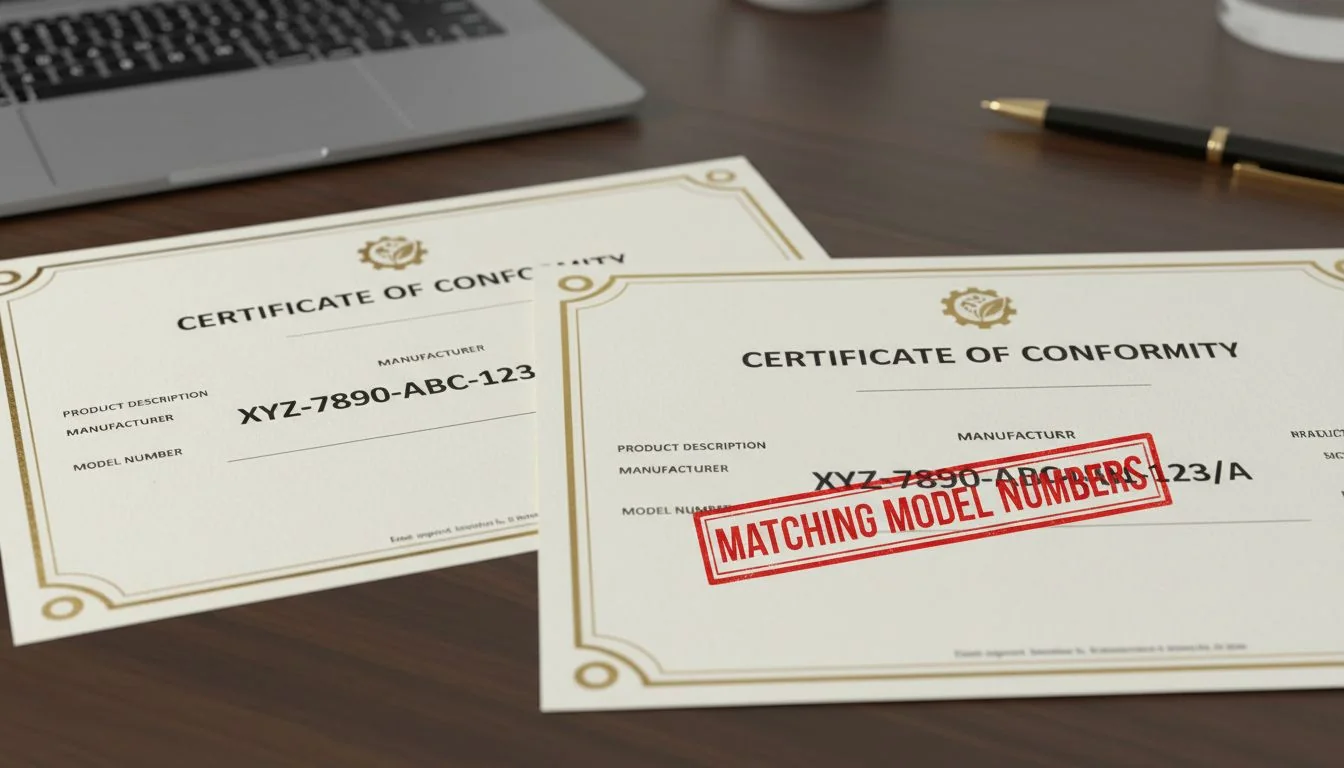
The Danger of Similar Model Numbers
I design molds. A small change in a dimension ruins the part. The same is true for model numbers. Suppliers often certify one expensive model. Then, they use that certificate to sell cheaper, uncertified models. I have seen this trick many times.
| Product Model | Certified Model | Result | Action to Take |
|---|---|---|---|
| Filter-X100 | Filter-X100 | Match | Safe to proceed. |
| Filter-X100-B | Filter-X100 | No Match | Reject the product. |
| Filter-Pro | Filter-Basic | No Match | Ask for the correct certificate. |
You must read every letter and number. If the product is "Model A", the certificate must say "Model A". Do not accept excuses. If the supplier says the models are the same inside, tell them to prove it with a new certificate. The claim must match the exact model you are buying.
If a brand has one certified filter, all their filters are certified.Falso
Certifications apply to specific model numbers, not entire brands.
The model number on the product must exactly match the model number on the certificate.Vero
Even a small difference in the model number means the specific product is not officially certified.
4. Step 3: Review Test Reports and Reduction Data?
Vague claims hide poor performance. You might buy a filter that barely works. You must read the actual test reports to see the real reduction numbers.
Ask the supplier for the full test report. Look for the specific testing standard, like NSF/ANSI 536 or 58 for PFAS. Check the reduction percentage. It should show a high reduction rate, usually above 95%. Also, check the tested capacity to see how long the filter lasts.
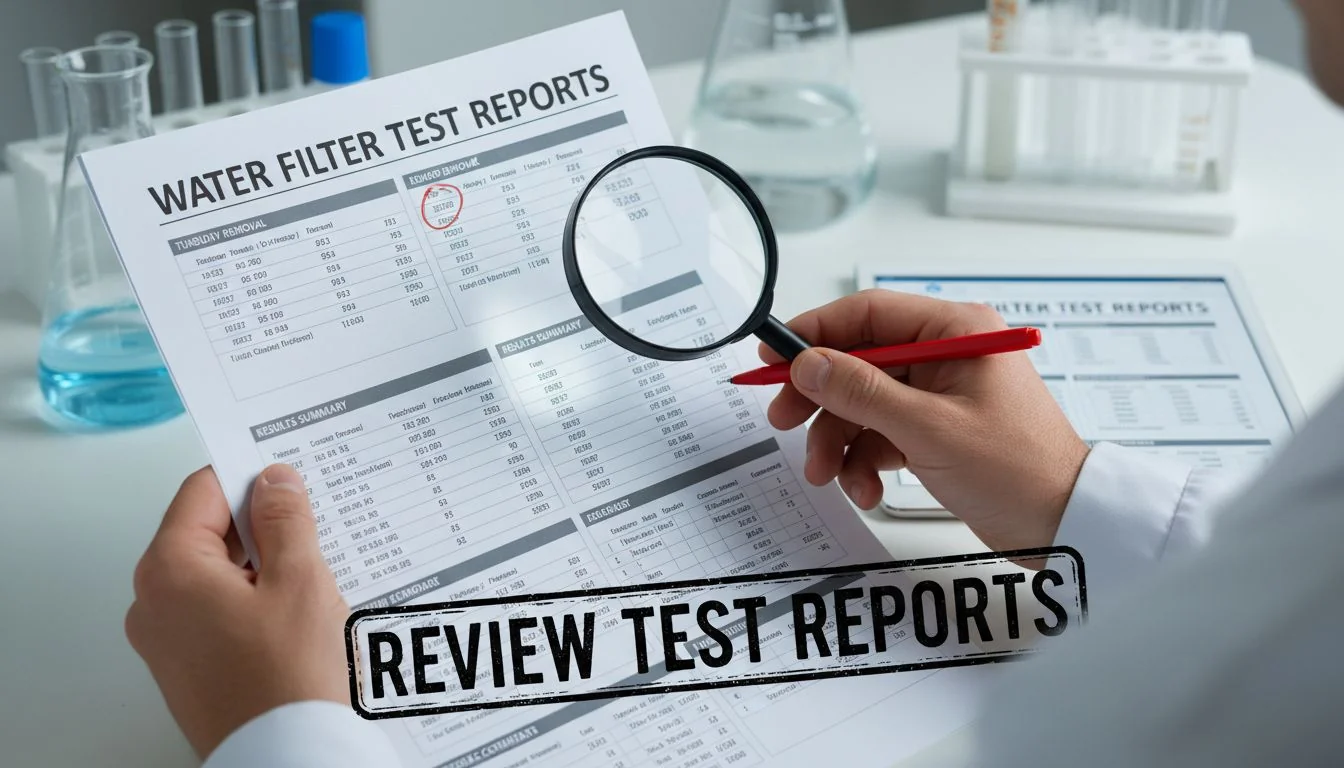
How to Read the Data
I review CNC machines. I look at the tolerance data. When you review a filter, you must look at the reduction data. A claim of "reduces PFAS" is not enough. You need to know how much it reduces. You also need to know the capacity.
| Data Point | What to Look For | Why It Matters |
|---|---|---|
| Standard | NSF/ANSI 53 or 58 | Proves the test method is correct for PFAS. |
| Influent Challenge | ~1.5 ug/L | Shows the starting amount of PFAS in the test water. |
| Reduction % | > 95% | Shows how much PFAS the filter actually removes. |
| Capacità | Gallons or Liters | Tells you when you must replace the filter. |
A filter might work well for 100 gallons. But it might fail at 200 gallons. The test report shows the true capacity. You must confirm the maintenance requirements. If you do not change the filter on time, the PFAS reduction stops.
Any test report is good enough to prove PFAS reduction.Falso
The test report must follow specific standards like NSF/ANSI 53 or 58 to be valid for PFAS.
The test report shows the maximum capacity of the filter.Vero
Test reports indicate how many gallons the filter can process before it stops reducing PFAS effectively.
5. Step 4: Check the Certifying Body's Credibility?
Fake labs give fake certificates7. You might trust a worthless piece of paper. You must ensure the certifying body is recognized and accredited by official organizations.
Not all certificates are equal. You must check if the certifying body is accredited by a recognized group, like ANSI in the United States. Look for well-known names like NSF, WQA, IAPMO, or UL. If you do not recognize the lab name, you must research their credentials.
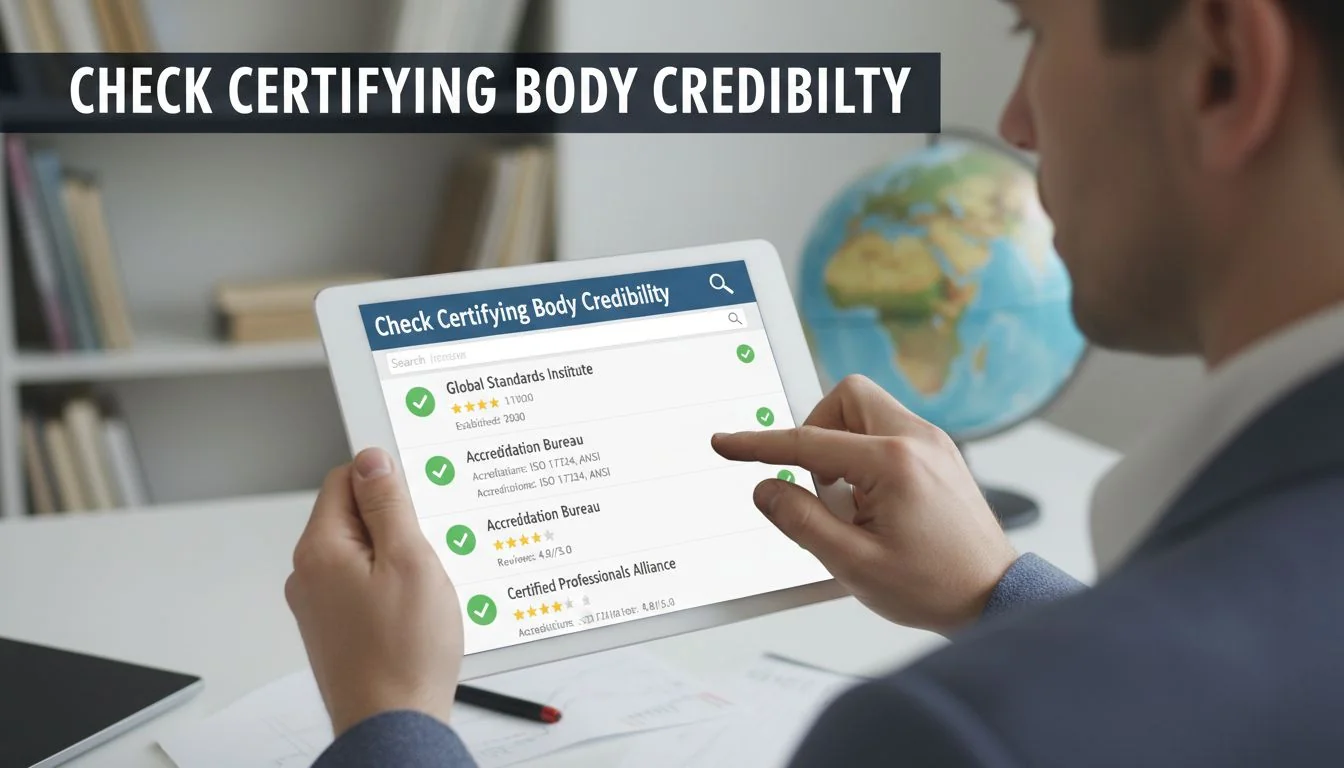
Identifying Real Testing Labs
I work in the trading business. I see many fake inspection companies. The same problem exists in water filtration. A supplier can pay a small, unknown lab to write a good report. This report is useless. You must verify the lab.
| Certifying Body | Accreditation | Trust Level |
|---|---|---|
| NSF International | ANSI Accredited | Alto |
| WQA | ANSI Accredited | Alto |
| Unknown Local Lab | Nessuno | Basso |
| In-house Company Lab | Nessuno | Low (Conflict of Interest) |
You must look for the ANSI logo or a similar national accreditation mark on the certificate. If the lab is not accredited, their test methods might be wrong. They might not have the right equipment to test for PFAS. Always demand documents from a credible, third-party organization. This is the only way to be sure the data is real.
An in-house test report is just as reliable as a third-party certificate.Falso
In-house reports have a conflict of interest. Third-party labs provide independent and unbiased testing.
ANSI accreditation means the certifying body follows strict testing standards.Vero
ANSI ensures that the testing laboratory is competent and follows recognized international standards.
6. A Reusable Verification Checklist?
Forgetting a step leads to bad purchases. You might miss a crucial detail. You need a simple checklist to use every time you evaluate a new filter.
Use this checklist for every purchase. First, get the official certificate. Second, verify the listing on the official database. Third, match the exact model number. Fourth, check the testing standard8 and reduction data. Finally, confirm the filter capacity and maintenance schedule. This keeps your sourcing process strict.
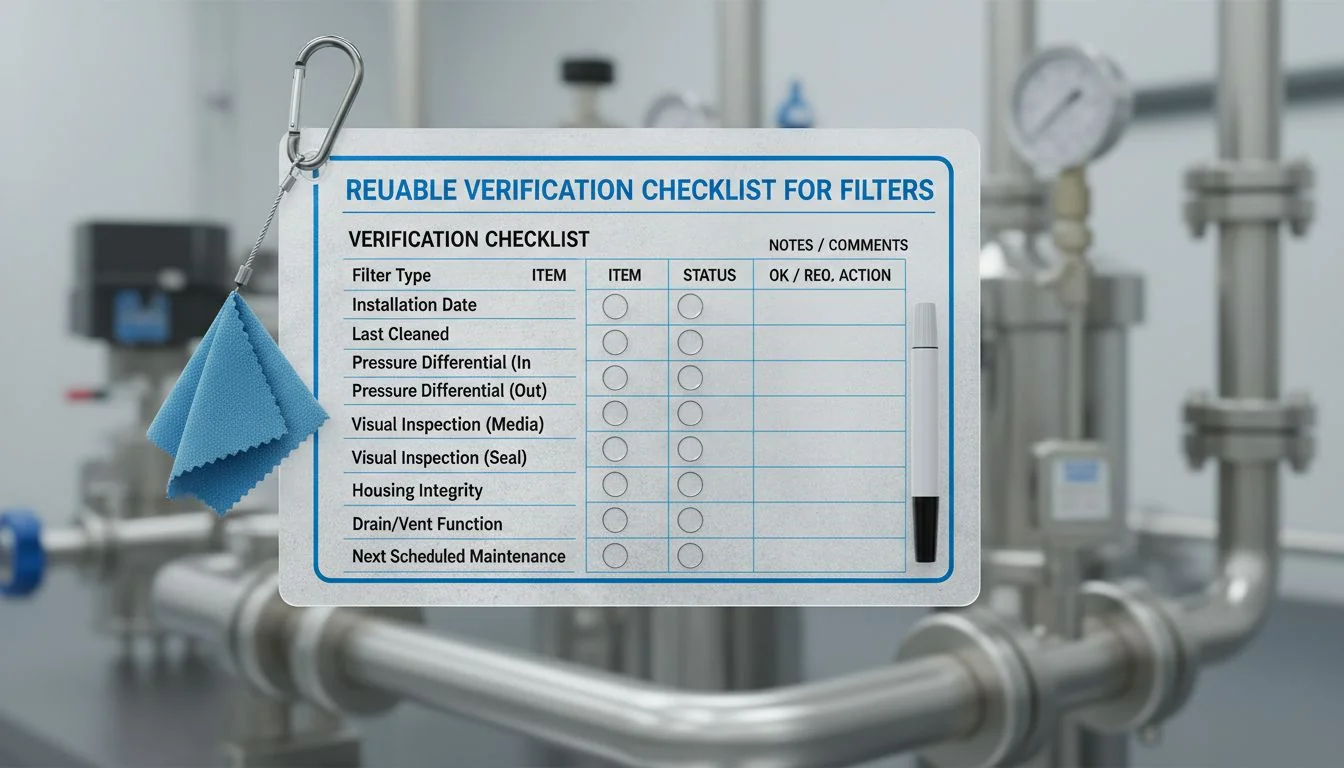
Your Daily Sourcing Tool
I use checklists for every mold design project. Checklists stop mistakes. You should use a checklist for verifying filter claims. It turns a confusing process into a simple routine. You can share this checklist with your team.
| Verification Step | Action Required | Status (Pass/Fail) |
|---|---|---|
| 1. Document Request | Ask supplier for certificate and test report. | [ ] |
| 2. Database Check | Search the official lab website. | [ ] |
| 3. Model Match | Compare product model to certificate model. | [ ] |
| 4. Standard Check | Confirm NSF/ANSI 53 or 58 for PFAS. | [ ] |
| 5. Data Review | Check reduction % and total capacity. | [ ] |
Do not skip any steps. If a product fails one step, you must stop the purchase. Ask the supplier for more information. If they cannot provide it, find a new supplier. This checklist helps you judge the documentation, not just the marketing words.
You only need to check the model number if the brand is unknown.Falso
You must check the exact model number for every brand, even famous ones, to ensure certification.
Using a checklist helps prevent mistakes during the sourcing process.Vero
A checklist ensures you verify all necessary documents and data points before making a purchase decision.
Conclusione
Verifying PFAS claims requires checking real documents, not marketing. Follow these steps to protect your projects. Send me your claims or certificates for a free sourcing and documentation review today!
References
-
Understanding PFAS reduction claims is crucial for making informed decisions about water filtration systems. ↩
-
Identifying misleading marketing claims protects you from purchasing ineffective water filtration systems. ↩
-
Reading test reports is essential to understand the actual performance of a water filter. ↩
-
A credible certifying body ensures that the water filter has been tested and certified accurately. ↩
-
Finding the official certification listing ensures that the water filter meets safety and performance standards. ↩
-
NSF/ANSI 53 is a key standard for verifying the effectiveness of water filters in reducing PFAS. ↩
-
Knowing how to spot fake certificates is crucial to avoid scams and ensure product reliability. ↩
-
Knowing the testing standards helps you assess the reliability of water filtration claims. ↩


 English
  Français
  Español
  Italiano
  Deutsch
  Português
  Русский
  العربية
  日本語
日本語  한국어
한국어  Tiếng Việt
