
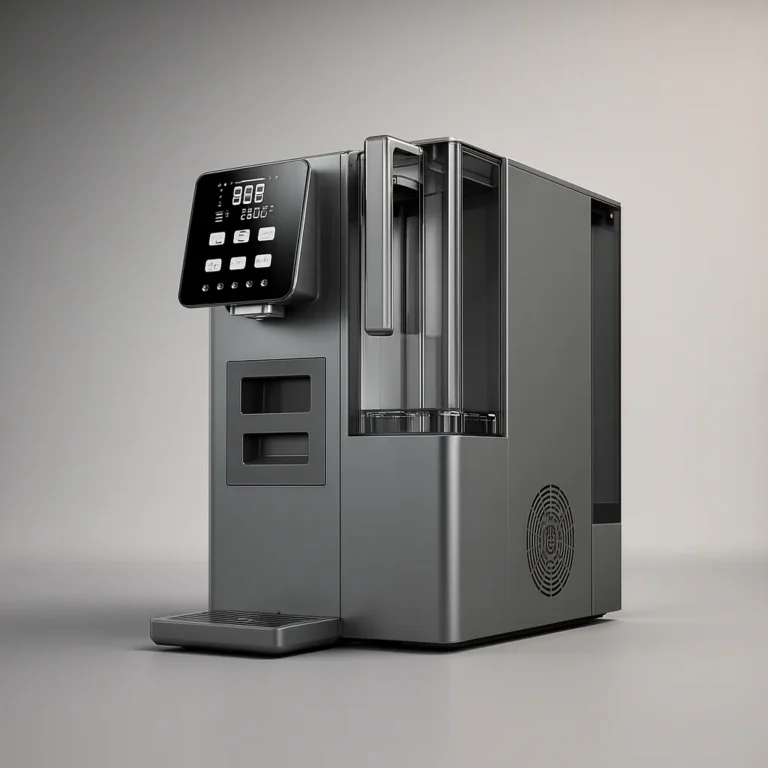
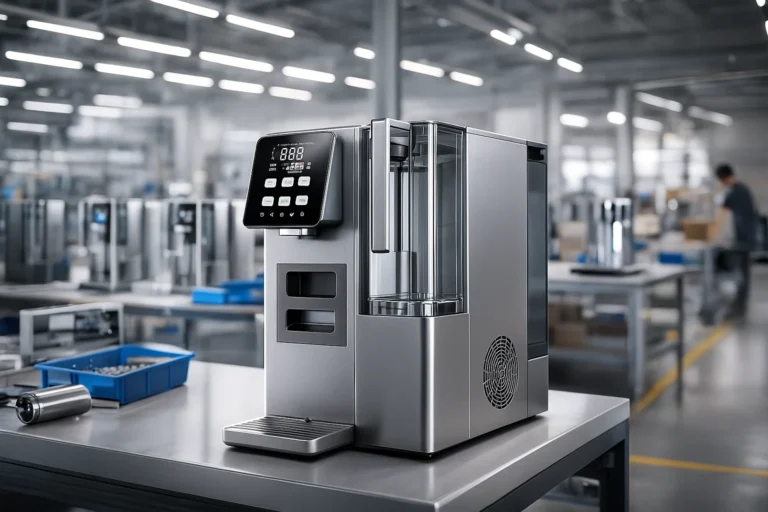
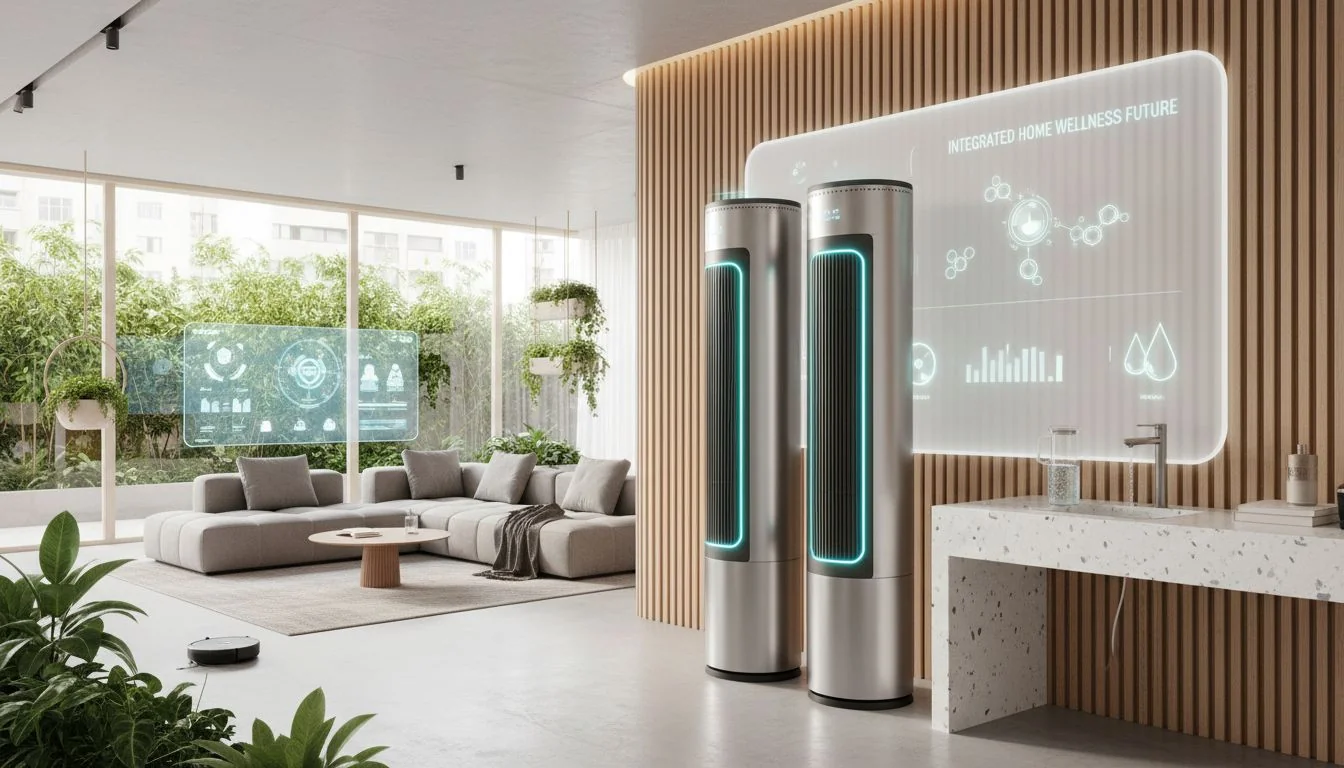
You design a perfect product, but your customer buys the next device from a competitor. This fragmentation hurts your brand growth. The solution lies in building a unified product family.
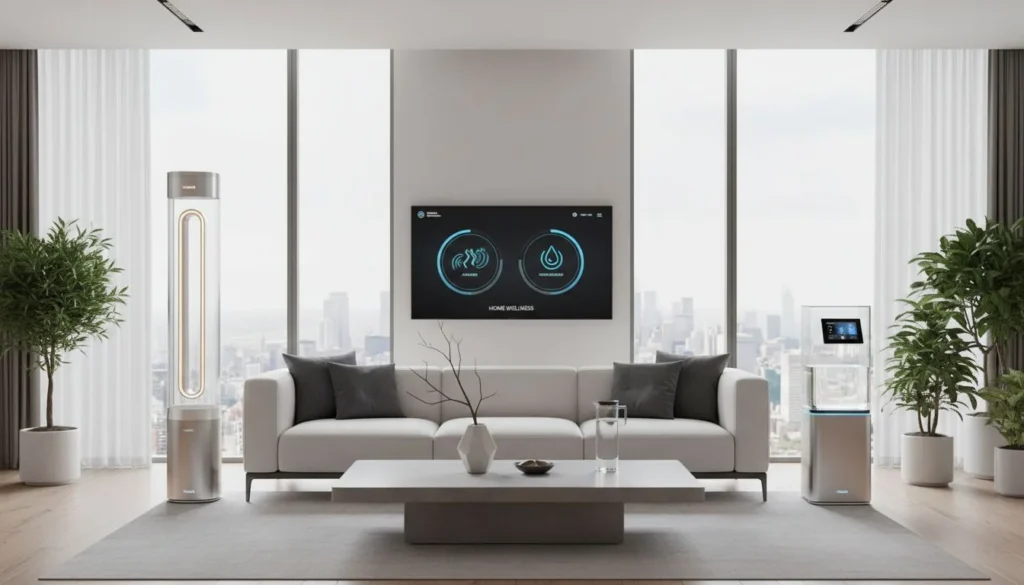
The integrated home wellness future is about shifting from selling standalone devices to creating a cohesive ecosystem. By aligning air and water purification systems through shared design languages, unified apps, and synchronized consumables, brands can secure a larger "Share of Home1" and increase customer lifetime value.
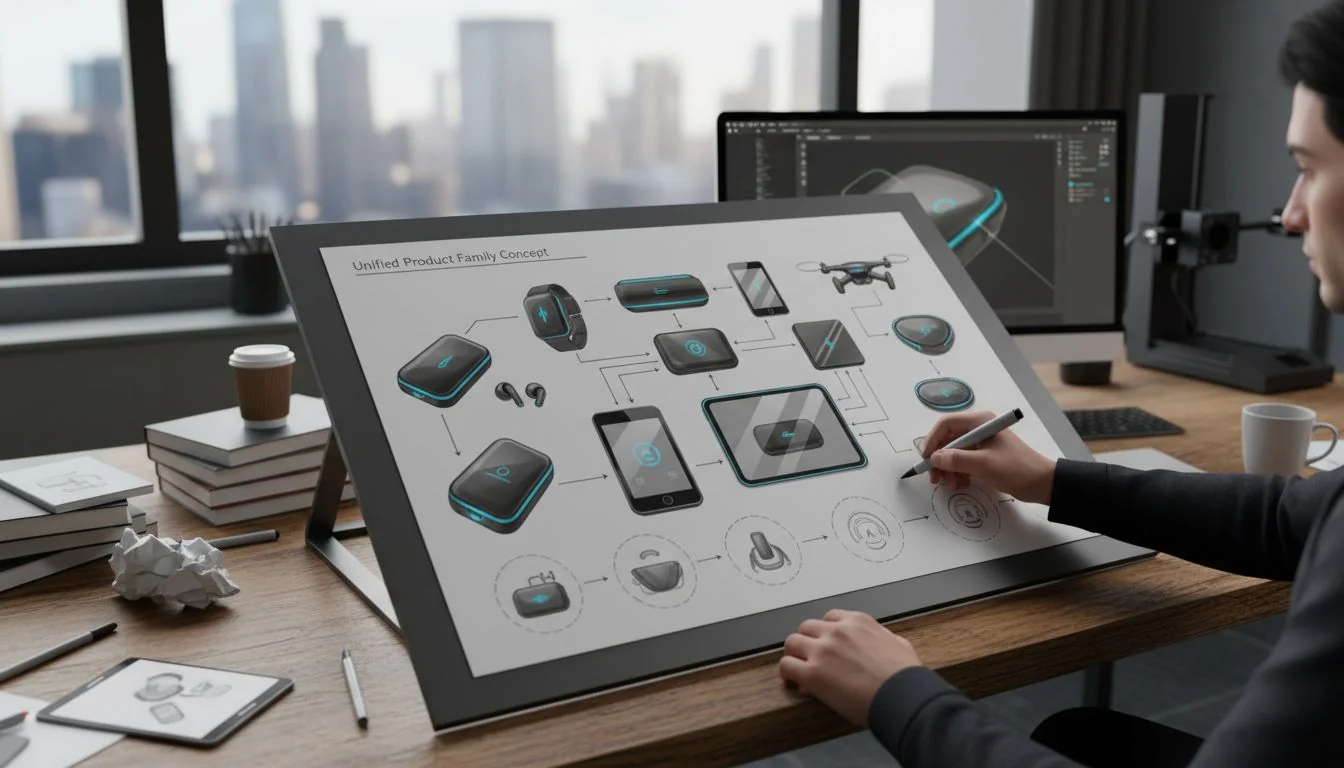
Many designers and manufacturers focus too much on a single item. They forget how that item fits into the larger home environment. This limits their potential revenue. I want to show you how connecting these categories changes everything.
Selling a matching water purifier to an existing air purifier customer is significantly easier than finding a new customer.Verdadeiro
Cross-selling to a customer who already trusts the brand's quality and design language has a much lower acquisition cost and higher conversion rate.
Most factories specialize in both air and water purification manufacturing equally.Falso
Typically, factories specialize in either air or water technology. Finding a single manufacturer like Hisoair that handles both is rare but valuable for consistency.
Introduction: How Do We Shift From "Gadgets" to "Ecosystems"?
Most brands are happy selling one good device. However, the real profit comes from owning the entire home environment. We need to stop thinking about gadgets and start thinking about systems.
An ecosystem strategy focuses on the "Share of Home" metric rather than just unit sales. By pitching B2B clients on the cross-sell potential, you can position an air purifier and a water purifier as inseparable partners. This approach turns a one-time purchase into a comprehensive home health solution.
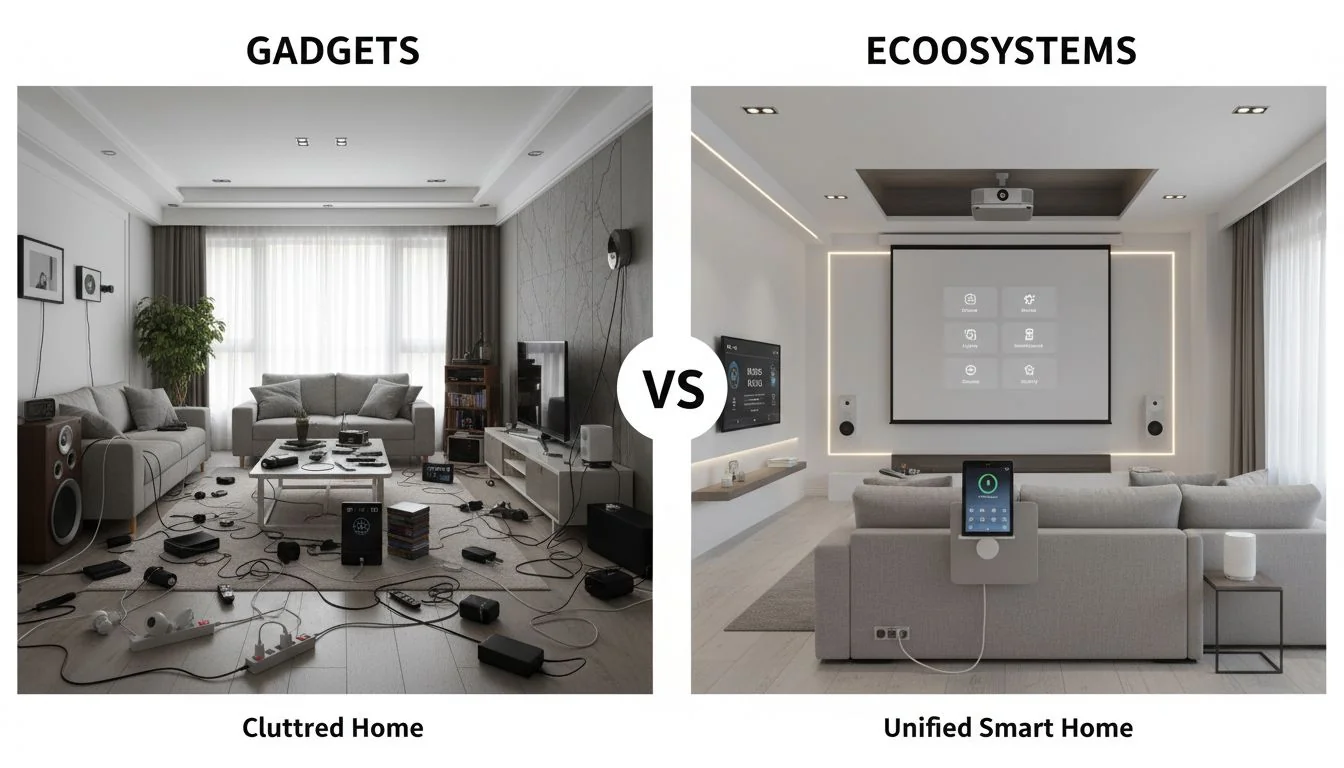
I have seen many companies fail because they think too small. They pour all their energy into one plastic mold for one specific air purifier. They sell it, and then they disappear. The "Share of Home" insight changes this dynamic completely. The goal is not just to sell a device; it is to occupy more square footage in the customer's house.
When you design a product, you must think about its partner. If a customer trusts your client's air purifier, they are the easiest sale for a matching water purifier. This is the "Cross-Sell" strategy. As a designer, you can facilitate this. You can present concepts that show the two devices side-by-side. You can show how they complement each other.
Hisoair enables this strategy effectively. They provide a consistent product family. This means you do not have to source from five different vendors. You can present a unified front to your B2B clients. You tell them, "Do not just sell clean air. Sell a clean home." This mindset shift from single gadgets to a connected ecosystem is where the industry is heading. It maximizes revenue and builds stronger brand loyalty.
The 'Share of Home' metric measures the percentage of a household's appliances owned by a single brand.Verdadeiro
This metric focuses on deepening the relationship with the customer by fulfilling multiple needs within their living space.
Consumers prefer to buy air and water purifiers from different brands to diversify their risk.Falso
Consumers generally prefer a unified ecosystem for simplicity, aesthetic consistency, and ease of management.
The "Biological Baseline": Why Do Air and Water Belong Together?
Wellness consumers are obsessed with the concept of "Detox." They want to remove toxins from their lives. Combining air and water purification creates a powerful narrative for these buyers.
Air and water purification belong together because they address the two primary intake vectors for toxins: breathing and drinking. Marketing this bundle as a "Total Home Detox System2" creates a "Safe Haven" emotional hook. The air unit removes airborne VOCs, while the water unit removes liquid contaminants like PFAS.
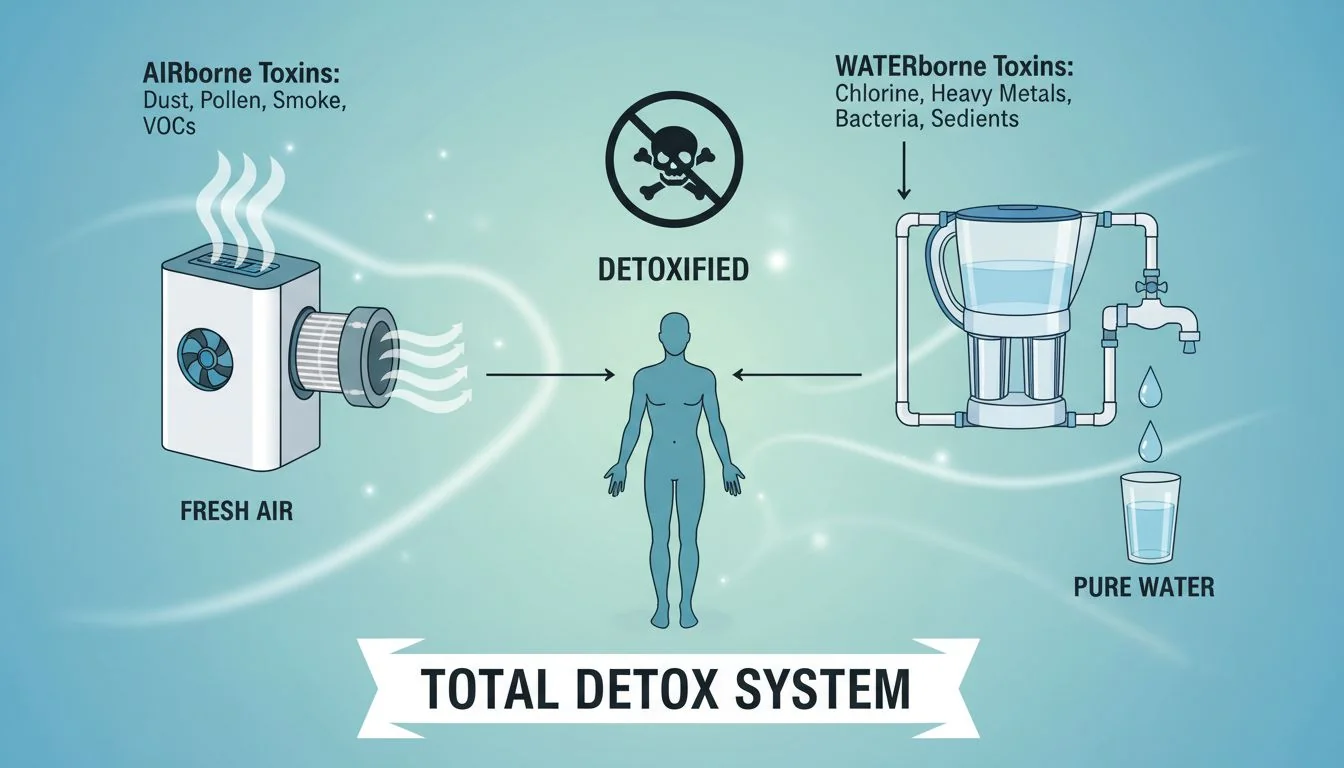
In my years in the mold industry, I have learned that technical specs are important, but the story sells the product. The "Total Detox" positioning is a massive opportunity. High-end consumers are very worried about their health. They read about VOCs (Volatile Organic Compounds) in the air. They read about PFAS (forever chemicals) in the water.
If you sell these solutions separately, you are only solving half the problem. But if you bundle them, you create a "Safe Haven." You tell the customer, "We protect everything you consume." This is a very strong emotional hook. It moves the conversation from "buying an appliance" to "investing in health."
From a design perspective, this means your marketing materials and packaging should reflect this duality. The icons for air filtration and water filtration should look like siblings. The user manuals should reference each other. You are not just selling a machine; you are selling a biological baseline for a healthier life. This integrated approach makes the purchase decision much easier for a health-conscious buyer.
VOCs are primarily found in drinking water.Falso
VOCs (Volatile Organic Compounds) are airborne toxins, whereas PFAS are common contaminants found in water.
Bundling air and water purification addresses the 'Total Detox' consumer trend.Verdadeiro
This strategy targets the consumer desire for a comprehensive health solution that covers both breathing and drinking.
Aesthetic Harmony: Is the "Stainless Steel" Design Language Essential?
Consumers love matching sets, whether it is luggage or kitchenware. Visual consistency implies quality. If your devices do not look like a family, you lose the impulse to buy the pair.
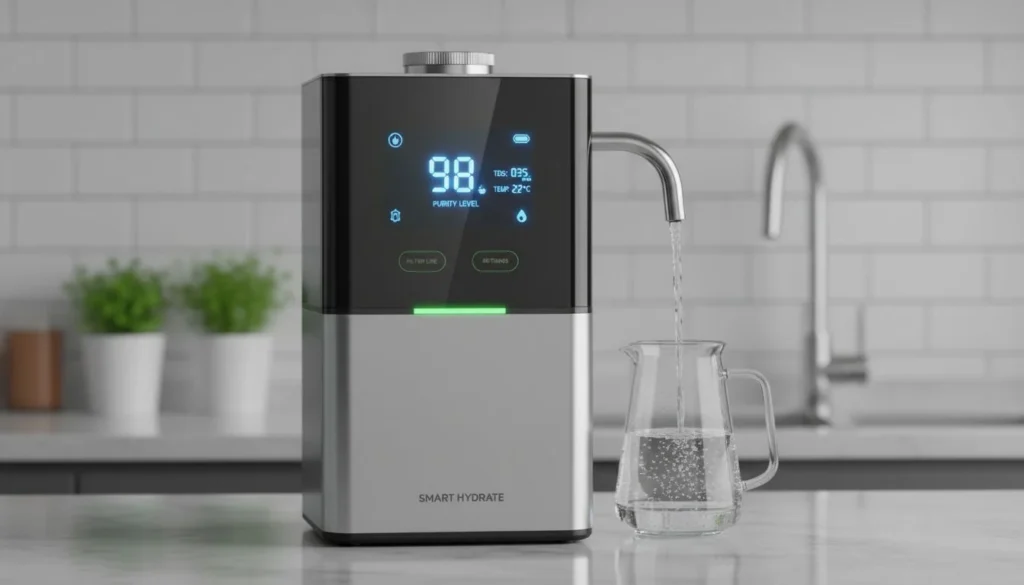
Aesthetic harmony creates a "Visual Ecosystem3" that makes buying the pair irresistible. By ensuring the Wall-Mounted Air Purifier and Countertop Water Purifier share the exact same Brushed Stainless Steel finish and UI design, you appeal to interior-conscious buyers who value a cohesive look in their home.
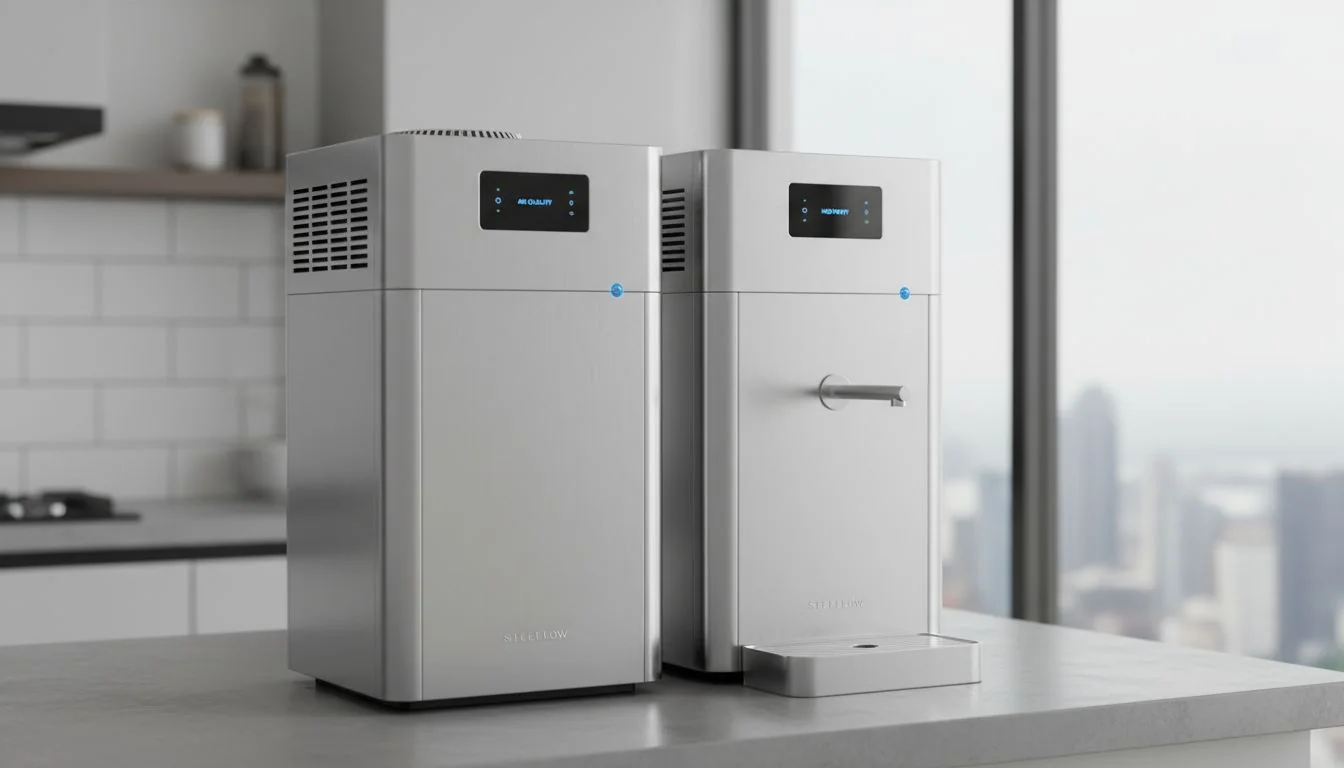
Let's talk about CMF: Color, Material, and Finish4. As a mold enthusiast, I know how hard it is to match textures. If you have an air purifier made in Factory A and a water purifier made in Factory B, the "Brushed Stainless Steel" will never look the same. One will be slightly darker. One will have a coarser grain. To a designer like Jacky, this is a disaster. To a consumer, it looks cheap.
The strategy here is to offer "Matched Sets." You must ensure that the Wall-Mounted Air Purifier and the Countertop Water Purifier share the exact same finish. They must also share the same User Interface (UI) design. The buttons should feel the same. The lights should be the same color temperature.
This visual consistency is a powerful psychological trigger. It is the same reason people buy a full set of Le Creuset pots. It looks organized. It looks intentional. When you achieve this level of harmony, the products act as decor. The customer wants to display them, not hide them. This visual alignment is only possible if you control the manufacturing standards strictly, ideally through a partner like Hisoair who understands this need for uniformity.
CMF stands for Color, Material, and Finish.Verdadeiro
This is a standard industrial design term used to define the aesthetic properties of a product.
Sourcing products from different factories guarantees identical surface finishes.Falso
Different factories use different suppliers, tooling, and processes, making it nearly impossible to achieve an exact match in finish without strict centralized control.
Technological Integration: Can One App Rule Them All?
Modern users hate clutter on their phones. They do not want five different apps for five different devices. A unified digital experience is just as important as the physical design.
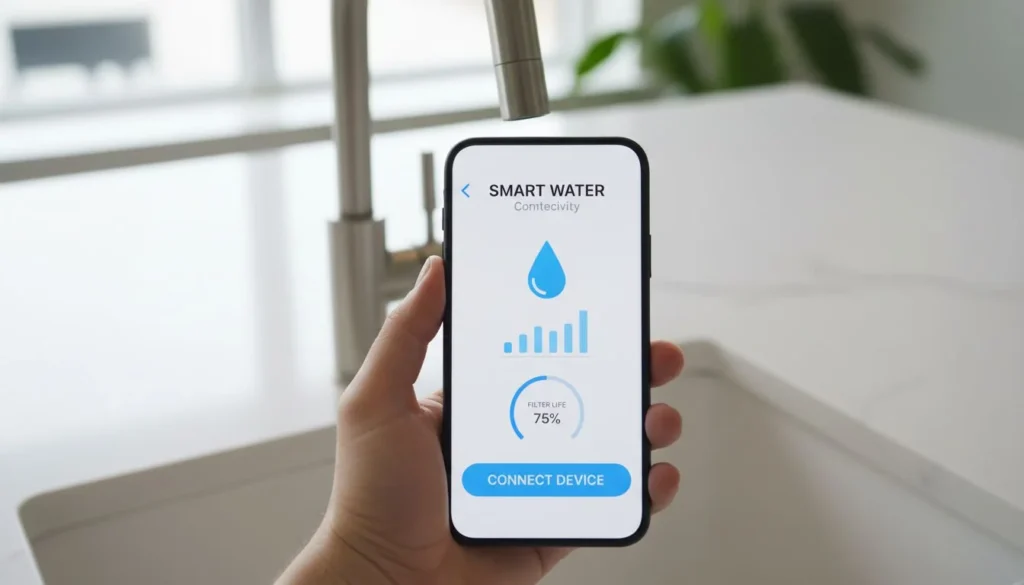
Technological integration means providing a single app to control both air and water systems. This "One App to Rule Them All5" approach simplifies the user experience, allowing customers to monitor air quality and water filter status in one place, reinforcing the ecosystem concept.
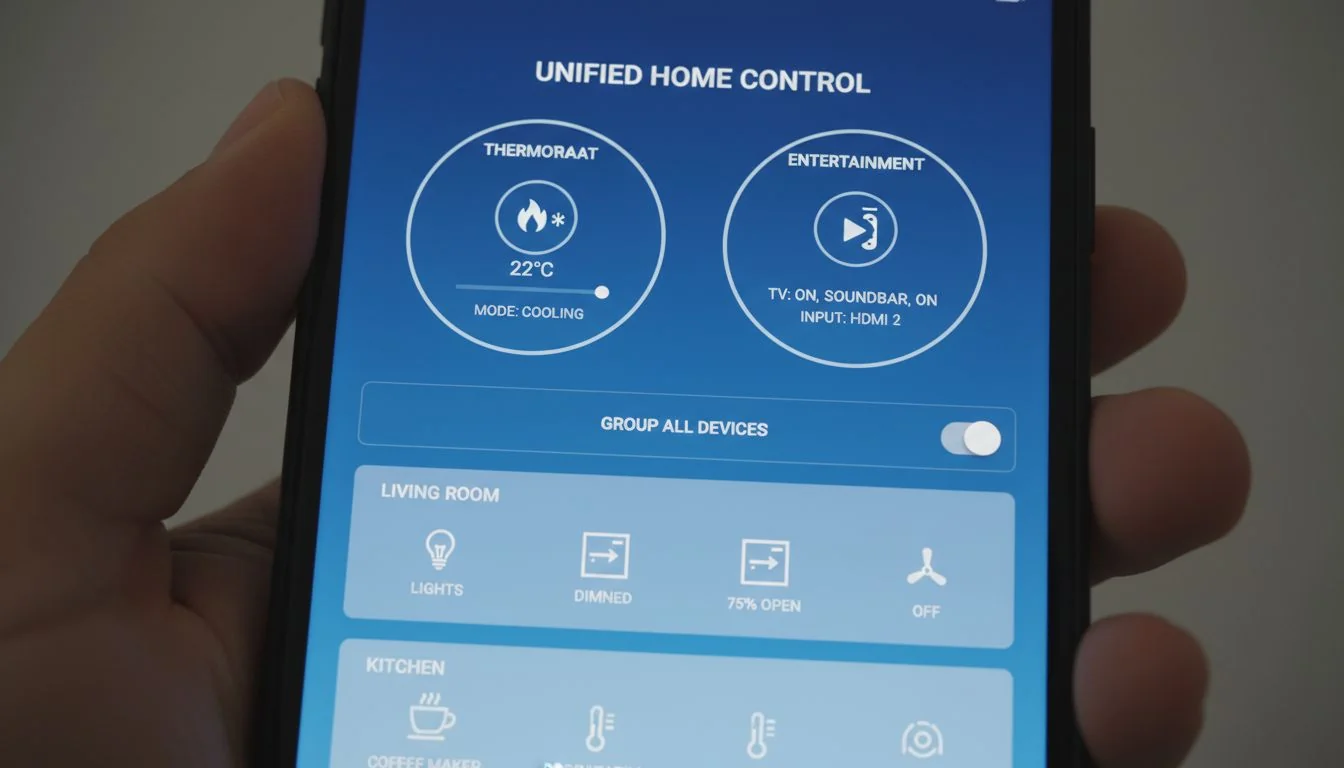
We often focus heavily on the plastic shell and the mold. But today, the product is also the software. If your client's air purifier uses "App A" and their water purifier uses "App B," the ecosystem is broken. It feels disjointed. The user has to switch contexts, and that causes friction.
The strategy is simple: One App. The customer should open their phone and see their "Home Health Status." They should see the Air Quality Index (AQI) right next to their Water TDS (Total Dissolved Solids) level. This reinforces the idea that these two machines are working together.
This also helps with the "Share of Home" strategy we discussed earlier. If a customer already has the app for their air purifier, adding the water purifier is just a matter of clicking "Add Device." They are already in the ecosystem. The barrier to entry is almost zero. For a designer, this means you need to think about the UI flow. How do these two data streams look on one screen? The digital design must match the physical design.
A unified app increases the friction of adding a new device.Falso
A unified app reduces friction because the user is already familiar with the interface and has the software installed.
Monitoring AQI and TDS in one place reinforces the 'Home Health' narrative.Verdadeiro
It provides a holistic view of the home's environmental quality, validating the need for both devices.
Recurring revenue is the holy grail of business. Selling the machine is just the start. The real long-term value comes from the consumables that keep the machines running.
The commercial value is maximized through a "Unified Consumables Subscription." By proposing a "Whole Home Filter Subscription6," customers receive one box every six months containing both Air HEPA and Water RO filters. This locks in revenue and solves the annoyance of managing multiple maintenance schedules.
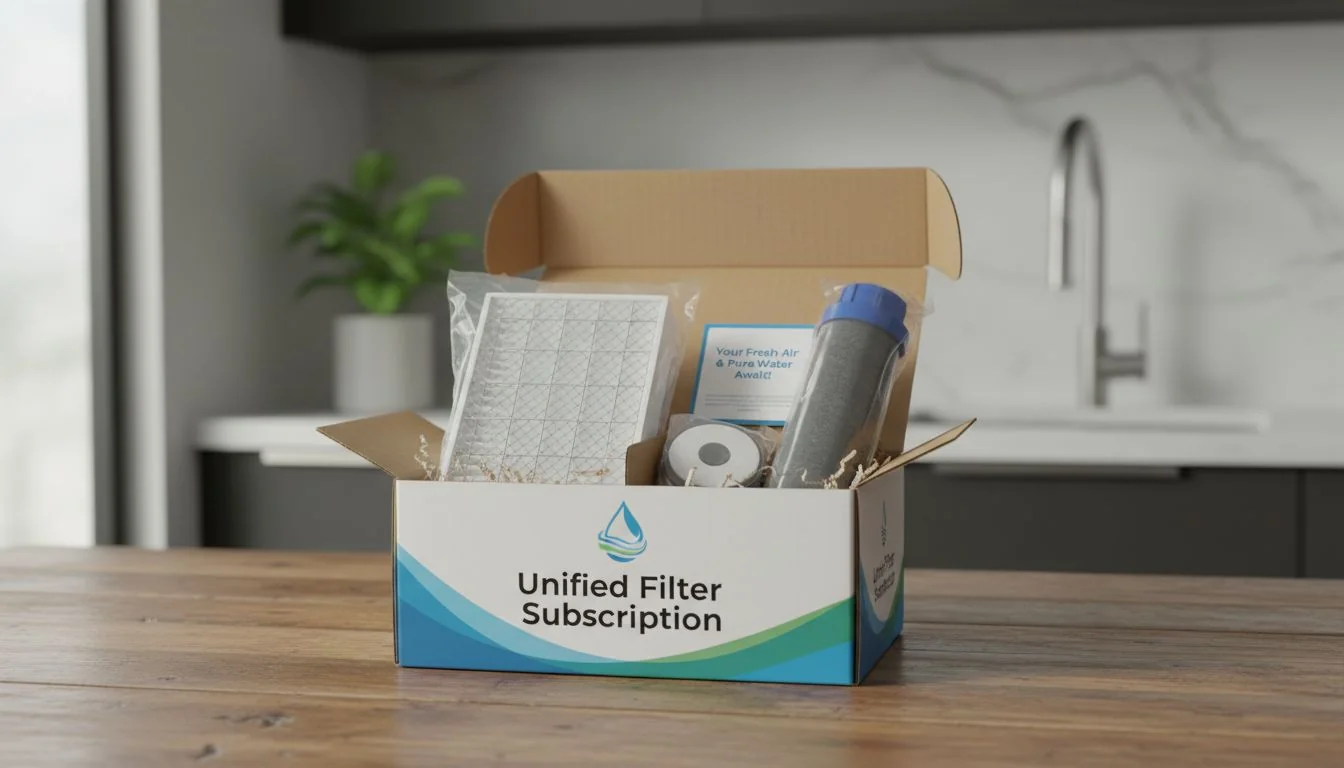
Managing filter changes is annoying. I have forgotten to change my own filters many times. Managing two different schedules for two different machines is even worse. It is a pain point for the customer. But for a business, it is an opportunity.
The strategy is the "Whole Home Filter Subscription." You propose a system where the customer gets one box delivered to their door every six months. Inside that box is everything they need: the HEPA filter for the air unit and the RO filter for the water unit.
This does two things. First, it simplifies the user's life. They do not have to remember anything. Second, it locks in recurring revenue for your client. They are not just selling a device once; they are selling a subscription for years. From a mold design perspective, this might influence how you design the filter housing. Can you make the replacement process similar for both? Can you make it a "snap-and-go" mechanism for both air and water? Standardizing the interaction makes the maintenance feel like a simple ritual rather than a chore.
Bundling consumables increases the likelihood of subscription churn.Falso
Bundling increases convenience, which typically reduces churn and increases customer retention.
A synchronized subscription model simplifies logistics for the manufacturer and the user.Verdadeiro
It consolidates shipping costs and reduces the cognitive load on the consumer to track multiple dates.
Conclusion: Can You Become the "Apple" of Home Health?
To dominate the market, you must simplify the supply chain. You cannot build a cohesive ecosystem if your manufacturing is scattered across too many different providers.
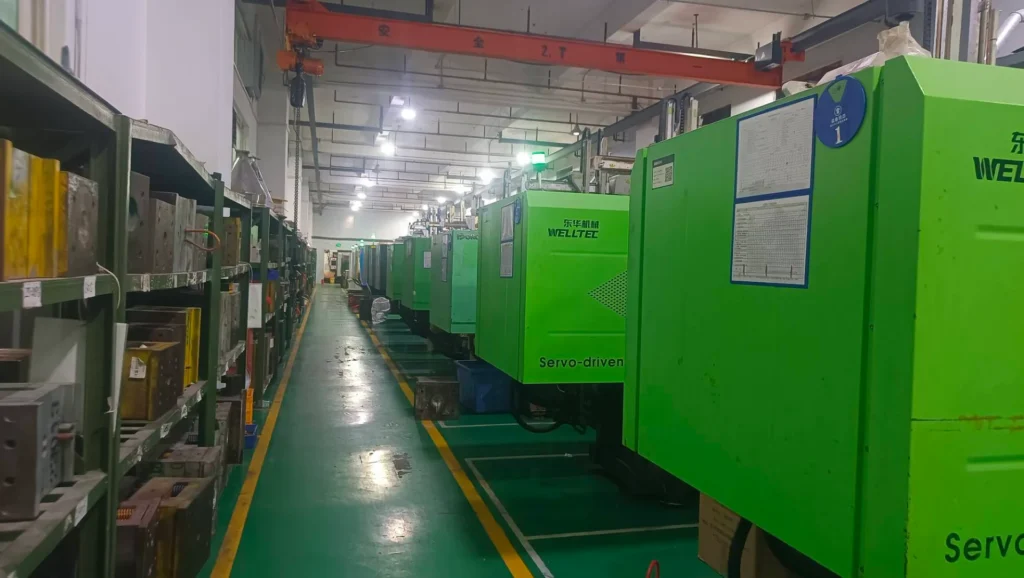
To become the "Apple" of home health, you need a "One-Stop Wellness Foundry7" like Hisoair. Consolidating air and water production under one roof simplifies quality control, shipping, and supply chain management, allowing you to deliver a seamless, high-quality multi-category experience.
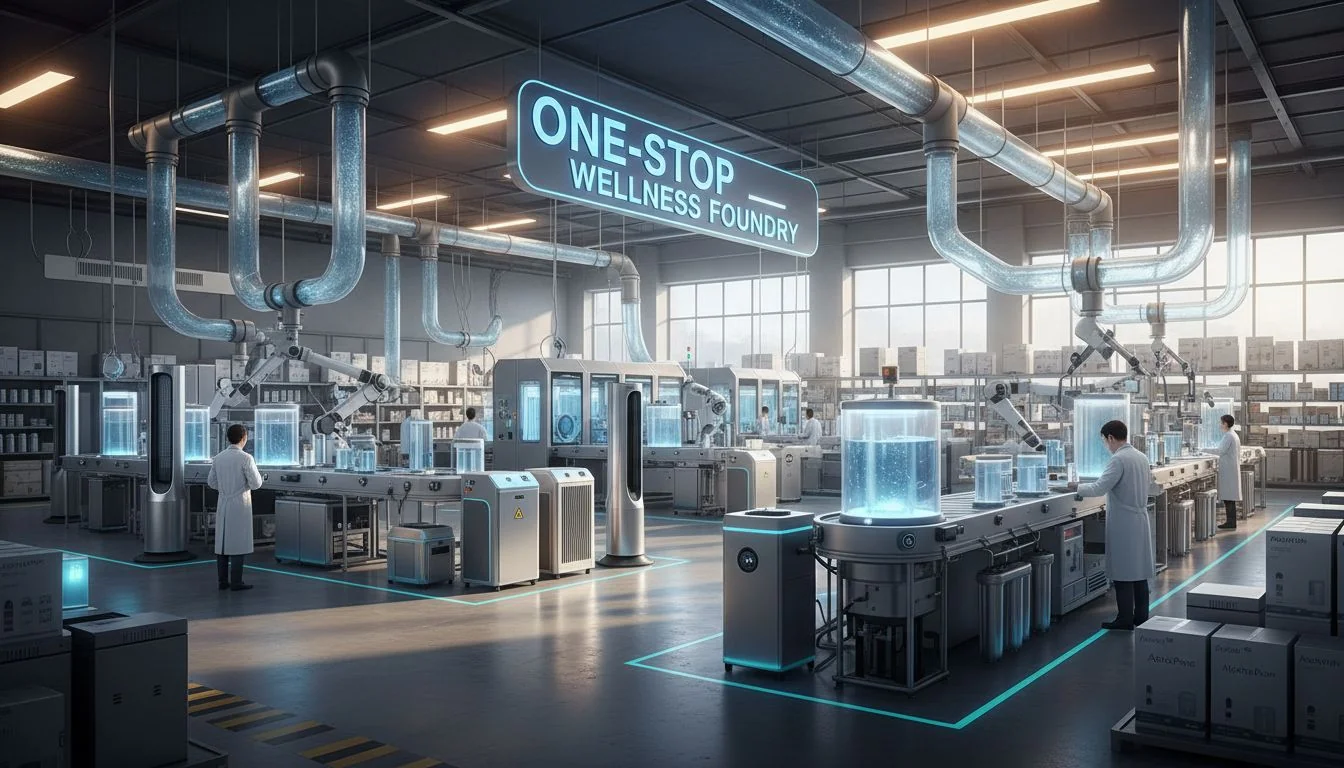
Most factories only do Air or Water. They rarely do both. This creates supply chain chaos. You have to coordinate colors, shipping dates, and quality standards across different companies. It is a headache.
The strategy is to position Hisoair as the "Multi-Category Specialist." They act as a "One-Stop Wellness Foundry." By consolidating both categories under one roof, you solve the biggest problems in manufacturing. You get consistent CMF (that stainless steel match we talked about). You get unified shipping. You get a single point of contact for quality control.
For a designer like Jacky, this is a dream. You are not fighting with two different engineering teams. You are working with one partner who understands the whole vision. This allows you to focus on design and innovation rather than logistics. This is how you build a brand that rivals the biggest names. You create a seamless, integrated experience from the factory floor to the living room.
Using multiple factories for different products simplifies quality control.Falso
Multiple factories introduce variables in materials and processes, making consistent quality control much harder.
Hisoair specializes in consolidating air and water manufacturing.Verdadeiro
This consolidation allows for better design consistency and streamlined supply chain management.
Conclusão
The future of home wellness is not in isolated devices, but in integrated ecosystems. By aligning design, technology, and manufacturing through partners like Hisoair, you can own the "Share of Home."
References
-
Understanding this concept can help brands maximize their market presence and customer retention. ↩
-
Learn how bundling air and water purification creates a compelling health narrative for consumers. ↩
-
Discover how aesthetic harmony influences consumer purchasing decisions and brand perception. ↩
-
Discover the importance of CMF in creating visually appealing and cohesive products. ↩
-
Find out how a single app can enhance user experience and streamline device management. ↩
-
Explore how subscription models can simplify maintenance and increase customer loyalty. ↩
-
Learn how consolidating manufacturing can improve product quality and brand consistency. ↩

 Português
  English
  Français
  Español
  Italiano
  Deutsch
  Русский
  العربية
  日本語
日本語  한국어
한국어  Tiếng Việt

