
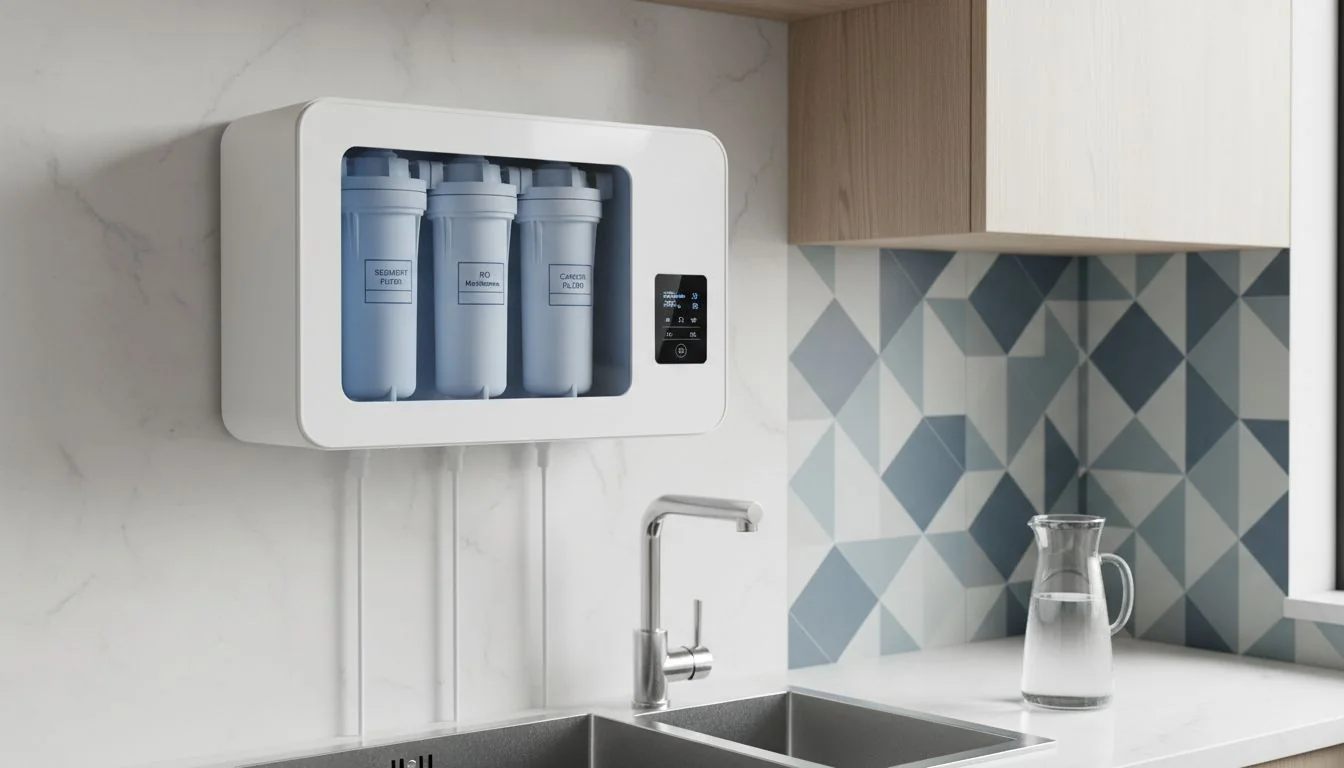
You design home appliances but struggle with water filtration specs. Bad designs lead to leaks and poor water quality. I will show you how RO systems actually work.
An RO water purifier system uses a semi-permeable membrane to remove ions, molecules, and larger particles from drinking water. It forces water under pressure through this membrane. This process drops the Total Dissolved Solids (TDS) significantly, providing clean and safe water for homes and businesses.
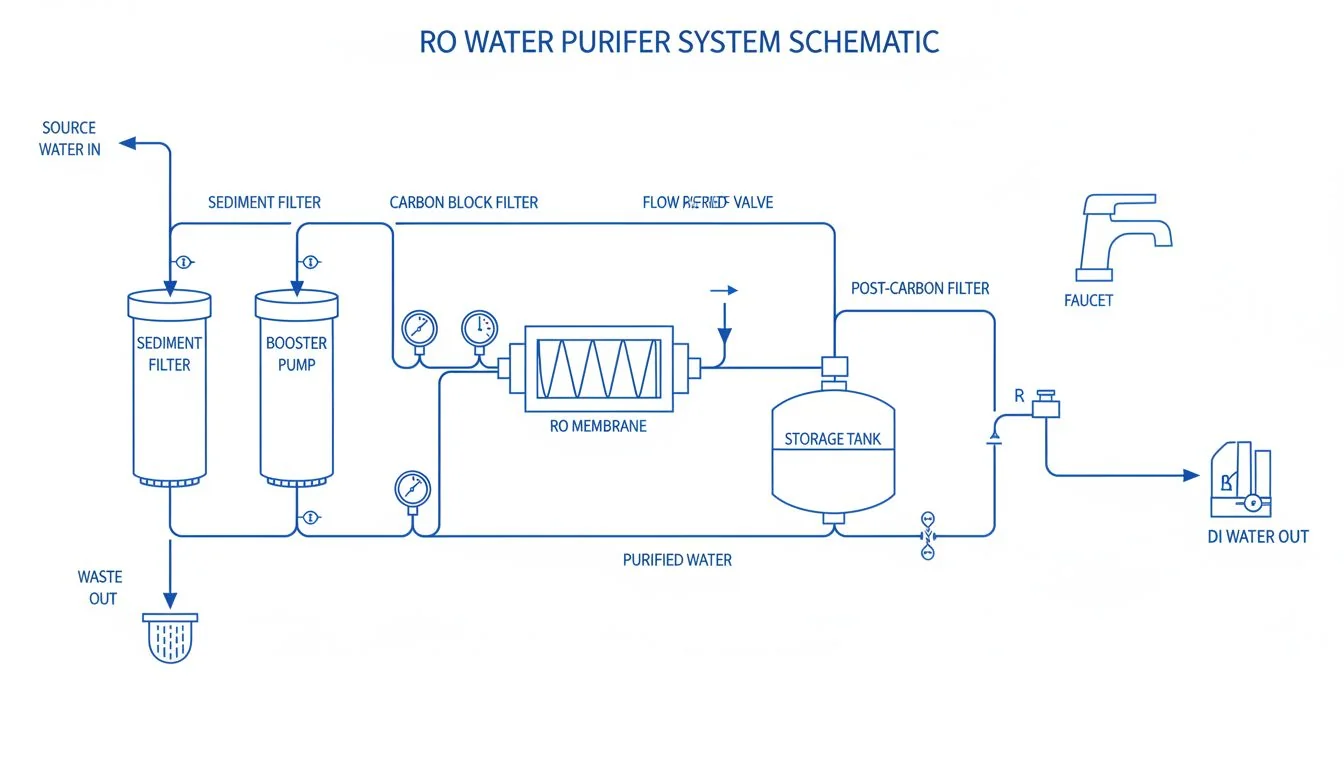
Let us dive into the core mechanics of these systems. You will see the exact technical details you need for your next product design project.
Reverse Osmosis removes dissolved solids from water.Verdadeiro
RO membranes have tiny pores that block heavy metals and salts.
RO systems do not produce any wastewater.Falso
All RO systems generate reject water to flush contaminants away from the membrane.
How exactly does an RO water purifier system work?
You need to integrate a water filter into a new product. You feel lost in the technical jargon. Let us break down the basic science of RO technology.
An RO water purifier system pushes tap water through a series of pre-filters1 and a reverse osmosis membrane. The membrane has pores as small as 0.0001 microns. It blocks heavy metals, bacteria, and dissolved salts. The system then sends clean water to a faucet.
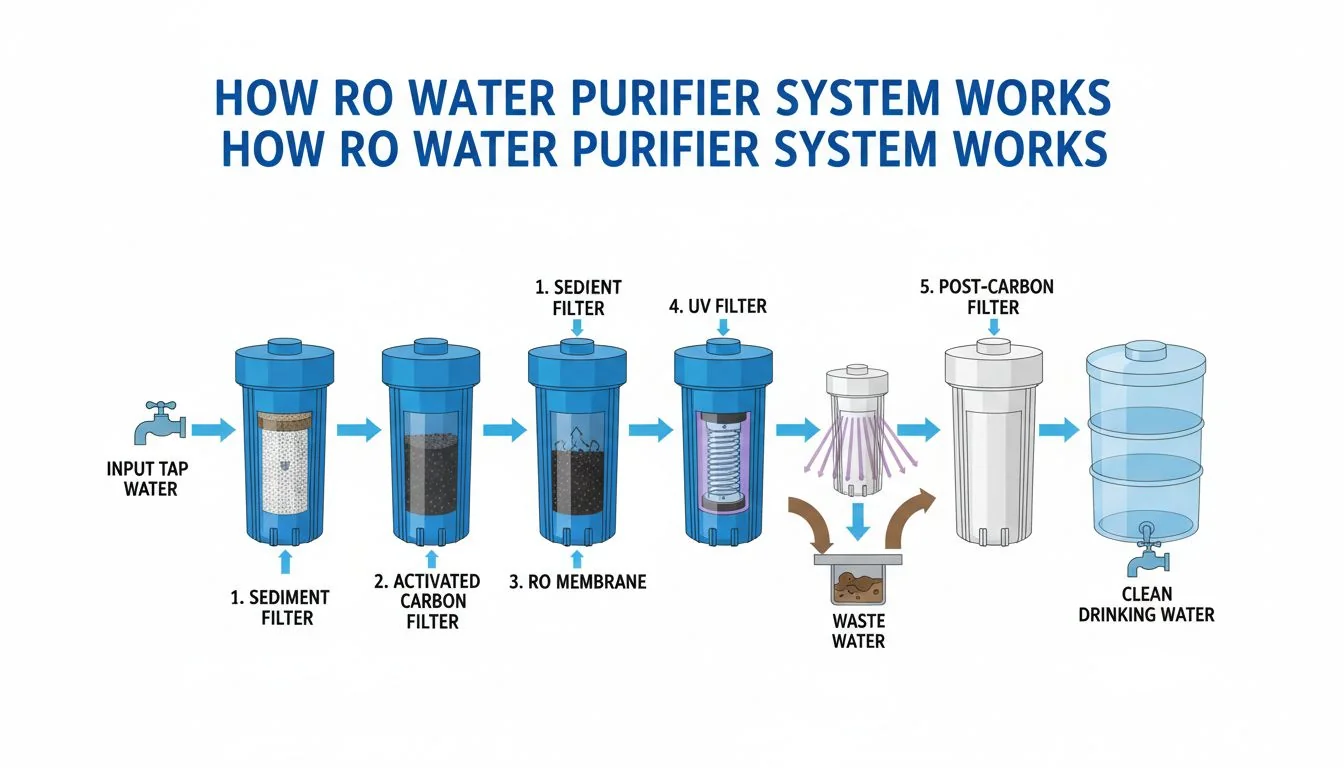
The Core Components of RO
I remember designing a plastic manifold for a water filter early in my career. I had to understand every part of the system to get the mold right. An RO system is not just one filter. It is a complete water treatment plant in a small box. The system relies on a specific pre-treatment configuration. This protects the delicate RO membrane2 from damage.
Pre-treatment Configuration
Tap water contains chlorine and large dirt particles. These elements will destroy an RO membrane fast. So, we use pre-filters.
| Filter Stage | Material | Função |
|---|---|---|
| Stage 1 | PP Spun | Removes sand, dirt, and rust. |
| Stage 2 | Granular Carbon | Absorbs chlorine and bad odors. |
| Stage 3 | Carbon Block | Further removes organic chemicals. |
| Stage 4 | RO Membrane | Removes dissolved solids and heavy metals. |
You must account for the pressure drop across these stages when you design the pump housing. The Total Dissolved Solids (TDS) drop happens entirely at the fourth stage. You need to select the right plastic materials for these filter housings. The material must withstand constant water pressure without deforming over time.
Chlorine can damage an RO membrane.Verdadeiro
Chlorine degrades the thin-film composite material used in most RO membranes.
PP spun filters remove dissolved salts.Falso
PP spun filters only remove large physical particles like sand and rust.
What is the difference between RO membrane vs carbon filtration?
You might think a simple carbon filter is enough. But your clients complain about hard water scale. You must know the difference between these two technologies.
carbon filtration3 uses activated carbon to absorb chlorine, bad tastes, and odors. It does not remove dissolved minerals. An RO membrane uses high pressure to force water through microscopic pores. It removes up to 99% of dissolved salts, heavy metals, and fluoride.
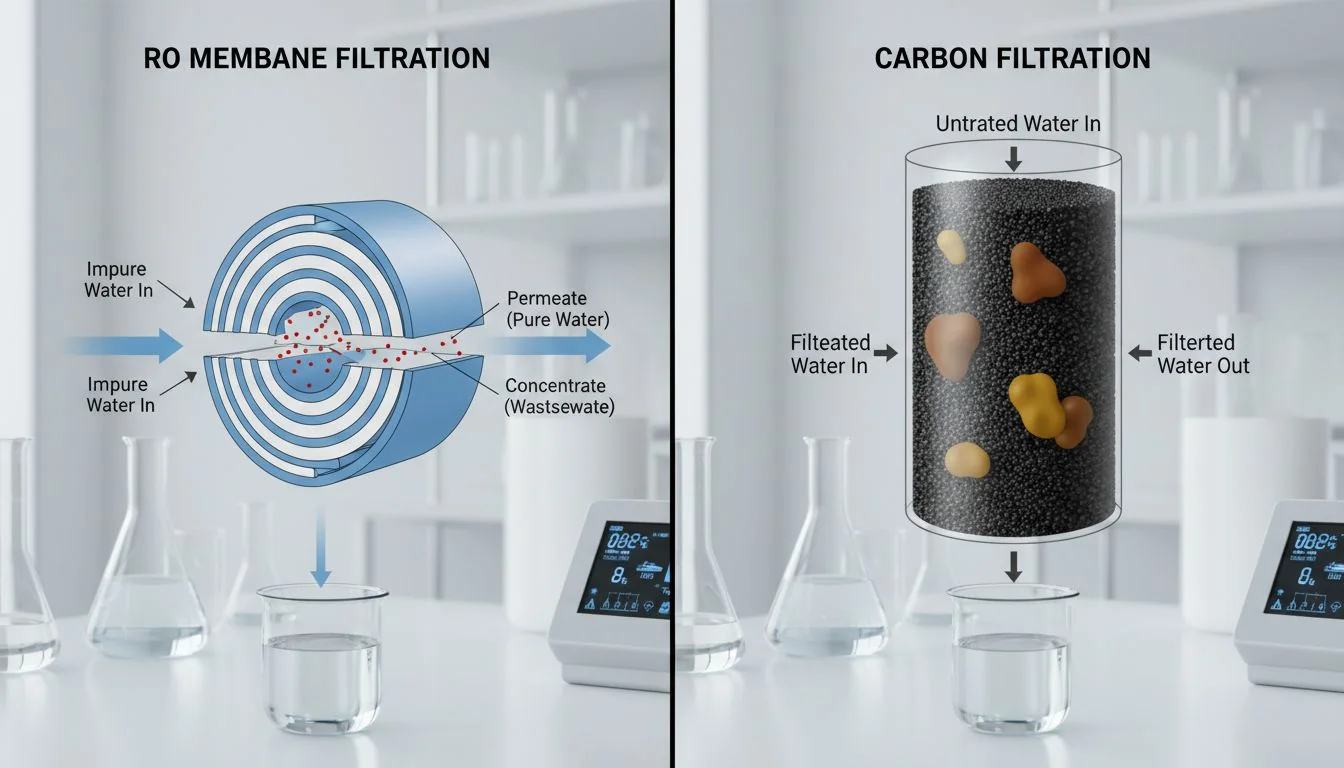
Comparing Filtration Capabilities
When I talk to engineers like you, they often confuse absorption with reverse osmosis. I once molded a filter housing that cracked. The designer used the wrong pressure specs for an RO membrane. Carbon filters operate at normal tap pressure. RO membranes require a booster pump to overcome osmotic pressure.
TDS Change and Performance
Carbon filters do not change the TDS of the water. If your tap water has a TDS of 300 ppm, the water leaving the carbon filter will still be 300 ppm. The RO membrane changes everything.
| Caraterística | Carbon Filtration | RO Membrane |
|---|---|---|
| Contaminantes alvo | Chlorine, VOCs, Odors | Heavy metals, Salts, Fluoride |
| TDS Reduction | 0% | 90% to 99% |
| Operating Pressure | Low (20-40 psi) | High (60-100 psi) |
| Tempo de vida | 6 to 12 months | 24 to 36 months |
You must design stronger plastic pressure vessels for the RO membrane. The wall thickness of your mold must handle this high pressure without warping. I always advise designers to run stress simulations on their CAD models. This prevents catastrophic failures when the system operates at maximum pressure.
Carbon filters reduce the TDS of water.Falso
Carbon filters only absorb chemicals and do not remove dissolved mineral salts.
RO membranes require higher water pressure than carbon filters.Verdadeiro
RO needs high pressure to force water through the semi-permeable membrane.
Why choose a tankless RO water purifier system?
Traditional RO systems take up too much space under the sink. Customers hate losing storage space. A tankless system solves this major design flaw.
A tankless RO water purifier4 system uses a high-capacity RO membrane and a strong booster pump. It produces clean water on demand. It removes the need for a large storage tank. This saves under-sink space and prevents secondary bacterial growth inside the tank.
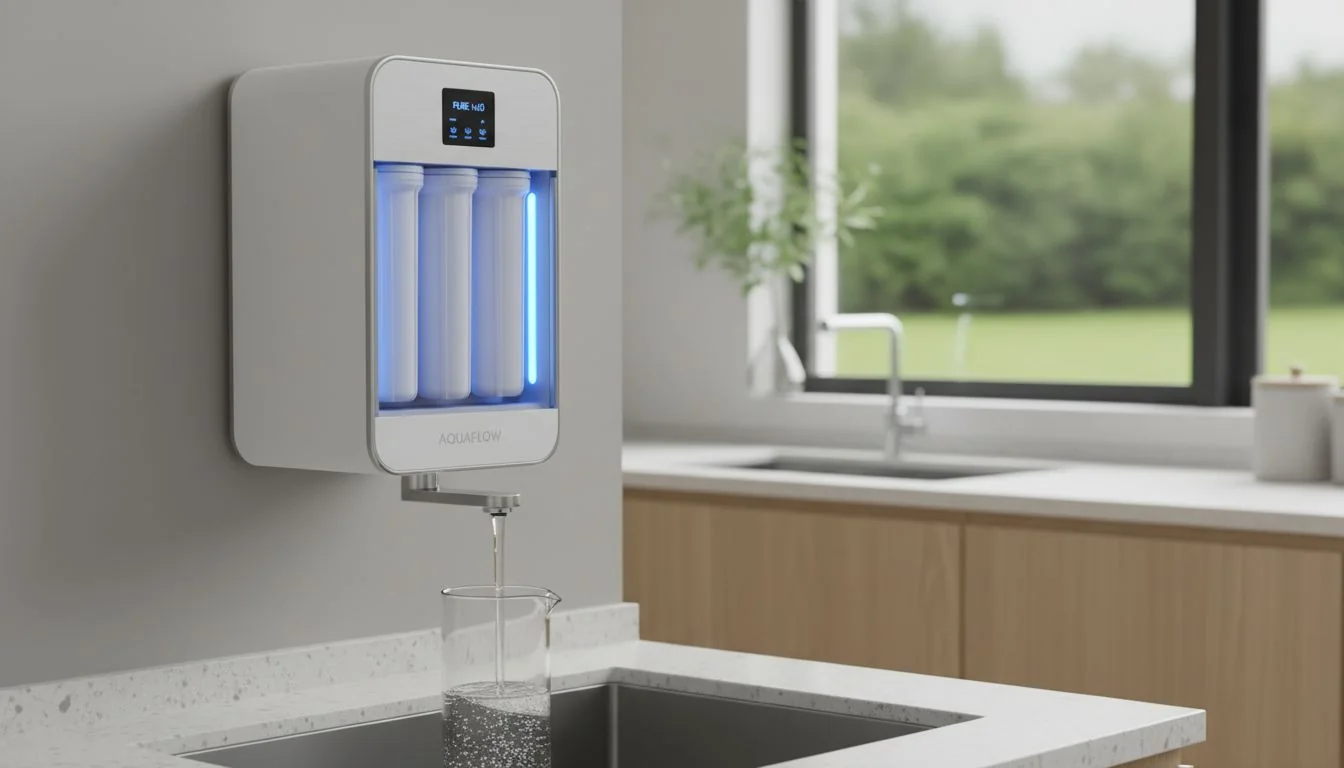
The Shift to Tankless Design
I recently helped a client design the plastic enclosure for a new tankless RO unit. The internal layout was very tight. We had to fit a massive 600 GPD (Gallons Per Day) membrane and a large pump into a small box. Traditional systems use a 50 GPD membrane and store water in a pressure tank.
Wastewater Ratio Improvements
Tankless systems often feature better wastewater ratios. Older systems waste three gallons of water for every one gallon of clean water. Modern tankless designs use advanced pumps and valves to improve this ratio.
| System Type | Membrane Capacity | wastewater ratio5 (Pure:Waste) | Space Required |
|---|---|---|---|
| Traditional with Tank | 50 - 100 GPD | 1:3 | Grande |
| Modern Tankless | 400 - 800 GPD | 1.5:1 or 2:1 | Compact |
As a product designer, you must ensure the pump has good heat dissipation. The pump runs harder in a tankless system to provide instant water flow. You should add ventilation slots to your plastic enclosure design. This keeps the internal components cool and extends the life of the machine.
Tankless RO systems store water in a hidden internal tank.Falso
Tankless systems produce water on demand and do not use any storage tanks.
Tankless RO systems require a stronger booster pump.Verdadeiro
A stronger pump is needed to push water through a high-capacity membrane instantly.
How to choose an RO water purifier for home vs commercial use?
You might specify a home RO unit for a busy cafe. The system will fail in weeks. You must match the system capacity to the actual daily usage.
A home RO water purifier produces 50 to 800 gallons per day. It fits under a kitchen sink. A commercial RO system6 produces 1,000 to 10,000 gallons per day. It uses large stainless steel housings and heavy-duty pumps to serve restaurants, cafes, and factories.
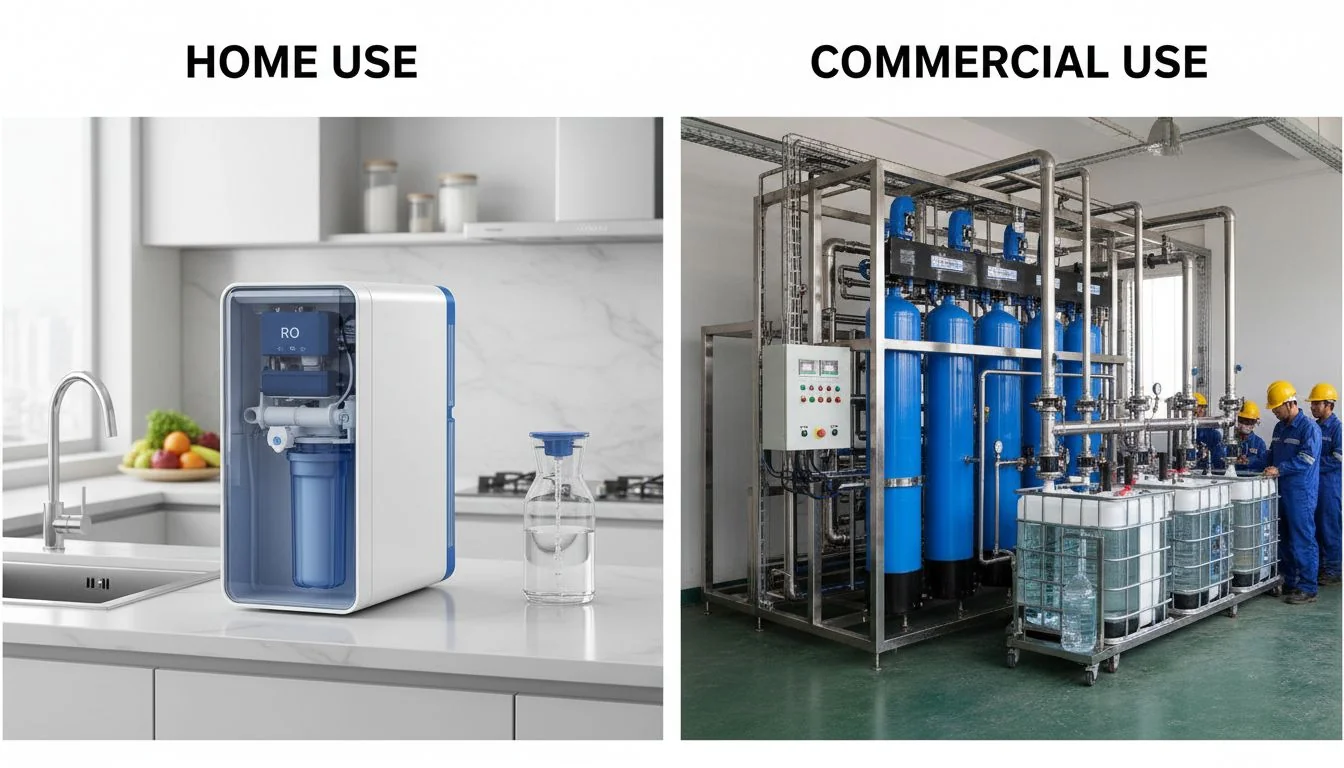
Scaling Up the Design
When I transitioned from small plastic molds to large industrial parts, I saw the difference in commercial RO systems. Commercial systems run almost 24 hours a day. Home systems only run for a few minutes at a time. You cannot use the same plastic materials for both.
Material and Component Differences
Commercial systems require robust pre-treatment configurations. They often use large fiberglass tanks for sand and carbon filtration before the water even reaches the RO membrane.
| Specification | Home RO System | Commercial RO System |
|---|---|---|
| Daily Capacity | 50 - 800 GPD | 1,000 - 10,000+ GPD |
| Membrane Housing | Food-grade Plastic | Stainless Steel or FRP |
| Pump Type | Small Diaphragm Pump | Large Rotary Vane Pump |
| Pipe Size | 1/4 inch or 3/8 inch | 1/2 inch to 1 inch |
If you design parts for commercial units, you must account for higher vibration and continuous heat from the large motors. You cannot use standard ABS plastic for these commercial frames. You must use reinforced materials or metal brackets to ensure long-term stability in a harsh commercial environment.
Home RO systems can supply enough water for a large restaurant.Falso
Home systems lack the capacity and continuous duty cycle required for commercial use.
Commercial RO systems often use stainless steel housings.Verdadeiro
Stainless steel handles higher pressures and continuous commercial use better than plastic.
What are the common problems in RO water systems?
Your customer installs the water filter. Suddenly, water leaks everywhere and the pump makes loud noises. You need to know these common failures to design better products.
Common problems in RO water systems include slow water flow, continuous draining of wastewater, and leaking filter housings. Slow flow usually means a clogged pre-filter or a damaged RO membrane. Continuous draining points to a broken auto-shutoff valve or a failed check valve.
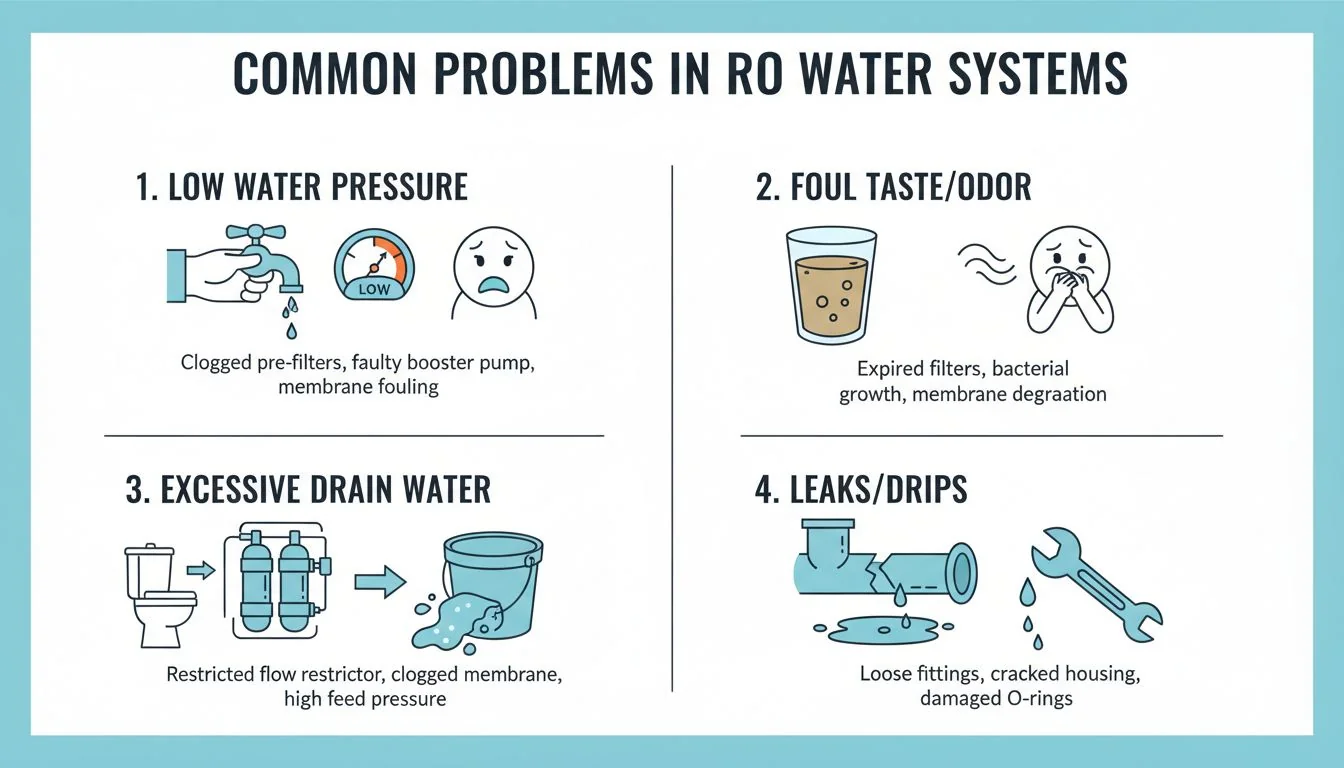
Identifying Design Flaws
I have seen many plastic filter housings crack under pressure. This happens when designers ignore mold shrinkage calculations. The O-ring groove becomes too large or too small. This leads to the most common problem: leaks.
Troubleshooting the System
Another major issue is the wastewater ratio changing over time. If the flow restrictor clogs, the RO membrane will foul quickly. The TDS of the clean water will rise.
| Common Problem | Likely Cause | Design Solution |
|---|---|---|
| Leaking Housings | Poor O-ring seal or cracked plastic | Optimize mold shrinkage and wall thickness. |
| High TDS in Pure Water | Ruptured RO membrane | Add a pressure relief valve to the design. |
| Pump Will Not Stop | Broken high-pressure switch | Use higher quality electronic sensors. |
| Slow Water Flow | clogged pre-filters7 | Design easy-to-change filter cartridges. |
You must design the system so users can easily replace parts. A modular design reduces maintenance headaches and improves the user experience. I always recommend using quick-connect fittings in your product layout. This allows the user to fix leaks quickly without needing special tools or professional help.
A clogged pre-filter can cause slow water flow in an RO system.Verdadeiro
Clogged filters restrict water from reaching the RO membrane, reducing output.
A continuous flow of wastewater means the system is working perfectly.Falso
Continuous wastewater flow usually indicates a broken auto-shutoff valve.
How to maintain an RO water purifier system properly?
You spend money on a great RO system. You forget to change the filters. The water tastes bad and the machine breaks down. Maintenance is crucial.
To maintain an RO water purifier system, you must replace the pre-filters every 6 to 12 months. You should replace the RO membrane every 2 to 3 years. You must also sanitize the system annually and check the TDS levels regularly to ensure the membrane works correctly.
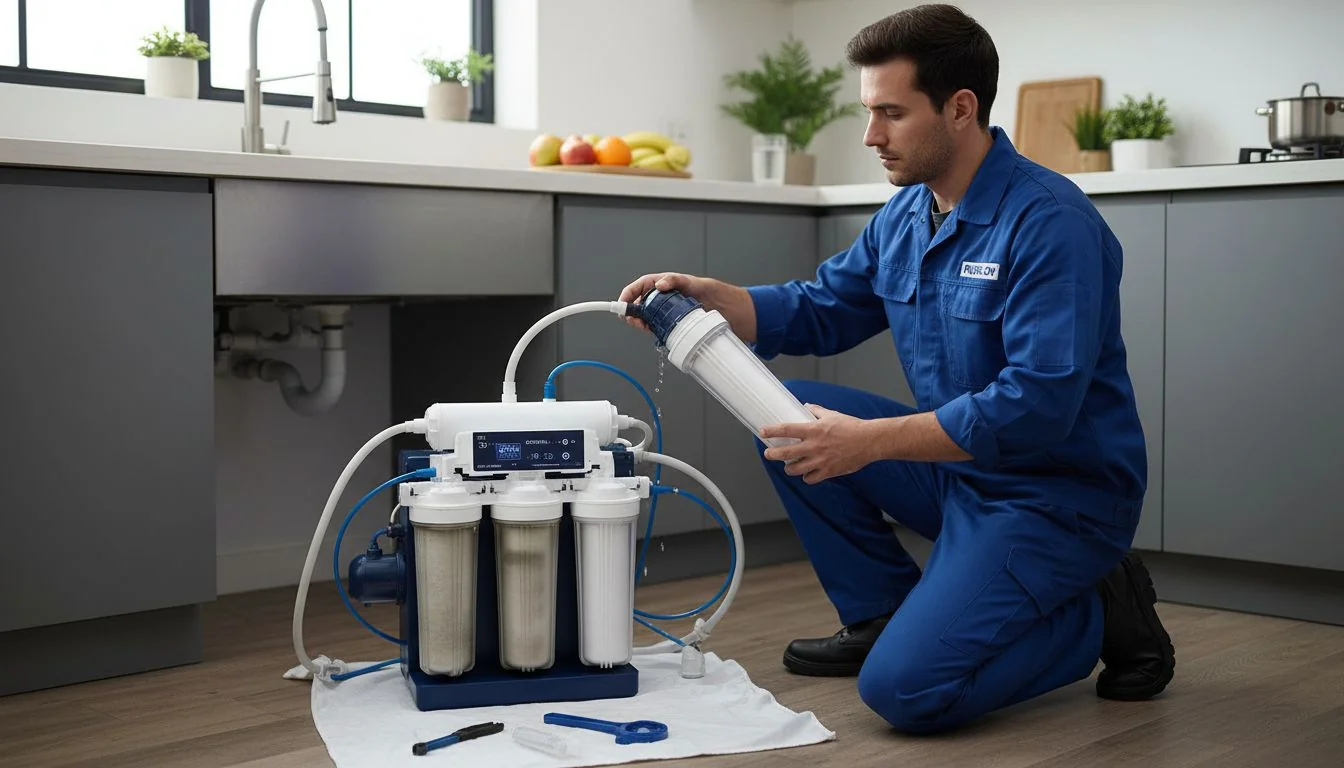
The Importance of Regular Filter Changes
I always tell my clients an RO system is like a car. It needs regular oil changes. In this case, the oil is the pre-filter set. If you do not change the carbon filter, chlorine will reach the RO membrane. Chlorine destroys the RO membrane lifespan in a matter of weeks.
Maintenance Schedule
You can use a simple TDS meter8 to check the water quality. If the tap water is 200 ppm, the RO water should be under 20 ppm. If it creeps up to 50 ppm, the membrane is failing.
| Componente | Replacement Schedule | Purpose of Replacement |
|---|---|---|
| PP Spun Filter | 6 Months | Prevents dirt from clogging the system. |
| Filtros de carvão | 6 to 12 Months | Protects RO membrane from chlorine. |
| RO Membrane | 24 to 36 Months | Maintains low TDS and pure water. |
| Post Carbon Filter | 12 Months | Keeps the water tasting fresh. |
As a designer, you should add LED indicators to your product. These lights can remind the user when to change each filter based on time or water volume. This simple electronic addition adds massive value to your product. It ensures the user maintains the system properly and enjoys clean water for years.
You should replace the RO membrane every six months.Falso
RO membranes typically last 2 to 3 years if the pre-filters are maintained.
A TDS meter helps determine if the RO membrane needs replacement.Verdadeiro
A rising TDS level indicates the membrane is no longer filtering dissolved solids effectively.
Conclusão
An RO water purifier system provides clean water by removing dissolved solids. You must understand the technical specs, membrane lifespan, and maintenance needs to design or choose the best system.
References
-
Pre-filters play a vital role in protecting the RO membrane, and knowing their types can enhance system efficiency. ↩
-
The RO membrane is the heart of the system; understanding its function is key to effective design and maintenance. ↩
-
Knowing the differences helps in selecting the right filtration method for specific water quality needs. ↩
-
Tankless systems save space and improve efficiency, making them a popular choice for modern water purification. ↩
-
Understanding wastewater ratios helps in designing more efficient systems and reducing water waste. ↩
-
Understanding commercial systems is vital for designing robust solutions for high-demand environments. ↩
-
Identifying causes of clogs can lead to better designs and user satisfaction by minimizing maintenance issues. ↩
-
A TDS meter is essential for monitoring water quality, ensuring the effectiveness of the purification system. ↩



 English
  Français
  Español
  Italiano
  Deutsch
  Português
  Русский
  العربية
  日本語
日本語  한국어
한국어  Tiếng Việt
