
Are you struggling to pick the right PFAS water filter1? Confusing standards can lead to bad choices. I will show you exactly how to understand these certifications today.
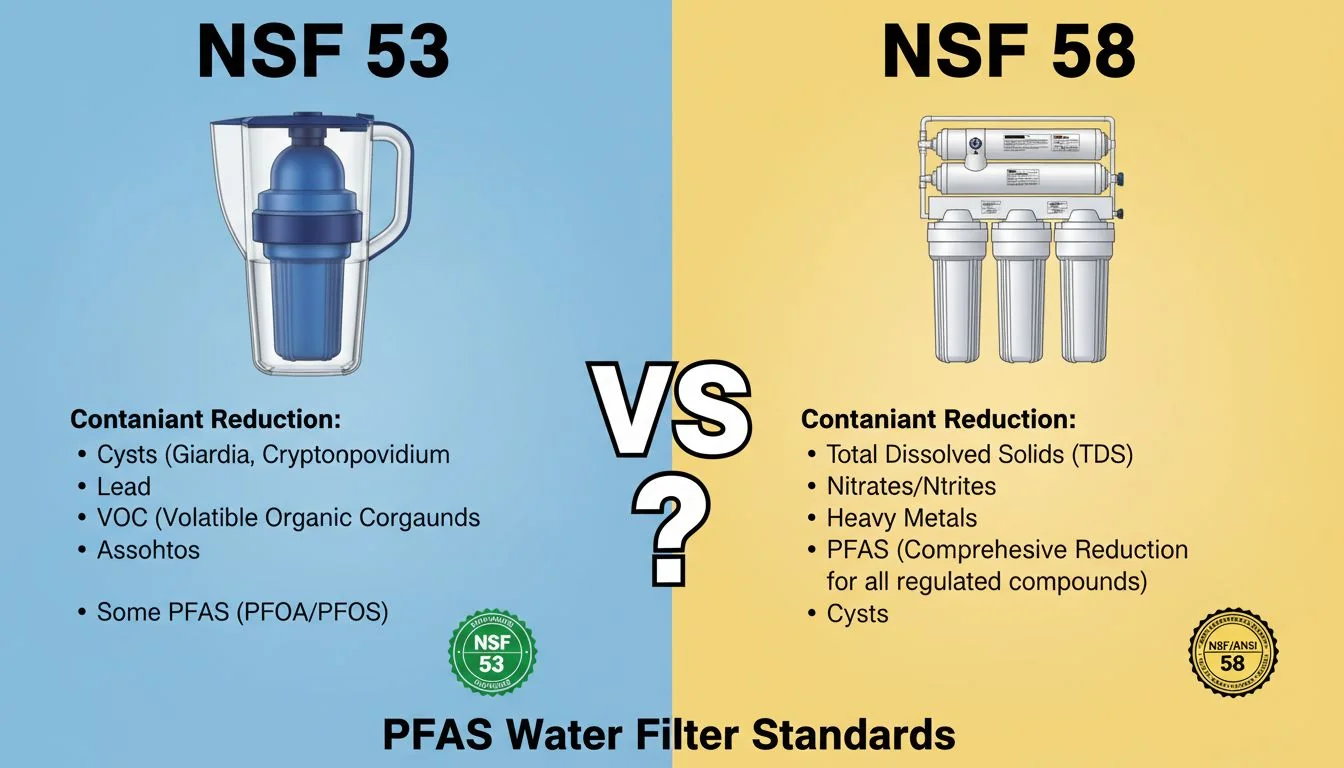
NSF/ANSI 532 covers point-of-use carbon filters that reduce specific health-related contaminants like PFAS. NSF/ANSI 58 covers reverse osmosis systems. Neither standard is universally better. The right choice depends on your specific water treatment technology, the target contaminants, and the exact claims verified on the product certificate.
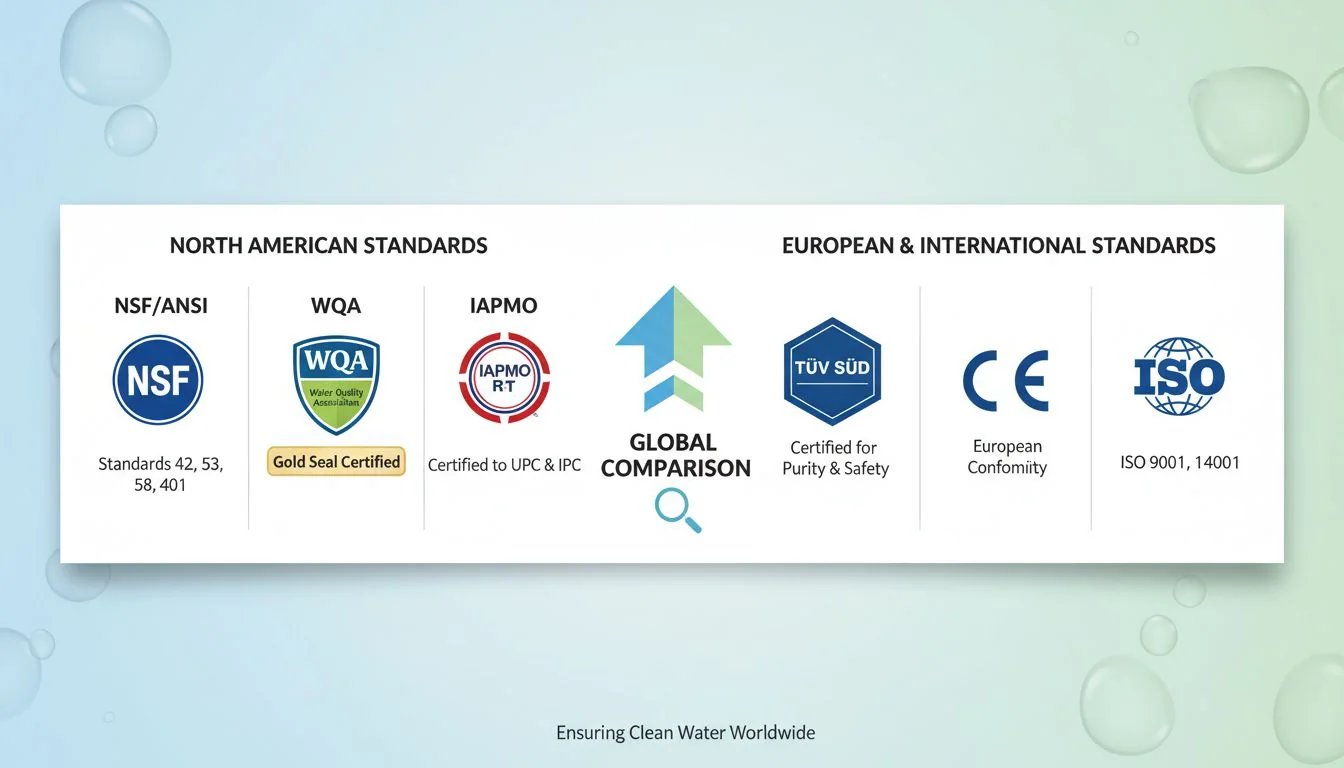
When I first started designing plastic housings for water filtration clients at my CNC trading company, I was totally lost. I thought any filter would work. But if you want to master molding right, you must understand the standards your products must meet. Let us break down these rules so you can design and buy with confidence.
NSF/ANSI 53 and 58 are the exact same standard.Ложь
They cover different filtration technologies. 53 is for carbon filters, while 58 is for reverse osmosis systems.
Both standards can certify a product for PFAS reduction.Правда
Both NSF/ANSI 53 and 58 have specific protocols to test and certify a system's ability to reduce PFAS.
1. What NSF/ANSI Standards Are and Who Maintains Them?
Do you feel overwhelmed by random letters on filter boxes? Ignoring them risks your health and product quality. Let us look at who actually makes these rules.
NSF International and the American National Standards Institute (ANSI) create and maintain these standards. They are independent groups. They test water treatment systems to make sure products actually remove the harmful things they claim to remove.
The Role of Independent Testing
When I worked at the mold factory, clients often asked me to stamp "certified" on plastic parts. I had to tell them that real certification comes from third-party labs. NSF and ANSI do not make filters. They make the testing rules. This builds professional trust. You cannot just guess if a filter works. You must test it. independent testing3 proves a product works as claimed without bias.
Why Designers Must Care
As a product designer, you need to know these rules. If you design a filter housing, the plastic must handle the pressure required by NSF testing. If it fails, the whole system fails. You must calculate mold shrinkage perfectly.
| Organization | Main Role | Why It Matters |
|---|---|---|
| NSF International | Writes testing protocols | Ensures health safety |
| ANSI | Oversees standard creation | Keeps rules fair and uniform |
| Third-Party Labs | Run the actual tests | Provides unbiased proof |
Understanding who writes these rules helps you avoid over-interpreting them. They do not say a product is perfect. They just say it passed a specific test.
Filter manufacturers write their own NSF standards.Ложь
NSF International and ANSI are independent organizations that write the standards, not the manufacturers.
Third-party testing builds professional trust.Правда
Independent testing proves a product works as claimed without bias.
2. NSF/ANSI 53: Scope and What It Covers?
Are you worried about hidden chemicals in your water? Standard carbon filters might not catch them all. Here is what NSF/ANSI 53 actually means for your safety.
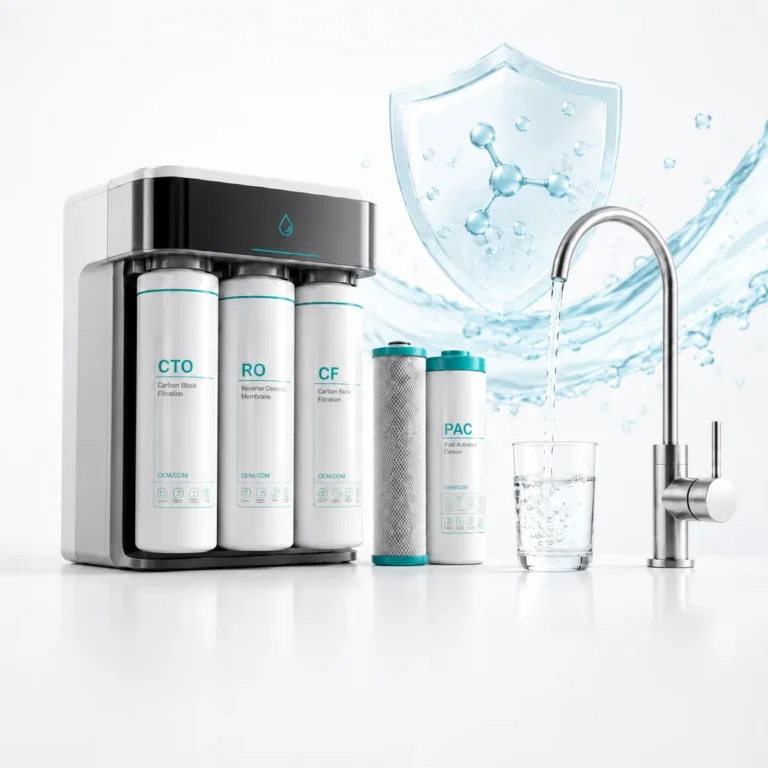
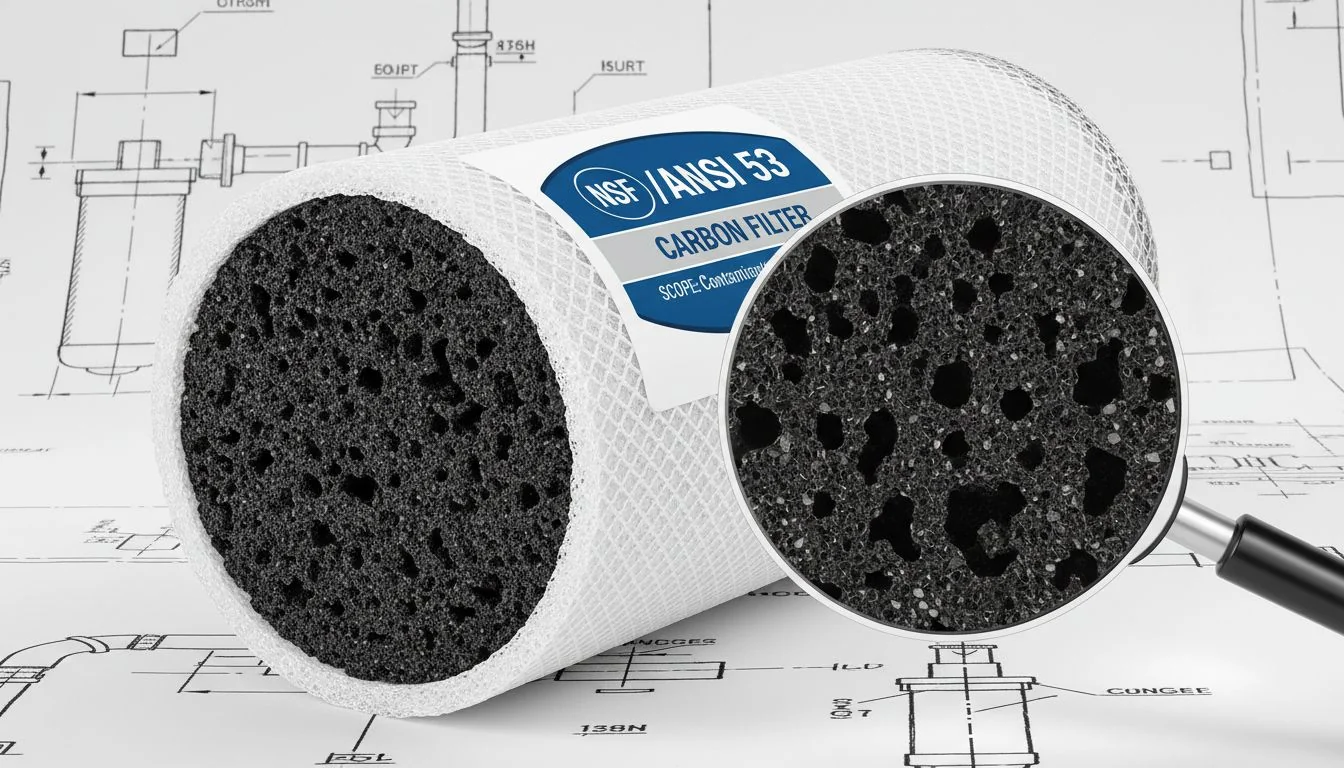
NSF/ANSI 53 applies to point-of-use and point-of-entry systems that use carbon or other media. It certifies that a filter reduces specific health-related contaminants, like lead, cysts, and PFAS. It focuses on the chemical removal performance of the filter media.
The Focus on Health Effects
NSF/ANSI 53 is all about health. It does not care if your water tastes good. It cares if your water is safe. When I help clients design molds for these filters, we focus heavily on sealing. If water bypasses the carbon block, the health claim is void. The plastic parts must fit together perfectly.
Treatment Technologies Used
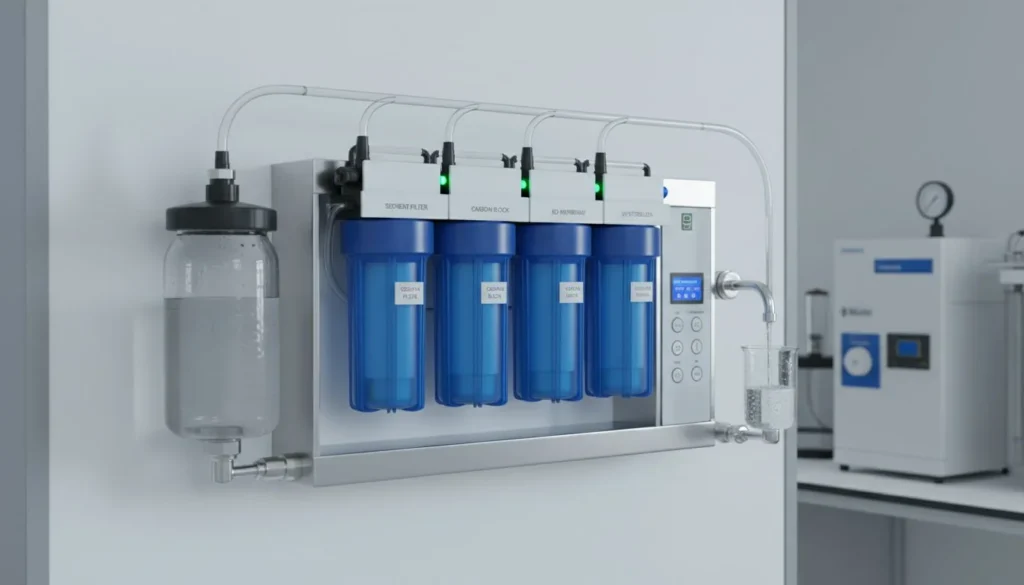
This standard mostly covers угольные фильтры4. These filters grab chemicals as water flows through them. They are great for PFAS. But they have limits. They eventually fill up and stop working. You must change them on time.
| Характеристика | NSF/ANSI 53 Details |
|---|---|
| System Type | Point-of-use (under sink, pitcher) |
| Main Technology | Activated carbon, adsorption media |
| Целевые загрязнители | Health hazards (PFAS, lead, VOCs) |
| Техническое обслуживание | Requires regular filter changes |
You must verify the exact claims. A filter can have NSF 53 certification for lead but not for PFAS. Always check the specific scope of the certification.
NSF/ANSI 53 covers reverse osmosis systems.Ложь
NSF/ANSI 53 covers systems like carbon filters, while reverse osmosis is covered by NSF/ANSI 58.
A filter can be NSF 53 certified for lead but not PFAS.Правда
Certification is contaminant-specific. A product must be tested for each specific chemical it claims to reduce.
3. NSF/ANSI 58: Scope and What It Covers?
Do you need heavy-duty water purification? Weak filters will leave dangerous toxins behind. Let us explore how NSF/ANSI 585 handles the toughest water problems.
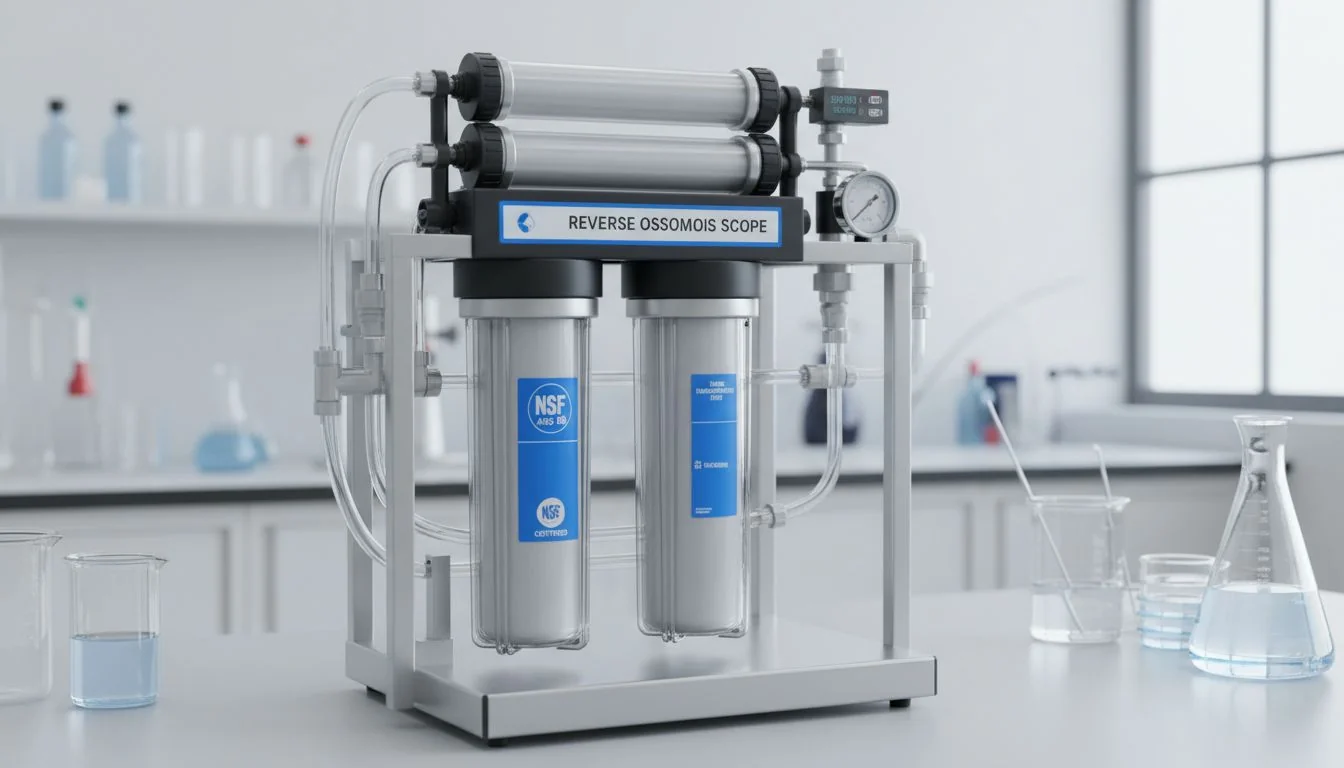
NSF/ANSI 58 is the standard specifically for reverse osmosis (RO) systems. It covers the reduction of contaminants like heavy metals, fluoride, and PFAS. It also tests the system safety, structural integrity, and the efficiency of the RO membrane.
How Reverse Osmosis Works
Reverse osmosis pushes water through a very tight membrane. It leaves the bad stuff behind. Designing molds for RO systems is hard. The plastic parts must handle high pressure. If my mold design has bad shrinkage calculations, the parts will leak. The whole system will fail the test.
Comprehensive System Testing
NSF/ANSI 58 tests the whole system. It checks the membrane. It checks the storage tank. It checks the faucets. It makes sure no bad chemicals leach from the plastic into the clean water.
| Характеристика | NSF/ANSI 58 Details |
|---|---|
| System Type | Reverse Osmosis (RO) |
| Main Technology | Semi-permeable membrane |
| Целевые загрязнители | Total dissolved solids, PFAS, heavy metals |
| Structural Needs | Must withstand high water pressure |
RO systems waste some water to make clean water. The standard also measures this efficiency. When you buy or design an RO system, you must look at the whole package.
NSF/ANSI 58 only tests the RO membrane.Ложь
It tests the entire system, including structural integrity, material safety, and the storage tank.
RO systems require high pressure to work.Правда
Reverse osmosis relies on water pressure to push water through the semi-permeable membrane.
4. How the Two Standards Differ for PFAS Reduction Claims?
Are you confused about which standard removes PFAS better? Guessing wrong can expose you to harmful chemicals. Here is how the two standards handle PFAS differently.
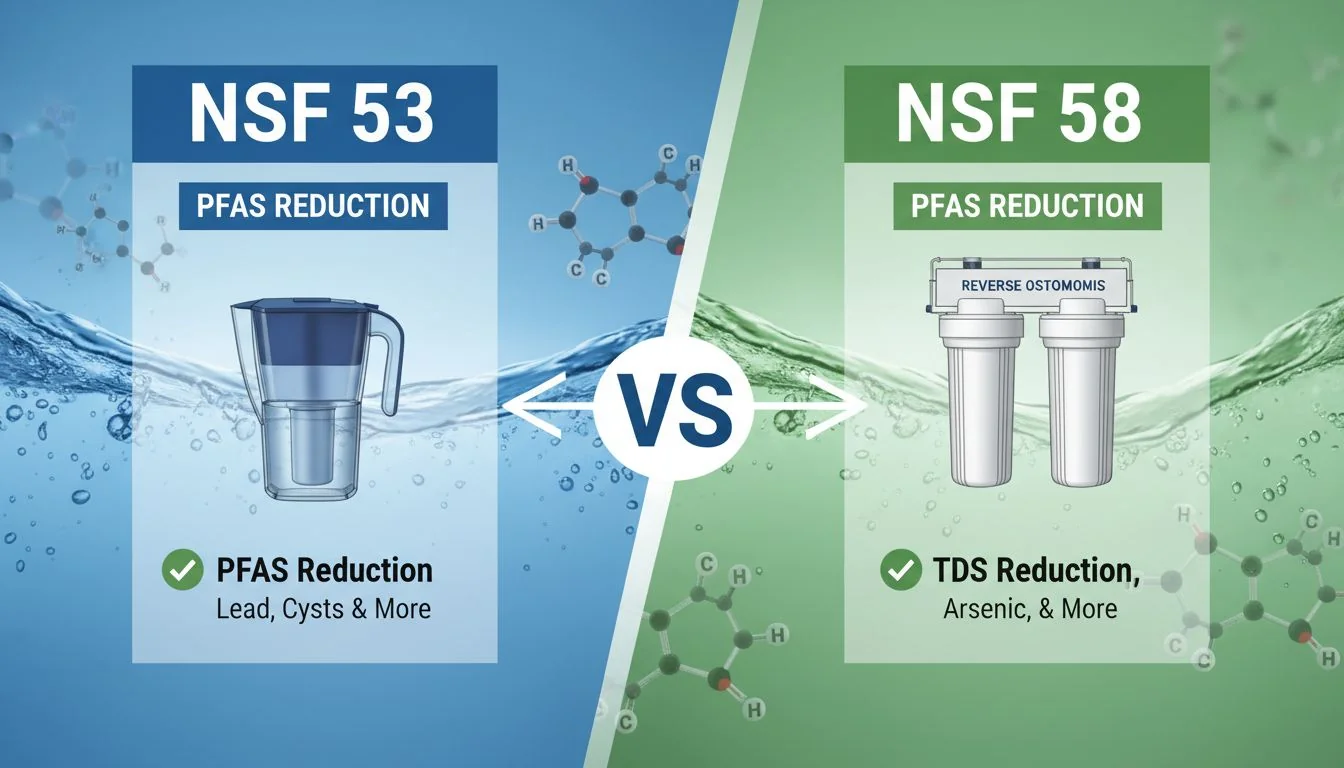
Both standards test for PFAS reduction. But they test different technologies. NSF 53 tests how well carbon absorbs PFAS. NSF 58 tests how well an RO membrane blocks PFAS. Neither is always better. The right fit depends on your water pressure and space.
Different Removal Methods
Carbon filters act like a sponge. They soak up PFAS. RO systems act like a wall. They block PFAS. In my CNC trading business, I see clients use both methods. It just depends on the product goal. Both methods work well if designed right.
Testing Protocols
The testing rules for PFAS are strict for both. The labs run water with high PFAS levels through the systems. They check if the output water is safe. They test the systems until they fail.
| Стандарт | PFAS Removal Method | Плюсы | Cons |
|---|---|---|---|
| NSF/ANSI 53 | Adsorption (Carbon) | No waste water, takes up less space | Media gets full, needs frequent changes |
| NSF/ANSI 58 | Rejection (RO Membrane) | Very long lifespan, removes more types of toxins | Wastes water, needs a storage tank |
We should avoid saying one standard is always better. If you have low water pressure, an RO system might fail. A carbon filter might be the perfect fit.
NSF 58 is always better than NSF 53 for PFAS.Ложь
Neither is universally better. The best choice depends on system type, water pressure, and user needs.
Carbon filters remove PFAS by acting like a sponge.Правда
Activated carbon uses adsorption to trap PFAS chemicals inside its pores.
5. How to Read a Certified Product Listing?
Do you trust every certified label you see? Fake claims can trick you into buying useless filters. You must learn how to read the actual listings.
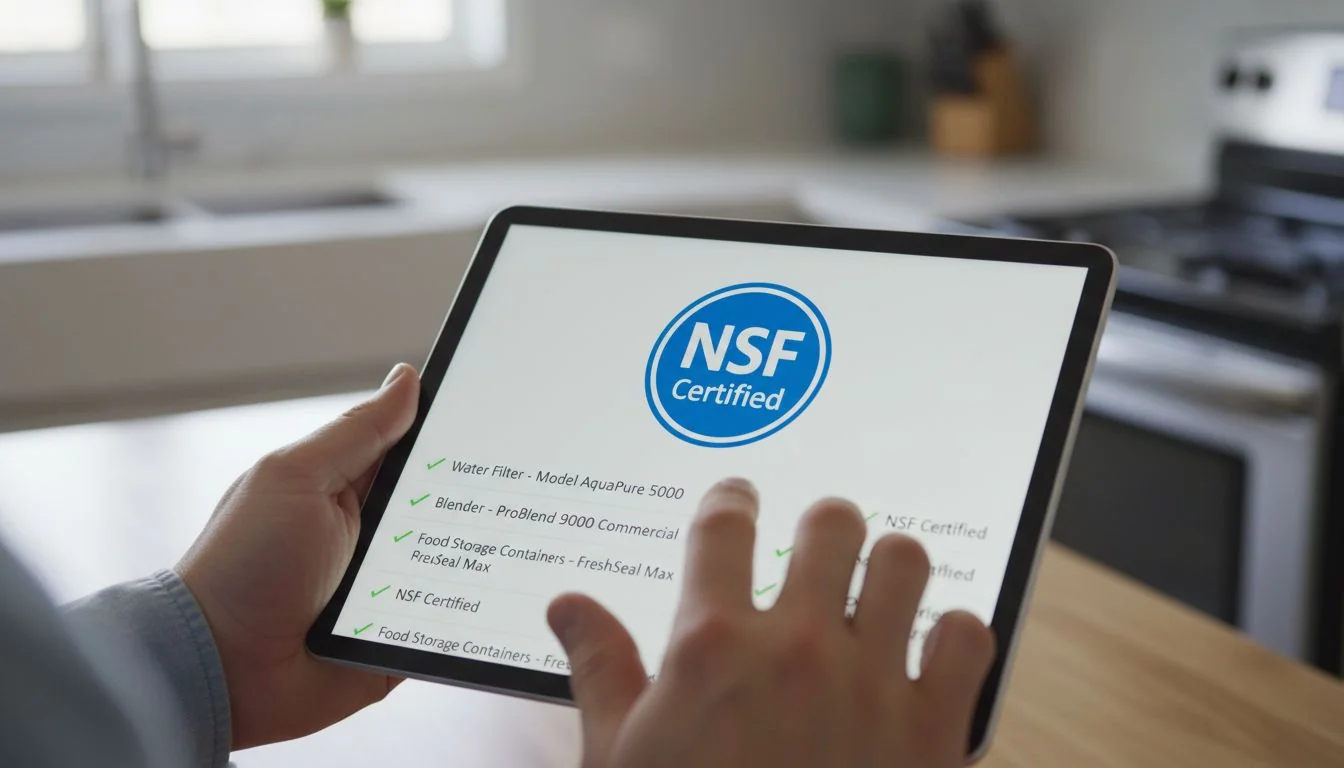
To verify a product, you must look up the official certified product listing on the certifier website. Check the exact model number. Look for the specific claim for PFAS reduction. Do not trust marketing materials alone. Always guide buyers back to the actual certificate.
Finding the Truth
Marketing teams love to stretch the truth. I have seen companies claim their products are tested to NSF standards. But they do not actually have a certificate. As a designer, I always check the official database. You should do the same. Go to the NSF website and search for the brand.
Matching the Model and Claim
You must match the exact model number. A brand might have one certified filter and ten uncertified ones. You must read the fine print.
| What to Check | Why It Is Important |
|---|---|
| Brand Name | Ensures the company is registered |
| Model Number | Proves this exact unit was tested |
| Claim Scope | Confirms it actually removes PFAS |
| Replacement Part | Shows which filter cartridge to buy |
If the listing does not say PFAS reduction, the filter is not certified for it. We need to explain buyer verification methods clearly. Always trust the database.
Tested to NSF standards means the product is NSF certified.Ложь
Tested to a standard is a marketing phrase. True certification requires an official listing in the certifier database.
You must check the exact model number in the database.Правда
Brands often sell both certified and uncertified models. Only the specific model listed is certified.
6. Choosing the Right Standard for Your Application?
Are you still unsure which filter to buy or design? Making the wrong choice wastes time and money. Let us find the perfect fit for your specific needs.
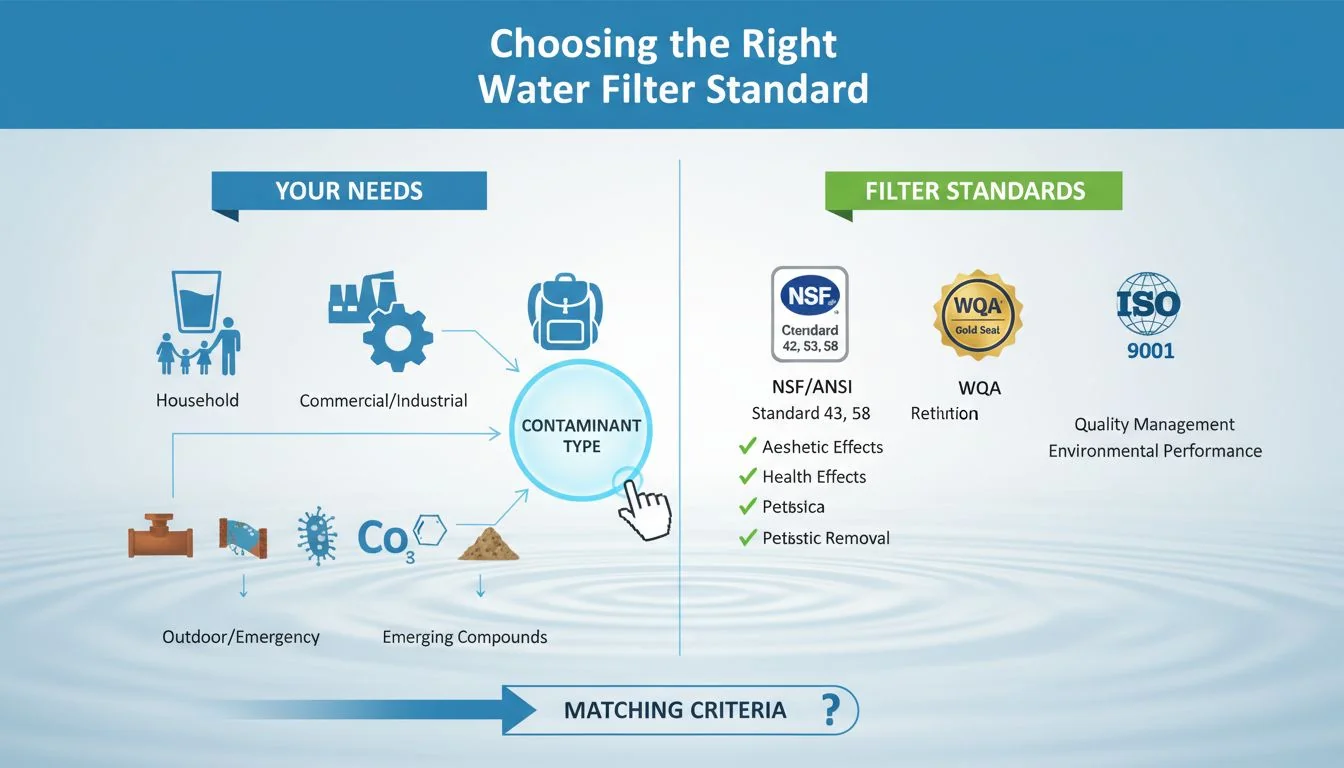
Choose NSF/ANSI 53 if you want a simple carbon filter that does not waste water. Choose NSF/ANSI 58 if you want a comprehensive RO system that removes heavy contaminants. Your choice depends on your target contaminant and system type.
Assessing Your Needs
When I help clients design new products, I ask them about their end users. Does the user have space under the sink? Do they care about water waste? These questions dictate the design. If you are buying a filter, ask yourself the same things. You must know your limits.
Making the Final Call
Look at your water test results. If PFAS is your only problem, a good NSF 53 carbon filter works great. If you also have high heavy metals, you might need an NSF 58 RO system.
| User Need | Best Standard | Reason |
|---|---|---|
| Limited space | NSF/ANSI 53 | Pitchers and small units fit easily |
| High contamination | NSF/ANSI 58 | RO membranes block almost everything |
| No water waste | NSF/ANSI 53 | Carbon filters process all the water |
The right fit depends on the target contaminant and the certified claim. Pick the one that matches your daily life and your water quality6.
NSF 53 filters waste a lot of water.Ложь
NSF 53 carbon filters do not waste water. NSF 58 RO systems produce waste water during the filtration process.
Your choice should depend on your specific water test results.Правда
Knowing exactly what is in your water helps you choose the right technology and certification standard.
Заключение
Understanding NSF/ANSI 53 and 58 helps you choose the right PFAS filter. Always check the official certificate, match your specific needs, and never rely on marketing claims alone.
References
-
Explore the latest options for PFAS water filters to ensure safe drinking water. ↩
-
Learn about NSF/ANSI 53 certification to understand its importance in water filtration. ↩
-
Learn why independent testing is crucial for verifying the effectiveness of water filtration systems. ↩
-
Understand the mechanism of activated carbon filters and their effectiveness in removing contaminants. ↩
-
Discover the differences between NSF/ANSI 58 and 53 to make informed choices for water filtration. ↩
-
Find out how to test your water quality to identify potential contaminants. ↩



 English
  Français
  Español
  Italiano
  Deutsch
  Português
  Русский
  العربية
  日本語
日本語  한국어
한국어  Tiếng Việt

