Открывается в новой вкладке
Инновационные решения в области качества воздуха
HisoAir-Logo
Запрос сейчас
● MILITARY HOUSING & DORMITORIES | INSTITUTIONAL IAQ SOLUTIONS

Reliable Clean Air for High-Occupancy Residential Facilities

HisoAir provides low-maintenance air purification platforms for military housing, barracks, dormitories, student residences, workforce housing, and other institutional living environments where continuous operation, standardized installation, filter life, and lifecycle maintenance matter.
Discuss Your Institutional Housing ProjectExplore Large-Scale Deployment
Real U.S. Institutional Housing Deployment
Extended Field-Use & Returned-Unit Validation
Extended-Life Filtration for Multi-Room Deployment
HisoAir HA200/400 Wall-Mounted Residential Air Purifier Installation
● Wall-mounted air purifier installed in a military housing or dormitory room
Institutional Housing IAQ Platform
REAL-WORLD FIELD VALIDATION
Actual deployed units, extended field-operation records, returned-product inspection, filter evaluation, and laboratory re-testing are available for applicable institutional housing projects.
INSTITUTIONAL HOUSING IAQ REQUIREMENTS

Large-Scale Residential Facilities Require a Different Air Purification Strategy

Military housing, barracks, dormitories, and institutional residences can involve hundreds of similar rooms, long operating hours, centralized facility management, limited maintenance manpower, and varying levels of occupant interaction. A practical IAQ solution therefore needs to be designed around continuous operation, standardized installation, filtration longevity, simple controls, and repeatable maintenance.

Continuous Operation with Minimal Occupant Intervention
Long-Life Filtration at Deployment Scale
Standardized Wall-Mounted Installation
Simple, Commercial-Oriented Operation
Repeatable Deployment Across Rooms & Buildings

At institutional scale, the real challenge is not installing one air purifier—it is keeping hundreds or thousands of units operating consistently with predictable maintenance and minimal occupant intervention.
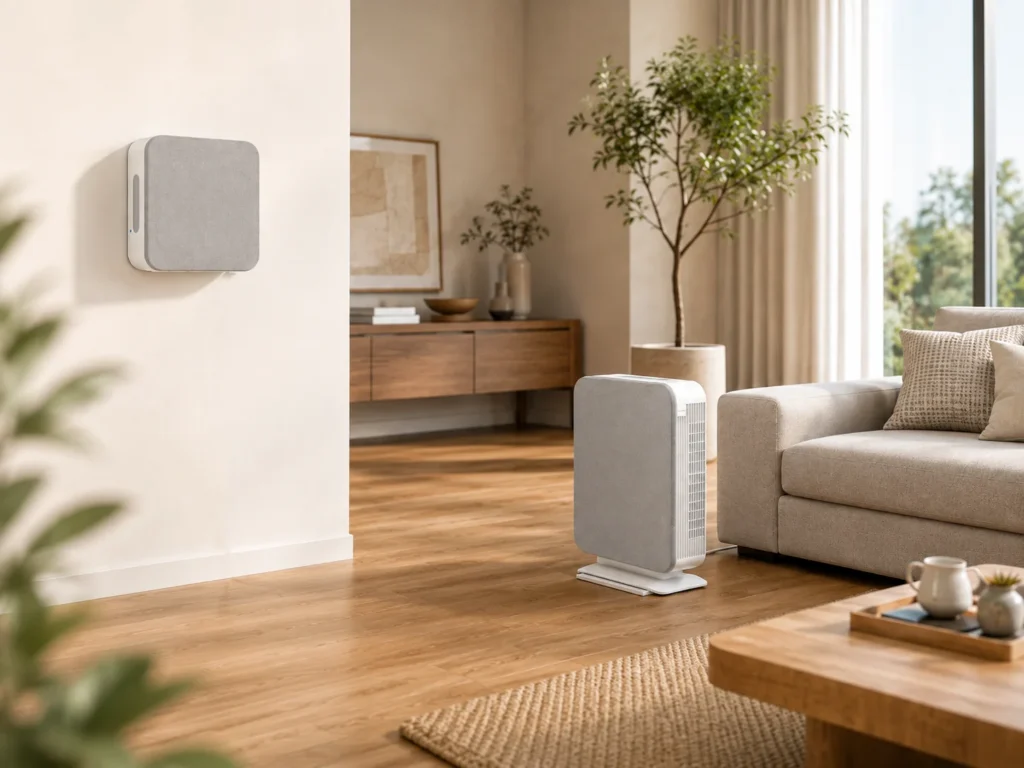
HisoAir Slimline Air Purifier Flush-Mounted in Residential Living Room
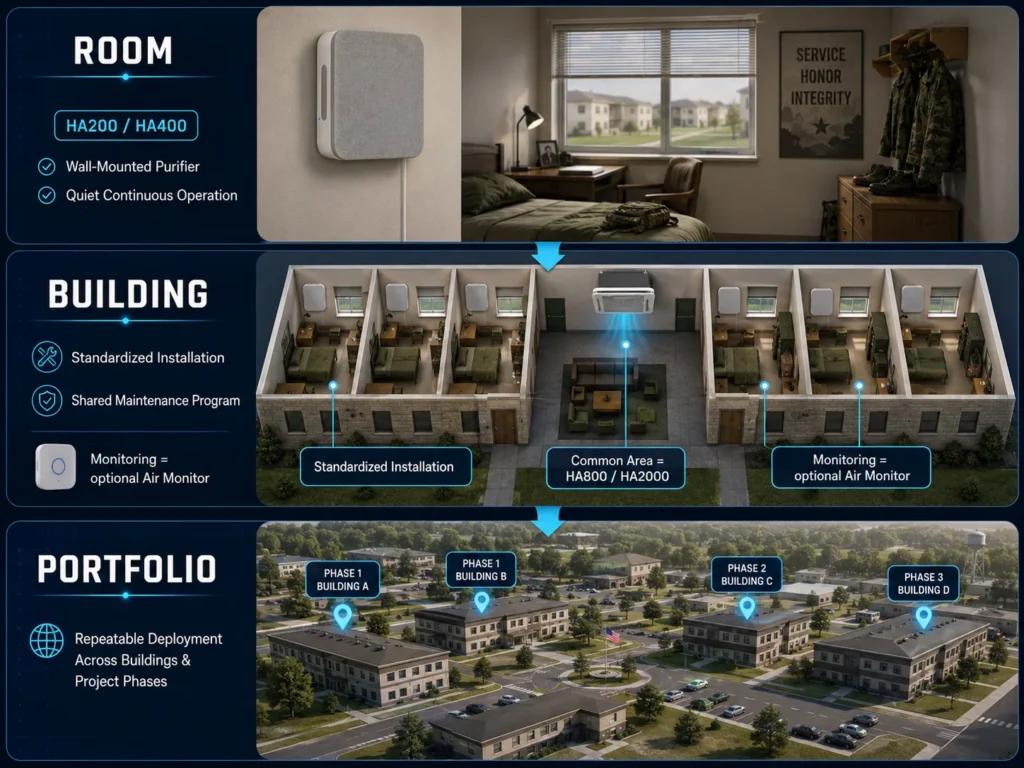
Institutional housing IAQ deployment from individual wall-mounted room purification to standardized multi-building operation
ROOM → BUILDING → PORTFOLIO:
Wall-mounted room purification + standardized multi-room installation
Extended-life filtration, simplified operation, optional monitoring, and repeatable maintenance planning
CORE CAPABILITIES • RELATIONSHIP: RELATED_CAPABILITIES

Relevant HisoAir Capabilities

The Residential application references HisoAir's centralized engineering capability repository. Each capability provides full laboratory test reports, acoustic testing curves, and OEM customization options.
Ultra-Quiet Airflow Platform
CONNECTED PRODUCT ENGINEERING

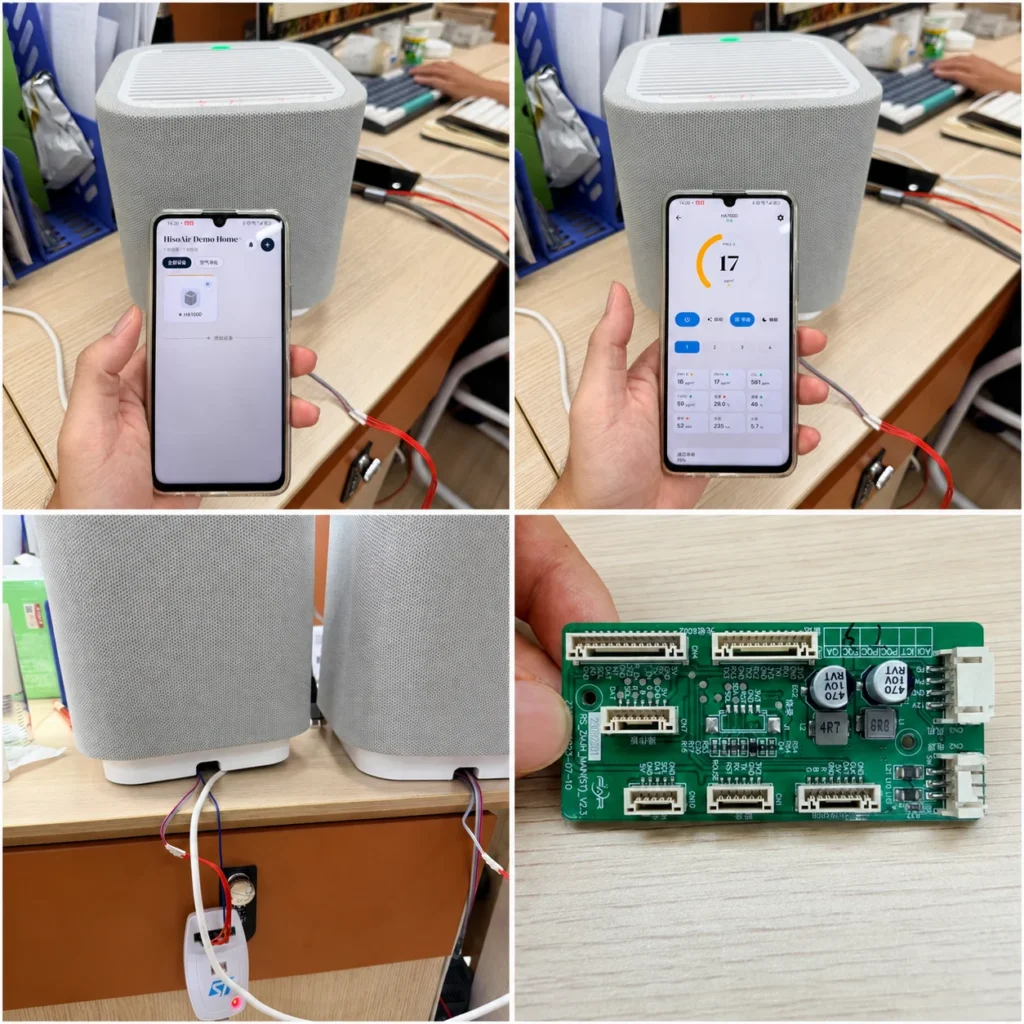
IoT Integration & Embedded Development

Build connected air, water, and environmental products faster with flexible IoT architecture, embedded firmware, protocol integration, and customer-platform support.
Ultra-Quiet Airflow Platform
Ultra-Quiet Airflow

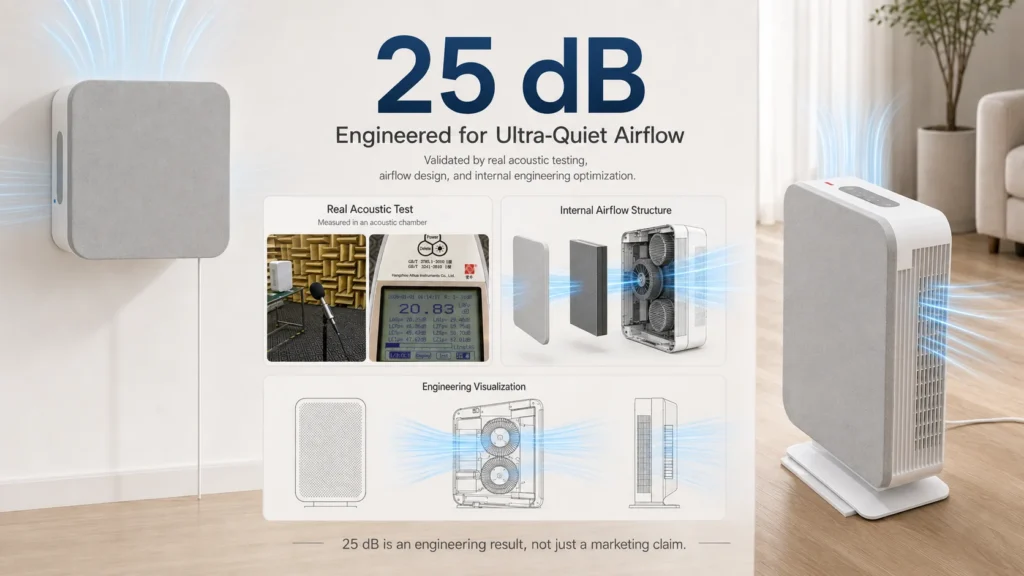
Ultra-Quiet Airflow Design

Engineer quieter air purification systems by balancing airflow, purification performance, fan control, and acoustic comfort across real residential, commercial, and institutional environments.
Ultra-Quiet Airflow Platform
LONG-LIFE FILTRATION ENGINEERING

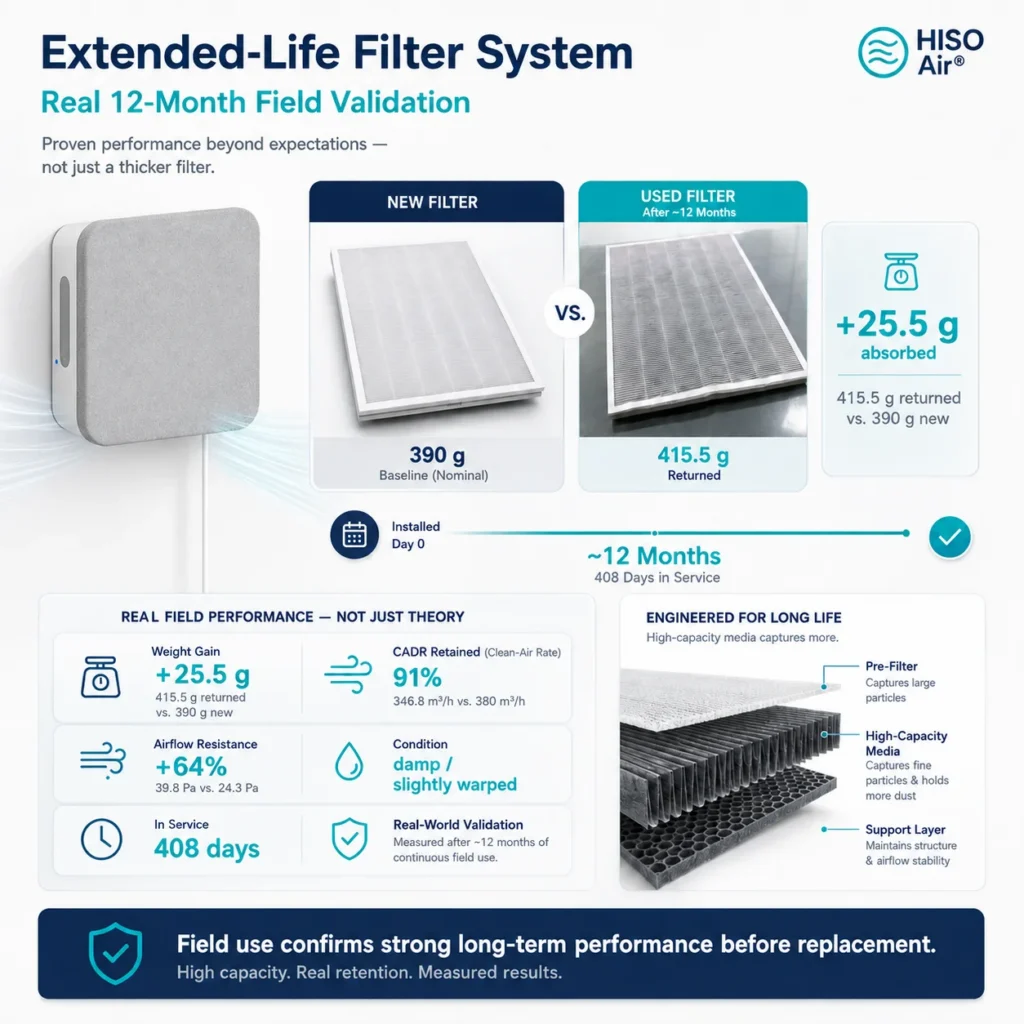
Extended-Life Filter System

Engineer longer-lasting air purifier filtration systems by balancing filter structure, dust-loading capacity, air resistance, airflow, and purification performance to reduce maintenance frequency and long-term operating cost.

Ultra-Quiet Airflow Platform
FILTRATION PLATFORM ENGINEERING

HEPA H13 / H14 Filtration Platform

Configurable HEPA H13 and H14 filtration platforms for premium residential, commercial, healthcare-adjacent, institutional, and OEM / ODM air purifier projects.

APPLICATION HIGHLIGHTS • SCENARIO DEPLOYMENT

Where These Platforms Fit

Targeted residential living zones engineered for optimal airflow distribution, acoustic thresholds, and architectural placement.
Bedrooms & Sleep Spaces

Modern Residential Living

Quiet, space-efficient air purification platforms for bedrooms, living rooms, apartments, and managed residential properties. Supporting wall-mounted, freestanding, and smart-connected product configurations with certified H13/H14 filtration, ≤25 dB(A) low-noise airflow, and customizable residential CMF styling.
Bedrooms & Sleep Spaces

Military Housing & Dormitories

HisoAir provides low-maintenance air purification platforms for military housing, barracks, dormitories, student residences, workforce housing, and other institutional living environments where continuous operation, standardized installation, filter life, and lifecycle maintenance matter.
Bedrooms & Sleep Spaces

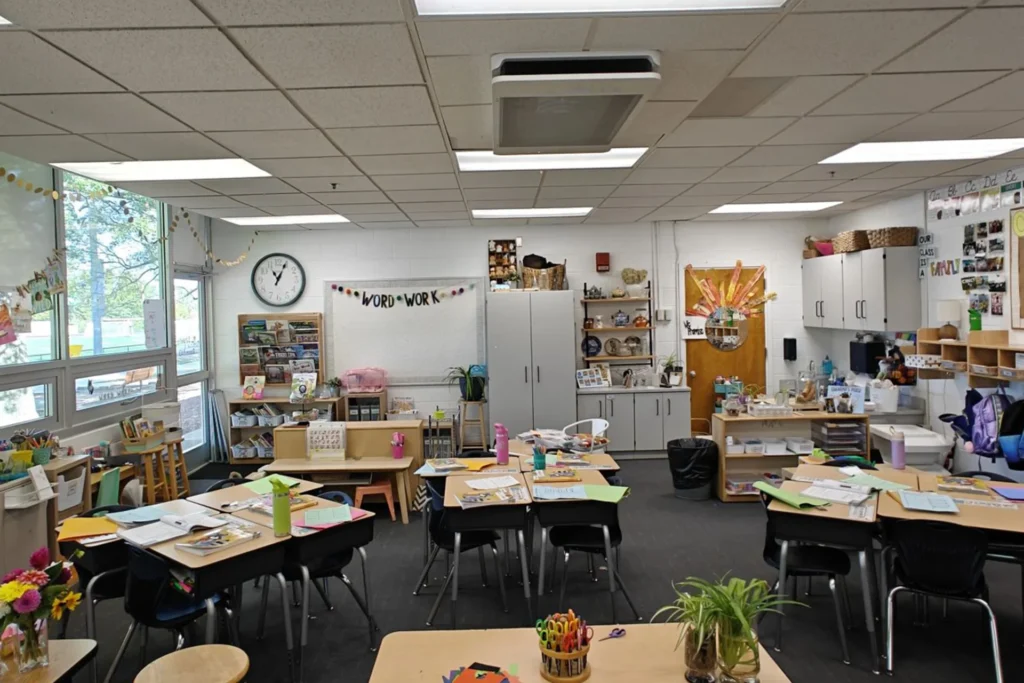
Schools & Kindergartens

HisoAir helps schools, education solution providers, and facility partners build quieter, space-efficient and measurable indoor air quality systems combining air purification, environmental sensing, connected control, and lower-maintenance operation.
Bedrooms & Sleep Spaces

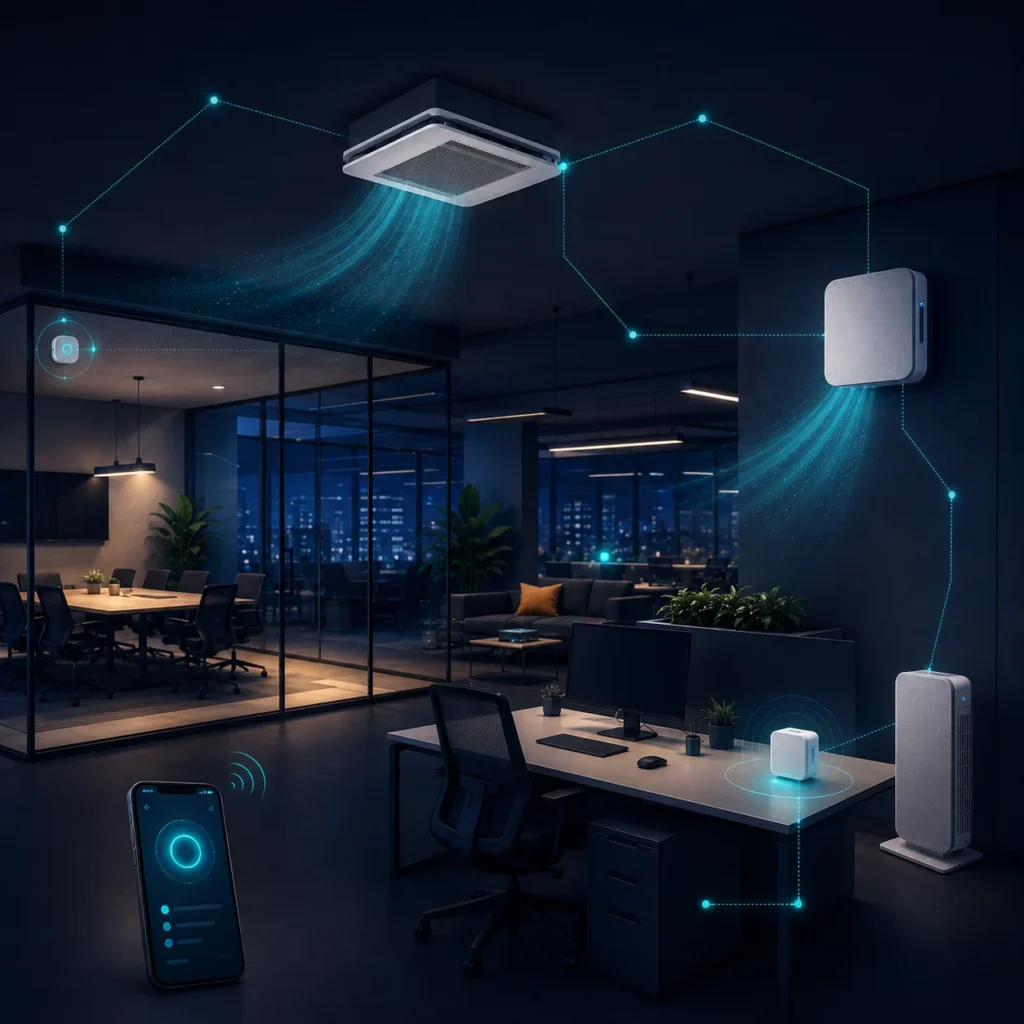
Offices & Workspaces

HisoAir helps brands, facility solution providers, and workplace technology companies build scalable office IAQ systems combining air purification, environmental sensing, connected control, and commercial deployment support.
Bedrooms & Sleep Spaces

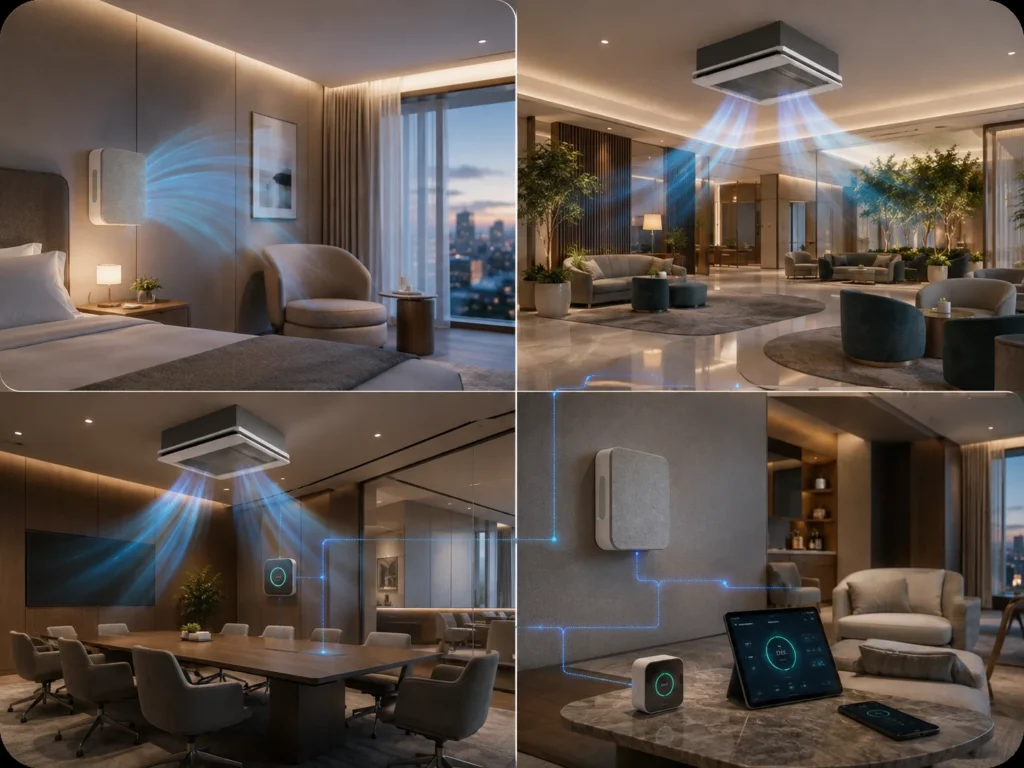
Hotel & Hospitality

HisoAir helps hospitality brands, property operators, and solution providers create cleaner, quieter, and easier-to-maintain indoor environments across guest rooms, suites, shared areas, and commercial hospitality spaces.
PRODUCTION PLATFORMS • RELATIONSHIP: RELATED_PRODUCTS

Recommended Residential Platforms

Validated OEM/ODM hardware platforms configured specifically for residential programs. Sourced directly from HisoAir's product catalog.
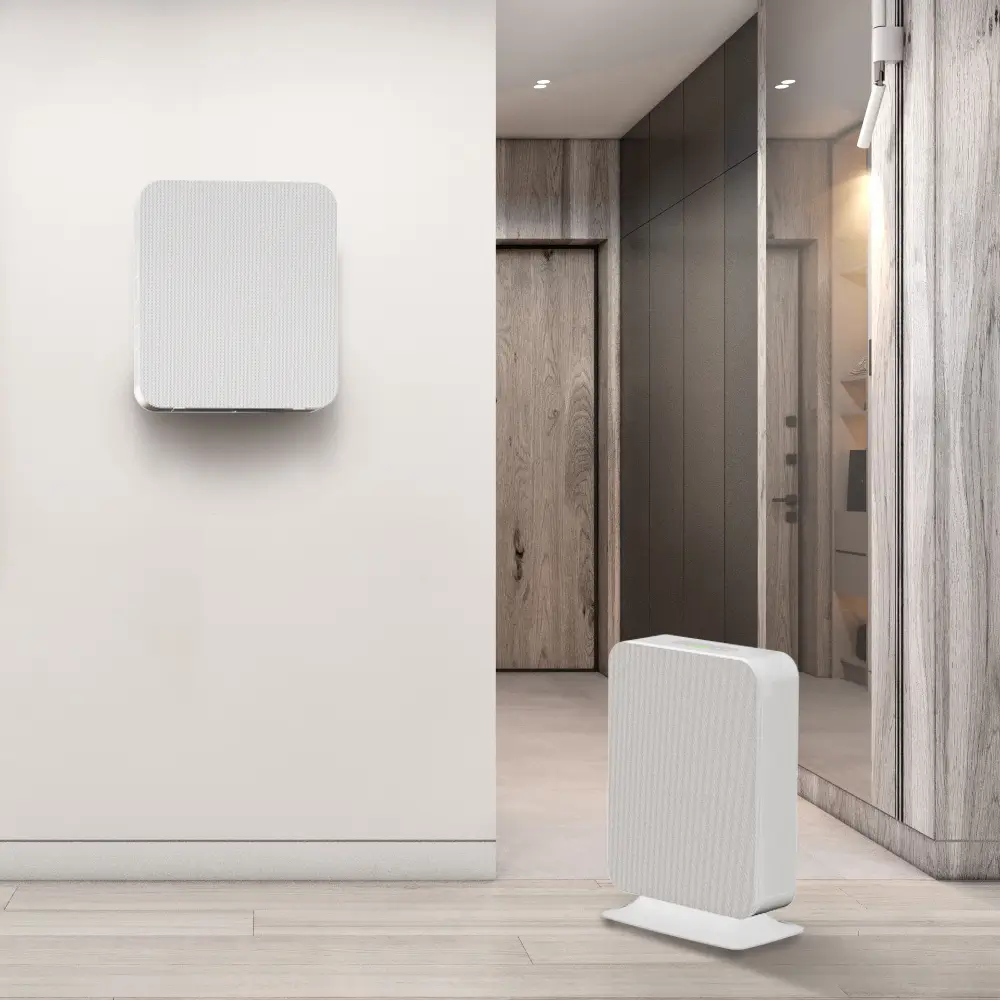
HA180 / HA380 Fabric Panel Platform

HA180 & HA380 Standing & Wall-Mounted Air Purifier
A versatile air purification platform designed for both wall-mounted and freestanding installation. With a slim profile, quiet operation, H13 HEPA filtration, real-time PM2.5 sensing, and configurable filtration and smart features, it provides flexible air quality management across a wide range of indoor environments.
Flexible Wall-Mounted & Freestanding Design — Supports vertical or horizontal wall mounting as well as freestanding installation, with an ultra-slim 144 mm wall-mounted profile.
Quiet, Efficient HEPA Purification — HA180 delivers up to 200 m³/h CADR and HA380 up to 360 m³/h, with H13 HEPA and activated carbon filtration and low-noise operation starting from 25 dB(A).
Smart & Highly Configurable Platform — Standard PM2.5 sensing with optional temperature, humidity, CO₂, TVOC, noise, light and occupancy sensors, plus optional Tuya, Matter over Thread, H14 HEPA, activated carbon, UVC and plasma configurations.
HA180 / HA380 Fabric Panel Platform

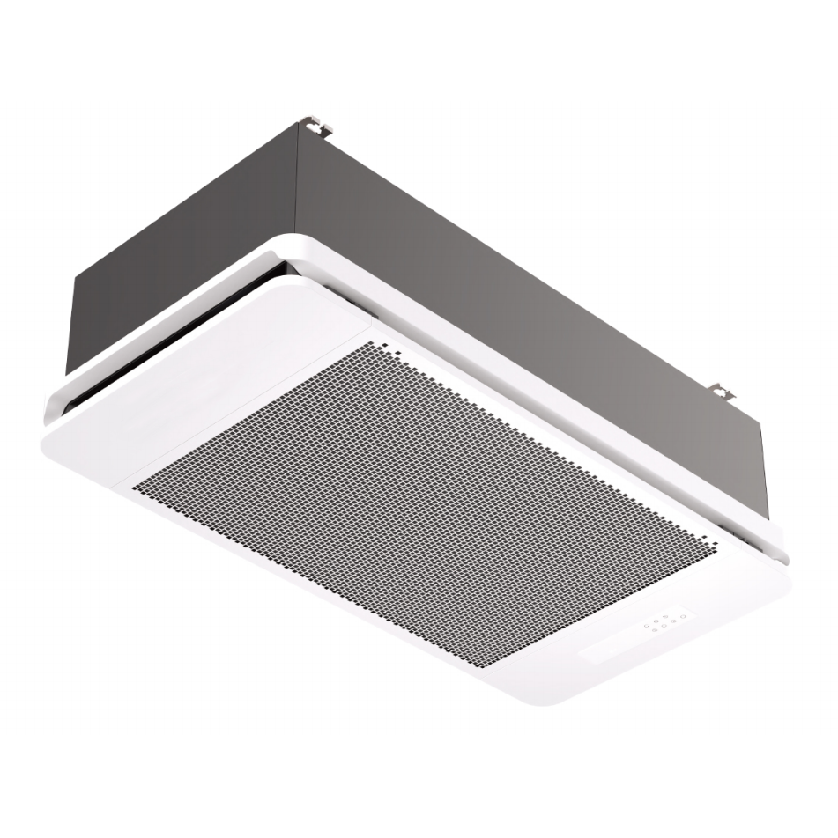
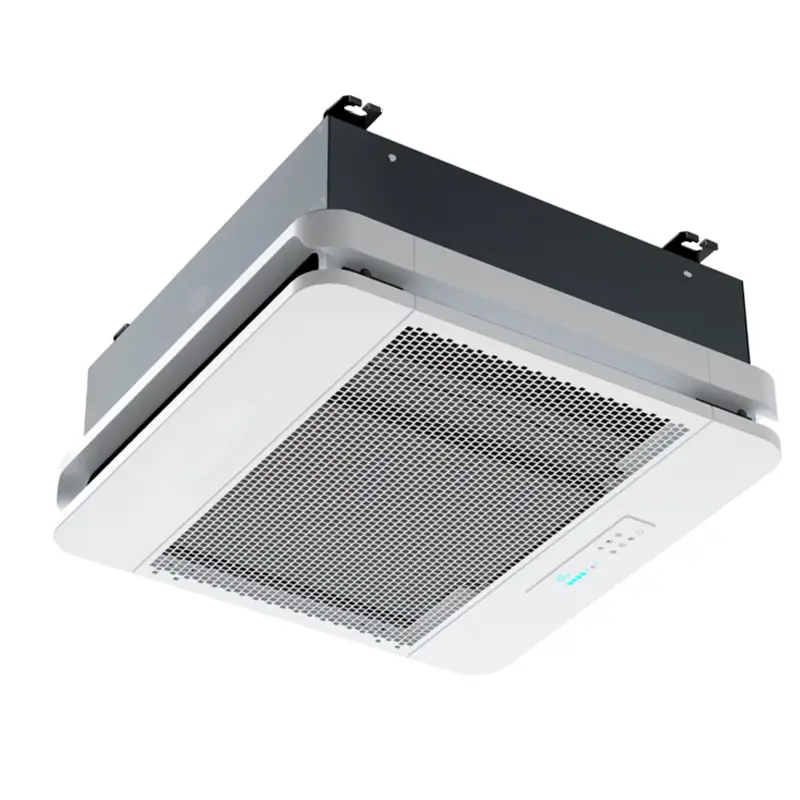
HA800 Ceiling-Mounted Air Purifier

A high-airflow ceiling-mounted air purifier designed to deliver efficient air purification without occupying floor or wall space. It combines H13 HEPA filtration, quiet multi-speed operation, and flexible sensor and connectivity options in a durable commercial-grade platform.
High-Airflow H13 HEPA Purification — Delivers up to 700 m³/h (414 CFM) airflow with H13 HEPA filtration for efficient removal of airborne particles.
Space-Saving Ceiling Installation — Fixed ceiling-mounted design preserves usable floor and wall space while providing integrated air circulation and purification.
Quiet & Configurable Operation — Four airflow levels with a specified 22–47 dB noise range, plus optional PM2.5, CO₂, Wi-Fi/Tuya, activated carbon, and UVC configurations.
HA180 / HA380 Fabric Panel Platform

HA2000 High-Capacity Ceiling-Mounted Air Purifier

A high-capacity ceiling-mounted air purifier designed for larger indoor environments requiring powerful airflow and space-efficient installation. It combines multi-level airflow control, H13 HEPA filtration, quiet operation, occupancy sensing, and configurable smart features in a durable metal platform.
High-Capacity Air Purification — Delivers four airflow levels from 800 to 2000 m³/h (470–1177 CFM), with H13 HEPA filtration for high-volume air circulation and particle removal.
Space-Saving Ceiling Installation — Fixed ceiling-mounted design keeps the purification system away from usable floor and wall space while supporting coverage of approximately 150–200 m².
Smart & Configurable Platform — Includes proximity sensing, LED display and remote control, with optional PM2.5, CO₂, Wi-Fi/Tuya, activated carbon filtration and UVC configurations.
HA180 / HA380 Fabric Panel Platform

Advanced PM2.5 Sensor for Real-Time Air Quality Monitoring

A compact particulate matter sensor designed for continuous, real-time PM2.5 monitoring. With a wide detection range, low power consumption, and flexible communication interfaces, it can be integrated into air quality monitors, air purification systems, HVAC equipment, and connected indoor air quality solutions.
Accurate Real-Time PM2.5 Monitoring — Uses advanced optical sensing technology to continuously detect fine particulate matter and provide responsive air quality data.
Wide Detection Range — Measures PM2.5 concentrations from 0–500 µg/m³, supporting air quality monitoring across a broad range of environmental conditions.
Compact & Easy to Integrate — Small form factor, low power consumption, and flexible I²C/UART interfaces support integration into air monitors, HVAC systems, purifiers, and other connected IAQ devices.
FAQ • OEM / ODM PROGRAM ANSWERS

Часто задаваемые вопросы

Direct factory answers regarding residential testing protocols, private-label customizations, and sample evaluations.

Institutional residential projects often involve many similar rooms, longer operating hours, centralized maintenance, standardized installation requirements, and less dependence on individual occupant behavior. Product configuration therefore needs to consider continuous operation, filter life, service access, controls, installation consistency, and lifecycle maintenance rather than only consumer features.

Category:Deployment

Applicable commercial-oriented HisoAir platforms can be configured for continuous occupied-space operation with simplified control strategies. Final operating modes, fan settings, filter configuration, installation conditions, and maintenance requirements should be defined according to the specific project.

Category:Operation

When hundreds or thousands of units are deployed, every additional filter replacement creates service visits, labor, spare-filter logistics, room access, and facility coordination. Extended-life filter configurations can reduce replacement frequency, while standardized filter programs and maintenance schedules can make large deployments easier to manage.

Category:Maintenance

HisoAir has real institutional field-deployment evidence including extended operating records, returned units, used-filter samples, engineering inspection, and laboratory re-testing after field use. Published claims should be linked to the applicable product model, deployment duration, field conditions, and corresponding test report.

Category:Field Validation

Wall-mounted installation can preserve usable floor space, reduce accidental movement, standardize equipment placement, and support repeatable installation and servicing across similar rooms. The final mounting method should be verified against the room layout, wall structure, airflow requirements, and service-access conditions.

Category:Installation

Yes, where required. Projects can be configured with optional IAQ sensing, filter-life monitoring, connected device status, reminders, scheduling, or customer-platform integration. Centralized monitoring is project-based and depends on the selected product, connectivity architecture, customer system, and development scope.

Category:IoT & Monitoring
Contaminant Engineering•3 min read

PFAS Water Filtration Technologies Explained: Carbon, Resin & RO

Key Takeaway:

PFAS reduction depends on the specific compounds present, treatment media, contact time, water chemistry, and system design. Activated carbon, ion exchange, and Reverse Osmosis address PFAS through different mechanisms.

PFAS are a large family of persistent fluorinated compounds that can occur in drinking-water supplies. Their treatment behavior varies significantly by molecular structure, chain length, functional group, concentration, and the chemistry of the source water.

Granular Activated Carbon (GAC) removes PFAS primarily through adsorption. It is generally more effective for many longer-chain PFAS, while shorter-chain compounds tend to break through more quickly. Carbon performance depends on media properties, Empty Bed Contact Time (EBCT), competing organic matter, loading, and replacement frequency.

Ion-exchange resins use charged functional sites to capture many PFAS compounds. Properly selected anion-exchange media can provide high capacity and may perform better than conventional activated carbon for some shorter-chain PFAS, although performance still depends on water chemistry and competing ions.

Reverse Osmosis (RO) uses membrane separation rather than adsorption. Properly designed RO systems can provide broad reduction across many PFAS compounds as well as dissolved salts and other contaminants. Unlike carbon or resin, however, RO also produces a concentrate stream that must be managed.

No single technology should be selected from a PFAS label alone. System design should consider which PFAS compounds are present, their concentrations, required reduction targets, flow rate, media life, and the applicable third-party certification or validation requirements.

HisoAir Water Technical Series
Product Discovery•3 min read

How to Choose an Under-Sink Water Purifier for Modern Kitchens

Key Takeaway:

Match the treatment technology to your water quality first, then evaluate cabinet space, faucet configuration, flow rate, drain and power requirements, and filter replacement needs.

Choosing an under-sink water purifier starts with water chemistry. Carbon filtration is well suited to chlorine, taste, odor, and many organic contaminants, while Reverse Osmosis is more appropriate when dissolved salts, fluoride, nitrates, or broader dissolved contaminants need to be reduced.

For compact kitchens, tankless RO systems eliminate the conventional storage tank and can significantly reduce the space required under the sink. However, membrane capacity stated in GPD does not directly equal faucet flow. When comparing systems, check the actual dispensing flow rate, inlet-pressure requirement, recovery ratio, and whether a booster pump is required.

Installation architecture also matters. Many RO systems require a drain connection, electrical power, and either a dedicated drinking-water faucet or a compatible multi-function faucet. High-flow carbon systems can often connect directly to the existing cold-water line with a simpler installation, but pressure drop and available faucet flow should still be verified.

RO also removes much of the naturally occurring dissolved mineral content. Where taste or mineral balance is a priority, a post-RO remineralization stage can be added. Filter life should be evaluated by both rated capacity and local water quality rather than replacement time alone.

The right system is therefore not simply the smallest or highest-GPD model. It is the configuration that matches the target contaminants, available cabinet space, desired faucet setup, peak dispensing demand, and maintenance expectations.

HisoAir Water Technical Series
Water Quality•2 min read

What Does TDS Mean in Drinking Water? Measurement vs Contaminant Reality

Key Takeaway:

A TDS meter estimates the overall concentration of dissolved ionic substances from electrical conductivity. It cannot identify specific contaminants or determine whether water is chemically safe.

Total Dissolved Solids (TDS) refers to the combined concentration of dissolved substances in water. Most handheld TDS meters do not measure TDS directly. Instead, they measure electrical conductivity (EC) and convert that reading into an estimated parts-per-million (ppm) value.

This means a TDS reading can indicate how much dissolved ionic material is present, but not what that material actually is. Calcium, magnesium, sodium, nitrates, and other dissolved ions can all contribute to conductivity, yet a simple TDS meter cannot distinguish between them.

TDS meters are also not suitable for detecting trace contaminants such as PFAS, many VOCs, pesticides, pharmaceuticals, or disinfection byproducts. These substances may be present at concentrations far below the level needed to noticeably change electrical conductivity.

A low TDS reading therefore does not guarantee safe drinking water, and a higher TDS reading does not automatically indicate contamination. Water-treatment decisions should be based on laboratory testing for specific contaminants of concern rather than TDS alone.

HisoAir Water Technical Series
Technology Selection•2 min read

RO vs UF Water Filtration: Understanding Pore Sizes & Dissolved Minerals

Key Takeaway:

Ultrafiltration can reduce bacteria, turbidity, and suspended particles while retaining most naturally occurring dissolved minerals. Reverse Osmosis provides much broader reduction of dissolved salts and smaller contaminants.

Ultrafiltration (UF) typically uses hollow-fiber membranes with pore sizes in the approximate 0.01–0.1 micron range. These membranes physically retain turbidity, suspended solids, colloids, and many microorganisms while allowing dissolved minerals and salts to remain in the water.

Reverse Osmosis (RO) operates at a much finer separation level. Unlike UF, RO can substantially reduce dissolved ions such as sodium, calcium, fluoride, nitrates, and other contributors to total dissolved solids (TDS). This makes RO more suitable when dissolved-salt reduction is a primary treatment objective.

UF generally requires less system pressure and produces little or no continuous concentrate stream in many point-of-use configurations. RO typically requires greater pressure and produces a reject-water stream, but delivers broader contaminant reduction.

For water with acceptable TDS and mineral content, UF can be a simpler mineral-retaining treatment option. Where dissolved salts, fluoride, nitrates, or broader dissolved contaminants are a concern, RO is generally the more appropriate technology.

HisoAir Water Technical Series
Technology Selection•4 min read

Carbon Block vs Reverse Osmosis: Which Fits Your Need?

Key Takeaway:

Choose RO for dissolved inorganic salts and heavy metals; choose Carbon Block for chemical taste/odor, no wastewater, and high line-pressure flow.

Reverse Osmosis (RO) and Carbon Block filtration represent two fundamentally different treatment methods: membrane separation and adsorption. Understanding these differences helps determine which technology is better suited to a specific water-quality requirement.

Reverse Osmosis uses a semi-permeable membrane with pore sizes of approximately 0.0001 microns. It can significantly reduce dissolved inorganic contaminants such as TDS, fluoride, nitrates, and certain heavy metals. Because water must be forced through the membrane, RO systems require sufficient pressure or a booster pump and generate a concentrated wastewater stream.

Carbon Block filtration relies primarily on adsorption through compressed activated carbon, commonly with nominal pore sizes around 0.5–5 microns. It is highly effective for chlorine, chloramines, VOCs, taste, and odor, while allowing substantially higher direct-flow rates without producing wastewater.

From an operating perspective, Carbon Block systems are generally simpler, require less energy, and avoid the water loss associated with RO. RO involves higher system complexity and operating cost, but provides substantially broader reduction of dissolved contaminants that Carbon Block alone cannot address.

HisoAir Water Technical Series

ЗАПРОСИТЬ ЦИТАТУ