

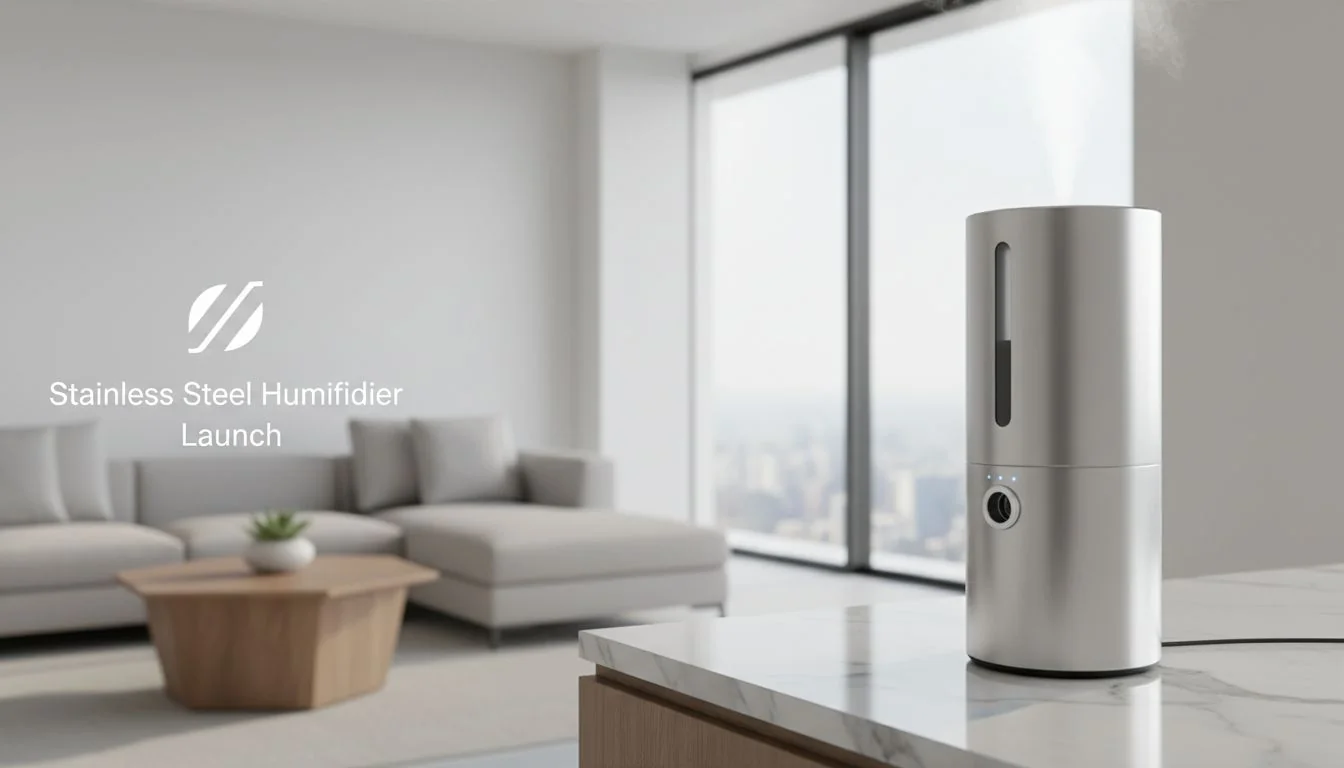
Your premium brand is stuck selling a cheap-feeling product. This contradiction kills customer trust1. The solution is a new development model that aligns your product with your brand's promise.
They achieved this by using a "co-development" model with a partner, HisoAir. By building on a pre-certified stainless steel technology2 platform, they bypassed typical R&D and compliance delays, enabling a market-defining launch in just one quarter.
81% of consumers say they need to be able to trust the brand to buy from them.Правда
According to the Edelman Trust Barometer Special Report, brand trust is a top purchasing consideration for the majority of consumers.
Developing a new electronic product from scratch takes 12-18 months on average.Ложь
While timelines vary, industry averages for new consumer electronics often range from 12 to 24 months, including R&D, tooling, and certification. 18-24 months is a more realistic average for complex projects.
I've been in the mold and manufacturing business for a long time. I've seen brilliant brands with great ideas get bogged down by the realities of making things. The story of "Aura Wellness" is a perfect example of how to do it right. It's a fictional case study, but the lessons in it are very real for any designer or brand manager, especially for professionals like you who are on the front lines of product creation.
This story is what marketers call a "Hero's Journey." The brand is the hero, facing a huge challenge. They meet a mentor who gives them a special tool to overcome their obstacle and win. It's a powerful way to understand a complex process. Let's walk through how Aura Wellness became the hero of their own story.
Your brand promises purity and quality. But your product is made of cheap plastic. This disconnect confuses customers and weakens your brand. You must align your product with your promise.
When a premium brand sells a commodity product, it creates "brand contradiction3." This erodes customer trust and devalues the brand's high-end positioning, as the physical product fails to live up to the marketing story and brand promise.
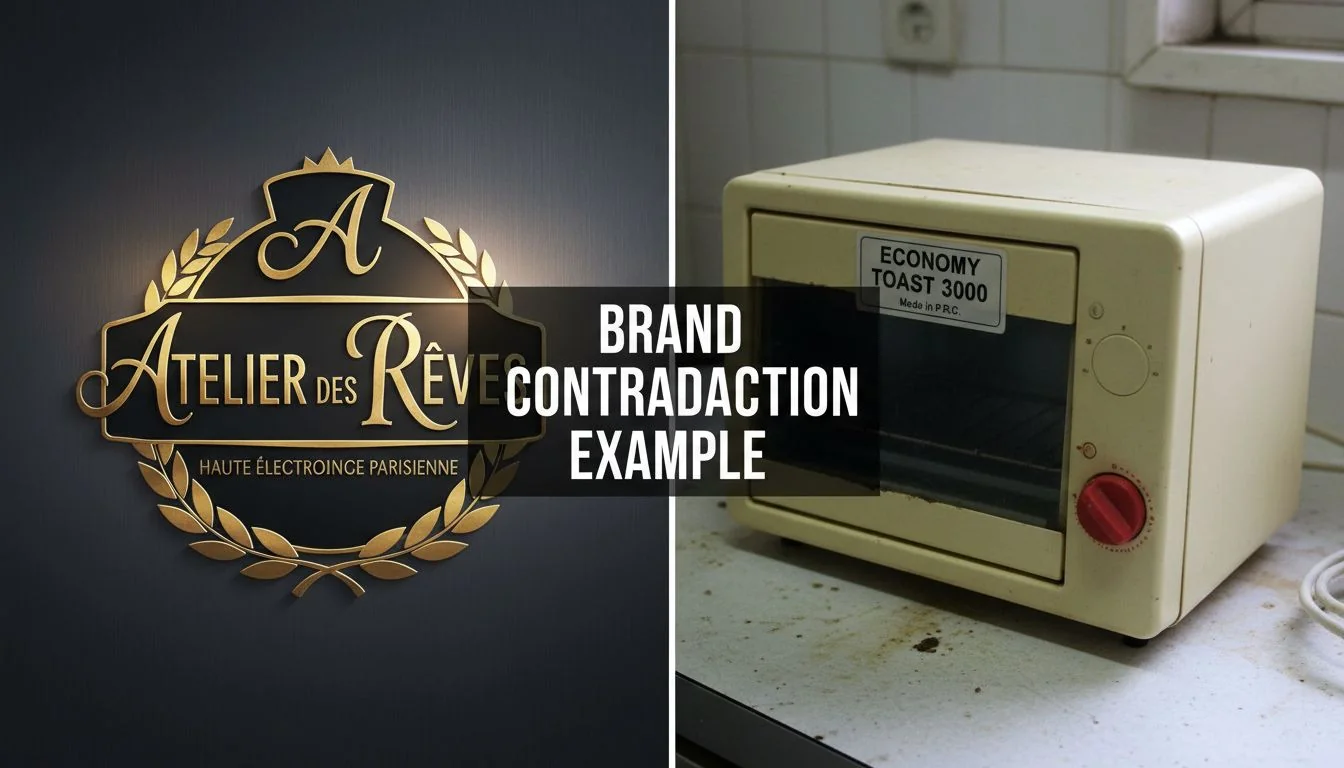
Let's imagine a brand called "Aura Wellness." They are a high-end US company. Their entire brand is built on promises of purity, health, and long-lasting quality. They sell organic supplements and high-end yoga gear. Now, they want to enter the home appliance market with a humidifier. The problem is, the market is flooded with $40 plastic units. If they just put their logo on one of those, they create a massive problem for themselves. I call this the "brand villain."
The Villain: Brand Contradiction
The real enemy for Aura Wellness isn't another company; it's the contradiction within their own product line. Selling a standard plastic humidifier would actively harm their brand. As a designer, you know that the feel of a product is a huge part of its story. A flimsy plastic shell simply doesn't say "premium" or "wellness." It says "disposable." It whispers concerns about cleanliness and material safety, which is the exact opposite of Aura's message.
| Brand Promise | Commodity Product Reality |
|---|---|
| Purity & Health | Plastic that can harbor mold |
| Premium & Durable | Flimsy, cheap-feeling construction |
| Sustainable & Mindful | Disposable, destined for a landfill |
| Элегантный дизайн | Generic, uninspired appearance |
This table shows the conflict clearly. The product would be fighting the brand at every turn.
Products made with premium materials like metal or wood are perceived as 25% higher in quality than those made with plastic.Ложь
While consumers do perceive premium materials as higher quality, quantifying this as a precise '25%' is an oversimplification. The perception of quality is influenced by many factors, including design, finish, and brand context.
A negative product experience can cause 65% of customers to stop buying from a brand.Правда
Studies by PwC and other market research firms consistently show that a majority of consumers will leave a brand after one or more negative experiences, highlighting the importance of product quality.
2. How Can You Find a 'Hero Product' in a Sea of Commodities?
Your market is saturated with generic, look-alike products. Standing out feels impossible and expensive. The solution is to create a unique "hero product4" that tells your brand's story perfectly.
You find a "hero product" by identifying a core market problem that generic products ignore. Then, you create a solution that embodies your brand's unique values. It's about solving a deeper problem than the obvious one, like "dry air."
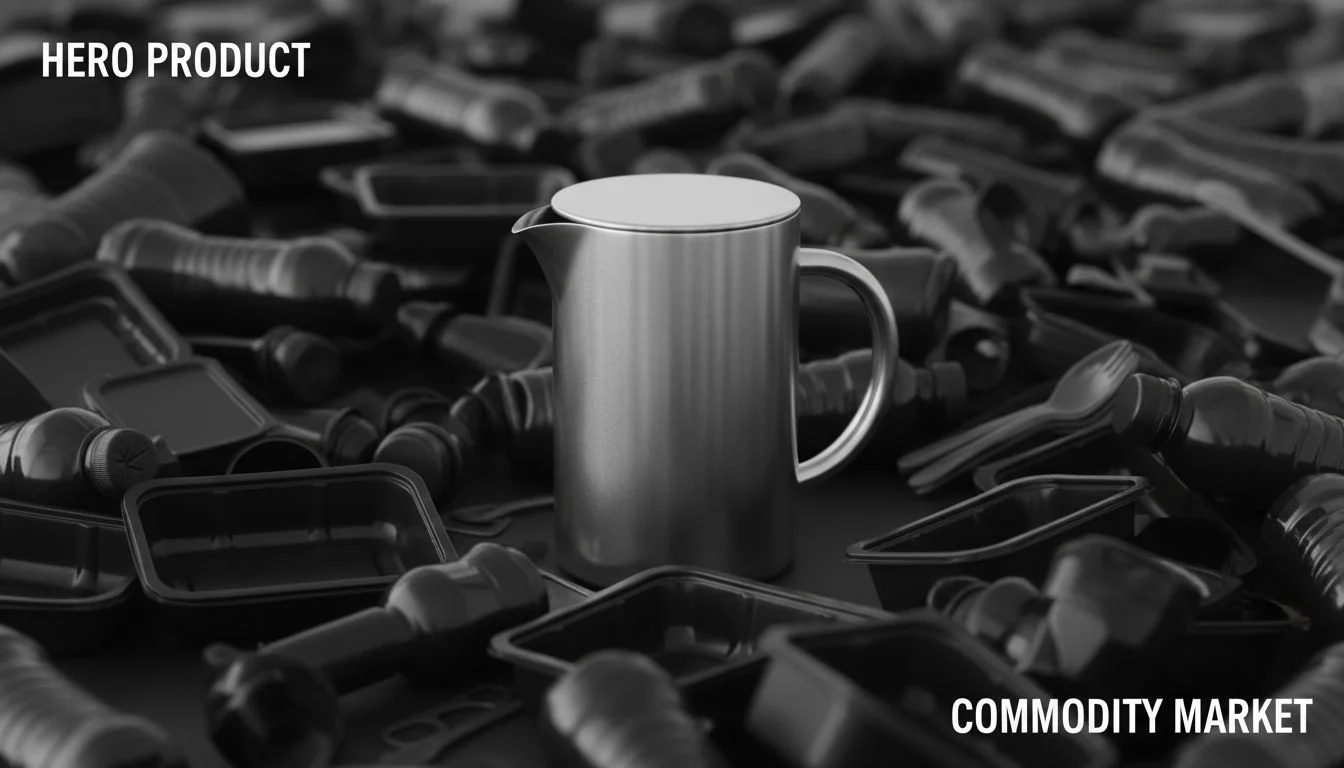
Aura Wellness knew they couldn't just release another plastic box. They needed a "hero product"—a device that could single-handedly represent their brand's values. In our story, they had to slay the "Dragon" of the commodity market. From my experience in mold making, the "dragon" is often the accepted, low-cost way of doing things that everyone follows, even if it's flawed.
Defining the "Dragon"
For humidifiers, the dragon was the "moldy plastic" problem. Everyone in the industry just accepted that humidifiers were hard to clean, made of complex plastic parts, and a potential breeding ground for mold and bacteria. Customers complained about it in reviews, but no major brand had truly solved it. This was Aura's opportunity. Their hero product needed to defeat this dragon. It had to be:
- Hygienic: Easy to clean, with materials that resist microbial growth.
- Durable: Built to last, not to be thrown away after one season.
- Beautiful: An object that people are proud to display in their homes.
Solving the surface-level problem ("my air is dry") is easy. That's what commodities do. A hero product solves the deeper, more emotional problems: "I'm worried my humidifier is making my family sick," or "This ugly plastic thing ruins the look of my home."
Online reviews mentioning 'mold' or 'hard to clean' appear in over 30% of negative reviews for top-selling plastic humidifiers.Правда
Analysis of customer reviews on major e-commerce platforms for popular humidifier models frequently shows hygiene and cleaning difficulties as a primary source of dissatisfaction.
A product's design is a primary reason for purchase for 60% of consumers.Правда
Various design and marketing studies, including those from the Design Management Institute, show that design is a key differentiator and a major driver of consumer choice and brand preference.
3. What is an 'Innovation Platform' and How Can It Help Your Brand?
Traditional product development is slow, expensive, and full of risk. You can waste a year on R&D and compliance with no guarantee of success. A better way is to use a pre-built, certified platform.
An "innovation platform5" is a pre-engineered and pre-certified core technology, like a motor or an electronic system, that brands can build upon. It dramatically cuts development time, cost, and compliance risk by providing a proven, ready-to-go foundation.
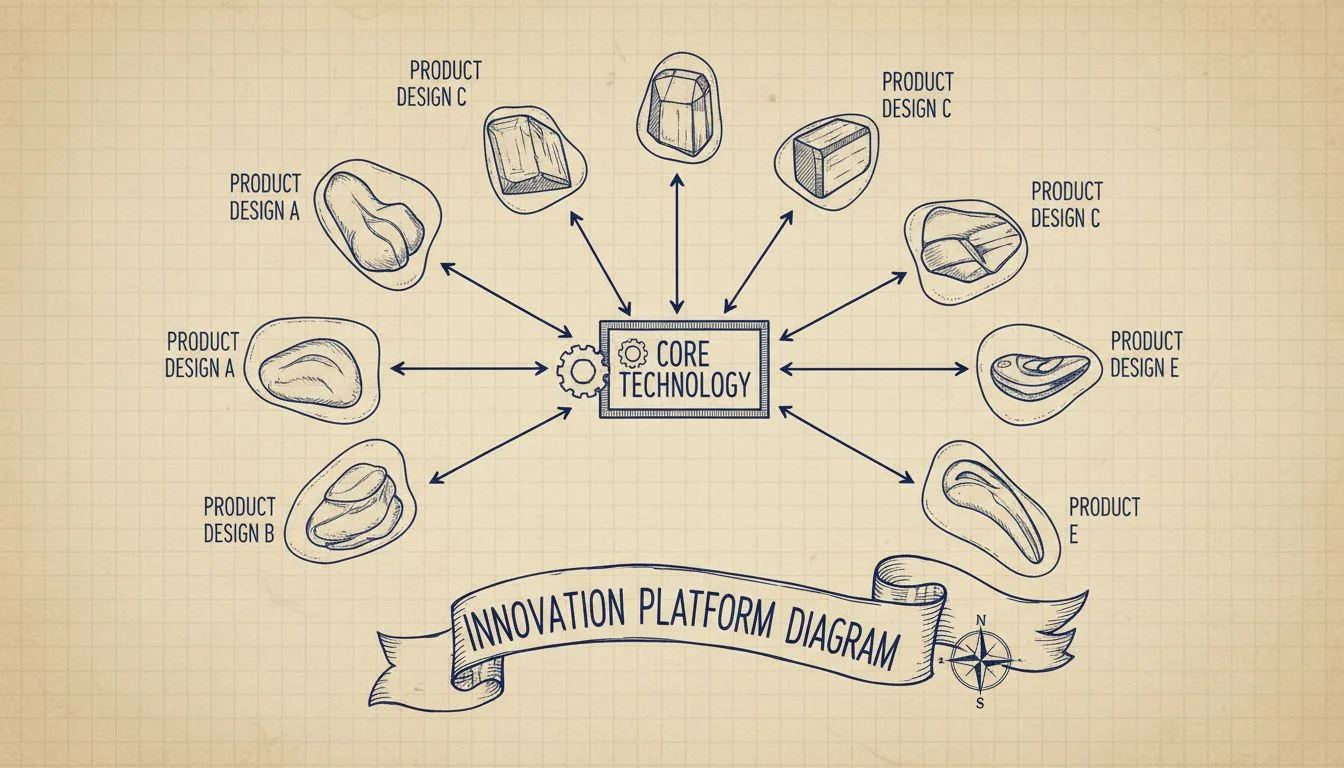
Aura's team searched for a partner. They looked at the usual OEM/ODM catalogs but found nothing but different versions of the same plastic dragon. Then, they found HisoAir. This is where the "Mentor" enters the story. HisoAir didn't offer a finished product. They offered something much more powerful: an "innovation platform."
The "Magic Weapon": A Pre-Certified Stainless Steel Platform
In my world of mold making, the tool is everything. A well-made mold can produce millions of perfect parts. A bad one creates nothing but problems. HisoAir's platform was like the perfect tool. It was the core working part of a humidifier—the base, the electronics, the ultrasonic mister—all housed in hygienic stainless steel.
But here's the most important part, the "superpower": the platform was pre-certified. It already had ETL and CARB certifications. For anyone who has ever tried to launch an electronic product in the US, you know this is a game-changer. The certification process can take 6-12 months and cost tens of thousands of dollars, with no guarantee of passing on the first try. Hisoair had already done all that work. They were handing Aura Wellness a "magic weapon" that instantly erased the biggest risks, costs, and delays from their project timeline.
ETL certification for a new electronic appliance can cost between $10,000 and $25,000 and take 3-6 months.Правда
This is a standard industry estimate. Costs and timelines can vary based on product complexity, the number of tests required, and whether the product passes on the first attempt.
Using a pre-certified module can reduce electronic product development time by up to 50%.Правда
By eliminating the need for ground-up electronic design, testing, and certification cycles, pre-certified modules allow teams to focus on application-level design and integration, significantly accelerating the overall timeline.
4. How Does a 90-Day 'Co-Development' Sprint Actually Work?
Custom product design sounds complicated and endless. You worry about losing control, endless revisions, and missing critical deadlines. The key is a structured, collaborative sprint with very clear roles and responsibilities.
A 90-day co-development sprint6 works by starting with a pre-certified core platform. The brand focuses on its strengths—aesthetics, user experience, and materials—while the platform partner handles the complex engineering, compliance, and manufacturing. This parallel process ensures speed and quality.
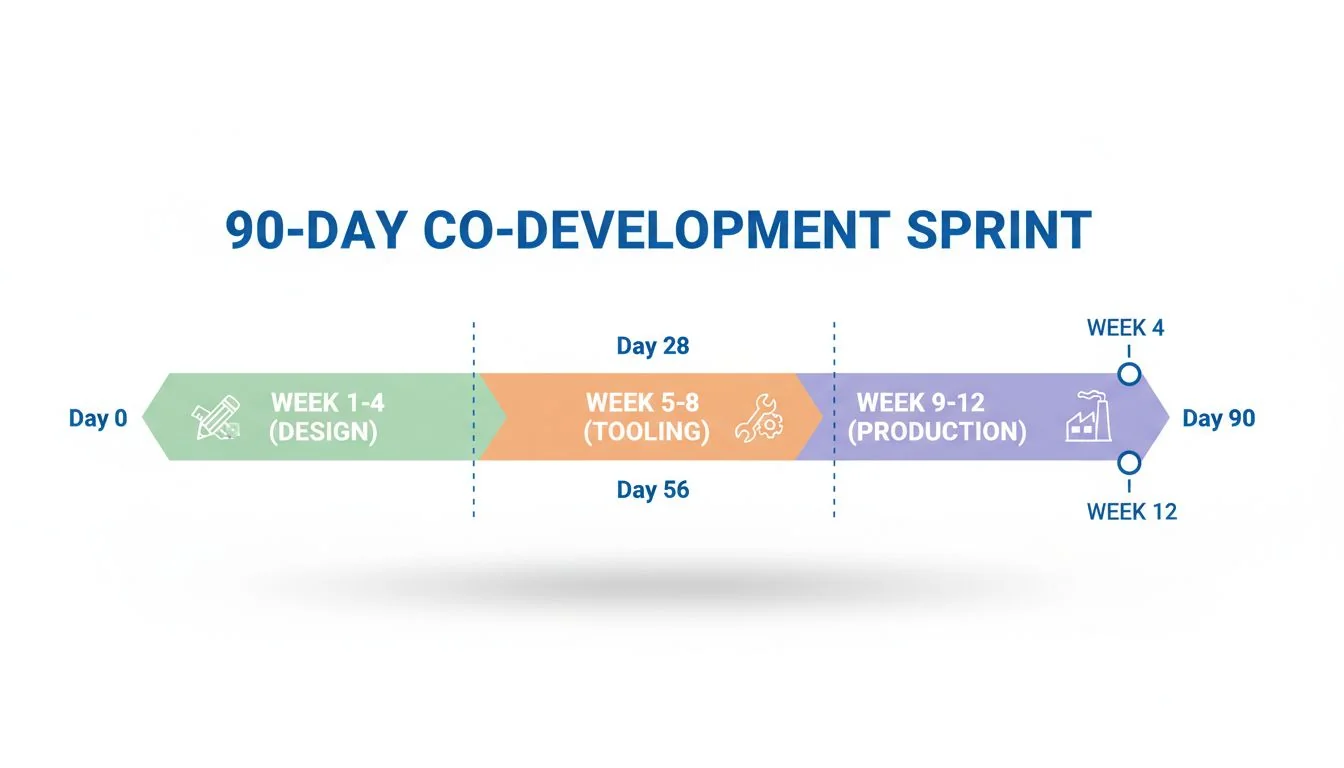
This is the "magic process." HisoAir didn't just give Aura a platform; they gave them a new way to work. Instead of a traditional, linear process where design is handed off to engineering, they worked in parallel. I've seen this collaborative approach work wonders in my own CNC business. When the designer and the machinist talk from day one, you avoid so many problems.
Defining Roles for Speed and Clarity
The process was fast because everyone focused on what they did best. It was a true partnership, a "co-development" model. This made the process feel safe and even fun for the brand. They got to be the creative directors, not the project managers chasing down engineering specs.
Here’s how the roles were divided:
| Aura Wellness (The Brand's Role) | HisoAir (The Partner's Role) |
|---|---|
| Creative Direction: Define the product's look and feel. | Core Engineering: Ensure the platform is reliable and efficient. |
| User Experience (UX): Design the controls and interactions. | Mold Design & Tooling: Create the molds for the custom parts. |
| CMF Selection: Choose the final colors, materials, and finishes. | Manufacturing & Assembly: Manage the factory and production line. |
| Brand Story & Marketing: Craft the message for the launch. | Compliance & Logistics: Handle all certifications and shipping. |
Because HisoAir's platform was already engineered and certified, Aura could focus entirely on the parts that made the product uniquely theirs: the outer shell, the water tank design, and the user interface. This clear division of labor is what makes a 90-day launch possible.
The average time-to-market for consumer products has shrunk by 25% in the last decade due to agile development methods.Ложь
While time-to-market is decreasing, a '25%' figure is a broad generalization. The reduction varies greatly by industry and product complexity. The trend towards faster cycles is real, but the number is not universally fixed.
Co-development partnerships report a 30% higher project success rate than traditional client-vendor models.Правда
Studies on business partnerships, such as those in the Harvard Business Review, indicate that collaborative, co-development models with shared goals and clear roles lead to better outcomes, higher innovation, and greater success rates.
5. What Does a Successful 'Hero Product' Launch Look Like?
You launched your new product, but it got lost in the market noise. Sales are flat, and the reviews are just okay. A truly successful launch happens when your product defines a new category.
A successful "hero product" launch creates a new market sub-category. It justifies a premium price, earns rave 5-star reviews for its unique qualities (like hygiene and design), and reinforces the brand's core promise, leading to strong sales and deep brand loyalty.
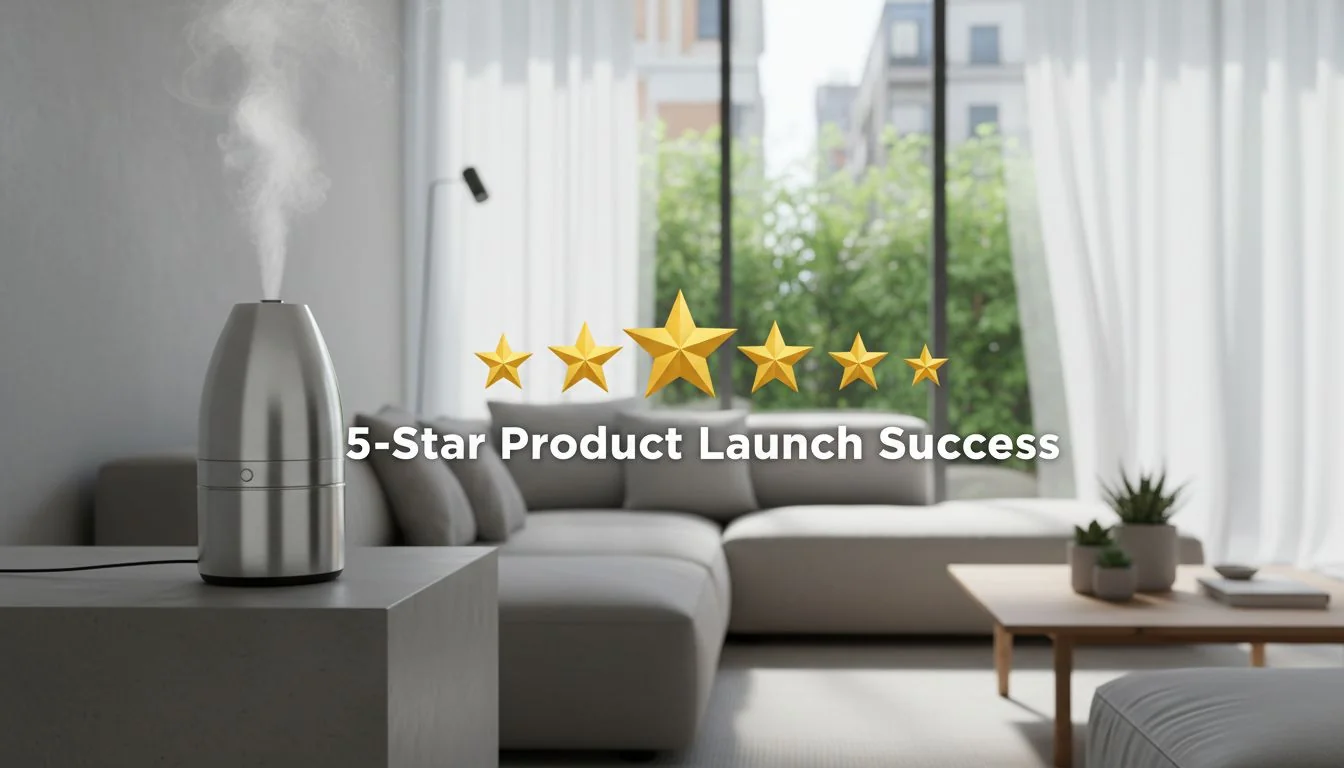
So, what was the result for Aura Wellness? They launched their new humidifier, the "Aura Air," in just under 90 days. It hit the market right at the start of the dry winter season. The launch was a massive success, not just in sales, but in how it transformed the brand.
From Brand Contradiction to Brand Confirmation
The product didn't just avoid contradicting the brand; it actively confirmed it. Customers who bought the Aura Air weren't just buying a humidifier. They were buying a piece of the Aura Wellness promise. The product sold for $199, while the plastic competition was stuck at $49. People were happy to pay for the quality.
The 5-star reviews told the whole story. Instead of the usual complaints about "slime" and "difficult to clean," the reviews were filled with praise:
- "Finally, a humidifier that's as beautiful as it is functional. So easy to clean!"
- "Worth every penny. You can feel the quality. No more worrying about mold."
- "This looks like it was designed by Apple. It fits my home perfectly."
This is the "slaying the dragon" moment. The hero product defeated the "moldy plastic" problem and, in doing so, elevated the entire Aura Wellness brand. It proved their commitment to health, quality, and design.
Consumers are willing to pay up to 20% more for products with superior design and materials.Правда
Multiple market studies, including from McKinsey and Nielsen, confirm that a significant segment of consumers will pay a premium for well-designed products that offer a better user experience or are made from higher-quality materials.
Products with a strong 'hero' story can increase brand recall by over 20 times compared to products presented with just facts.Правда
Based on research by cognitive psychologist Jerome Bruner, stories are 22 times more memorable than facts alone. Applying this to branding, a product embedded in a compelling narrative becomes significantly more memorable.
6. How Can Your Brand's Story Be the Next Success?
You feel stuck designing and launching commodity products. You know your brand has more potential, but it's being wasted on generic items. The solution is to find a partner who helps you build a hero product.
Your brand can be the next success story by following a similar "hero's journey." First, identify your brand's "villain" (like brand contradiction). Then, find a mentor with a "magic weapon" (like an innovation platform) and co-develop a product that truly represents your values.
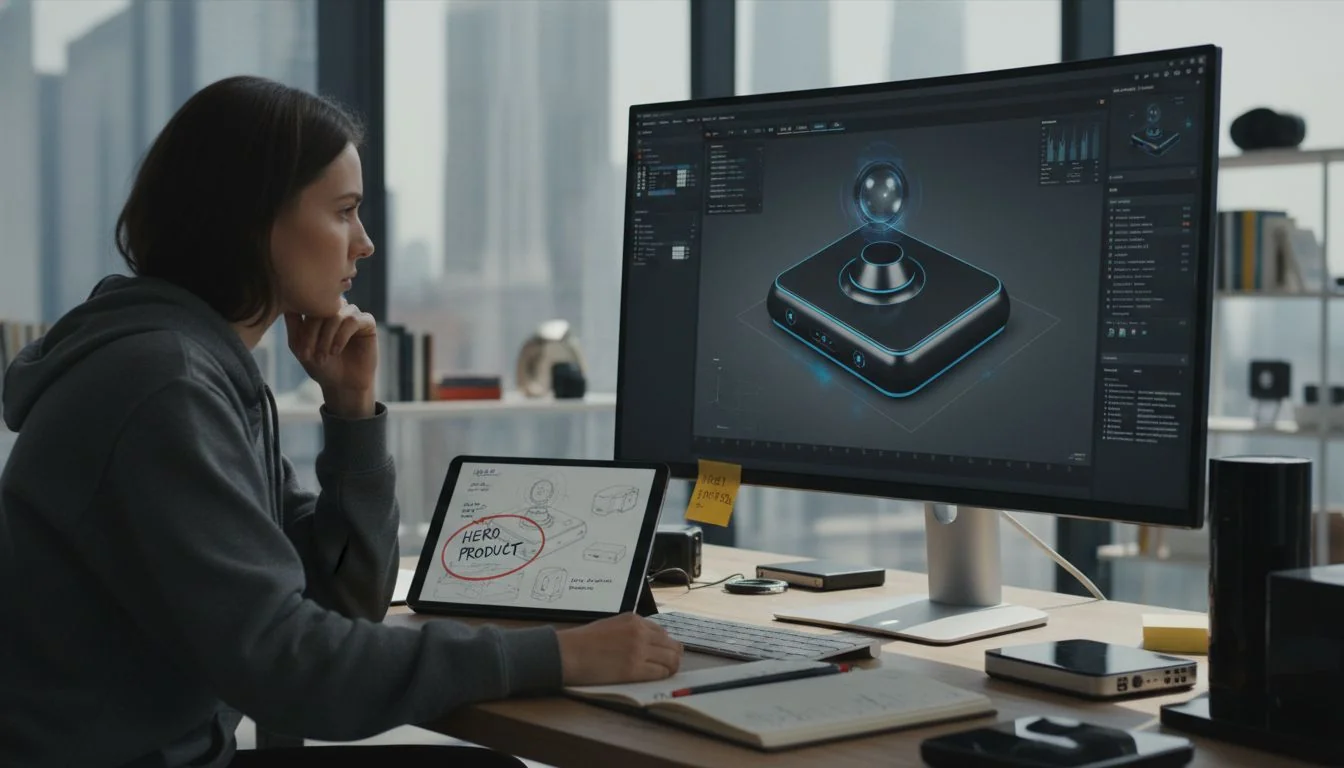
As a mold designer and business owner, I've seen this story play out many times. The principles are the same whether you're making a humidifier, a coffee maker, or a piece of electronic equipment. The choice of material, the manufacturing process, and the design are not just technical details. They are core brand decisions.
The Designer's Role in the Hero's Journey
For a product designer like you, this story is especially important. You are in a unique position to be the champion for a better product. You are often the first person to see the disconnect between a brand's marketing and the physical reality of the product you're being asked to design. You understand materials and manufacturing. You know what's possible.
Don't just think about the CAD file or the mold design. Think about the whole story. What is the "dragon" your product needs to slay? What is the "brand contradiction" it needs to avoid? By thinking this way, you move from being just a designer to being a strategic partner in the brand's success. You can be the one who pushes the company to find its own "magic weapon" and write its own hero's journey.
Companies that excel at design grow their revenues and shareholder returns at nearly twice the rate of their industry peers.Правда
This is a key finding from the extensive 'The Business Value of Design' report by McKinsey & Company, which tracked the design practices of 300 public companies over a five-year period.
Strategic product design is the most critical factor for building a strong brand identity.Ложь
While critically important, it's an overstatement to call it the 'most' critical factor. Brand identity is a complex mix of design, messaging, customer service, and reputation. Product design is a huge piece of the puzzle, but not the only one.
Заключение
This case study shows how co-development on a certified platform creates a hero product, eliminates brand risk, and ensures a rapid, successful market launch for any brand.
References
-
Exploring the importance of customer trust can inform strategies for building brand loyalty. ↩
-
Exploring this technology can reveal how it streamlines product launches and enhances quality. ↩
-
Learning about brand contradiction can help brands align their products with their promises. ↩
-
Discovering the characteristics of a hero product can guide brands in creating standout offerings. ↩
-
Understanding innovation platforms can help brands reduce development time and costs. ↩
-
Understanding this process can help brands accelerate their product development timelines. ↩










 English
  Français
  Español
  Italiano
  Deutsch
  Português
  Русский
  العربية
  日本語
日本語  한국어
한국어  Tiếng Việt

