Открывается в новой вкладке
Инновационные решения в области качества воздуха
HisoAir-Logo
Запрос сейчас
Samut Prakan, Thailand
Dual-Origin Production Option — Thailand

Thailand Production Base

The Same Platform, a Second Country of Origin, Documented Per Program

For brands managing tariff exposure, HisoAir offers validated platforms built in either China or Thailand. This Thailand facility gives you a second country of origin on the same engineering, the same tooling and the same quality protocol — with origin substantiated in writing before each shipment rather than assumed.
PRIMARY FACILITY ROLE
Alternative Country of Origin for Tariff-Exposed Programs
ORIGIN DOCUMENTATION
Per-Program Substantial Transformation Review & Written Origin Confirmation
PLATFORM CONTINUITY
Same Tooling & Quality Protocol as China Production
Request an Origin Assessment →View Site Progress
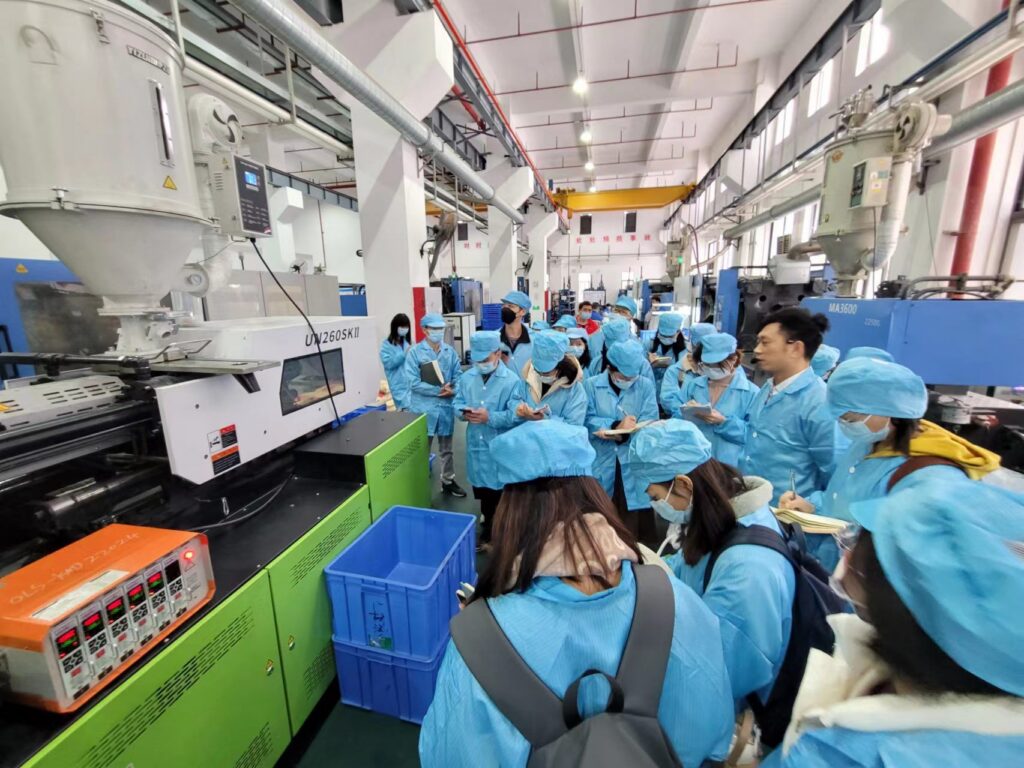
Facility View: Partner production base, Samut Prakan, Thailand.
TARIFF EXPOSURE & ORIGIN STRATEGY

Why This Facility

Samut Prakan sits inside an established industrial zone 40 minutes from Bangkok's airport and within reach of Laem Chabang port. But location is not the reason this site exists — optionality is.

Role 01

A Second Origin on the Same Platform

Tooling for platforms produced here is transferred from our China operation, so you are not requalifying a new design. Same mould, same engineering, same quality protocol — a different country on the customs declaration.

Role 02

Origin Substantiated, Not Assumed

Shipping from Thailand does not by itself make a product Thai-origin. For each program we document bill-of-materials localization and the substantial transformation basis, and issue written origin confirmation before shipment.

Role 03

Progressive Localization

Injection moulding and filter media are sourced in Thailand today. Packaging, power cords and metal parts are in active qualification. We publish the current localization position per program rather than a blanket claim.

Role 04

Unified Quality Across Both Origins

Performance validation for all platforms runs through the group's China laboratory, so a Thailand-built unit is verified against the same CADR, acoustic and safety criteria as its China-built equivalent.

WHAT THIS SITE DOES TODAY

Core Capabilities

This site is in production ramp-up. We describe what is operational now and what is in qualification, because a tariff strategy built on an overstated capability fails at the border, not in the meeting.
Industrial Design & Product Definition
Capability 01

Injection Moulding — Localized

Production tooling transferred from China operations and running on site, establishing local manufacture of structural components.

Industrial Design & Product Definition
Capability 02

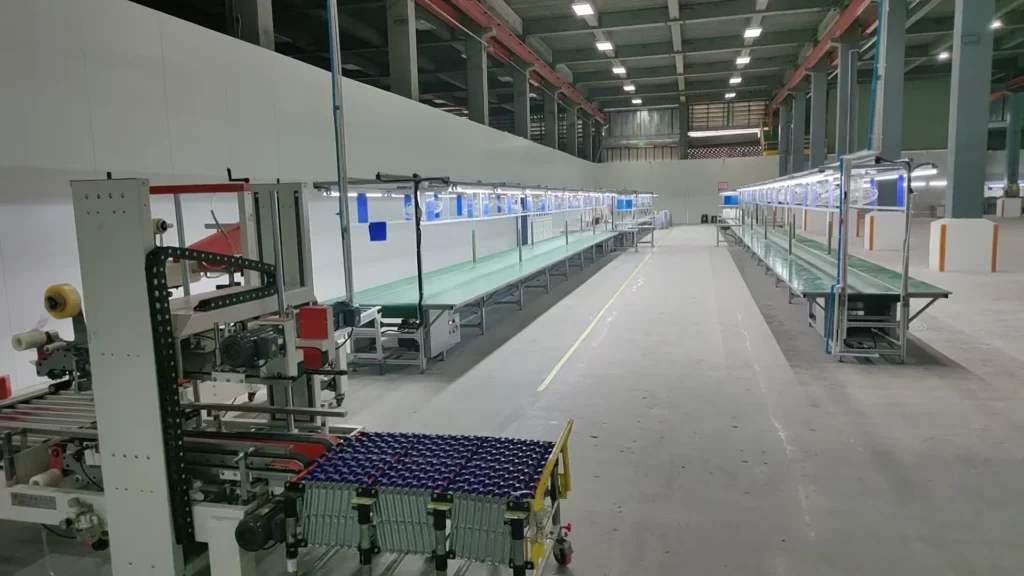
Final Assembly

Assembly lines operating with in-line functional test stations, running against the same work instructions as China production.
Industrial Design & Product Definition
Capability 03

Filter Media — Locally Sourced

Thai filter suppliers qualified and in supply, localizing a core consumable within the country of manufacture.
Industrial Design & Product Definition
Capability 04

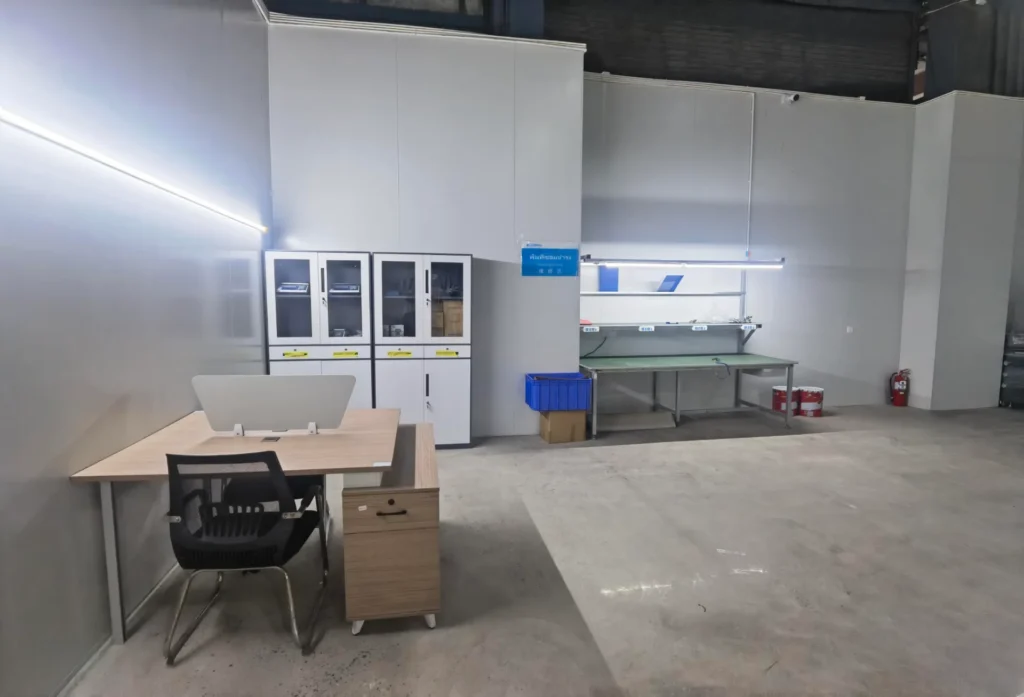
Quality Inspection & Functional Testing

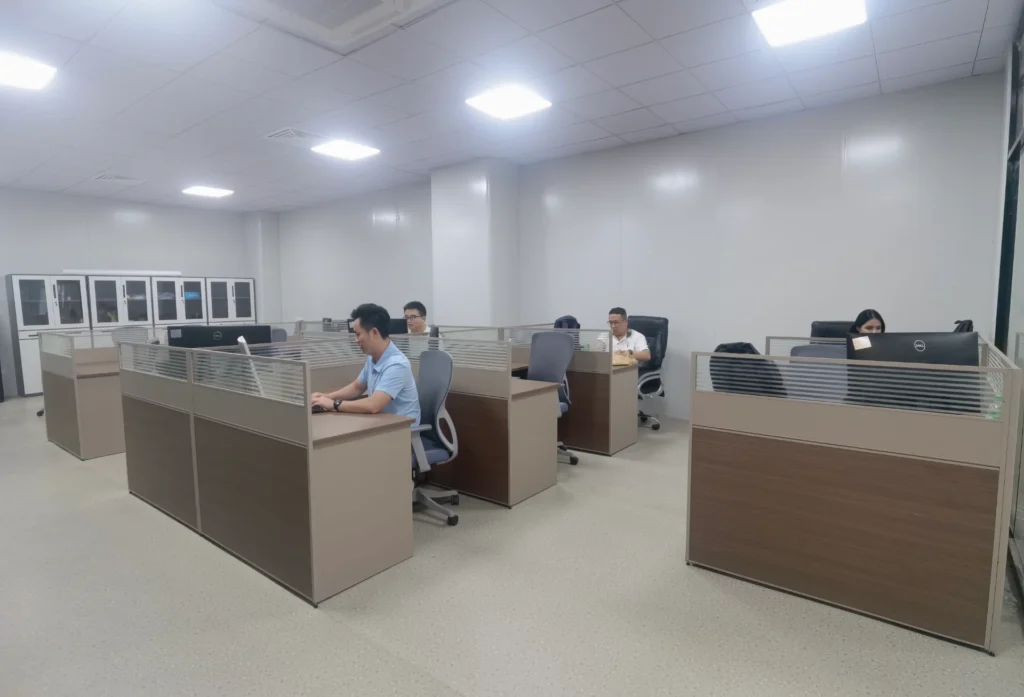
IQC, in-process and final inspection performed on site under ISO 9001, with functional and safety testing conducted locally.
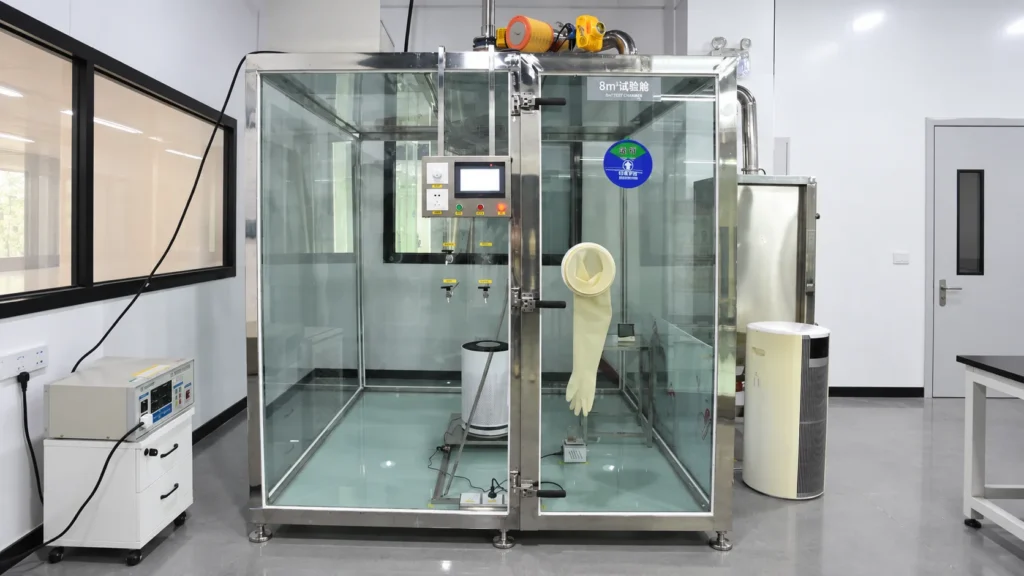
Particulate CADR performance validated in a 30 m³ test chamber during engineering and pilot-batch qualification.Industrial Design & Product Definition
Capability 05

Performance Validation — Group Laboratory

CADR, acoustic and reliability validation executed at the group's China laboratory, ensuring one verification standard across both production origins.
Industrial Design & Product Definition
Capability 06

Supply Chain Localization Programme

Ongoing qualification of Thai packaging, power cord and metal part suppliers, with localization status reported per program.

ORIGIN VERIFICATION & E-E-A-T

Quality, Origin Verification & E-E-A-T

For dual-origin programs, quality governance and origin governance are the same discipline. Both are documented per program and available for audit.

SITE VERIFICATION DOSSIER
MANUFACTURING RELATIONSHIP
Qualified Manufacturing Partner — Thailand Production Site
COUNTRY OF ORIGIN
Thailand — determined per product under destination-market rules and confirmed in writing before each shipment
QUALITY SYSTEM GOVERNANCE
ISO 9001 certified quality management system.
THIRD-PARTY AUDIT
Intertek facility audit completed.
AUDITED & VERIFIED BY
HisoAir Supply Chain & Engineering Team
LAST SITE REVIEW
2026/1
DOCUMENTATION ACCESS
Bill-of-materials localization summaries, substantial transformation assessments, origin certificates and facility audit records available for qualified programs under NDA.

Standard Quality Control Process

HisoAir's unified 6-stage quality protocol, deployed identically at this site so that a Thailand-built unit is inspected against the same criteria as its China-built equivalent.
01
Supplier Qualification
Thai supplier audit and approval under the group's vendor criteria, with localization status recorded per component.
02
Incoming Inspection (IQC)
AQL sampling on critical parts, applied identically to locally sourced and imported components.
03
Production QC (IPQC)
First article confirmation and in-process checks against work instructions transferred from China production.
04
Функциональное тестирование
100% electrical safety, power and function verification at in-line test stations.
05
Final Inspection (FQC)
Finished-goods audit, cosmetic check and packaging verification before release.
06
Corrective Action (CAPA)
Closed-loop 8D reporting, with findings shared across both production origins.
Country of Origin & Regulatory Compliance Disclaimer::

Shipment from Thailand does not by itself establish Thai country of origin. Origin is determined per product under the rules of the destination market, based on the bill of materials and the degree of transformation performed at this site, and is confirmed in writing for each program before shipment. Tariff treatment varies by destination market, product classification and prevailing trade measures; HisoAir does not provide customs or legal advice and recommends customers confirm classification and duty treatment with their own broker or counsel. Product certifications and test reports are model-specific and may vary by manufacturing location and destination market. Certifications held by partner manufacturing entities are issued to that entity and to specific models and do not transfer automatically between facilities.

SITE COMMISSIONING PROGRESS

Site Progress & Verification

This site is in production ramp-up. Rather than present a mature operation, we publish verified commissioning milestones and update them as the site scales.
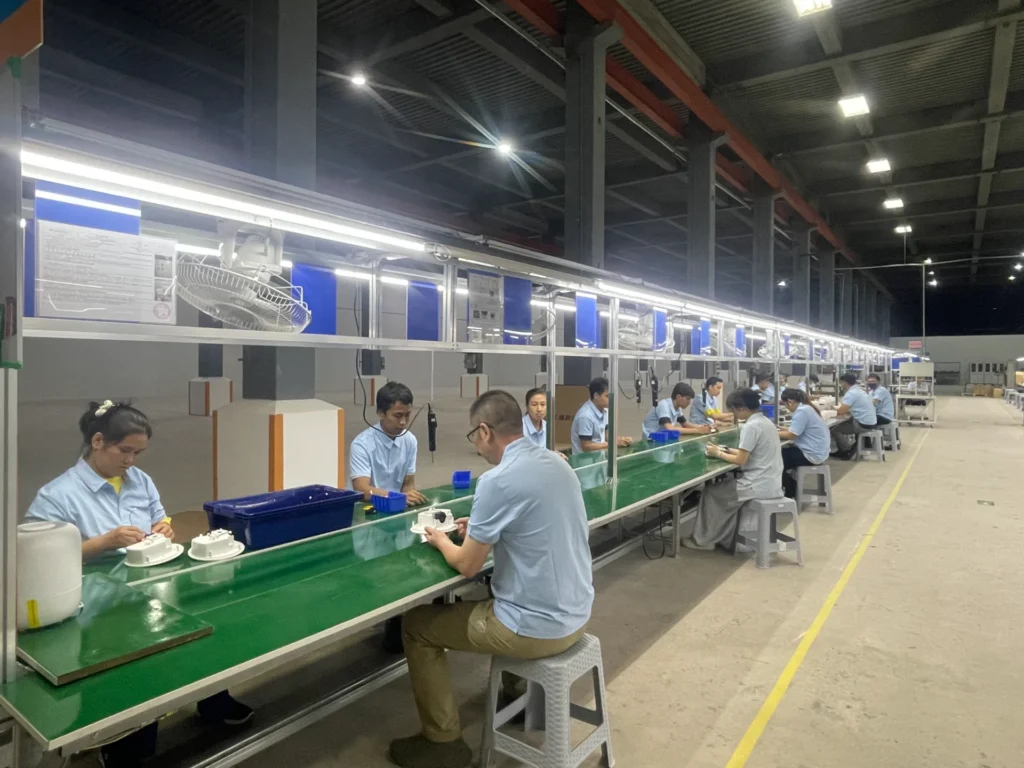
Proof 01

Assembly Line in Operation

Staffed assembly line running with station-level work instructions in place.—2025-09

Производство
Samut Prakan, Thailand
Verified Site Record
Proof 02

Quality Inspection Area

On-site inspection and functional test area established.—2025-09
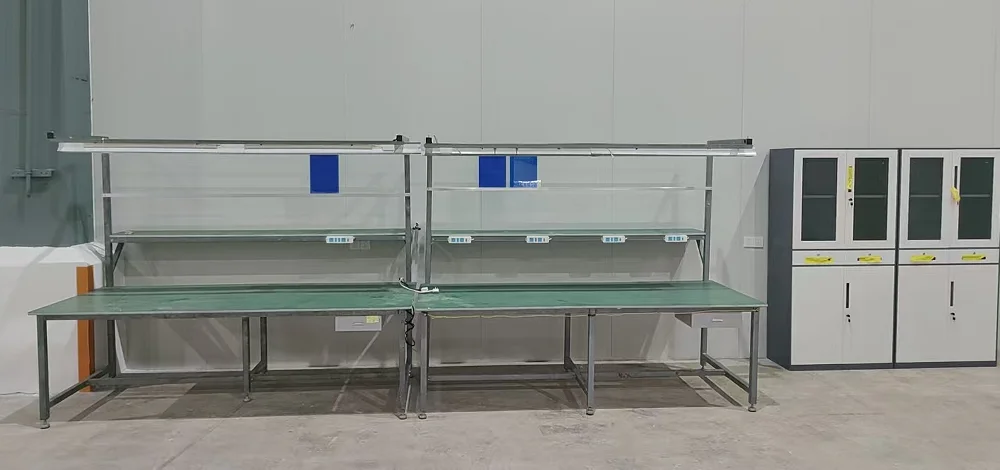
Quality Infrastructure
Samut Prakan, Thailand
Verified Site Record
Proof 03

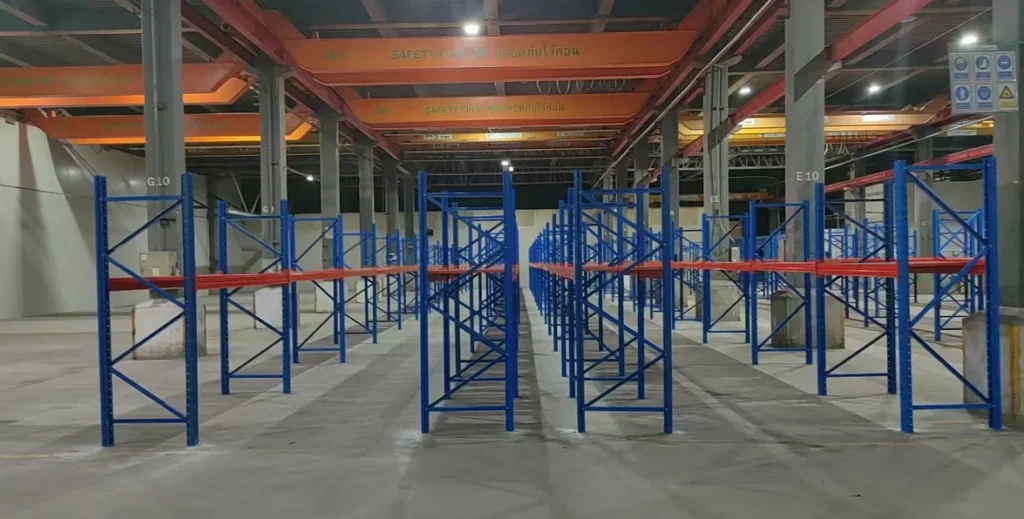
Warehouse & RackingWarehouse & Racking

Raw material and finished goods racking installed and commissioned.—2025-09

Site Commissioning
Samut Prakan, Thailand
Verified Site Record
Contaminant Engineering•3 min read

PFAS Water Filtration Technologies Explained: Carbon, Resin & RO

Key Takeaway:

PFAS reduction depends on the specific compounds present, treatment media, contact time, water chemistry, and system design. Activated carbon, ion exchange, and Reverse Osmosis address PFAS through different mechanisms.

PFAS are a large family of persistent fluorinated compounds that can occur in drinking-water supplies. Their treatment behavior varies significantly by molecular structure, chain length, functional group, concentration, and the chemistry of the source water.

Granular Activated Carbon (GAC) removes PFAS primarily through adsorption. It is generally more effective for many longer-chain PFAS, while shorter-chain compounds tend to break through more quickly. Carbon performance depends on media properties, Empty Bed Contact Time (EBCT), competing organic matter, loading, and replacement frequency.

Ion-exchange resins use charged functional sites to capture many PFAS compounds. Properly selected anion-exchange media can provide high capacity and may perform better than conventional activated carbon for some shorter-chain PFAS, although performance still depends on water chemistry and competing ions.

Reverse Osmosis (RO) uses membrane separation rather than adsorption. Properly designed RO systems can provide broad reduction across many PFAS compounds as well as dissolved salts and other contaminants. Unlike carbon or resin, however, RO also produces a concentrate stream that must be managed.

No single technology should be selected from a PFAS label alone. System design should consider which PFAS compounds are present, their concentrations, required reduction targets, flow rate, media life, and the applicable third-party certification or validation requirements.

HisoAir Water Technical Series
Product Discovery•3 min read

How to Choose an Under-Sink Water Purifier for Modern Kitchens

Key Takeaway:

Match the treatment technology to your water quality first, then evaluate cabinet space, faucet configuration, flow rate, drain and power requirements, and filter replacement needs.

Choosing an under-sink water purifier starts with water chemistry. Carbon filtration is well suited to chlorine, taste, odor, and many organic contaminants, while Reverse Osmosis is more appropriate when dissolved salts, fluoride, nitrates, or broader dissolved contaminants need to be reduced.

For compact kitchens, tankless RO systems eliminate the conventional storage tank and can significantly reduce the space required under the sink. However, membrane capacity stated in GPD does not directly equal faucet flow. When comparing systems, check the actual dispensing flow rate, inlet-pressure requirement, recovery ratio, and whether a booster pump is required.

Installation architecture also matters. Many RO systems require a drain connection, electrical power, and either a dedicated drinking-water faucet or a compatible multi-function faucet. High-flow carbon systems can often connect directly to the existing cold-water line with a simpler installation, but pressure drop and available faucet flow should still be verified.

RO also removes much of the naturally occurring dissolved mineral content. Where taste or mineral balance is a priority, a post-RO remineralization stage can be added. Filter life should be evaluated by both rated capacity and local water quality rather than replacement time alone.

The right system is therefore not simply the smallest or highest-GPD model. It is the configuration that matches the target contaminants, available cabinet space, desired faucet setup, peak dispensing demand, and maintenance expectations.

HisoAir Water Technical Series
Water Quality•2 min read

What Does TDS Mean in Drinking Water? Measurement vs Contaminant Reality

Key Takeaway:

A TDS meter estimates the overall concentration of dissolved ionic substances from electrical conductivity. It cannot identify specific contaminants or determine whether water is chemically safe.

Total Dissolved Solids (TDS) refers to the combined concentration of dissolved substances in water. Most handheld TDS meters do not measure TDS directly. Instead, they measure electrical conductivity (EC) and convert that reading into an estimated parts-per-million (ppm) value.

This means a TDS reading can indicate how much dissolved ionic material is present, but not what that material actually is. Calcium, magnesium, sodium, nitrates, and other dissolved ions can all contribute to conductivity, yet a simple TDS meter cannot distinguish between them.

TDS meters are also not suitable for detecting trace contaminants such as PFAS, many VOCs, pesticides, pharmaceuticals, or disinfection byproducts. These substances may be present at concentrations far below the level needed to noticeably change electrical conductivity.

A low TDS reading therefore does not guarantee safe drinking water, and a higher TDS reading does not automatically indicate contamination. Water-treatment decisions should be based on laboratory testing for specific contaminants of concern rather than TDS alone.

HisoAir Water Technical Series
Technology Selection•2 min read

RO vs UF Water Filtration: Understanding Pore Sizes & Dissolved Minerals

Key Takeaway:

Ultrafiltration can reduce bacteria, turbidity, and suspended particles while retaining most naturally occurring dissolved minerals. Reverse Osmosis provides much broader reduction of dissolved salts and smaller contaminants.

Ultrafiltration (UF) typically uses hollow-fiber membranes with pore sizes in the approximate 0.01–0.1 micron range. These membranes physically retain turbidity, suspended solids, colloids, and many microorganisms while allowing dissolved minerals and salts to remain in the water.

Reverse Osmosis (RO) operates at a much finer separation level. Unlike UF, RO can substantially reduce dissolved ions such as sodium, calcium, fluoride, nitrates, and other contributors to total dissolved solids (TDS). This makes RO more suitable when dissolved-salt reduction is a primary treatment objective.

UF generally requires less system pressure and produces little or no continuous concentrate stream in many point-of-use configurations. RO typically requires greater pressure and produces a reject-water stream, but delivers broader contaminant reduction.

For water with acceptable TDS and mineral content, UF can be a simpler mineral-retaining treatment option. Where dissolved salts, fluoride, nitrates, or broader dissolved contaminants are a concern, RO is generally the more appropriate technology.

HisoAir Water Technical Series
Technology Selection•4 min read

Carbon Block vs Reverse Osmosis: Which Fits Your Need?

Key Takeaway:

Choose RO for dissolved inorganic salts and heavy metals; choose Carbon Block for chemical taste/odor, no wastewater, and high line-pressure flow.

Reverse Osmosis (RO) and Carbon Block filtration represent two fundamentally different treatment methods: membrane separation and adsorption. Understanding these differences helps determine which technology is better suited to a specific water-quality requirement.

Reverse Osmosis uses a semi-permeable membrane with pore sizes of approximately 0.0001 microns. It can significantly reduce dissolved inorganic contaminants such as TDS, fluoride, nitrates, and certain heavy metals. Because water must be forced through the membrane, RO systems require sufficient pressure or a booster pump and generate a concentrated wastewater stream.

Carbon Block filtration relies primarily on adsorption through compressed activated carbon, commonly with nominal pore sizes around 0.5–5 microns. It is highly effective for chlorine, chloramines, VOCs, taste, and odor, while allowing substantially higher direct-flow rates without producing wastewater.

From an operating perspective, Carbon Block systems are generally simpler, require less energy, and avoid the water loss associated with RO. RO involves higher system complexity and operating cost, but provides substantially broader reduction of dissolved contaminants that Carbon Block alone cannot address.

HisoAir Water Technical Series

ЗАПРОСИТЬ ЦИТАТУ