Открывается в новой вкладке
Инновационные решения в области качества воздуха
HisoAir-Logo
Запрос сейчас

How Data & Sensors Will Change Water Appliances

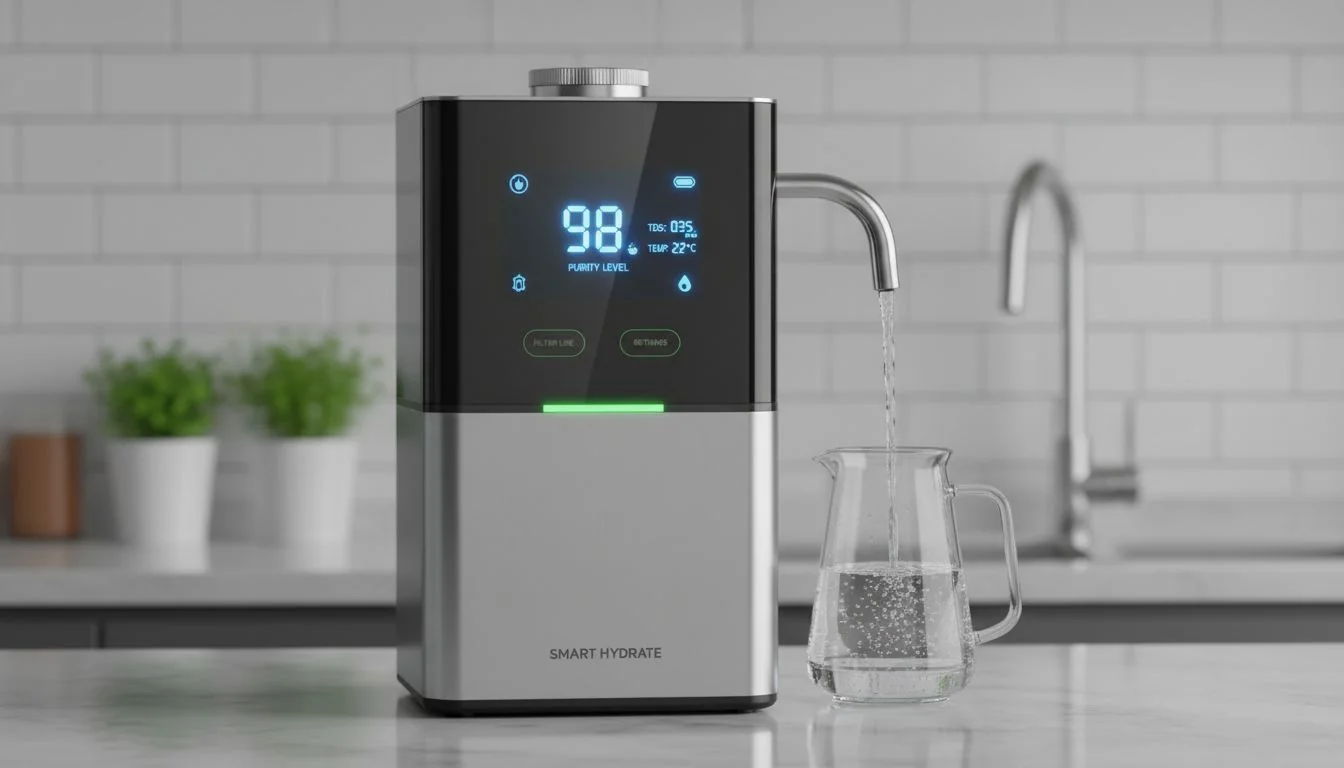
smart water purifier with digital display showing water quality

Designing water appliances used to be simple mechanics. Now, consumers demand smart features, leaving traditional designers feeling outdated. Here is how data integration changes everything for product developers.

Data and sensors transform water appliances from passive hardware into active service platforms. By integrating TDS sensors1, flow meters, and IoT connectivity, designers can offer real-time purity verification, predictive maintenance, and leak protection, significantly increasing user trust and product lifetime value.
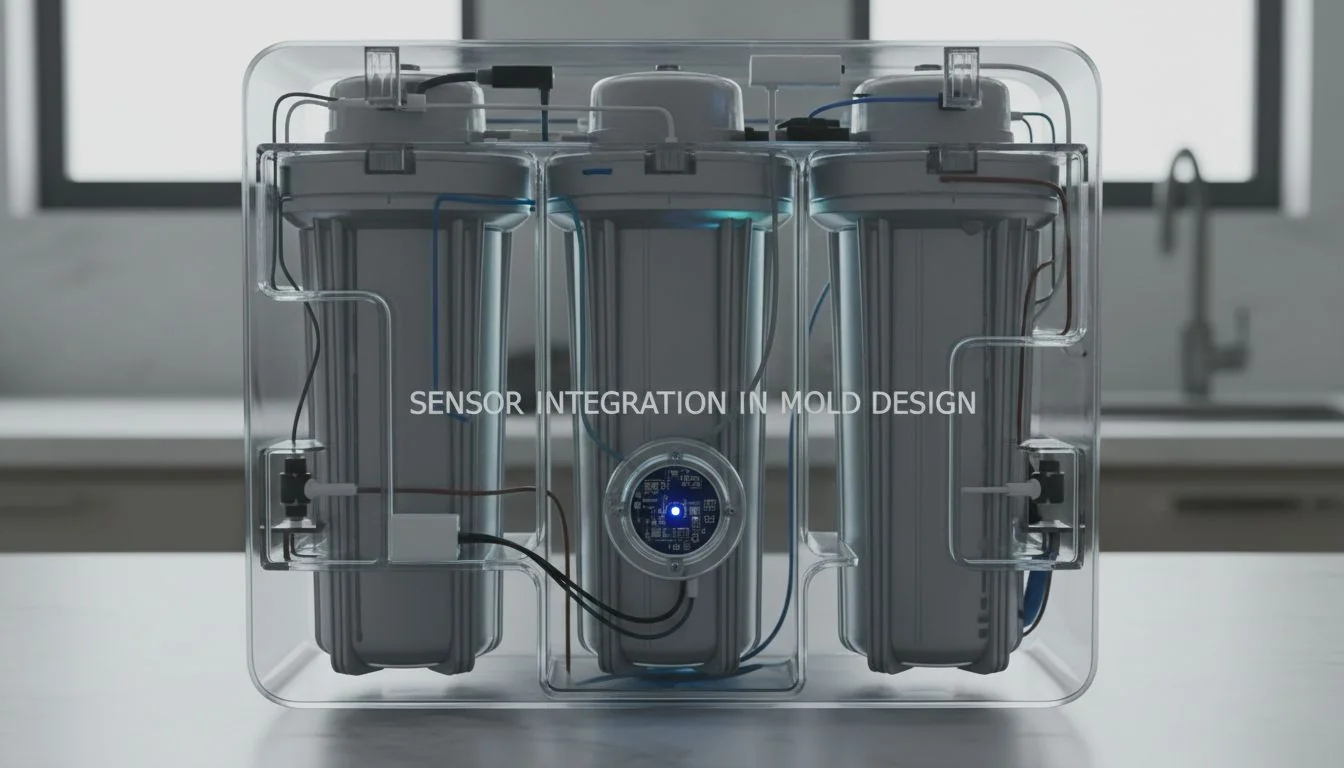
internal view of water purifier showing sensor placement

You might think this is just for software engineers, but it impacts mold design too. Let me explain why.

Consumers are willing to pay up to 20% more for appliances with verified performance data.Правда

Market research indicates that transparency and 'proof of work' features justify higher price points in the wellness sector.

Adding sensors simplifies the mold design process.Ложь

Sensors require precise housing, waterproofing, and cable routing, which adds complexity to the internal mold structure.

Why Must We Move From "Black Box" to "Glass Box" Designs?

Customers used to trust brands blindly. Now, skepticism is high, and hidden mechanics create doubt about water quality.

The "Glass Box" concept means making internal processes visible through data. Instead of hiding filtration, smart appliances display real-time performance, turning invisible functionality into a visible, premium feature that builds consumer confidence.
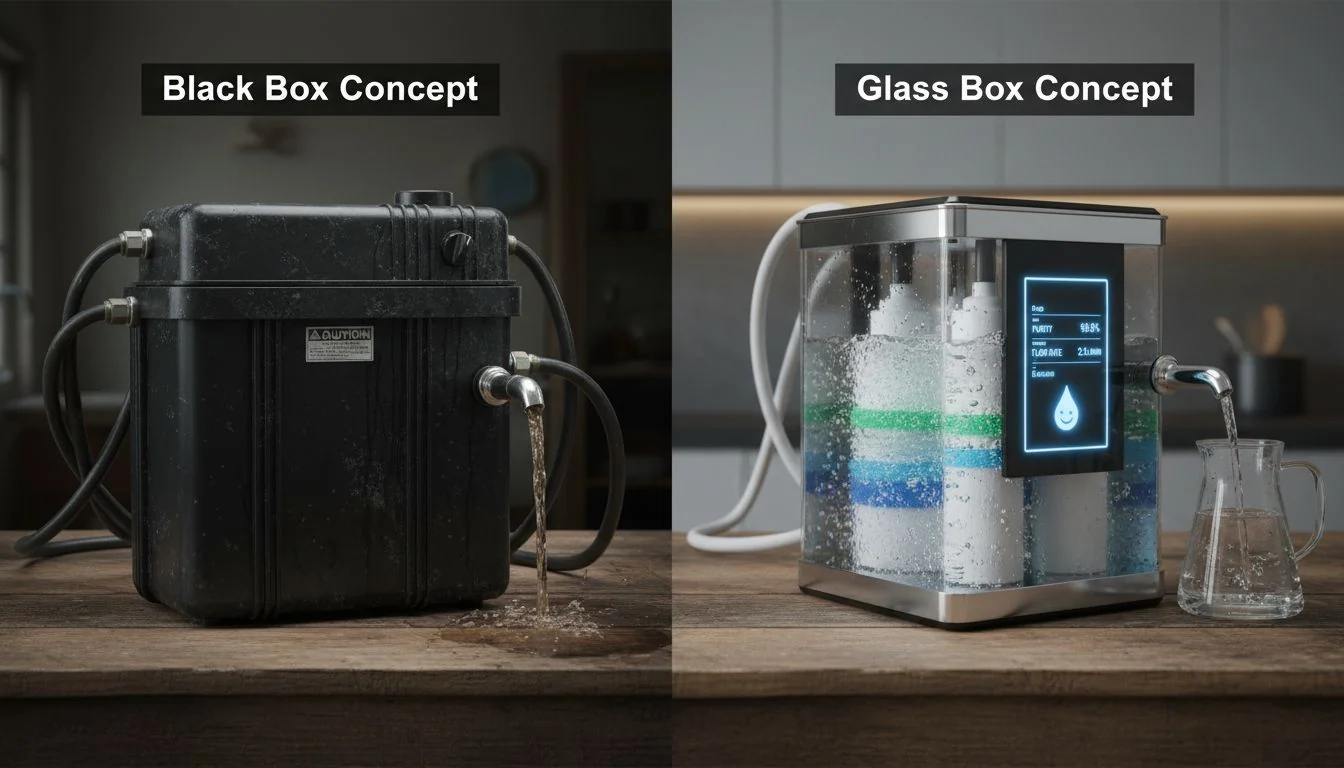
comparison of old opaque water filter vs new smart filter with screen

I have seen the industry change rapidly. In the past, we designed "Black Boxes." The user poured water in, and water came out. They had to hope it was clean. Today, hope is not a strategy. Premium buyers are skeptical. They want proof.

As designers, we must shift to "Glass Box" thinking. This does not mean the casing is clear plastic. It means the data makes the process transparent. We need to design interfaces that show the user exactly what is happening inside.

When I advise clients on mold structures for these new devices, we focus on where to place the display panels and how to route the sensor data. This transparency builds trust. If a user can see the filtration working through data, they trust the brand.

Характеристика "Black Box" Design "Glass Box" Design
user trust2 Based on Brand Name Based on Real-Time Data
Feedback None / Taste Test Digital Display / App
Value Perception Commodity Hardware premium health device3
Design Focus External Aesthetics Internal Performance Visibility

Visualizing data increases user engagement with the device.Правда

Users interact more frequently with devices that provide feedback, reinforcing the value proposition daily.

Glass Box design requires transparent plastic materials only.Ложь

It refers to data transparency, not physical transparency. The casing can be opaque if the digital interface reveals the internal process.

Can Real-Time Purity Verification Justify Higher Hardware Prices?

High-end clients hesitate to pay premiums for invisible results. They need proof that the machine actually works.

real-time purity verification4 uses Total Dissolved Solids (TDS) sensors to act as a "lie detector" for water quality. Displaying input versus output levels proves the filtration efficiency instantly, justifying a premium price point through tangible evidence.
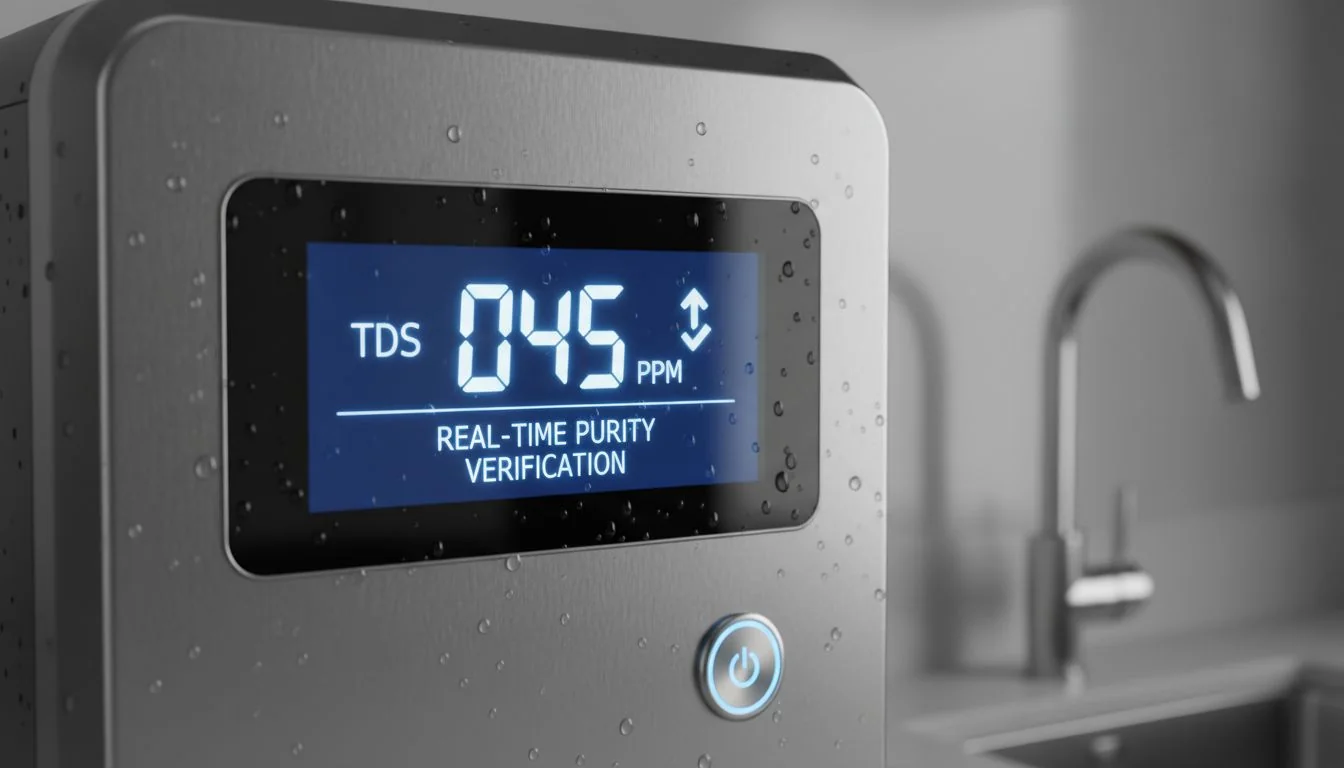
TDS sensor reading on a water purifier display

I often tell my clients: do not just sell clean water. Sell "Verified Purity." This is a massive difference.

Imagine you are designing a high-end purifier. You put a TDS (Total Dissolved Solids) sensor at the water inlet and another at the outlet. The screen shows "Input: 200 TDS" and "Output: 10 TDS."

This is a "Lie Detector" for water quality. It proves your machine works better than the tap every single second.

From a manufacturing perspective, this changes the mold. We need to create precise ports for these sensors in the flow channels. If the sensor fitting is loose, you get leaks. If it is too tight, you damage the sensor during assembly.

This feature justifies a high hardware price. The customer is not buying a plastic box. They are buying a laboratory-grade testing station for their kitchen.

TDS sensors measure all types of contaminants including bacteria.Ложь

TDS measures dissolved solids like minerals and salts. It does not directly measure bacteria or viruses, though a low TDS often implies effective reverse osmosis filtration.

Real-time verification reduces customer returns.Правда

When customers can see the device working effectively via data, they are less likely to return it due to perceived lack of performance.

Is the End of the 6-Month Filter Rule Finally Here?

Users hate guessing when to change filters. Fixed timelines are inefficient and often lead to wasted money or dirty water.

прогнозируемое обслуживание5 utilizes flow data and water quality readings to calculate exact filter life. This replaces arbitrary time-based rules with usage-based accuracy, ensuring optimal performance and driving consistent recurring revenue through auto-replenishment.
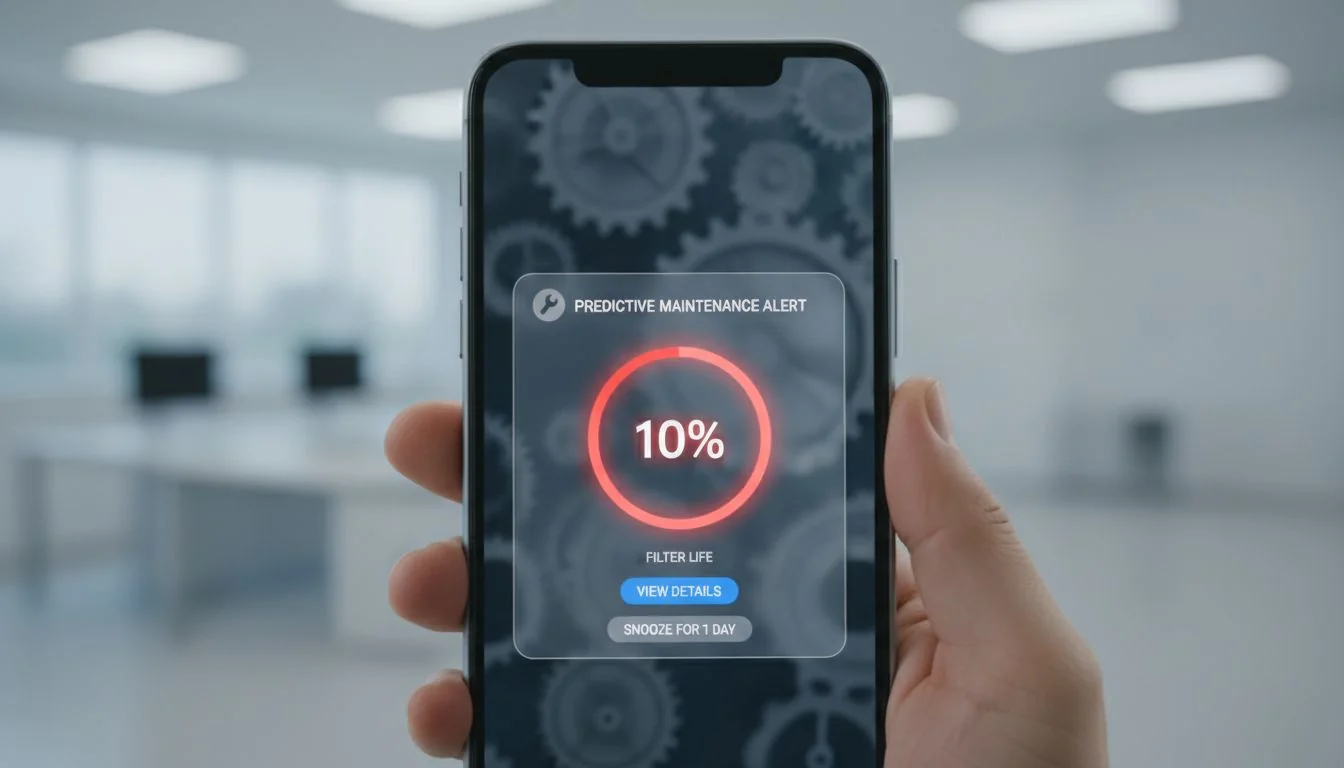
mobile app notification showing filter life at 10%

The biggest drop-off in Lifetime Value (LTV) for water companies is users forgetting to buy filters. The old "change every 6 months" rule is flawed. Some families drink 2 liters a day; others drink 20.

We can use sensor data to trigger Automatic Re-ordering6. This is the "Recurring Revenue" engine.

When the flow meter detects the filter is at 10% capacity, the App prompts a "One-Click Buy" or automatically ships a new one. This turns a one-time hardware sale into a consistent subscription business.

For us as designers, this means integrating the PCB (Printed Circuit Board) effectively within the housing. We need to protect these electronics from moisture. I have seen many designs fail because the humidity inside the machine corroded the smart board.

We must design dedicated, sealed compartments for the "brains" of the machine. This ensures the data keeps flowing, and the filter sales keep coming.

Usage-based filter replacement is more eco-friendly than time-based.Правда

It prevents users from throwing away filters that still have capacity, reducing plastic waste.

Predictive maintenance requires complex AI algorithms.Ложь

Simple logic based on flow volume and water quality readings is sufficient for accurate prediction in most water appliances.

How Does Gamification Create "Sticky" Users for Boring Appliances?

Water pitchers are boring and easily forgotten. To build loyalty, brands need to become part of a user's daily routine.

gamification7 transforms a standard appliance into a "Hydration Coach." By tracking consumption against daily goals via an app, brands keep users engaged daily, creating massive loyalty compared to non-connected devices sitting idle in the fridge.
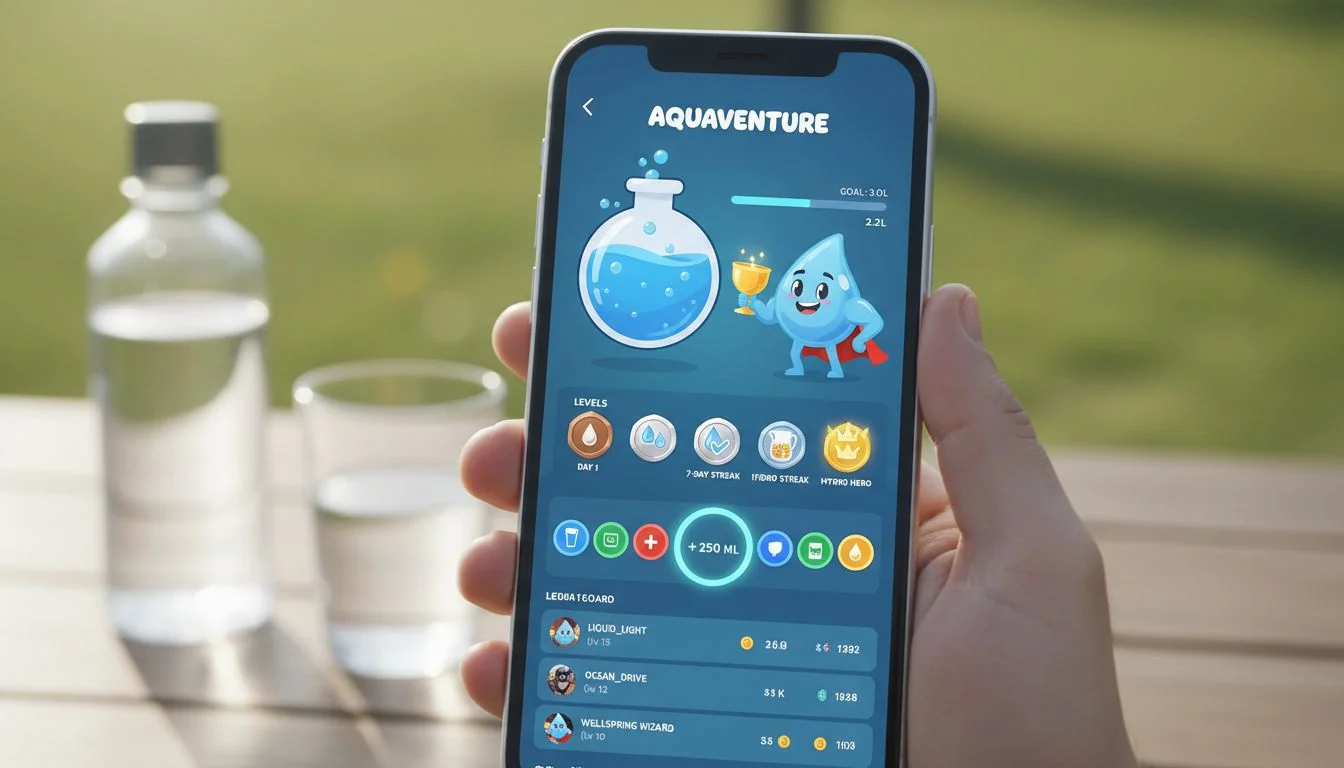
smartphone app showing hydration goals and water intake

Appliances are usually boring. Health apps are addictive. We need to bridge this gap.

I recommend pitching the "Hydration Coach" feature. If the user is checking your app to see if they hit their "2 Liters Goal," your brand is top-of-mind every day.

This creates massive brand loyalty compared to a "dumb" pitcher sitting in the fridge.

As a mold designer, I look at the user interface. Does the machine have a simple LED ring that lights up when they hit their goal? This requires light guides in the plastic mold.

We need to diffuse the light so it looks premium, not like a cheap toy. The texture of the plastic over the LED matters.

If we design the hardware to support this gamification, we make the user "sticky." They will not switch brands because they do not want to lose their hydration streak data.

Gamification increases daily water consumption for users.Правда

Tracking and rewards systems psychologically motivate users to meet their health goals.

Gamification features require expensive touchscreens on the device.Ложь

The heavy lifting is done on the smartphone app. The device only needs simple connectivity and basic indicators.

Why Is Leak Defense the Key to Winning B2B Contracts?

Water damage is a nightmare for developers and landlords. A single leak can ruin floors and cost thousands in repairs.

Smart leak defense acts as an insurance policy for real estate projects. By automatically shutting off flow when irregularities are detected, this feature mitigates risk, making these appliances highly attractive to developers fitting out luxury condos.
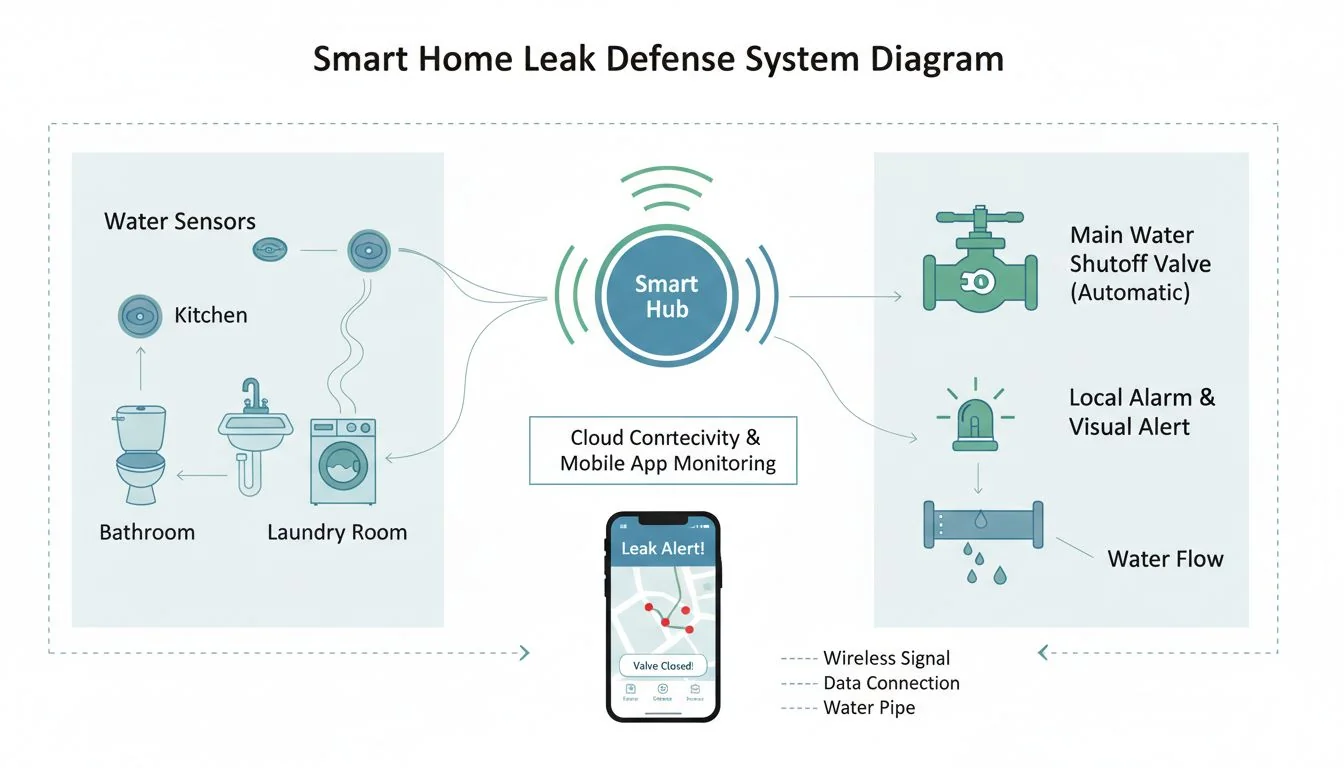
diagram of leak detection system in a smart home

Landlords and developers hate water damage. It is their biggest fear.

Position your Smart leak detection8 as an "Insurance Policy" for luxury condos. This feature alone can win B2B contracts for fitting out entire apartment blocks.

But here is the challenge: most water factories do not know software. They know how to bend metal and mold plastic.

This is where you need an "IoT Integrator" like Hisoair. They act as the Full-Stack Partner. They handle the hardware, the firmware, and the App.

You do not need to hire a software team. You partner with experts who handle the complex Tuya or Matter integration.

This allows the brand founder to focus on marketing. As a designer, knowing you have a partner like Hisoair means you can be ambitious with your features. You can promise leak defense because the tech stack supports it.

Leak detection systems can lower insurance premiums for buildings.Правда

Many insurance companies offer discounts for properties equipped with active leak prevention technology.

Leak defense is only necessary for industrial equipment.Ложь

Residential leaks are a leading cause of home insurance claims, making it vital for consumer appliances too.

Заключение

Data is the new brand loyalty. By integrating sensors, we move beyond selling hardware to selling verified trust and peace of mind.

Disclaimer

HisoAir is a B2B-focused manufacturer providing OEM/ODM product development and engineering services for air and water appliances. We do not provide consumer health advice or medical services.

References


  1. Understanding TDS sensors is crucial for grasping how they ensure water quality and justify premium pricing. ↩

  2. Exploring user trust factors can help brands develop strategies to enhance consumer confidence. ↩

  3. Understanding what makes a device premium can guide product development and marketing strategies. ↩

  4. Exploring real-time purity verification reveals how it builds consumer trust and justifies higher prices. ↩

  5. Learning about predictive maintenance can help optimize filter usage and improve customer satisfaction. ↩

  6. Understanding Automatic Re-ordering can help businesses create consistent revenue streams through subscriptions. ↩

  7. Discover how gamification can transform mundane tasks into engaging experiences, boosting brand loyalty. ↩

  8. Understanding leak detection systems can highlight their importance in preventing costly water damage. ↩

Поделиться:
Основатель Hisoair мистер Ли
Alwen Lee, an air purification expert with over 10 years of experience, is a devoted father of two and a passionate traveler, having explored more than 30 countries. With a love for public speaking and swimming, he has dedicated his life to the indoor air quality industry. His mission is to ensure that people around the world enjoy the freedom to breathe clean air and lead happy, healthy lives.

Отправить нам сообщение

Больше читать

Modern living room with a family enjoying a healthy indoor environment monitored by smart devices, natural lighting, and greenery.

After IFA 2026: The Healthy Home Is Moving Beyond Smart Devices

In our previous IFA 2026 column, Air Purification Is Becoming Part of the Healthy-Home Platform, we argued that the next generation of indoor-health products would ...
Новости
Modern living room and kitchen with smart home air quality devices including an air purifier, humidifier, and water filtration system, connected with visualized blue connectivity lines.

IFA 2026: Air Purification Is Becoming Part of the Healthy-Home Platform

Pre-IFA Industry Perspective | September 4, 2026 This article is based on official announcements and regulatory information available ahead of IFA 2026, which takes place ...
Новости
Comparison infographic showcasing the differences between carbon block filter and activated carbon fiber. Detailed diagrams illustrate the hierarchical porous structure of the carbon block with long diffusion paths and the open microporous structure of the activated carbon fiber with direct access for PFAS adsorption.

Carbon Block vs. Activated Carbon Fiber (ACF): Matching Media to Target Contaminants

Two carbon media. Same adsorption chemistry. Very different behaviour in a point-of-use cartridge. If you are specifying a water purifier platform for a PFAS-aware market, ...
Новости
NSF base listing and ANF private-label certification pathway for OEM water filters

What Is an NSF Master Listing? A Guide to Base Listings, ANF Certification and OEM Water Filters

For a brand preparing to launch an OEM water purifier, one of the most common supplier claims is: “We already have an NSF master listing, ...
News, Water Purifiers
Healthy-home brand team reviewing PFAS water filter certification, test data and product engineering

Entering the Water Category Is Easy. Building a Credible PFAS Claim Is Much Harder

For air purification, appliance and healthy-home brands, entering the water category can look surprisingly easy. A company can select an existing undersink system, customize its ...
Новости
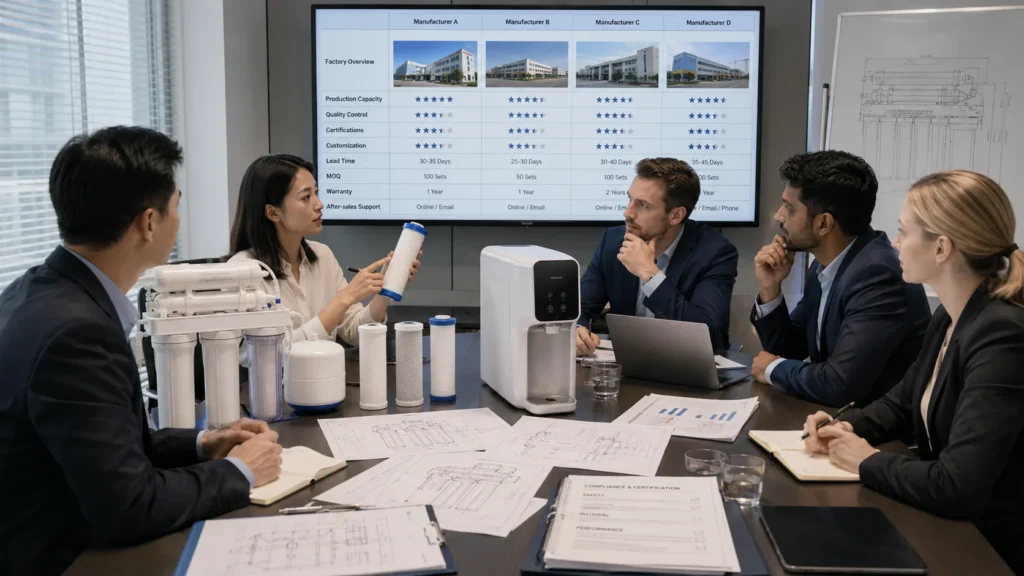
Team in a business meeting discussing a water filtration system with product components and a comparison table displayed on a screen.

5 Leading OEM Water Purifier Manufacturers in China for Private Label Brands

China has thousands of companies selling water filters, reverse osmosis systems and drinking-water appliances. However, only a portion of them are suitable for private-label, OEM ...
Новости
Contaminant Engineering•3 min read

PFAS Water Filtration Technologies Explained: Carbon, Resin & RO

Key Takeaway:

PFAS reduction depends on the specific compounds present, treatment media, contact time, water chemistry, and system design. Activated carbon, ion exchange, and Reverse Osmosis address PFAS through different mechanisms.

PFAS are a large family of persistent fluorinated compounds that can occur in drinking-water supplies. Their treatment behavior varies significantly by molecular structure, chain length, functional group, concentration, and the chemistry of the source water.

Granular Activated Carbon (GAC) removes PFAS primarily through adsorption. It is generally more effective for many longer-chain PFAS, while shorter-chain compounds tend to break through more quickly. Carbon performance depends on media properties, Empty Bed Contact Time (EBCT), competing organic matter, loading, and replacement frequency.

Ion-exchange resins use charged functional sites to capture many PFAS compounds. Properly selected anion-exchange media can provide high capacity and may perform better than conventional activated carbon for some shorter-chain PFAS, although performance still depends on water chemistry and competing ions.

Reverse Osmosis (RO) uses membrane separation rather than adsorption. Properly designed RO systems can provide broad reduction across many PFAS compounds as well as dissolved salts and other contaminants. Unlike carbon or resin, however, RO also produces a concentrate stream that must be managed.

No single technology should be selected from a PFAS label alone. System design should consider which PFAS compounds are present, their concentrations, required reduction targets, flow rate, media life, and the applicable third-party certification or validation requirements.

HisoAir Water Technical Series
Product Discovery•3 min read

How to Choose an Under-Sink Water Purifier for Modern Kitchens

Key Takeaway:

Match the treatment technology to your water quality first, then evaluate cabinet space, faucet configuration, flow rate, drain and power requirements, and filter replacement needs.

Choosing an under-sink water purifier starts with water chemistry. Carbon filtration is well suited to chlorine, taste, odor, and many organic contaminants, while Reverse Osmosis is more appropriate when dissolved salts, fluoride, nitrates, or broader dissolved contaminants need to be reduced.

For compact kitchens, tankless RO systems eliminate the conventional storage tank and can significantly reduce the space required under the sink. However, membrane capacity stated in GPD does not directly equal faucet flow. When comparing systems, check the actual dispensing flow rate, inlet-pressure requirement, recovery ratio, and whether a booster pump is required.

Installation architecture also matters. Many RO systems require a drain connection, electrical power, and either a dedicated drinking-water faucet or a compatible multi-function faucet. High-flow carbon systems can often connect directly to the existing cold-water line with a simpler installation, but pressure drop and available faucet flow should still be verified.

RO also removes much of the naturally occurring dissolved mineral content. Where taste or mineral balance is a priority, a post-RO remineralization stage can be added. Filter life should be evaluated by both rated capacity and local water quality rather than replacement time alone.

The right system is therefore not simply the smallest or highest-GPD model. It is the configuration that matches the target contaminants, available cabinet space, desired faucet setup, peak dispensing demand, and maintenance expectations.

HisoAir Water Technical Series
Water Quality•2 min read

What Does TDS Mean in Drinking Water? Measurement vs Contaminant Reality

Key Takeaway:

A TDS meter estimates the overall concentration of dissolved ionic substances from electrical conductivity. It cannot identify specific contaminants or determine whether water is chemically safe.

Total Dissolved Solids (TDS) refers to the combined concentration of dissolved substances in water. Most handheld TDS meters do not measure TDS directly. Instead, they measure electrical conductivity (EC) and convert that reading into an estimated parts-per-million (ppm) value.

This means a TDS reading can indicate how much dissolved ionic material is present, but not what that material actually is. Calcium, magnesium, sodium, nitrates, and other dissolved ions can all contribute to conductivity, yet a simple TDS meter cannot distinguish between them.

TDS meters are also not suitable for detecting trace contaminants such as PFAS, many VOCs, pesticides, pharmaceuticals, or disinfection byproducts. These substances may be present at concentrations far below the level needed to noticeably change electrical conductivity.

A low TDS reading therefore does not guarantee safe drinking water, and a higher TDS reading does not automatically indicate contamination. Water-treatment decisions should be based on laboratory testing for specific contaminants of concern rather than TDS alone.

HisoAir Water Technical Series
Technology Selection•2 min read

RO vs UF Water Filtration: Understanding Pore Sizes & Dissolved Minerals

Key Takeaway:

Ultrafiltration can reduce bacteria, turbidity, and suspended particles while retaining most naturally occurring dissolved minerals. Reverse Osmosis provides much broader reduction of dissolved salts and smaller contaminants.

Ultrafiltration (UF) typically uses hollow-fiber membranes with pore sizes in the approximate 0.01–0.1 micron range. These membranes physically retain turbidity, suspended solids, colloids, and many microorganisms while allowing dissolved minerals and salts to remain in the water.

Reverse Osmosis (RO) operates at a much finer separation level. Unlike UF, RO can substantially reduce dissolved ions such as sodium, calcium, fluoride, nitrates, and other contributors to total dissolved solids (TDS). This makes RO more suitable when dissolved-salt reduction is a primary treatment objective.

UF generally requires less system pressure and produces little or no continuous concentrate stream in many point-of-use configurations. RO typically requires greater pressure and produces a reject-water stream, but delivers broader contaminant reduction.

For water with acceptable TDS and mineral content, UF can be a simpler mineral-retaining treatment option. Where dissolved salts, fluoride, nitrates, or broader dissolved contaminants are a concern, RO is generally the more appropriate technology.

HisoAir Water Technical Series
Technology Selection•4 min read

Carbon Block vs Reverse Osmosis: Which Fits Your Need?

Key Takeaway:

Choose RO for dissolved inorganic salts and heavy metals; choose Carbon Block for chemical taste/odor, no wastewater, and high line-pressure flow.

Reverse Osmosis (RO) and Carbon Block filtration represent two fundamentally different treatment methods: membrane separation and adsorption. Understanding these differences helps determine which technology is better suited to a specific water-quality requirement.

Reverse Osmosis uses a semi-permeable membrane with pore sizes of approximately 0.0001 microns. It can significantly reduce dissolved inorganic contaminants such as TDS, fluoride, nitrates, and certain heavy metals. Because water must be forced through the membrane, RO systems require sufficient pressure or a booster pump and generate a concentrated wastewater stream.

Carbon Block filtration relies primarily on adsorption through compressed activated carbon, commonly with nominal pore sizes around 0.5–5 microns. It is highly effective for chlorine, chloramines, VOCs, taste, and odor, while allowing substantially higher direct-flow rates without producing wastewater.

From an operating perspective, Carbon Block systems are generally simpler, require less energy, and avoid the water loss associated with RO. RO involves higher system complexity and operating cost, but provides substantially broader reduction of dissolved contaminants that Carbon Block alone cannot address.

HisoAir Water Technical Series

ЗАПРОСИТЬ ЦИТАТУ