
Pre-IFA Industry Perspective | September 4, 2026
This article is based on official announcements and regulatory information available ahead of IFA 2026, which takes place in Berlin from September 4–8, 2026. Product announcements and industry observations may be updated as additional information becomes available during and after the show.
For years, air purifier development has focused on a familiar set of metrics: CADR, filtration efficiency, noise, filter life and industrial design.
Those fundamentals still matter.
But ahead of IFA 2026, another direction is becoming increasingly visible:
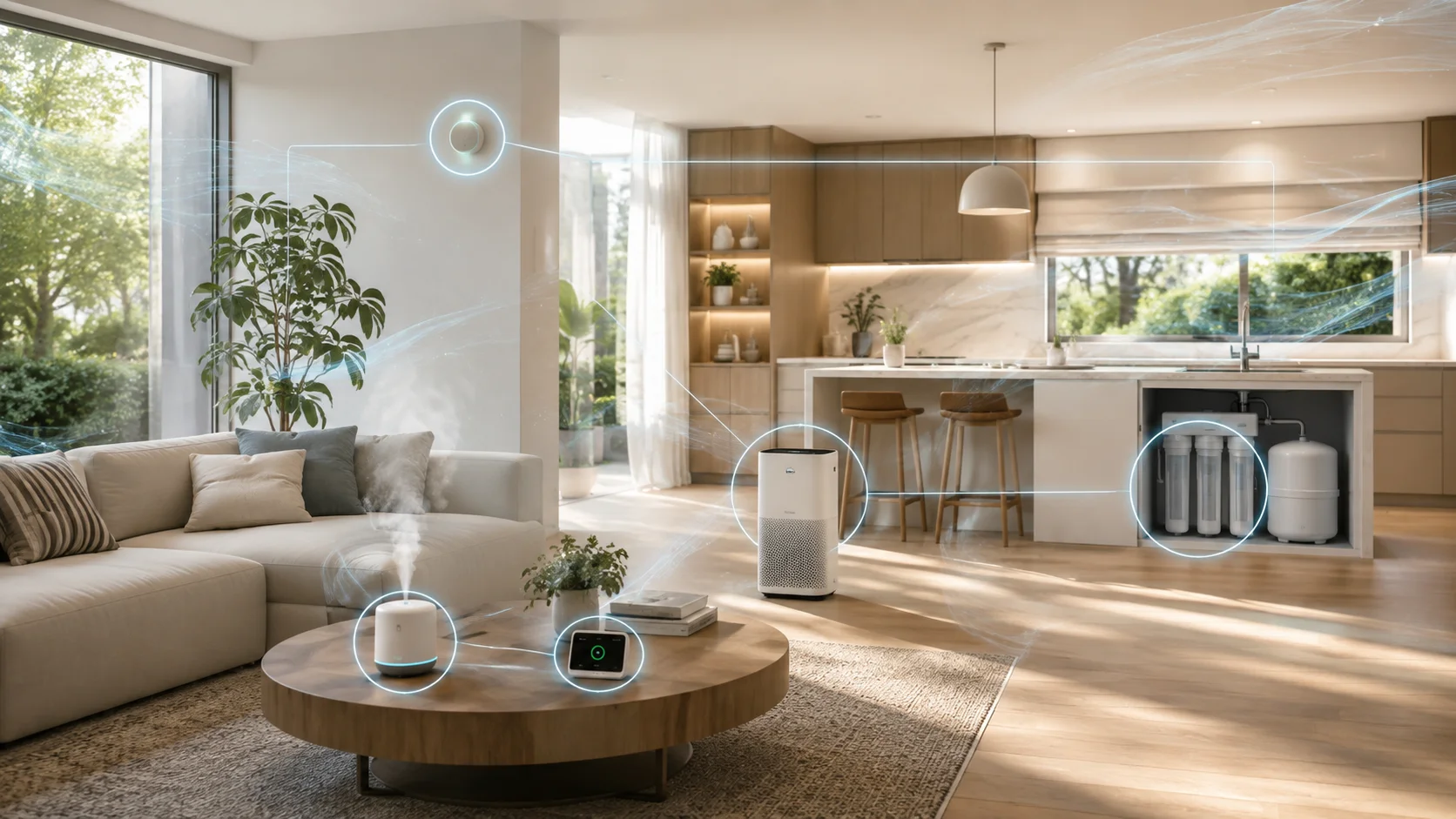
Air purification is beginning to move from a standalone appliance toward a broader healthy-home environment platform.
That platform is not defined by one device. It increasingly connects five layers:
Clean Air + Clean Water + Humidity + Environmental Sensing + Connectivity
For appliance brands, healthy-home companies and OEM/ODM product teams, this could change how the next generation of indoor environmental products is designed.
The opportunity is no longer simply to make individual appliances smarter. It is to help different environmental systems sense, respond and eventually work together.
From Smart Appliances to an Intelligent Home Environment

IFA has traditionally been a major stage for home appliances and consumer technology.
At IFA 2026, AI, connected living and smarter home environments are again central themes.
One useful example comes from DREO.
Ahead of the show, DREO announced DREO Air Intelligence, an AI-powered home-air management system combining environmental sensing, intelligent reasoning and coordinated device control.
The important point is not simply that an air purifier has become connected.
It is the architecture behind it:
Sense → Understand → Act
Sensors first understand changing indoor conditions. A software or intelligence layer interprets those conditions. Connected appliances then respond.
DREO is also hosting an IFA Dream Stage discussion titled “How Air, Connectivity and Intelligence Bridge the Last Mile of Home Wellness,” featuring the President and CEO of the Connectivity Standards Alliance.
That positioning illustrates how the air category is expanding beyond filtration alone.
LG is approaching the same idea from the broader smart-home side.
Its newly announced ThinQ Claw AI agent is designed to interpret user context and coordinate connected devices and services. One example described by LG involves monitoring indoor air quality and temperature before a resident arrives home and preparing a more comfortable indoor environment.
Different companies are approaching the opportunity from different directions, but the architectural logic is similar:
Environmental data is becoming an input for coordinated home systems rather than information displayed by one appliance.
Air Purification Is a Natural Starting Point
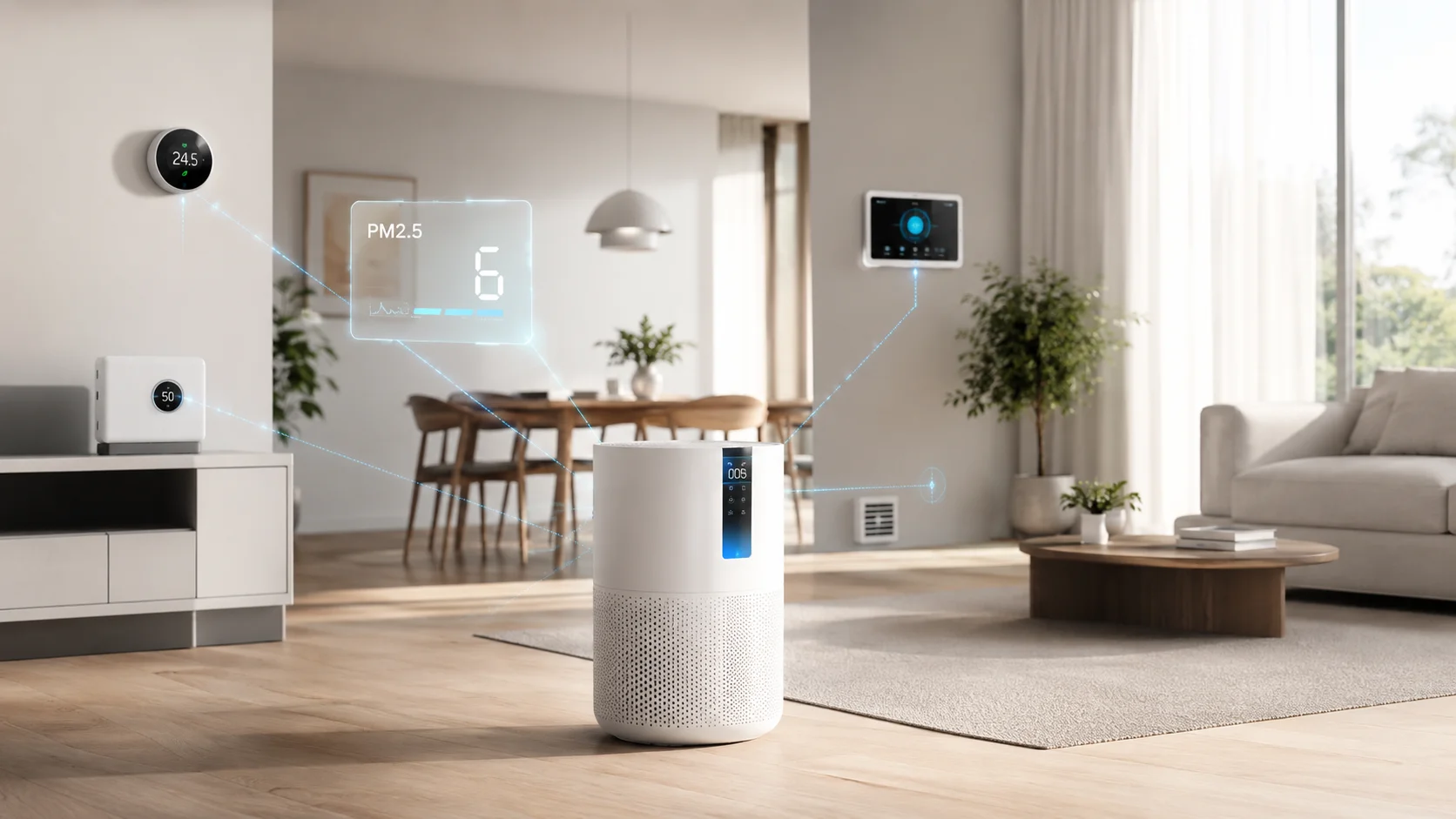
Air purification is particularly well positioned for this transition.
Modern air purifiers already combine several building blocks required by a broader environmental platform:
- Environmental sensing
- Variable-speed airflow control
- Automatic operating modes
- Replaceable filtration
- Filter-life monitoring
- Wireless connectivity
- App or ecosystem integration
This means the category has already moved beyond simple mechanical filtration.
The next step is not necessarily adding more functions to the purifier itself.
It is allowing the purifier to become one part of a larger environmental system.
A PM2.5 sensor, for example, can simply display particle levels.
But when environmental sensing is connected with purification, ventilation, occupancy and other building systems, the same data can help determine:
What is changing?
Does the space need intervention?
Which device should respond?
How long should it operate?
When can energy consumption be reduced?
That is a different product architecture.
The Healthy-Home Platform Has More Than One Environmental Layer

Indoor environmental quality is not determined by air purification alone.
A healthy-home product strategy increasingly needs to consider several interconnected dimensions.
Clean Air
Air remains one of the most developed parts of the healthy-home technology stack.
Particle sensing, HEPA filtration, activated carbon, airflow management and automatic control are already well established.
The opportunity is increasingly about how those capabilities connect with the rest of the indoor environment.
Humidity
Humidity sits directly between air quality and thermal comfort.
Too much or too little humidity affects how a space feels and changes the operating requirements of indoor environmental equipment.
This makes humidification and dehumidification natural extensions of an air-management architecture rather than entirely separate appliance categories.
Environmental Sensing
Sensing becomes the input layer.
PM2.5, CO₂, VOCs, temperature and relative humidity can provide different signals about what is happening inside a room.
Depending on the application, occupancy, light, noise or other environmental parameters may add additional context.
The value is not simply collecting more sensor data.
The value is determining which information is useful enough to trigger an appropriate response.
Clean Water
Water is less integrated into today's smart-home environment than air.
That may also make it one of the more interesting future opportunities.
In Europe, water-quality regulation is making contaminants such as PFAS increasingly visible. From January 12, 2026, EU Member States are required to conduct harmonised monitoring of PFAS in drinking water under the recast Drinking Water Directive.
This regulatory development should not be interpreted as evidence that every household requires a new filtration appliance.
It does, however, reinforce a broader trend:
Water quality is increasingly being treated as something that can be measured, monitored and managed.
For healthy-home brands, this creates a longer-term product question.
If a connected home can monitor air quality, temperature and humidity, could future environmental platforms also incorporate water-system information such as usage, filter condition, flow and maintenance status?
Air and water do not need to become one appliance.
But they can increasingly become parts of the same healthy-home product strategy.
Regulation Is Also Pushing Environmental Monitoring Forward
The move toward environmental sensing is not driven only by consumer electronics.
Building regulation is moving in the same direction.
The revised EU Energy Performance of Buildings Directive requires Member States to establish requirements for adequate indoor environmental quality and requires non-residential zero-emission buildings to include measuring and control devices for monitoring and regulating indoor air quality.
For existing non-residential buildings undergoing major renovation, such devices are also required where technically and economically feasible.
This matters because indoor environmental quality is increasingly becoming something buildings are expected to measure and manage, not simply something occupants perceive.
For product developers, that creates opportunities beyond consumer air purifiers.
Environmental sensors, connected purification, ventilation and room-level control can increasingly form part of commercial and institutional building strategies.
Connectivity Is the Layer That Turns Devices Into a Platform
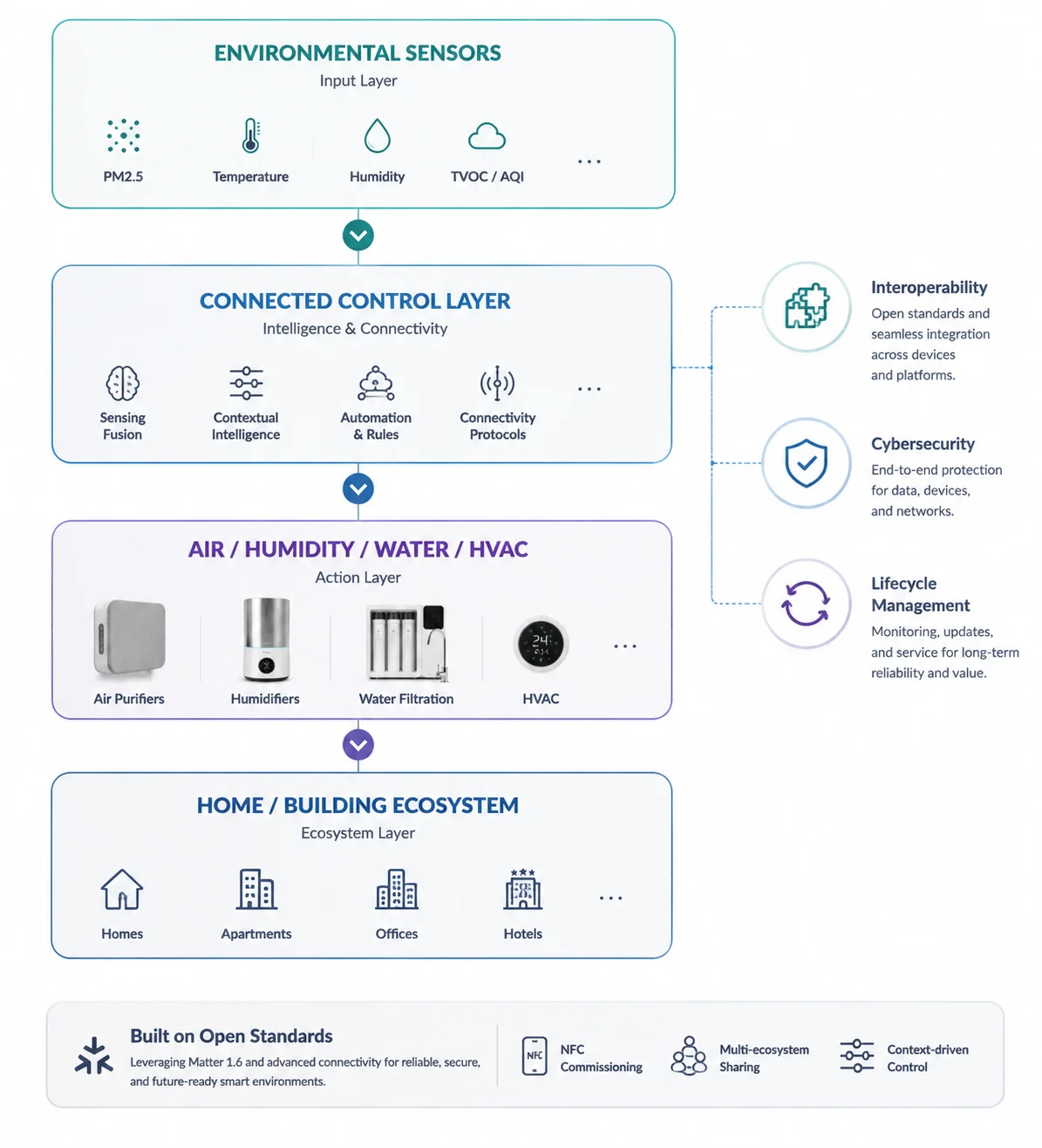
Air purification, water treatment, humidity management and sensing can all exist independently.
Connectivity is what allows them to begin functioning as a system.
Matter is one important part of this development.
The Connectivity Standards Alliance released Matter 1.6 in June 2026. Rather than focusing primarily on adding new device categories, this release improves areas such as NFC-based commissioning, multi-ecosystem device management and context-driven control.
That direction matters for healthy-home product development.
The future may not require every appliance brand to build a completely closed ecosystem.
Instead, products can increasingly be designed to participate in broader interoperable environments.
But connectivity introduces another issue:
A connected appliance is also a cybersecurity product.
Connected Healthy-Home Products Bring New Responsibilities
This point is especially important for European brands and OEM/ODM programs.
From September 11, 2026, just days after IFA closes, the reporting obligations of the EU Cyber Resilience Act begin to apply.
Manufacturers of products with digital elements will be required to report actively exploited vulnerabilities and severe cybersecurity incidents. The European Commission specifies an early warning within 24 hours and a fuller notification within 72 hours.
The wider CRA requirements are phased in separately, with the Regulation's main obligations applying later.
For brands using private-label or OEM/ODM models, the definition of manufacturer deserves particular attention.
Under the CRA, a company that has a product with digital elements designed, developed or manufactured and then markets that product under its own name or trademark can fall within the manufacturer definition.
This means adding Wi-Fi, an app, remote control or cloud functionality should no longer be treated only as a feature decision.
Product teams increasingly need to consider:
- Cybersecurity architecture
- Software-component management
- Vulnerability handling
- Update strategy
- Support periods
- Compliance responsibilities across the supply chain
For OEM/ODM relationships, these requirements make the underlying product architecture increasingly important.
What This Means for HisoAir's Product Development Direction
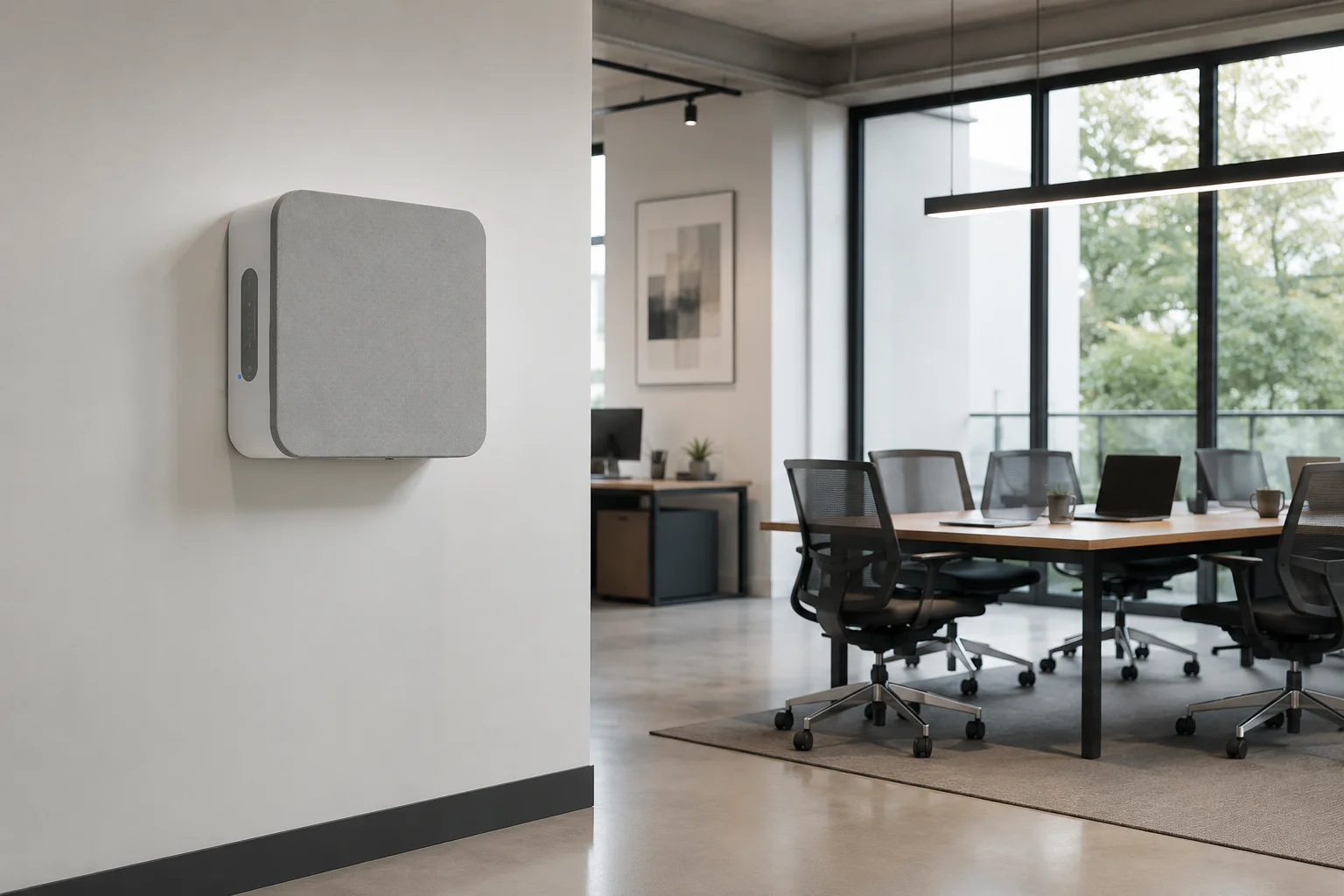
At HisoAir, we see these developments as part of a broader shift from individual indoor-health appliances toward configurable environmental platforms.
Our existing air-purification platforms already provide a practical foundation.
For example, HisoAir's HA200 and HA400 wall-mounted and freestanding purifier platform combines PM2.5 sensing with configurable options for additional environmental sensors such as CO₂, temperature, humidity, TVOC, light, noise and occupancy detection.
Connectivity can also be configured depending on the project requirements.
The longer-term opportunity is to extend this product-development logic across multiple indoor-health categories:
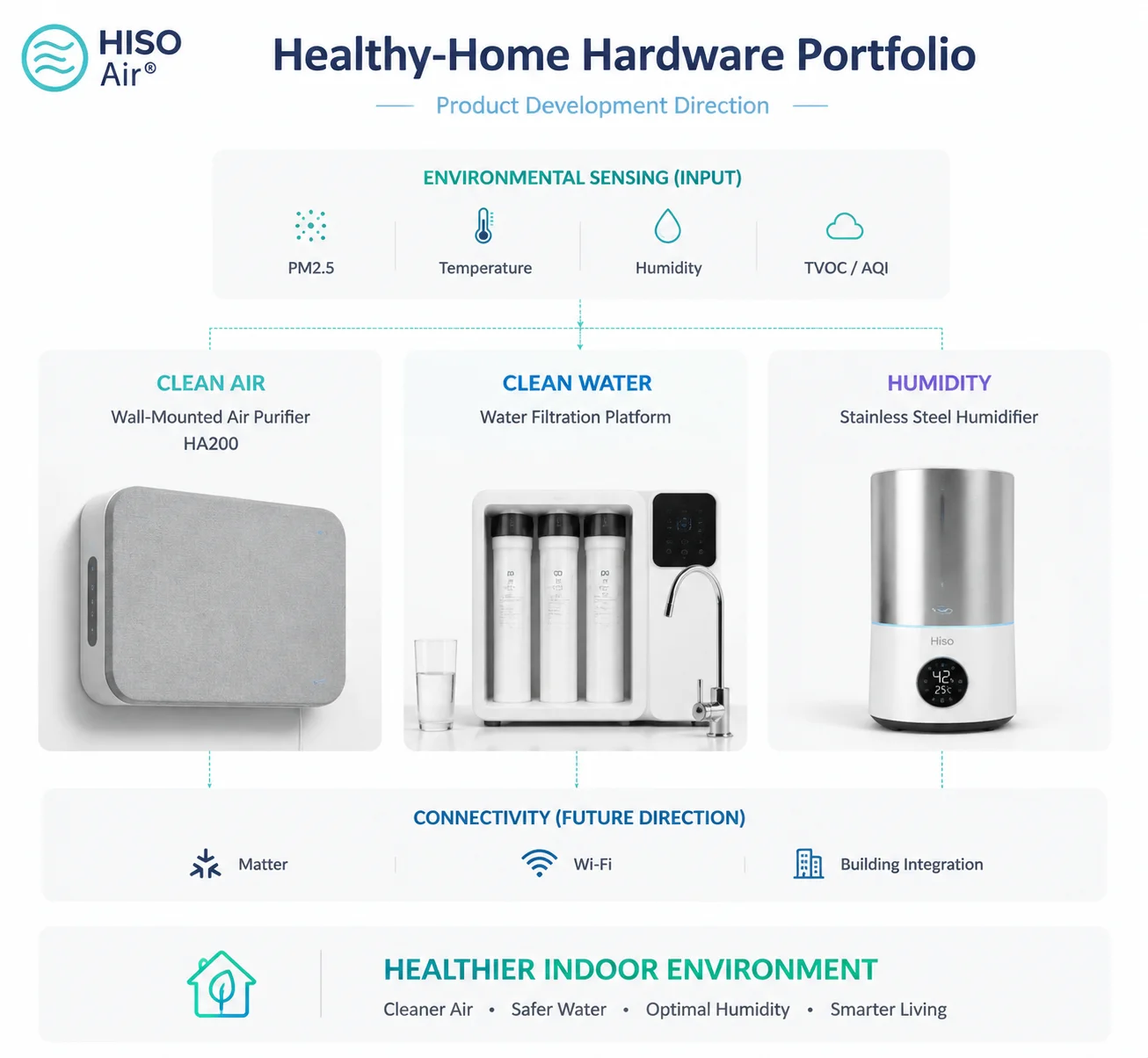
Clean Air
Purification, filtration and airflow management.
Clean Water
Filtration platforms designed around specific water-quality requirements and validated performance targets.
Humidity
Humidification and dehumidification as part of thermal and indoor-environment management.
Environmental Sensing
Providing the data layer needed to understand changing indoor conditions.
Connectivity
Allowing individual products to participate in wider home or building ecosystems.
These do not need to become one oversized device.
Instead, the opportunity is to develop a modular product architecture in which different products can share environmental information and respond to the needs of the space.
From Standalone Products to Sense–Understand–Act
The healthy-home market will continue to need better individual products.
Better filtration matters.
Lower noise matters.
Longer filter life matters.
Better water-treatment performance matters.
Reliable humidity control matters.
But the next layer of differentiation may increasingly come from how these products work together.
A useful way to think about that architecture is:
Sense
Understand air quality, temperature, humidity, occupancy and other relevant environmental conditions.
Understand
Determine whether conditions require action and which device is best suited to respond.
Act
Activate purification, humidity control, ventilation or another environmental system.
Verify
Use environmental data to determine whether conditions actually improved.
This creates a feedback loop rather than a collection of disconnected appliances.
The Next Healthy-Home Opportunity
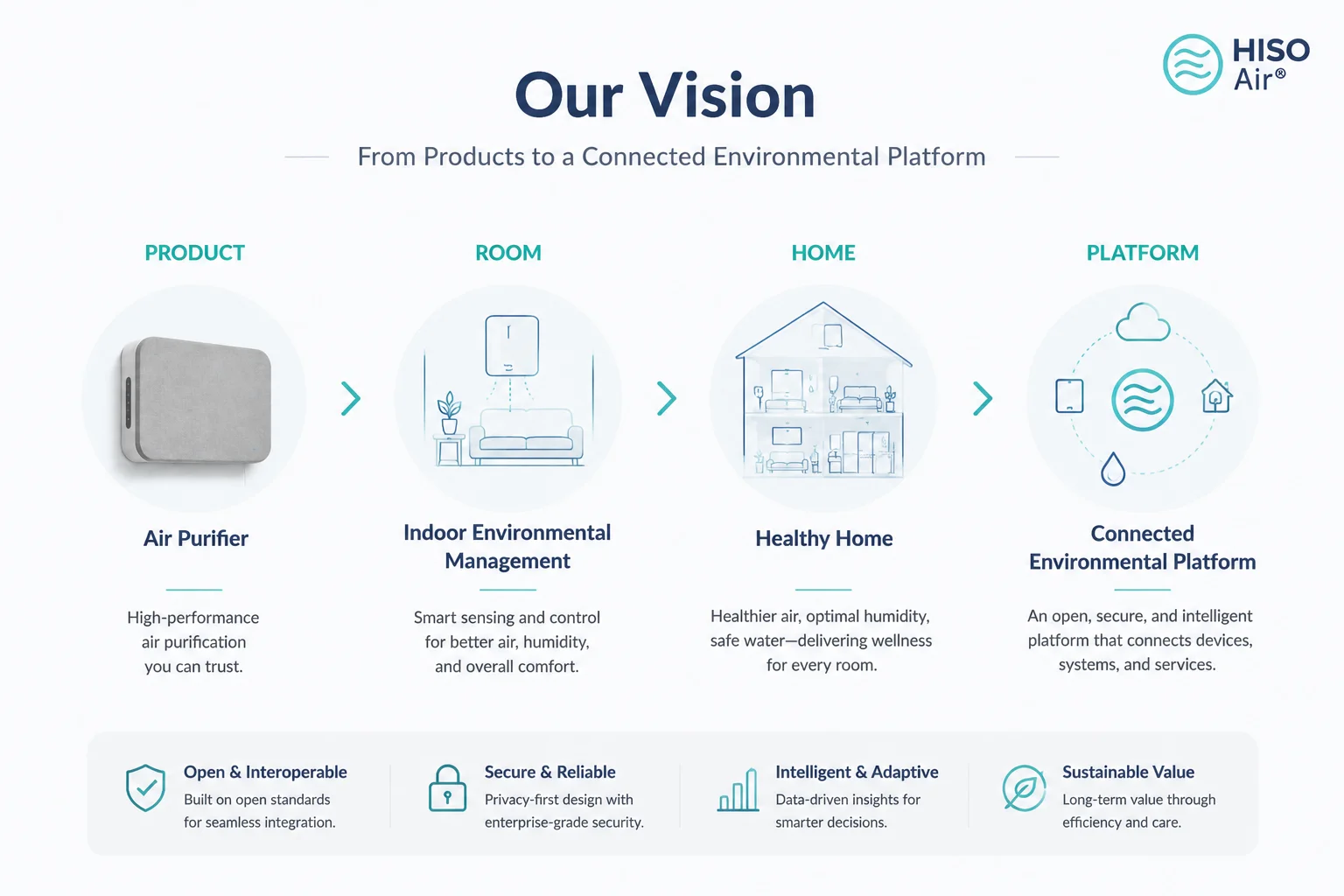
IFA 2026 is likely to generate plenty of discussion about AI appliances, smart-home ecosystems and connected products.
For the indoor-health industry, the more important question may be what happens when those technologies begin to converge.
Air purification is connecting with environmental sensing.
Environmental sensing is becoming part of smarter control systems.
Humidity increasingly belongs within the same indoor-environment discussion.
Water quality is becoming more measurable and more visible.
And connectivity is becoming both an interoperability opportunity and a product responsibility.
The result is a different strategic question for appliance brands:
Instead of asking how to make the next appliance smarter, should we start by asking how the indoor environment should be sensed, managed and improved?
Air purification may be one of the first healthy-home categories to make that transition.
But it is unlikely to be the last.
For brands and product teams exploring their next indoor-health platform, the opportunity may increasingly lie in connecting clean air, clean water, healthy humidity and environmental intelligence around one coherent product strategy.
Sources and Further Reading
For factual and regulatory references in this article, HisoAir reviewed primary or first-party sources including:
- IFA Berlin — IFA 2026 official event information
- DREO — IFA 2026 Air Intelligence announcement
- LG Global Newsroom — AI Home and ThinQ Claw announcement
- European Commission — Drinking Water Directive / PFAS monitoring
- EUR-Lex — Energy Performance of Buildings Directive
- European Commission — Cyber Resilience Act reporting obligations
- Connectivity Standards Alliance — Matter 1.6
- HisoAir — HA200 / HA400 product and sensing configuration information
Regulatory information in this article is provided for general industry discussion and should not be interpreted as legal or certification advice.

 English
  Français
  Español
  Italiano
  Deutsch
  Português
  Русский
  العربية
  日本語
日本語  한국어
한국어  Tiếng Việt

