

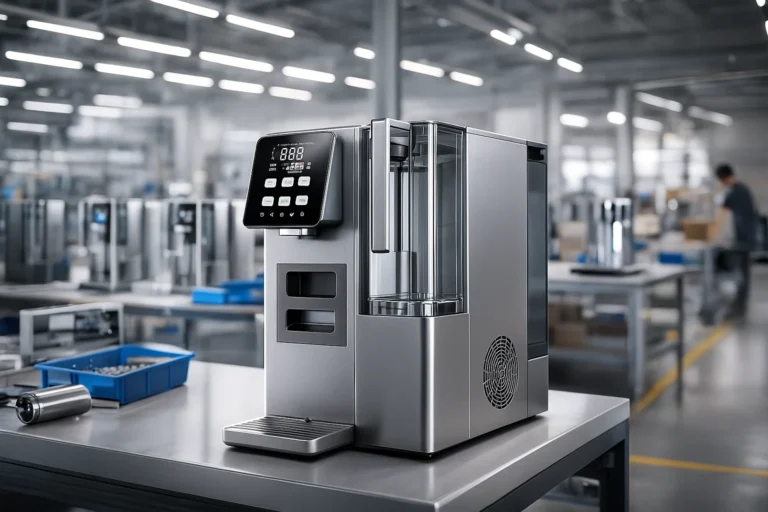
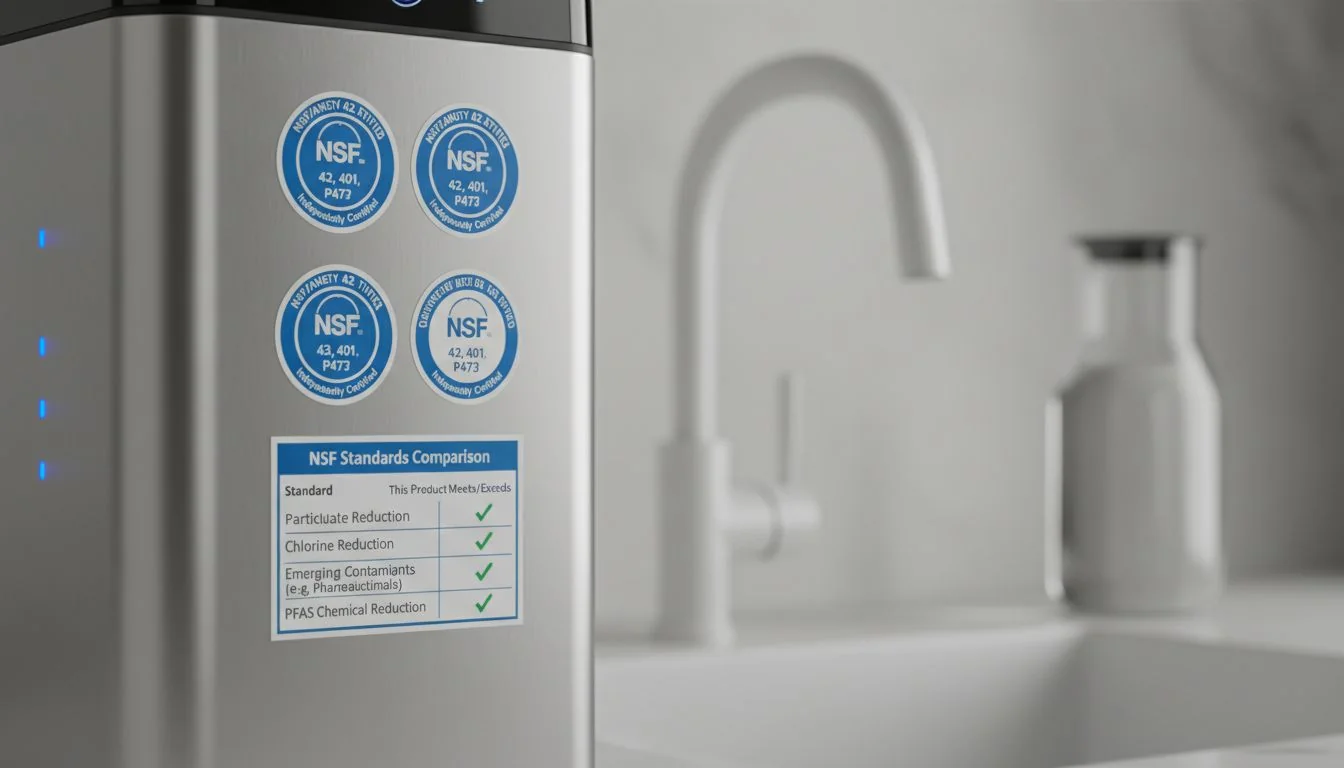
You design sleek water purifiers, but customers demand proof of purity. Confusing certification codes can kill your product launch. Here is the clear breakdown you need to master.
NSF 421 covers aesthetic effects like taste and chlorine. NSF 53 addresses health effects like lead and VOCs. NSF 58 is the gold standard for Reverse Osmosis systems, removing up to 99% of contaminants including PFAS. Choosing the right one dictates your product's price point and market positioning.
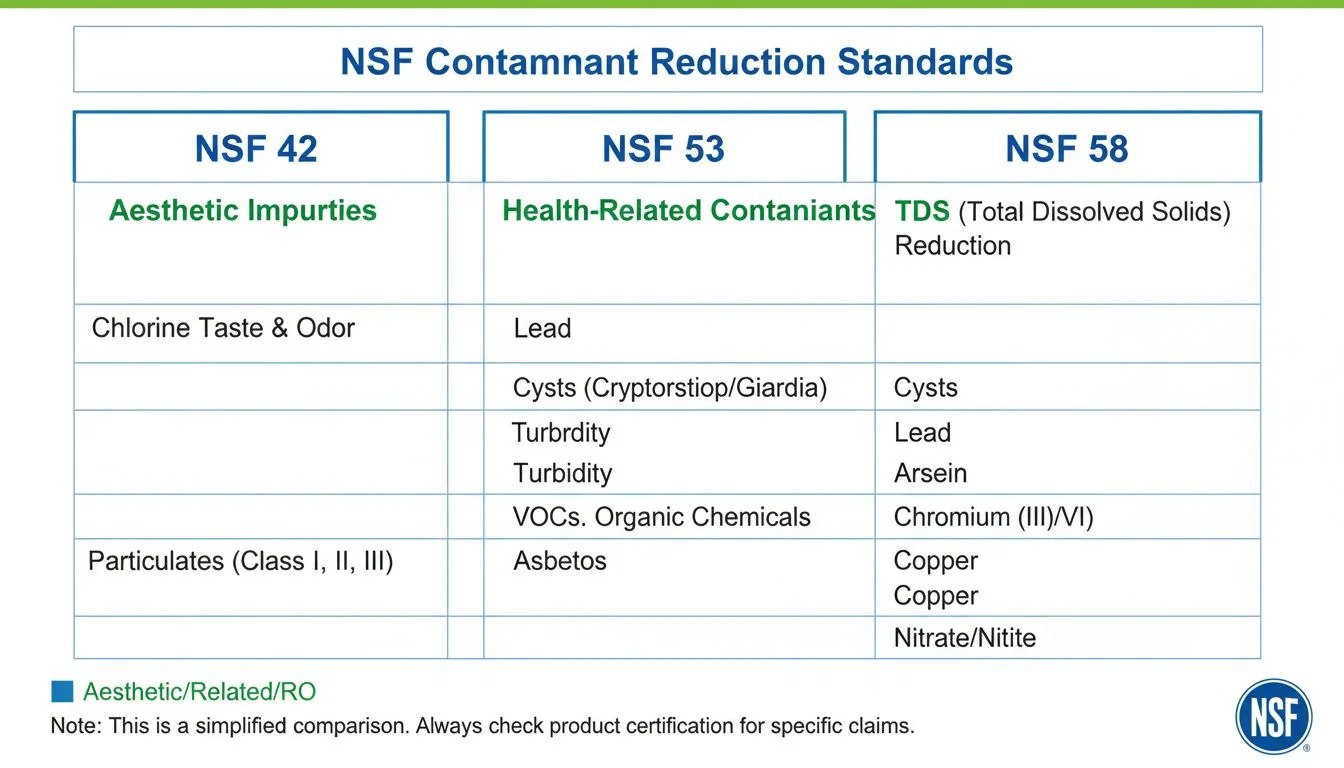
Many designers think a filter is just a filter. That is a mistake. The standard you choose dictates the engineering constraints, the mold tolerances, and the final price tag. Let’s look at the details.
NSF 42 certification guarantees the removal of lead and heavy metals.خطأ
NSF 42 is strictly for aesthetic effects like taste and odor; it does not cover health-critical contaminants like lead.
NSF 58 is the specific standard required for Reverse Osmosis systems.صحيح
NSF 58 specifically governs the performance and structural integrity of Reverse Osmosis (RO) systems.
Introduction: Why "Certified" Isn't Specific Enough?
"Certified" is a buzzword that means nothing without context. Your legal team knows this, but does your design team understand the engineering implications?
Generic certification claims invite FTC scrutiny and consumer distrust. Specific standards define exactly what a system removes. Without specifying the standard (42, 53, or 58), you cannot legally claim health benefits, leaving your brand vulnerable to lawsuits and limiting your pricing power.
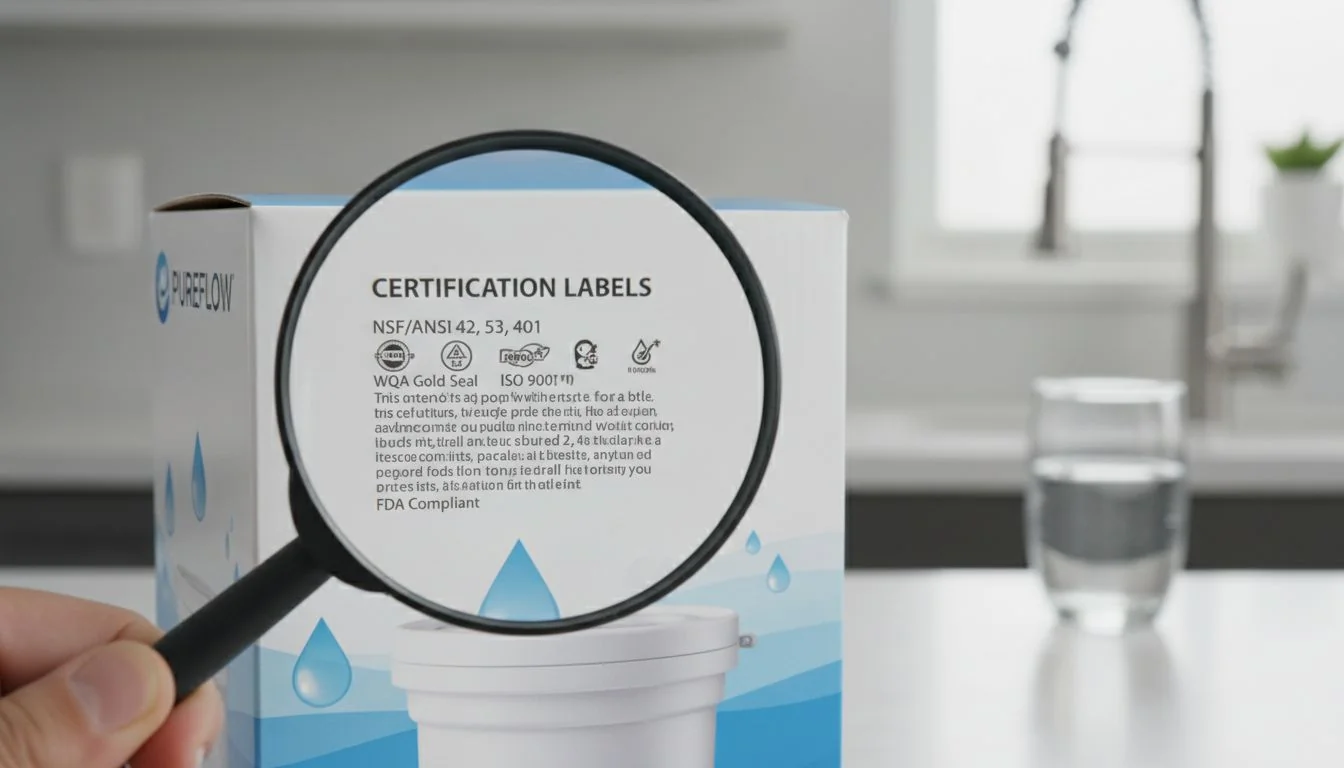
Wellness founders are often marketers, not compliance experts. They are terrified of the FTC (Federal Trade Commission) suing them for false health claims2. As a mold expert, I have seen great product housings fail because the internal specs did not match the marketing claims. If you just say "Pure Water," you are weak. You need specific claims to survive in the North American market.
Position yourself as the "Compliance Safety Net." By using certified specs, your marketing claims become legally defensible. If you claim "Healthy," you need NSF 533 or 58. If you only have NSF 42, you can only claim "Tasty." This distinction is massive. When we design molds for these units, we need to know the target early. A "Health" unit needs tighter tolerances and better sealing surfaces than a "Taste" pitcher. Don't let marketing write checks your engineering can't cash. You must guide the brand owner. Tell them that specific standards are their shield against liability.
General 'Pure Water' claims are sufficient for modern wellness brands.خطأ
Generic claims are legally risky and convert poorly; specific claims backed by NSF 53 or 58 are required for health positioning.
Compliance strategy affects mold design requirements.صحيح
Higher standards require tighter tolerances and better materials to prevent bypass and leaching.
NSF/ANSI 42: The "Aesthetic" Standard (Taste & Odor)?
Do you want to sell a cheap pitcher or a premium appliance? NSF 42 is the entry-level standard for basic consumer satisfaction.
NSF 42 certifies that a filter reduces non-health-related contaminants. This primarily covers chlorine, taste, and odor. It is the standard for basic water pitchers and fridge filters where the goal is better-tasting water, not necessarily safer water.
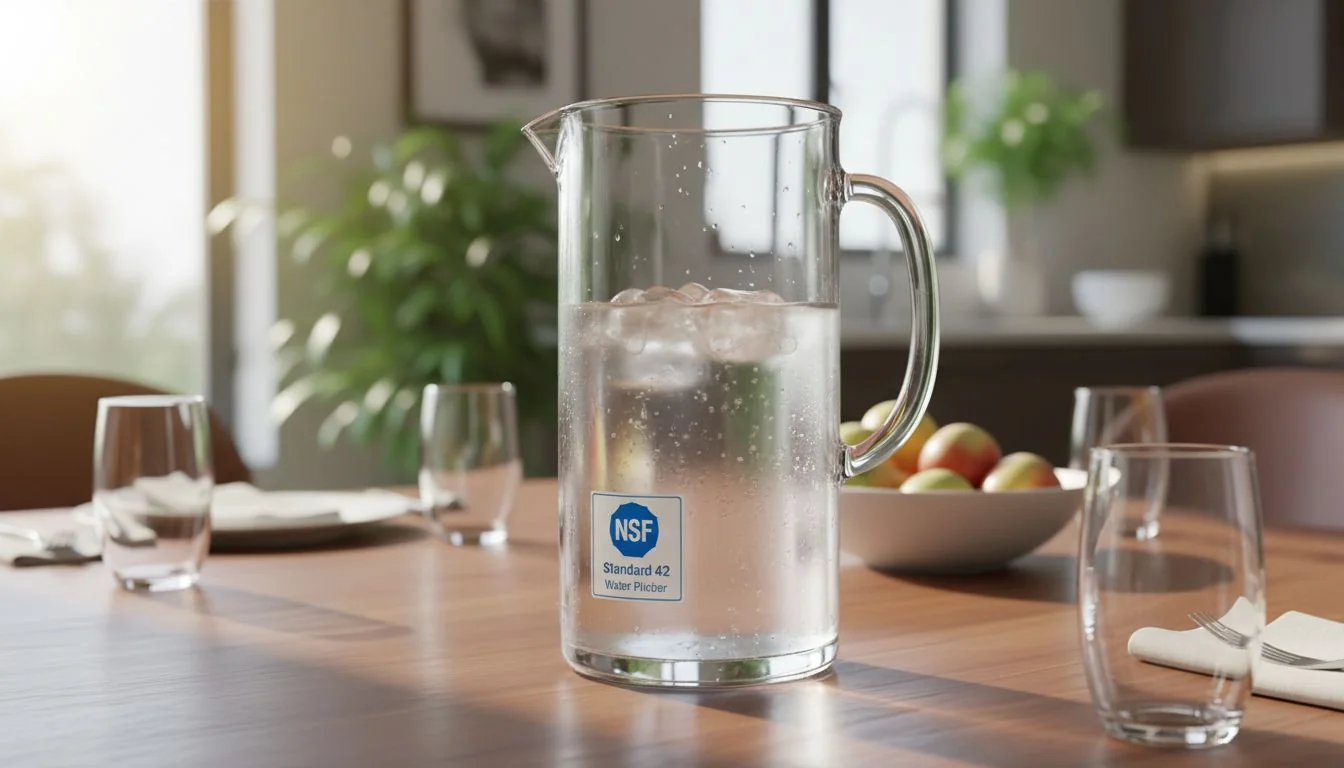
Think of NSF 42 as the "commodity" level. These products compete almost entirely on price. If you are designing a $30 pitcher, this is your target. The filtration media is usually simple carbon. From a mold design4 perspective, these housings are simpler. They generally do not face high operating pressures.
However, you cannot upsell a B2B client on "wellness" with just NSF 42. It is strictly for aesthetics. I tell my clients: "If you only want to sell a $30 pitcher, get NSF 42. If you want to sell a $400 wellness appliance, you need more." This standard improves the drinking experience, but it does not protect against toxins. It is a pricing lever. Use this distinction to manage expectations. If a client wants a cheap mold and a cheap product, they get NSF 42. They cannot expect to market it as a high-end health device. It is crucial to be honest about this limitation during the design phase so the final product matches the brand promise.
NSF 42 products primarily compete on trust and health benefits.خطأ
NSF 42 products compete on price and are viewed as commodity items for taste improvement.
NSF 42 is sufficient for removing chlorine taste.صحيح
Chlorine reduction for taste and odor is the primary function of NSF 42 certified filters.
NSF/ANSI 53: The "Health" Standard (Toxins & Lead)?
Consumers are scared of lead and chemicals. NSF 53 is your answer to their anxiety and the key to a higher price point.
NSF 53 certifies the reduction of specific health-related contaminants. This includes lead, cysts, and volatile organic chemicals (VOCs). Products with this certification can legally claim to make water safer, allowing for a higher price point and stronger trust with health-conscious buyers.

This is where the "Health" market truly begins. The trigger words for American consumers right now are "Lead" and "PFAS." NSF 53 is the standard that handles these. If your product passes this, you stop competing on price. You start competing on trust. You can charge significantly more.
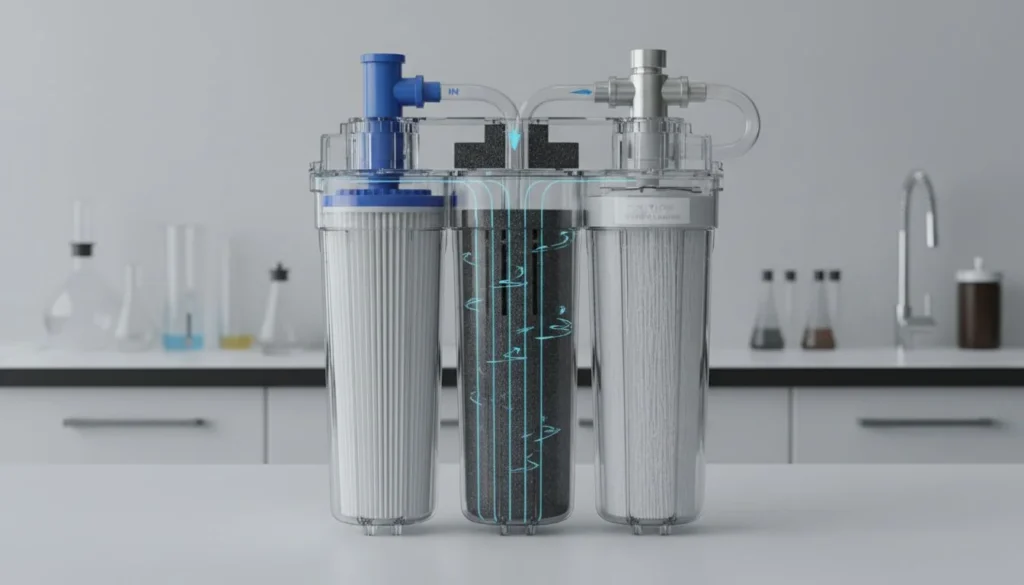
From a design view, the flow rates are usually slower here. The contact time with the media must be longer to trap these heavy metals. Your mold design must account for this backpressure. You cannot just swap a 42 filter into a 53 housing easily. Explicitly linking your product to "Lead-Free" converts buyers much higher than generic claims. We need to weaponize these terms. When I consult on mold projects, I advise clients to highlight "NSF 53" on the housing design itself. It is a badge of honor. It tells the user that this device is a health tool, not just a kitchen accessory.
NSF 53 covers the reduction of cysts and lead.صحيح
NSF 53 is designed to verify the reduction of health-related contaminants including lead, cysts, and VOCs.
Flow rates for NSF 53 filters are typically faster than NSF 42.خطأ
NSF 53 filters often require longer contact time with the media, resulting in slower flow rates or higher backpressure.
NSF/ANSI 58: The "Ultimate Purity" Standard (Reverse Osmosis)?
Want to charge $400+ for your appliance? You need the gold standard of filtration: Reverse Osmosis5.
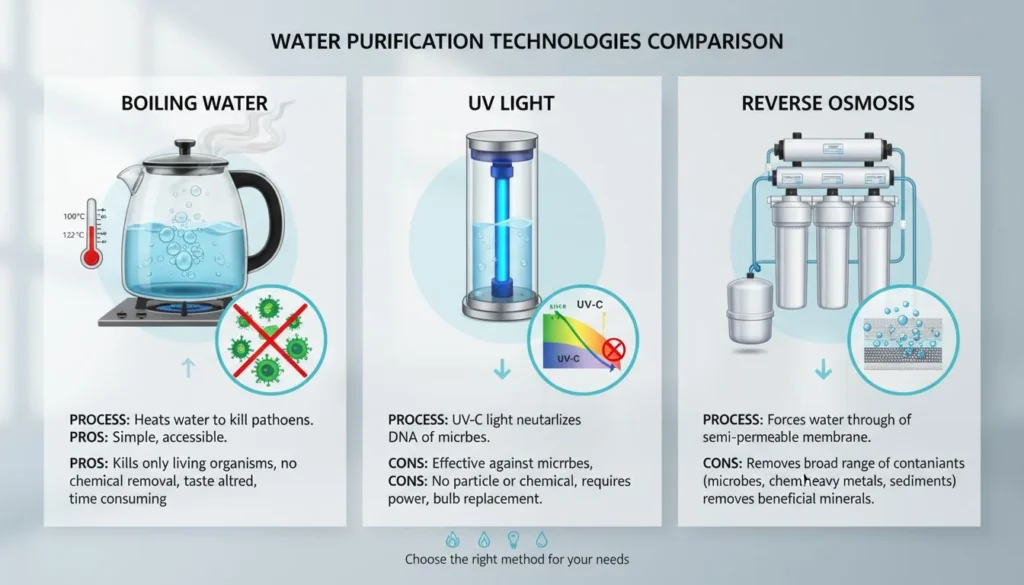
NSF 586 is exclusively for Reverse Osmosis (RO) systems. It requires the reduction of total dissolved solids (TDS) and contaminants like arsenic, fluoride, and PFAS. It is the most rigorous standard, positioning a product as a high-end wellness appliance rather than a simple filter.
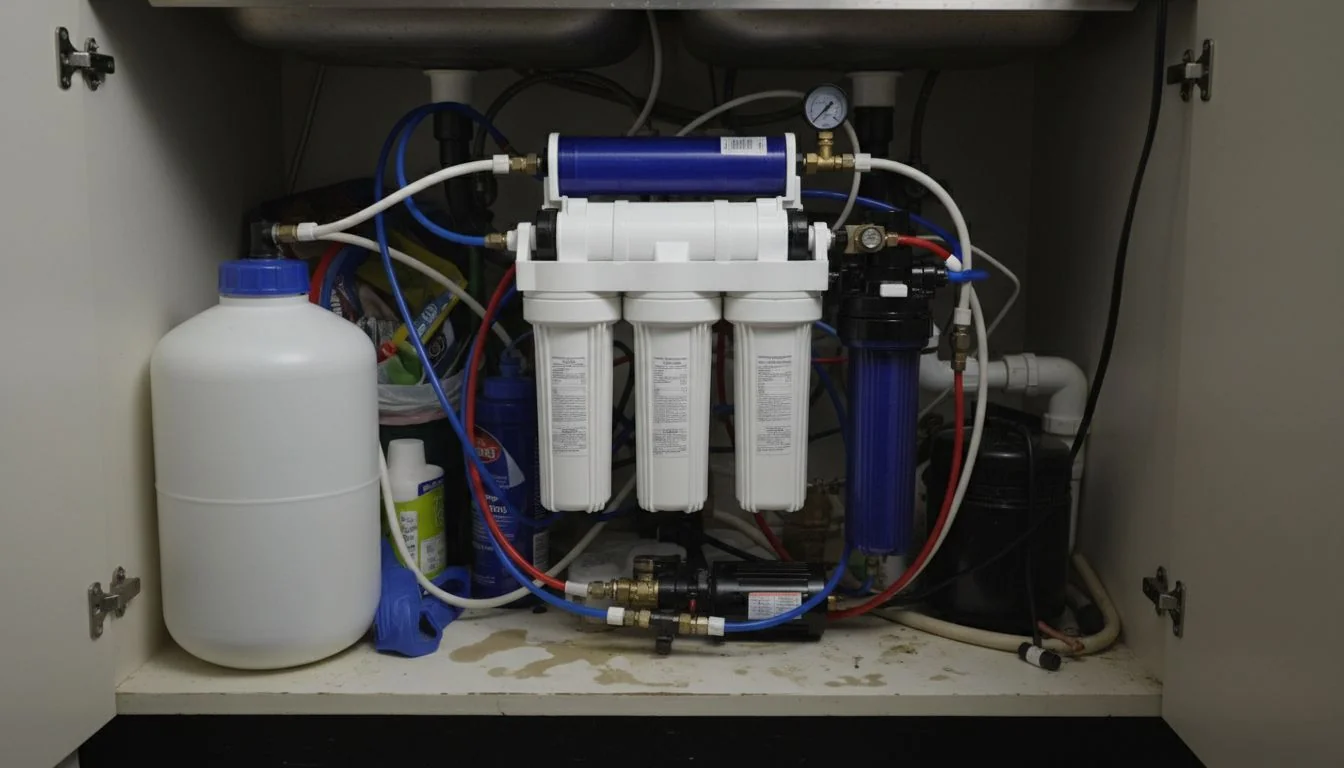
This is the top of the ladder. NSF 58 is for Reverse Osmosis. It removes almost everything, including the "forever chemicals" (PFAS). This allows you to sell a "PFAS Solution," not just a filter. However, getting this certification from scratch is a nightmare. It takes 6 to 12 months and costs over $20k.
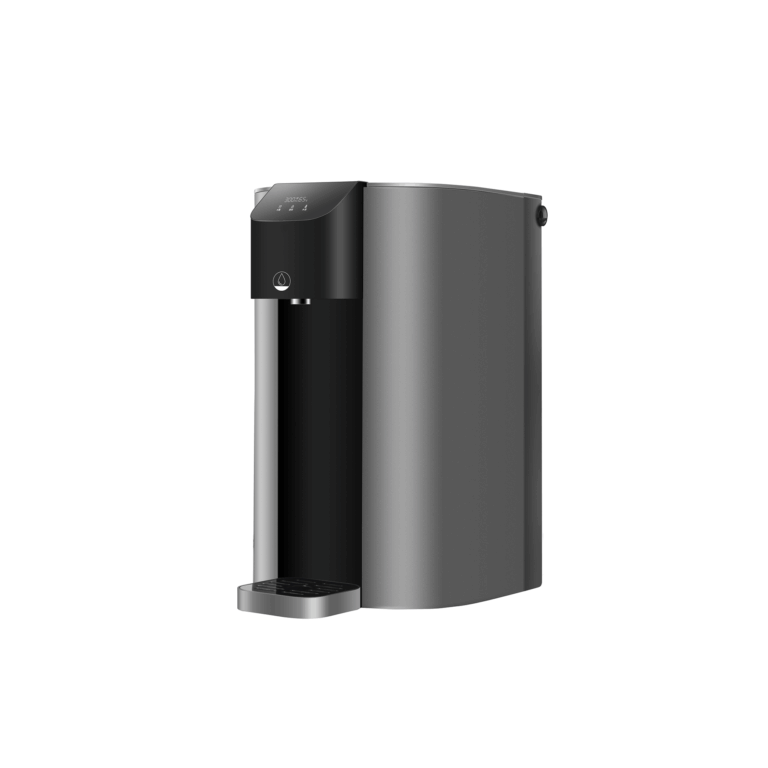
This is why I advise clients to look for "Ready-to-Go NSF 58 Platforms." You aren't just selling hardware; you are selling speed-to-market. You save the startup a year of R&D time. As a designer, you must accommodate the membrane, the waste water line, and the storage tank (or high-flow pump). It is complex. The mold design involves multiple manifolds and high-pressure seals. But the profit margin is huge. If you want to sell a $400 wellness appliance, you need NSF 58. We build the latter. Position your design capabilities here to attract serious investors who want to dominate the premium market.
NSF 58 certification is quick and inexpensive to obtain.خطأ
NSF 58 certification is rigorous, time-consuming (6-12 months), and expensive ($20k+).
NSF 58 is the standard used for Reverse Osmosis systems.صحيح
NSF 58 is the specific standard developed for the performance of Reverse Osmosis systems.
The "System Certification" Trap: Don't Be Fooled?
A certified filter inside a cheap plastic housing is a lie. Do not let your suppliers trick you into risking your reputation.
Many manufacturers use certified carbon media in uncertified housings. This is the "Component" vs. "System" trap. If the housing leaks or allows water to bypass the filter, the certification is useless. You must demand System Certification7 to ensure the entire unit performs as promised.
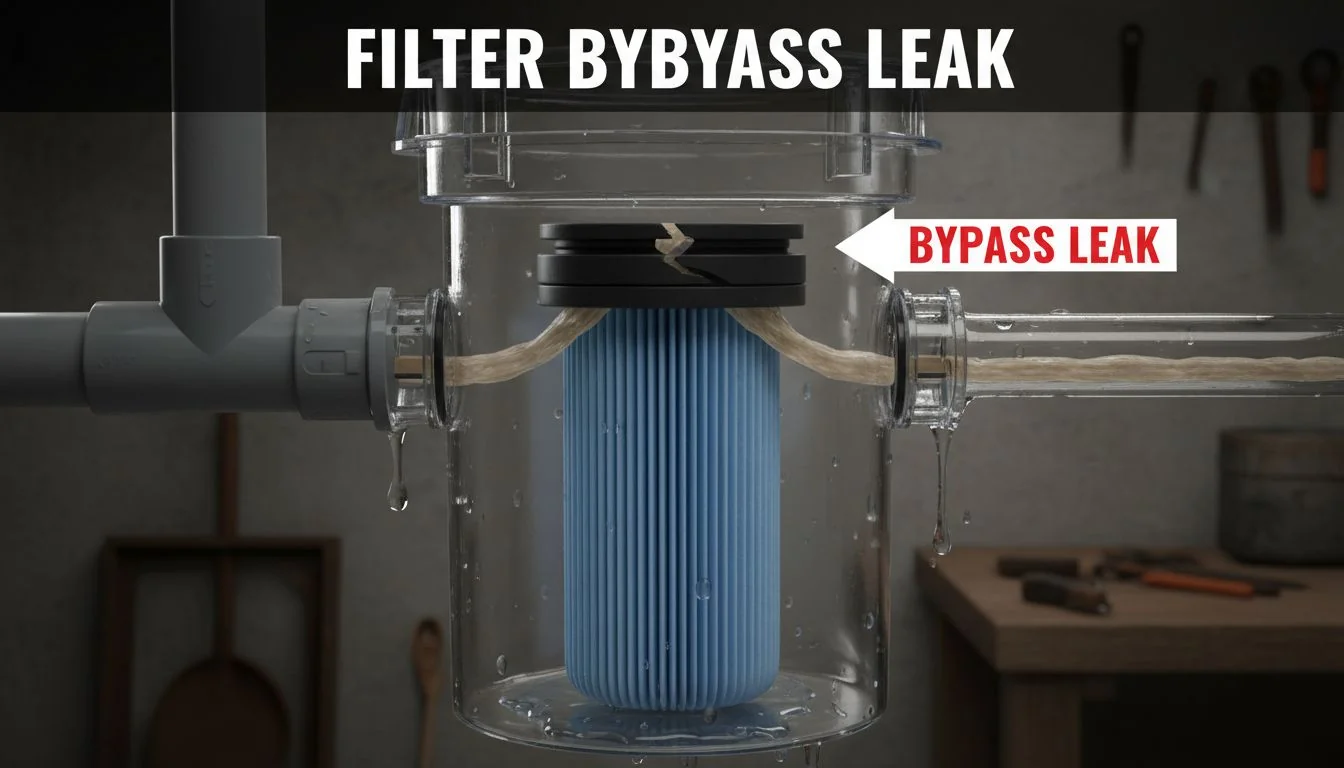
This is the biggest scam in the industry. A supplier shows you a certificate for the carbon powder. But they put it in a cheap, leaky mold. Water takes the path of least resistance. If your housing design is poor, water bypasses the filter media. The user drinks dirty water. The certificate for the powder means nothing if the system fails.
I always position Moldle as the honest partner who understands this. We look at the whole structure. A certified filter in a bad housing is a liability. Serious brand founders know this. They want "System Certification." This tests the structural integrity of the mold, the seals, and the flow path. It also tests for material leaching. Cheap plastics can leach chemicals back into the clean water. By certifying the system, you prove that your housing is as safe as the filter inside it. This builds immense trust with serious brand founders.
Using certified media guarantees the final product is safe.خطأ
Certified media in a faulty housing can allow bypass or leaching; the entire system must be certified for safety.
System certification tests structural integrity and material safety.صحيح
System certification ensures the housing does not leak, bypass, or leach harmful chemicals into the water.
الخاتمة
NSF 42 sells taste. NSF 53 sells safety. NSF 58 sells purity. Choose your standard early to define your mold design, your price, and your market success.
References
-
Understanding NSF 42 is crucial for brands targeting aesthetic improvements in water filtration. ↩
-
Understanding health claims is critical for brands to avoid legal issues and consumer distrust. ↩
-
NSF 53 is essential for brands aiming to market health benefits and build consumer trust. ↩
-
Mold design is key to product efficacy and should align with certification standards. ↩
-
Exploring Reverse Osmosis technology can enhance product offerings and consumer education. ↩
-
NSF 58 certification is vital for high-end products, ensuring maximum contaminant removal. ↩
-
System Certification ensures the entire unit's safety, crucial for brand reputation. ↩


 العربية
  English
  Français
  Español
  Italiano
  Deutsch
  Português
  Русский
  日本語
日本語  한국어
한국어  Tiếng Việt

