Se abre en una pestaña nueva
Soluciones innovadoras para la calidad del aire

How to launch a private label wellness product in the US

Related Products

How to launch a private label wellness product in the US?
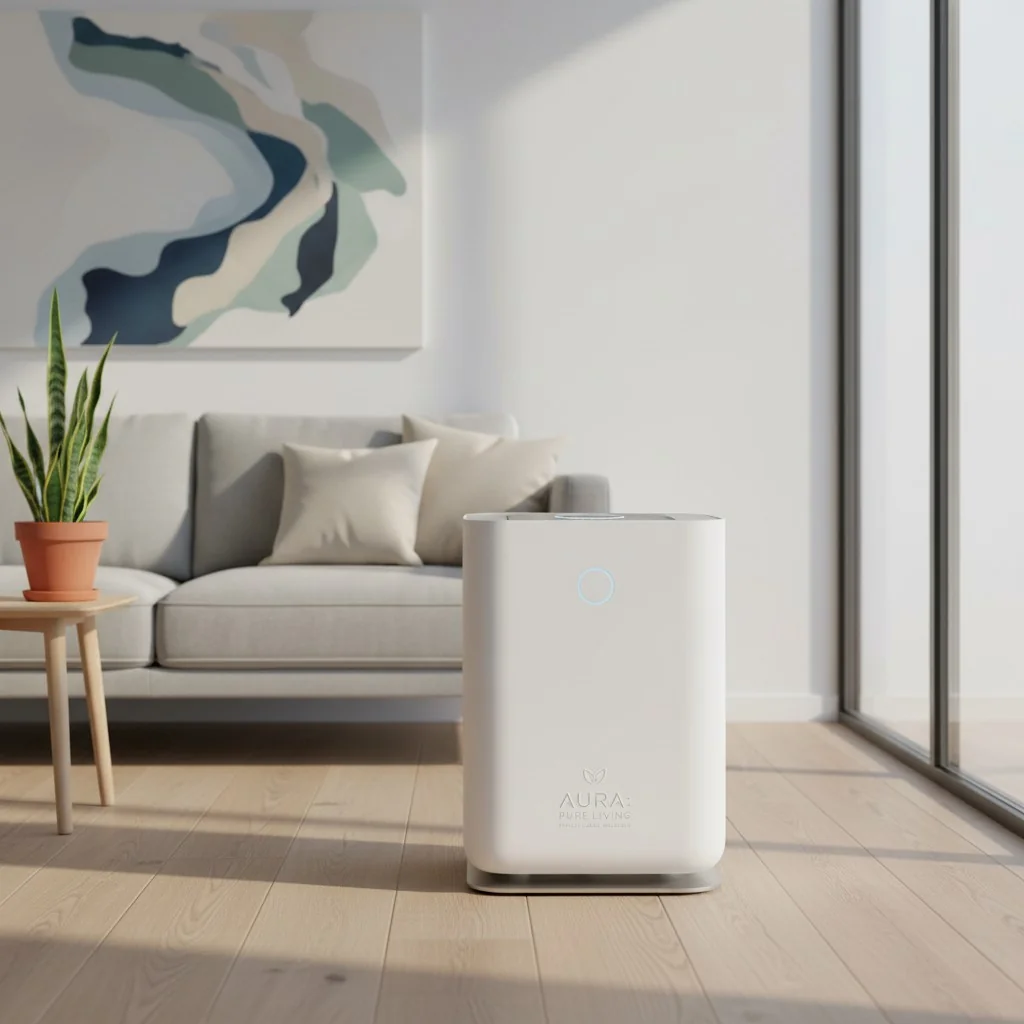
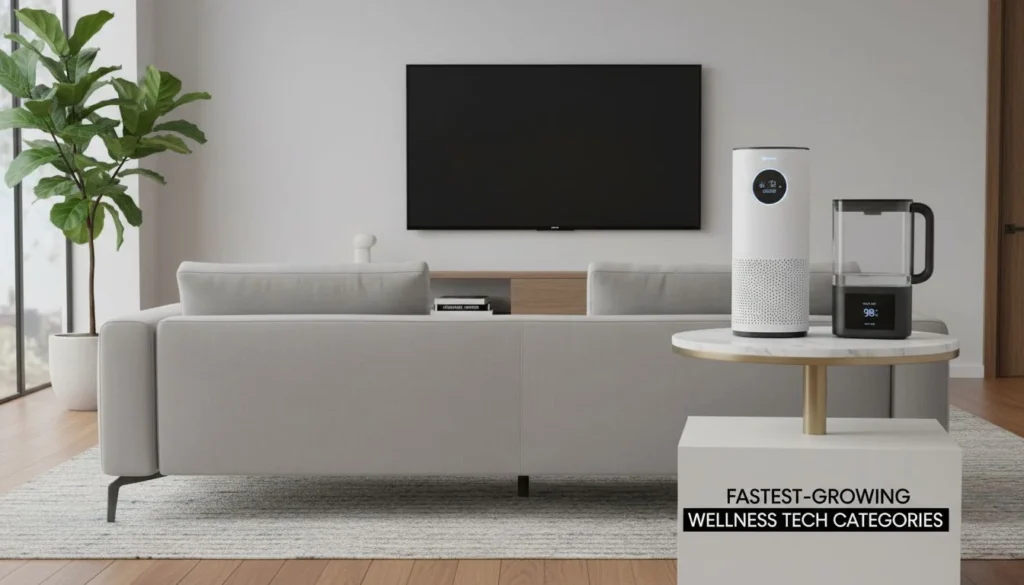
A modern and sleek air purifier in a minimalist living room setting

You want to enter the booming US wellness market, but you're stuck with generic products. You see competitors with unique items and wonder how they stand out while you struggle with me-too offerings.

To launch a private label wellness product1 in the US, you can start by rebranding an existing product for a quick market test. For long-term success, however, you must partner with an innovative manufacturer to develop a unique product that solves a real problem for health-conscious consumers.

A person sketching a new product design on a tablet

I've been in the air and water purification industry for over 20 years. I've seen countless entrepreneurs try to launch a brand. Many of them think the path to success is simply finding the cheapest product on Alibaba, slapping a logo on it, and running some ads. This might have worked ten years ago. Today, the market is far too crowded for that. Customers are smarter. They demand quality, innovation, and a brand that truly understands their needs. If you want to build a lasting D2C wellness brand2, you have to think differently from the start. You need to move beyond just being a reseller and become a brand builder. This journey begins not with marketing, but with the product itself.

The global wellness market is projected to reach nearly $7.0 trillion by 2025.Verdadero

According to the Global Wellness Institute, the market is experiencing significant growth, highlighting the immense opportunity for new brands.

Launching a private label product guarantees immediate profitability.Falso

Profitability depends on many factors, including product uniqueness, marketing effectiveness, and brand positioning. A generic product in a competitive market often leads to price wars and low margins.

Is a quick launch with a standard product a good strategy?

You're eager to test the market without a huge investment. But using a generic, off-the-shelf product feels risky and uninspired. You worry it will get lost in the noise and fail to build a real brand.

A quick launch using a ready-made product is a valid way to test market demand with minimal risk. You simply find a supplier, provide your logo and packaging, and you can be selling in weeks. This process is fast and lets you gather data without heavy upfront development costs.
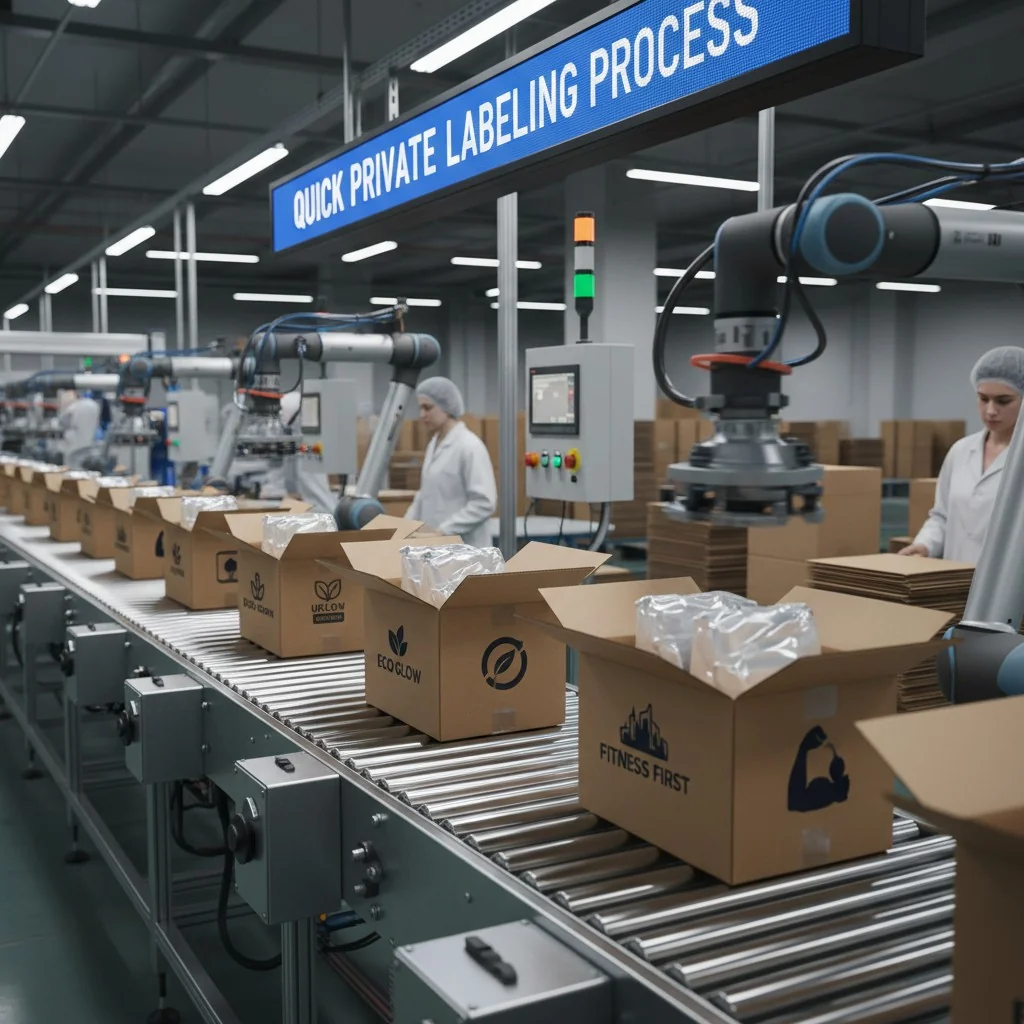
Boxes with custom logos being packed on a factory line

In my two decades of experience, I've seen this approach work best as a first step, not a final destination. Think of it as estudios de mercado3. You can quickly find a supplier for a basic air purifier or water filter. You can customize the box and the manual. This is the standard private label process. It's easy and fits a rapid launch schedule. You can get your product on Amazon or your own website and see if people are interested.

But here is the problem. The product you are selling is likely being sold by ten other brands with different logos. This leads to a few challenges.

The Downsides of a Standard Product Launch

Desafío Descripción Impact on Your Brand
Commoditization Your product is identical to competitors. The only differentiator is price. You are forced into price wars, which destroys your profit margins.
No brand story4 It's hard to build a compelling brand around a generic item. Customers have no reason to choose you or remain loyal.
Limited Growth You are dependent on the supplier's limited innovation. You can't adapt to market trends or customer feedback, limiting long-term growth.

This strategy is for testing the waters, not for building a ship. It can tell you if there are fish in the sea, but it won't help you catch them consistently.

Most private label manufacturers in China are primarily cost-driven.Verdadero

Many factories are optimized for mass production of existing designs at the lowest possible cost, rather than investing in unique R&D for smaller brands.

A quick launch product can easily become a bestseller with enough advertising.Falso

Advertising can generate initial sales, but without a unique value proposition, customer retention will be low and long-term success is unlikely in a competitive market.

How do you build a brand that truly stands out?

You see the wellness market is booming, but it's also saturated. You know a generic product won't cut it. You need something unique and innovative to capture the attention of discerning, health-conscious consumers5.

To stand out, you must develop a unique product based on deep insights into the US market. This means moving beyond basic private labeling and finding a partner who can help you innovate on design, technology, and function. This is how you build a successful D2C brand.

A group of people in a focus group discussing a wellness product prototype

The wellness trend is real. More people than ever, especially in the US, are conscious about their health and the environment in their homes. These are the customers you want. They are willing to pay for quality and innovation. The mistake many entrepreneurs make is trying to reach everyone. The successful ones understand how to connect with this specific group of health-conscious buyers. They build a community.

One of the most effective ways I've seen this done is through podcasts. Instead of spending a fortune on broad Google or Facebook ads, smart brands find podcasts that their target audience already trusts. They work with influencers and hosts who are experts in health, wellness, or home environments.

Marketing to the Health-Conscious Consumer

  • Find Your Niche: Don't just sell an "air purifier." Sell a solution for "allergy sufferers" or "new parents concerned about nursery air quality."
  • Leverage Trusted Voices: Partner with podcast hosts who have a loyal following. An endorsement from them is more powerful than any ad. They can talk about the product in an authentic way.
  • Provide Value, Not Just a Sales Pitch: The content should be informative. Discuss the science of air quality or the importance of clean water. Educate the audience, and the sales will follow.

This approach builds trust and attracts the right customers at a much lower cost.

Podcast listeners are 45% more likely to be affluent, with a household income over $250,000.Verdadero

Data from Nielsen shows that podcast audiences are often more educated and have higher disposable incomes, making them an ideal target for premium wellness products.

All wellness influencers are effective for marketing any health product.Falso

Effectiveness depends on the influencer's niche, audience trust, and alignment with your brand's values. A mismatch can be ineffective or even damage your brand's credibility.

How do you find a partner for an innovative product?

You know you need a unique product and a smart marketing plan. But finding a supplier who can deliver on innovation, design, and quality feels impossible. You're tired of communication issues and partners who don't understand your vision.

You need a partner who offers more than just manufacturing. Look for a supplier with JDM (Joint Design Manufacturing) or ODM (Original Design Manufacturing) services, strong engineering expertise, and a deep understanding of your target market's aesthetics and technical demands.

Engineers and designers collaborating around a 3D model of a product

This is where everything comes together. If you combine a unique wellness product with a targeted marketing strategy like podcasts, you have a powerful formula for success. The key is the product itself. You can't market a generic product as innovative. This is why your choice of a manufacturing partner is the most important decision you'll make.

At HisoAir, this is what we specialize in. I've spent my career in this field, focusing on air and water purification. We don't just take your logo and put it on our existing products (that's OEM). We work with you to create something new.

Finding the Right Innovation Partner

Service What It Is Why It Matters for Your Brand
OEM (Original Equipment Manufacturer) They make a product, you put your brand on it. Good for a quick market test, but offers no uniqueness.
ODM (Original Design Manufacturer) They have existing designs you can modify and brand. A step up. You can get a unique look and feel with less R&D.
JDM (Joint Design Manufacturer) You and the manufacturer collaborate to create a new product from scratch. The ultimate solution for a truly unique and innovative product. You bring market insight, they bring engineering expertise.

We combine US-led innovation with European design aesthetics and the latest technology. For example, we developed Decibel Cancellation™ technology to make our air purifiers incredibly quiet. This is the kind of unique feature that gives you a story to tell and a real reason for a customer to choose your brand. The entire process, from idea to shipment, is managed efficiently to avoid the delays and communication problems you've faced before.

JDM allows brands to have full intellectual property rights over the final product design.Verdadero

In a JDM partnership, the brand is deeply involved in the creation process, and contracts are typically structured so the brand owns the resulting IP, providing a significant competitive advantage.

Finding a JDM partner is as easy as searching on Alibaba.Falso

True JDM partners are rare and are not typically found on mass sourcing platforms. They are specialized firms that require a more direct and research-intensive search to find.

Conclusión

Launching a wellness brand is easy, but building a successful one is hard. It requires a unique product, smart marketing, and the right innovation partner to bring your vision to life.


References


  1. Explore effective strategies for launching a private label wellness product to stand out in a crowded market. ↩

  2. Learn the essential steps to build a successful direct-to-consumer wellness brand that resonates with customers. ↩

  3. Understand the best practices for market research to effectively target health-conscious consumers. ↩

  4. Understand the importance of a compelling brand story in building customer loyalty and trust. ↩

  5. Find out how to tailor your marketing strategies to attract health-conscious consumers. ↩

Comparte:
fundador de hisoair, sr. lee
Alwen Lee, an air purification expert with over 10 years of experience, is a devoted father of two and a passionate traveler, having explored more than 30 countries. With a love for public speaking and swimming, he has dedicated his life to the indoor air quality industry. His mission is to ensure that people around the world enjoy the freedom to breathe clean air and lead happy, healthy lives.

Envíenos un mensaje

Más que leer

A modern office room with a gray wall-mounted air purifier, large wooden desk, office chairs, indoor plants, and glass windows offering a city view.

Luftreiniger gegen Staub: HEPA-Luftreinigung für Büro, Gewerbe und Industrie

Kurz gesagt: Ein Luftreiniger entfernt Staub aus der Luft – nicht vom Schreibtisch. Er reduziert die Konzentration schwebender Partikel und damit auch die Menge an ...
Air purifier, Filter
Featured image for What are the fastest-growing categories in wellness tech?

What are the fastest-growing categories in wellness tech?

Discover booming wellness tech trends. Invest in AIOT air & water purification for smarter, healthier living. Don't miss out on this opportunity!
AI Trends, News
Featured image for Why Stainless Steel Humidifier Tanks Are Becoming the Gold Standard in Premium Wellness Hardware?

Why Stainless Steel Humidifier Tanks Are Becoming the Gold Standard in Premium Wellness Hardware?

Choose stainless steel for your humidifier. Enjoy luxury, hygiene, and safety over plastic. Discover why it's the premium wellness choice today.
AI Trends, Humidifier, News
wall mounted air purifier ha380 6

DIY vs. Commercial: Ceiling Purifier vs. Wall-Mounted Purifier

Indoor air quality has become a global concern for both individuals and organizations. Whether at home, in offices, or in public facilities, the need for ...
Purificador de aire
air purifier ha2553

The Strategic Guide to Home Air Purification: A Room-by-Room Analysis

In an era where indoor living dominates our daily routines, the quality of the air we breathe within our homes has become a paramount concern. ...
Purificador de aire
purificador de aire de ventilación hv 100

Wall-Mounted Purifier vs HVAC for Indoor Air Quality

Indoor air quality isn’t a nice-to-have—it’s daily infrastructure. Wildfire smoke, urban PM2.5, and indoor sources from cooking to cleaners now make clean air a baseline ...
Purificador de aire
Contaminant Engineering•3 min read

PFAS Water Filtration Technologies Explained: Carbon, Resin & RO

Key Takeaway:

PFAS reduction depends on the specific compounds present, treatment media, contact time, water chemistry, and system design. Activated carbon, ion exchange, and Reverse Osmosis address PFAS through different mechanisms.

PFAS are a large family of persistent fluorinated compounds that can occur in drinking-water supplies. Their treatment behavior varies significantly by molecular structure, chain length, functional group, concentration, and the chemistry of the source water.

Granular Activated Carbon (GAC) removes PFAS primarily through adsorption. It is generally more effective for many longer-chain PFAS, while shorter-chain compounds tend to break through more quickly. Carbon performance depends on media properties, Empty Bed Contact Time (EBCT), competing organic matter, loading, and replacement frequency.

Ion-exchange resins use charged functional sites to capture many PFAS compounds. Properly selected anion-exchange media can provide high capacity and may perform better than conventional activated carbon for some shorter-chain PFAS, although performance still depends on water chemistry and competing ions.

Reverse Osmosis (RO) uses membrane separation rather than adsorption. Properly designed RO systems can provide broad reduction across many PFAS compounds as well as dissolved salts and other contaminants. Unlike carbon or resin, however, RO also produces a concentrate stream that must be managed.

No single technology should be selected from a PFAS label alone. System design should consider which PFAS compounds are present, their concentrations, required reduction targets, flow rate, media life, and the applicable third-party certification or validation requirements.

HisoAir Water Technical Series
Product Discovery•3 min read

How to Choose an Under-Sink Water Purifier for Modern Kitchens

Key Takeaway:

Match the treatment technology to your water quality first, then evaluate cabinet space, faucet configuration, flow rate, drain and power requirements, and filter replacement needs.

Choosing an under-sink water purifier starts with water chemistry. Carbon filtration is well suited to chlorine, taste, odor, and many organic contaminants, while Reverse Osmosis is more appropriate when dissolved salts, fluoride, nitrates, or broader dissolved contaminants need to be reduced.

For compact kitchens, tankless RO systems eliminate the conventional storage tank and can significantly reduce the space required under the sink. However, membrane capacity stated in GPD does not directly equal faucet flow. When comparing systems, check the actual dispensing flow rate, inlet-pressure requirement, recovery ratio, and whether a booster pump is required.

Installation architecture also matters. Many RO systems require a drain connection, electrical power, and either a dedicated drinking-water faucet or a compatible multi-function faucet. High-flow carbon systems can often connect directly to the existing cold-water line with a simpler installation, but pressure drop and available faucet flow should still be verified.

RO also removes much of the naturally occurring dissolved mineral content. Where taste or mineral balance is a priority, a post-RO remineralization stage can be added. Filter life should be evaluated by both rated capacity and local water quality rather than replacement time alone.

The right system is therefore not simply the smallest or highest-GPD model. It is the configuration that matches the target contaminants, available cabinet space, desired faucet setup, peak dispensing demand, and maintenance expectations.

HisoAir Water Technical Series
Water Quality•2 min read

What Does TDS Mean in Drinking Water? Measurement vs Contaminant Reality

Key Takeaway:

A TDS meter estimates the overall concentration of dissolved ionic substances from electrical conductivity. It cannot identify specific contaminants or determine whether water is chemically safe.

Total Dissolved Solids (TDS) refers to the combined concentration of dissolved substances in water. Most handheld TDS meters do not measure TDS directly. Instead, they measure electrical conductivity (EC) and convert that reading into an estimated parts-per-million (ppm) value.

This means a TDS reading can indicate how much dissolved ionic material is present, but not what that material actually is. Calcium, magnesium, sodium, nitrates, and other dissolved ions can all contribute to conductivity, yet a simple TDS meter cannot distinguish between them.

TDS meters are also not suitable for detecting trace contaminants such as PFAS, many VOCs, pesticides, pharmaceuticals, or disinfection byproducts. These substances may be present at concentrations far below the level needed to noticeably change electrical conductivity.

A low TDS reading therefore does not guarantee safe drinking water, and a higher TDS reading does not automatically indicate contamination. Water-treatment decisions should be based on laboratory testing for specific contaminants of concern rather than TDS alone.

HisoAir Water Technical Series
Technology Selection•2 min read

RO vs UF Water Filtration: Understanding Pore Sizes & Dissolved Minerals

Key Takeaway:

Ultrafiltration can reduce bacteria, turbidity, and suspended particles while retaining most naturally occurring dissolved minerals. Reverse Osmosis provides much broader reduction of dissolved salts and smaller contaminants.

Ultrafiltration (UF) typically uses hollow-fiber membranes with pore sizes in the approximate 0.01–0.1 micron range. These membranes physically retain turbidity, suspended solids, colloids, and many microorganisms while allowing dissolved minerals and salts to remain in the water.

Reverse Osmosis (RO) operates at a much finer separation level. Unlike UF, RO can substantially reduce dissolved ions such as sodium, calcium, fluoride, nitrates, and other contributors to total dissolved solids (TDS). This makes RO more suitable when dissolved-salt reduction is a primary treatment objective.

UF generally requires less system pressure and produces little or no continuous concentrate stream in many point-of-use configurations. RO typically requires greater pressure and produces a reject-water stream, but delivers broader contaminant reduction.

For water with acceptable TDS and mineral content, UF can be a simpler mineral-retaining treatment option. Where dissolved salts, fluoride, nitrates, or broader dissolved contaminants are a concern, RO is generally the more appropriate technology.

HisoAir Water Technical Series
Technology Selection•4 min read

Carbon Block vs Reverse Osmosis: Which Fits Your Need?

Key Takeaway:

Choose RO for dissolved inorganic salts and heavy metals; choose Carbon Block for chemical taste/odor, no wastewater, and high line-pressure flow.

Reverse Osmosis (RO) and Carbon Block filtration represent two fundamentally different treatment methods: membrane separation and adsorption. Understanding these differences helps determine which technology is better suited to a specific water-quality requirement.

Reverse Osmosis uses a semi-permeable membrane with pore sizes of approximately 0.0001 microns. It can significantly reduce dissolved inorganic contaminants such as TDS, fluoride, nitrates, and certain heavy metals. Because water must be forced through the membrane, RO systems require sufficient pressure or a booster pump and generate a concentrated wastewater stream.

Carbon Block filtration relies primarily on adsorption through compressed activated carbon, commonly with nominal pore sizes around 0.5–5 microns. It is highly effective for chlorine, chloramines, VOCs, taste, and odor, while allowing substantially higher direct-flow rates without producing wastewater.

From an operating perspective, Carbon Block systems are generally simpler, require less energy, and avoid the water loss associated with RO. RO involves higher system complexity and operating cost, but provides substantially broader reduction of dissolved contaminants that Carbon Block alone cannot address.

HisoAir Water Technical Series

SOLICITAR PRESUPUESTO