What Are the Top 5 US Air Quality Trends for 2025-2026 and How Can Your Brand Capitalize on Them?
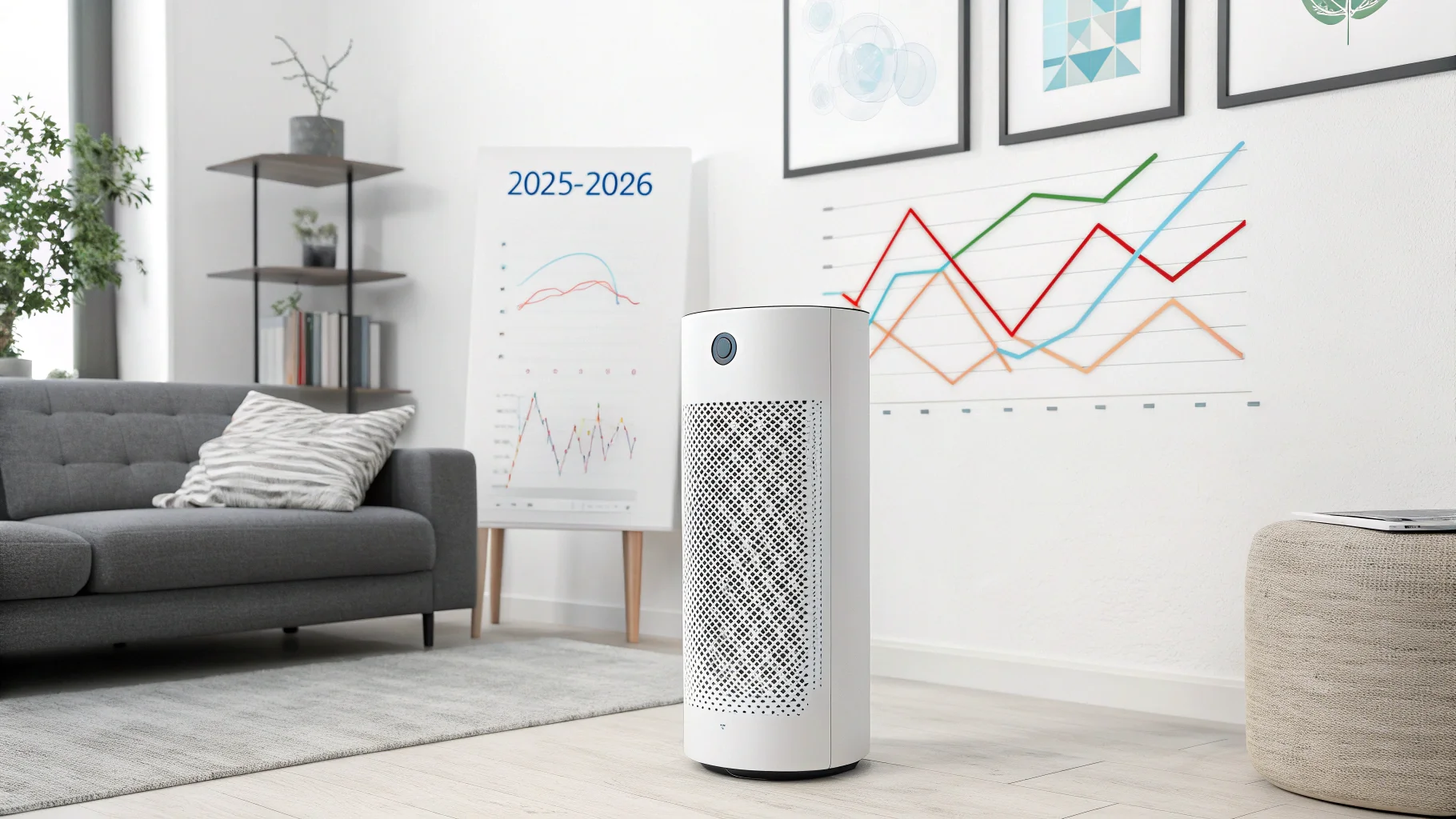
Are you struggling to find the next big thing in the air quality market? Your competitors are already adapting to new consumer demands, leaving your brand feeling outdated and left behind.
The top air quality trends for 2025-2026 are allergy relief1, wildfire smoke protection, smart home integration, mold prevention, and high-efficiency performance. Brands can win by developing specialized, connected, and energy-efficient purifiers that solve these specific consumer problems and meet new industry standards.
As an engineer who has spent over 20 years in the air purification industry, I've seen many trends come and go. But the shifts we're seeing now are different. They are fundamental changes in how people think about the air they breathe. For a brand owner and buyer like you, understanding these trends isn't just helpful—it's essential for survival and growth. These aren't just fads; they are direct responses to real-world problems that your future customers are desperate to solve. Let's break down what these trends are and, more importantly, what they mean for your product sourcing and brand strategy.
The global air purifier market is projected to reach over $20 billion by 2028.Verdadero
Multiple market research reports confirm a strong compound annual growth rate (CAGR) for the air purifier market, driven by increasing pollution, health awareness, and a rising prevalence of airborne diseases.
All air purifiers are equally effective against wildfire smoke.Falso
Effectiveness against wildfire smoke requires not only a high-efficiency particulate filter (like HEPA) for PM2.5 but also a substantial amount of activated carbon to adsorb volatile organic compounds (VOCs) and harmful gases, which not all purifiers have.
Why is Allergy Relief the New Gold Standard for Air Purifiers?
Millions of people suffer from allergies every day. Standard purifiers don't always cut it. A targeted solution can capture a huge, loyal market and solve a real pain point.
Consumers, especially parents, are now demanding purifiers specifically proven to capture allergens like pet dander, dust mites, and pollen. This shift makes allergy-focused marketing and filtration technology a top priority for brands looking to stand out and build trust with their customers.
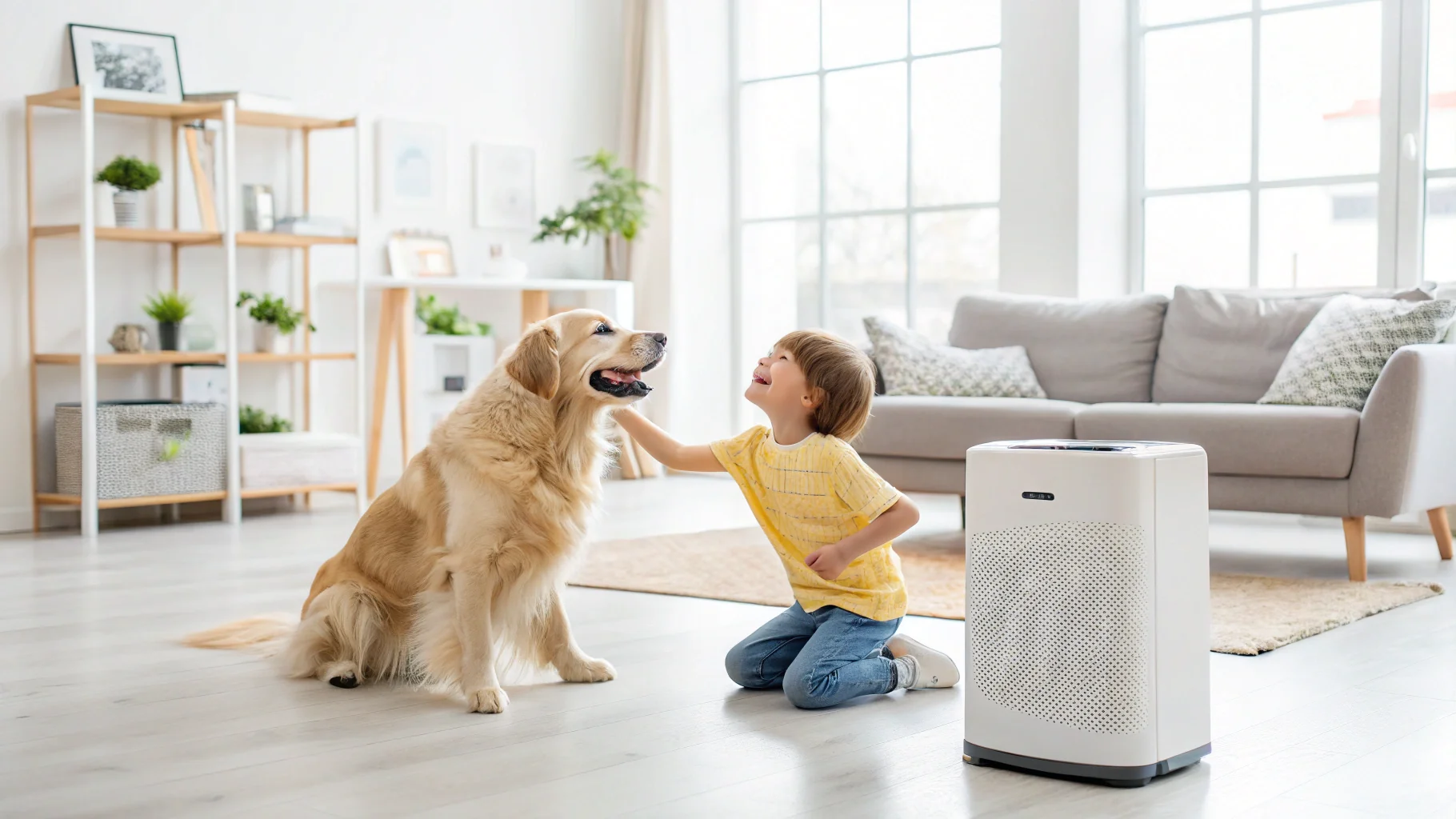
In my early days as a designer, the main focus was on general dust removal. Now, the conversation has completely changed. I talk to families who are desperate for relief. One father told me he bought a purifier hoping it would help his daughter's pet allergies, but it did little. The problem was that the unit wasn't designed for the fine, sticky nature of pet dander. This is a common story. The market is no longer satisfied with a generic "clean air" promise. Customers want to see proof that a product solves their specific problem, and for a growing number of people in the US, that problem is allergies.
The Rise of "Allergy-Specific" Filtration
This demand has pushed the technology forward. It's not just about having a Filtro HEPA2 anymore. It's about the quality of that filter, the seal of the unit to prevent air leakage, and the power to circulate air effectively. For brands, this means you can't just put "removes allergens" on the box. You need to back it up with specifications and, ideally, certifications.
What Buyers Should Look For
When you're sourcing products, you need to ask suppliers the right questions. Here’s a simple breakdown of what to look for to meet this trend:
| Característica | Depuradora estándar | Allergy-Focused Purifier |
|---|---|---|
| Tipo de filtro | HEPA-type or basic filters | True HEPA (H13/H14) |
| CADR Focus | General or Smoke CADR | High CADR for Dust & Pollen |
| Certificaciones | None or basic safety certs | AAFA Certified, ECARF Seal |
| Unit Seal | Often unsealed, allows bypass | Fully sealed gasket design |
Over 50 million Americans experience various types of allergies each year.Verdadero
This statistic is widely cited by the Asthma and Allergy Foundation of America (AAFA) and the American College of Allergy, Asthma & Immunology (ACAAI), highlighting the massive potential market.
Washing a True HEPA filter restores it to its original performance.Falso
Washing a True HEPA filter damages the dense mat of fine fibers that are essential for capturing microscopic particles. This permanently reduces its efficiency. These filters are designed to be replaced, not washed.
How Has Wildfire Smoke Turned Air Purifiers into a Wellness Essential?
Wildfire smoke is no longer a rare event; it's a seasonal health threat. Consumers are scared and looking for reliable protection. Your brand can be their trusted shield.
The increasing frequency of wildfires has linked air quality directly to personal wellness. Consumers are proactively buying purifiers, especially online, to combat smoke. They see them not as luxuries but as essential health devices for their homes.
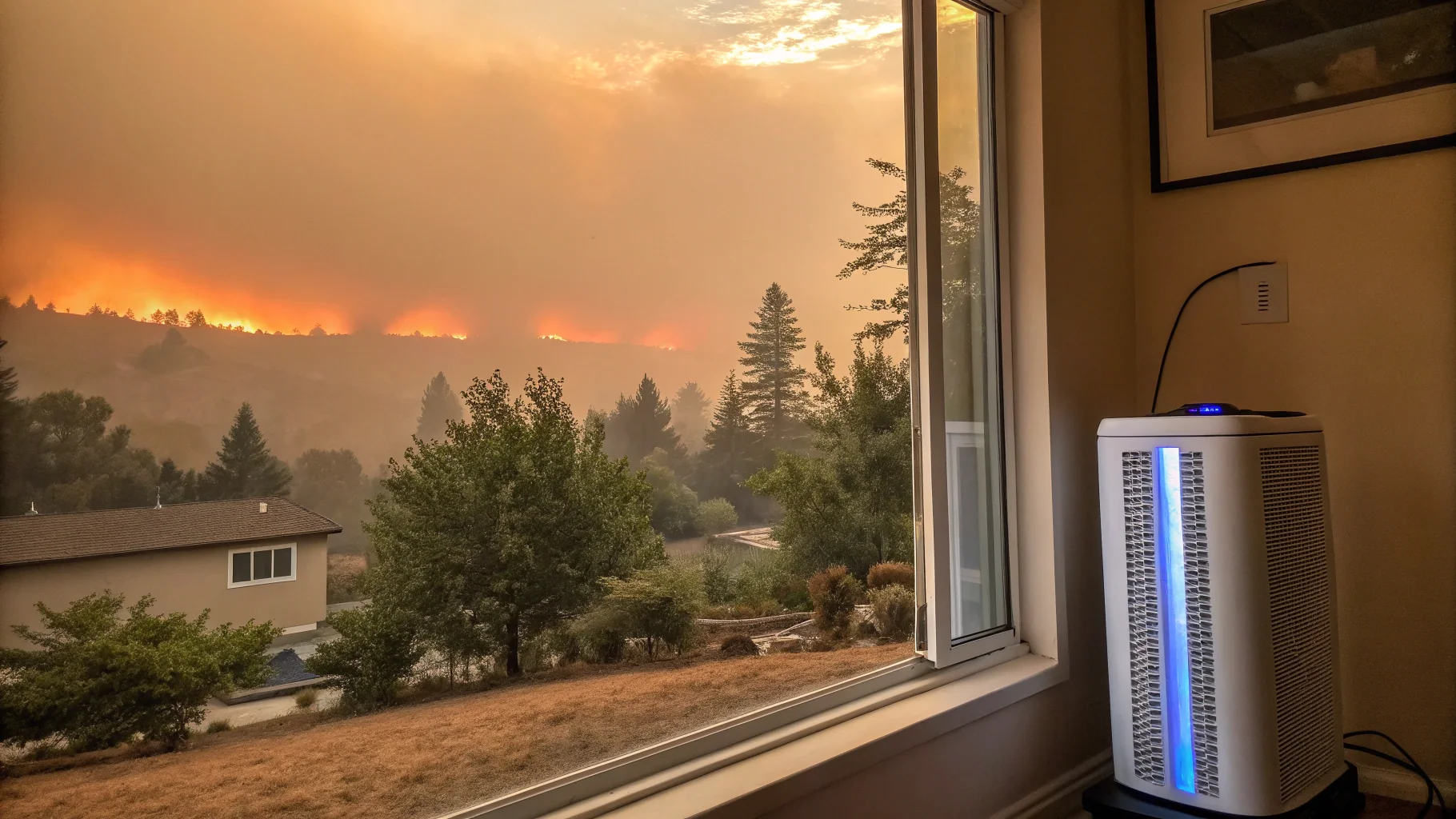
I remember the West Coast fires a few years ago. The air quality was so bad that you could smell the smoke inside your own home. Sales on platforms like Amazon skyrocketed, but so did customer complaints. Many people bought purifiers that were simply not up to the task. They had good particle filters, but the smoke's chemical smell, the VOCs, lingered. This was a wake-up call for the industry. We learned that fighting wildfire smoke requires a two-pronged approach: capturing the fine particles (PM2.5) and adsorbing the toxic gases. This has shifted the definition of a "good" air purifier.
Beyond Particulates: The Threat of VOCs
Wildfire smoke is a complex mixture. The visible haze is made of tiny solid particles, but the invisible threat comes from gases like formaldehyde and benzene. A standard HEPA filter does nothing to stop these. To be effective, a purifier needs a substantial filtro de carbón activado3. I'm not talking about a light, carbon-dusted mesh. I mean pounds of high-grade carbon pellets.
Sourcing for Smoke-Ready Purifiers
For a buyer like you, this means scrutinizing the specs. Don't be fooled by marketing. Look for the data.
| Specification | Minimum Requirement for Wildfire Smoke | Why It Matters for Your Brand |
|---|---|---|
| PM2.5 CADR | 250+ for a medium room | Proves it can clear particles quickly. |
| Carbón activado | >2 lbs of high-grade carbon | Ensures effective removal of odors and VOCs. |
| Air-Tight Sealing | Gasket-sealed filter housing | Prevents contaminated air from bypassing the filter. |
| Certificaciones | AHAM Verifide (Smoke) | Third-party validation builds consumer trust. |
Wildfire smoke contains PM2.5 particles, which can penetrate deep into the lungs and enter the bloodstream.Verdadero
The EPA, CDC, and WHO have all confirmed that fine particulate matter (PM2.5) is small enough to bypass the body's natural defenses, leading to respiratory and cardiovascular problems.
Any purifier with a carbon filter is effective against smoke.Falso
The amount, quality, and surface area of the activated carbon are critical. A thin, coated filter becomes saturated quickly and is largely ineffective against the high concentration of VOCs in heavy smoke.
Is Your Air Purifier Smart Enough for the 2025 Home?
Consumers are tired of juggling multiple apps for their smart devices. They want seamless integration. Products without it are quickly becoming obsolete, a major risk for your brand.
With the Matter protocol now supporting air quality devices, seamless integration is no longer a bonus—it's a requirement. Consumers expect their purifiers to work effortlessly with Google Home, Apple Home, and Alexa, making Matter-compatibility a critical feature.
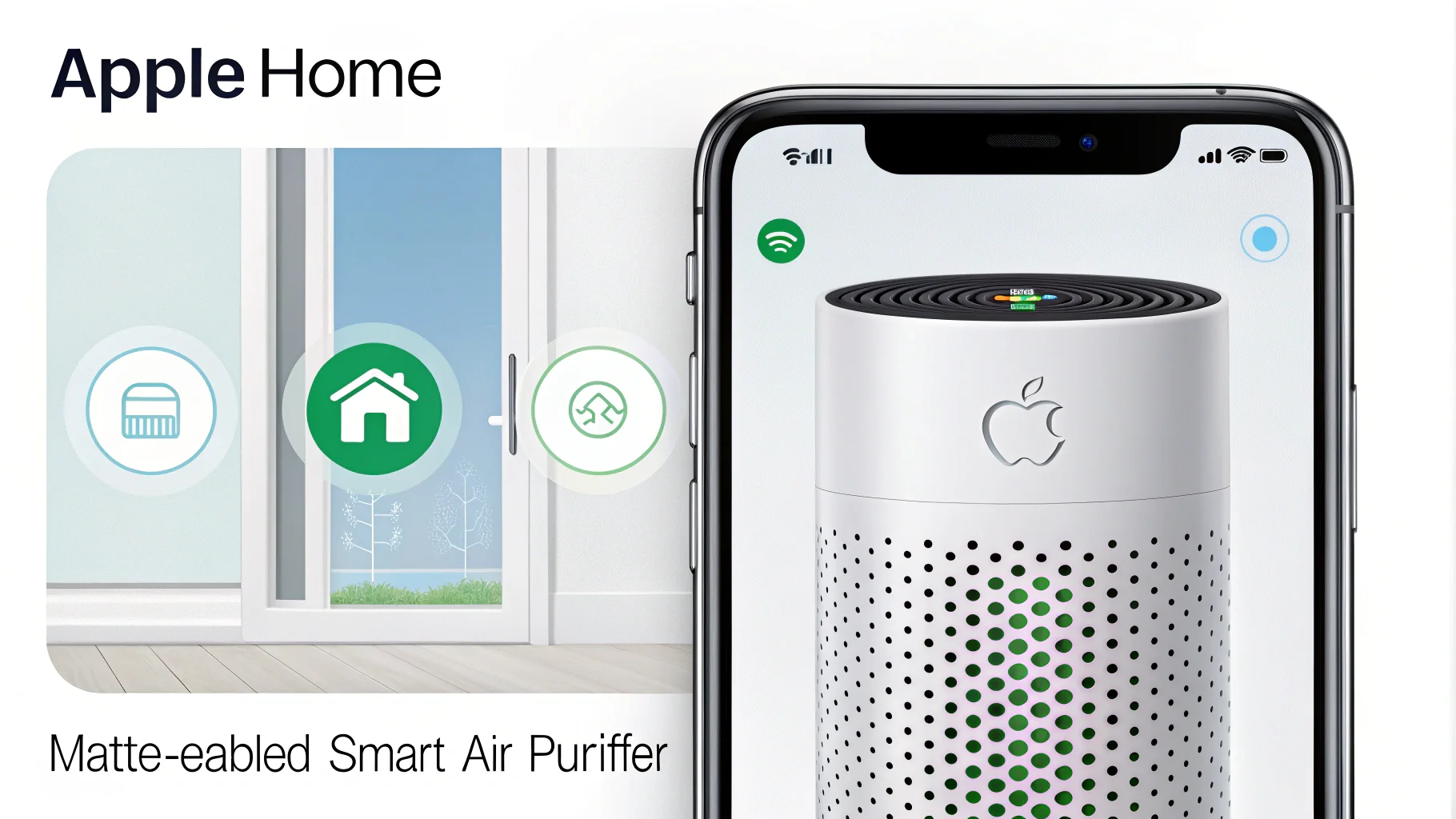
My background is in both environmental protection and electronic design, so this trend is particularly exciting for me. For years, "smart" purifiers were a mess. Every brand had its own clunky app. It was a terrible user experience. I knew a unified system was the only way forward. When the big tech companies announced the Matter standard, I knew it would be a game-changer. In 2023, they officially added air purifiers and sensors to the protocol. This is the starting gun for the next race in our industry. Brands that adopt Matter will thrive; those that don't will be left with "dumb" smart products that nobody wants.
What is Matter and Why Does it Matter?
Think of Matter as a universal translator for smart home devices. If a product is Matter-certified, it can talk directly to any Matter-compatible system, like Apple Home or Google Home. No extra apps, no complicated setup. For the consumer, it just works. For your brand, it means your product can fit into any customer's smart home, dramatically widening your potential market.
Key Features for a "Truly Smart" Purifier
When sourcing, you need to look beyond a simple "Wi-Fi" sticker.
| Función inteligente | Consumer Benefit | Sourcing Checklist |
|---|---|---|
| Matter certification4 | Works with any major smart home | Ask supplier for proof of certification. |
| Real-time Sensors | Automatically adjusts fan speed | Must have PM2.5, VOC, and humidity sensors. |
| Automated Routines | "Turn on when I leave home" | Check for IFTTT or native routine support. |
| Voice Control | Hands-free operation | Test with Alexa, Google, and Siri commands. |
Matter is a new smart home standard backed by major tech companies like Apple, Google, and Amazon.Verdadero
The Connectivity Standards Alliance (CSA), which develops Matter, includes all major tech players on its board, ensuring wide adoption and support for the protocol.
Any Wi-Fi enabled purifier can be updated to support Matter.Falso
Matter requires specific hardware (a compatible chipset) and software. While some existing devices might be updatable, most will require a new hardware design to be fully Matter-compliant.
Why is a Mold-Fighting Purifier the Next Big Thing in Home Health?
Mold is a silent threat in many homes, causing health issues. Consumers are now connecting the dots between humidity and mold. Your brand can offer the all-in-one solution they need.
Growing awareness of mold-related health problems is driving demand for humidity control. Consumers are looking for air purifiers that not only filter mold spores but also feature antimicrobial materials to prevent mold growth on the filter itself.
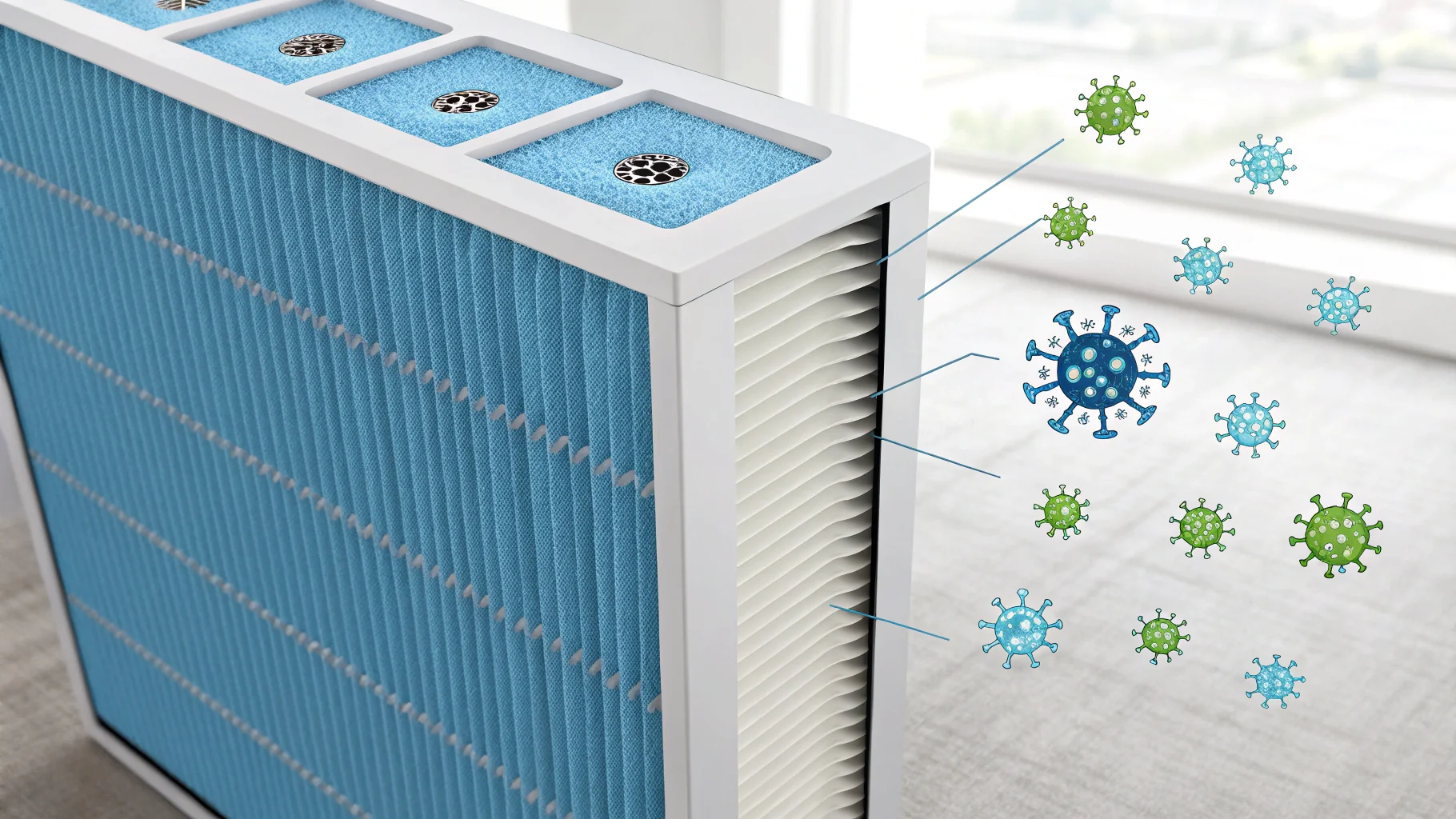
From my environmental work, I know that mold is a persistent problem, especially in humid climates or older buildings. For a long time, people just bought dehumidifiers. But a dehumidifier doesn't remove the mold spores already floating in the air. An air purifier does. The problem is that a standard filter can become a breeding ground for the very mold it captures if the conditions are right. Customers are getting smarter about this. They're asking, "How do I know the filter itself isn't making the problem worse?" This is a huge opportunity for brands that can provide a credible answer.
The Science of Mold Prevention
Mold needs moisture to grow. The CDC recommends keeping indoor humidity below 50%. An air purifier's role is twofold: first, to capture airborne mold spores with a HEPA filter, and second, to ensure the filter doesn't become a new mold colony. This is where new technologies, like antimicrobial coatings on the filter media, come into play. These treatments inhibit the growth of microbes, giving consumers peace of mind.
Product Features to Target the Anti-Mold Market
When you're evaluating suppliers, here are the features that will resonate with this growing market segment.
| Característica | Función | Importance for Your Brand |
|---|---|---|
| Antimicrobial Filter | Inhibits mold/bacteria growth on the filter | A key differentiator and marketing point. |
| High CADR for Spores | Quickly removes spores from the air | Spores are larger particles, so Dust CADR is a good proxy. |
| Integrated Dehumidifier | Removes moisture from the air | An "all-in-one" solution has strong appeal. |
| Humidity Sensor | Monitors room humidity levels | Provides data and enables auto-mode for dehumidifying. |
The CDC recommends keeping indoor humidity between 30% and 50% to help control mold.Verdadero
This is a standard recommendation from the Centers for Disease Control and Prevention (CDC) and the Environmental Protection Agency (EPA) for maintaining a healthy indoor environment.
A standard HEPA filter kills the mold spores it captures.Falso
HEPA filters are a physical barrier; they trap mold spores but do not kill them. If the filter becomes damp, the trapped spores can germinate and grow, potentially releasing fragments back into the air.
How Can High Performance and Energy Savings Coexist in Your Next Air Purifier?
Energy bills are rising, and consumers are eco-conscious. An inefficient, noisy air purifier is a tough sell. Your brand needs to deliver powerful cleaning without the high running cost.
New standards like ASHRAE 241 and stricter Energy Star requirements are pushing the industry toward high-performance, energy-saving purifiers. Consumers now expect a high CADR and more Air Changes per Hour (ACH) without a big spike in their electricity bills.
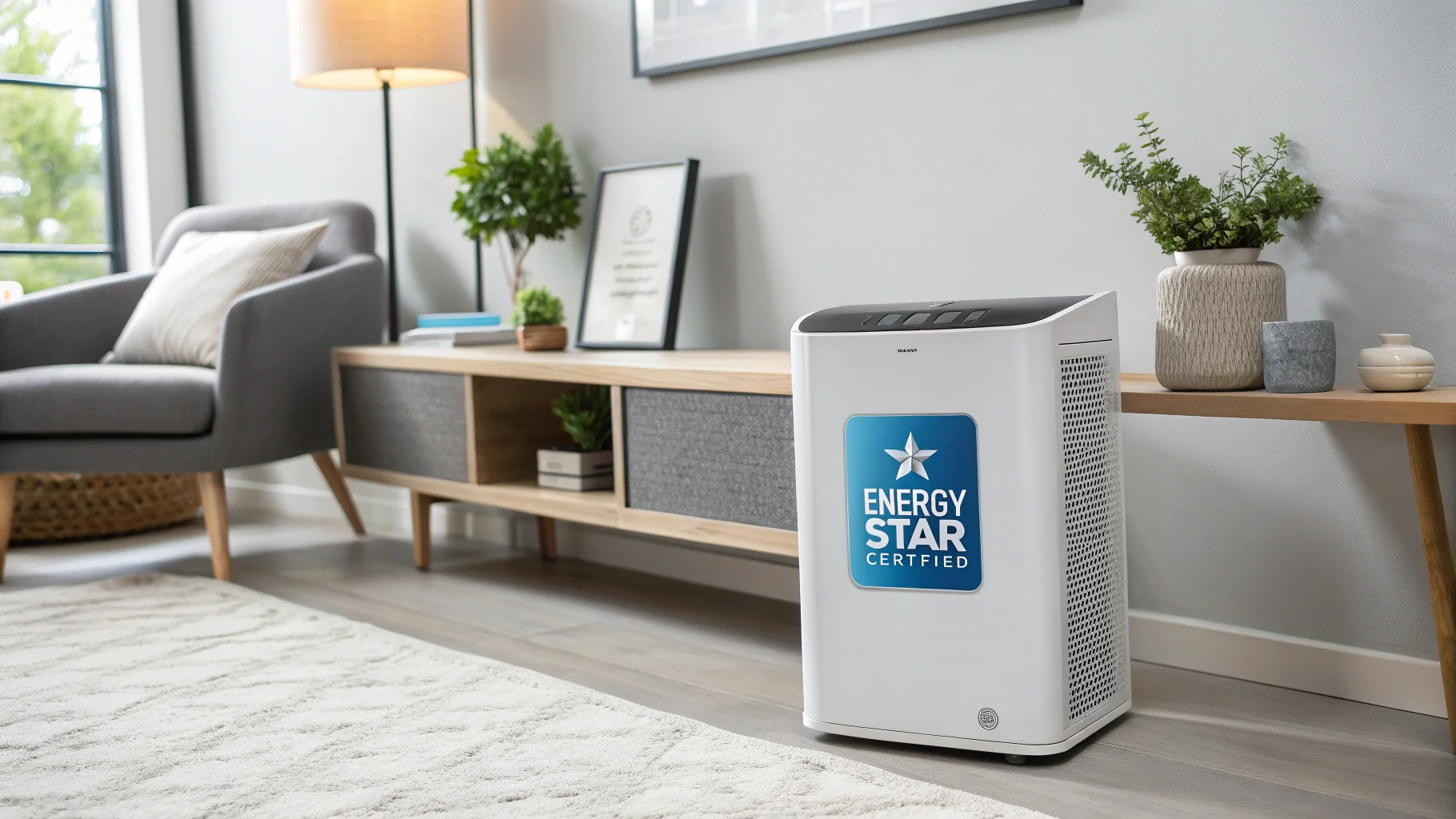
As an engineer, efficiency is my passion. It's the ultimate design challenge: how to move the most air, through the densest filter, using the least amount of energy, and making the least amount of noise. At my company, HisoAir, we've invested heavily in developing things like our Decibel Cancellation™ technology because we know this is the future. Consumers are looking at the long-term cost of ownership. A cheap purifier that costs a fortune to run is no longer a good deal. New building standards are also shaping expectations. When codes for new buildings require 6 air changes per hour, people start expecting that same level of performance in their homes.
Understanding the New Standards
You don't need to be an expert on these, but you should know what they mean. ASHRAE 241 is about controlling infectious aerosols, which demands high airflow. The new Energy Star 6.1 standard for air purifiers requires a much better CADR-to-Watt ratio. And AHAM is emphasizing ACH as a key performance metric. Together, they paint a clear picture: the market demands purifiers that are both powerful and cheap to run.
Key Metrics for Sourcing Efficient Purifiers
This is where you can really separate the good suppliers from the bad. Demand the data.
| Metric | What it Means | Target for 2025-2026 |
|---|---|---|
| CADR/Watt | Cleaning power per unit of energy | Must meet Energy Star 6.1 standards. |
| Nivel de ruido (dB) | How loud it is, especially at night | <25 dB on lowest setting. |
| Standby Power | Energy used when "off" but plugged in | <0.5 Watts. |
| Clasificación ACH | How many times it cleans the room's air per hour | Clearly stated for multiple room sizes (aim for 5-6 ACH). |
The ASHRAE 241 standard provides requirements for controlling infectious aerosols in buildings.Verdadero
ASHRAE Standard 241, Control of Infectious Aerosols, was published in 2023 to provide a consensus-based, code-enforceable set of requirements for air system design and operation in buildings.
A higher CADR always means a higher electricity bill.Falso
This is a common misconception. A well-designed purifier with an efficient motor and aerodynamic fan can achieve a high CADR with low energy consumption. The key metric is CADR-per-watt, not just CADR alone.
Conclusión
Staying ahead means focusing on allergies, smoke, smart tech, mold, and efficiency. These trends are your roadmap to building a successful air quality brand in 2025 and beyond.
References
-
Explore how allergy relief features in air purifiers can capture allergens effectively, meeting consumer demands. ↩
-
Discover the science behind HEPA filters and their importance in air purification. ↩
-
Learn how activated carbon filters enhance air purifiers' effectiveness against odors and harmful gases. ↩
-
Explore how Matter certification enhances compatibility and user experience for smart air purifiers. ↩

 English
 Français
 Español
 Italiano
 Deutsch
 Português
 Русский
 العربية
 日本語
 한국어
 Tiếng Việt

