


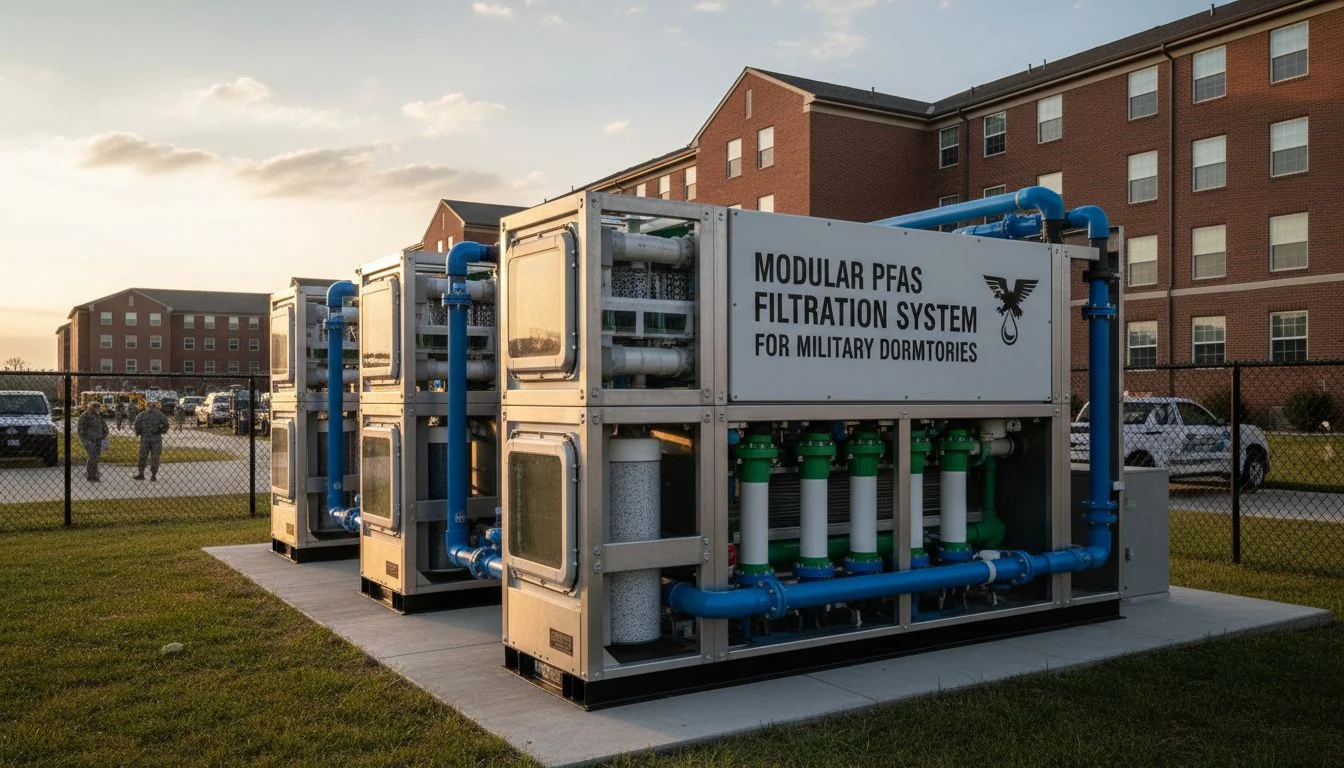
Military bases face strict new water rules. Old dormitories lack space for huge filters. I will show you how Modular PFAS filtration systems1 solve this engineering problem fast.
Modular PFAS water filtration systems use standardized, pre-engineered units to remove chemicals from military housing water. These systems fit into tight spaces, adapt to different water pressures, and allow facility teams to scale treatment across multiple buildings without major construction delays.

You might think custom-built water plants are the only way to handle large military bases. But custom builds take years and cost too much. Let us look at why modular engineering is the better choice for these projects.
Custom-built water treatment plants are always faster to install than modular systems.Falso
Custom plants require extensive site preparation and engineering time, making them much slower to deploy than pre-engineered modular units.
Modular PFAS filtration systems can be scaled by adding more standardized units.Vero
Modular designs allow facility managers to increase capacity simply by connecting additional filtration modules in parallel.
Why Does Modularity Matter for Base Housing Retrofits?
Retrofitting old military housing is a nightmare. Space is tight, and downtime upsets residents. Modular designs turn this complex construction job into a simple product-delivery task.
Modularity matters for Base housing retrofits2 because it shifts work from the site to the factory. We build and test standardized filtration units off-site. Facility teams then drop these units into existing mechanical rooms, saving time and avoiding major building modifications.
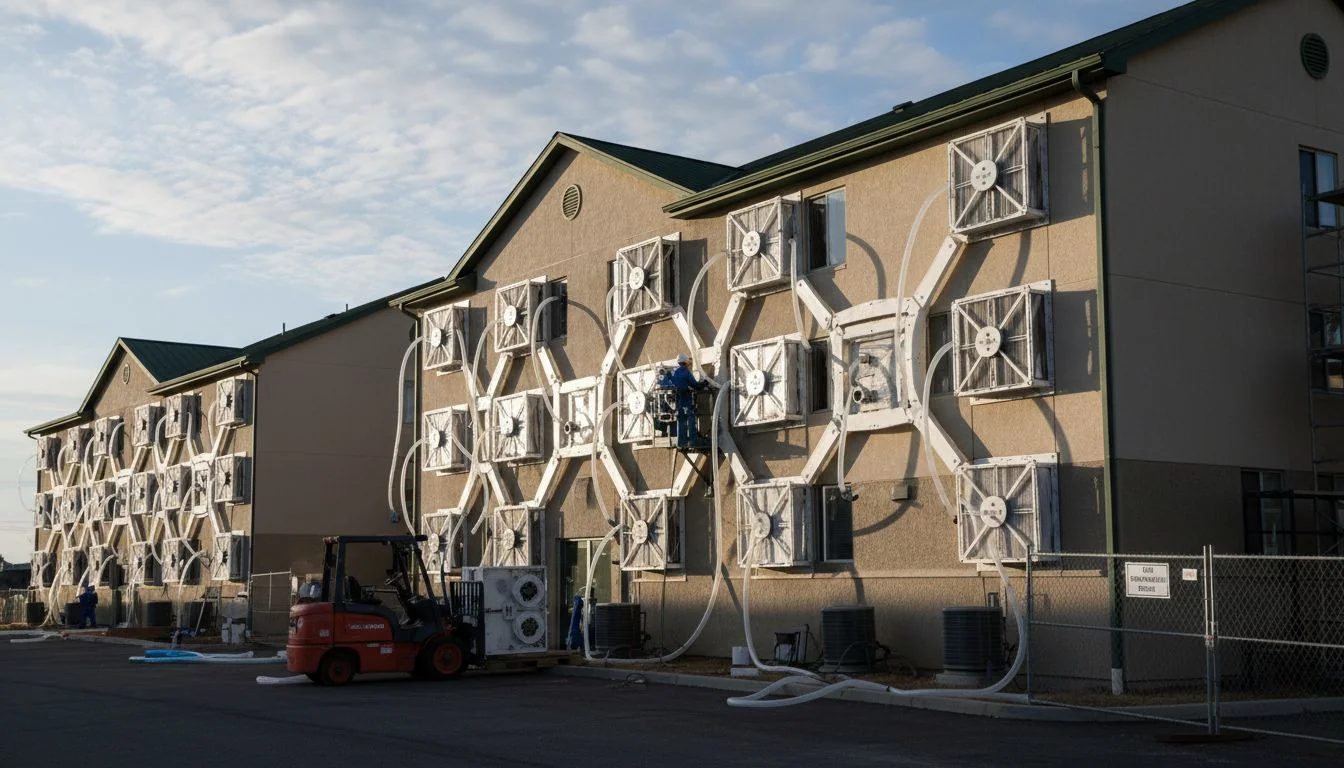
Engineering for Tight Spaces
When I first looked at military dormitories, I saw mechanical rooms built 50 years ago. They have no extra room. As designers, we must treat modularity as our main engineering advantage. We do not just shrink a big system. We break it into smart, repeatable blocks.
The Factory Advantage
By building modules in a factory, we control the quality. We use the same CAD models and the same CNC parts. This is just like designing a good plastic mold. You want consistency. When the units arrive at the base, workers just connect the pipes.
| Caratteristica | Custom Build | Modular System |
|---|---|---|
| Build Location | On-site | Fabbrica |
| Installation Time | Months | Days |
| Space Needed | Large, custom | Small, flexible |
| Controllo qualità | Variabile | High, standardized |
This approach reduces site work. It makes the project predictable. Facility managers love this because they know exactly what they will get.
Modular systems require massive structural changes to existing buildings.Falso
Modular systems are designed to fit through standard doors and into existing mechanical spaces without major structural changes.
Factory-built modules offer better quality control than on-site builds.Vero
Manufacturing in a controlled factory environment ensures consistent assembly, testing, and material quality compared to field construction.
How Do Modular Systems Scale Across Buildings and Occupancy Levels?
Troop levels change constantly. A fixed water system wastes money when dorms are empty and fails when they are full. Modular systems adapt to these changes easily.
Modular systems scale by adding or removing standard filtration blocks. If a building houses more troops, facility teams simply connect an extra module. This parallel design handles different water-pressure conditions and varying flow rates across multiple buildings without redesigning the whole system.
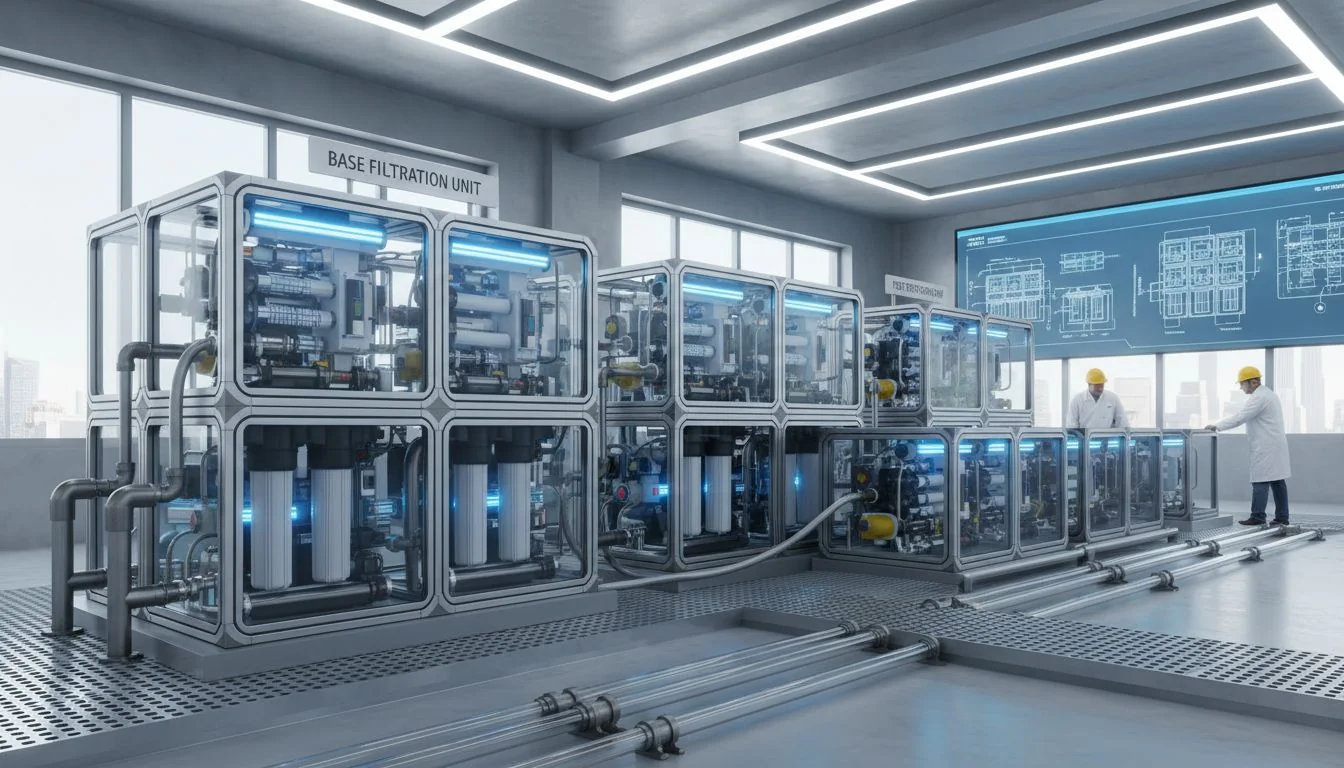
Handling Uneven Demand
Military bases have many buildings. Some are huge barracks. Others are small family homes. A one-size-fits-all design fails here. I always tell my engineering clients to design for flexibility. We use a parallel module setup.
Standardizing the Flow
If a dorm needs 50 gallons per minute, we install one module. If a larger building needs 150 gallons, we install three of the exact same modules. We do not design a new machine. We just multiply the standard unit.
| Building Type | Water Demand | Modules Needed |
|---|---|---|
| Small Duplex | Basso | 1 Unit |
| Medium Dorm | Medio | 2 Units |
| Large Barracks | Alto | 4 Units |
This scalability is a huge project-delivery advantage. It solves the problem of uneven space constraints and different water pressures. You just adjust the number of modules to match the local building needs. This keeps the engineering simple and the costs low.
You must design a completely new system for every building size.Falso
You can use the same standardized module and simply install more of them to meet higher capacity needs.
Parallel module setups handle varying water flow rates effectively.Vero
Connecting modules in parallel allows the system to turn units on or off based on real-time water demand.
What Footprint, Utility, and Site Requirements Should You Plan For?
Planning without checking site limits leads to disaster. You might buy equipment that does not fit through doors. Proper site planning prevents this costly mistake.
You must plan for physical footprint, door sizes, floor weight limits, and existing pipe connections. Modular systems are designed to fit through standard commercial doors. They require basic electrical hookups and standard plumbing fittings, making them easy to integrate into older military housing utility rooms.
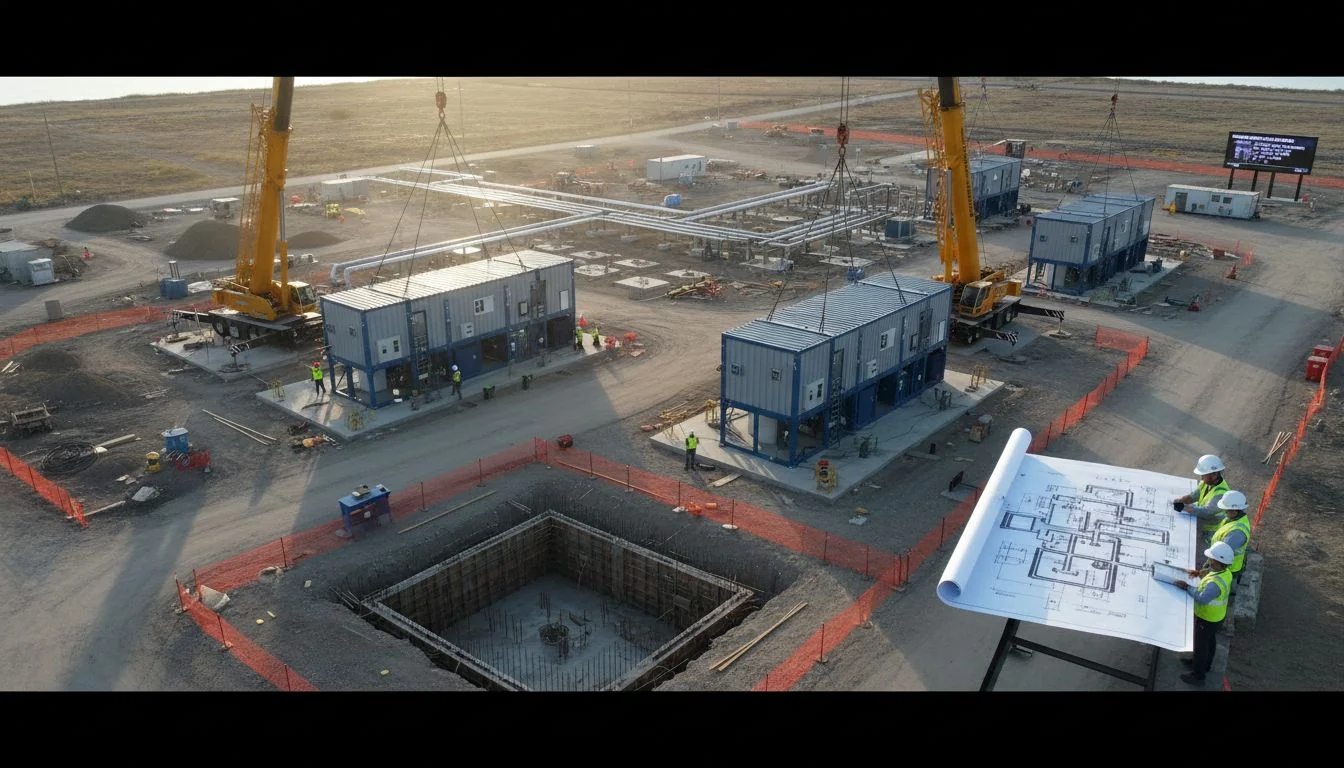
Measuring the Physical Space
I remember visiting a factory where the new machines were too big for the freight elevator. We had to take the machines apart. You must avoid this in military housing. We design our PFAS modules to fit on standard pallets. They pass through standard 36-inch doors.
Utility Connections
Older buildings have uneven space constraints. They also have old electrical panels. Our modules use standard 120V or 240V power. They do not need massive power upgrades.
| Requirement | Specification | Why It Matters |
|---|---|---|
| Door Width | 36 inches | Avoids knocking down walls |
| Potenza | Standard 120V/240V | Uses existing electrical panels |
| Peso | Under 1000 lbs | Protects old concrete floors |
| Piping | Standard Flanges | Connects to old base pipes |
You must check the water pressure conditions before installation. Some buildings need booster pumps. The modular design lets you add a pump module right next to the filter module.
Modular filtration systems require custom high-voltage power lines.Falso
Most modular systems are engineered to run on standard commercial power available in existing mechanical rooms.
Designing modules to fit through standard doors reduces installation costs.Vero
Fitting through standard doors eliminates the need for demolition and structural rebuilding during installation.
How Does Phased Deployment Work From Pilot Building to Full Rollout?
Rushing a base-wide installation causes massive disruptions. If the first system fails, the whole base suffers. A Phased deployment3 reduces risk and proves the design works first.
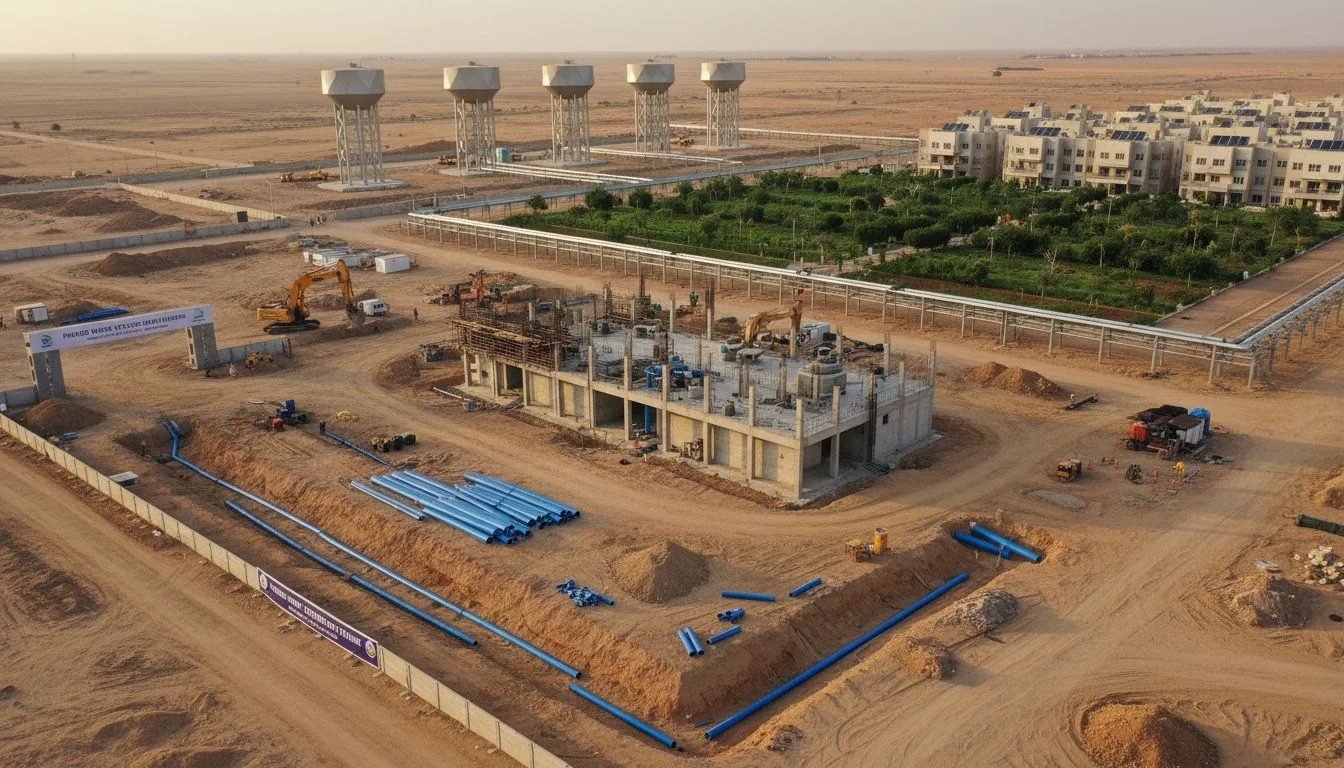
Phased deployment starts with installing modular units in one pilot building. Facility teams test the water pressure, monitor performance, and train staff. Once the pilot succeeds, the base rolls out the exact same standardized modules to all other dormitories, ensuring a smooth and predictable base-wide upgrade.
Starting with a Pilot
In mold manufacturing, we always do a test run before mass production. We call it a T1 trial. You should do the same with PFAS filtration. Pick one dormitory. Install the modular system. This pilot building shows you how the system handles real water-pressure conditions.
Scaling to Full Rollout
Once the pilot works, you move to the full rollout. Because the modules are identical, the installation process becomes a simple copy-and-paste job.
| Phase | Action | Goal |
|---|---|---|
| Phase 1 | Pilot Building | Test pressure and train staff |
| Phase 2 | High-Risk Dorms | Protect the most vulnerable areas |
| Phase 3 | Family Housing | Expand standard units |
| Phase 4 | Full Base | Complete the modular network |
This phased deployment across buildings keeps the project moving. It allows the facility team to learn the system on a small scale. It makes the whole project highly reliable.
A full base rollout should always happen on the exact same day.Falso
Deploying everything at once increases the risk of base-wide failures and overwhelms facility maintenance teams.
A pilot program helps facility teams identify site-specific challenges early.Vero
Testing one building first reveals pressure issues and space constraints before buying equipment for the whole base.
How Do You Specify Modular Systems in Contracts and RFPs?
Vague contracts lead to bad equipment. Without specifying modularity, contractors build expensive, permanent plants. You must write clear RFPs to get the right modular design.
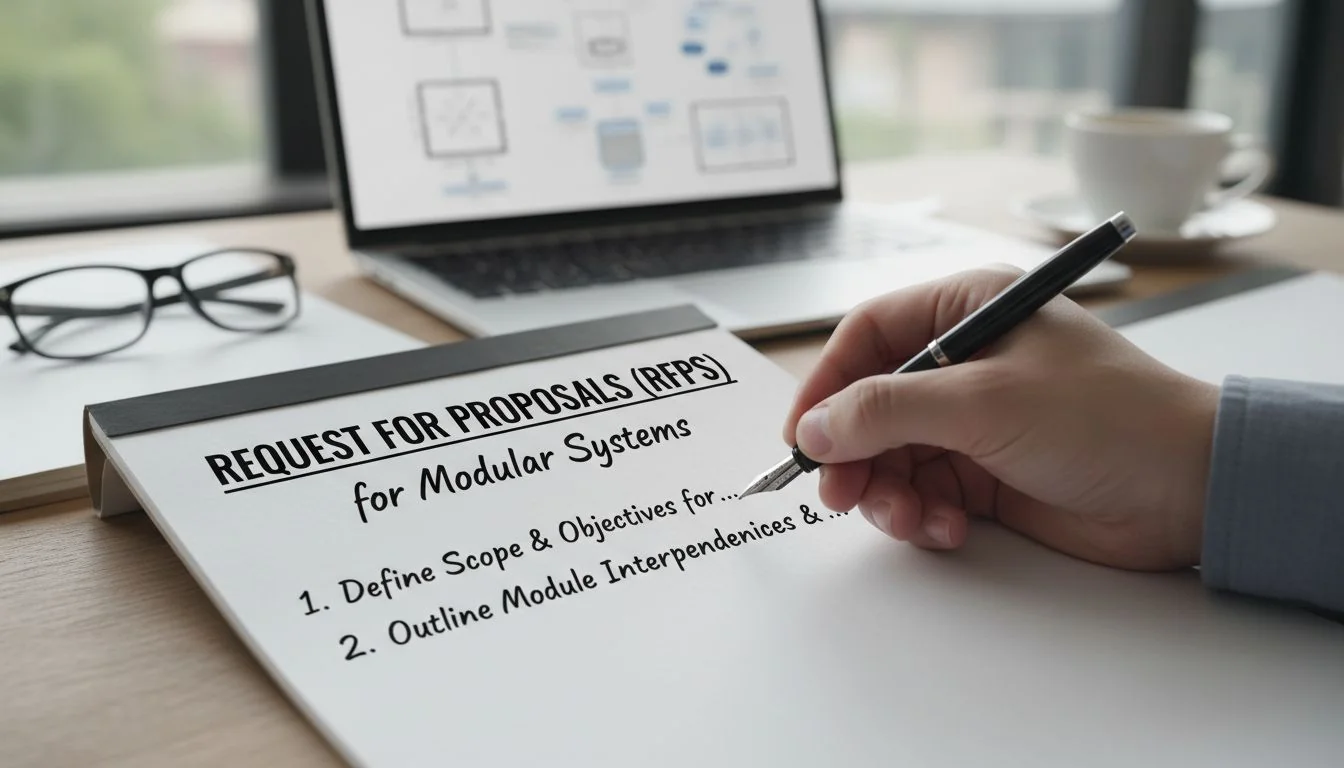
To specify modular systems in RFPs, you must demand pre-engineered, skid-mounted units. State the exact maximum dimensions, required flow rates, and standard connection types. You should also require replaceable modules and standardized parts to ensure the facility team can easily maintain the system over its lifespan.
Writing Clear Requirements
When I help clients buy CNC machines, I tell them to list every detail. You must do this for PFAS systems. Do not just ask for "clean water." Ask for "modular, skid-mounted filtration units." You must present modularity as your project-delivery advantage in the contract.
Focusing on Replaceable Parts
Your RFP must demand standardized, replaceable modules. If a pump breaks, the facility team should swap it out in minutes. They should not wait weeks for a custom part.
| RFP Section | Bad Specification | Good Specification |
|---|---|---|
| Design Type | Water treatment plant | Pre-engineered modular skid |
| Manutenzione | Easy to fix | Uses standard replaceable modules |
| Footprint | Fits in room | Max dimensions: 36" x 48" |
| Expansion | Upgradable | Parallel modular scalability |
Clear contracts force vendors to provide true modularity. This keeps the focus on facility reliability and maintainability. It protects the military base from bad engineering.
RFPs should only state the final water quality required.Falso
RFPs must also specify the physical footprint, modularity, and maintenance requirements to ensure the system fits the facility.
Specifying skid-mounted units ensures the system is built off-site.Vero
Skid-mounted units are pre-assembled on a frame in a factory, which guarantees off-site construction and easy transport.
What Are the Maintenance and Standardization Benefits for Facility Teams?
Custom systems break down and leave maintenance teams guessing. Finding custom spare parts takes forever. Standardized modular systems eliminate this stress and keep water flowing.
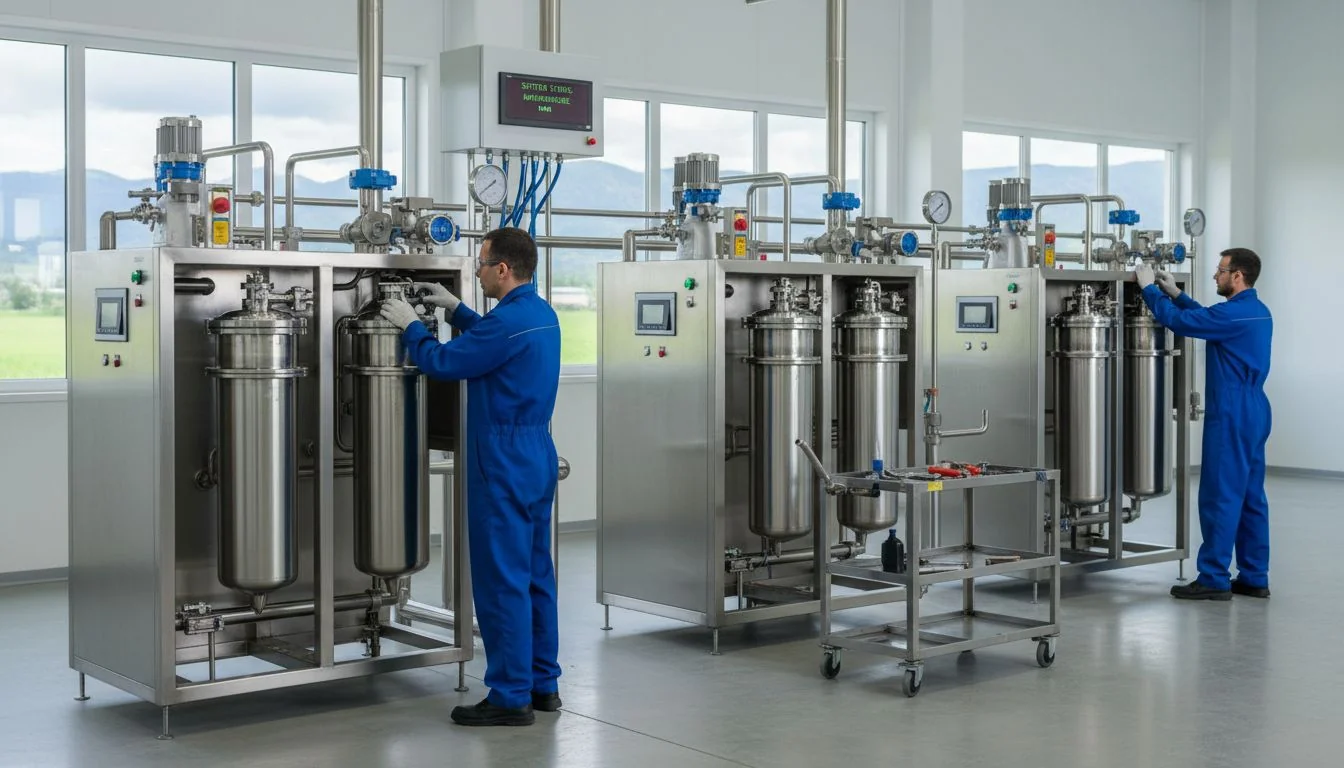
Modular systems offer massive Maintenance benefits4 through standardization. Every building uses the exact same filters, pumps, and valves. Facility teams only need to stock one set of spare parts. When a unit fails, workers simply swap out the replaceable module, ensuring high facility reliability and zero downtime.
The Power of Standardization
In mold design, we use standard pins and screws. This saves time and money. Military bases must do the same with water filters. When every dorm has the same modular system, training becomes very easy. A mechanic who learns to fix one building can fix them all.
Quick Swaps and Serviceability
We emphasize serviceability and replaceable modules. If a filter housing cracks, you do not shut down the building for a week. You unbolt the broken module. You slide in a new one.
| Maintenance Task | Custom System | Modular System |
|---|---|---|
| Spare Parts Inventory | Huge, many types | Small, one standard set |
| Staff Training | Complex, unique systems | Simple, identical units |
| Repair Time | Days or weeks | Hours or minutes |
| System Downtime | Alto | Very low |
This standardization is the ultimate engineering advantage. It keeps the tone focused on facility reliability. It makes the daily job of the maintenance team much easier and much safer.
Standardized systems require facility teams to stock hundreds of different spare parts.Falso
Standardization means all units use the same parts, drastically reducing the number of unique spares needed in inventory.
Replaceable modules reduce system downtime during repairs.Vero
Instead of fixing a complex part on-site, technicians can quickly swap the entire broken module with a working spare.
Conclusione
Modular PFAS filtration systems solve space and time problems for military housing. By focusing on smart engineering, standardized parts, and phased rollouts, we make facility maintenance simple and highly reliable.
References
-
Explore how modular PFAS filtration systems enhance water quality and efficiency in military housing. ↩
-
Understand the complexities and solutions involved in retrofitting military housing for modern needs. ↩
-
Find out how phased deployment minimizes risks and ensures successful implementation of modular systems. ↩
-
Explore how modular systems simplify maintenance and enhance reliability for facility teams. ↩




 English
  Français
  Español
  Italiano
  Deutsch
  Português
  Русский
  العربية
  日本語
日本語  한국어
한국어  Tiếng Việt

