새 탭에서 열립니다
혁신적인 공기질 솔루션

Where Are Lasko Humidifiers Manufactured?

Related Products

When shopping for humidifiers, most people used to focus solely on features like tank size or noise levels. Today, however, many customers want to know something more fundamental: where was it made?

For Lasko a century-old Pennsylvania brand with deep American roots this question touches on both practical considerations and brand identity. With rising interest in domestic manufacturing and supply chain transparency, understanding the origin of these products has never been more relevant.

This guide explores the real manufacturing story behind Lasko's expanding humidifier lineup, revealing why most new models roll off Chinese assembly lines while certain legacy units still maintain their American heritage. Whether you're outfitting a healthcare facility or simply looking for a reliable home unit, knowing where these products are made affects everything from price and availability to service and parts.

The Bottom Line

If you're short on time, here's what you need to know: all current Lasko ultrasonic humidifiers (UH-series) are manufactured in China. This includes popular models like:

  • UH200 (Cool-Mist tabletop)
  • UH300 (Warm/Cool digital tower)
  • UH150 (Personal Cool-Mist)

Retail packaging and specification sheets for these models plainly state "Country of Origin: China" or "Manufactured in China."

In contrast, some legacy evaporative console models particularly the wheeled 9-gallon model 1128 have historically carried "Made in USA" identification plates. These larger, traditional units represent the remaining American-made portion of Lasko's humidifier catalog.

The Company Behind the Brand

Founded in 1906 in West Chester, Pennsylvania, Lasko started by manufacturing sheet-metal window fans. Today, the company maintains three U.S. facilities:

  • West Chester, PA (Corporate Headquarters)
  • Fort Worth, TX
  • Franklin, TN

These American plants primarily handle products with substantial plastic housings but simpler electronics mainly box fans, air circulators, and space heaters. The company employs roughly 1,000 people across these locations.

Humidifiers, particularly the ultrasonic models that dominate today's market, contain specialized components like ultrasonic transducers and complex electronic boards that Lasko sources more economically from overseas partners.

Why China? The Economics Behind Manufacturing Choices

Why would Lasko ship relatively lightweight humidifiers across 7,000 miles of ocean instead of producing them domestically? The answer involves both component sourcing and manufacturing economics.

The ultrasonic atomizer the heart of every UH-series unit is a commodity component mass-produced by specialized vendors in Guangdong province. By assembling these units in the same industrial regions where the critical components originate, Lasko achieves significant cost advantages.

This manufacturing strategy appears plainly in product documentation. The UH200's specification sheet explicitly states: "Designed and Engineered in the USA — Manufactured in China." Similar notations appear across the entire ultrasonic lineup.

Labor economics remain a major factor. Manufacturing wages in Guangdong average around $4-5 per hour compared to $24-28 in comparable U.S. facilities. Despite rising shipping costs, Lasko optimizes container utilization by packing up to 10,000 tabletop units per 40-foot container.
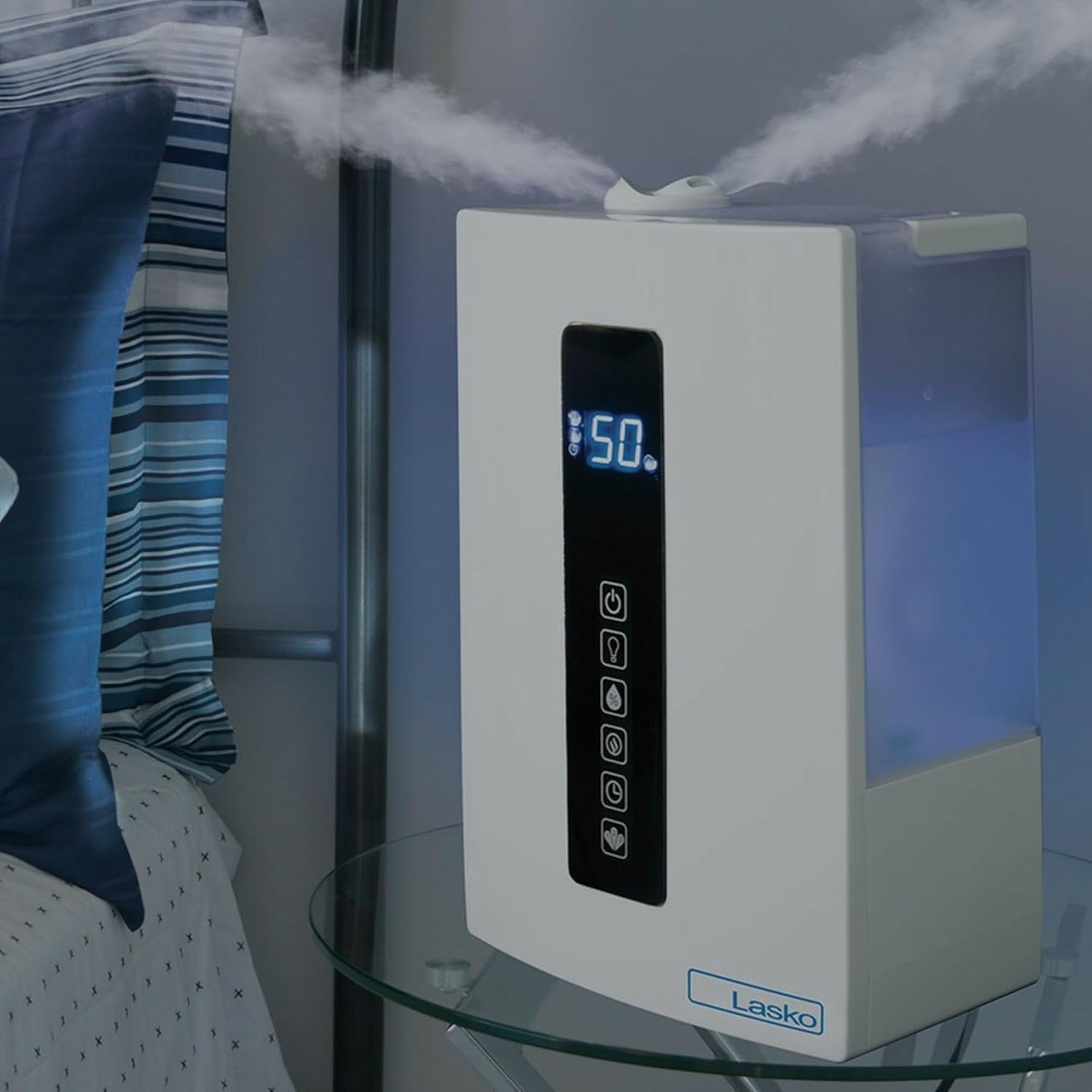
lasko humidifier 3

American-Made Legacy: The Evaporative Console Line

Not everything in Lasko's catalog comes from overseas. The company's large evaporative console humidifiers most notably the model 1128 have traditionally been manufactured in the United States.

These units rely on simpler technology: a wick filter and squirrel-cage fan rather than precision ultrasonic components. The bulky design aligns perfectly with Lasko's domestic manufacturing capabilities:

  1. The cabinet weighs five times more than ultrasonic models, making overseas shipping less economical
  2. Tooling for the large reservoir was paid off years ago, reducing the incentive to move production
  3. These units share motor assemblies with Lasko's American-made box fans, creating economies of scale

The trade-off comes in pricing these American-made units typically retail around $120, significantly higher than their ultrasonic counterparts. They're also primarily distributed within North America.

Lasko's "Dual-Source" Strategy

Lasko executives describe their approach as a "dual-source" manufacturing model that balances cost, quality, and delivery speed. Company materials summarize this strategy as "utilizing both domestic production and Asian sourcing to deliver high-quality, low-cost products with limited lead time."

This hybrid approach offers several advantages:

  • Cost optimization: Producing ultrasonic units in China keeps retail prices competitive (under $50 for most models)
  • Rapid replenishment: U.S. facilities can deliver fans and heaters to retailers within 48 hours during demand spikes
  • Risk mitigation: The dual-source capability provides flexibility if trade policies or tariffs change suddenly

This balanced strategy has helped Lasko remain the only legacy American fan manufacturer still prominently featured in major home improvement chains.

Model-by-Model Manufacturing Guide

모델 유형 제조 위치 Verification Source
UH150 Personal Cool-Mist (5 oz/hr) 중국 Bed Bath & Beyond listing
UH200 Tabletop 360° Cool-Mist 중국 Official specification sheet
UH300 Warm/Cool Digital Tower 중국 Hospitality supplier listings
UH110/120 Older tabletop models 중국 Identical chassis to UH200
1128/1129 Evaporative consoles Historically USA Verification plate on unit
1115 "Natural Cascade" (discontinued) USA until 2014, then offshore Historical product records

Pro Tip: Lasko occasionally creates retailer-exclusive model variants (like "UH200-H" for Home Depot). The fastest way to verify origin is to check the silver ETL certification sticker on the base country of origin appears just above the serial number.

Lasko Humidifier Manufacturing Comparison

기능 Chinese-Made Models U.S.-Made Models
Product Lines All ultrasonic models (UH-series) Legacy evaporative consoles (e.g., 1128)
가격 범위 $39-$129 $120+
기술 Ultrasonic transducers Wick filters & squirrel-cage fans
크기 Compact, tabletop or tower Large console units on casters
무게 Lightweight (2-5 lbs) Heavy (10+ lbs)
Distribution 글로벌 Primarily North America
보증 1-year parts & labor 1-year parts & labor
Replenishment Speed 72+ hours after customs clearance 48-72 hours domestic
Manufacturing Rationale Component clustering, labor costs Freight economics, shared components

How to Verify Manufacturing Origin

U.S. customs regulations require that the country of origin be visible to the purchaser at the point of sale. Here's how to check Lasko humidifiers:

  • Boxed units: Look at the end panel with the UPC code; "Made in ___" should appear in lettering at least as tall as the country name
  • Display models: Check the underside for the ETL/UL compliance plate where the country of origin appears below the electrical rating
  • Online purchases: Scroll to the specification table's bottom section; if origin is omitted, assume "Imported"
  • Government contracts: For TAA compliance, request a written country of origin certificate from your distributor

Remember that "Designed in USA" (which appears on all Lasko packaging) is not equivalent to "Made in USA." Also note that replacement parts may have different origins than the main unit replacement wicks for the 1128 are made in the USA by BestAir in Illinois, regardless of where the humidifier itself was manufactured.

Common Questions About Manufacturing Origin

Does manufacturing location affect warranty coverage?

No. All Lasko humidifiers carry the same one-year parts-and-labor warranty administered from Pennsylvania, regardless of manufacturing origin.

Are filters interchangeable between U.S. and Chinese-made units?

Yes, for evaporative models. The 1128 uses Lasko's THF8 wick regardless of where final assembly occurred. Ultrasonic units don't use replaceable filters, only optional demineralization cartridges.

Will Lasko bring ultrasonic production back to the U.S.?

While company representatives mention "ongoing evaluations," the specialized tooling and component ecosystem in Shenzhen make a near-term shift unlikely. Any reshoring would likely begin with premium, small-batch products.

Are Chinese-manufactured units less reliable?

Field data provided to commercial buyers shows return rates under 2% for both domestic and imported units. Most failures stem from water quality issues (mineral buildup on electronic components) rather than manufacturing defects.
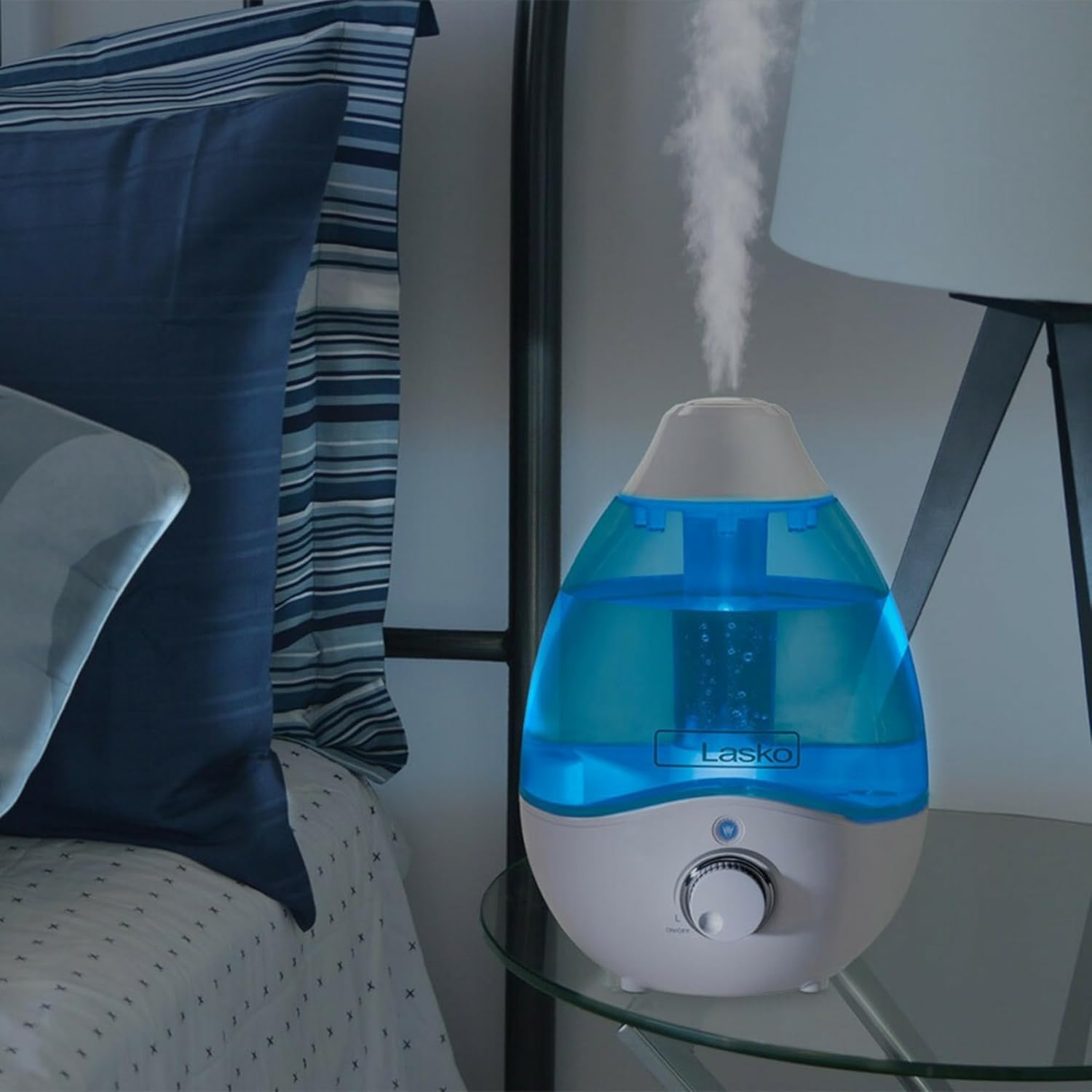
lasko humidifier

결론

Lasko's manufacturing approach reflects the balance between tradition and economic reality. The company maintains its century-old American production facilities for fans and select humidifier models while leveraging Chinese manufacturing expertise for the precision components in modern ultrasonic units.

For consumers, the choice is straightforward:

  • If you want an affordable, compact ultrasonic humidifier under $70, you'll be purchasing a Chinese-manufactured Lasko
  • If supporting American manufacturing is a priority—and you don't mind a larger unit with a higher price tag—the evaporative console models offer a domestic alternative

Both options come with identical warranty coverage and customer support. With this manufacturing knowledge in hand, you can confidently select the Lasko humidifier that best aligns with your budget, performance requirements, and personal values.

공유:
히로에어 설립자 미스터 리
Alwen Lee, an air purification expert with over 10 years of experience, is a devoted father of two and a passionate traveler, having explored more than 30 countries. With a love for public speaking and swimming, he has dedicated his life to the indoor air quality industry. His mission is to ensure that people around the world enjoy the freedom to breathe clean air and lead happy, healthy lives.

메시지 보내기

Related Products

자세히 보기

Modern living room with a family enjoying a healthy indoor environment monitored by smart devices, natural lighting, and greenery.

After IFA 2026: The Healthy Home Is Moving Beyond Smart Devices

In our previous IFA 2026 column, Air Purification Is Becoming Part of the Healthy-Home Platform, we argued that the next generation of indoor-health products would ...
뉴스
Modern living room and kitchen with smart home air quality devices including an air purifier, humidifier, and water filtration system, connected with visualized blue connectivity lines.

IFA 2026: Air Purification Is Becoming Part of the Healthy-Home Platform

Pre-IFA Industry Perspective | September 4, 2026 This article is based on official announcements and regulatory information available ahead of IFA 2026, which takes place ...
뉴스
Comparison infographic showcasing the differences between carbon block filter and activated carbon fiber. Detailed diagrams illustrate the hierarchical porous structure of the carbon block with long diffusion paths and the open microporous structure of the activated carbon fiber with direct access for PFAS adsorption.

Carbon Block vs. Activated Carbon Fiber (ACF): Matching Media to Target Contaminants

Two carbon media. Same adsorption chemistry. Very different behaviour in a point-of-use cartridge. If you are specifying a water purifier platform for a PFAS-aware market, ...
뉴스
NSF base listing and ANF private-label certification pathway for OEM water filters

What Is an NSF Master Listing? A Guide to Base Listings, ANF Certification and OEM Water Filters

For a brand preparing to launch an OEM water purifier, one of the most common supplier claims is: “We already have an NSF master listing, ...
News, Water Purifiers
Healthy-home brand team reviewing PFAS water filter certification, test data and product engineering

Entering the Water Category Is Easy. Building a Credible PFAS Claim Is Much Harder

For air purification, appliance and healthy-home brands, entering the water category can look surprisingly easy. A company can select an existing undersink system, customize its ...
뉴스
Team in a business meeting discussing a water filtration system with product components and a comparison table displayed on a screen.

5 Leading OEM Water Purifier Manufacturers in China for Private Label Brands

China has thousands of companies selling water filters, reverse osmosis systems and drinking-water appliances. However, only a portion of them are suitable for private-label, OEM ...
뉴스
Contaminant Engineering•3 min read

PFAS Water Filtration Technologies Explained: Carbon, Resin & RO

Key Takeaway:

PFAS reduction depends on the specific compounds present, treatment media, contact time, water chemistry, and system design. Activated carbon, ion exchange, and Reverse Osmosis address PFAS through different mechanisms.

PFAS are a large family of persistent fluorinated compounds that can occur in drinking-water supplies. Their treatment behavior varies significantly by molecular structure, chain length, functional group, concentration, and the chemistry of the source water.

Granular Activated Carbon (GAC) removes PFAS primarily through adsorption. It is generally more effective for many longer-chain PFAS, while shorter-chain compounds tend to break through more quickly. Carbon performance depends on media properties, Empty Bed Contact Time (EBCT), competing organic matter, loading, and replacement frequency.

Ion-exchange resins use charged functional sites to capture many PFAS compounds. Properly selected anion-exchange media can provide high capacity and may perform better than conventional activated carbon for some shorter-chain PFAS, although performance still depends on water chemistry and competing ions.

Reverse Osmosis (RO) uses membrane separation rather than adsorption. Properly designed RO systems can provide broad reduction across many PFAS compounds as well as dissolved salts and other contaminants. Unlike carbon or resin, however, RO also produces a concentrate stream that must be managed.

No single technology should be selected from a PFAS label alone. System design should consider which PFAS compounds are present, their concentrations, required reduction targets, flow rate, media life, and the applicable third-party certification or validation requirements.

HisoAir Water Technical Series
Product Discovery•3 min read

How to Choose an Under-Sink Water Purifier for Modern Kitchens

Key Takeaway:

Match the treatment technology to your water quality first, then evaluate cabinet space, faucet configuration, flow rate, drain and power requirements, and filter replacement needs.

Choosing an under-sink water purifier starts with water chemistry. Carbon filtration is well suited to chlorine, taste, odor, and many organic contaminants, while Reverse Osmosis is more appropriate when dissolved salts, fluoride, nitrates, or broader dissolved contaminants need to be reduced.

For compact kitchens, tankless RO systems eliminate the conventional storage tank and can significantly reduce the space required under the sink. However, membrane capacity stated in GPD does not directly equal faucet flow. When comparing systems, check the actual dispensing flow rate, inlet-pressure requirement, recovery ratio, and whether a booster pump is required.

Installation architecture also matters. Many RO systems require a drain connection, electrical power, and either a dedicated drinking-water faucet or a compatible multi-function faucet. High-flow carbon systems can often connect directly to the existing cold-water line with a simpler installation, but pressure drop and available faucet flow should still be verified.

RO also removes much of the naturally occurring dissolved mineral content. Where taste or mineral balance is a priority, a post-RO remineralization stage can be added. Filter life should be evaluated by both rated capacity and local water quality rather than replacement time alone.

The right system is therefore not simply the smallest or highest-GPD model. It is the configuration that matches the target contaminants, available cabinet space, desired faucet setup, peak dispensing demand, and maintenance expectations.

HisoAir Water Technical Series
Water Quality•2 min read

What Does TDS Mean in Drinking Water? Measurement vs Contaminant Reality

Key Takeaway:

A TDS meter estimates the overall concentration of dissolved ionic substances from electrical conductivity. It cannot identify specific contaminants or determine whether water is chemically safe.

Total Dissolved Solids (TDS) refers to the combined concentration of dissolved substances in water. Most handheld TDS meters do not measure TDS directly. Instead, they measure electrical conductivity (EC) and convert that reading into an estimated parts-per-million (ppm) value.

This means a TDS reading can indicate how much dissolved ionic material is present, but not what that material actually is. Calcium, magnesium, sodium, nitrates, and other dissolved ions can all contribute to conductivity, yet a simple TDS meter cannot distinguish between them.

TDS meters are also not suitable for detecting trace contaminants such as PFAS, many VOCs, pesticides, pharmaceuticals, or disinfection byproducts. These substances may be present at concentrations far below the level needed to noticeably change electrical conductivity.

A low TDS reading therefore does not guarantee safe drinking water, and a higher TDS reading does not automatically indicate contamination. Water-treatment decisions should be based on laboratory testing for specific contaminants of concern rather than TDS alone.

HisoAir Water Technical Series
Technology Selection•2 min read

RO vs UF Water Filtration: Understanding Pore Sizes & Dissolved Minerals

Key Takeaway:

Ultrafiltration can reduce bacteria, turbidity, and suspended particles while retaining most naturally occurring dissolved minerals. Reverse Osmosis provides much broader reduction of dissolved salts and smaller contaminants.

Ultrafiltration (UF) typically uses hollow-fiber membranes with pore sizes in the approximate 0.01–0.1 micron range. These membranes physically retain turbidity, suspended solids, colloids, and many microorganisms while allowing dissolved minerals and salts to remain in the water.

Reverse Osmosis (RO) operates at a much finer separation level. Unlike UF, RO can substantially reduce dissolved ions such as sodium, calcium, fluoride, nitrates, and other contributors to total dissolved solids (TDS). This makes RO more suitable when dissolved-salt reduction is a primary treatment objective.

UF generally requires less system pressure and produces little or no continuous concentrate stream in many point-of-use configurations. RO typically requires greater pressure and produces a reject-water stream, but delivers broader contaminant reduction.

For water with acceptable TDS and mineral content, UF can be a simpler mineral-retaining treatment option. Where dissolved salts, fluoride, nitrates, or broader dissolved contaminants are a concern, RO is generally the more appropriate technology.

HisoAir Water Technical Series
Technology Selection•4 min read

Carbon Block vs Reverse Osmosis: Which Fits Your Need?

Key Takeaway:

Choose RO for dissolved inorganic salts and heavy metals; choose Carbon Block for chemical taste/odor, no wastewater, and high line-pressure flow.

Reverse Osmosis (RO) and Carbon Block filtration represent two fundamentally different treatment methods: membrane separation and adsorption. Understanding these differences helps determine which technology is better suited to a specific water-quality requirement.

Reverse Osmosis uses a semi-permeable membrane with pore sizes of approximately 0.0001 microns. It can significantly reduce dissolved inorganic contaminants such as TDS, fluoride, nitrates, and certain heavy metals. Because water must be forced through the membrane, RO systems require sufficient pressure or a booster pump and generate a concentrated wastewater stream.

Carbon Block filtration relies primarily on adsorption through compressed activated carbon, commonly with nominal pore sizes around 0.5–5 microns. It is highly effective for chlorine, chloramines, VOCs, taste, and odor, while allowing substantially higher direct-flow rates without producing wastewater.

From an operating perspective, Carbon Block systems are generally simpler, require less energy, and avoid the water loss associated with RO. RO involves higher system complexity and operating cost, but provides substantially broader reduction of dissolved contaminants that Carbon Block alone cannot address.

HisoAir Water Technical Series

견적 요청하기