Открывается в новой вкладке
Инновационные решения в области качества воздуха
HisoAir-Logo
Запрос сейчас

Топ 3 Китай озон генератор очиститель воздуха производителей

Related Products

Генераторы озона считаются альтернативой традиционным воздухоочистителям, использующим системы фильтрации. Эти устройства генерируют озон, который, в свою очередь, помогает нейтрализовать взвешенные в воздухе частицы и загрязнения.
На современном рынке генераторы озона завоевывают все большую популярность в нише очистки воздуха. Они призваны конкурировать со стандартными воздухоочистителями на основе фильтров, выпускаемыми авторитетными производителями очистителей воздуха. Поэтому неудивительно, что растет и количество китайских воздухоочистителей с генератором озона.

С технической точки зрения, генераторы озона - это устройства, выделяющие газ озон или O3 (он состоит из трех атомов кислорода). Первые два атома образуют молекулу кислорода, а оставшийся превращает весь озон в реактивный газ. Считается, что реактивность озона помогает нейтрализовать загрязняющие вещества.

Идея, лежащая в основе этих озоновых генераторов, благородна. Но есть некоторые оговорки, о которых мы поговорим позже. А пока позвольте нам представить некоторых ведущих производителей озоновых генераторов в Китае.

Список лучших Китай озон генератор очиститель воздуха производителей

Следующие компании являются наиболее известными именами, когда речь идет о генераторах озона на китайском рынке. Именно они специализируются на производстве высококачественных, соответствующих требованиям промышленности озоновых генераторов. Проверьте их прямо сейчас.

  1. Шэньчжэнь Nanbai Appliance Co., Ltd.
  2. Компания Highend Home Appliance Co., Ltd.
  3. Компания Shandong Sundon Technology Co., Ltd.

Лучшие Китай озон генератор очиститель воздуха производителей

Ниже приведены краткие профили компаний, которые мы перечислили выше. Лучше проверьте каждую из них и посмотрите, какая из них может предложить вам лучшие предложения на озоновый генератор.

1. Shenzhen Nanbai Appliance Co., Ltd.
Shenzhen Nanbai Appliance Logo

Источник изображения: Нанбай

  • Тип бизнеса: ODM, OEM, производитель, поставщик
  • Штаб-квартира: R909 Здание A, Dawan Cultural Plaza, East Loop No. 4128, PingShan New District, Шэньчжэнь, Китай
  • Основные рынки: Глобальная
  • Опыт работы: 25 лет
  • Сертификаты: ISO 9001-2008, CE и RoHS

Компания Shenzhen Nanbai Appliance Co., Ltd. является одним из самых известных производителей. производители воздухоочистителей в Китае. Основанное в 1997 году, это предприятие входит в число ведущих профессиональных производителей и экспортеров различных систем очистки воздуха и воды. У него есть озоновые стерилизаторы, водоочистители, генераторы озона и ионов, фильтры и другие сопутствующие аксессуары. Оно также является поставщиком ряда продуктов OEM и ODM.

Вся продукция Shenzhen Nanbai Appliance соответствует международным стандартам качества. Поэтому есть гарантия, что озоновые воздухоочистители этого бренда безопасны и долговечны. Кроме того, компания принимает оптовые заказы и осуществляет международную доставку. Кроме того, на все товары этой компании установлены конкурентоспособные цены.

Ключевые продукты

  • Генераторы озона для воды
  • Генераторы озона для воздуха
  • Фильтры для воды

2. Компания Highend Home Appliance Co., Ltd.
Логотип Highend Home Appliance

Источник изображения: Бытовая техника Highend

  • Тип бизнеса: ODM, OEM, производитель, поставщик
  • Штаб-квартира: Этаж 3, 16-1 Meiyuan Road, Qianlong Industrial Area, Sanxiang Town, Zhongshan City, Zhongshan, Guangdong, China
  • Основные рынки: Глобальная
  • Опыт работы: Более 10 лет
  • Сертификаты: ISO 9001-2008, CE и RoHS

Компания Highend Home Appliance Co., Ltd. также является конкурентоспособным производителем и поставщиком озоновых воздухоочистителей в Китае. В частности, эта компания специализируется на производстве товаров для улучшения качества воздуха в помещениях, таких как увлажнители и электрические обогреватели. Она обладает огромными производственными возможностями, так как может выпускать до 20 000 единиц техники ежемесячно на своем заводе.

Контроль качества в компании Highend Home Appliance Co., Ltd. также довольно впечатляющий. Вся деятельность компании регулируется Стандарты IS0 9001. Кроме того, компетентный отдел исследований и разработок обеспечивает безупречное исполнение изделий. Перед отправкой все приборы тестируются, чтобы убедиться, что в них нет никаких дефектов. Как и другие компании здесь, Highend Home Appliance также принимает оптовые заказы с международных рынков.

Ключевые продукты

  • Озоновые очистители воздуха
  • Приборы для контроля качества воздуха в помещениях

3. Компания Shandong Sundon Technology Co., Ltd.

Логотип Сандона
Логотип Сандона

Источник изображения: Sundon

  • Тип бизнеса: ODM, OEM, производитель, поставщик
  • Штаб-квартира: No.105 Building 65, Xinmaokejicheng, No.299 Zidong Road, Tianqiao District, Jinan City, Shandong, China
  • Основные рынки: Глобальная
  • Опыт работы: Более 10 лет
  • Сертификаты: ISO 9001-2008, CE и RoHS

Sundon Ozone - еще один ведущий производитель озоновых воздухоочистителей и ионизаторов в Китае. Это современное предприятие, которое внедряет многочисленные технологии и инновации в свою продукцию, гарантируя, что она будет работать так, как вы ожидаете. Компания имеет многолетний опыт в производстве озоновых продуктов. Кроме того, в компании работает команда высококвалифицированных специалистов в области производства воздухоочистителей.

Помимо воздухоочистителей, Sundon Ozone также производит продукцию для очистки воды и повышения ее качества, которая используется в больницах, общественных местах и коммерческих учреждениях. Благодаря наличию обширного сборочного производства компания способна наладить массовое производство этих товаров. Интересно, что компания экспортирует свою продукцию в Северную Америку и Европу. В настоящее время она упорно стремится к расширению своего присутствия на мировых рынках.

Лучший производитель очистителей воздуха в Китае

Несмотря на предполагаемые преимущества озоновых генераторов, на самом деле профессионалы и эксперты в области здравоохранения не рекомендуют их использовать. По данным Агентства по охране окружающей среды, озонаторы могут стать токсичными для организма, особенно если вдыхать их в больших количествах. Это повышает риск возникновения раздражения легких, астмы и одышки.

Если вам нужен очиститель воздуха для дома, выбирайте обычные. Они просты, но эффективны в удалении загрязнений в воздухе. Одним из лучших производителей этой продукции является HisoAir.

HisoAir

Логотип HisoAir
Логотип HisoAir

Источник изображения: HisoAir

  • Тип бизнеса: Производитель, поставщик, OE/OD/JD
  • Штаб-квартира: Room 712, Building B1-1, No. 4, Second Road, Songshan Lake Park, Dongguan City, Guangdong Province, China
  • Основные рынки: Глобальная
  • Опыт работы: 19 years
  • Сертификаты: CE, ROHS, EN1822

HisoAir - мировой бренд высококачественных воздухоочистителей для жилых и коммерческих помещений. Эта компания является одним из крупнейших производителей воздухоочистителей медицинского класса в Китае. В настоящее время она уже расширяет свои продажи и маркетинг в зарубежных странах. Качество воздухоочистителей безупречно, что подтверждается сертификатами сторонних производителей, таких как AHAM и Energy Star.

Кроме того, HisoAir принимает оптовые заказы на свои воздухоочистители. Это означает, что компании и сторонние фирмы могут приобретать их продукцию на приемлемых условиях и по разумным ценам. Поскольку воздухоочистители HisoAir долговечны, они могут прослужить долго. Даже фильтры, входящие в состав этих приборов, тоже долговечны. Они эффективно задерживают микроскопические загрязнения и распространенные аллергены.


Ключевые продукты

  • Воздухоочистители медицинского класса

Заключение

Сегодня множество компаний предлагают различные способы очистки воздуха. Среди таких альтернатив - воздухоочистители с генератором озона. По словам их производителей, эти озоновые очистители воздуха эффективно нейтрализуют загрязнения. Несмотря на то, что озоновый газ способен справиться с этой задачей, его побочные эффекты могут перевесить его преимущества.

Поэтому мы рекомендуем вам приобретать обычные очистители воздуха с фильтрами, например, производства HisoAir. Эти устройства намного эффективнее и безопаснее своих аналогов. Посетите HisoAir и увидеть все свои воздухоочистители!

Посмотрите и другие статьи!
Поделиться:
Основатель Hisoair мистер Ли
Alwen Lee, an air purification expert with over 10 years of experience, is a devoted father of two and a passionate traveler, having explored more than 30 countries. With a love for public speaking and swimming, he has dedicated his life to the indoor air quality industry. His mission is to ensure that people around the world enjoy the freedom to breathe clean air and lead happy, healthy lives.

Отправить нам сообщение

Related Products

Больше читать

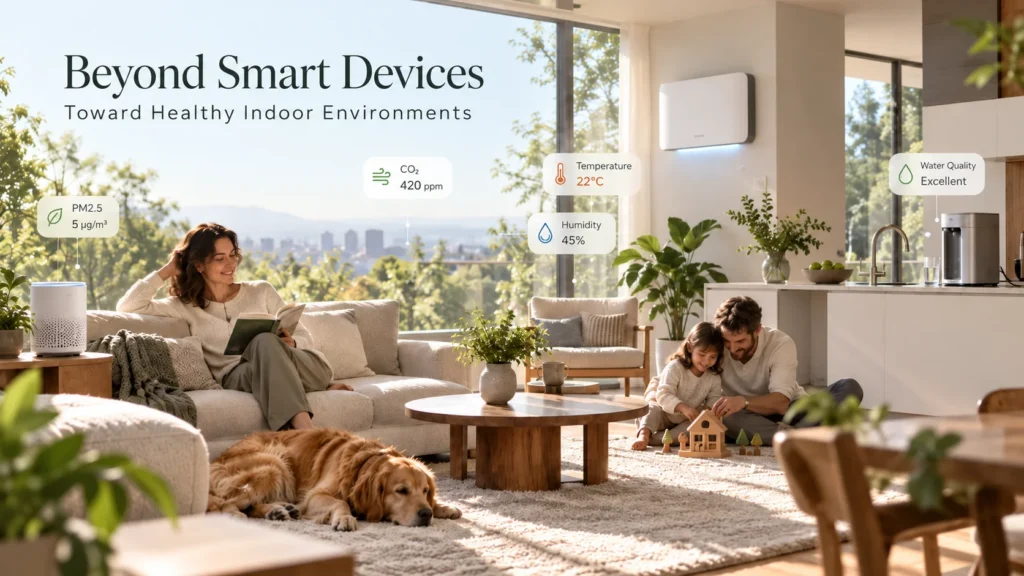
Modern living room with a family enjoying a healthy indoor environment monitored by smart devices, natural lighting, and greenery.

After IFA 2026: The Healthy Home Is Moving Beyond Smart Devices

In our previous IFA 2026 column, Air Purification Is Becoming Part of the Healthy-Home Platform, we argued that the next generation of indoor-health products would ...
Новости
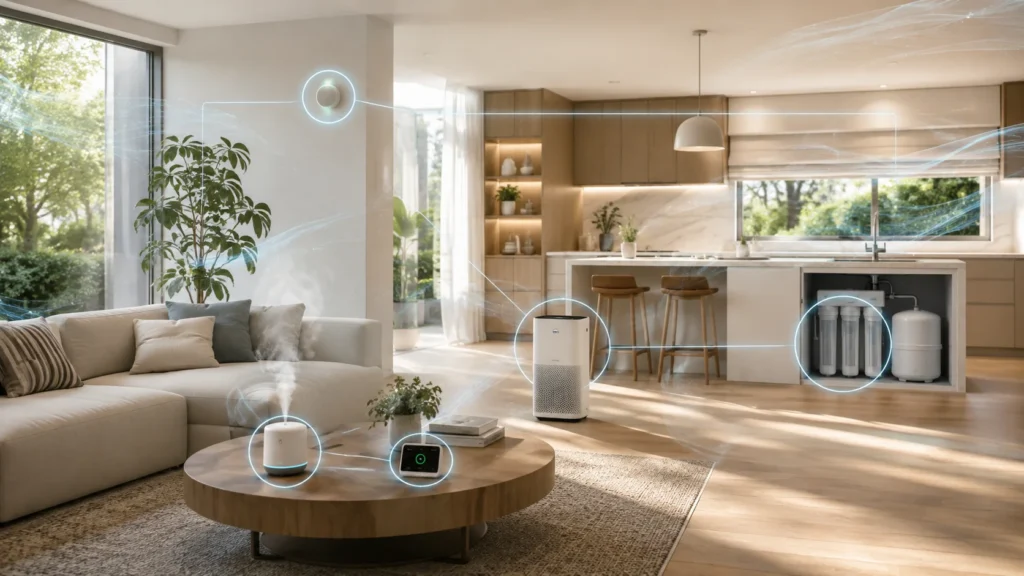
Modern living room and kitchen with smart home air quality devices including an air purifier, humidifier, and water filtration system, connected with visualized blue connectivity lines.

IFA 2026: Air Purification Is Becoming Part of the Healthy-Home Platform

Pre-IFA Industry Perspective | September 4, 2026 This article is based on official announcements and regulatory information available ahead of IFA 2026, which takes place ...
Новости
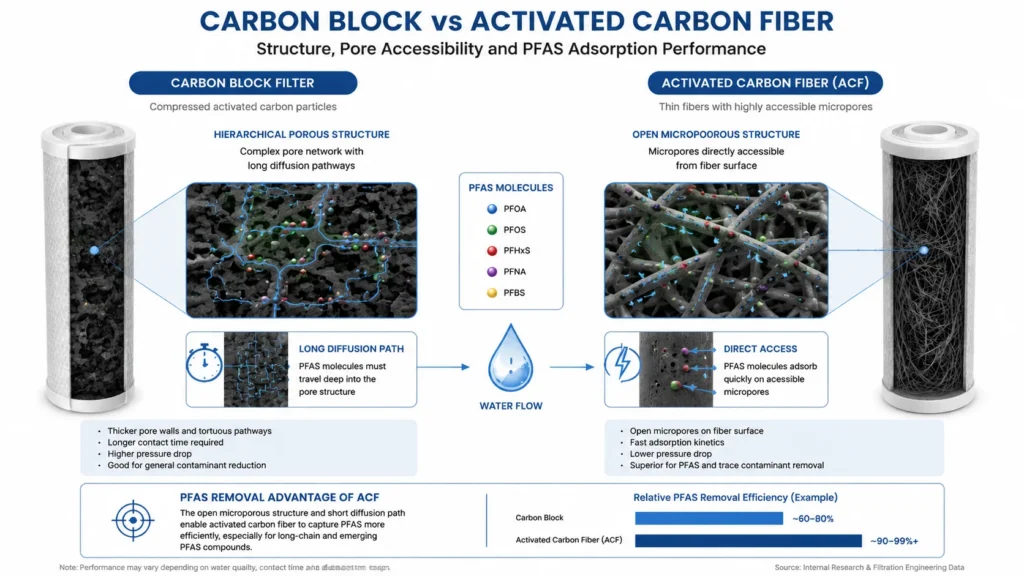
Comparison infographic showcasing the differences between carbon block filter and activated carbon fiber. Detailed diagrams illustrate the hierarchical porous structure of the carbon block with long diffusion paths and the open microporous structure of the activated carbon fiber with direct access for PFAS adsorption.

Carbon Block vs. Activated Carbon Fiber (ACF): Matching Media to Target Contaminants

Two carbon media. Same adsorption chemistry. Very different behaviour in a point-of-use cartridge. If you are specifying a water purifier platform for a PFAS-aware market, ...
Новости
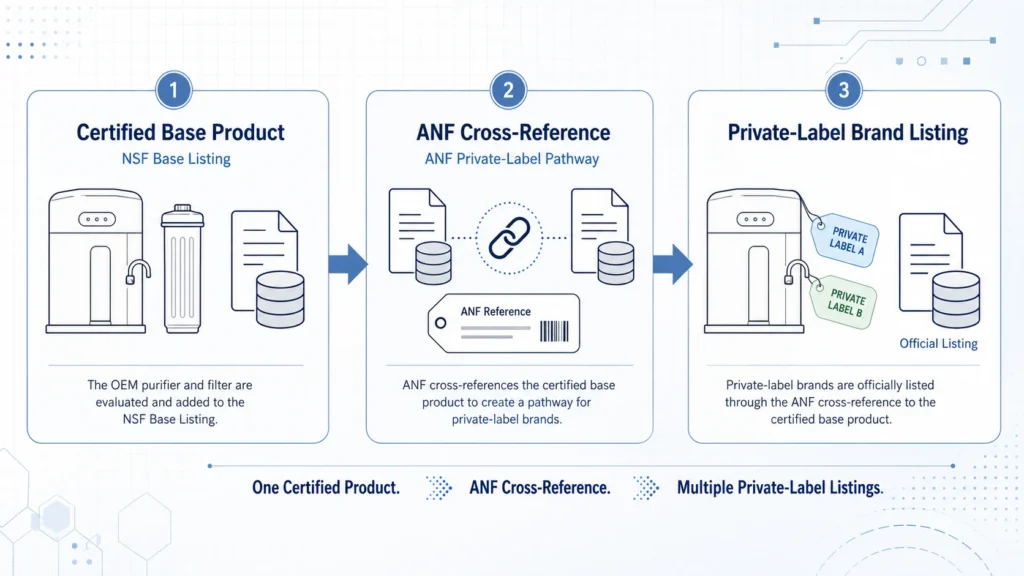
NSF base listing and ANF private-label certification pathway for OEM water filters

What Is an NSF Master Listing? A Guide to Base Listings, ANF Certification and OEM Water Filters

For a brand preparing to launch an OEM water purifier, one of the most common supplier claims is: “We already have an NSF master listing, ...
News, Water Purifiers
Healthy-home brand team reviewing PFAS water filter certification, test data and product engineering

Entering the Water Category Is Easy. Building a Credible PFAS Claim Is Much Harder

For air purification, appliance and healthy-home brands, entering the water category can look surprisingly easy. A company can select an existing undersink system, customize its ...
Новости
Team in a business meeting discussing a water filtration system with product components and a comparison table displayed on a screen.

5 Leading OEM Water Purifier Manufacturers in China for Private Label Brands

China has thousands of companies selling water filters, reverse osmosis systems and drinking-water appliances. However, only a portion of them are suitable for private-label, OEM ...
Новости
Contaminant Engineering•3 min read

PFAS Water Filtration Technologies Explained: Carbon, Resin & RO

Key Takeaway:

PFAS reduction depends on the specific compounds present, treatment media, contact time, water chemistry, and system design. Activated carbon, ion exchange, and Reverse Osmosis address PFAS through different mechanisms.

PFAS are a large family of persistent fluorinated compounds that can occur in drinking-water supplies. Their treatment behavior varies significantly by molecular structure, chain length, functional group, concentration, and the chemistry of the source water.

Granular Activated Carbon (GAC) removes PFAS primarily through adsorption. It is generally more effective for many longer-chain PFAS, while shorter-chain compounds tend to break through more quickly. Carbon performance depends on media properties, Empty Bed Contact Time (EBCT), competing organic matter, loading, and replacement frequency.

Ion-exchange resins use charged functional sites to capture many PFAS compounds. Properly selected anion-exchange media can provide high capacity and may perform better than conventional activated carbon for some shorter-chain PFAS, although performance still depends on water chemistry and competing ions.

Reverse Osmosis (RO) uses membrane separation rather than adsorption. Properly designed RO systems can provide broad reduction across many PFAS compounds as well as dissolved salts and other contaminants. Unlike carbon or resin, however, RO also produces a concentrate stream that must be managed.

No single technology should be selected from a PFAS label alone. System design should consider which PFAS compounds are present, their concentrations, required reduction targets, flow rate, media life, and the applicable third-party certification or validation requirements.

HisoAir Water Technical Series
Product Discovery•3 min read

How to Choose an Under-Sink Water Purifier for Modern Kitchens

Key Takeaway:

Match the treatment technology to your water quality first, then evaluate cabinet space, faucet configuration, flow rate, drain and power requirements, and filter replacement needs.

Choosing an under-sink water purifier starts with water chemistry. Carbon filtration is well suited to chlorine, taste, odor, and many organic contaminants, while Reverse Osmosis is more appropriate when dissolved salts, fluoride, nitrates, or broader dissolved contaminants need to be reduced.

For compact kitchens, tankless RO systems eliminate the conventional storage tank and can significantly reduce the space required under the sink. However, membrane capacity stated in GPD does not directly equal faucet flow. When comparing systems, check the actual dispensing flow rate, inlet-pressure requirement, recovery ratio, and whether a booster pump is required.

Installation architecture also matters. Many RO systems require a drain connection, electrical power, and either a dedicated drinking-water faucet or a compatible multi-function faucet. High-flow carbon systems can often connect directly to the existing cold-water line with a simpler installation, but pressure drop and available faucet flow should still be verified.

RO also removes much of the naturally occurring dissolved mineral content. Where taste or mineral balance is a priority, a post-RO remineralization stage can be added. Filter life should be evaluated by both rated capacity and local water quality rather than replacement time alone.

The right system is therefore not simply the smallest or highest-GPD model. It is the configuration that matches the target contaminants, available cabinet space, desired faucet setup, peak dispensing demand, and maintenance expectations.

HisoAir Water Technical Series
Water Quality•2 min read

What Does TDS Mean in Drinking Water? Measurement vs Contaminant Reality

Key Takeaway:

A TDS meter estimates the overall concentration of dissolved ionic substances from electrical conductivity. It cannot identify specific contaminants or determine whether water is chemically safe.

Total Dissolved Solids (TDS) refers to the combined concentration of dissolved substances in water. Most handheld TDS meters do not measure TDS directly. Instead, they measure electrical conductivity (EC) and convert that reading into an estimated parts-per-million (ppm) value.

This means a TDS reading can indicate how much dissolved ionic material is present, but not what that material actually is. Calcium, magnesium, sodium, nitrates, and other dissolved ions can all contribute to conductivity, yet a simple TDS meter cannot distinguish between them.

TDS meters are also not suitable for detecting trace contaminants such as PFAS, many VOCs, pesticides, pharmaceuticals, or disinfection byproducts. These substances may be present at concentrations far below the level needed to noticeably change electrical conductivity.

A low TDS reading therefore does not guarantee safe drinking water, and a higher TDS reading does not automatically indicate contamination. Water-treatment decisions should be based on laboratory testing for specific contaminants of concern rather than TDS alone.

HisoAir Water Technical Series
Technology Selection•2 min read

RO vs UF Water Filtration: Understanding Pore Sizes & Dissolved Minerals

Key Takeaway:

Ultrafiltration can reduce bacteria, turbidity, and suspended particles while retaining most naturally occurring dissolved minerals. Reverse Osmosis provides much broader reduction of dissolved salts and smaller contaminants.

Ultrafiltration (UF) typically uses hollow-fiber membranes with pore sizes in the approximate 0.01–0.1 micron range. These membranes physically retain turbidity, suspended solids, colloids, and many microorganisms while allowing dissolved minerals and salts to remain in the water.

Reverse Osmosis (RO) operates at a much finer separation level. Unlike UF, RO can substantially reduce dissolved ions such as sodium, calcium, fluoride, nitrates, and other contributors to total dissolved solids (TDS). This makes RO more suitable when dissolved-salt reduction is a primary treatment objective.

UF generally requires less system pressure and produces little or no continuous concentrate stream in many point-of-use configurations. RO typically requires greater pressure and produces a reject-water stream, but delivers broader contaminant reduction.

For water with acceptable TDS and mineral content, UF can be a simpler mineral-retaining treatment option. Where dissolved salts, fluoride, nitrates, or broader dissolved contaminants are a concern, RO is generally the more appropriate technology.

HisoAir Water Technical Series
Technology Selection•4 min read

Carbon Block vs Reverse Osmosis: Which Fits Your Need?

Key Takeaway:

Choose RO for dissolved inorganic salts and heavy metals; choose Carbon Block for chemical taste/odor, no wastewater, and high line-pressure flow.

Reverse Osmosis (RO) and Carbon Block filtration represent two fundamentally different treatment methods: membrane separation and adsorption. Understanding these differences helps determine which technology is better suited to a specific water-quality requirement.

Reverse Osmosis uses a semi-permeable membrane with pore sizes of approximately 0.0001 microns. It can significantly reduce dissolved inorganic contaminants such as TDS, fluoride, nitrates, and certain heavy metals. Because water must be forced through the membrane, RO systems require sufficient pressure or a booster pump and generate a concentrated wastewater stream.

Carbon Block filtration relies primarily on adsorption through compressed activated carbon, commonly with nominal pore sizes around 0.5–5 microns. It is highly effective for chlorine, chloramines, VOCs, taste, and odor, while allowing substantially higher direct-flow rates without producing wastewater.

From an operating perspective, Carbon Block systems are generally simpler, require less energy, and avoid the water loss associated with RO. RO involves higher system complexity and operating cost, but provides substantially broader reduction of dissolved contaminants that Carbon Block alone cannot address.

HisoAir Water Technical Series

ЗАПРОСИТЬ ЦИТАТУ