يفتح في علامة تبويب جديدة
Air & Water Purification OEM/ODM Manufacturer | HisoAir
هيسو إير
استفسر الآن

أفضل 3 شركات صينية مصنعة لمولدات الأوزون لتنقية الهواء في الصين

Related Products

تعتبر مولدات الأوزون بديلاً لأجهزة تنقية الهواء التقليدية التي تستخدم أنظمة الترشيح. تولد هذه الأجهزة الأوزون الذي يساعد بدوره على تحييد الجسيمات والملوثات العالقة في الهواء.
في سوق اليوم، تكتسب مولدات الأوزون شعبية كبيرة في مجال تنقية الهواء. وهي مصممة لمنافسة أجهزة تنقية الهواء القياسية القائمة على الفلاتر التي تصنعها الشركات المصنعة لأجهزة تنقية الهواء ذات السمعة الطيبة. ومن ثم، ليس من المستغرب أن يتزايد عدد أجهزة تنقية الهواء بمولدات الأوزون الصينية لتنقية الهواء.

من الناحية الفنية، فإن مولدات الأوزون هي أجهزة تطلق غاز الأوزون أو O3 (وهو عبارة عن تركيبة من ثلاث ذرات أوكسجين). الذرتان الأوليان هما الذرتان اللتان تشكلان جزيء الأكسجين، والذرة المتبقية تجعل الأوزون بأكمله غازاً تفاعلياً. ويقال إن تفاعلية غاز الأوزون تساعد في تحييد الملوثات.

الفكرة وراء مولدات الأوزون هذه نبيلة. ولكن هناك بعض المحاذير التي علينا مناقشتها لاحقًا. في غضون ذلك، اسمح لنا بتقديم بعض من أفضل الشركات المصنعة لمولدات الأوزون في الصين.

قائمة أفضل الشركات المصنعة لمولدات الأوزون لتنقية الهواء في الصين

الشركات التالية هي أبرز الأسماء عندما يتعلق الأمر بمولدات الأوزون في السوق الصينية. وهي الشركات المتخصصة في تصنيع مولدات الأوزون عالية الجودة والمتوافقة مع الصناعة. تحقق منها الآن.

  1. شركة Shenzhen Nanbai Appliance Co., Ltd.
  2. شركة هاي هيند للأجهزة المنزلية المحدودة (Highhend Home Appliance Co., Ltd.)
  3. شركة شاندونغ ساندون تكنولوجي المحدودة.

أفضل مصنعي مولدات الأوزون الصينية لتنقية الهواء في الصين

فيما يلي نبذة مختصرة عن الشركات التي ذكرناها أعلاه. من الأفضل التحقق من كل منها، ومعرفة أي منها يمكن أن تقدم لك أفضل العروض لمولد الأوزون.

1. Shenzhen Nanbai Appliance Co., Ltd.
شعار شركة شنتشن نانباي للأجهزة المنزلية

مصدر الصورة: نانباي

  • نوع العمل: ODM، ODM، OEM، الشركة المصنعة، المورد
  • المقر الرئيسي: R909 المبنى A، داوان كولتورال بلازا، الحلقة الشرقية رقم 4128، منطقة بينغشان الجديدة، شينزن، الصين
  • الأسواق الرئيسية: عالمي
  • سنوات الخبرة: 25 سنة
  • الشهادات: ISO 9001-2008، ISO 9001-2008، CE، و RoHS

تعد شركة Shenzhen Nanbai Appliance Co., Ltd. واحدة من أبرز الشركات المصنعة لأجهزة تنقية الهواء في الصين. تأسست هذه المؤسسة في عام 1997، وهي من بين كبار المصنعين المحترفين لمصدري أنظمة تنقية الهواء والماء المختلفة. ولديها أجهزة تعقيم الأوزون، وأجهزة تنقية المياه، ومولدات الأوزون والأيونات، والمرشحات، وغيرها من الملحقات ذات الصلة. وهي أيضًا مزود لعدد من منتجات تصنيع المعدات الأصلية وتصنيع التصميم الشخصي

جميع منتجات شركة Shenzhen Nanbai Appliance متوافقة مع معايير الجودة العالمية. ولهذا السبب، هناك ضمان أن أجهزة تنقية الهواء بالأوزون القادمة من هذه العلامة التجارية آمنة ومتينة. كما أنها تقبل الطلبات بالجملة والشحن الدولي. جميع منتجاتها بأسعار تنافسية أيضًا.

المنتجات الرئيسية

  • مولدات الأوزون للمياه
  • مولدات الأوزون للهواء
  • فلاتر المياه

2. Highhend Home Appliance Co., Ltd.
شعار شركة هاي هيند للأجهزة المنزلية

مصدر الصورة: هاي هيند للأجهزة المنزلية

  • نوع العمل: ODM، ODM، OEM، الشركة المصنعة، المورد
  • المقر الرئيسي: الطابق 3، 16-1 طريق مييوان، منطقة تشيان لونغ الصناعية، مدينة سانشيانغ، مدينة تشونغشان، تشونغشان، قوانغدونغ، الصين
  • الأسواق الرئيسية: عالمي
  • سنوات الخبرة: أكثر من 10 سنوات
  • الشهادات: ISO 9001-2008، ISO 9001-2008، CE، و RoHS

إن شركة هاي هيند للأجهزة المنزلية المحدودة هي أيضًا شركة مُصنِّع ومورِّد منافس لأجهزة تنقية الهواء بالأوزون في الصين. وعلى وجه التحديد، تتخصص هذه الشركة في إنتاج منتجات جودة الهواء الداخلي، مثل أجهزة الترطيب والسخانات الكهربائية. كما أنها تتمتع بقدرات إنتاجية هائلة أيضًا، حيث يمكنها إطلاق ما يصل إلى 20,000 قطعة من الأجهزة كل شهر في مصنعها.

كما أن مراقبة الجودة في شركة هاي هيند للأجهزة المنزلية المحدودة مثيرة للإعجاب إلى حد ما أيضًا. ويخضع تشغيلها بالكامل لـ معايير IS0 9001 IS0 9001. وعلاوةً على ذلك، يضمن قسم البحث والتطوير المختص أن تكون هندسة أجهزتها خالية من العيوب. وقبل الشحن، يتم اختبار جميع الأجهزة قبل شحنها لضمان عدم ظهور أي عيوب بها. وعلى غرار الشركات الأخرى هنا، تقبل شركة هاي هيند للأجهزة المنزلية أيضًا الطلبات بالجملة من الأسواق الدولية.

المنتجات الرئيسية

  • أجهزة تنقية الهواء بالأوزون
  • أجهزة جودة الهواء الداخلي

3. Shandong Sundon Technology Co., Ltd.
شعار ساندون
شعار ساندون

مصدر الصورة: ساندون

  • نوع العمل: ODM، ODM، OEM، الشركة المصنعة، المورد
  • المقر الرئيسي: رقم 105 المبنى رقم 65، شينماوكيجيتشنغ، رقم 299 طريق زيدونغ، منطقة تيانكياو، مدينة جينان، شاندونغ، الصين
  • الأسواق الرئيسية: عالمي
  • سنوات الخبرة: أكثر من 10 سنوات
  • الشهادات: ISO 9001-2008، ISO 9001-2008، CE، و RoHS

إن Sundon Ozone هي شركة رائدة أخرى في مجال تصنيع أجهزة تنقية الهواء بالأوزون والمؤينات في الصين. إنها مؤسسة حديثة تدمج العديد من التقنيات والابتكارات في منتجاتها، مما يضمن عملها بالطريقة التي تتوقعها. لديها سنوات من الخبرة في تصنيع المنتجات المتعلقة بالأوزون. كما أن لديها فريق من الأفراد المدربين تدريباً عالياً في مجال إنتاج أجهزة تنقية الهواء.

وبصرف النظر عن أجهزة تنقية الهواء، فإن شركة Sundon Ozone تصنع أيضًا منتجات معالجة المياه وجودة المياه، والتي تُستخدم في المستشفيات والأماكن العامة والتطبيقات التجارية. وهي قادرة على إنتاج هذه المنتجات بكميات كبيرة بفضل مصنع التجميع الواسع الذي تمتلكه. ومن المثير للاهتمام أن الشركة قامت بالتصدير إلى أمريكا الشمالية وأوروبا. وتسعى الشركة جاهدةً لتوسيع نطاق انتشارها في الأسواق العالمية

أفضل مُصنِّع أجهزة تنقية الهواء في الصين

على الرغم من الفوائد المتصورة لمولدات الأوزون، إلا أنه لا يوصى باستخدامها في الواقع من قبل المتخصصين وخبراء الصحة. فوفقًا لوكالة حماية البيئة، يمكن أن تصبح مولدات الأوزون هذه سامة للجسم، خاصةً إذا تم استنشاقها بكميات كبيرة. فهي تزيد من عوامل خطر تهيج الرئة والربو وضيق التنفس.

إذا كنت تريد جهاز تنقية هواء لمنزلك، فاختر الأجهزة التقليدية. فهي بسيطة ولكنها فعالة في إزالة الملوثات في الهواء. واحدة من أفضل الشركات المصنعة لهذا المنتج هي HisoAir.

هيسو إير

شعار هيسو إير
شعار هيسو إير

مصدر الصورة: هيسو إير

  • نوع العمل: مُصنِّع المعدات الأصلية/صانع المعدات الأصلية/صانع المعدات المملوكة للغير، المورد
  • المقر الرئيسي: Room 712, Building B1-1, No. 4, Second Road, Songshan Lake Park, Dongguan City, Guangdong Province, China
  • الأسواق الرئيسية: عالمي
  • سنوات الخبرة: 19 years
  • الشهادات: سي، روهز، إن 1822

HisoAir هي علامة تجارية عالمية لأجهزة تنقية الهواء عالية الجودة للأغراض السكنية والتجارية. هذه الشركة بالذات هي واحدة من أكبر منتجي أجهزة تنقية الهواء الطبية في الصين. وهي الآن تقوم بالفعل بتوسيع نطاق مبيعاتها وتسويقها في الدول الأجنبية. إن جودة أجهزة تنقية الهواء التي تنتجها الشركة لا تشوبها شائبة، وقد أثبتت ذلك شهادات الجهات الخارجية مثل AHAM و Energy Star.

وعلاوة على ذلك، تقبل شركة HisoAir الطلبات بالجملة لأجهزة تنقية الهواء الخاصة بها. وهذا يعني أنه يمكن للشركات وشركات الطرف الثالث الحصول على منتجاتها بشروط وأسعار معقولة. وبما أن أجهزة تنقية الهواء الخاصة بها متينة، فإنها يمكن أن تدوم طويلاً في الخدمة. وحتى الفلاتر الموجودة في هذه الأجهزة متينة أيضاً. فهي فعالة في حبس الملوثات المجهرية والمواد المسببة للحساسية الشائعة.


المنتجات الرئيسية

  • أجهزة تنقية هواء من الدرجة الطبية

الخاتمة

تقدم العديد من الشركات اليوم وسائل مختلفة لتنقية الهواء. ومن بين هذه البدائل أجهزة تنقية الهواء المولدة للأوزون. ووفقاً لصانعيها، فإن أجهزة تنقية الهواء بالأوزون هذه فعالة في تحييد الملوثات. وعلى الرغم من قدرتها على القيام بهذه المهمة، إلا أن الآثار الجانبية لغاز الأوزون قد تفوق فوائده.

لهذا السبب، ننصحك بالحصول على أجهزة تنقية الهواء التقليدية القائمة على الفلاتر بدلاً من ذلك، مثل تلك المصنعة من قبل شركة HisoAir. فهذه الأجهزة أكثر كفاءة وأماناً من نظيراتها. قم بزيارة هيسو إير وشاهد جميع أجهزة تنقية الهواء الخاصة بها!

راجع هذه المقالات الأخرى أيضاً!

شارك:
Alwen Lee of HisoAir
Alwen Lee, an air purification expert with over 10 years of experience, is a devoted father of two and a passionate traveler, having explored more than 30 countries. With a love for public speaking and swimming, he has dedicated his life to the indoor air quality industry. His mission is to ensure that people around the world enjoy the freedom to breathe clean air and lead happy, healthy lives.

أرسل لنا رسالة

Related Products

المزيد للقراءة

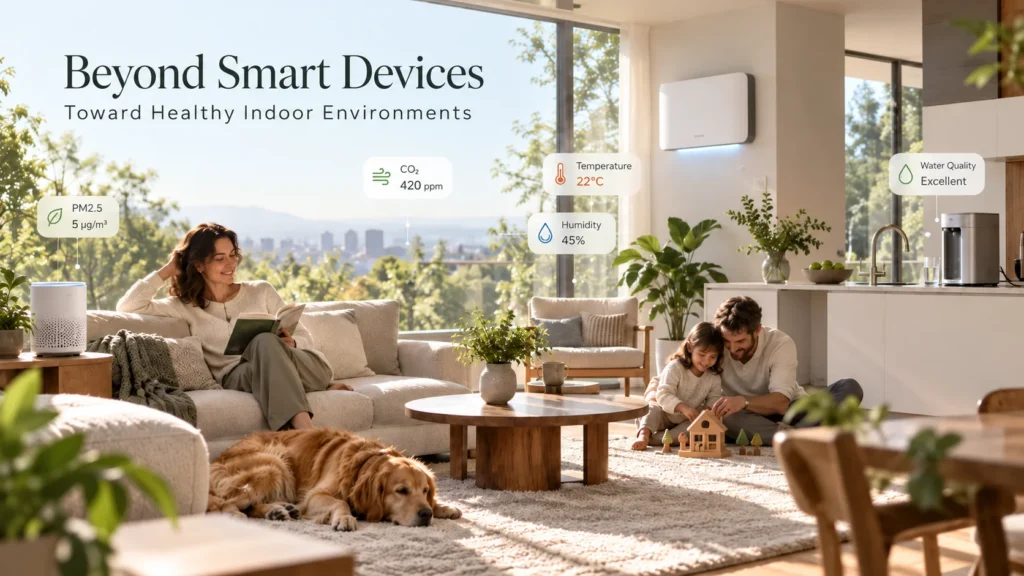
Modern living room with a family enjoying a healthy indoor environment monitored by smart devices, natural lighting, and greenery.

After IFA 2026: The Healthy Home Is Moving Beyond Smart Devices

In our previous IFA 2026 column, Air Purification Is Becoming Part of the Healthy-Home Platform, we argued that the next generation of indoor-health products would ...
الأخبار
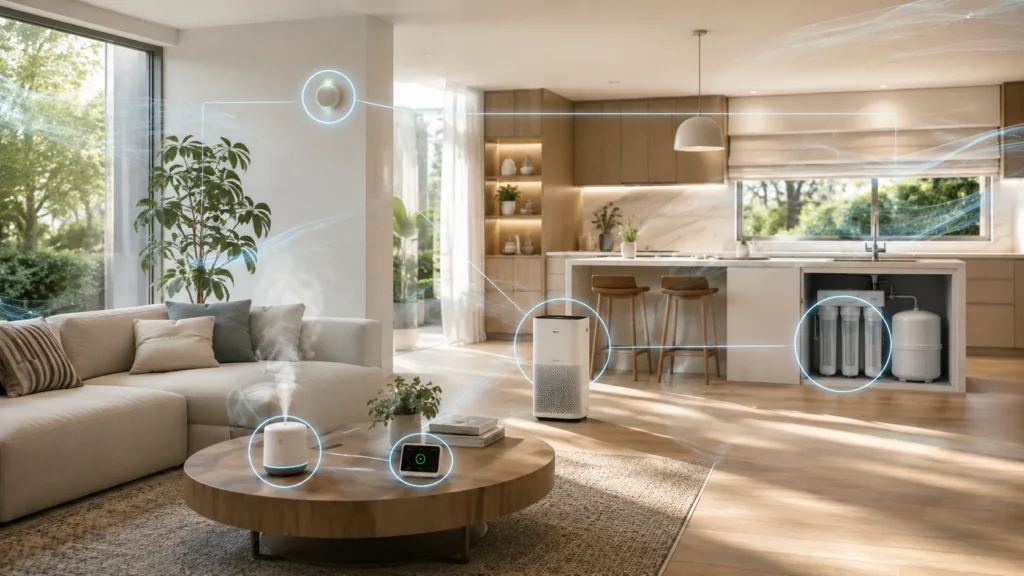
Modern living room and kitchen with smart home air quality devices including an air purifier, humidifier, and water filtration system, connected with visualized blue connectivity lines.

IFA 2026: Air Purification Is Becoming Part of the Healthy-Home Platform

Pre-IFA Industry Perspective | September 4, 2026 This article is based on official announcements and regulatory information available ahead of IFA 2026, which takes place ...
الأخبار
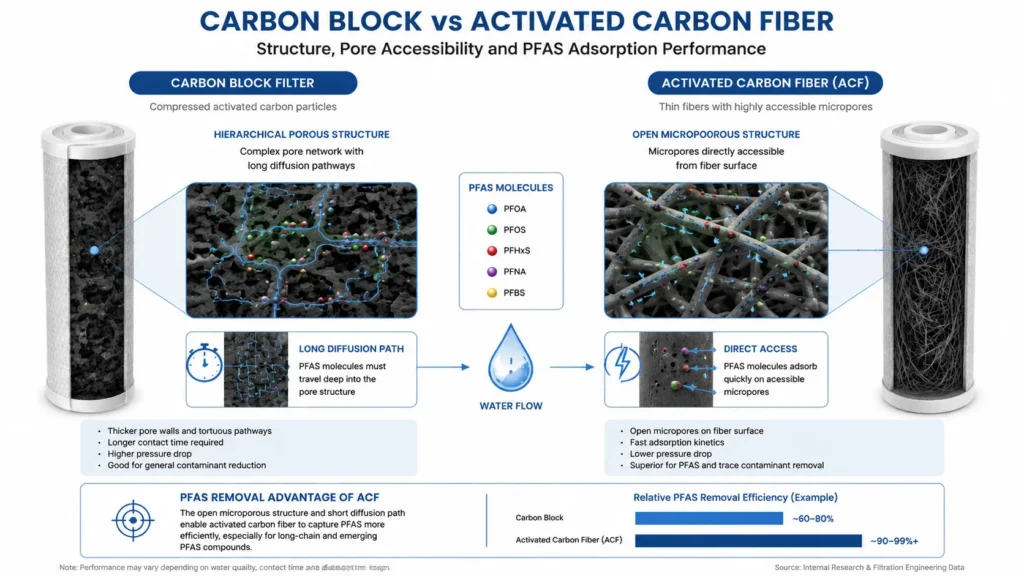
Comparison infographic showcasing the differences between carbon block filter and activated carbon fiber. Detailed diagrams illustrate the hierarchical porous structure of the carbon block with long diffusion paths and the open microporous structure of the activated carbon fiber with direct access for PFAS adsorption.

Carbon Block vs. Activated Carbon Fiber (ACF): Matching Media to Target Contaminants

Two carbon media. Same adsorption chemistry. Very different behaviour in a point-of-use cartridge. If you are specifying a water purifier platform for a PFAS-aware market, ...
الأخبار
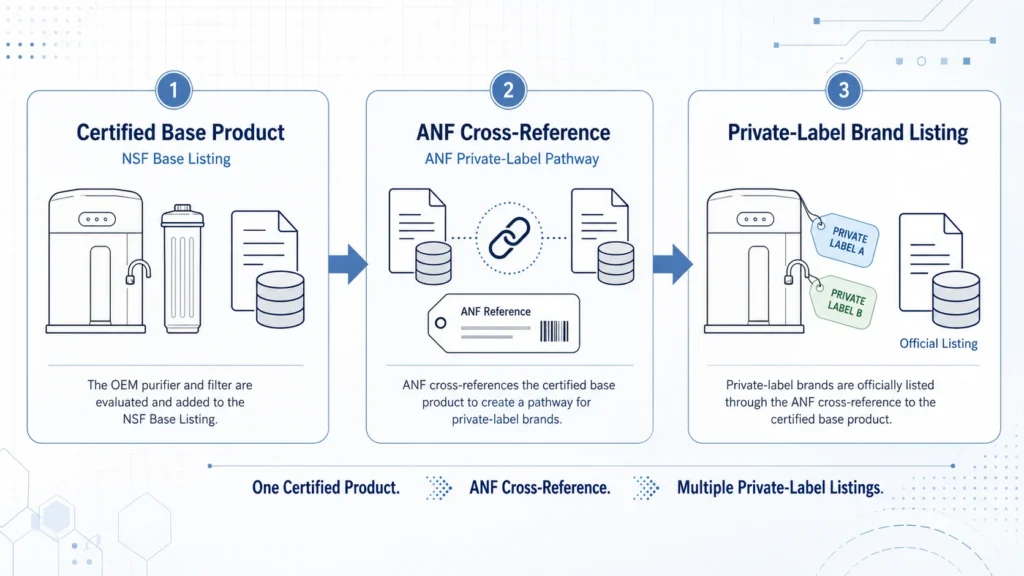
NSF base listing and ANF private-label certification pathway for OEM water filters

What Is an NSF Master Listing? A Guide to Base Listings, ANF Certification and OEM Water Filters

For a brand preparing to launch an OEM water purifier, one of the most common supplier claims is: “We already have an NSF master listing, ...
News, Water Purifiers
Healthy-home brand team reviewing PFAS water filter certification, test data and product engineering

Entering the Water Category Is Easy. Building a Credible PFAS Claim Is Much Harder

For air purification, appliance and healthy-home brands, entering the water category can look surprisingly easy. A company can select an existing undersink system, customize its ...
الأخبار
Team in a business meeting discussing a water filtration system with product components and a comparison table displayed on a screen.

5 Leading OEM Water Purifier Manufacturers in China for Private Label Brands

China has thousands of companies selling water filters, reverse osmosis systems and drinking-water appliances. However, only a portion of them are suitable for private-label, OEM ...
الأخبار
Contaminant Engineering•3 min read

PFAS Water Filtration Technologies Explained: Carbon, Resin & RO

Key Takeaway:

PFAS reduction depends on the specific compounds present, treatment media, contact time, water chemistry, and system design. Activated carbon, ion exchange, and Reverse Osmosis address PFAS through different mechanisms.

PFAS are a large family of persistent fluorinated compounds that can occur in drinking-water supplies. Their treatment behavior varies significantly by molecular structure, chain length, functional group, concentration, and the chemistry of the source water.

Granular Activated Carbon (GAC) removes PFAS primarily through adsorption. It is generally more effective for many longer-chain PFAS, while shorter-chain compounds tend to break through more quickly. Carbon performance depends on media properties, Empty Bed Contact Time (EBCT), competing organic matter, loading, and replacement frequency.

Ion-exchange resins use charged functional sites to capture many PFAS compounds. Properly selected anion-exchange media can provide high capacity and may perform better than conventional activated carbon for some shorter-chain PFAS, although performance still depends on water chemistry and competing ions.

Reverse Osmosis (RO) uses membrane separation rather than adsorption. Properly designed RO systems can provide broad reduction across many PFAS compounds as well as dissolved salts and other contaminants. Unlike carbon or resin, however, RO also produces a concentrate stream that must be managed.

No single technology should be selected from a PFAS label alone. System design should consider which PFAS compounds are present, their concentrations, required reduction targets, flow rate, media life, and the applicable third-party certification or validation requirements.

HisoAir Water Technical Series
Product Discovery•3 min read

How to Choose an Under-Sink Water Purifier for Modern Kitchens

Key Takeaway:

Match the treatment technology to your water quality first, then evaluate cabinet space, faucet configuration, flow rate, drain and power requirements, and filter replacement needs.

Choosing an under-sink water purifier starts with water chemistry. Carbon filtration is well suited to chlorine, taste, odor, and many organic contaminants, while Reverse Osmosis is more appropriate when dissolved salts, fluoride, nitrates, or broader dissolved contaminants need to be reduced.

For compact kitchens, tankless RO systems eliminate the conventional storage tank and can significantly reduce the space required under the sink. However, membrane capacity stated in GPD does not directly equal faucet flow. When comparing systems, check the actual dispensing flow rate, inlet-pressure requirement, recovery ratio, and whether a booster pump is required.

Installation architecture also matters. Many RO systems require a drain connection, electrical power, and either a dedicated drinking-water faucet or a compatible multi-function faucet. High-flow carbon systems can often connect directly to the existing cold-water line with a simpler installation, but pressure drop and available faucet flow should still be verified.

RO also removes much of the naturally occurring dissolved mineral content. Where taste or mineral balance is a priority, a post-RO remineralization stage can be added. Filter life should be evaluated by both rated capacity and local water quality rather than replacement time alone.

The right system is therefore not simply the smallest or highest-GPD model. It is the configuration that matches the target contaminants, available cabinet space, desired faucet setup, peak dispensing demand, and maintenance expectations.

HisoAir Water Technical Series
Water Quality•2 min read

What Does TDS Mean in Drinking Water? Measurement vs Contaminant Reality

Key Takeaway:

A TDS meter estimates the overall concentration of dissolved ionic substances from electrical conductivity. It cannot identify specific contaminants or determine whether water is chemically safe.

Total Dissolved Solids (TDS) refers to the combined concentration of dissolved substances in water. Most handheld TDS meters do not measure TDS directly. Instead, they measure electrical conductivity (EC) and convert that reading into an estimated parts-per-million (ppm) value.

This means a TDS reading can indicate how much dissolved ionic material is present, but not what that material actually is. Calcium, magnesium, sodium, nitrates, and other dissolved ions can all contribute to conductivity, yet a simple TDS meter cannot distinguish between them.

TDS meters are also not suitable for detecting trace contaminants such as PFAS, many VOCs, pesticides, pharmaceuticals, or disinfection byproducts. These substances may be present at concentrations far below the level needed to noticeably change electrical conductivity.

A low TDS reading therefore does not guarantee safe drinking water, and a higher TDS reading does not automatically indicate contamination. Water-treatment decisions should be based on laboratory testing for specific contaminants of concern rather than TDS alone.

HisoAir Water Technical Series
Technology Selection•2 min read

RO vs UF Water Filtration: Understanding Pore Sizes & Dissolved Minerals

Key Takeaway:

Ultrafiltration can reduce bacteria, turbidity, and suspended particles while retaining most naturally occurring dissolved minerals. Reverse Osmosis provides much broader reduction of dissolved salts and smaller contaminants.

Ultrafiltration (UF) typically uses hollow-fiber membranes with pore sizes in the approximate 0.01–0.1 micron range. These membranes physically retain turbidity, suspended solids, colloids, and many microorganisms while allowing dissolved minerals and salts to remain in the water.

Reverse Osmosis (RO) operates at a much finer separation level. Unlike UF, RO can substantially reduce dissolved ions such as sodium, calcium, fluoride, nitrates, and other contributors to total dissolved solids (TDS). This makes RO more suitable when dissolved-salt reduction is a primary treatment objective.

UF generally requires less system pressure and produces little or no continuous concentrate stream in many point-of-use configurations. RO typically requires greater pressure and produces a reject-water stream, but delivers broader contaminant reduction.

For water with acceptable TDS and mineral content, UF can be a simpler mineral-retaining treatment option. Where dissolved salts, fluoride, nitrates, or broader dissolved contaminants are a concern, RO is generally the more appropriate technology.

HisoAir Water Technical Series
Technology Selection•4 min read

Carbon Block vs Reverse Osmosis: Which Fits Your Need?

Key Takeaway:

Choose RO for dissolved inorganic salts and heavy metals; choose Carbon Block for chemical taste/odor, no wastewater, and high line-pressure flow.

Reverse Osmosis (RO) and Carbon Block filtration represent two fundamentally different treatment methods: membrane separation and adsorption. Understanding these differences helps determine which technology is better suited to a specific water-quality requirement.

Reverse Osmosis uses a semi-permeable membrane with pore sizes of approximately 0.0001 microns. It can significantly reduce dissolved inorganic contaminants such as TDS, fluoride, nitrates, and certain heavy metals. Because water must be forced through the membrane, RO systems require sufficient pressure or a booster pump and generate a concentrated wastewater stream.

Carbon Block filtration relies primarily on adsorption through compressed activated carbon, commonly with nominal pore sizes around 0.5–5 microns. It is highly effective for chlorine, chloramines, VOCs, taste, and odor, while allowing substantially higher direct-flow rates without producing wastewater.

From an operating perspective, Carbon Block systems are generally simpler, require less energy, and avoid the water loss associated with RO. RO involves higher system complexity and operating cost, but provides substantially broader reduction of dissolved contaminants that Carbon Block alone cannot address.

HisoAir Water Technical Series

طلب عرض أسعار