يفتح في علامة تبويب جديدة
حلول مبتكرة لجودة الهواء
شعار هيسو-أير-لوجو
استفسر الآن

Global Air & Water Manufacturing Network

HisoAir manages product development, engineering, quality assurance and global delivery through qualified joint and contract manufacturing partners across China and Southeast Asia.

Product Development Since 2006
OEM, ODM & JDM Support
China + Southeast Asia Production
Air & Water Product Platforms

How HisoAir Manages Your Manufacturing Program

HisoAir remains the customer-facing product, engineering, quality and project-management partner, while qualified manufacturing partners provide specialized production resources based on product category, destination market and order scale.

HisoAir Responsibilities

  • Product strategy and requirement definition
  • Industrial design and engineering coordination
  • Mechanical, electronic and firmware development
  • DFM and supplier selection
  • Prototype and pilot-build management
  • Certification planning
  • Quality standards and inspection criteria
  • Client communication and project delivery
Manufacturing Partners

  • Tooling and component production
  • Injection molding and sheet-metal processing
  • Motor and filter production
  • PCBA and electrical assembly
  • Final product assembly
  • Production-line testing
  • Packaging and shipment preparation

Why Premium Brands Choose HisoAir Instead of a Basic Factory

A basic factory can manufacture an existing model. HisoAir helps premium appliance and indoor wellness brands define, engineer, certify, and scale differentiated air and water product platforms.
البُعد
Product Direction
Engineering Depth
Premium Performance
Compliance Readiness
Quality Management
Global Supply Flexibility
Basic Factory

Sells what already exists.

Adjusts color, logo, packaging.

Competes mainly on price.

Handles certification after the product is selected.

Relies on factory inspection.

One production base.

هيسو إير

Helps define what your market actually needs.

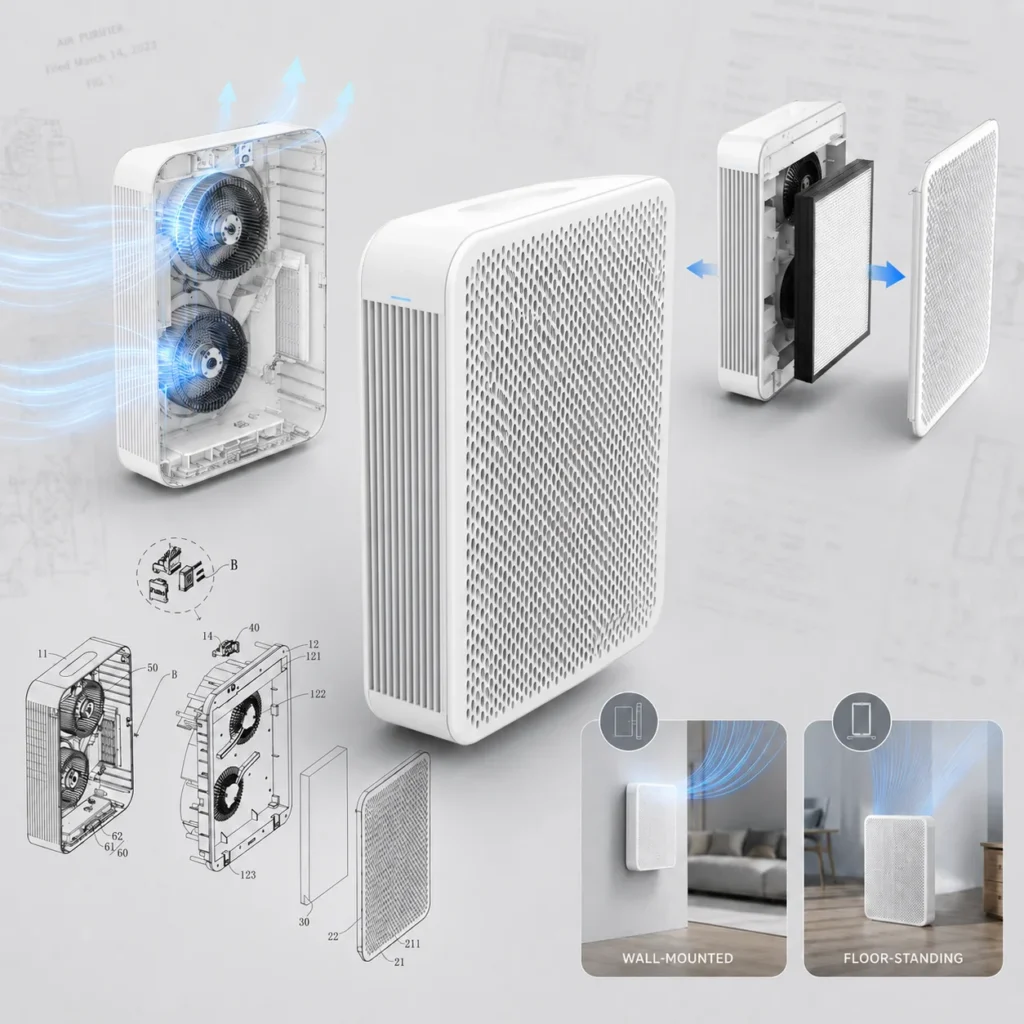
Supports structure, airflow, filter, electronics, firmware, and DFM. (See our Capabilities and Patented Design)

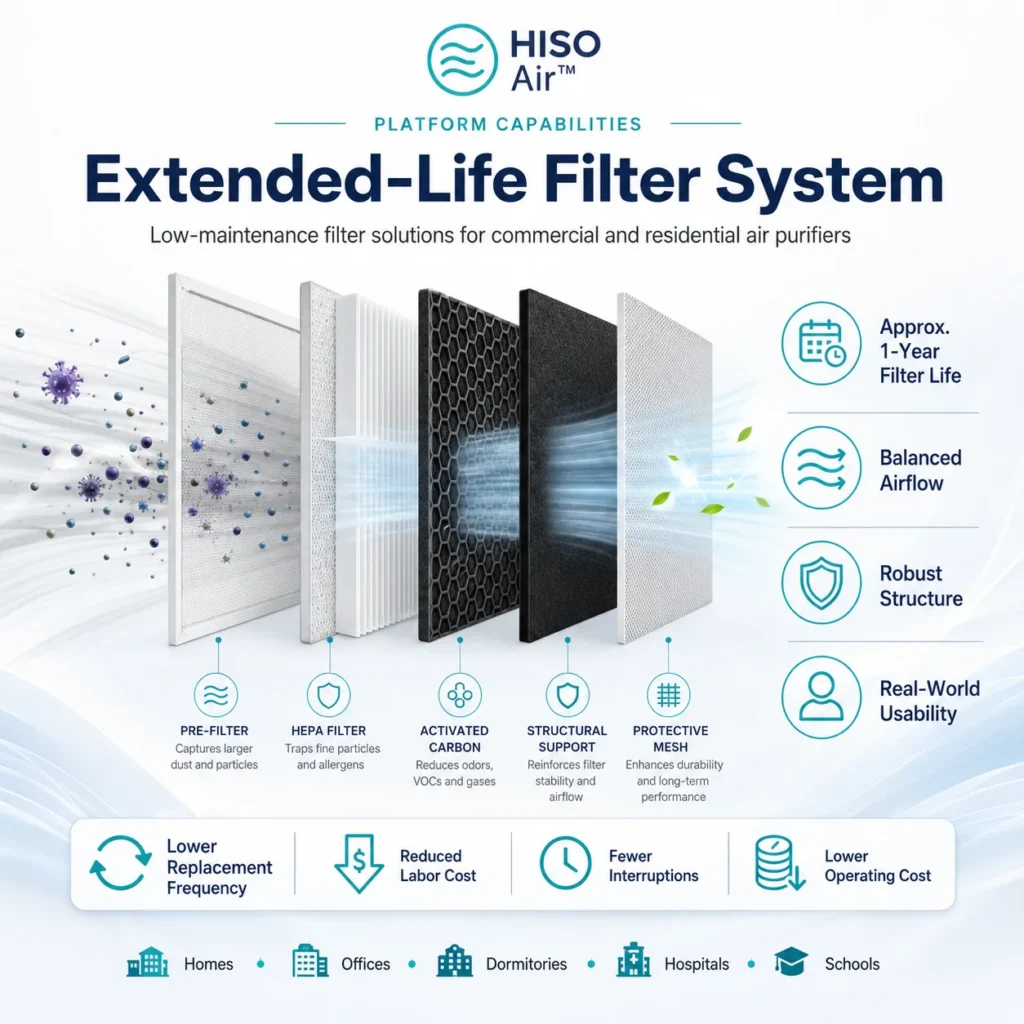
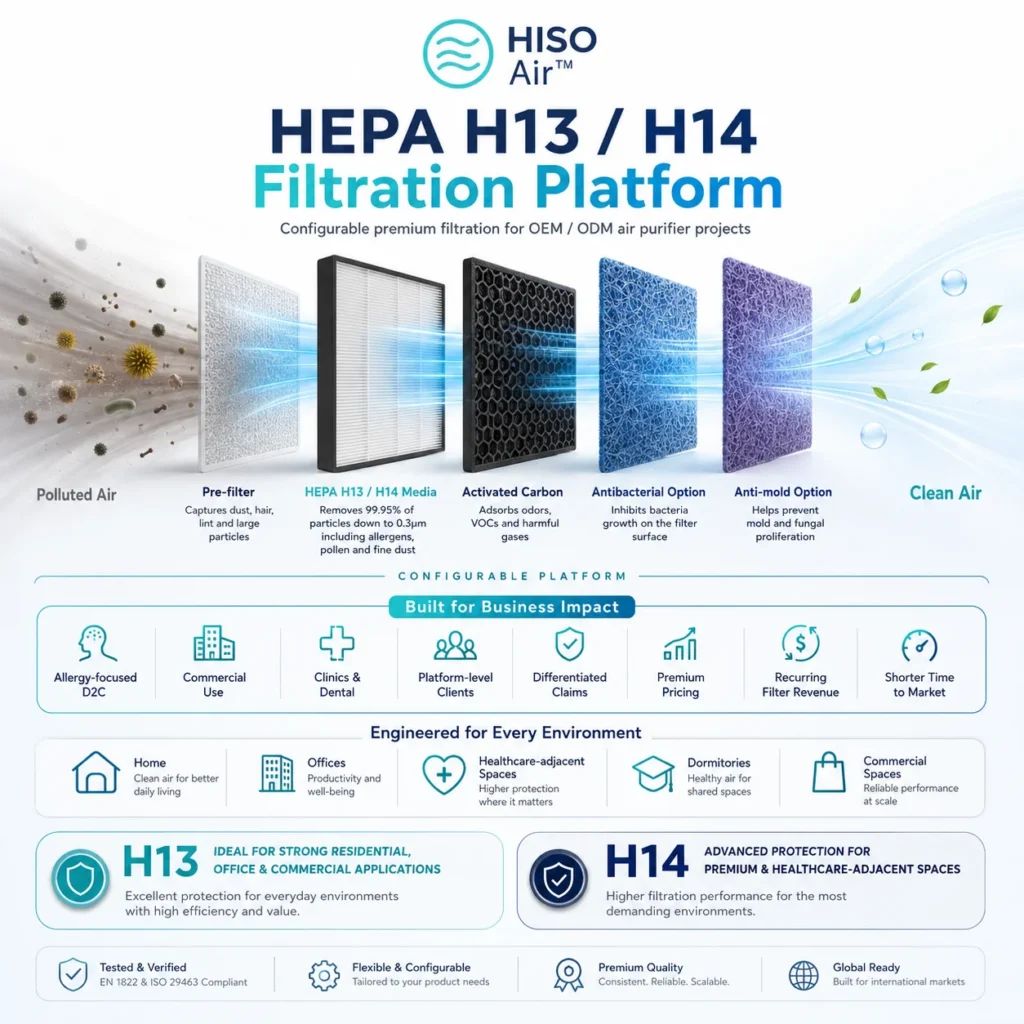
Builds around quietness, filtration efficiency (HEPA H13/H14), CADR balance, long-life filters, and user experience.

Plans certification and testing before tooling and market launch.

China + Southeast Asia manufacturing network for flexible sourcing and scale.

Helps define what your market actually needs.

Not sure if you need a basic private-label model or a custom product platform?

Talk to HisoAir about your target market, certification needs, and launch plan.
Discuss Your Manufacturing Program

Strategic Production Footprint

Our qualified manufacturing network spans China and Southeast Asia, providing flexibility, scale, and supply chain resilience to support a "China+1" sourcing strategy.
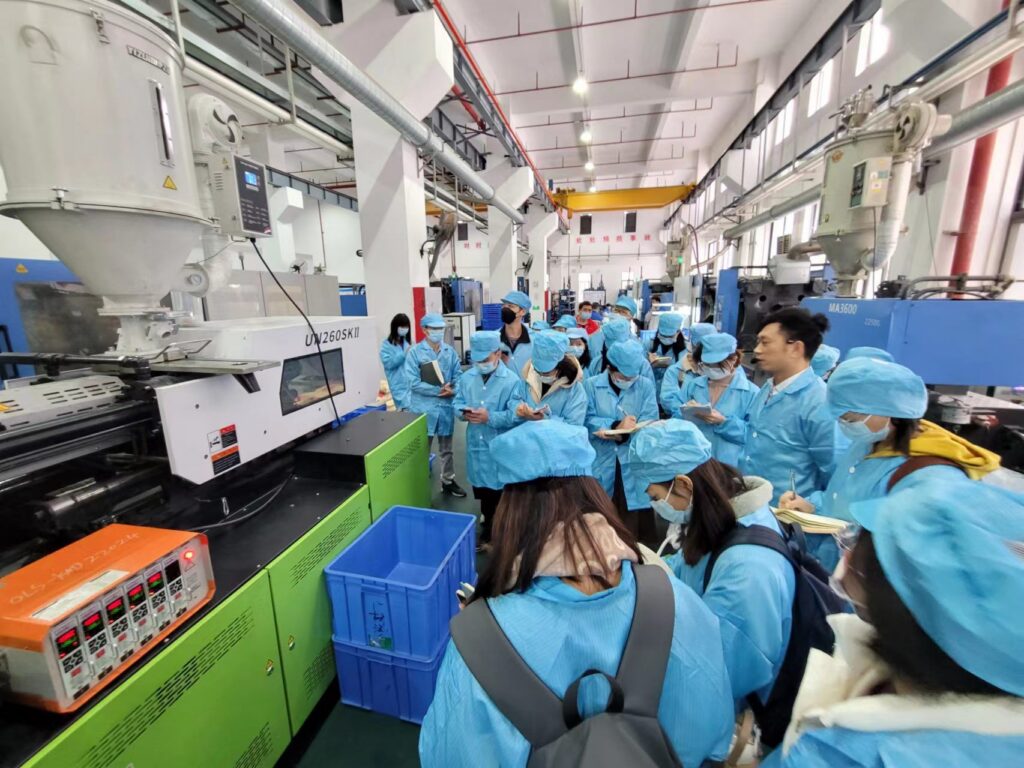
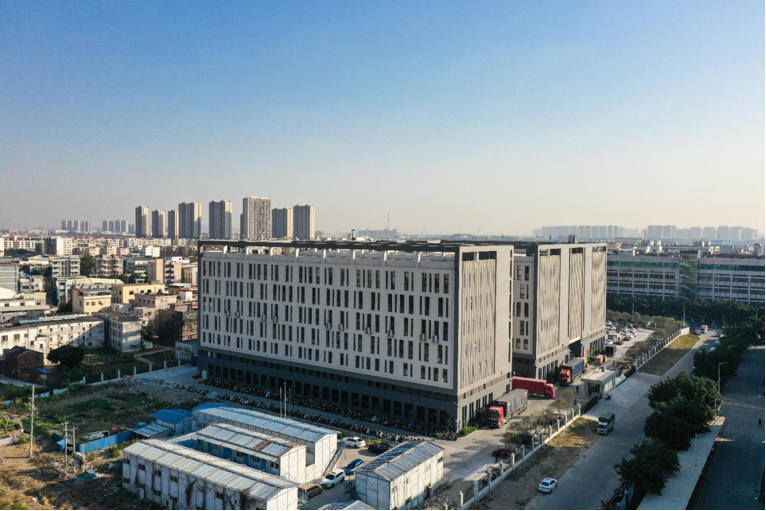
HisoAir engineering team conducting a pilot-production review at a contract manufacturing partner in Dongguan, China, May 2026.

China R&D & Manufacturing Base

Our China-based engineering and manufacturing network supports air purifier development, prototyping, tooling, pilot production, certification preparation and mass-production management for global brands.

Current Status

Qualified contract manufacturing partner

Verified By

HisoAir Supply Chain Team

Last Site Review

March 2026

Quality Systems

Manufacturing partner certified to ISO 9001:2015

Applicable Products

  • أجهزة تنقية الهواء
  • Air quality monitors
  • أجهزة ترطيب الهواء
  • فلاتر الهواء
  • أجهزة تنقية المياه

Available Processes

  • Injection molding
  • Sheet metal
  • PCBA assembly
  • Final assembly
  • Functional testing
Inquire about China Production
HisoAir engineering team conducting a pilot-production review at a contract manufacturing partner in Dongguan, China, May 2026.

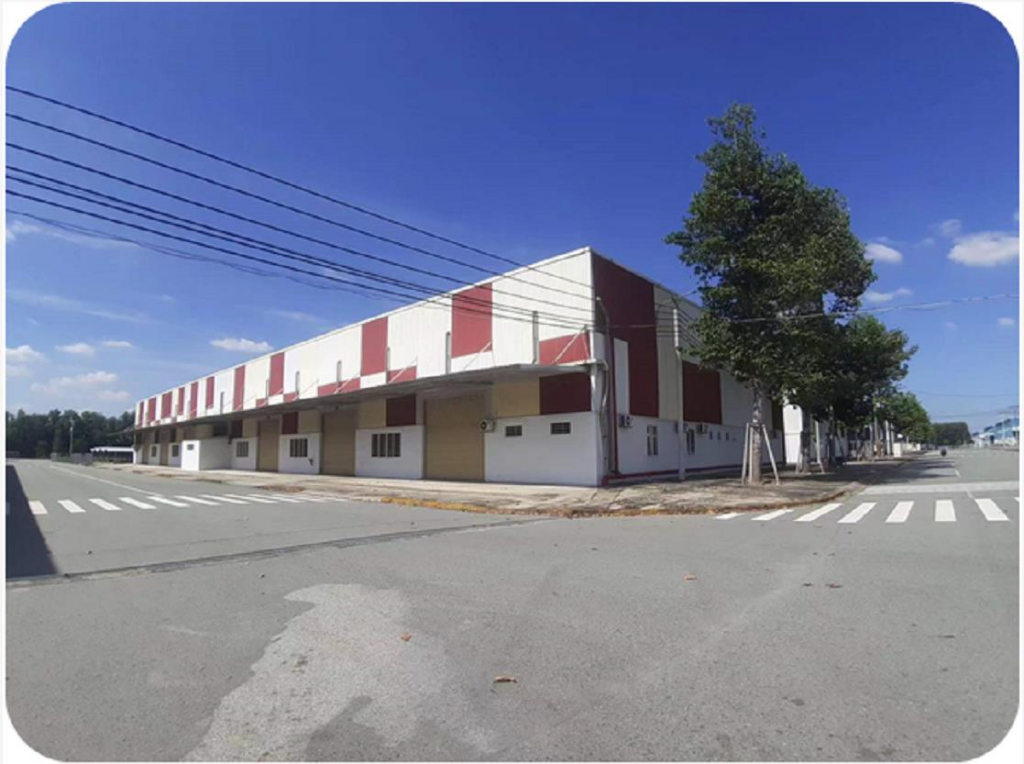
Vietnam Production Center

Dedicated to high-volume mass production of mature products, enabling supply chain diversification and risk mitigation for international markets.

Current Status

Qualified contract manufacturing partner

Verified By

HisoAir Quality and Engineering Teams

Last Site Review

January 2026

Quality Systems

Manufacturing partner certified to ISO 9001:2015

Applicable Products

  • أجهزة تنقية الهواء
  • أجهزة ترطيب الهواء
  • فلاتر الهواء

Available Processes

  • Injection molding
  • Filter assembly
  • Motor production
  • Final assembly
  • Packaging
Inquire about Vietnam Production
HisoAir engineering team conducting a pilot-production review at a contract manufacturing partner in Dongguan, China, May 2026.

Thailand Assembly & Testing Facility

Dedicated to high-volume mass production of mature products, enabling supply chain diversification and risk mitigation for international markets.

Current Status

Qualified contract manufacturing partner

Verified By

HisoAir Quality and Engineering Teams

Last Site Review

January 2026

Quality Systems

Manufacturing partner certified to ISO 9001:2015

Applicable Products

  • أجهزة تنقية الهواء
  • أجهزة ترطيب الهواء
  • فلاتر الهواء

Available Processes

  • Injection molding
  • Filter assembly
  • Motor production
  • Final assembly
  • Packaging
Inquire about Thailand Production
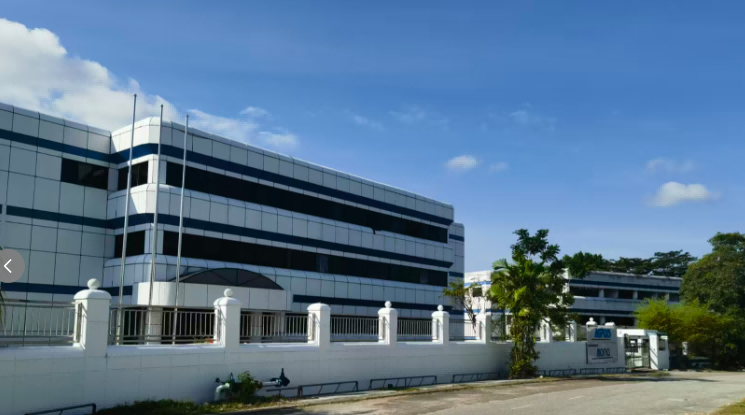
Exterior of HisoAir water purifier manufacturing facility in Johor Bahru, Malaysia
Countertop RO water purifier assembly line at Mona's production base in Johor Bahru, Malaysia, March 2026.

Malaysia Water Purification Base

Dedicated to high-volume mass production of mature products, enabling supply chain diversification and risk mitigation for international markets.

Current Status

Qualified contract manufacturing partner

Verified By

HisoAir Quality and Engineering Teams

Last Site Review

March 2026

Quality Systems

Manufacturing partner certified to ISO 9001, ISO 14001 and ISO 45001

Applicable Products

  • Countertop RO water purifiers
  • Instant-hot water dispensers
  • Hot & cold water dispensers

Available Processes

  • Clean-environment assembly
  • Pre-assembly
  • Final assembly
  • Functional & water-path testing
  • Packaging
Inquire about Thailand Production

From Product Concept to Mass Production

A verified, transparent workflow where HisoAir actively manages each milestone, ensuring output matches the defined requirements and quality standards.
1

Requirement Definition

Collaborative scoping of product specifications, target markets, and compliance needs.

Verifiable Output Document

Product Requirement Document (PRD)

2

Product Design and Engineering

Industrial design, mechanical engineering, and formal design reviews by HisoAir engineering teams.

Verifiable Output Document

Redacted DFM Review & Engineering Drawings

3

Prototype Development

Rapid prototyping, functional mockups, and early-stage aesthetic validation.

Verifiable Output Document

Prototype Evaluation Report

4

Testing and Certification Planning

Pre-compliance testing and defining specific certification requirements before tooling.

Verifiable Output Document

Certification Test Plan & Pre-scan Results

5

DFM and Pilot Production

Design for Manufacturing review, tooling initiation, and pilot run execution to validate assembly.

Verifiable Output Document

Redacted Pilot-run Quality Checklist

6

Mass Production and Quality Control

Scaled production at qualified partner facilities under HisoAir quality oversight.

Verifiable Output Document

Batch Inspection Report (AQL)

7

Delivery and Post-Launch Support

Logistics coordination, market feedback analysis, and continuous improvement protocols.

Verifiable Output Document

8D or Corrective Action Report (CAR)

Quality Control Across Our Manufacturing Network

We enforce strict quality protocols across all partner facilities. Discover how our technical capabilities are implemented on the factory floor to guarantee reliable performance.

Standardized QC Procedures

1
Supplier qualification
2
Incoming material inspection
3
First article inspection
4
In-process quality control
5
Functional and safety testing
6
Pre-shipment inspection
7
Traceability and corrective action

Explore Our Technical Capabilities

ملاحظة: This section outlines our manufacturing execution controls. For detailed engineering specifications, patent information, and R&D capabilities, please visit the respective capability pages.

Certifications, Testing and Compliance

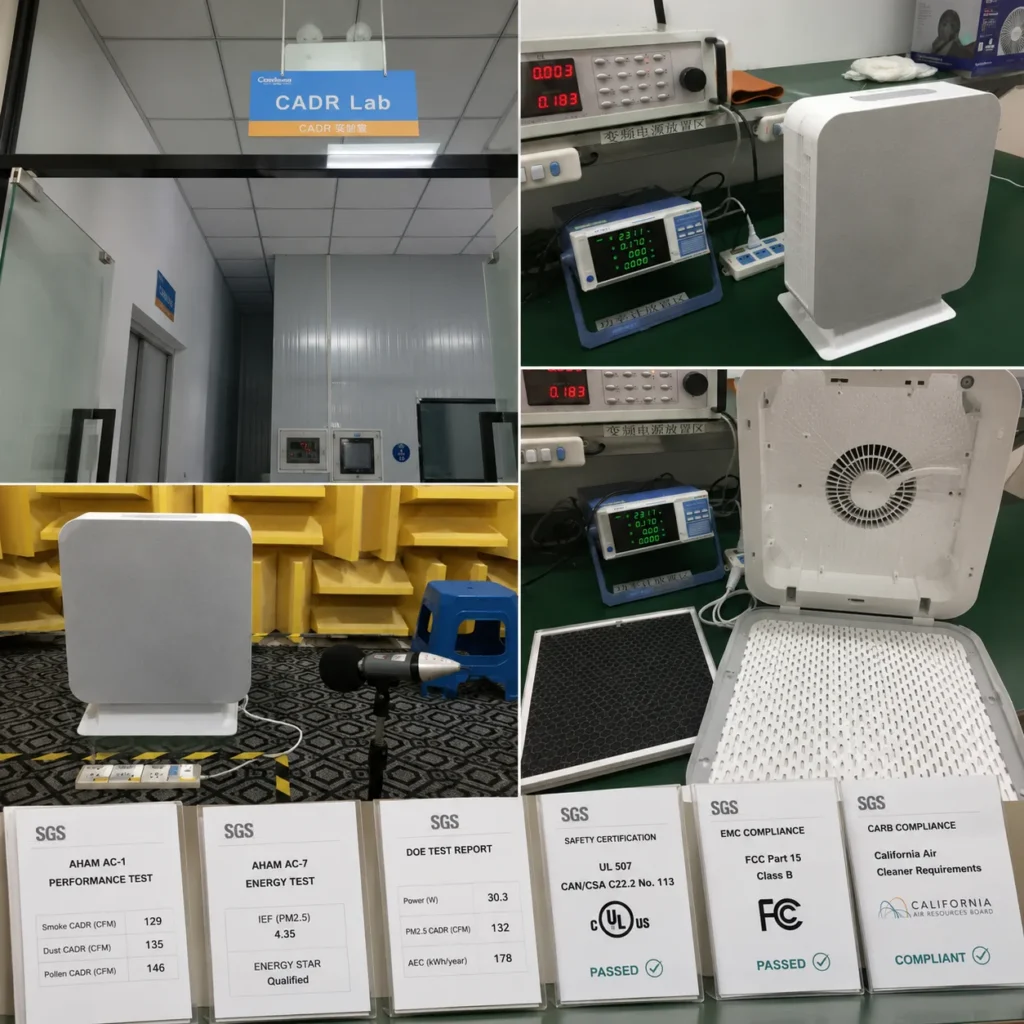
Important Note: Quality-system certificates may belong to HisoAir or to the applicable joint or contract manufacturing partner. Product certifications and test reports are model-specific and may vary by production site and destination market. Supporting documentation is available for qualified projects upon request.

HisoAir Company Credentials

  • Business License
  • Export Qualifications

Partner Quality Systems

  • آيزو 9001
  • ISO 13485

Product Certifications

  • UL / ETL
  • لجنة الاتصالات الفيدرالية
  • CARB
  • م
  • RoHS
  • سي بي
  • TÜV
  • NSF / IAPMO

Internal & Third-Party Testing

  • CADR
  • الضوضاء
  • EMC
  • Electrical Safety
  • كفاءة التصفية
  • Long-Term Field Validation

MOQ, Capacity and Lead-Time Overview

Overview metrics for our manufacturing operations. Exact figures depend on project requirements.

View Detailed Supply Capacity

Sample Availability

Available upon request

White-Label MOQ

Typical MOQ: 100 units for selected existing white-label platforms

OEM Customization MOQ

Flexible by platform and destination market

Structural Customization MOQ

Project-specific evaluation

Private Tooling MOQ

Project-specific evaluation

Typical Prototype Lead Time

2–4 weeks

Typical Certification Preparation Time

4–8 weeks

Typical Mass-Production Lead Time

4–6 weeks

Available Monthly Capacity

Scalable up to 200,000+ units across the network

Disclaimer: MOQ, lead time and capacity vary by product platform, certification requirements, customization scope, component availability and selected production location. Figures are reviewed periodically and confirmed during project evaluation.

Manufacturing Experience in Real-World Projects

Our expertise is proven through active project management, problem-solving, and continuous improvement in the field.
Post-deployment validation: Q4 2025

US Military Housing Air Purifier Deployment

Project Requirement:

High-durability wall-mounted unit meeting strict safety and performance specifications for military residential use.

Manufacturing Challenge:

Aggressive timeline for custom structural modifications and rigorous compliance validation.

HisoAir's Role:

Led mechanical redesign, coordinated rapid prototyping, and managed certification testing workflows.

Verified Result:

Successful deployment with zero structural failures reported during a one-year field test and warranty period.

View Full Case Study
Mass production initiated: Q2 2026

Allergy & Mold Brand Silver Ion Filter Project

Project Requirement:

Develop a custom extended-life HEPA filter with antimicrobial silver ion treatment for a North American client.

Manufacturing Challenge:

Balancing high CADR output with low pressure drop while incorporating dense antimicrobial layers.

HisoAir's Role:

Managed filter media sourcing, prototype testing in ISO chambers, and pilot production validation.

Verified Result:

Achieved 99.99% antimicrobial efficacy in third-party tests while maintaining target CADR within a 5% margin.

View Full Case Study
Certification completed: Q1 2026

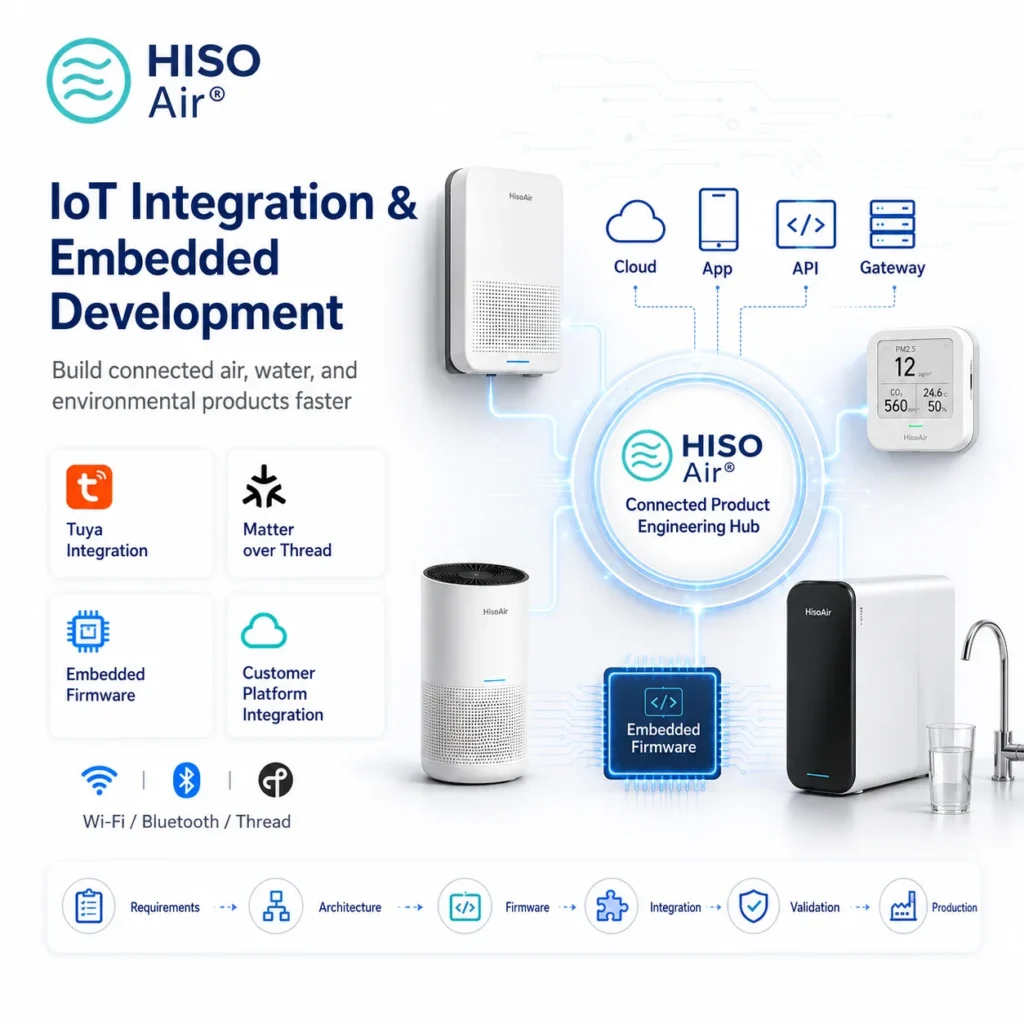
Matter over Thread Desktop Air Purifier

Project Requirement:

Integrate the latest smart-home connectivity, Matter over Thread, into a compact desktop form factor.

Manufacturing Challenge:

RF interference shielding within a constrained housing and firmware certification alignment.

HisoAir's Role:

Directed PCBA layout optimization, managed firmware integration, and navigated Matter certification testing.

Verified Result:

Product successfully certified and launched, establishing an early-mover advantage in the smart-appliance category.

View Full Case Study
Category expansion: Thailand

German Home Appliance Brand Air Purification Expansion

Project Requirement:

Develop a cohesive mass-premium air purifier family for the Thai market, covering multiple room sizes while maintaining a consistent brand and design language.

Manufacturing Challenge:

Help an established water-heating brand enter a new product category quickly while balancing premium design, proven performance, competitive pricing, and market-specific certification needs.

HisoAir's Role:

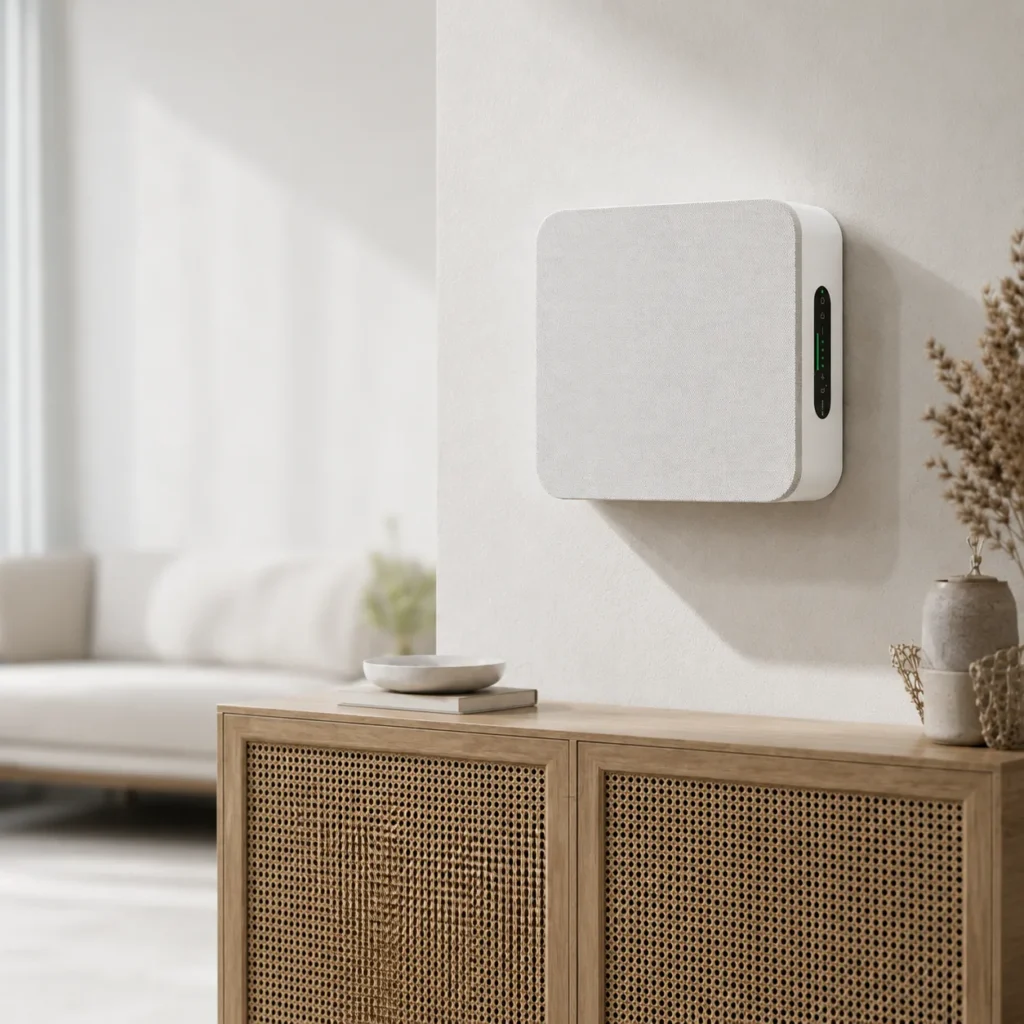
Provided desktop and wall-mounted purifier platforms, product-line planning, industrial design adaptation, fabric furnishing design, certification support, manufacturing coordination, and supply-chain management.

Verified Result:

Successfully launched a unified desktop and wall-mounted air purifier lineup, enabling faster entry into Thailand's mass-premium air purification market.

View Full Case Study

الأسئلة الشائعة

Does HisoAir own all the manufacturing facilities listed?
HisoAir operates through a strategic mix of joint ventures and qualified contract manufacturing partners. We remain your single point of contact for engineering, project management, and quality control, while leveraging specialized production floors to scale efficiently.
How do you ensure IP protection when using contract manufacturers?
We implement strict Non-Disclosure Agreements (NDAs), compartmentalize sensitive design files, and often manage critical firmware or final testing protocols in-house or through closely monitored joint-venture lines to protect client intellectual property.
Can I specify which country my products are manufactured in?
Yes. Depending on your target market, tariff considerations, and order volume, we can route production through our facilities in China, Vietnam, or Thailand. We will advise on the most cost-effective and risk-averse strategy during project scoping.

Page Authorship & Verification

Prepared by:
HisoAir Manufacturing & Supply Chain Team
Technical review:
HisoAir Engineering and Quality Teams
Commercial review:
Alwen Lee
Last reviewed:
July 2026
Evidence sources:
Site visits, partner quality certificates, project records, inspection documents and third-party test reports.

Corporate Entity

Dongguan Hiso Technology Co., Ltd. (HisoAir)
Dongguan, Guangdong, China

Explore Our Capabilities

See what we manufacture across our global facilities and how we've helped brands scale successfully.
📦

أجهزة تنقية الهواء المثبتة على الحائط

Discover our flagship line of CE/FCC certified wall-mounted purifiers featuring HEPA H13 filtration and whisper-quiet operation. Available for OEM/ODM across all our facilities.

🏆

Client Case Studies

Read how our global manufacturing strategy and strict quality control have solved complex supply chain challenges for leading appliance brands worldwide.

طلب عرض أسعار

اترك رسالة أدناه

سنعاود الاتصال بك في أسرع وقت ممكن!

ابق على اتصال دائم

معلومات الاتصال

استفسارك مهم بالنسبة لنا.
سنتصل بك قريباً، وستظل بياناتك آمنة دائماً.
sales@hisoair.com
+86 138 0961 9940

مكتب الولايات المتحدة:: 2180 S Winville S AVE ONTARIO, CA 91761

المكتب: Room 712 ~ 713, Building 1, No. 4, Second Road, Songshan Lake Park, Dongguan City, Guangdong Province, 523429.

المصنع: الصين | فيتنام | تايلاند | ماليزيا

Contaminant Engineering•3 min read

PFAS Water Filtration Technologies Explained: Carbon, Resin & RO

Key Takeaway:

PFAS reduction depends on the specific compounds present, treatment media, contact time, water chemistry, and system design. Activated carbon, ion exchange, and Reverse Osmosis address PFAS through different mechanisms.

PFAS are a large family of persistent fluorinated compounds that can occur in drinking-water supplies. Their treatment behavior varies significantly by molecular structure, chain length, functional group, concentration, and the chemistry of the source water.

Granular Activated Carbon (GAC) removes PFAS primarily through adsorption. It is generally more effective for many longer-chain PFAS, while shorter-chain compounds tend to break through more quickly. Carbon performance depends on media properties, Empty Bed Contact Time (EBCT), competing organic matter, loading, and replacement frequency.

Ion-exchange resins use charged functional sites to capture many PFAS compounds. Properly selected anion-exchange media can provide high capacity and may perform better than conventional activated carbon for some shorter-chain PFAS, although performance still depends on water chemistry and competing ions.

Reverse Osmosis (RO) uses membrane separation rather than adsorption. Properly designed RO systems can provide broad reduction across many PFAS compounds as well as dissolved salts and other contaminants. Unlike carbon or resin, however, RO also produces a concentrate stream that must be managed.

No single technology should be selected from a PFAS label alone. System design should consider which PFAS compounds are present, their concentrations, required reduction targets, flow rate, media life, and the applicable third-party certification or validation requirements.

HisoAir Water Technical Series
Product Discovery•3 min read

How to Choose an Under-Sink Water Purifier for Modern Kitchens

Key Takeaway:

Match the treatment technology to your water quality first, then evaluate cabinet space, faucet configuration, flow rate, drain and power requirements, and filter replacement needs.

Choosing an under-sink water purifier starts with water chemistry. Carbon filtration is well suited to chlorine, taste, odor, and many organic contaminants, while Reverse Osmosis is more appropriate when dissolved salts, fluoride, nitrates, or broader dissolved contaminants need to be reduced.

For compact kitchens, tankless RO systems eliminate the conventional storage tank and can significantly reduce the space required under the sink. However, membrane capacity stated in GPD does not directly equal faucet flow. When comparing systems, check the actual dispensing flow rate, inlet-pressure requirement, recovery ratio, and whether a booster pump is required.

Installation architecture also matters. Many RO systems require a drain connection, electrical power, and either a dedicated drinking-water faucet or a compatible multi-function faucet. High-flow carbon systems can often connect directly to the existing cold-water line with a simpler installation, but pressure drop and available faucet flow should still be verified.

RO also removes much of the naturally occurring dissolved mineral content. Where taste or mineral balance is a priority, a post-RO remineralization stage can be added. Filter life should be evaluated by both rated capacity and local water quality rather than replacement time alone.

The right system is therefore not simply the smallest or highest-GPD model. It is the configuration that matches the target contaminants, available cabinet space, desired faucet setup, peak dispensing demand, and maintenance expectations.

HisoAir Water Technical Series
Water Quality•2 min read

What Does TDS Mean in Drinking Water? Measurement vs Contaminant Reality

Key Takeaway:

A TDS meter estimates the overall concentration of dissolved ionic substances from electrical conductivity. It cannot identify specific contaminants or determine whether water is chemically safe.

Total Dissolved Solids (TDS) refers to the combined concentration of dissolved substances in water. Most handheld TDS meters do not measure TDS directly. Instead, they measure electrical conductivity (EC) and convert that reading into an estimated parts-per-million (ppm) value.

This means a TDS reading can indicate how much dissolved ionic material is present, but not what that material actually is. Calcium, magnesium, sodium, nitrates, and other dissolved ions can all contribute to conductivity, yet a simple TDS meter cannot distinguish between them.

TDS meters are also not suitable for detecting trace contaminants such as PFAS, many VOCs, pesticides, pharmaceuticals, or disinfection byproducts. These substances may be present at concentrations far below the level needed to noticeably change electrical conductivity.

A low TDS reading therefore does not guarantee safe drinking water, and a higher TDS reading does not automatically indicate contamination. Water-treatment decisions should be based on laboratory testing for specific contaminants of concern rather than TDS alone.

HisoAir Water Technical Series
Technology Selection•2 min read

RO vs UF Water Filtration: Understanding Pore Sizes & Dissolved Minerals

Key Takeaway:

Ultrafiltration can reduce bacteria, turbidity, and suspended particles while retaining most naturally occurring dissolved minerals. Reverse Osmosis provides much broader reduction of dissolved salts and smaller contaminants.

Ultrafiltration (UF) typically uses hollow-fiber membranes with pore sizes in the approximate 0.01–0.1 micron range. These membranes physically retain turbidity, suspended solids, colloids, and many microorganisms while allowing dissolved minerals and salts to remain in the water.

Reverse Osmosis (RO) operates at a much finer separation level. Unlike UF, RO can substantially reduce dissolved ions such as sodium, calcium, fluoride, nitrates, and other contributors to total dissolved solids (TDS). This makes RO more suitable when dissolved-salt reduction is a primary treatment objective.

UF generally requires less system pressure and produces little or no continuous concentrate stream in many point-of-use configurations. RO typically requires greater pressure and produces a reject-water stream, but delivers broader contaminant reduction.

For water with acceptable TDS and mineral content, UF can be a simpler mineral-retaining treatment option. Where dissolved salts, fluoride, nitrates, or broader dissolved contaminants are a concern, RO is generally the more appropriate technology.

HisoAir Water Technical Series
Technology Selection•4 min read

Carbon Block vs Reverse Osmosis: Which Fits Your Need?

Key Takeaway:

Choose RO for dissolved inorganic salts and heavy metals; choose Carbon Block for chemical taste/odor, no wastewater, and high line-pressure flow.

Reverse Osmosis (RO) and Carbon Block filtration represent two fundamentally different treatment methods: membrane separation and adsorption. Understanding these differences helps determine which technology is better suited to a specific water-quality requirement.

Reverse Osmosis uses a semi-permeable membrane with pore sizes of approximately 0.0001 microns. It can significantly reduce dissolved inorganic contaminants such as TDS, fluoride, nitrates, and certain heavy metals. Because water must be forced through the membrane, RO systems require sufficient pressure or a booster pump and generate a concentrated wastewater stream.

Carbon Block filtration relies primarily on adsorption through compressed activated carbon, commonly with nominal pore sizes around 0.5–5 microns. It is highly effective for chlorine, chloramines, VOCs, taste, and odor, while allowing substantially higher direct-flow rates without producing wastewater.

From an operating perspective, Carbon Block systems are generally simpler, require less energy, and avoid the water loss associated with RO. RO involves higher system complexity and operating cost, but provides substantially broader reduction of dissolved contaminants that Carbon Block alone cannot address.

HisoAir Water Technical Series

طلب عرض أسعار