Открывается в новой вкладке
Инновационные решения в области качества воздуха
HisoAir-Logo
Запрос сейчас

The Clear Opportunity: Your Strategic Playbook for Dominating the B2B Water Purifier Market

The ground is shifting beneath the North American water market, and for savvy B2B distributors, this tectonic shift is creating a river of opportunity. We're not talking about a niche market; we're talking about an industry projected to surge from USD 8.46 billion in 2024 to a staggering USD 17.93 billion by 2034.

The engine of this explosive growth? A perfect storm of public anxiety over water safety, crumbling municipal infrastructure, and a corporate world desperate to burnish its green credentials.

For distributors accustomed to moving products, the message is clear: the time to pivot to providing high-value hydration solutions is now. The commercial sector is the next frontier, poised for the most aggressive expansion as businesses wake up to the operational, financial, and cultural benefits из point-of-use (POU) water purification.

This isn't about selling another breakroom appliance. It's about solving critical business problems. It's about becoming an indispensable partner in your clients' success.

This playbook will show you how to navigate this burgeoning market, target the most lucrative customer segments, and build a profitable, recurring-revenue business that leaves the competition behind.

Why Now? The Unstoppable Forces Driving Commercial Demand

To win in this space, you first need to understand the powerful currents driving the market forward. This isn't a fleeting trend; it's a fundamental change in how businesses view water.

• The Crisis of Confidence

Public trust in tap water is at an all-time low. High-profile water crises and a constant barrage of news about contaminants from old enemies like lead to new threats like "forever chemicals" (PFAS) and microplastics have created deep-seated anxiety. Businesses are no longer willing to leave their employees' and customers' health to chance. They are actively seeking a final barrier of protection at the tap.

• The Infrastructure Problem

Much of North America's water infrastructure is aging, with pipes that are decades old. This decay can lead to contamination from lead and copper leaching into the water supply long after it has left the treatment plant. For businesses, especially those in older buildings, a POU purifier is no longer a luxury; it's an insurance policy.

• The ESG Imperative

Today’s corporations are under pressure to meet ESG goals. Reducing plastic waste is a highly visible, achievable target. The traditional 5-gallon jug and single-use plastic bottles are environmental relics.
By switching to a bottleless POU system, a company can drastically reduce plastic waste and slash its carbon footprint. In 2019 alone, filtration systems displaced over 1.2 billion plastic bottles.

• The Compelling ROI

Сайт Total Cost of Ownership (TCO) for a bottleless purification system is dramatically lower than a bottled water delivery service. POU systems eliminate bloated costs from bottling, transportation, and logistics. The clear ROI makes it easy for budget-conscious managers to justify.
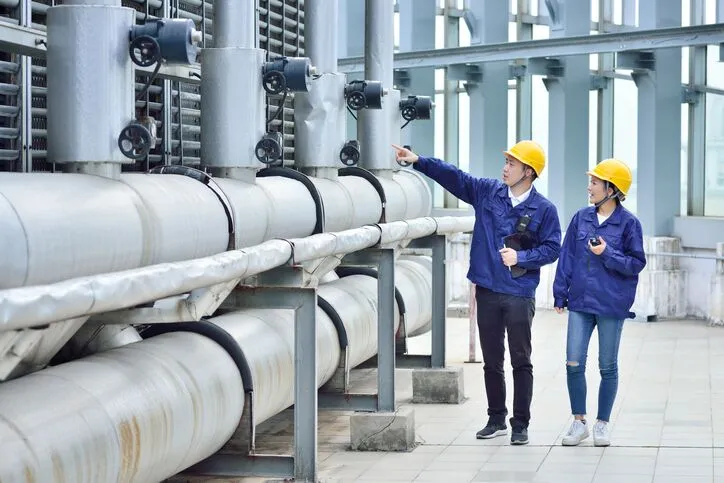
culligan water purifiers

Know Your Arsenal: A Distributor’s Guide to Purification Tech

To succeed, you must be more than a salesperson — you must be an expert advisor. Understanding the core technologies and certifications that prove their worth is what separates the solution-provider from the box-mover.

Core Technologies

  • Reverse Osmosis (RO)
    Removes heavy metals, nitrates, TDS. Ideal for healthcare/labs.⁸ High purity, but water waste is an issue.

  • Активированный уголь
    Great for taste/odor and chemical removal. Solid block form is ideal for office/hospitality.

  • Ultraviolet (UV) Purification
    Neutralizes bacteria/viruses without chemicals. Must-have for healthcare, schools, clinics.

  • Ion Exchange
    Softens water by removing calcium/magnesium. Protects foodservice equipment.

The Power of Certification: Your Ultimate Sales Tool

In an unregulated industry, third-party certifications (like NSF) build trust.

  • NSF/ANSI 42: Aesthetic contaminants (chlorine, taste/odor)
  • NSF/ANSI 53: Health-related contaminants (lead, PFAS)
  • NSF/ANSI 58: RO systems, TDS and heavy metals
  • NSF P231: Microbiological protection (bacteria, viruses)

Table: Comparative Analysis of Water Purification Technologies for B2B Applications

Технология Primary Use Case Contaminants Removed Key Certifications Плюсы Cons
Reverse Osmosis (RO) Healthcare, labs, high TDS TDS, heavy metals, fluoride NSF/ANSI 58 Highest purity Water waste, removes minerals
Carbon Block Filter Offices, hospitality Chlorine, VOCs, PFAS NSF/ANSI 42, 53 Great taste, retains minerals Not for TDS, nitrate
UV Purification Healthcare, schools Бактерии, вирусы NSF P231, ANSI 55 No chemicals, low maintenance Needs pre-filtration
Ion Exchange Foodservice, hotels Hard minerals NSF/ANSI 44 Prevents scale, protects machines Adds sodium, limited filtration

hw hci01 main
HisoAir - RO Water Purifer & lce Maker with UV Protection HW-HCI01

Targeting the Goldmines: High-Value B2B Customer Verticals

A one-size-fits-all approach won’t cut it. Tailor your pitch to each vertical’s pain points.

1. Corporate Offices & Co-working Spaces

  • Need: Wellness + ESG goals + cost control
  • Pain: Managing deliveries, heavy lifting, clutter
  • Your Pitch: “A fixed-cost, plastic-free hydration solution that boosts wellness and simplifies operations.”

2. Healthcare & Dental Clinics

  • Need: Compliance + patient safety
  • Pain: Risk of HAIs, scale in autoclaves
  • Your Pitch: “A certified water solution that protects your patients, your reputation, and your equipment.”

3. Small Hospitality (Cafés, Restaurants)

  • Need: Water as an ingredient
  • Pain: Bad coffee, broken espresso machines, scale buildup
  • Your Pitch: “Protect your equipment and ensure consistent taste quality with a purification solution built for ROI.”

Table: B2B Customer Segment Needs & Solutions Matrix

Vertical Driver Pain Points Decision Maker Tech Certs Value Prop
Офисы Wellness, ESG Logistics, cost Facilities Mgr Carbon/RO NSF 42, 53 “All-inclusive rental hydration plan”
Clinics Соответствие требованиям HAIs, biofilm Admin/Dentist UV, RO NSF P231, 58 “Compliance-as-a-Service”
Cafés Product quality Scale, poor taste Owner Ion, Carbon NSF 44, 42 “ROI-driven water upgrade”

hw hc01 water
*HisoAir - All in One - Water Purify, Heat & Cool HW-HC01

The Winning Playbook: How to Build a Profitable B2B Business

1. Sell Outcomes, Not Hardware

Use TCO calculators to compare POU vs bottled. Show real financial impact.

Example: TCO Analysis for 50-Employee Office

Компонент затрат Bottled (Monthly) Bottleless (Monthly) Bottled (Annual) Bottleless (Annual)
Cooler Fee \$7.00 \$0 \$84.00 \$0
Water Jugs \$85.00 \$0 \$1,020.00 \$0
Fuel Fees \$7.90 \$0 \$94.80 \$0
Admin Time \$10.00 \$0 \$120.00 \$0
Total \$109.90 \$65.00 \$1,318.80 \$780.00

3-Year Savings: Over \$1,620

2. Embrace Recurring Revenue

Offer rental models by default. Push filter replacement subscriptions for one-time sales. Build customer loyalty and consistent cash flow.

3. Market Like an Expert

Create targeted content (blogs, case studies). Use local SEO to capture regional B2B searches. Offer free water quality tests to start conversations.

The Future is Smart: Hydration-as-a-Service (HaaS)

Smart purifiers with IoT integration are here. Features include:

  • Predictive maintenance
  • Real-time water quality monitoring
  • Auto filter reorders

This shift means you're no longer selling machines — you're selling guaranteed water performance, backed by data.
water purifier benifits 3

Заключение

The opportunity is massive — but success demands a strategic pivot.

By specializing in high-potential verticals, offering service-based models, and becoming a trusted hydration expert, B2B distributors can ride the rising wave of demand for safe, sustainable, and smart water solutions.

Discover how HisoAir’s commercial water purification solutions can help you deliver safer, greener, and more cost-effective hydration — visit HisoAir.

Поделиться:
Основатель Hisoair мистер Ли
Alwen Lee, an air purification expert with over 10 years of experience, is a devoted father of two and a passionate traveler, having explored more than 30 countries. With a love for public speaking and swimming, he has dedicated his life to the indoor air quality industry. His mission is to ensure that people around the world enjoy the freedom to breathe clean air and lead happy, healthy lives.

Отправить нам сообщение

Больше читать

Comparison between PFAS-ready and PFAS-certified water filters, showing internal filter components and certification steps.

PFAS-Ready vs. PFAS-Certified Water Filters: Engineering Differences for OEM Brands

For an appliance, wellness or healthy-home brand preparing to launch a water purifier, the phrase “PFAS-ready” can sound reassuring. The proposed system may use activated ...
Water Purifiers
NSF base listing and ANF private-label certification pathway for OEM water filters

What Is an NSF Master Listing? A Guide to Base Listings, ANF Certification and OEM Water Filters

For a brand preparing to launch an OEM water purifier, one of the most common supplier claims is: “We already have an NSF master listing, ...
News, Water Purifiers
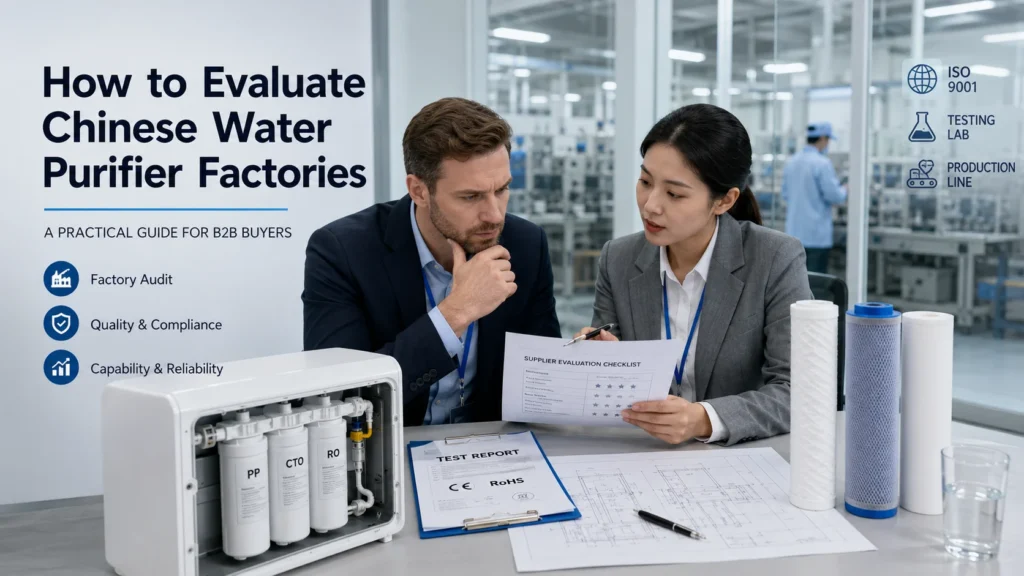
Two professionals discussing a supplier evaluation checklist at a table with water purifier parts, documents, and technical drawings in a factory setting.

Water Purifier Manufacturer in China: 12 Questions B2B Buyers Should Ask

Finding a water purifier manufacturer in China is easy. Finding a factory that can support your target contaminants, certification pathway, product positioning and long-term replacement-filter ...
News, Water Purifiers
Featured image for Why Stainless Steel Water Purifiers Are Becoming the Premium Choice for Wellness Brands

Why Stainless Steel Water Purifiers Are Becoming the Premium Choice for Wellness Brands

Choose stainless steel purifiers for purity, aesthetics, and sustainability. Elevate your wellness brand with premium quality today!
News, Water Purifiers
Featured image for What Biohacking & Longevity Consumers Want in a Water Purification System

What Biohacking & Longevity Consumers Want in a Water Purification System

Discover pure, re-mineralized water systems. No plastics, complete RO, perfect for biohacking longevity. Upgrade your hydration now!
News, Water Purifiers
Featured image for How Premium Water Appliances Improve Sleep, Skin, and Daily Energy

How Premium Water Appliances Improve Sleep, Skin, and Daily Energy

Unlock better sleep, radiant skin, and energy with mineral-rich water. Discover the power of premium appliances for your ultimate wellness boost.
News, Water Purifiers
Contaminant Engineering•3 min read

PFAS Water Filtration Technologies Explained: Carbon, Resin & RO

Key Takeaway:

PFAS reduction depends on the specific compounds present, treatment media, contact time, water chemistry, and system design. Activated carbon, ion exchange, and Reverse Osmosis address PFAS through different mechanisms.

PFAS are a large family of persistent fluorinated compounds that can occur in drinking-water supplies. Their treatment behavior varies significantly by molecular structure, chain length, functional group, concentration, and the chemistry of the source water.

Granular Activated Carbon (GAC) removes PFAS primarily through adsorption. It is generally more effective for many longer-chain PFAS, while shorter-chain compounds tend to break through more quickly. Carbon performance depends on media properties, Empty Bed Contact Time (EBCT), competing organic matter, loading, and replacement frequency.

Ion-exchange resins use charged functional sites to capture many PFAS compounds. Properly selected anion-exchange media can provide high capacity and may perform better than conventional activated carbon for some shorter-chain PFAS, although performance still depends on water chemistry and competing ions.

Reverse Osmosis (RO) uses membrane separation rather than adsorption. Properly designed RO systems can provide broad reduction across many PFAS compounds as well as dissolved salts and other contaminants. Unlike carbon or resin, however, RO also produces a concentrate stream that must be managed.

No single technology should be selected from a PFAS label alone. System design should consider which PFAS compounds are present, their concentrations, required reduction targets, flow rate, media life, and the applicable third-party certification or validation requirements.

HisoAir Water Technical Series
Product Discovery•3 min read

How to Choose an Under-Sink Water Purifier for Modern Kitchens

Key Takeaway:

Match the treatment technology to your water quality first, then evaluate cabinet space, faucet configuration, flow rate, drain and power requirements, and filter replacement needs.

Choosing an under-sink water purifier starts with water chemistry. Carbon filtration is well suited to chlorine, taste, odor, and many organic contaminants, while Reverse Osmosis is more appropriate when dissolved salts, fluoride, nitrates, or broader dissolved contaminants need to be reduced.

For compact kitchens, tankless RO systems eliminate the conventional storage tank and can significantly reduce the space required under the sink. However, membrane capacity stated in GPD does not directly equal faucet flow. When comparing systems, check the actual dispensing flow rate, inlet-pressure requirement, recovery ratio, and whether a booster pump is required.

Installation architecture also matters. Many RO systems require a drain connection, electrical power, and either a dedicated drinking-water faucet or a compatible multi-function faucet. High-flow carbon systems can often connect directly to the existing cold-water line with a simpler installation, but pressure drop and available faucet flow should still be verified.

RO also removes much of the naturally occurring dissolved mineral content. Where taste or mineral balance is a priority, a post-RO remineralization stage can be added. Filter life should be evaluated by both rated capacity and local water quality rather than replacement time alone.

The right system is therefore not simply the smallest or highest-GPD model. It is the configuration that matches the target contaminants, available cabinet space, desired faucet setup, peak dispensing demand, and maintenance expectations.

HisoAir Water Technical Series
Water Quality•2 min read

What Does TDS Mean in Drinking Water? Measurement vs Contaminant Reality

Key Takeaway:

A TDS meter estimates the overall concentration of dissolved ionic substances from electrical conductivity. It cannot identify specific contaminants or determine whether water is chemically safe.

Total Dissolved Solids (TDS) refers to the combined concentration of dissolved substances in water. Most handheld TDS meters do not measure TDS directly. Instead, they measure electrical conductivity (EC) and convert that reading into an estimated parts-per-million (ppm) value.

This means a TDS reading can indicate how much dissolved ionic material is present, but not what that material actually is. Calcium, magnesium, sodium, nitrates, and other dissolved ions can all contribute to conductivity, yet a simple TDS meter cannot distinguish between them.

TDS meters are also not suitable for detecting trace contaminants such as PFAS, many VOCs, pesticides, pharmaceuticals, or disinfection byproducts. These substances may be present at concentrations far below the level needed to noticeably change electrical conductivity.

A low TDS reading therefore does not guarantee safe drinking water, and a higher TDS reading does not automatically indicate contamination. Water-treatment decisions should be based on laboratory testing for specific contaminants of concern rather than TDS alone.

HisoAir Water Technical Series
Technology Selection•2 min read

RO vs UF Water Filtration: Understanding Pore Sizes & Dissolved Minerals

Key Takeaway:

Ultrafiltration can reduce bacteria, turbidity, and suspended particles while retaining most naturally occurring dissolved minerals. Reverse Osmosis provides much broader reduction of dissolved salts and smaller contaminants.

Ultrafiltration (UF) typically uses hollow-fiber membranes with pore sizes in the approximate 0.01–0.1 micron range. These membranes physically retain turbidity, suspended solids, colloids, and many microorganisms while allowing dissolved minerals and salts to remain in the water.

Reverse Osmosis (RO) operates at a much finer separation level. Unlike UF, RO can substantially reduce dissolved ions such as sodium, calcium, fluoride, nitrates, and other contributors to total dissolved solids (TDS). This makes RO more suitable when dissolved-salt reduction is a primary treatment objective.

UF generally requires less system pressure and produces little or no continuous concentrate stream in many point-of-use configurations. RO typically requires greater pressure and produces a reject-water stream, but delivers broader contaminant reduction.

For water with acceptable TDS and mineral content, UF can be a simpler mineral-retaining treatment option. Where dissolved salts, fluoride, nitrates, or broader dissolved contaminants are a concern, RO is generally the more appropriate technology.

HisoAir Water Technical Series
Technology Selection•4 min read

Carbon Block vs Reverse Osmosis: Which Fits Your Need?

Key Takeaway:

Choose RO for dissolved inorganic salts and heavy metals; choose Carbon Block for chemical taste/odor, no wastewater, and high line-pressure flow.

Reverse Osmosis (RO) and Carbon Block filtration represent two fundamentally different treatment methods: membrane separation and adsorption. Understanding these differences helps determine which technology is better suited to a specific water-quality requirement.

Reverse Osmosis uses a semi-permeable membrane with pore sizes of approximately 0.0001 microns. It can significantly reduce dissolved inorganic contaminants such as TDS, fluoride, nitrates, and certain heavy metals. Because water must be forced through the membrane, RO systems require sufficient pressure or a booster pump and generate a concentrated wastewater stream.

Carbon Block filtration relies primarily on adsorption through compressed activated carbon, commonly with nominal pore sizes around 0.5–5 microns. It is highly effective for chlorine, chloramines, VOCs, taste, and odor, while allowing substantially higher direct-flow rates without producing wastewater.

From an operating perspective, Carbon Block systems are generally simpler, require less energy, and avoid the water loss associated with RO. RO involves higher system complexity and operating cost, but provides substantially broader reduction of dissolved contaminants that Carbon Block alone cannot address.

HisoAir Water Technical Series

ЗАПРОСИТЬ ЦИТАТУ