
Dry air can cause discomfort and health issues. Finding a reliable manufacturing partner is a huge challenge. You need quality, innovation, and a partner you can trust.
The top 5 humidifier manufacturers in Thailand are HisoAir, Yoowon Electronics, Ford Sales & Service, J & P Fragrances, and GASEA. Each company offers unique strengths, from OEM/ODM1 specialization and export leadership to professional distribution, catering to diverse business needs in the air quality market.
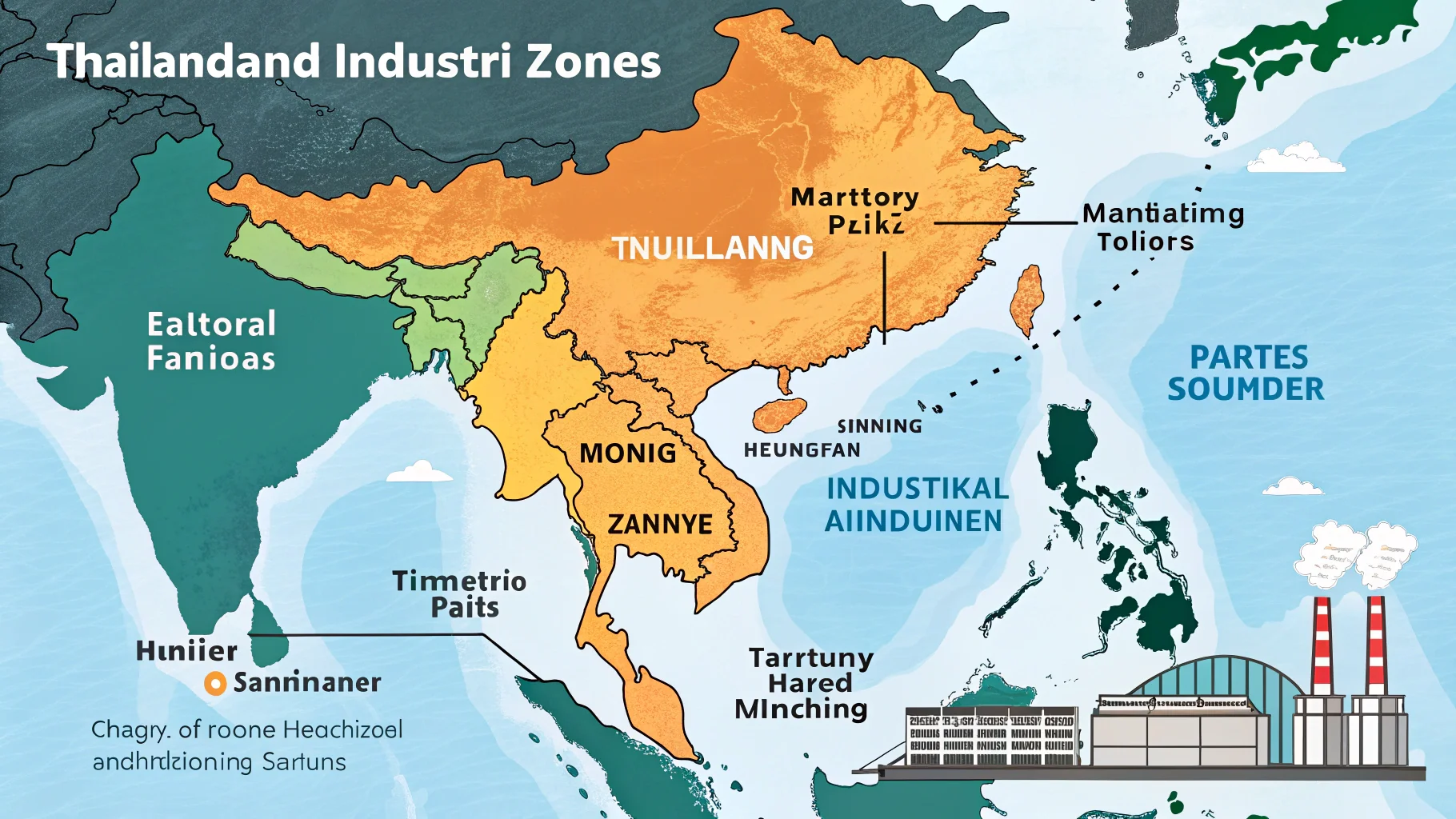
Finding the right manufacturing partner is a critical step for any business. I've spent years in the air and water quality industry, and I've learned that where you source from matters just as much as what you source. Many of our clients ask me why we base our operations in Thailand. It's a great question that gets to the heart of our business strategy. The answer goes beyond just one single reason. It's about a combination of factors that create a powerful environment for producing high-quality goods. Let's explore why Thailand has become a go-to hub for businesses like yours and mine.
Thailand's manufacturing sector accounts for over 30% of its GDP.Правда
Thailand has a robust and diversified manufacturing industry, which is a cornerstone of its economy, particularly in electronics, automotive, and appliances.
Sourcing from Thailand is always cheaper than from other Asian countries.Ложь
While competitive, Thailand's pricing reflects its focus on higher quality standards, skilled labor, and advanced infrastructure. It often provides better overall value than the absolute lowest price.
Why Should You Source Humidifiers from Thailand?
Struggling to find a manufacturing base that balances cost with high quality? The logistics can be a nightmare. You worry about standards, communication, and reliable shipping.
Thailand offers a strong solution. It has a Квалифицированная рабочая сила2, excellent infrastructure, and government support for manufacturing. Its central location in Southeast Asia makes it a strategic hub for global logistics. This combination provides a stable and efficient environment for producing top-tier humidifiers.

When I first decided to establish HisoAir, I looked at several countries. Thailand stood out for a few key reasons. It's not just about lower costs. It's about the entire ecosystem that supports high-quality manufacturing.
Стратегическое местоположение и инфраструктура
Thailand is right in the middle of Southeast Asia. This makes it a perfect Logistics hub3. We can easily ship products to major markets in Asia, Europe, and the Americas. The country has deep-sea ports, modern airports, and a reliable road network. This means fewer delays and more predictable supply chains for our clients.
Skilled Workforce and Quality Focus
The workforce here is another major advantage. There's a strong emphasis on technical education and skills training. In my experience, Thai workers are detail-oriented and committed to quality. This is crucial in our industry, where precision and reliability are everything. We build innovative Air quality solutions4, and that requires a team that can execute complex designs flawlessly.
Поддерживающая политика правительства
The Thai government actively encourages foreign investment, especially in high-tech industries. The Board of Investment (BOI) offers incentives that make it easier to set up and run a business. This support creates a stable and predictable business environment, allowing us to focus on what we do best: innovation and manufacturing.
The Thai government's Board of Investment (BOI) offers tax exemptions of up to 8 years for certain industries.Правда
The BOI provides a range of tax and non-tax incentives to attract foreign investment in targeted sectors, including electronics and high-tech manufacturing.
All factories in Thailand operate on 100% renewable energy.Ложь
While Thailand is increasing its use of renewable energy, most factories still rely on a traditional energy grid. However, many modern manufacturers, including us at HisoAir, are incorporating sustainable practices.
What Was My Selection Criteria for the Top 5?
With so many companies, how do you know who is truly the best? It's easy to get lost in marketing claims. You need a clear, objective way to judge potential partners.
My criteria focused on four key areas: manufacturing role (OEM/ODM vs. distributor), export performance, product specialization, and overall Market reputation5. This method helps identify true industry leaders, not just companies with the biggest marketing budgets. It ensures a list of reliable, proven, and specialized partners.
Choosing the right partners is one of the most important things I do. A good list isn't just about picking the biggest names. It's about understanding what makes a company a valuable partner for different types of businesses. When I put together this list, I didn't just look at websites or sales numbers. I drew on my own experience in the Thai market and used a specific set of criteria to evaluate each company. This ensures the list is practical and genuinely helpful for anyone looking to source humidifiers from Thailand.
Here’s a breakdown of what I looked for:
Core Business Model
- OEM/ODM vs. Distributor: Is the company a hands-on manufacturer that can create custom products (OEM/ODM), or do they primarily distribute products made by others? For businesses like ours that value innovation and custom branding, an OEM/ODM partner is essential.
Market Reach and Performance
- Export Volume: A company's export data is a strong indicator of its success and reliability. High export volumes mean their products are trusted by international clients and meet global standards.
Specialization and Expertise
- Product Focus: Does the company specialize in humidifiers and air quality, or is it just one small part of a huge catalog? I find that specialized companies often have deeper knowledge and produce better, more innovative products.
OEM stands for 'Original Equipment Manufacturer,' where a company makes a product to be sold under another company's brand.Правда
This is a common practice in the electronics industry, allowing brands to offer products without owning their own factories. ODM, or 'Original Design Manufacturer,' is similar, but the manufacturer also handles the design.
All top exporters in Thailand are locally owned companies.Ложь
Many top exporters in Thailand are foreign-owned or joint ventures, bringing international capital, technology, and management expertise into the country's manufacturing sector.
Who Made the List of Top 5 Humidifier Manufacturers in Thailand?
You need a reliable partner, but who can you trust? Finding a manufacturer that fits your specific needs for quality, Настройка6, or distribution can be a long and difficult search.
This curated list breaks down the top 5 players in Thailand's humidifier market. From OEM/ODM specialists like HisoAir to major exporters and distributors, you can quickly identify the company that best aligns with your business goals.
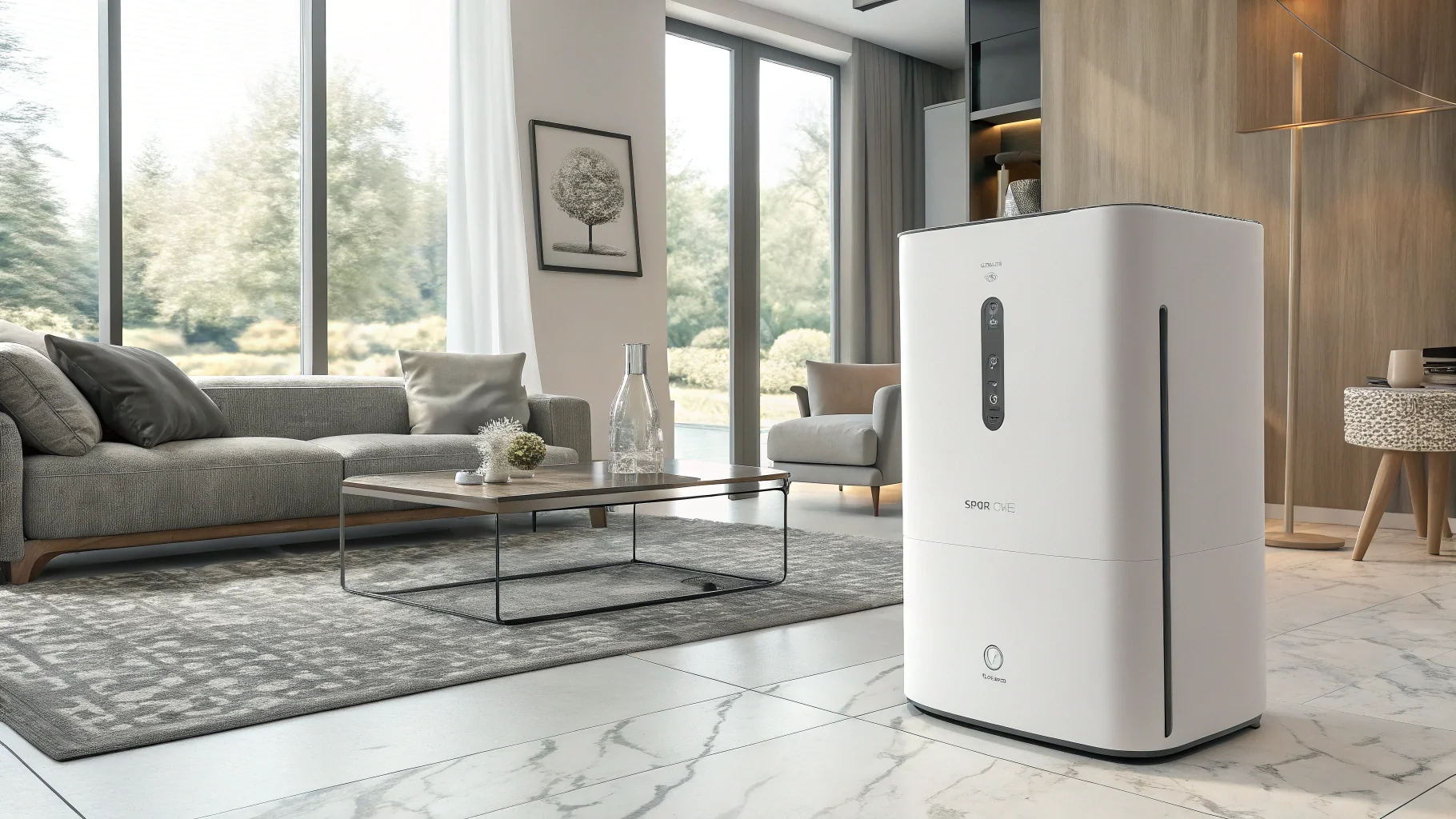
After carefully applying my criteria, I've identified five companies that stand out in the Thai humidifier market. Each one has a distinct role and serves different needs. I know some of these companies as competitors, others as partners in the broader industry. This firsthand knowledge gives me confidence in this list. Whether you need a custom-designed product, a large volume of standard units, or a specialized system, one of these companies will likely be a great fit for you.
1. HisoAir
As the founder of HisoAir, I'm proud to place us at the top of this list for OEM/ODM services. Our focus is clear: we provide innovative air quality solutions. We partner with B2B clients to design and manufacture humidifiers and water purifiers that meet their exact specifications. We control the entire process, from initial concept to final production, ensuring the highest quality. Our slogan, "Innovative Air Quality Solutions," is something we live by every day.
2. Yoowon Electronics Co., Ltd.
Yoowon Electronics is a powerhouse when it comes to exports. They are a major player in the Thai electronics scene and have a significant presence in the global market. Their strength lies in large-scale production and a well-established logistics network. They are a go-to for businesses looking for a reliable supplier of standard model humidifiers in large quantities.
3. Ford Sales & Service Thailand Co., Ltd.
The name might be surprising, but this company is a key manufacturer and exporter in the appliance space, including humidifiers. Their involvement shows the diversity of Thailand's manufacturing capabilities. They have strong processes and quality control systems, likely adapted from their experience in other demanding sectors. They are a solid choice for businesses that prioritize established manufacturing processes.
4. J & P Fragrances Co., Ltd.
This company brings a unique twist to the market. As their name suggests, they specialize in fragrances, which points to expertise in aroma diffusers and fragrance-infused humidifiers. This is a growing niche. For businesses focused on the wellness or home fragrance market, J & P Fragrances is a very interesting and specialized potential partner.
5. GASEA Co., Ltd.
GASEA holds a different position in the market. They are a leading distributor of professional and industrial humidifier systems. They cater to clients who need large-scale humidity control for commercial buildings, data centers, or manufacturing facilities. They are the experts to call when you need a complex, engineered solution rather than a consumer product.
HisoAir is the only company in Thailand offering OEM/ODM humidifier services.Ложь
While HisoAir is a leading OEM/ODM specialist, other manufacturers in Thailand also offer these services. HisoAir distinguishes itself through its focus on innovation and integrated air and water quality solutions.
Aroma diffusers are a type of humidifier.Правда
Most aroma diffusers are ultrasonic humidifiers that vibrate to create a cool mist from water and essential oils, humidifying the air while also dispersing fragrance.
How Do These Top Manufacturers Compare?
You have the list, but how do you choose? Each company seems strong in its own way. It's hard to see the key differences at a glance to make a quick, informed decision.
This comparative table simplifies it. It lays out each company's main role, target market, and key strength side-by-side. This allows you to easily match your business needs with the right manufacturer's specialty.
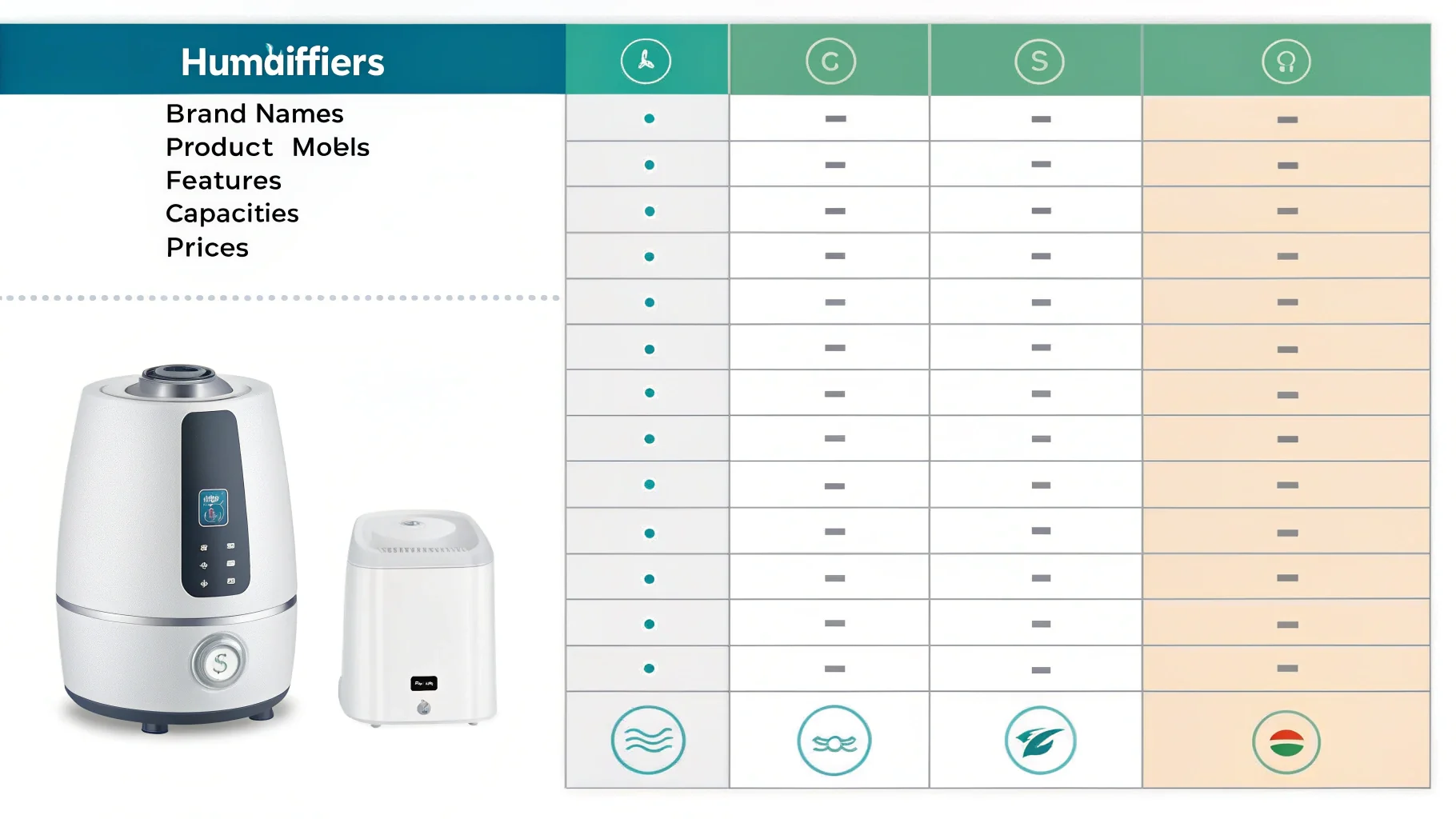
To make things clearer, I've put together a simple table. I find that seeing information laid out like this helps in decision-making. When I'm evaluating potential suppliers or partners, I often create a similar chart for myself. It cuts through the marketing language and gets straight to the point. This table compares the five companies based on what I consider the most important factors for a potential B2B client. It helps you see exactly where each company shines and how their services align with different business models.
Comparative Analysis Table
| Название компании | Role / Distinction | Целевой рынок | Key Strength |
|---|---|---|---|
| HisoAir | OEM/ODM Manufacturer/Supplier | B2B/D2C Brands | Customization & Innovation |
| Yoowon Electronics Co., Ltd. | Top Exporter | B2B Wholesalers | High-Volume Production & Logistics |
| Ford Sales & Service Thailand Co., Ltd. | Key Exporter/Manufacturer | B2B/Retail | Established Processes & Scale |
| J & P Fragrances Co., Ltd. | Niche Exporter | Wellness/Retail | Specialization in Aroma/Fragrance |
| GASEA Co., Ltd. | Leading Distributor | B2B/Industrial | Professional Systems & Technical Expertise |
As you can see, if your goal is to build a unique brand with a custom-designed product, a partner like us at HisoAir is the ideal choice. If you simply need to source large quantities of a standard model, Yoowon or Ford might be a better fit. For niche markets or industrial applications, J & P and GASEA offer the specialized expertise you'd need.
Distributors and OEM manufacturers offer the same level of product customization.Ложь
OEM manufacturers like HisoAir specialize in creating custom products based on a client's design and brand. Distributors typically sell pre-existing products from various manufacturers with limited to no customization.
B2B stands for 'Business-to-Business,' referring to companies that sell products or services to other companies.Правда
This is distinct from B2C, or 'Business-to-Consumer,' where companies sell directly to individual customers.
How Do You Choose the Right Thai Manufacturer?
Knowing the top players is one thing, but making the final choice is another. You might feel unsure about the next steps. How do you verify quality and ensure a smooth partnership?
The key is a structured approach. Define your needs, verify certifications, request samples, and discuss communication protocols. This systematic process minimizes risk and helps you find a partner that truly aligns with your Quality standards7 and business goals.

I've seen many businesses struggle with this final step. They get excited about a potential partner but don't have a clear process for making the final decision. Based on my experience building partnerships for HisoAir, I've developed a simple checklist. Following these steps will help you move forward with confidence and build a strong, lasting relationship with your chosen Thai manufacturer.
1. Clearly Define Your Product Needs
Before you contact anyone, know exactly what you want. What type of humidifier do you need (ultrasonic, evaporative)? What features are essential? What is your target price point and volume? A clear brief makes it easier for a manufacturer to give you an accurate quote and tell you if they are a good fit.
2. Verify Certifications and Quality Standards
Ask for their quality certifications, like ISO 9001. This shows they have a documented quality management system. Also, ask about product-specific certifications like CE, RoHS, or UL, depending on your target market. Don't just take their word for it; ask for the documents.
3. Request Samples
Never commit to a large order without seeing and testing a sample first. This is the best way to evaluate the build quality, performance, and overall feel of the product. At HisoAir, we see the sample stage as a critical part of our collaboration with a new partner.
4. Discuss Communication and Support
How will you communicate? Who is your main point of contact? A good partner will have clear and responsive communication channels. I remember a time early in my career when poor communication with a supplier caused major delays. It taught me to make this a priority from day one.
ISO 9001 is a certification for product quality.Ложь
ISO 9001 is a standard for a company's Quality Management System (QMS). It certifies that the company's processes are designed to consistently produce products that meet customer and regulatory requirements, but it doesn't certify the product itself.
Using purified water in humidifiers can prevent the release of white mineral dust.Правда
Tap water contains minerals that, in ultrasonic humidifiers, can be dispersed as fine white dust. Using distilled or purified water, like from a HisoAir water purifier, eliminates this issue.
What Are the Future Trends in Thailand’s Humidifier Market?
The market is always changing. What's popular today might be obsolete tomorrow. You need to know what's next to stay ahead of the competition and meet future consumer demands.
The future is smart, healthy, and sustainable. Expect to see more Wi-Fi-connected humidifiers, devices with advanced air purification features, and products made from eco-friendly materials. These trends reflect a growing consumer focus on health, convenience, and environmental responsibility.
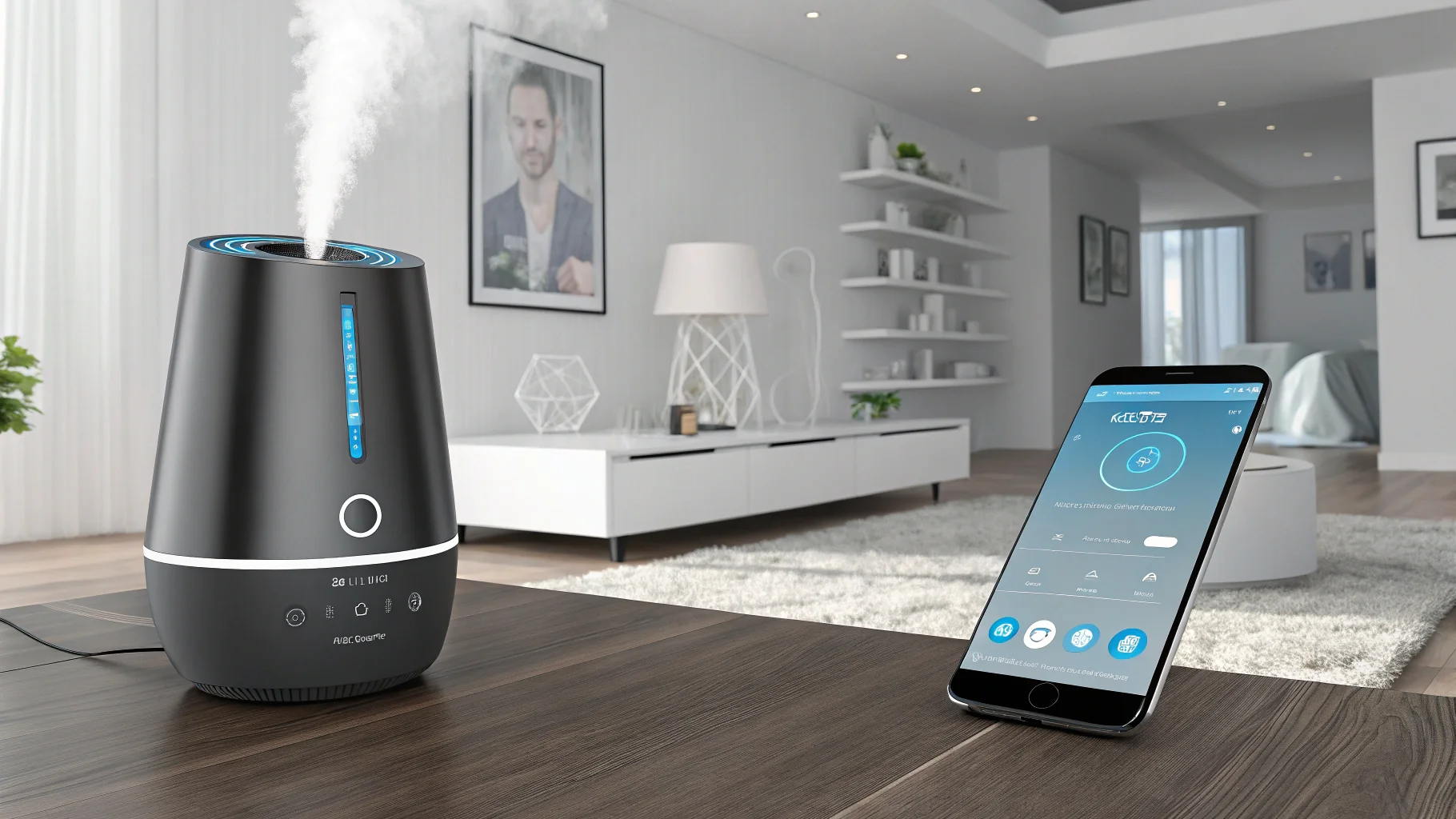
At HisoAir, we are always looking ahead. Our slogan is "Innovative Air Quality Solutions," and that means we have to be at the forefront of new technology and consumer trends. The humidifier market in Thailand, and globally, is evolving quickly. From my perspective, there are three major trends that will shape the next generation of products. For any business in this space, understanding these trends is not just interesting—it's essential for future success.
Интеграция умного дома
Convenience is king. More and more customers want devices they can control with their smartphones or voice assistants like Alexa and Google Assistant. Future humidifiers will be fully integrated into the smart home ecosystem. Users will be able to set schedules, monitor humidity levels remotely, and receive alerts for refilling the water tank, all from an app.
Health and Wellness Features
The line between a humidifier and an air purifier is blurring. Consumers want products that do more to protect their health. This means we'll see more humidifiers with built-in UV-C sterilization to kill bacteria in the water tank. We'll also see more models that incorporate advanced filtration to capture dust and allergens. The connection to water quality is also key here; pairing a humidifier with a water purifier will become a standard recommendation for optimal health benefits.
Sustainability and Eco-Friendly Design
Environmental consciousness is growing. Customers are starting to ask questions about the materials used in products and their energy consumption. The next wave of humidifiers will be made from recycled or sustainable materials. They will also be designed for greater energy efficiency, reducing their environmental footprint and saving consumers money on their electricity bills.
UV-C light is proven to kill bacteria and viruses in water.Правда
UV-C radiation has germicidal properties that disrupt the DNA of microorganisms, rendering them unable to reproduce. It is a widely used and effective method for water sterilization in many applications.
All smart humidifiers are compatible with all smart home systems.Ложь
Compatibility varies by manufacturer. Some devices may only work with specific ecosystems like Apple HomeKit, Google Home, or Amazon Alexa, so it's important to check before buying.
Заключение
Choosing the right Thai manufacturer is key to your success. This guide provides a clear path, from understanding the market to selecting a partner that fits your specific needs.
References
-
Understanding OEM/ODM is crucial for businesses seeking custom manufacturing solutions. ↩
-
A skilled workforce is essential for quality production and innovation in manufacturing. ↩
-
Discover the advantages of Thailand's strategic location for global logistics. ↩
-
Explore cutting-edge solutions that improve air quality and consumer health. ↩
-
A strong market reputation is vital for choosing reliable manufacturing partners. ↩
-
Customization can enhance product appeal and meet specific customer needs. ↩
-
Understanding quality standards helps ensure product reliability and compliance. ↩


 English
  Français
  Español
  Italiano
  Deutsch
  Português
  Русский
  العربية
  日本語
日本語  한국어
한국어  Tiếng Việt
