Открывается в новой вкладке
Инновационные решения в области качества воздуха
HisoAir-Logo
Запрос сейчас

Top 5 Water Purifier Manufacturers in the Indonesia

Related Products

In a nation where clean drinking water is becoming less of a guarantee and more of a luxury, the humble water purifier has transformed into an essential household appliance. With reports indicating that nearly 70% of household drinking water sources in Indonesia may be contaminated, it's no surprise that the market for water purifiers is booming. Valued at over USD 464 million in 2023, the industry is expanding rapidly as more families seek reliable solutions to protect their health.

But with a flood of options on the market, choosing the right brand can be overwhelming. Who can you trust to deliver safe, clean, and great-tasting water for your family? To help you navigate this vital decision, we're diving deep into the top 5 water purifier manufacturers that are setting the standard in Indonesia.

From international giants with decades of experience to innovative specialists changing the game, these are the brands leading the charge in technology, service, and customer trust.

PT. Coway International Indonesia

A powerhouse from South Korea, Coway has made a significant impact on the Indonesian market by introducing a revolutionary business model. Instead of a simple one-time purchase, Coway champions a rental and subscription service that makes its premium, high-tech purifiers accessible to a broader audience.

  • Technology Focus: Coway is renowned for its sophisticated, multi-stage filtration systems, particularly its advanced Reverse Osmosis (RO) technology. The company operates one of the largest R&D centers in the industry and validates its performance with numerous international certifications from bodies like the Water Quality Association (WQA), giving consumers confidence in its ability to remove a wide array of contaminants.
  • Go-to-Market Strategy: Coway's signature "HEART Service" is its key differentiator. The subscription model includes regular maintenance visits every two months from a trained service team, known as "Cody," who handle filter changes and product sanitation. This "service-as-a-product" approach offers a hassle-free, worry-free solution that appeals to health-conscious urban families who value convenience and reliability.
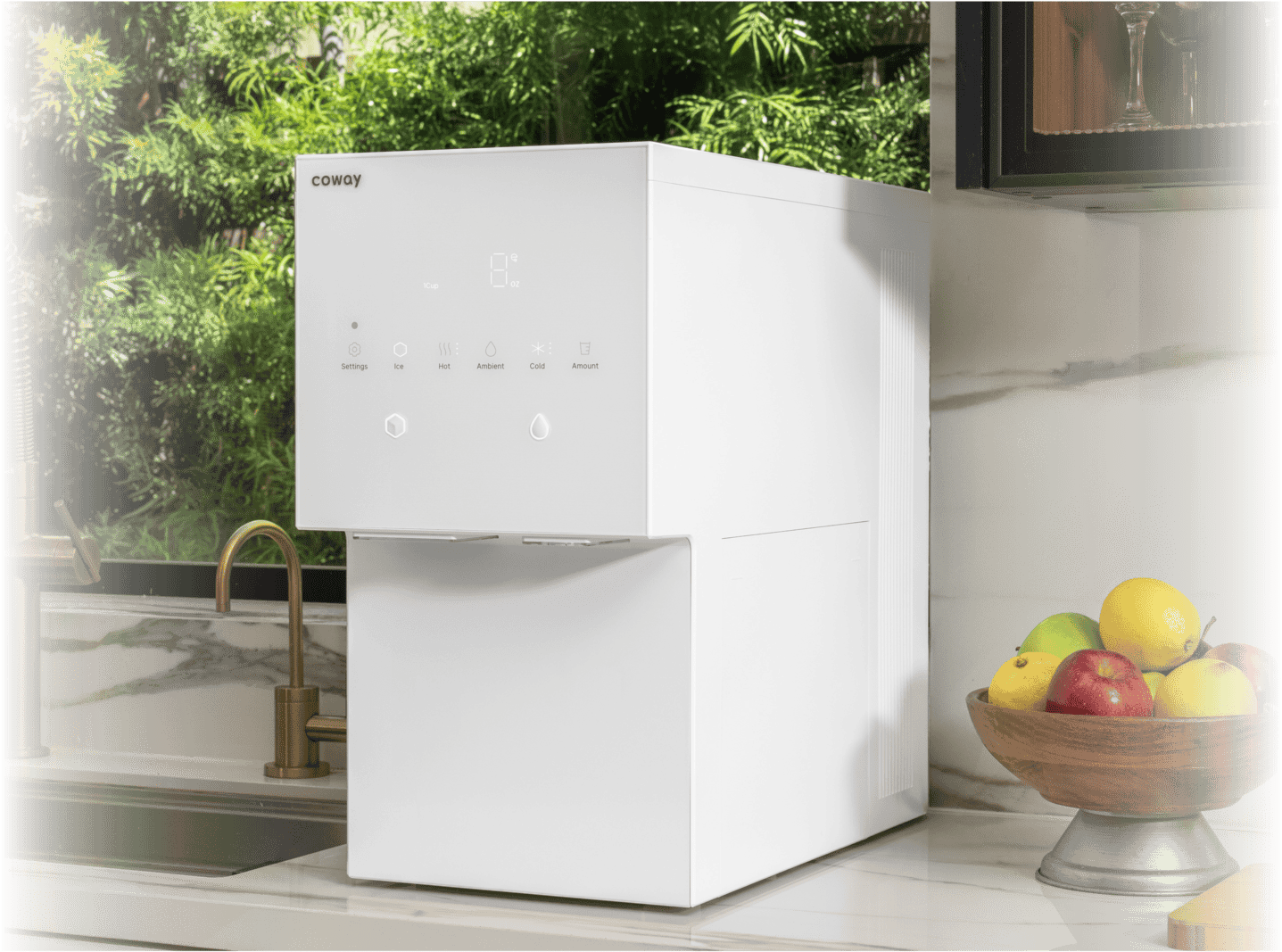
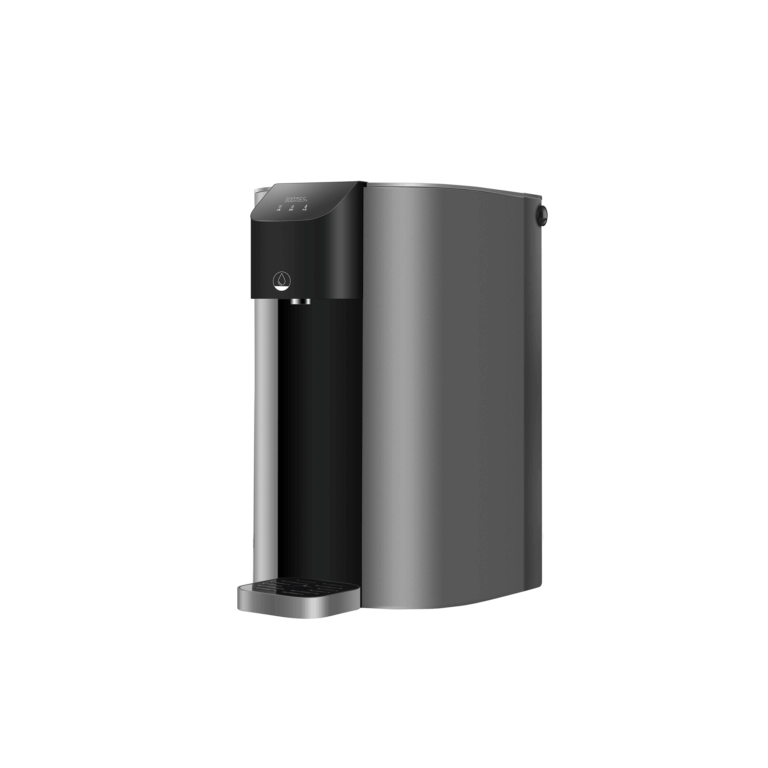
coway water purifier

PT Unilever Indonesia Tbk (Pureit) / A.O. Smith

The Pureit brand, long established under the trusted FMCG giant Unilever, has been a household name in Indonesia for years, known for making safe water accessible to the mass market. However, a recent strategic shift is set to redefine its position.

  • The A.O. Smith Transition: In a landmark move, the global Pureit business was acquired by A.O. Smith, a US-based global leader specializing in water technology. This transition from an FMCG parent to a dedicated water technology expert is expected to inject a new level of innovation and engineering excellence into the brand.
  • Technology and Market Position: Historically, Pureit offered a wide range of products, from affordable gravity-based purifiers to more advanced RO and UV models, leveraging Unilever's vast distribution network to reach every corner of the country. Under A.O. Smith, it is anticipated that Pureit will move towards a more premium market space, enhancing its portfolio to compete directly with other high-end technology players while retaining its strong brand equity.

PT. Cuckoo Global Indonesia

Another formidable player from South Korea, Cuckoo entered the Indonesian market with an aggressive expansion strategy and a clear goal: to become a "Healthy Home Creator." Competing directly with Coway, Cuckoo also employs a successful rental and subscription model.

  • Technology Focus: Cuckoo differentiates itself with its proprietary filtration systems, including the "Natural Filter" and "Nano Positive Filter." This technology is engineered not only to eliminate 99.99% of harmful contaminants but also to retain beneficial minerals, producing mild alkaline water—a key selling point for health-conscious consumers. Features like automatic "IN & OUT Electrolysis Sterilisation" further enhance hygiene and convenience.
  • Go-to-Market Strategy: Cuckoo has invested heavily in building an aspirational brand, using high-profile celebrity endorsements to build awareness. Its value proposition is centered on its "Natural Care Service," an all-inclusive package that covers filter changes, steam sterilization, and routine maintenance, promising a service that is "Beyond Standards" and completely worry-free for its customers.

cuckoo water purifier

PT. Panasonic Gobel Indonesia

Leveraging a legacy of trust that spans decades, Japanese electronics giant Panasonic is a formidable player in the Indonesian market. Having sold water pumps in the country since 1988, the brand has a deep understanding of local water challenges and enjoys powerful brand equity.

  • Technology Focus: Panasonic's key advantage is its strategy of localized innovation. Recognizing that many Indonesian households rely on well water with high iron content, the company developed a proprietary "rapid oxidation treatment technique" to effectively remove dissolved iron that other filters miss. This problem-solving approach extends to its new systems designed to combat hard water, making Panasonic a uniquely tailored choice for local conditions.
  • Go-to-Market Strategy: Panasonic operates on a traditional direct sales model, utilizing an extensive network of authorized dealers and a strong online presence on major e-commerce platforms. The company positions itself as a comprehensive "water solutions" provider, bundling its purifiers with its successful water pump business and even offering value-added services like professional pipe cleaning to ensure optimal system performance.

HisoAir

A dynamic and customer-focused brand making significant waves in the market, HisoAir has established itself as a "Health & Water Specialist." By concentrating on cutting-edge technology and a consumer-centric approach, HisoAir is quickly becoming a go-to choice for Indonesians seeking wellness solutions for their homes.

  • Technology Focus: HisoAir's product portfolio is strongly centered on the market's preferred technology: Reverse Osmosis (RO). This specialization allows the brand to deliver high-performance purification that effectively addresses consumer concerns about a wide range of contaminants. By focusing on RO and integrating modern, user-friendly features into its dispenser-style units, HisoAir offers solutions that are both powerful and convenient for the modern home.
  • Go-to-Market Strategy: HisoAir employs a direct-to-consumer strategy, ensuring a seamless customer experience from inquiry to installation. This approach allows the brand to build a direct relationship with its customers, offering personalized consultations and robust after-sales support. By focusing on a blend of online accessibility and dedicated customer service, HisoAir targets urban consumers who value performance, modern design, and a trustworthy brand experience. To learn more about their innovative solutions, you can visit their website.
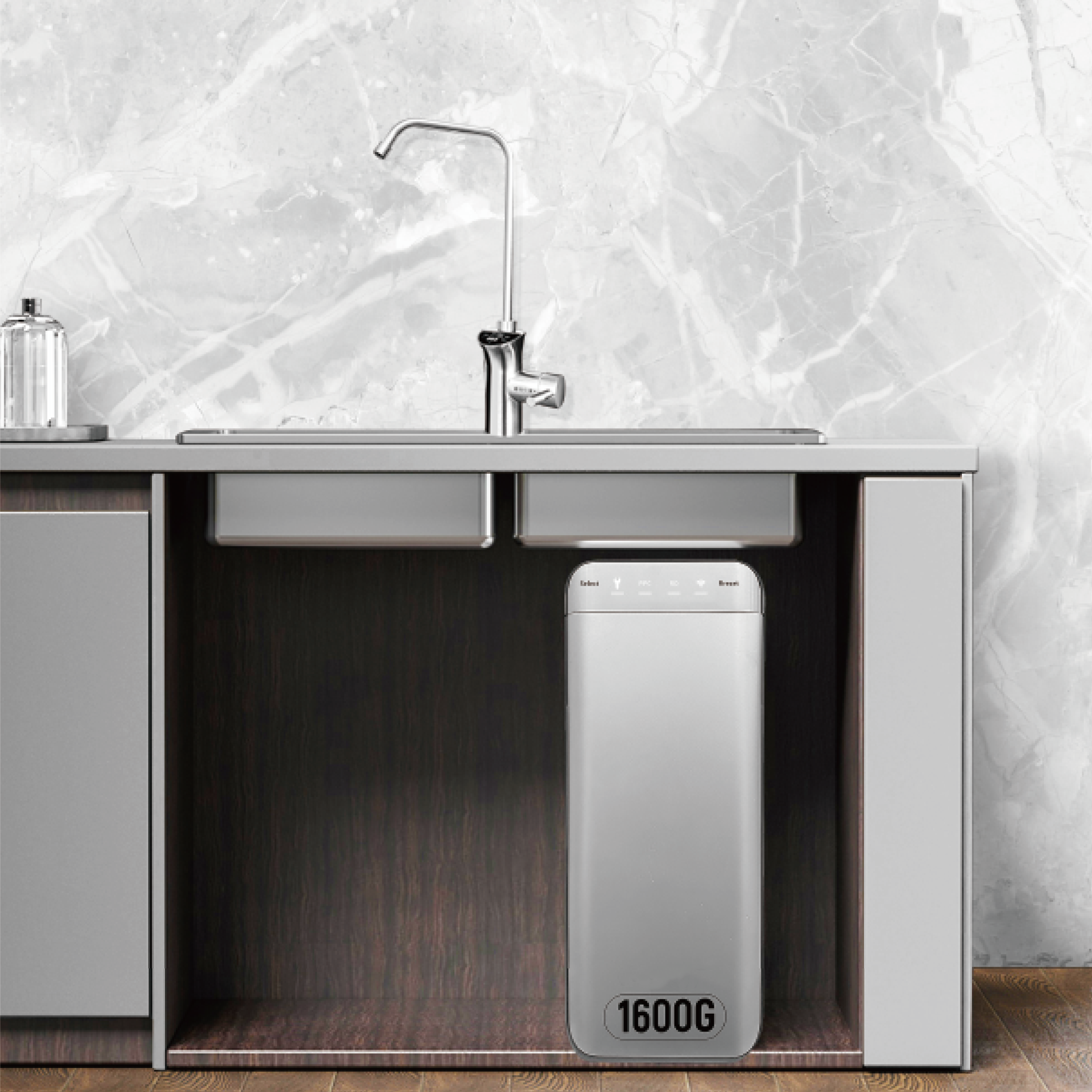
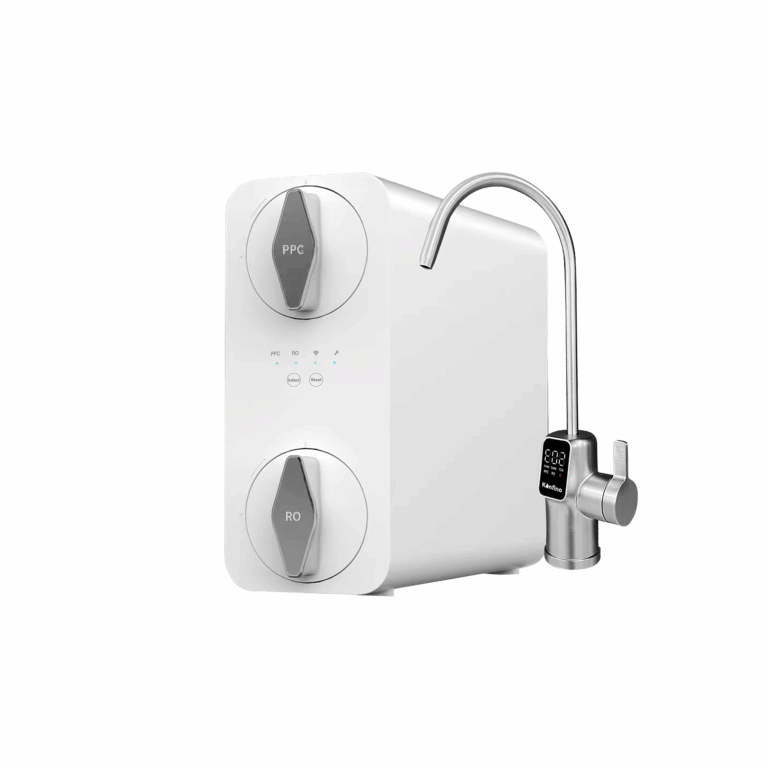
hw04 serise

Заключение

Clean drinking water is no longer a luxury—it is a necessity for every household in Indonesia. As the market grows, these five leading manufacturers—Coway, Pureit/A.O. Smith, Cuckoo, Panasonic, and HisoAir—are setting new benchmarks in technology, service, and trust. Each brand offers a unique value proposition, from hassle-free subscription models and advanced RO systems to locally tailored solutions and direct-to-consumer care.

For families, the right choice comes down to matching your lifestyle needs with a brand that prioritizes health, convenience, and long-term reliability. For businesses and industry players, the message is equally clear: the future belongs to those who combine innovation with customer-centric service.

In a market where safe water is increasingly vital, choosing the right partner is not just about purification—it’s about peace of mind.

Поделиться:
Основатель Hisoair мистер Ли
Alwen Lee, an air purification expert with over 10 years of experience, is a devoted father of two and a passionate traveler, having explored more than 30 countries. With a love for public speaking and swimming, he has dedicated his life to the indoor air quality industry. His mission is to ensure that people around the world enjoy the freedom to breathe clean air and lead happy, healthy lives.

Отправить нам сообщение

Больше читать

Comparison between PFAS-ready and PFAS-certified water filters, showing internal filter components and certification steps.

PFAS-Ready vs. PFAS-Certified Water Filters: Engineering Differences for OEM Brands

For an appliance, wellness or healthy-home brand preparing to launch a water purifier, the phrase “PFAS-ready” can sound reassuring. The proposed system may use activated ...
Water Purifiers
NSF base listing and ANF private-label certification pathway for OEM water filters

What Is an NSF Master Listing? A Guide to Base Listings, ANF Certification and OEM Water Filters

For a brand preparing to launch an OEM water purifier, one of the most common supplier claims is: “We already have an NSF master listing, ...
News, Water Purifiers
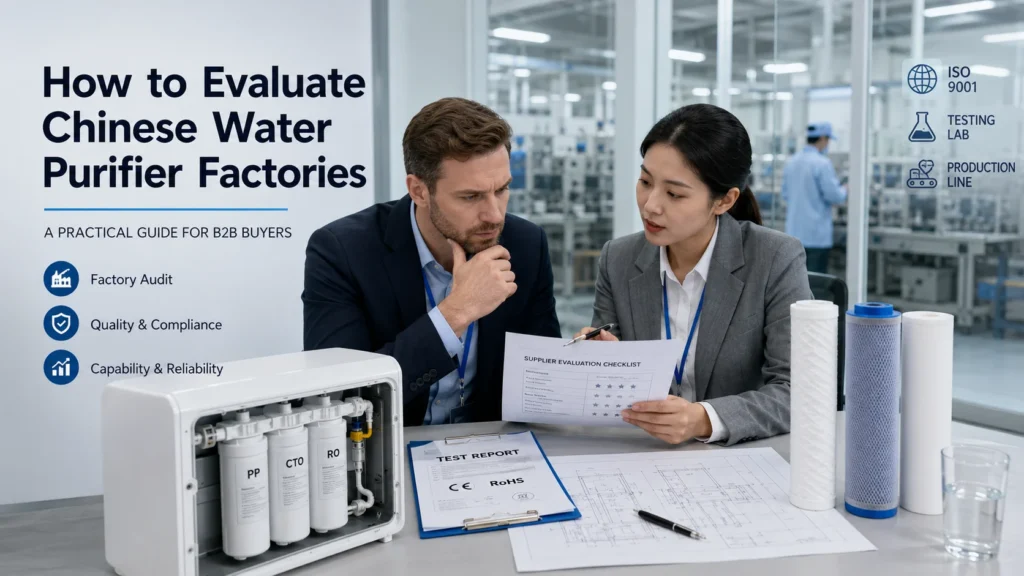
Two professionals discussing a supplier evaluation checklist at a table with water purifier parts, documents, and technical drawings in a factory setting.

Water Purifier Manufacturer in China: 12 Questions B2B Buyers Should Ask

Finding a water purifier manufacturer in China is easy. Finding a factory that can support your target contaminants, certification pathway, product positioning and long-term replacement-filter ...
News, Water Purifiers
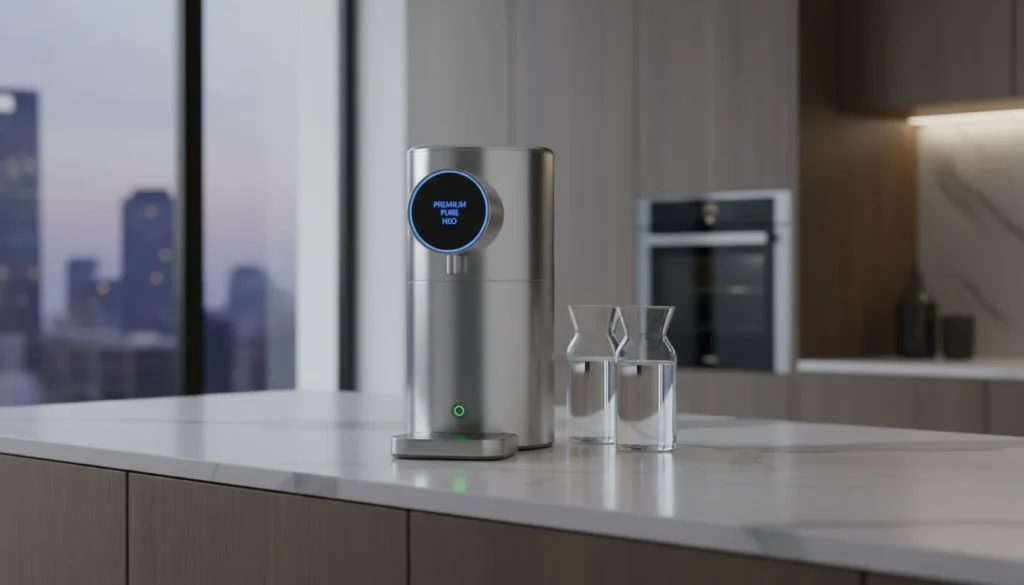
Featured image for Why Stainless Steel Water Purifiers Are Becoming the Premium Choice for Wellness Brands

Why Stainless Steel Water Purifiers Are Becoming the Premium Choice for Wellness Brands

Choose stainless steel purifiers for purity, aesthetics, and sustainability. Elevate your wellness brand with premium quality today!
News, Water Purifiers
Featured image for What Biohacking & Longevity Consumers Want in a Water Purification System

What Biohacking & Longevity Consumers Want in a Water Purification System

Discover pure, re-mineralized water systems. No plastics, complete RO, perfect for biohacking longevity. Upgrade your hydration now!
News, Water Purifiers
Featured image for How Premium Water Appliances Improve Sleep, Skin, and Daily Energy

How Premium Water Appliances Improve Sleep, Skin, and Daily Energy

Unlock better sleep, radiant skin, and energy with mineral-rich water. Discover the power of premium appliances for your ultimate wellness boost.
News, Water Purifiers
Contaminant Engineering•3 min read

PFAS Water Filtration Technologies Explained: Carbon, Resin & RO

Key Takeaway:

PFAS reduction depends on the specific compounds present, treatment media, contact time, water chemistry, and system design. Activated carbon, ion exchange, and Reverse Osmosis address PFAS through different mechanisms.

PFAS are a large family of persistent fluorinated compounds that can occur in drinking-water supplies. Their treatment behavior varies significantly by molecular structure, chain length, functional group, concentration, and the chemistry of the source water.

Granular Activated Carbon (GAC) removes PFAS primarily through adsorption. It is generally more effective for many longer-chain PFAS, while shorter-chain compounds tend to break through more quickly. Carbon performance depends on media properties, Empty Bed Contact Time (EBCT), competing organic matter, loading, and replacement frequency.

Ion-exchange resins use charged functional sites to capture many PFAS compounds. Properly selected anion-exchange media can provide high capacity and may perform better than conventional activated carbon for some shorter-chain PFAS, although performance still depends on water chemistry and competing ions.

Reverse Osmosis (RO) uses membrane separation rather than adsorption. Properly designed RO systems can provide broad reduction across many PFAS compounds as well as dissolved salts and other contaminants. Unlike carbon or resin, however, RO also produces a concentrate stream that must be managed.

No single technology should be selected from a PFAS label alone. System design should consider which PFAS compounds are present, their concentrations, required reduction targets, flow rate, media life, and the applicable third-party certification or validation requirements.

HisoAir Water Technical Series
Product Discovery•3 min read

How to Choose an Under-Sink Water Purifier for Modern Kitchens

Key Takeaway:

Match the treatment technology to your water quality first, then evaluate cabinet space, faucet configuration, flow rate, drain and power requirements, and filter replacement needs.

Choosing an under-sink water purifier starts with water chemistry. Carbon filtration is well suited to chlorine, taste, odor, and many organic contaminants, while Reverse Osmosis is more appropriate when dissolved salts, fluoride, nitrates, or broader dissolved contaminants need to be reduced.

For compact kitchens, tankless RO systems eliminate the conventional storage tank and can significantly reduce the space required under the sink. However, membrane capacity stated in GPD does not directly equal faucet flow. When comparing systems, check the actual dispensing flow rate, inlet-pressure requirement, recovery ratio, and whether a booster pump is required.

Installation architecture also matters. Many RO systems require a drain connection, electrical power, and either a dedicated drinking-water faucet or a compatible multi-function faucet. High-flow carbon systems can often connect directly to the existing cold-water line with a simpler installation, but pressure drop and available faucet flow should still be verified.

RO also removes much of the naturally occurring dissolved mineral content. Where taste or mineral balance is a priority, a post-RO remineralization stage can be added. Filter life should be evaluated by both rated capacity and local water quality rather than replacement time alone.

The right system is therefore not simply the smallest or highest-GPD model. It is the configuration that matches the target contaminants, available cabinet space, desired faucet setup, peak dispensing demand, and maintenance expectations.

HisoAir Water Technical Series
Water Quality•2 min read

What Does TDS Mean in Drinking Water? Measurement vs Contaminant Reality

Key Takeaway:

A TDS meter estimates the overall concentration of dissolved ionic substances from electrical conductivity. It cannot identify specific contaminants or determine whether water is chemically safe.

Total Dissolved Solids (TDS) refers to the combined concentration of dissolved substances in water. Most handheld TDS meters do not measure TDS directly. Instead, they measure electrical conductivity (EC) and convert that reading into an estimated parts-per-million (ppm) value.

This means a TDS reading can indicate how much dissolved ionic material is present, but not what that material actually is. Calcium, magnesium, sodium, nitrates, and other dissolved ions can all contribute to conductivity, yet a simple TDS meter cannot distinguish between them.

TDS meters are also not suitable for detecting trace contaminants such as PFAS, many VOCs, pesticides, pharmaceuticals, or disinfection byproducts. These substances may be present at concentrations far below the level needed to noticeably change electrical conductivity.

A low TDS reading therefore does not guarantee safe drinking water, and a higher TDS reading does not automatically indicate contamination. Water-treatment decisions should be based on laboratory testing for specific contaminants of concern rather than TDS alone.

HisoAir Water Technical Series
Technology Selection•2 min read

RO vs UF Water Filtration: Understanding Pore Sizes & Dissolved Minerals

Key Takeaway:

Ultrafiltration can reduce bacteria, turbidity, and suspended particles while retaining most naturally occurring dissolved minerals. Reverse Osmosis provides much broader reduction of dissolved salts and smaller contaminants.

Ultrafiltration (UF) typically uses hollow-fiber membranes with pore sizes in the approximate 0.01–0.1 micron range. These membranes physically retain turbidity, suspended solids, colloids, and many microorganisms while allowing dissolved minerals and salts to remain in the water.

Reverse Osmosis (RO) operates at a much finer separation level. Unlike UF, RO can substantially reduce dissolved ions such as sodium, calcium, fluoride, nitrates, and other contributors to total dissolved solids (TDS). This makes RO more suitable when dissolved-salt reduction is a primary treatment objective.

UF generally requires less system pressure and produces little or no continuous concentrate stream in many point-of-use configurations. RO typically requires greater pressure and produces a reject-water stream, but delivers broader contaminant reduction.

For water with acceptable TDS and mineral content, UF can be a simpler mineral-retaining treatment option. Where dissolved salts, fluoride, nitrates, or broader dissolved contaminants are a concern, RO is generally the more appropriate technology.

HisoAir Water Technical Series
Technology Selection•4 min read

Carbon Block vs Reverse Osmosis: Which Fits Your Need?

Key Takeaway:

Choose RO for dissolved inorganic salts and heavy metals; choose Carbon Block for chemical taste/odor, no wastewater, and high line-pressure flow.

Reverse Osmosis (RO) and Carbon Block filtration represent two fundamentally different treatment methods: membrane separation and adsorption. Understanding these differences helps determine which technology is better suited to a specific water-quality requirement.

Reverse Osmosis uses a semi-permeable membrane with pore sizes of approximately 0.0001 microns. It can significantly reduce dissolved inorganic contaminants such as TDS, fluoride, nitrates, and certain heavy metals. Because water must be forced through the membrane, RO systems require sufficient pressure or a booster pump and generate a concentrated wastewater stream.

Carbon Block filtration relies primarily on adsorption through compressed activated carbon, commonly with nominal pore sizes around 0.5–5 microns. It is highly effective for chlorine, chloramines, VOCs, taste, and odor, while allowing substantially higher direct-flow rates without producing wastewater.

From an operating perspective, Carbon Block systems are generally simpler, require less energy, and avoid the water loss associated with RO. RO involves higher system complexity and operating cost, but provides substantially broader reduction of dissolved contaminants that Carbon Block alone cannot address.

HisoAir Water Technical Series

ЗАПРОСИТЬ ЦИТАТУ