
In my quest for cleaner air, I discovered that finding the best deal on an air purifier is more than just looking at price tags. It's about understanding what lies beneath those numbers.
To effectively compare air purifier prices across various suppliers, focus on key features such as CADR, noise level, and filter type. Ensure you evaluate similar specifications to make a fair comparison, considering both cost and performance.
While price is crucial, grasping the nuances of air purifier features can truly make or break your purchasing decision. Join me as we explore what really counts!
CADR is the most important feature to compare.True
CADR measures air purifier efficiency, crucial for performance assessment.
What Features Should You Focus on When Comparing Air Purifiers?
Choosing the right air purifier requires careful attention to specific features that affect performance and value.
When comparing air purifiers, focus on CADR, noise levels, filter types, and additional smart features to ensure optimal air quality and user convenience.
Understanding CADR and Its Importance
The Clean Air Delivery Rate (CADR) is a critical measurement when evaluating air purifiers. It indicates the volume of filtered air an air purifier produces per minute, affecting how efficiently it cleans a room. A higher CADR value means faster air purification.
Comparing CADR values across models with similar room size specifications helps you assess which device offers better performance. Remember, matching the CADR1 to your room size is essential for effective purification.
Evaluating Noise Levels
Noise levels can significantly impact your comfort, especially if the air purifier is used in a bedroom or office. Check the decibel levels provided by the manufacturer. Models offering Decibel Cancellation Technology2 can provide quieter operation, enhancing your environment without distracting noise.
| Model | Noise Level (dB) |
|---|---|
| Model A | 40 dB |
| Model B | 50 dB |
| Model C | 35 dB |
Considering Filter Types
The type of filter plays a pivotal role in what pollutants the air purifier can eliminate. Common filters include HEPA, activated carbon, and UV light filters. Each serves a different purpose:
- HEPA Filters: Capture particles as small as 0.3 microns, including pollen, dust, and smoke.
- Activated Carbon Filters: Remove odors and gaseous pollutants.
- UV Light Filters: Kill bacteria and viruses.
Evaluate which filter types3 align with your specific needs, like reducing allergies or eliminating odors.
Additional Smart Features
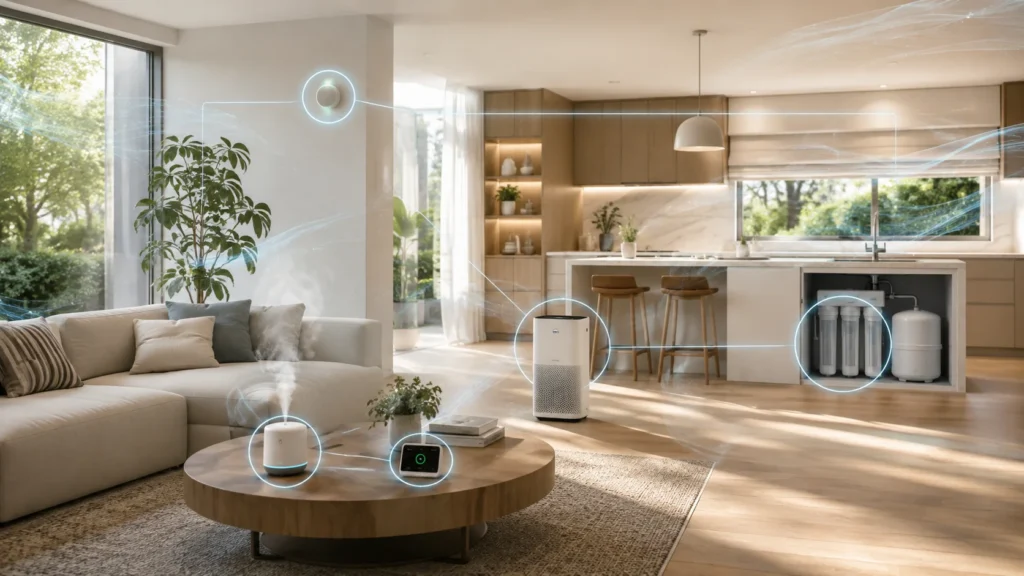
Modern air purifiers come equipped with smart features such as IoT capabilities for remote control, sensor-based adjustments, and integration with home automation systems. Features like real-time air quality monitoring or app controls can offer significant convenience and functionality.
Consider whether these smart features4 are essential for your lifestyle and how they can enhance overall usability and efficiency.
Higher CADR means faster air purification.True
CADR measures the volume of filtered air per minute, affecting speed.
HEPA filters remove odors from the air.False
HEPA filters capture small particles but do not remove odors.
Why Is It Important to Evaluate Supplier-Specific Technologies?
Understanding the unique technologies offered by suppliers can drastically impact your purchasing decision.
Evaluating supplier-specific technologies is crucial because it influences product quality, cost-effectiveness, and innovation. By understanding these unique offerings, you can make informed decisions that align with your needs and business goals.

Understanding Unique Technological Offerings
When comparing air purifiers, it's not just about the upfront cost or standard features like CADR (Clean Air Delivery Rate) and noise level. Supplier-specific technologies can offer unique advantages that set one product apart from others. For example, HisoAir's Decibel Cancellation Technology significantly reduces noise, which could be a deciding factor for customers prioritizing quiet operation. This innovation might justify a higher price point due to its added value.
The Role of Innovation in Cost-Efficiency
Innovation from suppliers often leads to more cost-effective solutions. Technologies like storm motor technology can enhance efficiency, reducing energy consumption and lowering long-term operational costs. By evaluating these innovations, businesses can determine whether the initial investment will lead to savings over time. It’s important to weigh the technological benefits5 against the price to ensure a wise investment.
Building Strong Supplier Relationships
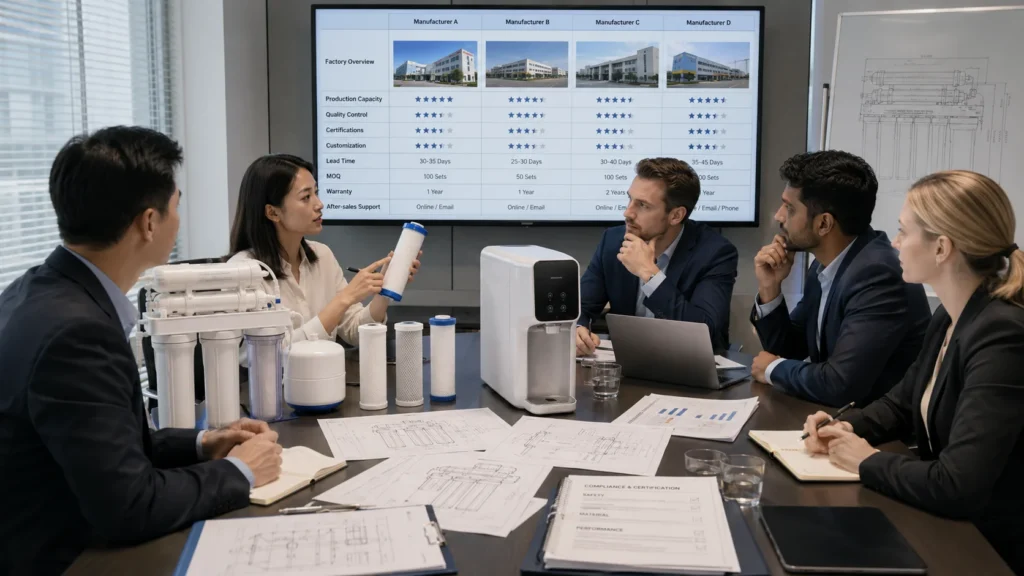
Understanding and leveraging supplier-specific technologies can also foster stronger partnerships. When suppliers see that you value their innovations, it can lead to better pricing negotiations and collaborations, especially in ODM (Original Design Manufacturer) projects. Requesting a Bill of Materials (BOM) from suppliers when handling large volumes allows for a transparent comparison of costs and highlights any unique technological advantages.
| Feature | Supplier A | Supplier B |
|---|---|---|
| CADR | 300 m³/h | 280 m³/h |
| Noise Level | 45 dB | 50 dB |
| Decibel Cancellation | Yes | No |
| Filter Type | HEPA | Carbon |
| Innovative Motor Technology | Yes | No |
Ensuring Competitive Advantage
Lastly, evaluating these technologies ensures your supply chain remains competitive. A supplier with superior technology can provide you with products that offer better performance or unique features, giving you an edge in the market. This competitive advantage is crucial for maintaining customer satisfaction and achieving long-term business success.
By focusing on supplier-specific technologies, you not only enhance your product offerings but also strengthen your market position.
Supplier-specific technologies can lower operational costs.True
Innovations like storm motor technology enhance efficiency, reducing costs.
Evaluating supplier technologies doesn't impact product quality.False
Understanding these technologies influences quality, cost-effectiveness, and innovation.
How Does Total Cost Influence Your Air Purifier Purchase Decision?
When selecting an air purifier, it's crucial to consider the total cost, not just the initial price.
The total cost of an air purifier includes the purchase price, maintenance expenses, and operational costs. Evaluating all these factors ensures you select a model that fits your budget in the long run while meeting your air quality needs.
Understanding Total Cost Components
When evaluating air purifiers, consider three primary cost components:
- Initial Purchase Price: This is the upfront cost you pay to own the air purifier. It varies significantly based on features like CADR (Clean Air Delivery Rate), noise level, and filter type. A higher CADR might mean a higher price, but it also indicates better performance.
- Maintenance Expenses: Regular maintenance is crucial for optimal performance. Consider the cost of replacing filters, which can vary widely based on the purifier's make and model. Some models offer permanent filters that need cleaning instead of replacement, potentially saving money over time.
- Operational Costs: This includes electricity consumption. Energy-efficient models might have a higher initial cost but save money in the long run by reducing your energy bills.
The Role of Supplier-Specific Technologies
Some suppliers offer unique technologies that can impact the total cost. For instance, HisoAir's6 Decibel Cancellation Technology not only reduces noise but may also contribute to lower energy consumption. Similarly, their Storm Motor Technology could enhance airflow efficiency, potentially lowering operational costs.
Importance of Evaluating Cost Over Time
Assessing the total cost involves looking beyond the immediate expenses. A model with a low purchase price but high maintenance costs might be more expensive in the long term compared to a pricier alternative with minimal upkeep needs.
| Cost Component | Example Considerations |
|---|---|
| Initial Purchase Price | Features such as CADR, IoT capabilities, and sensor types |
| Maintenance Expenses | Filter replacement frequency and costs |
| Operational Costs | Energy consumption and efficiency ratings |
Leveraging Total Cost for Better Supplier Negotiation
If you have a significant order volume or are involved in an ODM project, requesting a BOM (Bill of Materials) list from suppliers can be advantageous. This transparency allows for more aggressive and informed price negotiations.
By comprehensively evaluating these factors, you ensure your air purifier choice aligns with both your budget and air quality goals, ultimately leading to a more satisfying purchase experience.
Higher CADR indicates better air purifier performance.True
CADR measures the efficiency of an air purifier in removing pollutants.
Permanent filters always cost more than replaceable ones.False
Permanent filters may save money over time as they require cleaning, not replacement.
What Role Do Reviews and Ratings Play in Your Comparison Process?
In the bustling market of air purifiers, reviews and ratings serve as your guiding light, illuminating the path to a wise purchase decision.
Reviews and ratings provide firsthand user experiences and expert insights, helping you gauge product reliability and performance. They highlight common issues and benefits, ensuring a well-informed decision-making process.

Understanding the Influence of User Feedback
In today's digital age, reviews and ratings have become integral to the purchasing process. They offer genuine insights from people who have already used the product. By considering these, you gain a clearer understanding of an air purifier's real-world performance, potential issues7, and standout features.
Types of Reviews: User vs. Expert
-
User Reviews: These provide authentic feedback from everyday users. They often highlight practical aspects such as ease of use, maintenance challenges, or customer service experiences.
-
Expert Reviews: Often found on tech or consumer websites, these reviews delve deeper into technical specifications, offering comparisons against similar models. They might explore aspects like CADR8 and filter longevity in greater detail.
Evaluating Reviews Critically
Not all reviews are created equal. Some might be biased or incentivized. Therefore, it's crucial to:
- Look for Patterns: If multiple reviews mention poor build quality or noisy operation, these could be legitimate concerns.
- Check the Source: Verify the credibility of the review platform. Trustworthy sources often have a mix of positive and negative feedback.
Ratings: A Quick Overview
Ratings provide a snapshot of customer satisfaction. A product with a high rating generally indicates reliability and efficiency. However, it's essential to:
- Consider the number of ratings. A five-star rating from ten users is less reliable than one from a thousand.
- Look for recent ratings to ensure feedback reflects the current model or version of the air purifier.
Leveraging reputation in Decision-Making
Since you are comparing with different supplier, a tip for you is that you can tell A supplier that you are comparing the price and quality with B supplier, which will give pressure to your supplier, and you can get better price. But for your decision making, you should collect some information about the potential supplier reputation which is essential to lower your risk.
Conclusion
By weighing cost against quality and technology, I ensure a smart purchase that meets my air quality needs.
-
Ensures optimal air purification by matching CADR to your room size.: This article breaks down the three essential steps to identify the appropriate size of an air purifier and how a metric called CADR can help with this. ↩
-
Learn about technologies for quieter air purifier operation.: HiSo Air Purifiers utilize Decibel Cancellation™ Technology, allowing the use of less dense filters. Charged particles adhere more easily, reducing the need ... ↩
-
Helps identify the best filter types for your needs.: What Are the Different Kinds of Air Filters? · HEPA filters · UV light filters · Electrostatic filters · Washable filters · Media filters · Spun glass filters ... ↩
-
Discover how smart features can enhance air purifier usability.: Yet a well-designed purifier can capture virtually all airborne allergens, such as pollen and mold spores, as well as bacteria, viruses, and ... ↩
-
Explore how innovations reduce costs and improve air purifier efficiency.: This innovative approach simultaneously reduces particulate matter from nanoparticles size up to larger sizes, by up to 99%, as well as removes ... ↩
-
Explore how this technology reduces noise and saves energy.: HiSo Air Purifiers utilize Decibel Cancellation™ Technology, allowing the use of less dense filters. Charged particles adhere more easily, reducing the need ... ↩
-
Discover potential pitfalls before purchasing an air purifier.: An improperly maintained air purifier will have dirty or clogged filters, malfunctioning motors, and other problems that affect its overall function. ↩
-
Learn why CADR is crucial for air purifier efficiency.: Choosing an air purifier with a high CADR rating ensures that it is effective in cleaning the air of pollutants, such as dust, pollen, smoke, ... ↩


 English
  Français
  Español
  Italiano
  Deutsch
  Português
  Русский
  العربية
  日本語
日本語  한국어
한국어  Tiếng Việt

