
As the founder of HisoAir, I've spent years immersed in the world of air quality and smart home technology. I've witnessed firsthand the incredible potential of connected devices to transform our living spaces, making them healthier, more comfortable, and more efficient. Yet, I've also observed a persistent challenge: the smart home, for all its promise, has often fallen short of true seamlessness. Users frequently grapple with unreliable connections, a bewildering array of proprietary hubs, and devices that simply refuse to communicate with each other. This fragmentation has been a significant barrier to widespread adoption and a source of considerable frustration for consumers.
But a fundamental shift is underway, one that promises to finally deliver on the smart home's original vision of effortless interoperability and rock-solid reliability. At the heart of this transformation are two complementary technologies: Matter, the application layer standard, and Thread, the low-power mesh networking protocol. For Original Equipment Manufacturers (OEMs) of smart air purifiers, this isn't just another technical update; it's a strategic imperative. Embracing Thread is no longer a speculative R&D endeavor but a critical decision that will define market leadership, enable powerful product differentiation, and future-proof your offerings in an increasingly competitive landscape.
At HisoAir, we believe in foresight and innovation. Our commitment has always been to empower our OEM partners with the most advanced and reliable solutions, ensuring that the products you bring to market are not just functional, but truly exceptional. That's why we've been closely tracking and actively engaging with the development of Thread, recognizing its profound potential to revolutionize how smart air purifiers integrate into the modern home. This isn't just about connectivity; it's about building a foundation for a smarter, more reliable, and ultimately, more valuable smart home experience for your customers.
Understanding Thread: The Backbone of the Reliable Smart Home
To truly grasp the strategic implications of Thread1 for your smart air purifier OEM projects, it’s essential to move beyond a superficial understanding and delve into its core architecture and principles. Thread represents a significant departure from previous wireless protocols, built from the ground up on the robust, open standards of the internet itself.

Beyond Wi-Fi & Bluetooth: The IP-Based Mesh
Thread is a low-power, secure, and reliable wireless mesh networking protocol specifically engineered for the Internet of Things (IoT). It operates on the IEEE 802.15.4 physical (PHY) and media access control (MAC) layers, utilizing the globally standardized 2.4 GHz frequency band. This ensures that a single product SKU can be deployed worldwide, simplifying your global market strategy.
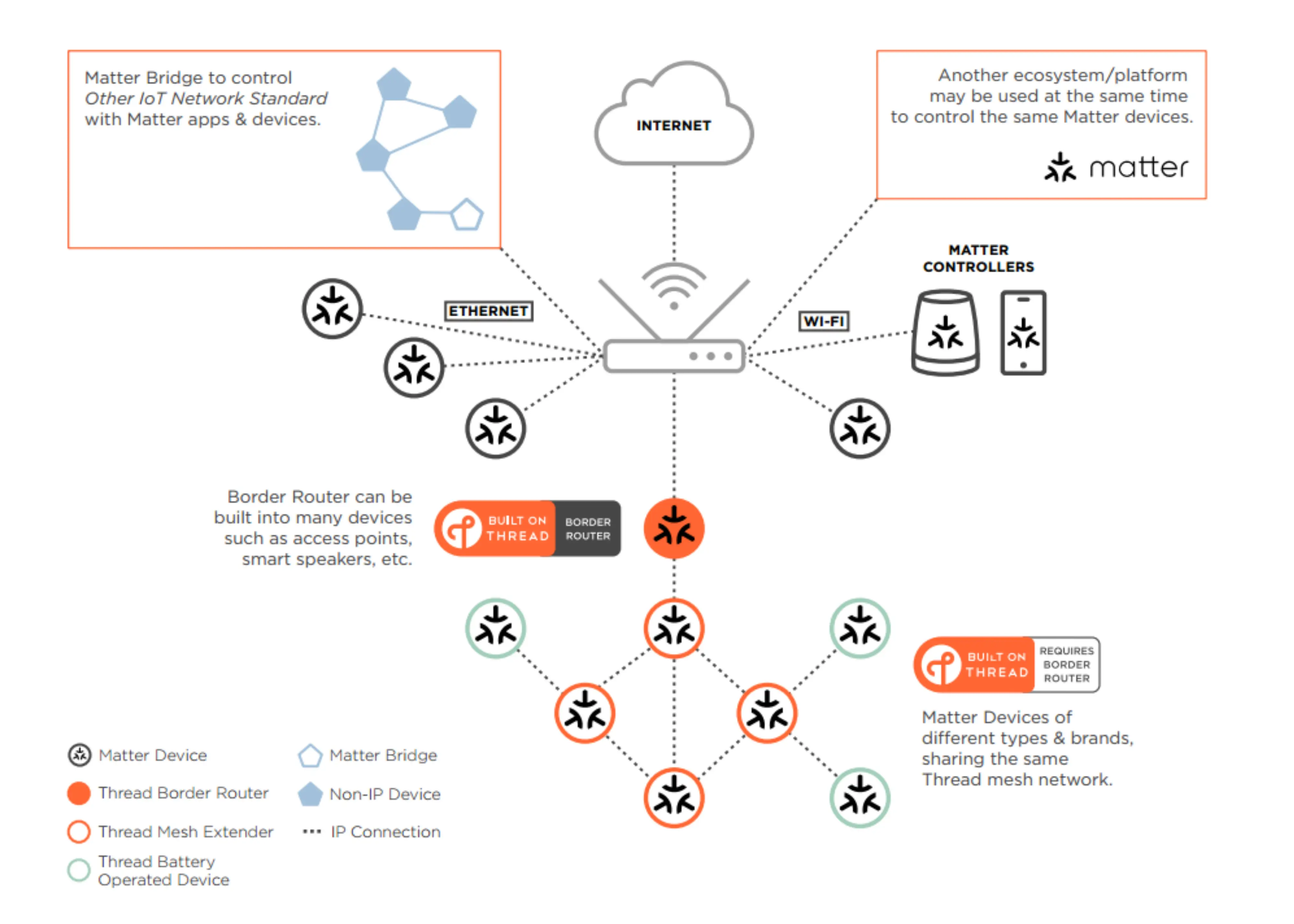
The most critical architectural choice that sets Thread apart is its native support for Internet Protocol version 6 (IPv6). This is not a minor technical detail; it is the protocol’s defining feature. Unlike older IoT protocols such as Zigbee or Z-Wave, which rely on their own non-IP networking schemes, every device on a Thread network possesses its own unique IPv6 address. This native IP capability means Thread devices can communicate directly with other IP-based networks—like a home’s Wi-Fi or Ethernet LAN—and the broader internet without the need for complex, proprietary “translator” gateways or hubs. This architecture dramatically simplifies the smart home network, reduces the number of required hardware devices, and eliminates potential points of failure, leading to a more robust and streamlined user experience.
The second pillar of Thread’s architecture is its mesh topology. In a Thread network, devices (or “nodes”) can communicate directly with one another in a peer-to-peer fashion. Data packets can be relayed from one node to the next to reach their destination. This creates a resilient, “self-healing” network; if one device or communication path fails, the network automatically and dynamically re-routes the data through an alternative path. A profound consequence of this design is that the network’s strength, coverage, and reliability actually increase as more devices are added. Each new mains-powered device can act as a repeater, strengthening the mesh and extending its reach to the farthest corners of a home. This stands in stark contrast to traditional Wi-Fi networks, where adding more devices can lead to congestion and degraded performance.
Device Roles & The Air Purifier’s Advantage
A Thread network is comprised of devices that can assume different roles based on their capabilities and power source. Understanding these roles is crucial for an OEM to determine how their product will function within the ecosystem:
-
Full Thread Device (FTD): An FTD has the complete Thread software stack and can perform any role in the network. These are typically mains-powered devices, such as smart plugs, light bulbs, and, critically, air purifiers. Because they have a constant power source, their radios can remain “always on,” allowing them to act as Routers that forward data packets for other devices in the network.
-
Minimal Thread Device (MTD): An MTD has a reduced software stack and is designed for power-constrained applications. These are often battery-powered devices like temperature sensors or door/window sensors. MTDs function as End Devices; they can send and receive messages but do not route traffic for others. They can enter a low-power “sleepy” state, waking only periodically to transmit data, which allows them to operate for years on a single small battery.
-
Thread Border Router (TBR): The TBR is not a distinct device type but rather a critical function that bridges the low-power Thread mesh network to other IP-based networks like Wi-Fi or Ethernet. It is the essential gateway that allows a user to control their Thread devices from a smartphone (which is on the Wi-Fi network) and enables devices to connect to cloud services. This function can be built into any FTD, and has already been integrated by major ecosystem players into their hub devices, such as Apple’s HomePod and Apple TV 4K, Google’s Nest Hub and Nest Wifi Pro, and Amazon’s Echo speakers. This existing infrastructure of TBRs lowers the barrier to entry for consumers, as they may already own the necessary hardware to support a new Thread device.
-
Thread Leader: Within the group of active Routers, one device is dynamically and automatically elected to be the Leader. The Leader is responsible for managing the set of routers and making certain network-wide decisions. If the current Leader fails or is removed from the network, the other Routers automatically elect a new one, providing another layer of resilience and ensuring there is no single point of failure [1].
For an air purifier OEM, the key takeaway is profound: your product, being mains-powered, is a perfect candidate to be a Full Thread Device. This means it can and should be designed to act as a Thread Router, contributing to the overall health and stability of the user’s smart home network. This elevates the product from a simple connected appliance to a foundational piece of home infrastructure—a powerful value proposition that HisoAir is uniquely positioned to help you realize.
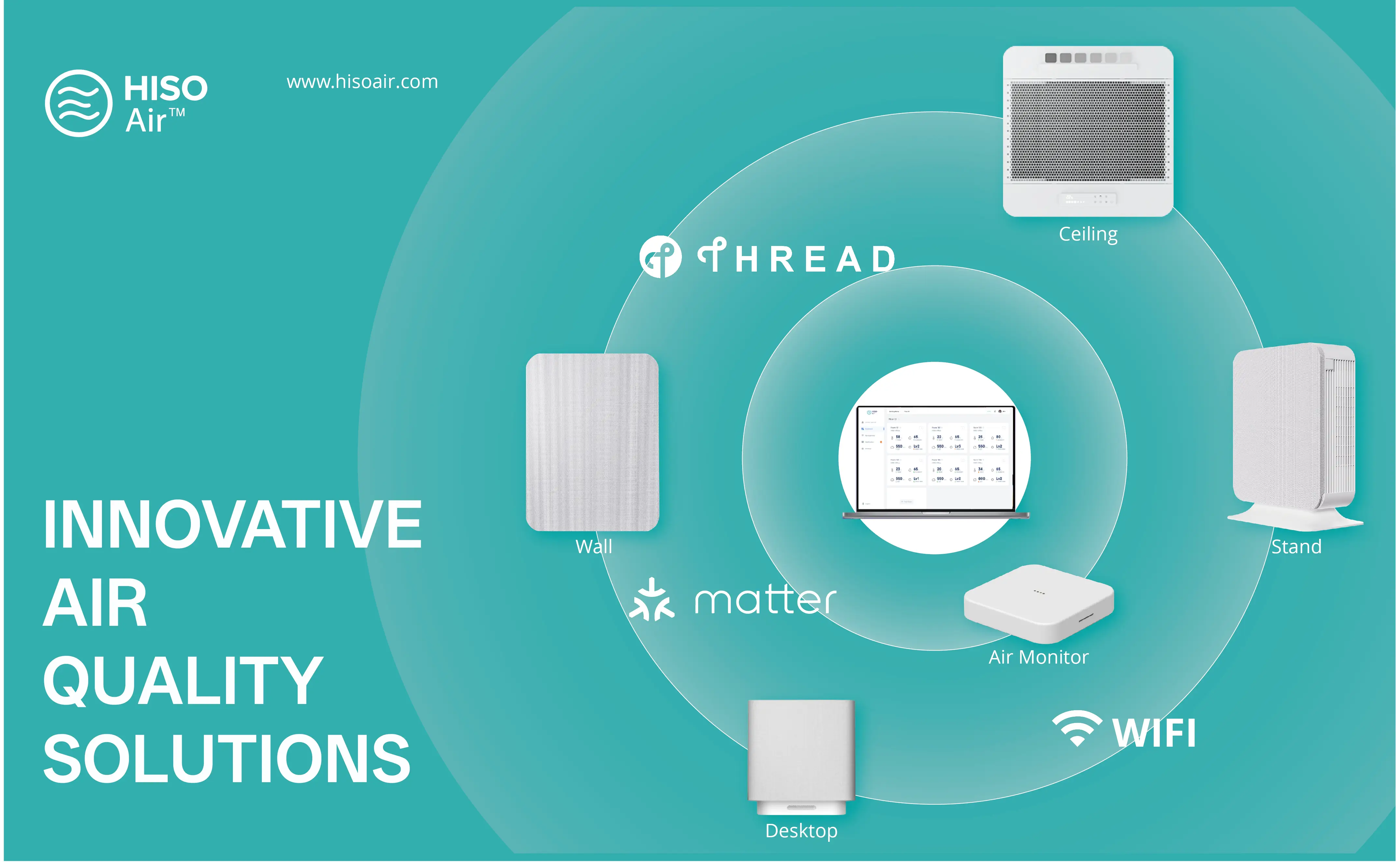
The Strategic Imperative: Why Thread Outperforms Alternatives for OEMs
The decision to adopt Thread cannot be made in a vacuum. It requires a clear-eyed assessment of its strengths and weaknesses relative to the incumbent wireless protocols that currently dominate the smart home market. For an OEM, this comparison must extend beyond technical specifications to include strategic implications for product positioning, user experience, and long-term viability.
Thread vs. Wi-Fi
Wi-Fi2 is ubiquitous and offers very high bandwidth, making it the default choice for devices that need to stream large amounts of data, such as security cameras or smart speakers. However, for a low-data device like an air purifier, this high bandwidth is unnecessary overhead. Wi-Fi’s primary drawbacks for IoT are its relatively high power consumption and its reliance on a “star” network topology, where every device connects directly to a central router. This creates a single point of failure—if the router goes down, the entire network of smart devices goes offline. Furthermore, as households add dozens of smart plugs, bulbs, and switches, these devices can begin to congest the Wi-Fi network, potentially degrading performance for the high-bandwidth applications that truly need it, like video conferencing and media streaming2.
Thread, in contrast, is designed for low-bandwidth control signals. By operating on its own dedicated mesh network, it offloads IoT traffic from the primary Wi-Fi network, effectively decongesting it and improving overall home network health. Its self-healing mesh topology is inherently more reliable for critical control tasks than Wi-Fi’s star topology. Your product, when Thread-enabled, doesn't just connect; it improves the home network, rather than burdening it.
Thread vs. Zigbee/Z-Wave
Zigbee and Z-Wave are the most direct architectural predecessors to Thread. They are also low-power, mesh-networking protocols. However, they possess a critical, and increasingly fatal, flaw: they are not natively IP-based. This means they speak a different language from the internet and home Wi-Fi networks. To bridge this gap, they require a protocol-specific, translating hub or gateway. This hub adds cost for the consumer, complexity to the setup, and introduces another potential point of failure [1].
Thread effectively takes the best concept from Zigbee—the low-power mesh—and modernizes it by building it directly on IPv6. This native IP support allows for seamless integration with modern smart home ecosystems like Apple Home and Google Home without the need for proprietary gateways. For an OEM, choosing Zigbee today is a bet on a legacy architecture, risking being locked out of the IP-native future that the entire industry is coalescing around.
Thread vs. Bluetooth Low Energy (BLE)
BLE’s primary advantages are its extremely low power consumption and its universal presence in smartphones, making it an excellent choice for simple, direct device-to-phone connections and for the initial setup (commissioning) of other smart devices. However, for creating a robust, whole-home control network, BLE has limitations. Its range is shorter, its latency can be higher and more variable, and its mesh networking implementation is generally considered less mature and less reliable for always-on IoT applications compared to Thread.
Thread offers a faster, more reliable, and longer-range network experience due to its purpose-built mesh architecture, making it far better suited for a comprehensive smart home system where devices in different rooms must communicate reliably.
The Ultimate OEM Differentiator: The “Smart Home Network Enhancer”
The choice of protocol is profoundly influenced by the nature of the device itself. For a mains-powered, always-on product like an air purifier, Thread offers a unique strategic opportunity that goes far beyond simple connectivity. Because it does not have the power constraints of a battery-operated sensor, it is the ideal candidate to function as a Full Thread Device (FTD) and serve as a stable, high-performance router within the mesh network.
This capability transforms the product’s value proposition. A competing Wi-Fi air purifier is purely a network client; it consumes a slot on the user’s Wi-Fi router and adds to potential network congestion. A Thread-based air purifier, by acting as a router, is a network contributor. It actively strengthens the mesh, extends its range, and improves the reliability of every other Thread device in the home—even those from different manufacturers. This allows an OEM to market their product not just as an appliance that cleans the air, but as a “Smart Home Network Enhancer”—a device that makes the user’s entire ecosystem of connected devices faster and more stable. This is a powerful and sophisticated selling point that no competitor using an alternative protocol can legitimately claim. User reviews of the first Thread air purifier confirm this effect, with customers noting that it “bolster[s] my Thread network”.
Matter + Thread: The Universal Language of the Smart Home
While Thread provides the robust, reliable network foundation, Matter3 is the universal language that allows smart devices to communicate seamlessly, regardless of manufacturer or ecosystem. Together, Matter3 and Thread form the ultimate power couple, delivering on the long-awaited promise of true smart home interoperability.
The Power Couple: Interoperability Redefined
Think of Thread as the super-reliable road that carries messages within your smart home, and Matter as the universal language spoken by all the devices traveling on that road. Before Matter, each smart home ecosystem (Apple Home, Google Home, Amazon Alexa, Samsung SmartThings) often spoke its own dialect, requiring complex integrations or separate hubs. This led to a fragmented user experience and increased development burden for OEMs.
With Matter, a single “Matter-over-Thread” product can be built and certified to work seamlessly across all major smart home platforms. This means your smart air purifier, once integrated with Matter and Thread, will effortlessly connect and communicate with Apple HomeKit, Google Home, Amazon Alexa, and Samsung SmartThings. This dramatically simplifies the development process for OEMs, as you no longer need to develop and maintain separate versions or integrations for each ecosystem. It also significantly expands your potential market reach, as your product becomes accessible to a much wider consumer base.
Enhanced User Experience: Simplicity and Reliability
The synergy between Matter and Thread translates directly into a vastly enhanced user experience. Setup becomes remarkably simple, often involving just a quick scan of a QR code. Control is instantaneous and reliable, thanks to Thread’s low latency and mesh architecture. And because of Matter’s universal language, users can mix and match devices from different brands with confidence, knowing they will work together harmoniously. This eliminates the frustration of incompatible devices and proprietary ecosystems, fostering greater consumer trust and driving broader adoption of smart home technology. For your OEM projects, this means higher customer satisfaction, fewer support calls, and a stronger brand reputation built on reliability and ease of use.
Integrating a new protocol like Thread might seem daunting, but the ecosystem has matured significantly, making the journey increasingly manageable. At HisoAir, we are committed to guiding our OEM partners through this process, transforming potential challenges into strategic advantages.
De-risking Development: Leveraging a Mature Ecosystem
You don't have to start from scratch. The Thread ecosystem is supported by a robust network of silicon vendors like Nordic Semiconductor, Silicon Labs, and NXP, who offer pre-certified modules and development kits. These resources, combined with open-source software stacks like OpenThread, significantly de-risk the development process. By utilizing these established components, OEMs can accelerate their time to market, reduce R&D costs, and build upon proven, reliable technology. This allows your engineering teams to focus on what they do best: innovating on the core air purification technology and user experience, rather than reinventing the connectivity wheel.
The Certification Process: Streamlined with Expertise
Adopting Thread and Matter involves a dual certification gauntlet: one for Thread and one for Matter. While this might sound complex, using pre-certified components and partnering with experienced entities can streamline this process considerably. HisoAir, with its deep understanding of both air purification technology and smart home integration, is uniquely positioned to offer guidance and support through these certification hurdles. We can help you navigate the requirements, ensuring your products meet the necessary standards for interoperability and security, and ultimately, gain market acceptance swiftly.

HisoAir’s Role as Your Partner: Building Future-Proof Products
At HisoAir, we see ourselves as more than just a supplier; we are your strategic partner in innovation. Our expertise extends beyond manufacturing high-quality air purification components. We possess a profound understanding of the smart home landscape, including the intricacies of Thread and Matter integration. We are here to:
- Share Expertise: Provide insights and technical know-how to help your team understand and implement Thread effectively.
- Offer Support: Guide you through the technical challenges of integration and the complexities of the certification process.
- Ensure Strategic Advantage: Work with you to not just build products, but to build future-proof products that stand out in a crowded market.
Phased Implementation Strategy
We recommend a phased approach to Thread implementation to maximize efficiency and minimize disruption:
- Pilot Project: Start with a flagship air purifier model. Utilize a pre-certified module to build internal expertise, validate the technology, and establish a first-mover advantage in the Thread-enabled smart air purifier market.
- Development & Optimization: Focus on refining the user experience, ensuring full feature parity across different smart home ecosystems, and optimizing performance within the Thread network.
- Market Launch & Expansion: Once your pilot product is successful, leverage its unique benefits in your marketing. Emphasize the reliability, enhanced network contribution, and seamless interoperability that Thread brings. Then, strategically expand Thread integration across your product portfolio.
Conclusion: Beyond Connectivity – Building the Future of Smart Air Purification
The smart home is no longer a futuristic concept; it is a present reality, and its evolution is accelerating. The shift towards open, IP-based standards like Thread and Matter is not merely a trend; it is the fundamental architectural change that will unlock the true potential of connected living. For smart air purifier OEMs, this means that the time to adapt is now. Relying on older, fragmented protocols risks market marginalization and a failure to meet the growing consumer demand for reliable, interoperable smart devices.
Adopting Thread transforms your air purifier from a simple appliance into a core, value-adding piece of the modern smart home infrastructure. It becomes a network contributor, enhancing the stability and performance of the entire connected ecosystem. This is a powerful differentiator that resonates deeply with consumers who are tired of connectivity headaches and yearn for a truly seamless smart home experience.
At HisoAir, our vision extends beyond just clean air; it encompasses a future where every home is a healthier, smarter, and more harmonious environment. We are committed to leading this transformation, and more importantly, to empowering our OEM partners to be at the forefront of this change. By embracing Thread, you are not just upgrading your product’s connectivity; you are investing in its future, securing your position as a leader in the next generation of smart home technology.
References:
-
Thread Group. What is Thread? Retrieved from https://www.threadgroup.org/What-is-Thread ↩
-
HisoAir. What Wi-Fi Protocol Means for Smart Air Purifier OEM Projects. Retrieved from https://hisoair.com/what-wi-fi-protocol-means-for-smart-air-purifier-oem-projects/ ↩ ↩
-
HisoAir. What Matter Protocol Means for Smart Air Purifier OEM Projects. Retrieved from https://hisoair.com/what-matter-protocol-means-for-smart-air-purifier-oem-projects/ ↩ ↩




 English
  Français
  Español
  Italiano
  Deutsch
  Português
  Русский
  العربية
  日本語
日本語  한국어
한국어  Tiếng Việt

