يفتح في علامة تبويب جديدة
حلول مبتكرة لجودة الهواء
شعار هيسو-أير-لوجو
استفسر الآن

Where Are ASAKUKI Diffusers Manufactured?

Related Products

For any direct-to-consumer (D2C) brand navigating the complexities of the global marketplace, the story of ASAKUKI is a masterclass in strategy. On the surface, it’s a brand of essential oil diffusers that has captured a significant market share through elegant design and a powerful wellness narrative. Consumers often ask a simple question: "Where are ASAKUKI diffusers made?" The simple answer is that they are manufactured in Chongqing, China.

However, for B2B and D2C entrepreneurs, that simple answer is merely the entry point to a much more compelling story. The true genius of ASAKUKI lies not in a single location, but in a sophisticated global-local business model that leverages the unique strengths of three different countries. It’s a playbook that meticulously separates brand identity from corporate structure and manufacturing origin to build a highly successful and resilient e-commerce enterprise.

This deep dive will deconstruct the three core pillars of the ASAKUKI model: a Japanese-inspired brand identity that builds trust, a US-based corporate framework that provides market access, and a Chinese manufacturing base that ensures scalability and cost-efficiency.

Pillar 1: The Power of Perception: Crafting a Japanese Brand Identity

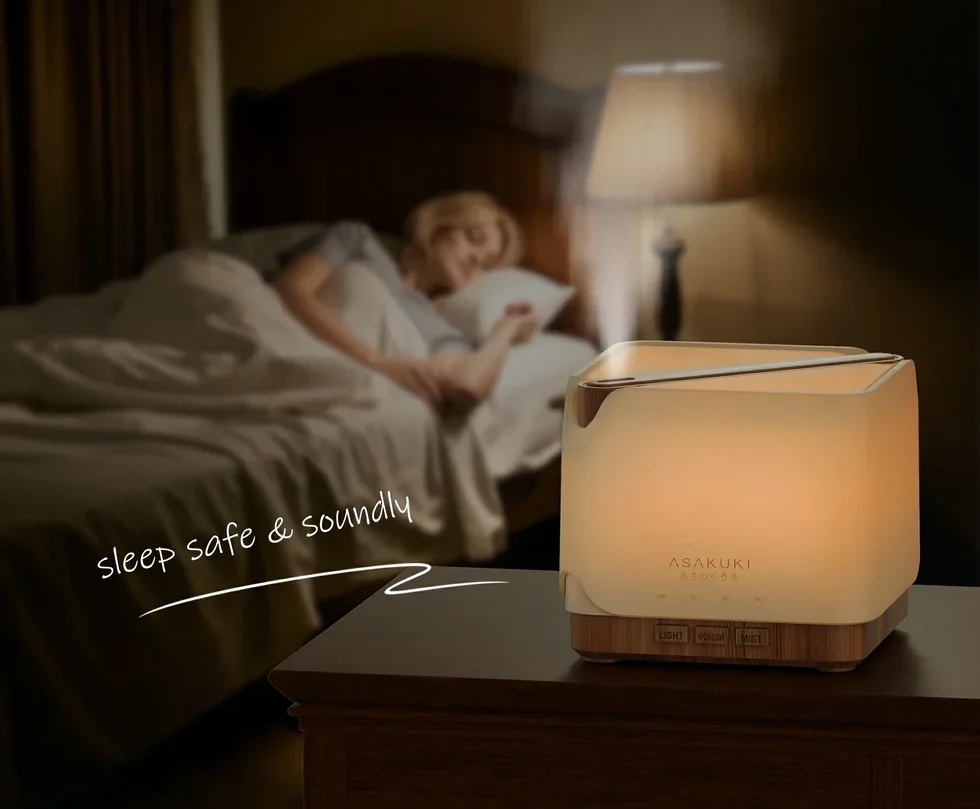
The first, and arguably most crucial, pillar of ASAKUKI's success is its carefully cultivated brand persona. The brand doesn't just sell a product; it sells a feeling—one of serenity, nature, and minimalist elegance, all deeply rooted in a Japanese aesthetic.
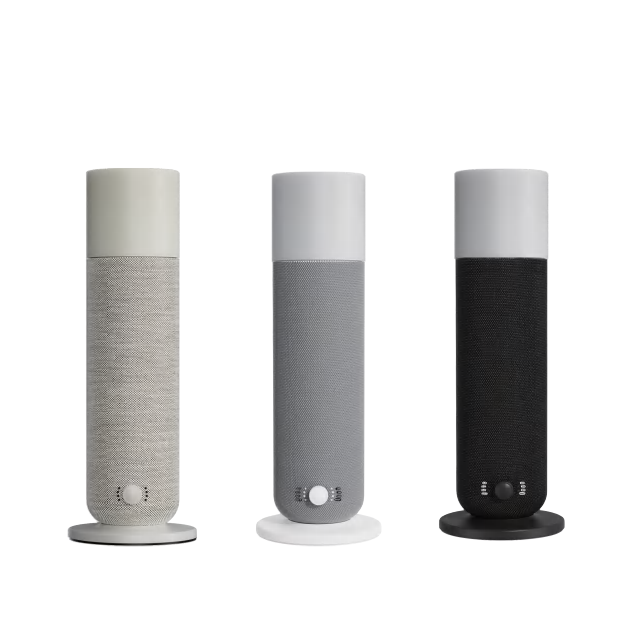
asakuki diffusers 2

The Meaning Behind the Name

The foundation of this identity is the name itself. "ASAKUKI" is derived from the Japanese phrase "朝の空気" (Asa no kūki), which translates to "air in the morning". This isn't just a clever marketing angle; it's a legally protected asset. The company’s trademark filing includes a transliteration statement confirming this meaning, cementing the association between the brand and concepts of freshness, purity, and tranquility.

This single choice of name immediately taps into the powerful "country of origin effect." Western consumers often associate Japanese products with high quality, reliability, and meticulous craftsmanship. By adopting a Japanese name and narrative, ASAKUKI positions its products in this premium category, differentiating them from a crowded market of generic home electronics. A user manual for one of its diffusers even states, "ASAKUKI originated from Japan," reinforcing this narrative directly to the consumer post-purchase.

A Philosophy of Serenity

Beyond the name, ASAKUKI has built an entire brand philosophy around its Japanese persona. The company’s mission is "Returning to Nature, Embracing Comfort," a slogan that resonates with global wellness trends and the Western perception of Eastern philosophies. Marketing materials are filled with phrases like "harmonizing nature with aromatic essences" to create a "naturally comforting experience".

This narrative is consistently applied across all touchpoints, from its official website to its store description on the Asian retail platform Pinkoi, which notes the brand name comes from the Japanese pronunciation and its products "relate to healthy family life". This consistent messaging allows ASAKUKI to position itself not as a mere appliance manufacturer, but as a purveyor of a lifestyle—one that is refined, natural, and focused on well-being. For D2C brands, this is a key lesson: a strong, emotionally resonant brand story can be your most valuable asset, creating a moat that product features alone cannot build.

Pillar 2: The Onshore Engine: A US Corporate and Logistics Framework

While the brand whispers of Japanese tea gardens, its corporate and logistical engine is firmly planted in the United States. This second pillar provides the legal and operational structure necessary to access and serve the lucrative North American market.
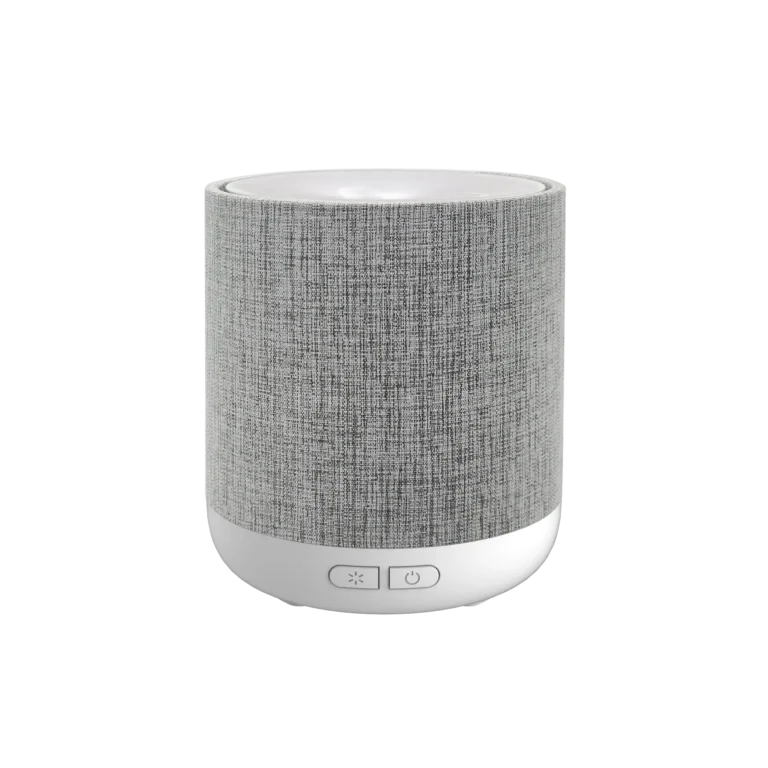
asakuki diffusers 4

Solving the Headquarters Puzzle

Investigating ASAKUKI's corporate identity reveals some interesting discrepancies that are common among global e-commerce brands. The company's official website lists its address as "2988 Bandel CT NW, Rochester, WI, United States, Wisconsin". However, independent corporate data platforms like Pitchbook place the headquarters in Rochester, Minnesota.

A quick geographical check confirms that Bandel Court NW is located in Rochester, Minnesota, not Wisconsin. The "WI" on the company's own site is a typo. This small error is revealing; it suggests the address likely functions as a registered agent's office or an administrative point of contact rather than a large, operational headquarters. This is characteristic of an "asset-light" business model, where the US entity focuses on legal, marketing, and financial operations while minimizing physical overhead.

Another discrepancy lies in the founding date. The brand's marketing narrative claims a 2010 founding, lending it an air of longevity. However, corporate databases consistently show the US entity was incorporated in 2016. This six-year gap highlights the difference between the brand's story and its legal reality. The 2010 date may refer to the brand's conception or early operations elsewhere, while 2016 marks the formal establishment of the US corporation to target the American market.

The Logistical Bridge to the American Consumer

The US pillar is not just about legal incorporation; it's about creating a physical bridge from the factory to the customer. ASAKUKI's shipping policy page lists a "Delivery Point" at 705 Boulder Drive, Breinigsvillel, PA, 18031.

This address is not a corporate office. It's a fulfillment center in the Lehigh Valley, a major logistics hub for the entire US Northeast. This is where bulk shipments of diffusers, imported from China, are received, warehoused, and then shipped to individual customers who order from platforms like Shopify, Amazon, and Walmart. This third-party logistics (3PL) partnership is the final, critical link in the supply chain, enabling efficient D2C order fulfillment without the brand needing to own its own warehouses.

Pillar 3: The Heart of Production: Tracing Manufacturing to China

The third pillar is the manufacturing base, which, stripped of all branding, is located in China. This is where the physical product is born, leveraging the country's unparalleled manufacturing ecosystem.
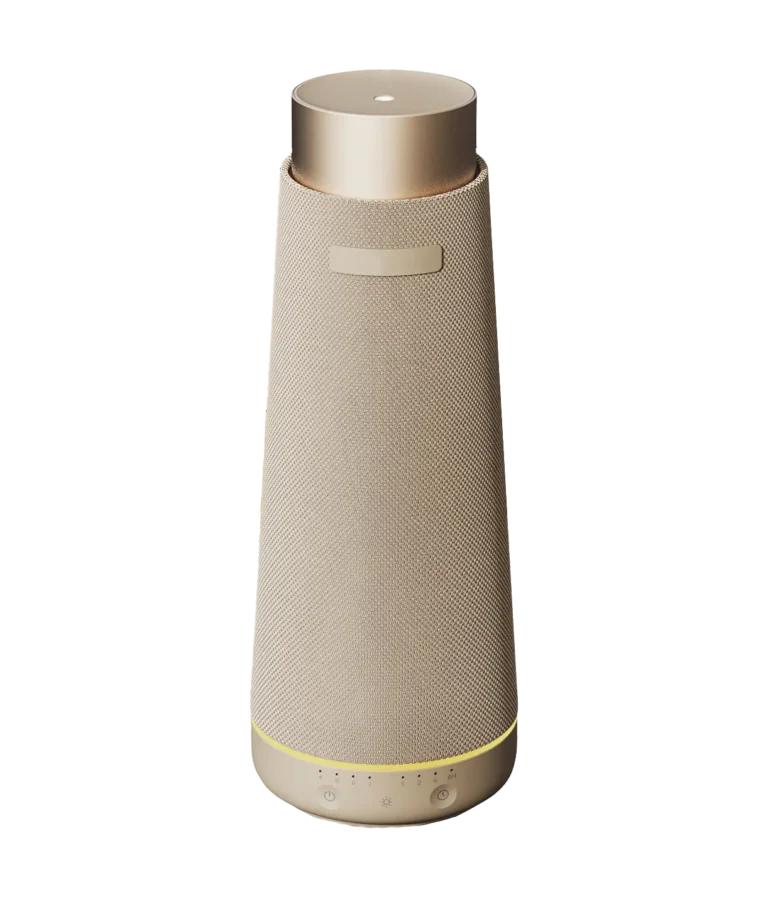
asakuki diffusers

The Definitive Evidence: The Manufacturer of Record

The most conclusive evidence comes directly from ASAKUKI's own product documentation. The user manual for the Essential Oil Diffuser (Model 100-DF001) explicitly names the manufacturer and its location:

Manufacture: Chongqing Chuang Hong Dian Zi Shang Wu You Xian Gongsi
Address: 1 zhuang 11-3, jin kai da dao 1228 hao, bei bu xin qu, Chongqing, China

This is an unambiguous declaration. It confirms that the ASAKUKI brand contracts a separate Chinese entity for its production. This is a classic private-label or contract manufacturing arrangement, allowing the brand to focus on marketing and design while outsourcing the capital-intensive work of production.

Corroboration Across E-Commerce Channels

This primary evidence is independently supported by data from various e-commerce sites. An eBay listing for an ASAKUKI diffuser clearly states the "Country/Region of Manufacture" is China. Likewise, a product listing on the international retail site Ubuy also identifies the country of manufacture as China. The consistency across these independent retail channels solidifies the Chinese origin of the products.

It is worth noting that a simple search of public import databases like Panjiva may not show a direct link between the Chinese manufacturer and the ASAKUKI brand. Modern importers often use strategies to obscure their supply chains from competitors, such as using intermediary trading companies or different legal entities for importation. The absence of a clean bill of lading does not contradict the other evidence; it simply illustrates the sophisticated, and often opaque, nature of global trade.
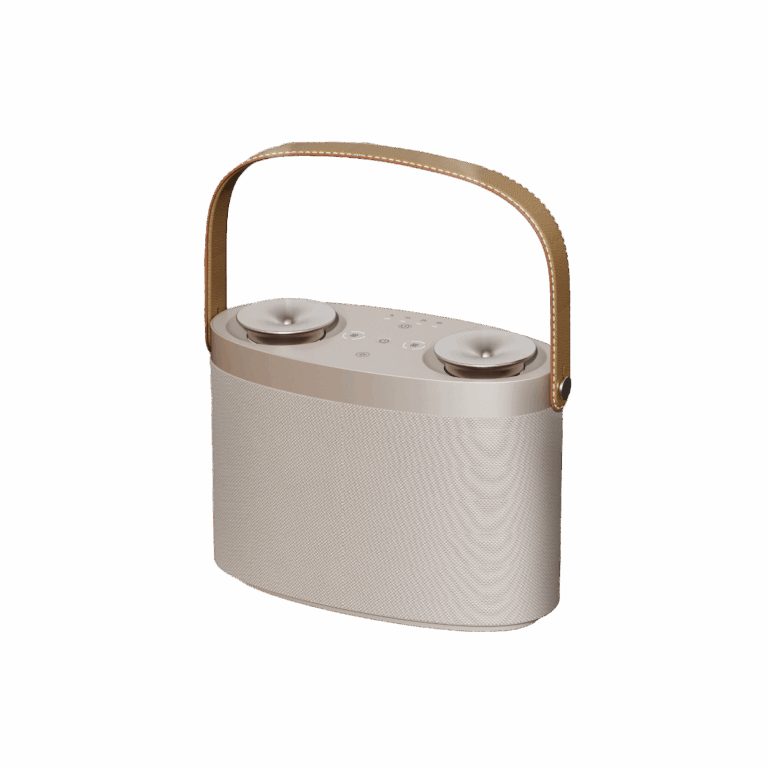
asakuki diffusers 5

The Synthesis: The ASAKUKI Global-Local D2C Playbook

The ASAKUKI model is a powerful case study in modern e-commerce strategy. By integrating these three pillars, the company has created a highly efficient and profitable operation that is greater than the sum of its parts.

  • Chinese Manufacturing: Provides access to a scalable, cost-effective, and technically proficient production base without the need for massive capital investment in factories.
  • US Corporate & Logistics: Establishes the legal framework to operate in a major consumer market, manages marketing and sales channels, and creates an efficient D2C fulfillment network through 3PL partners.
  • Japanese Brand Identity: Creates a powerful marketing narrative that builds consumer trust, elevates the product into a premium category, and differentiates it from competitors through cultural capital and the positive associations of the "country of origin effect".

This global-local strategy is the playbook for thousands of successful D2C brands. It demonstrates a keen understanding of how to allocate resources globally—sourcing products from one region, managing sales from another, and drawing brand inspiration from a third. For D2C entrepreneurs looking to scale, the lesson from ASAKUKI is clear: success in today's market is not just about what you sell, but about the global story you build and the international supply chain you architect to support it.

شارك:
السيد لي مؤسس شركة هيسواير
Alwen Lee, an air purification expert with over 10 years of experience, is a devoted father of two and a passionate traveler, having explored more than 30 countries. With a love for public speaking and swimming, he has dedicated his life to the indoor air quality industry. His mission is to ensure that people around the world enjoy the freedom to breathe clean air and lead happy, healthy lives.

أرسل لنا رسالة

المزيد للقراءة

levoit diffusers

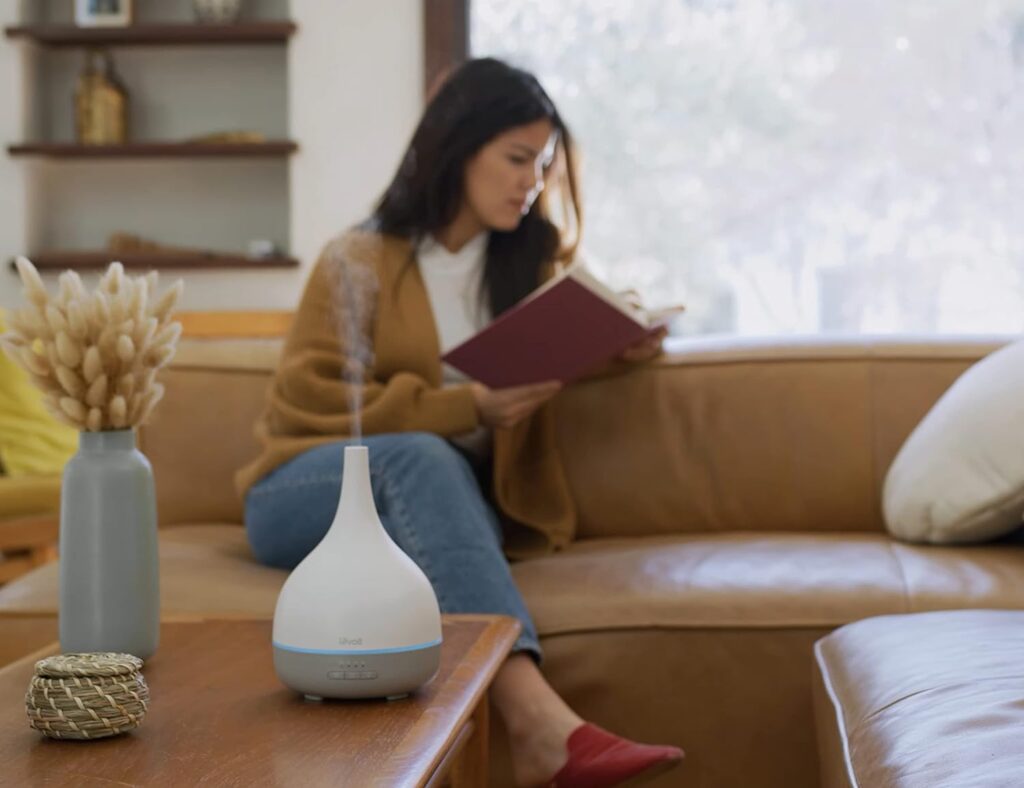
Where Are Levoit Diffusers Manufactured?

Levoit has emerged as a prominent brand, widely recognized for its commitment to enhancing home environments. From its leading-edge air purifiers to its popular humidifiers ...
Diffuser
saje diffusers 5

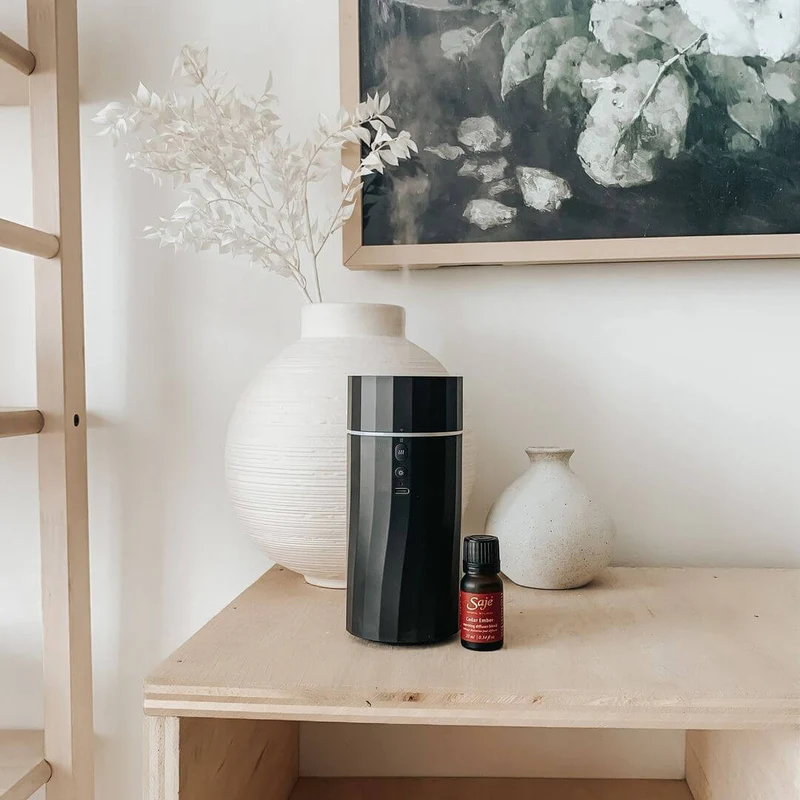
Where Are Saje Diffusers Manufactured?

For any D2C or B2B brand leader, Saje Natural Wellness is a case study in masterful brand building. Since its inception in 1992, the Vancouver-based ...
Diffuser
anjou diffusers 4

Where Are Anjou Diffusers Manufactured?

At first glance, the Anjou brand seems to embody the quintessential modern wellness company. Its marketing speaks of being "Inspired by Nature" and "perfected by ...
Diffuser
innogear diffusers 7

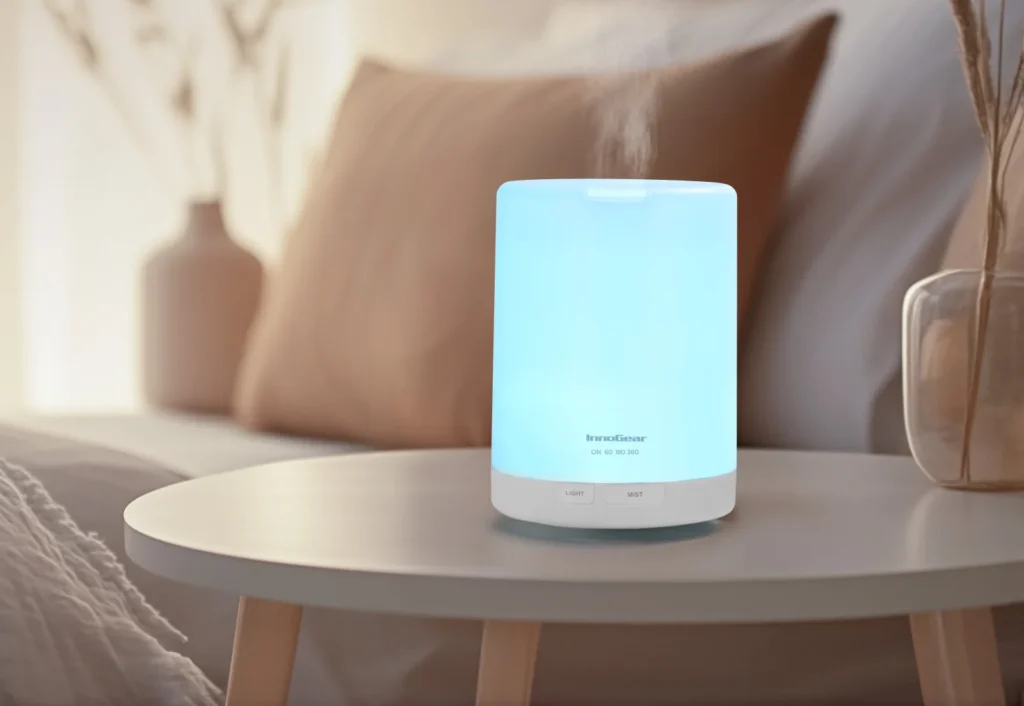
Where Are InnoGear Diffusers Manufactured?

If you’ve browsed for home wellness products on Amazon or Walmart, you’ve almost certainly encountered the InnoGear brand. Known for its affordable, reliable, and feature-rich ...
Diffuser
urpower diffusers 5

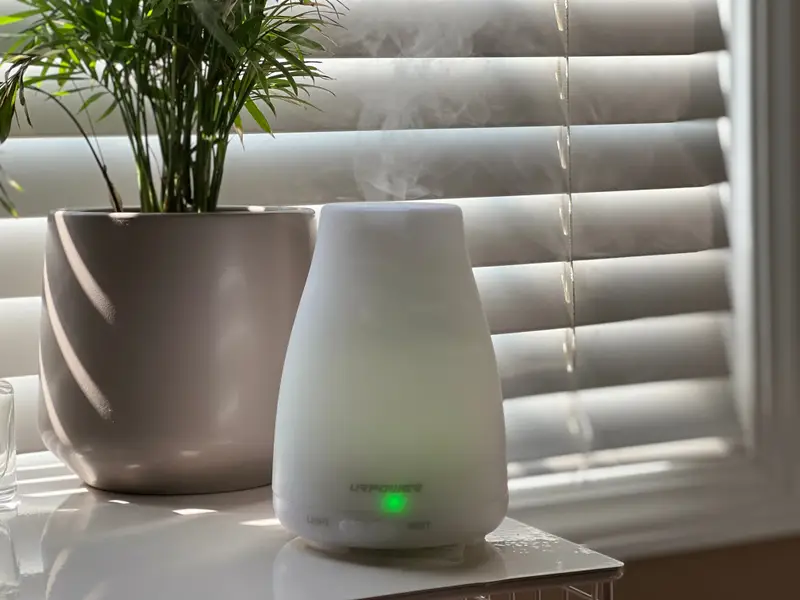
Where Are URPOWER Diffusers Manufactured?

If you’ve browsed for home wellness products on Amazon or Walmart in the last few years, you’ve almost certainly encountered the URPOWER brand. Their essential ...
Diffuser
vitruvi diffusers 6

Where Are Vitruvi Diffusers Manufactured?

In the world of direct-to-consumer (D2C) wellness, few brands have captured the intersection of design, quality, and clean living as effectively as Vitruvi. Their iconic ...
Diffuser
Contaminant Engineering•3 min read

PFAS Water Filtration Technologies Explained: Carbon, Resin & RO

Key Takeaway:

PFAS reduction depends on the specific compounds present, treatment media, contact time, water chemistry, and system design. Activated carbon, ion exchange, and Reverse Osmosis address PFAS through different mechanisms.

PFAS are a large family of persistent fluorinated compounds that can occur in drinking-water supplies. Their treatment behavior varies significantly by molecular structure, chain length, functional group, concentration, and the chemistry of the source water.

Granular Activated Carbon (GAC) removes PFAS primarily through adsorption. It is generally more effective for many longer-chain PFAS, while shorter-chain compounds tend to break through more quickly. Carbon performance depends on media properties, Empty Bed Contact Time (EBCT), competing organic matter, loading, and replacement frequency.

Ion-exchange resins use charged functional sites to capture many PFAS compounds. Properly selected anion-exchange media can provide high capacity and may perform better than conventional activated carbon for some shorter-chain PFAS, although performance still depends on water chemistry and competing ions.

Reverse Osmosis (RO) uses membrane separation rather than adsorption. Properly designed RO systems can provide broad reduction across many PFAS compounds as well as dissolved salts and other contaminants. Unlike carbon or resin, however, RO also produces a concentrate stream that must be managed.

No single technology should be selected from a PFAS label alone. System design should consider which PFAS compounds are present, their concentrations, required reduction targets, flow rate, media life, and the applicable third-party certification or validation requirements.

HisoAir Water Technical Series
Product Discovery•3 min read

How to Choose an Under-Sink Water Purifier for Modern Kitchens

Key Takeaway:

Match the treatment technology to your water quality first, then evaluate cabinet space, faucet configuration, flow rate, drain and power requirements, and filter replacement needs.

Choosing an under-sink water purifier starts with water chemistry. Carbon filtration is well suited to chlorine, taste, odor, and many organic contaminants, while Reverse Osmosis is more appropriate when dissolved salts, fluoride, nitrates, or broader dissolved contaminants need to be reduced.

For compact kitchens, tankless RO systems eliminate the conventional storage tank and can significantly reduce the space required under the sink. However, membrane capacity stated in GPD does not directly equal faucet flow. When comparing systems, check the actual dispensing flow rate, inlet-pressure requirement, recovery ratio, and whether a booster pump is required.

Installation architecture also matters. Many RO systems require a drain connection, electrical power, and either a dedicated drinking-water faucet or a compatible multi-function faucet. High-flow carbon systems can often connect directly to the existing cold-water line with a simpler installation, but pressure drop and available faucet flow should still be verified.

RO also removes much of the naturally occurring dissolved mineral content. Where taste or mineral balance is a priority, a post-RO remineralization stage can be added. Filter life should be evaluated by both rated capacity and local water quality rather than replacement time alone.

The right system is therefore not simply the smallest or highest-GPD model. It is the configuration that matches the target contaminants, available cabinet space, desired faucet setup, peak dispensing demand, and maintenance expectations.

HisoAir Water Technical Series
Water Quality•2 min read

What Does TDS Mean in Drinking Water? Measurement vs Contaminant Reality

Key Takeaway:

A TDS meter estimates the overall concentration of dissolved ionic substances from electrical conductivity. It cannot identify specific contaminants or determine whether water is chemically safe.

Total Dissolved Solids (TDS) refers to the combined concentration of dissolved substances in water. Most handheld TDS meters do not measure TDS directly. Instead, they measure electrical conductivity (EC) and convert that reading into an estimated parts-per-million (ppm) value.

This means a TDS reading can indicate how much dissolved ionic material is present, but not what that material actually is. Calcium, magnesium, sodium, nitrates, and other dissolved ions can all contribute to conductivity, yet a simple TDS meter cannot distinguish between them.

TDS meters are also not suitable for detecting trace contaminants such as PFAS, many VOCs, pesticides, pharmaceuticals, or disinfection byproducts. These substances may be present at concentrations far below the level needed to noticeably change electrical conductivity.

A low TDS reading therefore does not guarantee safe drinking water, and a higher TDS reading does not automatically indicate contamination. Water-treatment decisions should be based on laboratory testing for specific contaminants of concern rather than TDS alone.

HisoAir Water Technical Series
Technology Selection•2 min read

RO vs UF Water Filtration: Understanding Pore Sizes & Dissolved Minerals

Key Takeaway:

Ultrafiltration can reduce bacteria, turbidity, and suspended particles while retaining most naturally occurring dissolved minerals. Reverse Osmosis provides much broader reduction of dissolved salts and smaller contaminants.

Ultrafiltration (UF) typically uses hollow-fiber membranes with pore sizes in the approximate 0.01–0.1 micron range. These membranes physically retain turbidity, suspended solids, colloids, and many microorganisms while allowing dissolved minerals and salts to remain in the water.

Reverse Osmosis (RO) operates at a much finer separation level. Unlike UF, RO can substantially reduce dissolved ions such as sodium, calcium, fluoride, nitrates, and other contributors to total dissolved solids (TDS). This makes RO more suitable when dissolved-salt reduction is a primary treatment objective.

UF generally requires less system pressure and produces little or no continuous concentrate stream in many point-of-use configurations. RO typically requires greater pressure and produces a reject-water stream, but delivers broader contaminant reduction.

For water with acceptable TDS and mineral content, UF can be a simpler mineral-retaining treatment option. Where dissolved salts, fluoride, nitrates, or broader dissolved contaminants are a concern, RO is generally the more appropriate technology.

HisoAir Water Technical Series
Technology Selection•4 min read

Carbon Block vs Reverse Osmosis: Which Fits Your Need?

Key Takeaway:

Choose RO for dissolved inorganic salts and heavy metals; choose Carbon Block for chemical taste/odor, no wastewater, and high line-pressure flow.

Reverse Osmosis (RO) and Carbon Block filtration represent two fundamentally different treatment methods: membrane separation and adsorption. Understanding these differences helps determine which technology is better suited to a specific water-quality requirement.

Reverse Osmosis uses a semi-permeable membrane with pore sizes of approximately 0.0001 microns. It can significantly reduce dissolved inorganic contaminants such as TDS, fluoride, nitrates, and certain heavy metals. Because water must be forced through the membrane, RO systems require sufficient pressure or a booster pump and generate a concentrated wastewater stream.

Carbon Block filtration relies primarily on adsorption through compressed activated carbon, commonly with nominal pore sizes around 0.5–5 microns. It is highly effective for chlorine, chloramines, VOCs, taste, and odor, while allowing substantially higher direct-flow rates without producing wastewater.

From an operating perspective, Carbon Block systems are generally simpler, require less energy, and avoid the water loss associated with RO. RO involves higher system complexity and operating cost, but provides substantially broader reduction of dissolved contaminants that Carbon Block alone cannot address.

HisoAir Water Technical Series

طلب عرض أسعار