

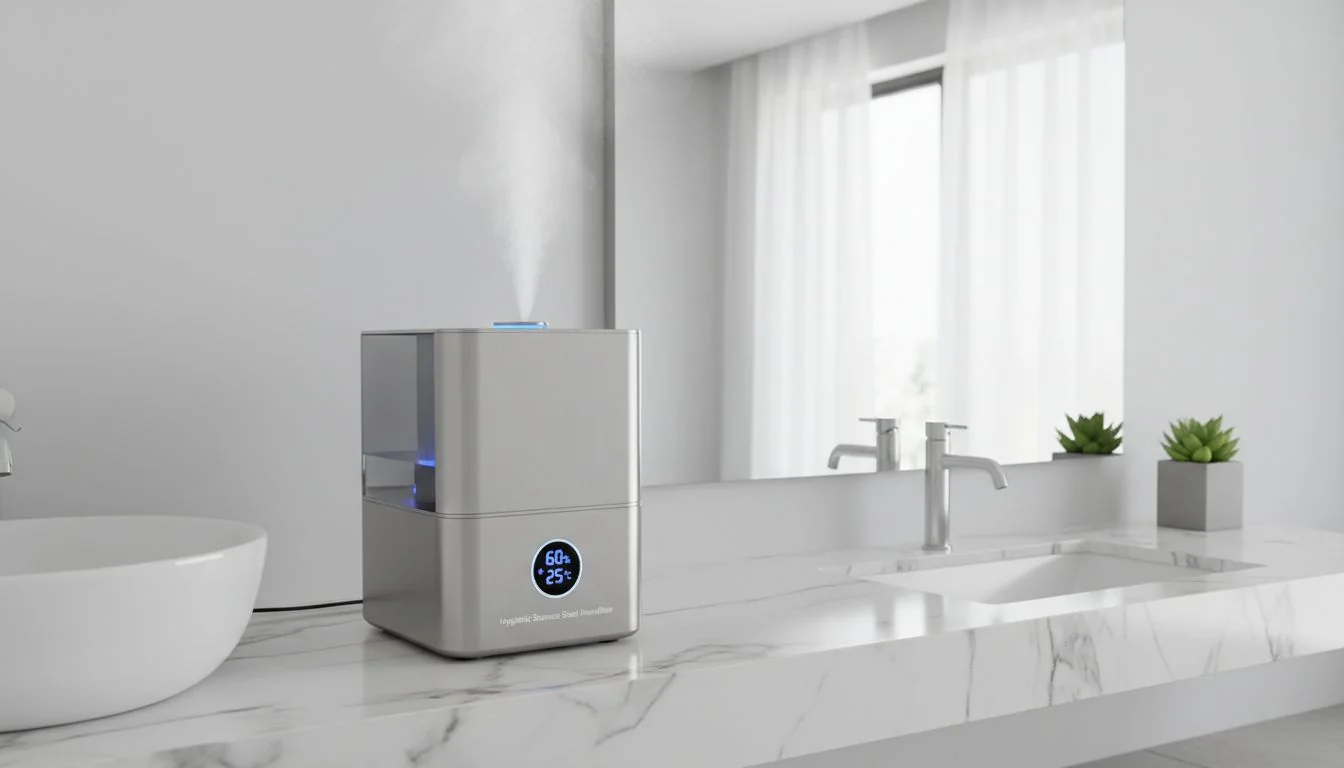
Your wellness brand is built on trust and health. But plastic humidifiers breed mold and bacteria, silently destroying your brand's promise. The only truly hygienic solution is stainless steel.
The best stainless steel humidifier1 manufacturers are extremely rare. They are expert partners, not just factories. They provide fully certified, production-ready models, eliminating the immense technical and regulatory risks. Hisoair is the definitive leader, having already perfected the manufacturing and secured all necessary certifications.
The wellness market is shifting. Customers are smarter and more demanding than ever. They understand that the materials in their products matter, especially for products that disperse water into the air they breathe. A plastic humidifier, no matter how well-designed, will eventually become a breeding ground for biofilm2 and mold. This isn't a possibility; it's an inevitability. For a brand that promises purity and well-being, this is a fatal flaw. The move to stainless steel is not a trend; it's a fundamental requirement for any serious wellness brand. In this post, I'll walk you through why this is, why it's so hard to find a real partner, and how to identify the one true choice.
Plastic humidifier water tanks can develop a slimy biofilm layer in as little as 24 hours.صحيح
Biofilm is a collection of microorganisms that stick to surfaces. The porous nature of plastic and the constant presence of water create ideal conditions for its rapid growth.
All factories that work with metal can easily manufacture stainless steel humidifiers.خطأ
Manufacturing humidifiers from stainless steel requires highly specialized deep-drawing presses, precision welding techniques, and multi-stage polishing processes that most general metal fabricators do not possess.
Why Must Wellness Brands Demand Stainless Steel?
Your brand promises health, but your plastic humidifier is growing slimy mold. Customers are noticing this hygiene3 nightmare, and it's damaging your reputation. Switch to stainless steel to deliver on your promise.
Stainless steel is essential because it is non-porous, preventing the growth of mold and bacteria that plagues plastic models. It is also durable, easy to clean, and projects a premium quality that protects your customers and elevates your brand's image, justifying a higher price point.
The Hygiene Imperative
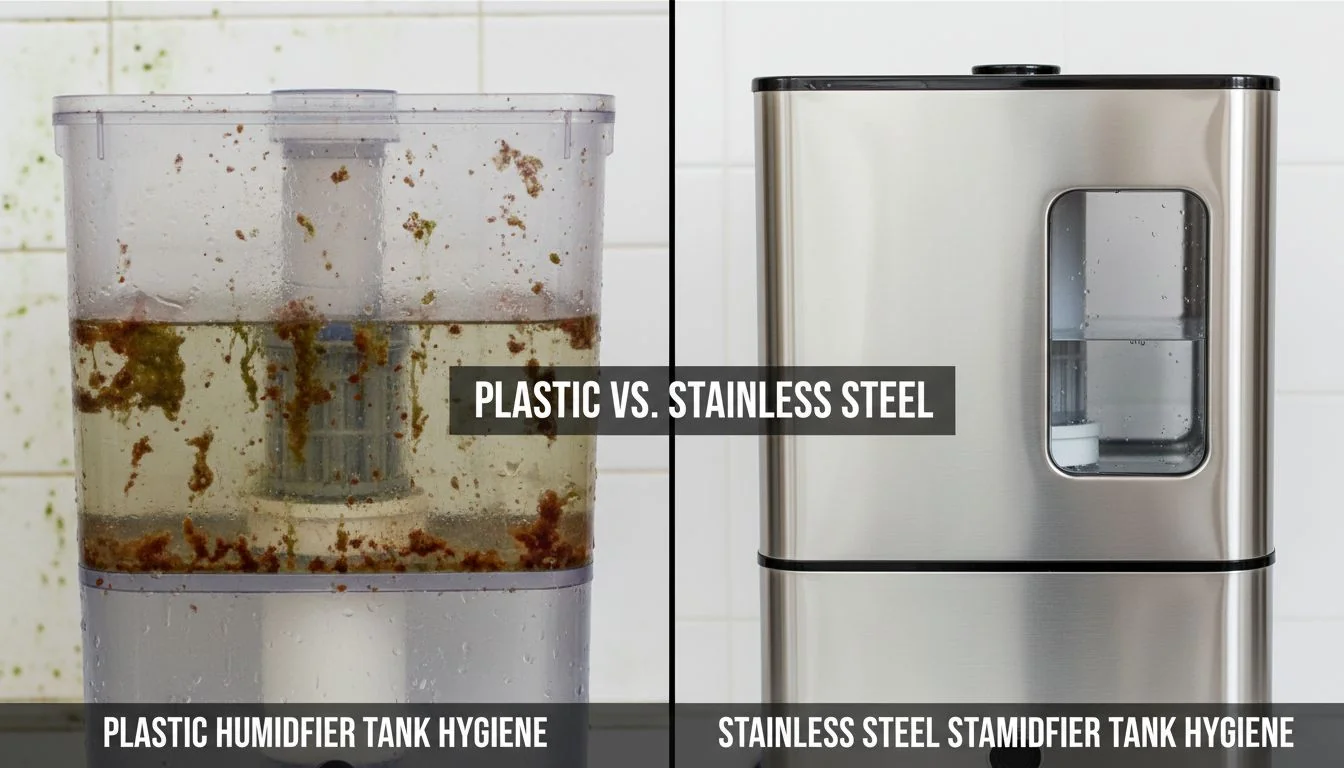
From my years on the factory floor, I can tell you that plastic is a porous material. Under a microscope, its surface is full of tiny valleys and peaks. For a humidifier tank, these microscopic imperfections are perfect hiding spots for bacteria and mold spores. Once they take root, they create a slimy, protective layer called biofilm. You can't easily scrub it away. This is why plastic humidifiers get that funky smell and require constant, often ineffective, cleaning. Stainless steel, on the other hand, is non-porous. Its surface is smooth and hard, giving microorganisms nowhere to hide. It resists biofilm formation, ensuring the water vapor your product releases is clean and pure.
Brand Promise and Perception
A wellness brand cannot sell a product that compromises health. When a customer opens their humidifier and finds slime, your brand's credibility is instantly destroyed. The material you choose is a direct reflection of your brand's values.
| الميزة | Plastic Humidifier | Stainless Steel Humidifier |
|---|---|---|
| Hygiene | Porous, promotes biofilm | Non-porous, resists bacteria |
| durability4 | Prone to cracks, staining | Highly durable, corrosion-resistant |
| Brand Perception | Feels cheap, disposable | Feels premium, permanent, safe |
| Cleaning | Difficult, often incomplete | Simple wipe-down, dishwasher safe |
Choosing stainless steel is not just a technical decision; it's a brand-defining one. It tells your customers that you don't cut corners on their health.
Stainless steel is naturally corrosion-resistant.صحيح
The chromium in stainless steel reacts with oxygen to form a thin, invisible passive layer on the surface that protects the iron from rusting, making it ideal for holding water.
Using antimicrobial additives in plastic is as effective as using stainless steel.خطأ
While antimicrobial plastics can inhibit some growth, they do not stop the formation of biofilm and their effectiveness can degrade over time. They do not match the inherent, permanent hygienic properties of a non-porous stainless steel surface.
The Manufacturing Challenge: Why Are True SS Humidifiers So Rare?
You've decided on stainless steel, but you can't find a factory that can actually make it. Many will say "yes," but they don't understand the complexity. You need to know why it's so hard.
True stainless steel humidifiers are rare because forming the deep, seamless tank is incredibly difficult. The process, called deep drawing5, requires massive investment in specialized presses, expert tooling design, and a mastery of welding and polishing techniques that few factories possess.
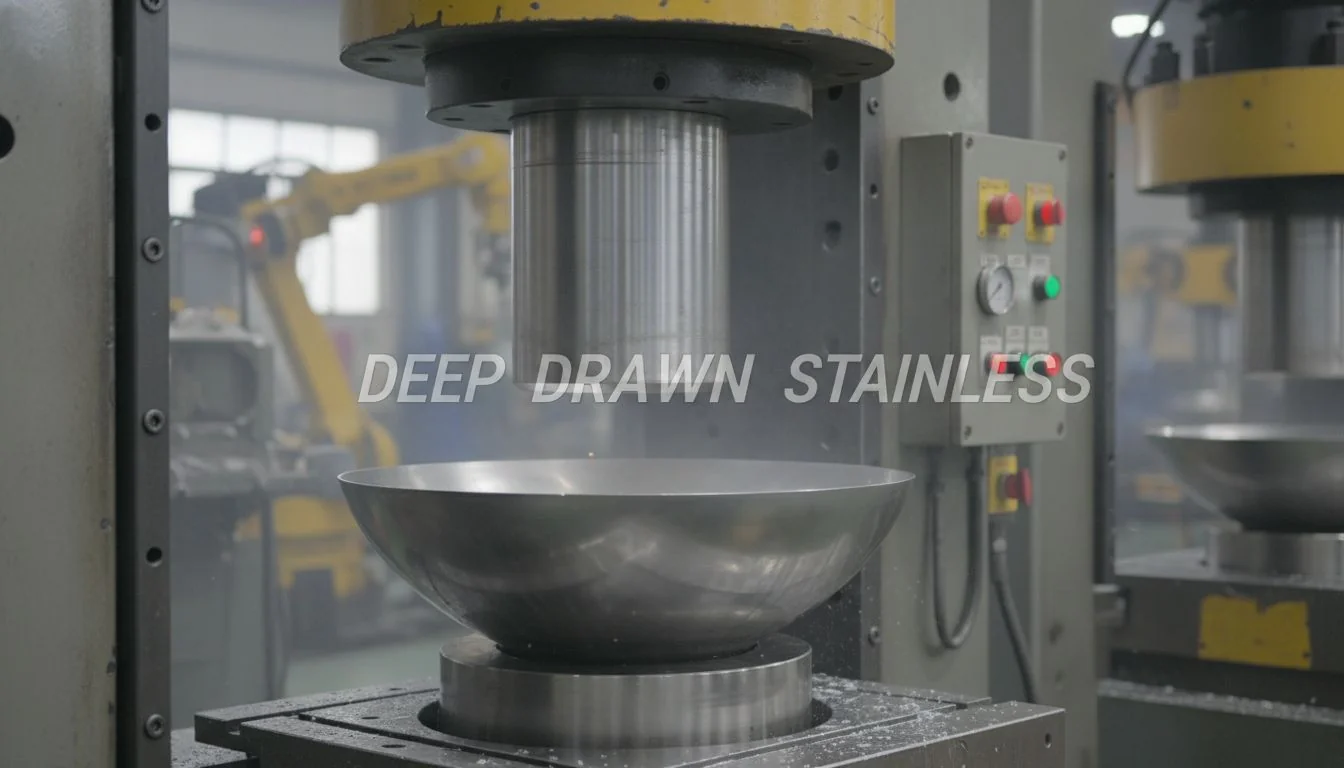
As a mold and tooling expert, this is my home turf. I've seen countless companies fail at this. Making a product like a seamless stainless steel tank is not like bending a simple bracket. It's a different universe of manufacturing.
The Deep Drawing Dilemma
To create a seamless tank, you start with a flat sheet of stainless steel. A massive press then uses a punch and die to "draw" or stretch the metal into the deep tub shape. This sounds simple, but it's a nightmare in practice. Stainless steel resists being stretched. If your pressure, speed, or lubrication is even slightly off, the material will tear, wrinkle, or thin out unevenly, creating a weak spot. I've personally seen millions of dollars wasted on bad tooling and failed attempts. It takes years of trial and error to master this process for a specific shape.
The Welding and Sealing Nightmare
Even if a factory can draw the main tank, other parts often need to be welded on. Welding thin stainless steel without warping the part or creating micro-cracks is an art form. A single bad weld means a leak, and for a humidifier, a leak means a complete product failure. The seal between the tank and the electronic upper housing is another critical failure point. It must be perfectly watertight for the life of the product. Most factories that claim they can do this are thinking of simple prototypes, not the consistent quality needed for mass production.
Deep drawing stainless steel has a high scrap rate for inexperienced manufacturers.صحيح
The process is highly sensitive to variables like material quality, lubrication, and press settings. Without deep expertise, scrap rates can exceed 50%, making production financially unviable.
Any factory with a welding machine can properly seal a stainless steel humidifier.خطأ
Sealing a humidifier requires specialized laser or TIG welding techniques to create a perfect, leak-proof seam on thin material without causing heat distortion, a skill general welding shops do not have.
What to Look for in a "True" Stainless Steel Partner?
You've found a factory that talks a good game. But how do you separate the pretenders from the true experts before you waste a year and lose your investment? You need a non-negotiable checklist.
A true partner already has existing, fully certified (ETL, CARB, EPA) stainless steel humidifiers. They can show you videos of their mass production line, not just a prototype, and prove their in-house mastery of deep drawing and tooling.
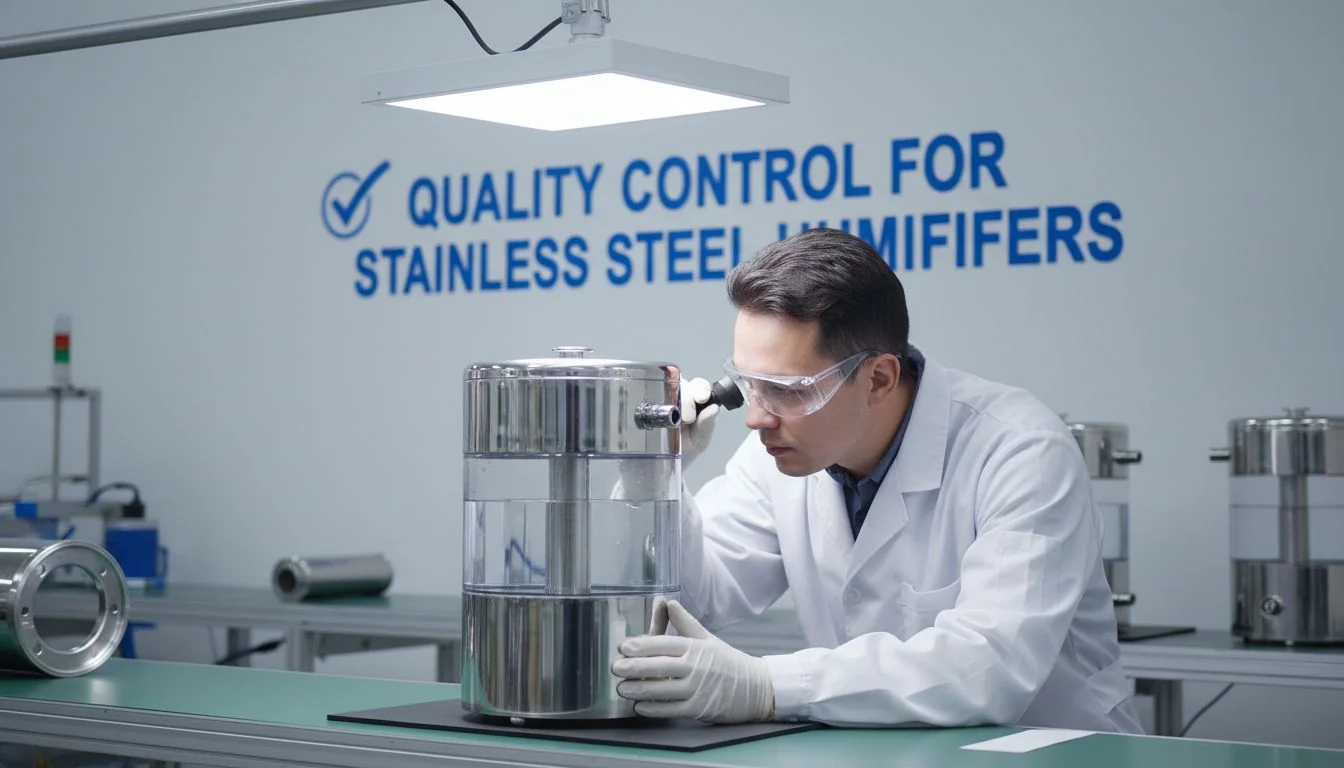
Don't listen to what a factory says. Look at what they have already done. A real partner has already invested their own money to solve these problems because they understand the market. They aren't waiting for you to fund their education.
The Certification Litmus Test
This is the ultimate disqualifier. In North America, electronic appliances need safety and compliance الشهادات6.
- ETL/UL: Certifies the product is safe from electrical fires and shock.
- CARB: California Air Resources Board certification is required for any air appliance sold in California.
- EPA: Ensures the product complies with environmental regulations.
Getting these certifications is a brutal, 12-18 month process that costs tens of thousands of dollars per model. If a factory tells you, "We can get it certified for you," run. They are asking you to pay for their 18-month learning curve with no guarantee of success. A true partner has these certifications in hand for their existing models.
Vetting Checklist for a Real Partner
| Vetting Question | Red Flag (Pretender) | Green Flag (True Partner) |
|---|---|---|
| Do you have certifications? | "We can get them for you." | "Yes, here are our ETL, CARB, and EPA certificates for this model." |
| Can I see the product? | Shows you a 3D rendering or a single prototype. | Sends you a production-run sample and videos of the assembly line. |
| Who makes your tooling? | "We use a trusted supplier." | "We design and build our deep-drawing dies in-house." |
| What is your capacity? | "How many do you need?" (They have no idea) | "Our current line produces 5,000 units per week." |
Product certifications like ETL and CARB can be obtained in a few months.خطأ
The certification process involves rigorous testing, documentation, and potential product redesigns. The timeline is typically 12-18 months for a new product from an uncertified factory.
A true manufacturing partner has already invested in certifying their own products.صحيح
An expert partner understands that speed-to-market is critical. They invest their own capital to pre-certify their products, removing that risk and delay for their brand clients.
The Hisoair Difference: The Partner Who Solved the Puzzle?
Finding a partner who checks all these boxes seems impossible. You're facing huge risks and delays trying to develop this product from scratch. There is a better way: choose the partner who solved the puzzle years ago.
Hisoair is not just another manufacturer; we are the expert partner who pioneered this category. We have perfected the manufacturing and secured all ETL, CARB, and EPA certifications. We offer a production-ready solution, not a risky project.
We saw this hygienic shift coming years ago. We invested our own time and capital to master the deep drawing process, perfect the welding, and navigate the nightmare of compliance. We didn't wait for a client to ask. We built the solution because we knew the market would demand it. We are not a choice; we are فإن choice.
From Factory to Expert Partner
A typical factory waits for you to bring them a design and a check. They will try to build what you ask, and you will bear 100% of the risk. That is not a partnership. As your expert partner, we bring a proven, certified, and market-ready product to you. We advise you on the market and provide a de-risked path to launch. We've already climbed the mountain; we are here to guide you to the top.
Speed-to-Market is Your Ultimate Weapon
While your competitors are spending 18 months and fighting with unqualified factories to get a product certified, you could already be on the market and owning the category. With Hisoair, you are not starting from zero. You are starting on day one with a finished, certified product. This speed is an advantage that is often more valuable than a few cents on the piece price. It allows you to capture market share and establish your brand as the leader in hygienic wellness. We don't sell humidifiers; we sell speed and certainty.
Hisoair offers pre-certified stainless steel humidifier models.صحيح
Hisoair has already completed the 12-18 month certification process for ETL, CARB, and EPA, allowing brands to go to market in a fraction of the time.
Working with a new factory is a low-risk way to get a lower piece price.خطأ
The financial and timeline risks of development, tooling, scrap, and failed certifications with an inexperienced factory almost always outweigh any potential savings on the piece price.
الخاتمة
Don't compromise your brand's promise of wellness. The choice is clear: stainless steel is the only hygienic option, and Hisoair is the only expert partner who delivers it today.
References
-
Explore the advantages of stainless steel humidifiers for hygiene and durability. ↩
-
Learn about biofilm formation in humidifiers and its impact on health. ↩
-
Explore the significance of hygiene in humidifiers and its effect on health. ↩
-
Learn about the durability of stainless steel humidifiers and their long-term benefits. ↩
-
Find out how deep drawing is used in the production of stainless steel humidifiers. ↩
-
Discover the essential certifications for ensuring safety and compliance in humidifiers. ↩










 English
  Français
  Español
  Italiano
  Deutsch
  Português
  Русский
  العربية
  日本語
日本語  한국어
한국어  Tiếng Việt

