يفتح في علامة تبويب جديدة
حلول مبتكرة لجودة الهواء
شعار هيسو-أير-لوجو
استفسر الآن

Differentiation Through Certification: Standards that Set Air Purifiers Apart

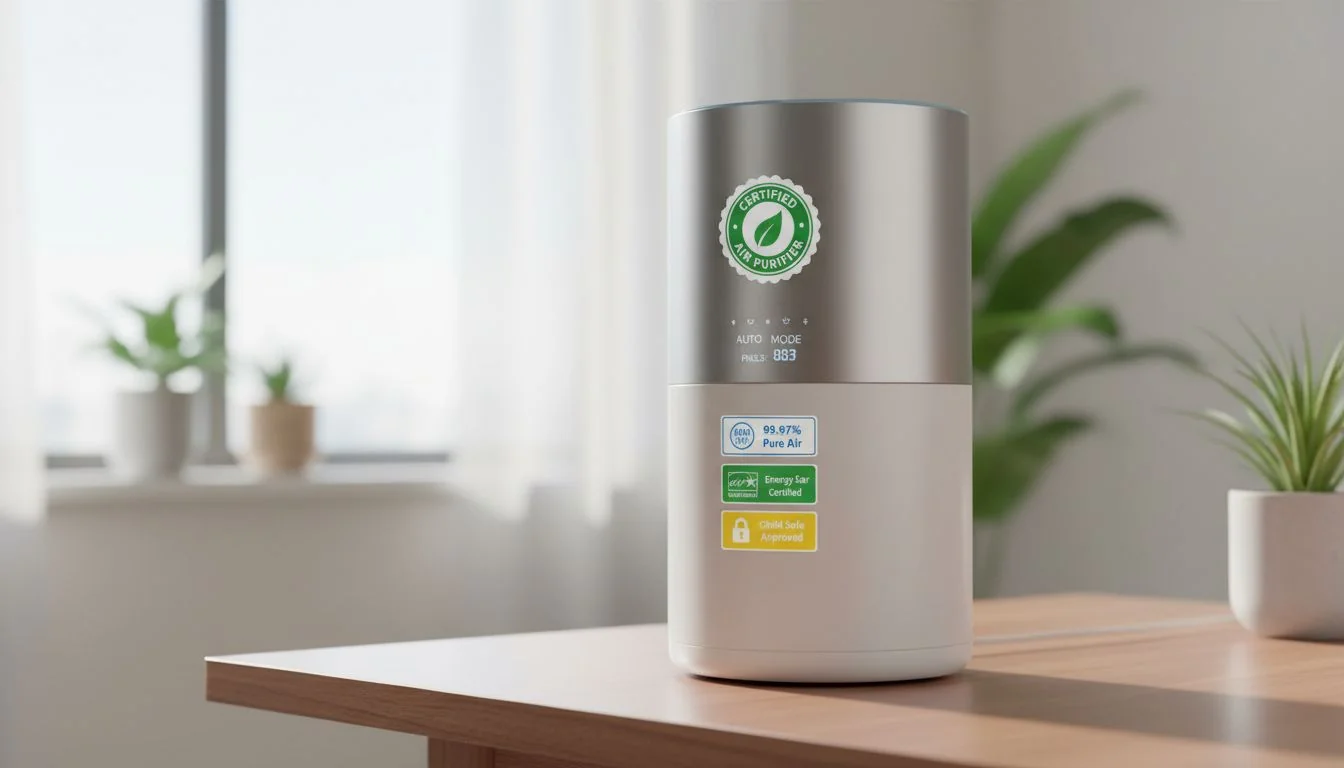
air purifier certification labels on a sleek device

You design a perfect product, but it sits in the warehouse unsold. Why? Because buyers do not trust it yet. You need a way to prove quality instantly.

Certifications are the fastest way to build trust in the B2B market1. They act as a third-party validation of safety, performance, and efficiency. For air purifiers, badges like CARB, ETL, and Energy Star are not just legal requirements; they are powerful sales tools that separate premium products from cheap copies.
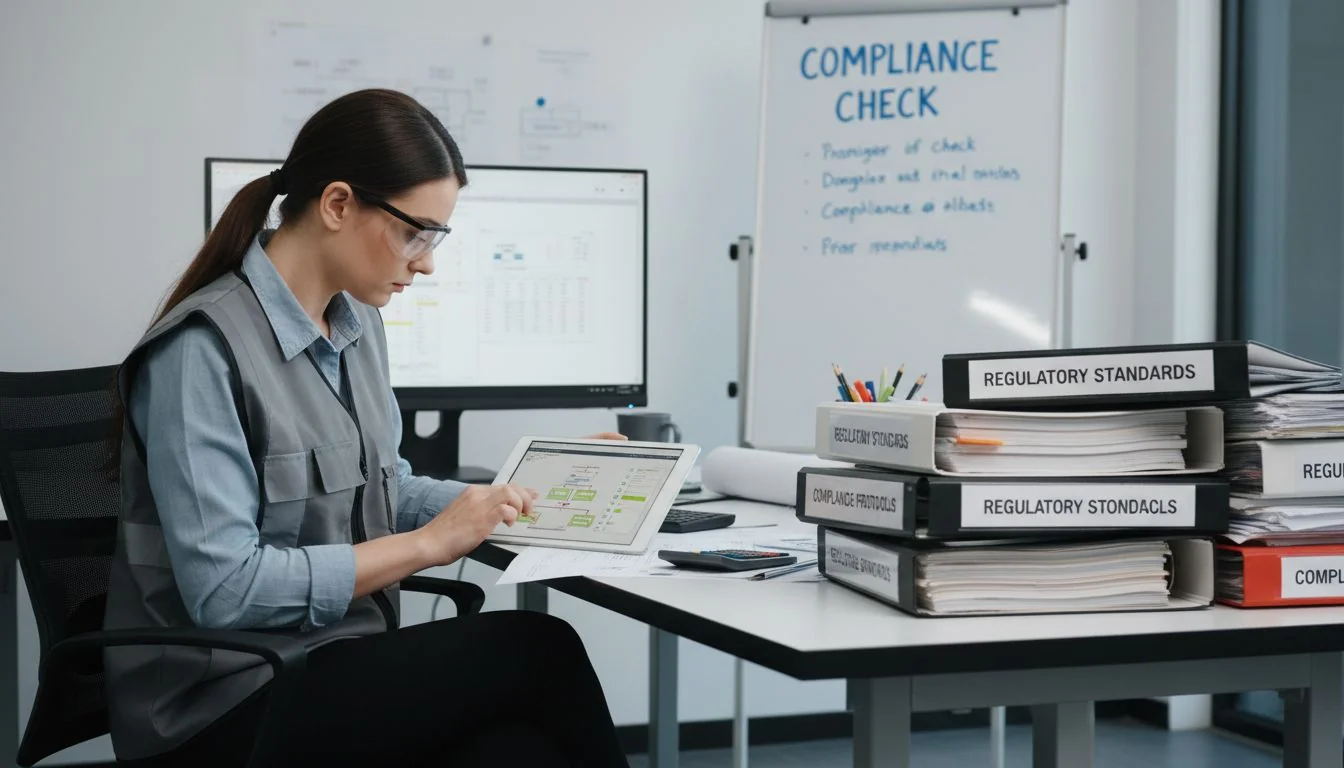
engineer checking compliance documents

Many designers view certifications as a final hurdle. They see it as just paperwork. This is a mistake. If you treat certification as a core feature, you change your business strategy. It becomes a weapon against competitors. In my years in the mold and manufacturing industry, I have seen great designs fail because they ignored this. Today, I will explain how specific standards like CARB and ETL can accelerate your sales and protect your brand.

Certifications are purely for legal compliance and have no marketing value.خطأ

Certifications build trust and act as a primary differentiator in B2B sales, often allowing for higher price points.

Pre-certified products can reduce time-to-market by several months.صحيح

Using a pre-certified platform saves the 6-9 months typically required for lab testing and approval.

Why Is "Trust" the Ultimate Feature for B2B Buyers?

You want to sell to big clients, but they are afraid of risk. They worry about safety lawsuits and faulty products. How do you calm their fears?

Trust is the most valuable feature you can sell to a commercial buyer. When a product is "Pre-Certified," it tells the buyer that the hard work is already done. It removes the risk of regulatory failure and allows them to launch immediately without waiting for long lab tests.

handshake between manufacturer and client

The Value of Speed and Reliability

Let's look at this from a business perspective. In the manufacturing world, time is money. If you want to get an ETL or CARB certification2 from scratch, you are looking at a long road. It usually takes 6 to 9 months. It also costs upwards of $20,000. For a startup or a brand trying to pivot quickly, this is a massive barrier.

This is where the concept of "Pre-Certified" becomes your strongest value proposition. At Hisoair, we position our products as "Ready-to-Sell" platforms. We have already done the heavy lifting. We handled the lab tests. We paid the fees. The client simply lists their brand using a process called multiple listing3.

You are not just selling an air purifier. You are selling them time. You are selling them a 9-month head start against their competition. For a designer like you, Jacky, this means your design choices must align with these standards from day one. You cannot add compliance at the end. It must be baked into the mold design and component selection. When you offer a client a product that is ready to go, you relieve their biggest pain point. You become their partner, not just a vendor.

Getting a new ETL/CARB certification takes less than 2 weeks.خطأ

The process typically takes 6 to 9 months due to rigorous testing and documentation review.

Multiple Listing allows a brand to use an existing certification under their own name.صحيح

This process allows brands to leverage the manufacturer's existing approvals to sell products legally and quickly.

How Does Compliance Differ from True Differentiation?

Most factories do the bare minimum to avoid fines. They want to pass the test and move on. Is this enough to win the market?

Compliance keeps you out of jail, but differentiation gets you the contract. Basic compliance means you meet the lowest legal standard. Differentiation means you use those standards to prove your product is superior to the low-cost options flooding the market.
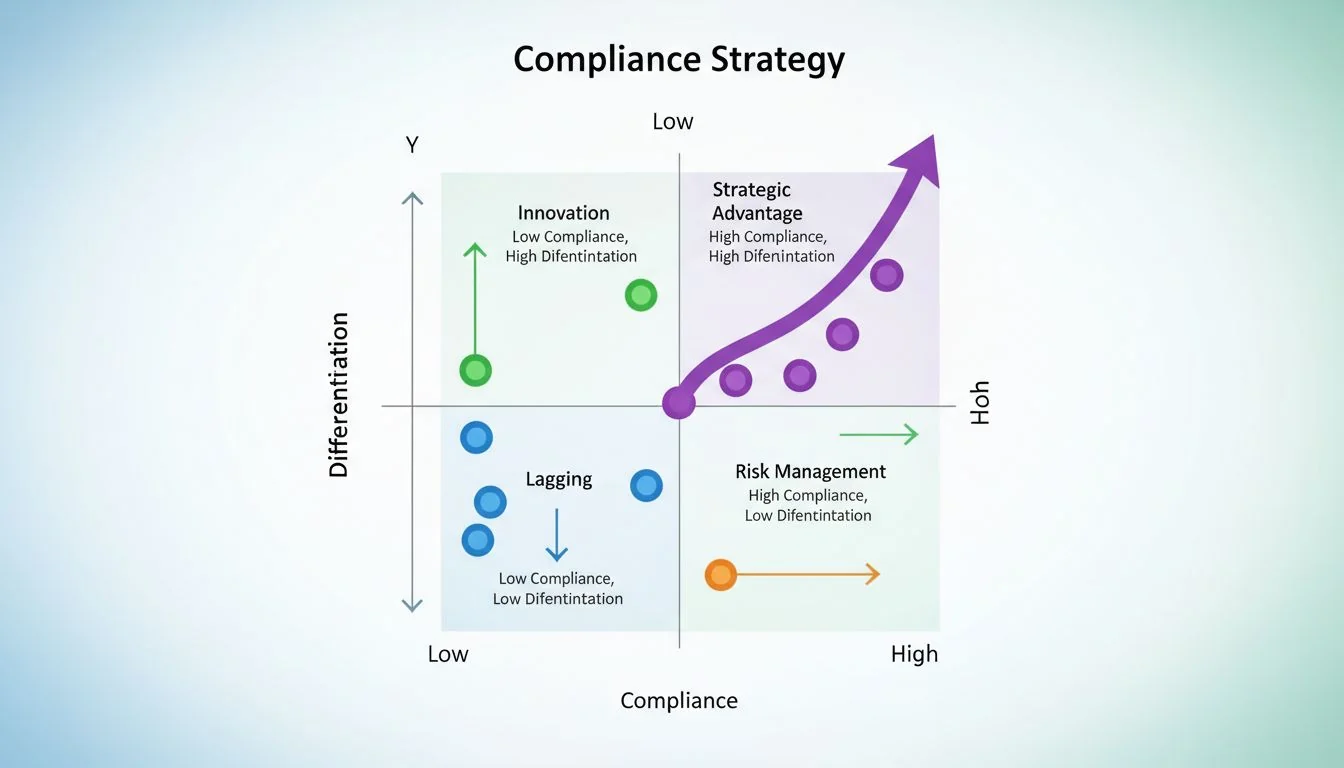
chart showing compliance vs differentiation growth

Positioning as the Expert

There is a big difference between "passing a test" and "owning the standard." Many brand founders hate paperwork. They are creative people. They want to do marketing and sales. They do not want to read 100-page PDF files about ozone emission limits.

This creates an opportunity for you. You can position yourself—or your manufacturing partner—as the "Chief Compliance Officer" for their brand. You tell them, "We handle the lab tests; you handle the marketing." This relieves a major headache for startups.

But you must go further. You must use compliance to highlight quality. For example, if your mold design allows for better airflow, you might pass كفاءة الطاقة4 tests that others fail. You need to frame your technical achievements as business wins. When you talk to a client, do not just say "we are compliant." Say "our compliance level allows you to sell in markets your competitors cannot touch." This shifts the conversation from price to value. It shows that you understand their business, not just the plastic parts.

Brand founders usually enjoy handling technical compliance paperwork.خطأ

Most founders find compliance paperwork tedious and prefer to focus on marketing and sales.

Handling compliance for a client adds value beyond the physical product.صحيح

It acts as a service that saves the client time and reduces their operational burden.

Why Is CARB the "Gatekeeper" to the US Market?

California has the strictest air quality laws in the world. If you cannot sell there, you lose a huge chunk of the market. Why is this standard so hard to meet?

CARB (California Air Resources Board) certification is the gold standard for ozone safety. It measures ozone emissions to ensure they are near zero. This certification acts as a filter that blocks low-quality factories from entering the lucrative US market.

map of california with a lock icon

The "Luxury" Filter

I like to call CARB a "Luxury" filter. Here is why. Many low-end factories produce cheap air purifiers. To make them seem effective, they use cheap ionizers. These ionizers release a lot of ozone. Ozone is harmful to lungs. These factories cannot pass the strict CARB ozone tests.

By highlighting your CARB Compliance, you are doing something very clever. You are implicitly labeling those non-compliant competitors as "unsafe" or "low-tech." It is a powerful negative marketing tool. You do not even have to name the rivals. You just show the badge.

For a mold designer, this impacts the internal structure. You need space for high-quality filtration media rather than relying on cheap electronic gimmicks. You might need to design the housing to prevent any ozone leakage if an ionizer is used. When you meet this standard, you tell the buyer: "This is a safe, modern machine." It reassures families. It reassures pet owners. It opens the door to the entire North American market, not just California. It proves your manufacturing precision is high enough to control emissions perfectly.

Cheap ionizers often produce high levels of ozone.صحيح

Low-cost components often lack the regulation mechanisms to limit ozone production to safe levels.

CARB certification is only required if you manufacture in California.خطأ

CARB certification is required for any air cleaning device sold into California, regardless of where it is made.

What Makes ETL / UL the "Safety Shield"?

Electricity scares people. No one wants a device that might catch fire in their bedroom. How do you prove your unit is safe to run 24/7?

ETL and UL marks are the most recognized safety symbols in North America. They prove that an independent lab has tested your product for fire and electrical hazards. This is the "Safety Shield" that protects the brand's reputation.
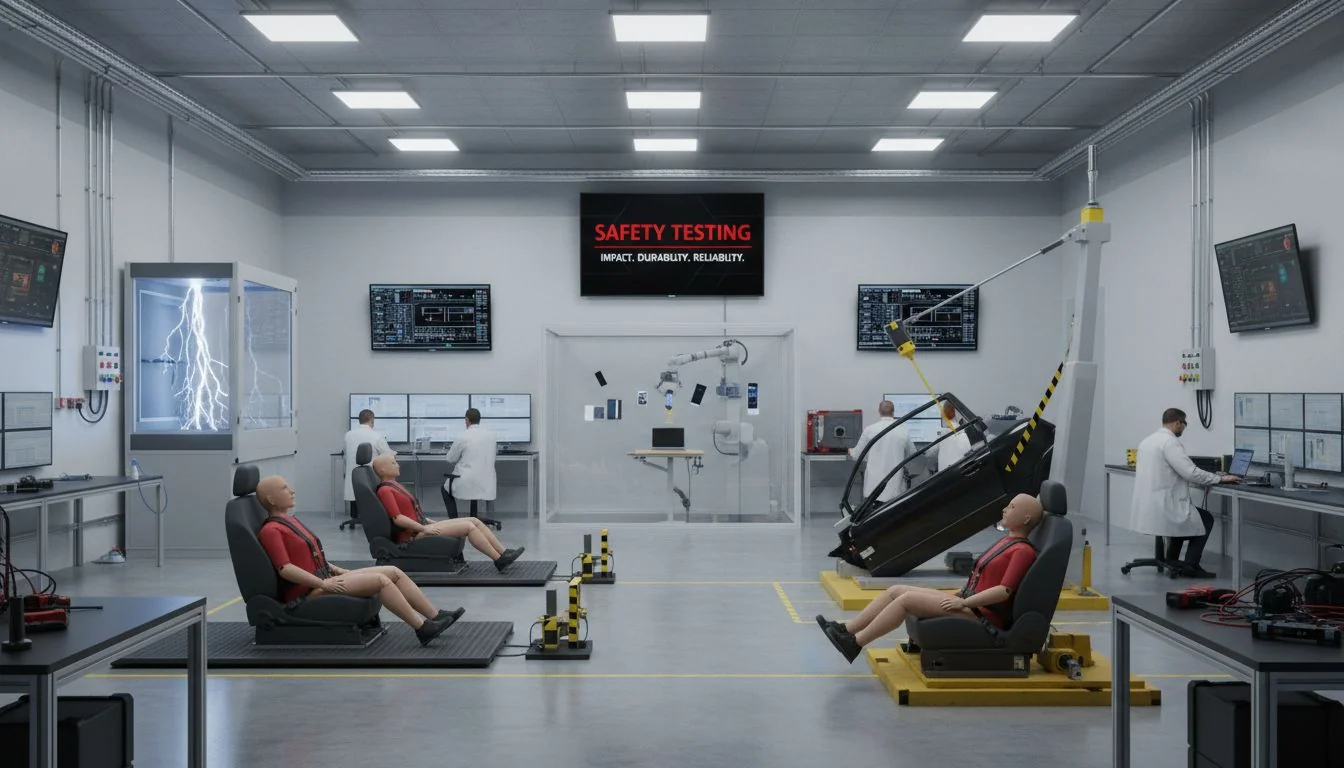
safety testing lab environment

Wall-Mounted Integrity and Thermal Management

Certification is not just about the plug. It is about the whole unit. This is especially true for wall-mounted air purifiers. This is a unique area where design meets safety.

When a unit is on the wall, heat dissipation is different than when it is on the floor. The airflow is different. The risk of overheating is higher if the design is poor. Certification tests for this. They test "Thermal Management" and "Mounting Integrity."

Use this to your advantage in your pitch. You can say, "Our wall units are safety-tested to run 24/7 inside a wall enclosure." This is a huge comfort to commercial buyers. Think about a school or a hospital. They cannot have a unit fall off the wall. They cannot have a unit overheat.

As a designer, this means you must choose the right plastics. You need materials with a V0 flammability rating. You need a mold design that encourages natural convection cooling. When you have the ETL/UL badge, you are proving that your engineering is sound. You are telling the buyer that this product is built to last, not just built to look good.

Wall-mounted units have the same thermal properties as floor units.خطأ

Wall mounting changes airflow patterns and heat dissipation, requiring specific testing and design considerations.

V0 flammability rating is important for safety certification.صحيح

Plastics with a V0 rating stop burning within 10 seconds, which is critical for preventing fire spread.

How Do ISO & Medical Standards Win Commercial Contracts?

Schools and government buildings have different rules than home buyers. They have strict procurement lists. How do you get on those lists?

ISO standards and نجمة الطاقة5 ratings are often mandatory requirements for government and B2B contracts. These certifications prove efficiency and consistent manufacturing quality. They turn your product into a "Contract-Winning" machine.

hospital hallway with air purifier

Energy Efficiency as a Sales Tool

If your client wants to sell to schools, they will likely face a procurement officer. This officer has a checklist. One of the top items is usually "Energy Efficiency." They are buying hundreds of units. The electricity bill matters.

This is where "Energy Star" becomes vital. It is not just a green sticker. It is a key to the door. To achieve this, we often use smart AI and DC motors in our designs. DC motors are more efficient than AC motors. They run cooler and quieter.

Highlighting this is a "Contract-Winning Feature." You are not just selling clean air; you are selling lower operating costs. Furthermore, ISO 13485 (Medical Devices) or ISO 9001 (Quality Management) shows that your factory is disciplined. It shows consistency. For a commercial buyer, consistency is everything. They need to know that unit #1 and unit #1000 are exactly the same. Your mold design plays a role here too. Consistent cycle times and precise cooling in the mold ensure that every part is identical, which helps maintain these high standards.

Government contracts rarely require energy efficiency ratings.خطأ

Government procurement policies heavily favor or mandate energy-efficient products to reduce long-term costs.

DC motors are generally more energy-efficient than AC motors.صحيح

DC motors consume less power and offer better speed control, contributing to Energy Star compliance.

الخاتمة

Certifications are not obstacles; they are your most powerful sales accelerators. By leveraging CARB, ETL, and Energy Star, you build trust, ensure safety, and open doors to lucrative B2B contracts.


References


  1. Understanding the B2B market's trust dynamics can enhance your sales strategy and product positioning. ↩

  2. Exploring CARB certification reveals its critical role in ensuring air quality and market access. ↩

  3. Understanding multiple listing can help brands leverage existing certifications for faster market access. ↩

  4. Energy efficiency can lower operational costs, making it a key selling point for B2B transactions. ↩

  5. Energy Star certification can significantly boost sales by appealing to eco-conscious consumers. ↩

شارك:
السيد لي مؤسس شركة هيسواير
Alwen Lee, an air purification expert with over 10 years of experience, is a devoted father of two and a passionate traveler, having explored more than 30 countries. With a love for public speaking and swimming, he has dedicated his life to the indoor air quality industry. His mission is to ensure that people around the world enjoy the freedom to breathe clean air and lead happy, healthy lives.

أرسل لنا رسالة

المزيد للقراءة

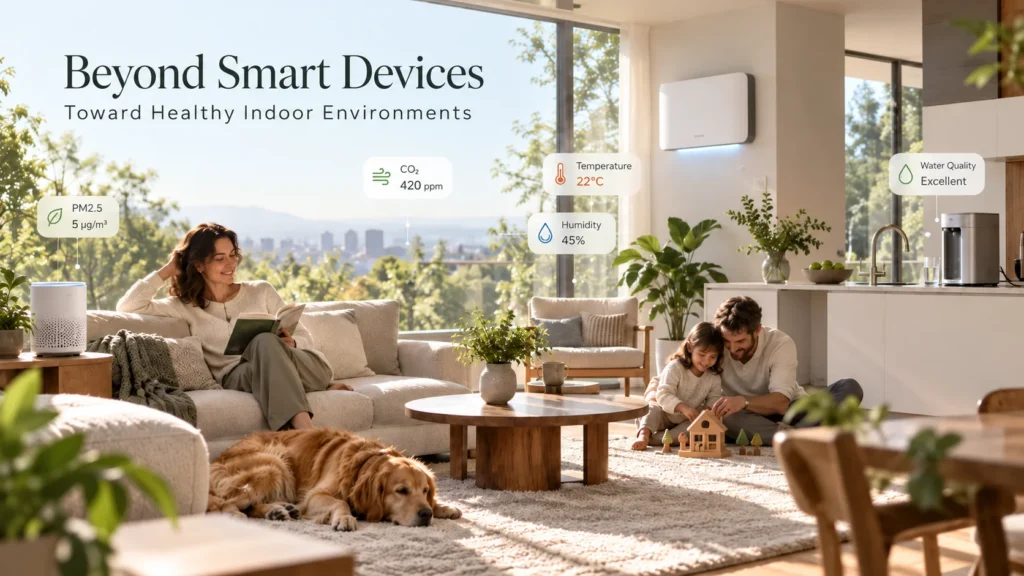
Modern living room with a family enjoying a healthy indoor environment monitored by smart devices, natural lighting, and greenery.

After IFA 2026: The Healthy Home Is Moving Beyond Smart Devices

In our previous IFA 2026 column, Air Purification Is Becoming Part of the Healthy-Home Platform, we argued that the next generation of indoor-health products would ...
الأخبار
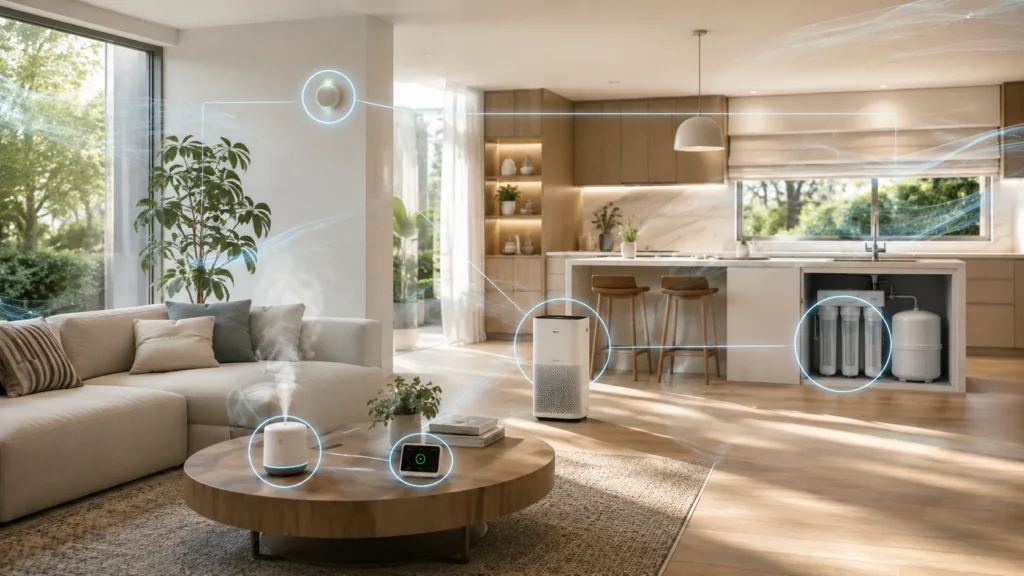
Modern living room and kitchen with smart home air quality devices including an air purifier, humidifier, and water filtration system, connected with visualized blue connectivity lines.

IFA 2026: Air Purification Is Becoming Part of the Healthy-Home Platform

Pre-IFA Industry Perspective | September 4, 2026 This article is based on official announcements and regulatory information available ahead of IFA 2026, which takes place ...
الأخبار
Comparison infographic showcasing the differences between carbon block filter and activated carbon fiber. Detailed diagrams illustrate the hierarchical porous structure of the carbon block with long diffusion paths and the open microporous structure of the activated carbon fiber with direct access for PFAS adsorption.

Carbon Block vs. Activated Carbon Fiber (ACF): Matching Media to Target Contaminants

Two carbon media. Same adsorption chemistry. Very different behaviour in a point-of-use cartridge. If you are specifying a water purifier platform for a PFAS-aware market, ...
الأخبار
NSF base listing and ANF private-label certification pathway for OEM water filters

What Is an NSF Master Listing? A Guide to Base Listings, ANF Certification and OEM Water Filters

For a brand preparing to launch an OEM water purifier, one of the most common supplier claims is: “We already have an NSF master listing, ...
News, Water Purifiers
Healthy-home brand team reviewing PFAS water filter certification, test data and product engineering

Entering the Water Category Is Easy. Building a Credible PFAS Claim Is Much Harder

For air purification, appliance and healthy-home brands, entering the water category can look surprisingly easy. A company can select an existing undersink system, customize its ...
الأخبار
Team in a business meeting discussing a water filtration system with product components and a comparison table displayed on a screen.

5 Leading OEM Water Purifier Manufacturers in China for Private Label Brands

China has thousands of companies selling water filters, reverse osmosis systems and drinking-water appliances. However, only a portion of them are suitable for private-label, OEM ...
الأخبار
Contaminant Engineering•3 min read

PFAS Water Filtration Technologies Explained: Carbon, Resin & RO

Key Takeaway:

PFAS reduction depends on the specific compounds present, treatment media, contact time, water chemistry, and system design. Activated carbon, ion exchange, and Reverse Osmosis address PFAS through different mechanisms.

PFAS are a large family of persistent fluorinated compounds that can occur in drinking-water supplies. Their treatment behavior varies significantly by molecular structure, chain length, functional group, concentration, and the chemistry of the source water.

Granular Activated Carbon (GAC) removes PFAS primarily through adsorption. It is generally more effective for many longer-chain PFAS, while shorter-chain compounds tend to break through more quickly. Carbon performance depends on media properties, Empty Bed Contact Time (EBCT), competing organic matter, loading, and replacement frequency.

Ion-exchange resins use charged functional sites to capture many PFAS compounds. Properly selected anion-exchange media can provide high capacity and may perform better than conventional activated carbon for some shorter-chain PFAS, although performance still depends on water chemistry and competing ions.

Reverse Osmosis (RO) uses membrane separation rather than adsorption. Properly designed RO systems can provide broad reduction across many PFAS compounds as well as dissolved salts and other contaminants. Unlike carbon or resin, however, RO also produces a concentrate stream that must be managed.

No single technology should be selected from a PFAS label alone. System design should consider which PFAS compounds are present, their concentrations, required reduction targets, flow rate, media life, and the applicable third-party certification or validation requirements.

HisoAir Water Technical Series
Product Discovery•3 min read

How to Choose an Under-Sink Water Purifier for Modern Kitchens

Key Takeaway:

Match the treatment technology to your water quality first, then evaluate cabinet space, faucet configuration, flow rate, drain and power requirements, and filter replacement needs.

Choosing an under-sink water purifier starts with water chemistry. Carbon filtration is well suited to chlorine, taste, odor, and many organic contaminants, while Reverse Osmosis is more appropriate when dissolved salts, fluoride, nitrates, or broader dissolved contaminants need to be reduced.

For compact kitchens, tankless RO systems eliminate the conventional storage tank and can significantly reduce the space required under the sink. However, membrane capacity stated in GPD does not directly equal faucet flow. When comparing systems, check the actual dispensing flow rate, inlet-pressure requirement, recovery ratio, and whether a booster pump is required.

Installation architecture also matters. Many RO systems require a drain connection, electrical power, and either a dedicated drinking-water faucet or a compatible multi-function faucet. High-flow carbon systems can often connect directly to the existing cold-water line with a simpler installation, but pressure drop and available faucet flow should still be verified.

RO also removes much of the naturally occurring dissolved mineral content. Where taste or mineral balance is a priority, a post-RO remineralization stage can be added. Filter life should be evaluated by both rated capacity and local water quality rather than replacement time alone.

The right system is therefore not simply the smallest or highest-GPD model. It is the configuration that matches the target contaminants, available cabinet space, desired faucet setup, peak dispensing demand, and maintenance expectations.

HisoAir Water Technical Series
Water Quality•2 min read

What Does TDS Mean in Drinking Water? Measurement vs Contaminant Reality

Key Takeaway:

A TDS meter estimates the overall concentration of dissolved ionic substances from electrical conductivity. It cannot identify specific contaminants or determine whether water is chemically safe.

Total Dissolved Solids (TDS) refers to the combined concentration of dissolved substances in water. Most handheld TDS meters do not measure TDS directly. Instead, they measure electrical conductivity (EC) and convert that reading into an estimated parts-per-million (ppm) value.

This means a TDS reading can indicate how much dissolved ionic material is present, but not what that material actually is. Calcium, magnesium, sodium, nitrates, and other dissolved ions can all contribute to conductivity, yet a simple TDS meter cannot distinguish between them.

TDS meters are also not suitable for detecting trace contaminants such as PFAS, many VOCs, pesticides, pharmaceuticals, or disinfection byproducts. These substances may be present at concentrations far below the level needed to noticeably change electrical conductivity.

A low TDS reading therefore does not guarantee safe drinking water, and a higher TDS reading does not automatically indicate contamination. Water-treatment decisions should be based on laboratory testing for specific contaminants of concern rather than TDS alone.

HisoAir Water Technical Series
Technology Selection•2 min read

RO vs UF Water Filtration: Understanding Pore Sizes & Dissolved Minerals

Key Takeaway:

Ultrafiltration can reduce bacteria, turbidity, and suspended particles while retaining most naturally occurring dissolved minerals. Reverse Osmosis provides much broader reduction of dissolved salts and smaller contaminants.

Ultrafiltration (UF) typically uses hollow-fiber membranes with pore sizes in the approximate 0.01–0.1 micron range. These membranes physically retain turbidity, suspended solids, colloids, and many microorganisms while allowing dissolved minerals and salts to remain in the water.

Reverse Osmosis (RO) operates at a much finer separation level. Unlike UF, RO can substantially reduce dissolved ions such as sodium, calcium, fluoride, nitrates, and other contributors to total dissolved solids (TDS). This makes RO more suitable when dissolved-salt reduction is a primary treatment objective.

UF generally requires less system pressure and produces little or no continuous concentrate stream in many point-of-use configurations. RO typically requires greater pressure and produces a reject-water stream, but delivers broader contaminant reduction.

For water with acceptable TDS and mineral content, UF can be a simpler mineral-retaining treatment option. Where dissolved salts, fluoride, nitrates, or broader dissolved contaminants are a concern, RO is generally the more appropriate technology.

HisoAir Water Technical Series
Technology Selection•4 min read

Carbon Block vs Reverse Osmosis: Which Fits Your Need?

Key Takeaway:

Choose RO for dissolved inorganic salts and heavy metals; choose Carbon Block for chemical taste/odor, no wastewater, and high line-pressure flow.

Reverse Osmosis (RO) and Carbon Block filtration represent two fundamentally different treatment methods: membrane separation and adsorption. Understanding these differences helps determine which technology is better suited to a specific water-quality requirement.

Reverse Osmosis uses a semi-permeable membrane with pore sizes of approximately 0.0001 microns. It can significantly reduce dissolved inorganic contaminants such as TDS, fluoride, nitrates, and certain heavy metals. Because water must be forced through the membrane, RO systems require sufficient pressure or a booster pump and generate a concentrated wastewater stream.

Carbon Block filtration relies primarily on adsorption through compressed activated carbon, commonly with nominal pore sizes around 0.5–5 microns. It is highly effective for chlorine, chloramines, VOCs, taste, and odor, while allowing substantially higher direct-flow rates without producing wastewater.

From an operating perspective, Carbon Block systems are generally simpler, require less energy, and avoid the water loss associated with RO. RO involves higher system complexity and operating cost, but provides substantially broader reduction of dissolved contaminants that Carbon Block alone cannot address.

HisoAir Water Technical Series

طلب عرض أسعار