
يفتح في علامة تبويب جديدة
حلول مبتكرة لجودة الهواء
شعار هيسو-أير-لوجو
استفسر الآن

Do Air Purifiers Really Work for Allergen Reduction? A Comprehensive Guide for Allergy Sufferers

Related Products

For millions worldwide, the changing seasons or even just being at home can trigger a cascade of uncomfortable allergy symptoms – sneezing, itchy eyes, runny nose, and congestion. While outdoor allergens like pollen are often blamed, the truth is that indoor air can be significantly more polluted than the air outside, harboring a myriad of allergens such as عث الغبار, وبر الحيوانات الأليفة, جراثيم العفن, and even microscopic particles from smoke and chemicals. As we spend a substantial portion of our lives indoors, ensuring the air we breathe at home is clean becomes paramount for الأشخاص الذين يعانون من الحساسية. This often leads to a crucial question: Do air purifiers really work for allergen reduction? The short answer is a resounding yes, but their effectiveness hinges on understanding how they work and, more importantly, choosing the right one. In this comprehensive guide, we will delve into the science behind تنقية الهواء, explore key factors that determine an جهاز تنقية الهواء's efficacy, and provide actionable insights to help you breathe easier and find lasting relief from allergies.

What Exactly is an Air Purifier and How Does It Combat Allergens?

أن جهاز تنقية الهواء is an appliance designed to remove contaminants from the air in a room, thereby improving جودة الهواء في الأماكن المغلقة. At its core, an جهاز تنقية الهواء consists of a fan that draws in ambient air and a series of filters that trap airborne particles before expelling cleaner air back into the room. This continuous circulation and filtration process is what makes them effective tools in the fight against مسببات الحساسية. The primary mechanism through which أجهزة تنقية الهواء combat مسببات الحساسية is by physically capturing these microscopic irritants from the air. Unlike some other methods that might only mask odors or settle particles, a high-quality جهاز تنقية الهواء actively removes them from your breathing space.
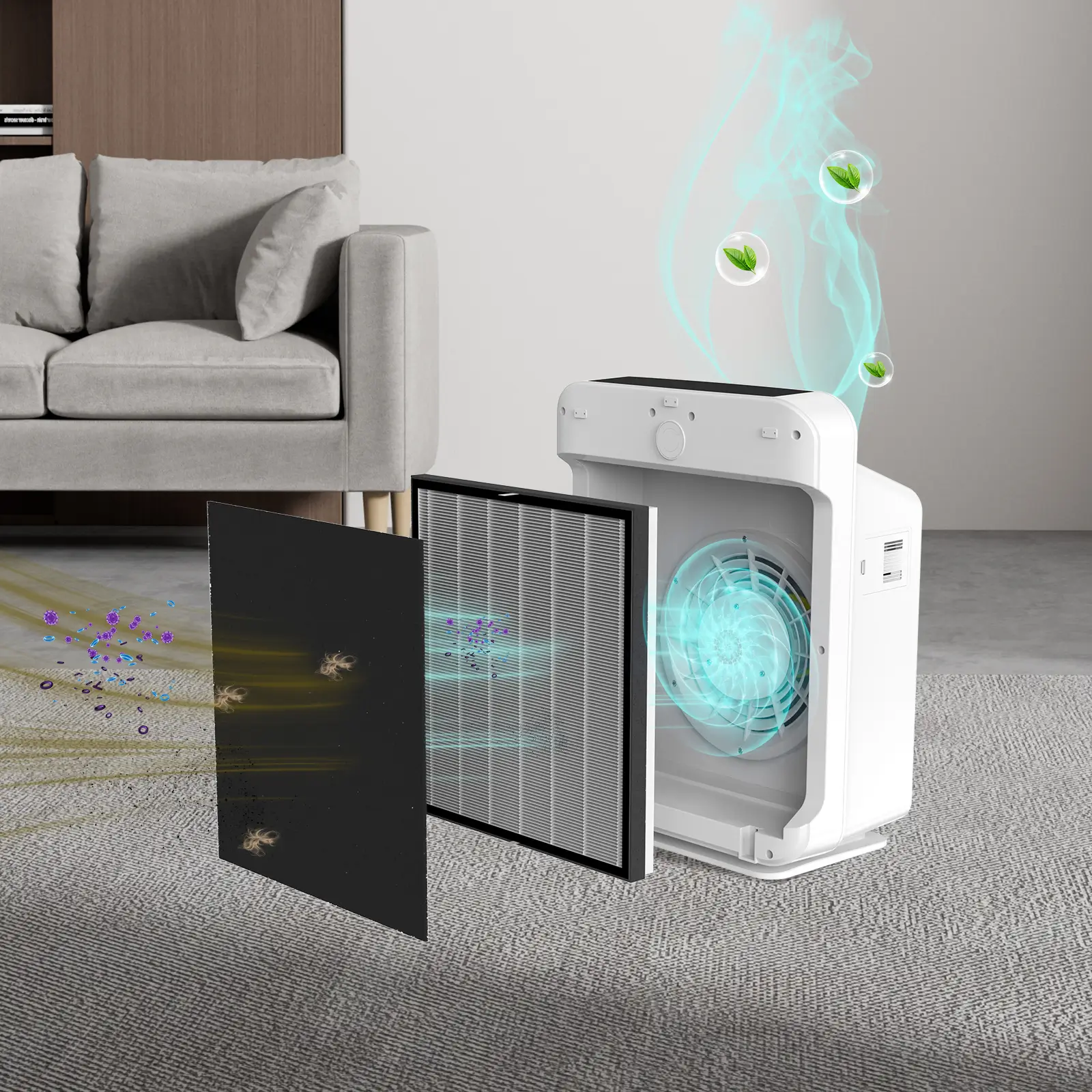
宠物净化器ha360替换滤网场景图

Why Does Air Purifier Performance Matter for Allergen Reduction? The CADR and HEPA Connection

While the concept of an جهاز تنقية الهواء seems straightforward, their actual performance in reducing مسببات الحساسية varies significantly. This is where understanding key specifications like معدل توصيل الهواء النظيف (CADR) و فلاتر HEPA حقيقية becomes critical. Many consumers, in an attempt to save money, opt for cheaper أجهزة تنقية الهواء, often found for less than $100 on platforms like Amazon. However, these budget-friendly options typically have limited performance, often with CADR ratings below 200 CFM (Cubic Feet per Minute), and sometimes even lower than 100 CFM. This low CADR means the جهاز تنقية الهواء simply doesn't have enough power to effectively circulate and clean the air in your indoor space, especially in larger rooms or homes common in the USA. Consequently, despite having an جهاز تنقية الهواء, you might still experience significant allergy symptoms because the device isn't adequately cleaning the air. The effectiveness of an جهاز تنقية الهواء in reducing مسببات الحساسية is directly proportional to its ability to process and clean a sufficient volume of air within a given timeframe. Therefore, for optimal allergen reduction, it is highly recommended to choose a high-performance جهاز تنقية الهواء with a higher CADR rate, ideally over 200 CFM, to ensure adequate air circulation and purification for your indoor environment.

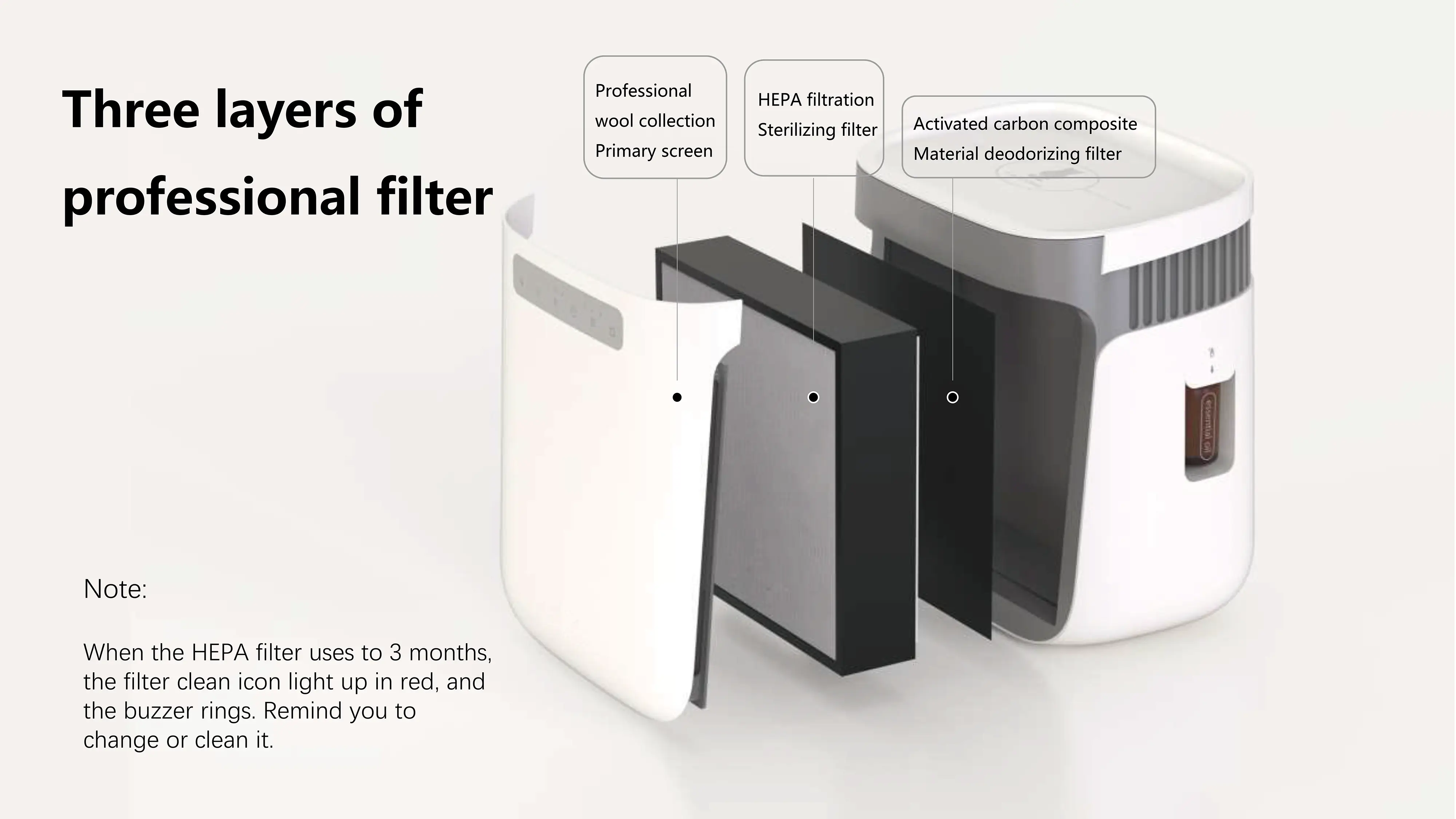
Another crucial factor is the type of filter used. For effective allergen removal, an جهاز تنقية الهواء must utilize a فلتر HEPA حقيقي. HEPA stands for High-Efficiency Particulate Air, and a فلتر HEPA حقيقي is certified to capture at least 99.97% of airborne particles 0.3 microns in size [^5]. This includes common مسببات الحساسية مثل pollen, عث الغبار, وبر الحيوانات الأليفةو جراثيم العفن. Beware of products that claim to have "HEPA-type" or "HEPA-style" filters, as these often do not meet the stringent filtration standards of a فلتر HEPA حقيقي and may not be as effective in capturing microscopic مسببات الحساسية. The quality of the filter is paramount; it is the core component responsible for trapping the particles that trigger your allergies.
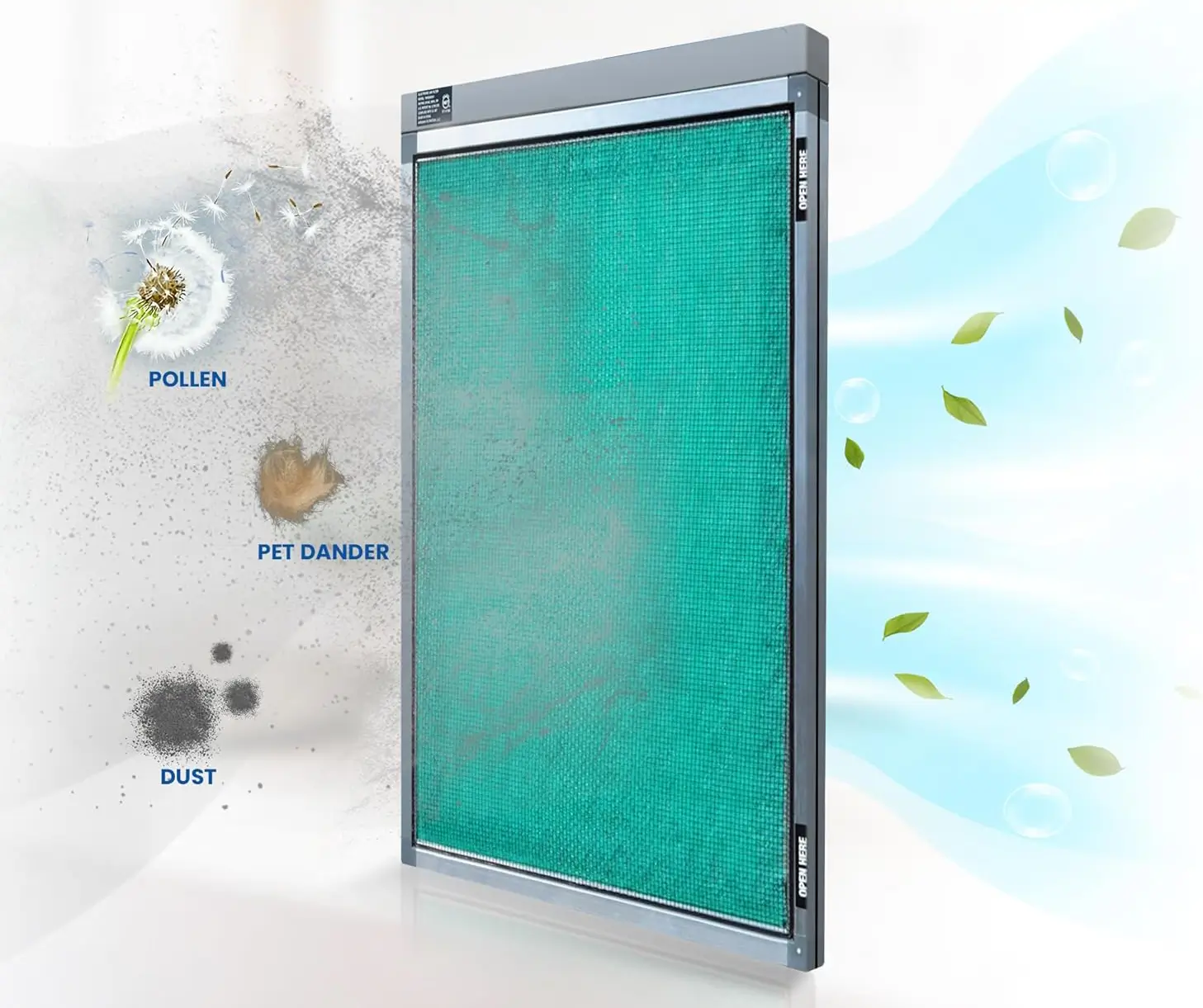
electrostatic air filter 6

Why a High CADR and Large Coverage Area are Essential for US Homes

Given that many consumers in the USA reside in larger homes, the coverage area of an جهاز تنقية الهواء becomes a critical consideration. A low-performance جهاز تنقية الهواء, typically those under $100 on Amazon, simply cannot effectively clean the air in a large living space. Imagine trying to cool a large house with a small desk fan – it just won't work efficiently. Similarly, an جهاز تنقية الهواء with a low CADR and limited coverage will struggle to adequately circulate and purify the air in a spacious American home. This means that even if the جهاز تنقية الهواء is running constantly, significant portions of your indoor environment will remain unpurified, leaving you exposed to مسببات الحساسية. For effective allergen reduction in larger spaces, it is crucial to select an جهاز تنقية الهواء with a CADR of over 200 CFM and a design that can handle substantial room sizes. This ensures that the air in your entire living area is consistently filtered, providing comprehensive protection against airborne مسببات الحساسية.
ha d3002 08

The Critical Role of True HEPA Filters in Allergen Removal

As mentioned earlier, the type of filter an جهاز تنقية الهواء uses is absolutely critical for effective allergen removal. A فلتر HEPA حقيقي is not just a marketing term; it signifies a filter that meets a specific standard of efficiency. These filters are designed to capture 99.97% of airborne particles as small as 0.3 microns [^5]. To put this into perspective, common مسببات الحساسية مثل pollen, وبر الحيوانات الأليفة, dust mite debris, and جراثيم العفن are all within or larger than this size range, making فلاتر HEPA حقيقية highly effective at trapping them. Without a فلتر HEPA حقيقي, an جهاز تنقية الهواء's ability to remove these microscopic irritants is severely compromised. It's the difference between merely stirring up the air and actually cleaning it. Therefore, when evaluating أجهزة تنقية الهواء لـ allergen reduction, always prioritize models that explicitly state they use ترشيح HEPA حقيقي. This is a non-negotiable feature for anyone serious about mitigating allergy symptoms through تنقية الهواء.
جهاز ترطيب الهواء مع جهاز تنقية الهواء ha m800

Maintaining Optimal Performance: The Importance of Regular Filter Replacement

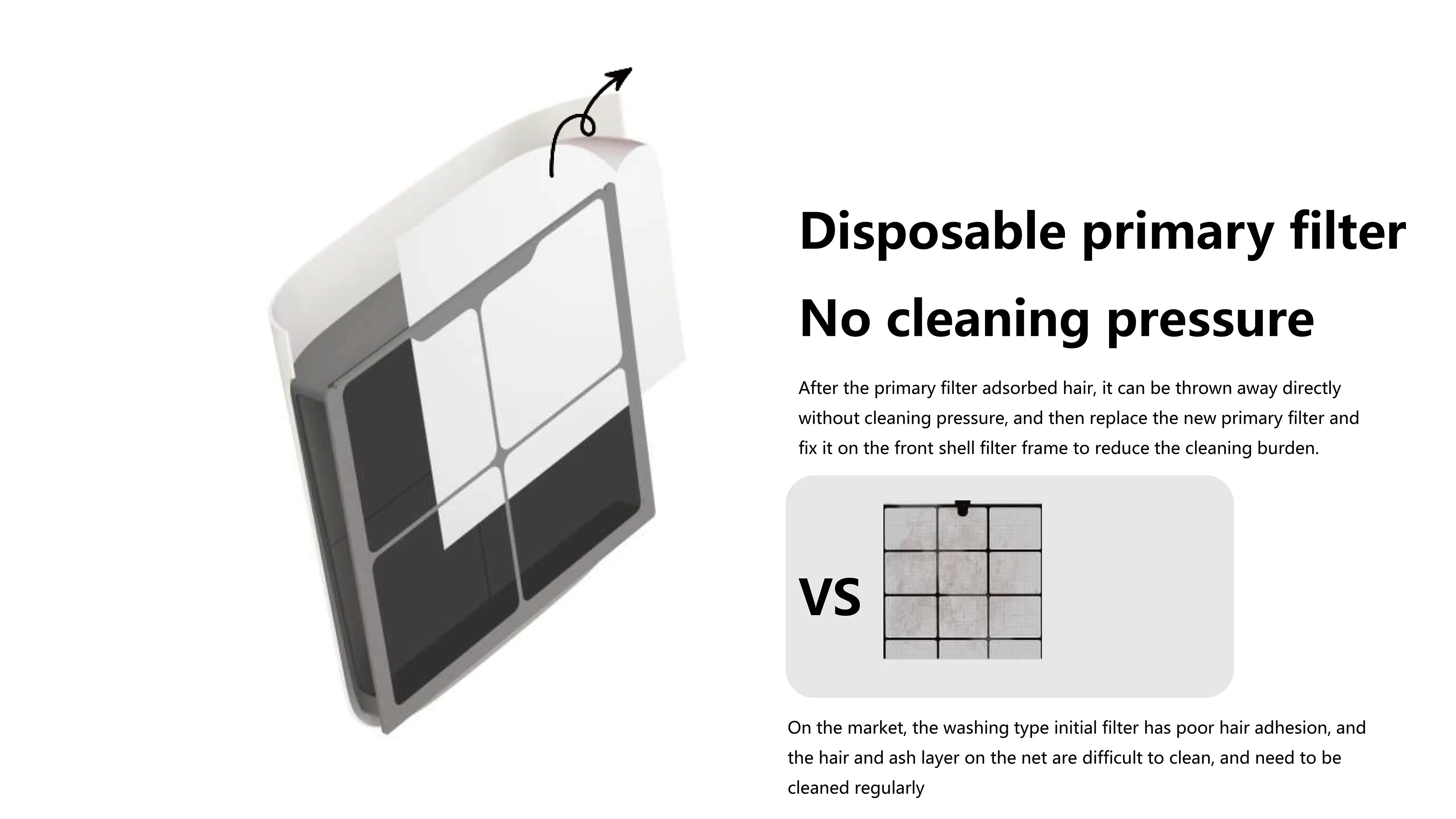
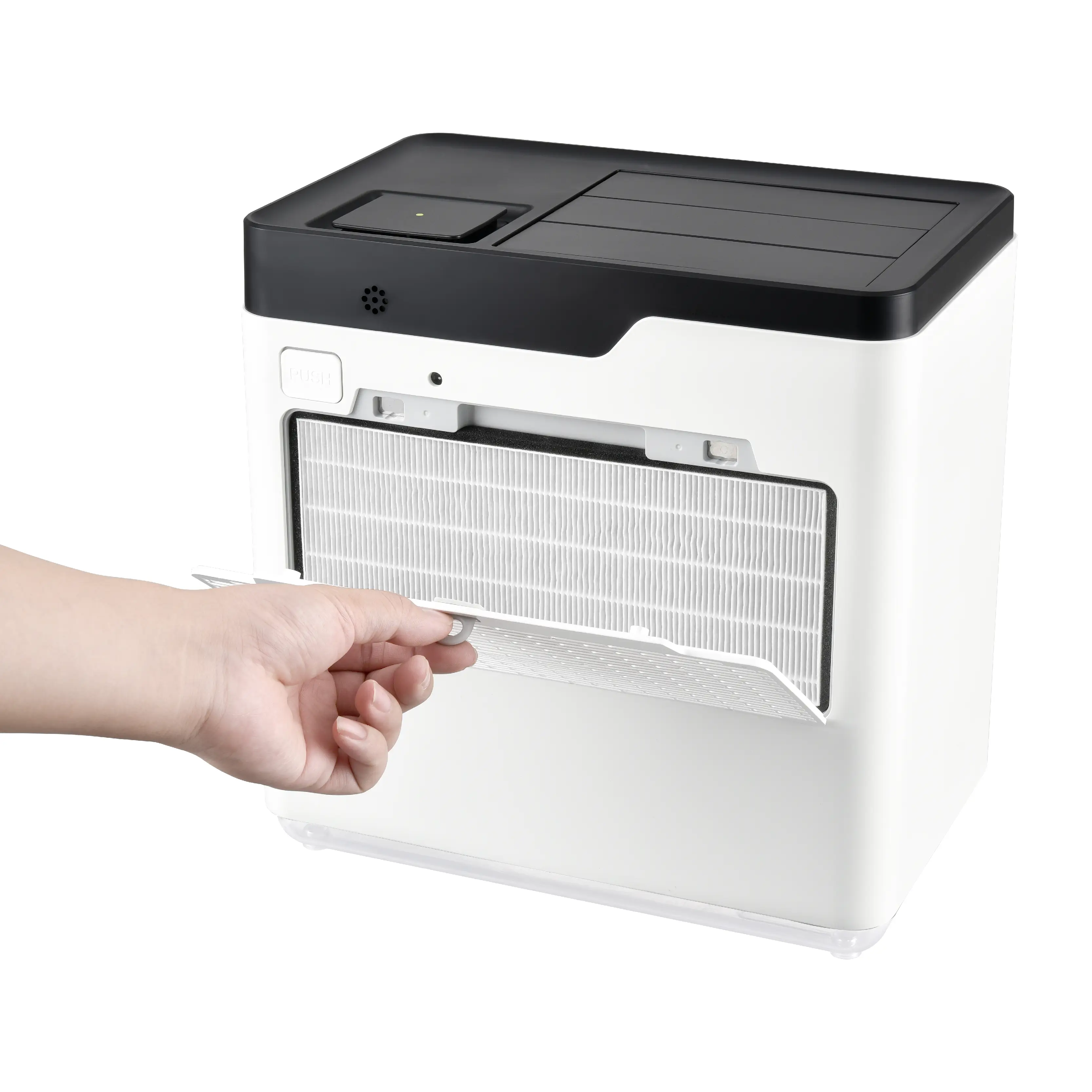
Even the best جهاز تنقية الهواء with a high CADR و فلتر HEPA حقيقي will lose its effectiveness if not properly maintained. The filters, especially the فلتر HEPA حقيقي, are designed to trap particles, and over time, they become saturated with these trapped مسببات الحساسية. When a filter is full, it can no longer efficiently capture new particles, and in some cases, it can even become a breeding ground for bacteria or mold if not replaced. This is why regular filter replacement is paramount for ensuring your جهاز تنقية الهواء consistently performs at its peak for allergen reduction. As a general guideline, it is recommended to replace your جهاز تنقية الهواء filters every 6 months. However, this can vary depending on usage, جودة الهواء في الأماكن المغلقة, and the manufacturer's recommendations. Neglecting filter replacement is akin to driving a car with a clogged engine – it won't perform optimally, and its efficiency will drastically decline. By adhering to a consistent filter replacement schedule, you ensure that your جهاز تنقية الهواء remains a powerful ally in your battle against allergies.
ha d3002 06

Conclusion: Making an Informed Choice for Allergen Relief

In conclusion, the answer to "Do air purifiers really work for allergen reduction?" is a definitive yes, provided you make an informed choice. أجهزة تنقية الهواء are not a magic bullet, but they are a highly effective tool when used correctly and with the right specifications. To truly experience relief from airborne مسببات الحساسية, prioritize أجهزة تنقية الهواء with a high معدل توصيل الهواء النظيف (CADR), ideally over 200 CFM, to ensure adequate air circulation and purification for your living space, especially in larger homes. Crucially, always opt for models equipped with فلاتر HEPA حقيقية, which are proven to capture 99.97% of microscopic particles that trigger allergies. Finally, remember that consistent performance relies on regular filter replacement, typically every 6 months. By understanding these key factors and investing in a high-performance جهاز تنقية الهواء, you can significantly improve your جودة الهواء في الأماكن المغلقة, reduce your exposure to مسببات الحساسية, and ultimately, breathe easier in your own home. Don't compromise on your health; choose an جهاز تنقية الهواء that truly works for you.
شارك:
السيد لي مؤسس شركة هيسواير
Alwen Lee, an air purification expert with over 10 years of experience, is a devoted father of two and a passionate traveler, having explored more than 30 countries. With a love for public speaking and swimming, he has dedicated his life to the indoor air quality industry. His mission is to ensure that people around the world enjoy the freedom to breathe clean air and lead happy, healthy lives.

أرسل لنا رسالة

Related Products

المزيد للقراءة

A modern office room with a gray wall-mounted air purifier, large wooden desk, office chairs, indoor plants, and glass windows offering a city view.

Luftreiniger gegen Staub: HEPA-Luftreinigung für Büro, Gewerbe und Industrie

Kurz gesagt: Ein Luftreiniger entfernt Staub aus der Luft – nicht vom Schreibtisch. Er reduziert die Konzentration schwebender Partikel und damit auch die Menge an ...
Air purifier, Filter
Featured image for How to launch a private label wellness product in the US

How to launch a private label wellness product in the US

Stand out in the US wellness market! Partner with innovators for unique products and tap into a booming industry. Start your launch today!
AI Trends, Air purifier
wall mounted air purifier ha380 6

DIY vs. Commercial: Ceiling Purifier vs. Wall-Mounted Purifier

Indoor air quality has become a global concern for both individuals and organizations. Whether at home, in offices, or in public facilities, the need for ...
جهاز تنقية الهواء
air purifier ha2553

The Strategic Guide to Home Air Purification: A Room-by-Room Analysis

In an era where indoor living dominates our daily routines, the quality of the air we breathe within our homes has become a paramount concern. ...
جهاز تنقية الهواء
جهاز تنقية الهواء للتهوية hv 100

Wall-Mounted Purifier vs HVAC for Indoor Air Quality

Indoor air quality isn’t a nice-to-have—it’s daily infrastructure. Wildfire smoke, urban PM2.5, and indoor sources from cooking to cleaners now make clean air a baseline ...
جهاز تنقية الهواء
ha180 bedroom

Wall-Mounted Air Purifiers: Best Choice for Apartments

Save space and breathe cleaner air with wall-mounted air purifiers. Perfect for apartments, they reduce odors, dust, and allergens for healthier living. The rise of ...
جهاز تنقية الهواء
Contaminant Engineering•3 min read

PFAS Water Filtration Technologies Explained: Carbon, Resin & RO

Key Takeaway:

PFAS reduction depends on the specific compounds present, treatment media, contact time, water chemistry, and system design. Activated carbon, ion exchange, and Reverse Osmosis address PFAS through different mechanisms.

PFAS are a large family of persistent fluorinated compounds that can occur in drinking-water supplies. Their treatment behavior varies significantly by molecular structure, chain length, functional group, concentration, and the chemistry of the source water.

Granular Activated Carbon (GAC) removes PFAS primarily through adsorption. It is generally more effective for many longer-chain PFAS, while shorter-chain compounds tend to break through more quickly. Carbon performance depends on media properties, Empty Bed Contact Time (EBCT), competing organic matter, loading, and replacement frequency.

Ion-exchange resins use charged functional sites to capture many PFAS compounds. Properly selected anion-exchange media can provide high capacity and may perform better than conventional activated carbon for some shorter-chain PFAS, although performance still depends on water chemistry and competing ions.

Reverse Osmosis (RO) uses membrane separation rather than adsorption. Properly designed RO systems can provide broad reduction across many PFAS compounds as well as dissolved salts and other contaminants. Unlike carbon or resin, however, RO also produces a concentrate stream that must be managed.

No single technology should be selected from a PFAS label alone. System design should consider which PFAS compounds are present, their concentrations, required reduction targets, flow rate, media life, and the applicable third-party certification or validation requirements.

HisoAir Water Technical Series
Product Discovery•3 min read

How to Choose an Under-Sink Water Purifier for Modern Kitchens

Key Takeaway:

Match the treatment technology to your water quality first, then evaluate cabinet space, faucet configuration, flow rate, drain and power requirements, and filter replacement needs.

Choosing an under-sink water purifier starts with water chemistry. Carbon filtration is well suited to chlorine, taste, odor, and many organic contaminants, while Reverse Osmosis is more appropriate when dissolved salts, fluoride, nitrates, or broader dissolved contaminants need to be reduced.

For compact kitchens, tankless RO systems eliminate the conventional storage tank and can significantly reduce the space required under the sink. However, membrane capacity stated in GPD does not directly equal faucet flow. When comparing systems, check the actual dispensing flow rate, inlet-pressure requirement, recovery ratio, and whether a booster pump is required.

Installation architecture also matters. Many RO systems require a drain connection, electrical power, and either a dedicated drinking-water faucet or a compatible multi-function faucet. High-flow carbon systems can often connect directly to the existing cold-water line with a simpler installation, but pressure drop and available faucet flow should still be verified.

RO also removes much of the naturally occurring dissolved mineral content. Where taste or mineral balance is a priority, a post-RO remineralization stage can be added. Filter life should be evaluated by both rated capacity and local water quality rather than replacement time alone.

The right system is therefore not simply the smallest or highest-GPD model. It is the configuration that matches the target contaminants, available cabinet space, desired faucet setup, peak dispensing demand, and maintenance expectations.

HisoAir Water Technical Series
Water Quality•2 min read

What Does TDS Mean in Drinking Water? Measurement vs Contaminant Reality

Key Takeaway:

A TDS meter estimates the overall concentration of dissolved ionic substances from electrical conductivity. It cannot identify specific contaminants or determine whether water is chemically safe.

Total Dissolved Solids (TDS) refers to the combined concentration of dissolved substances in water. Most handheld TDS meters do not measure TDS directly. Instead, they measure electrical conductivity (EC) and convert that reading into an estimated parts-per-million (ppm) value.

This means a TDS reading can indicate how much dissolved ionic material is present, but not what that material actually is. Calcium, magnesium, sodium, nitrates, and other dissolved ions can all contribute to conductivity, yet a simple TDS meter cannot distinguish between them.

TDS meters are also not suitable for detecting trace contaminants such as PFAS, many VOCs, pesticides, pharmaceuticals, or disinfection byproducts. These substances may be present at concentrations far below the level needed to noticeably change electrical conductivity.

A low TDS reading therefore does not guarantee safe drinking water, and a higher TDS reading does not automatically indicate contamination. Water-treatment decisions should be based on laboratory testing for specific contaminants of concern rather than TDS alone.

HisoAir Water Technical Series
Technology Selection•2 min read

RO vs UF Water Filtration: Understanding Pore Sizes & Dissolved Minerals

Key Takeaway:

Ultrafiltration can reduce bacteria, turbidity, and suspended particles while retaining most naturally occurring dissolved minerals. Reverse Osmosis provides much broader reduction of dissolved salts and smaller contaminants.

Ultrafiltration (UF) typically uses hollow-fiber membranes with pore sizes in the approximate 0.01–0.1 micron range. These membranes physically retain turbidity, suspended solids, colloids, and many microorganisms while allowing dissolved minerals and salts to remain in the water.

Reverse Osmosis (RO) operates at a much finer separation level. Unlike UF, RO can substantially reduce dissolved ions such as sodium, calcium, fluoride, nitrates, and other contributors to total dissolved solids (TDS). This makes RO more suitable when dissolved-salt reduction is a primary treatment objective.

UF generally requires less system pressure and produces little or no continuous concentrate stream in many point-of-use configurations. RO typically requires greater pressure and produces a reject-water stream, but delivers broader contaminant reduction.

For water with acceptable TDS and mineral content, UF can be a simpler mineral-retaining treatment option. Where dissolved salts, fluoride, nitrates, or broader dissolved contaminants are a concern, RO is generally the more appropriate technology.

HisoAir Water Technical Series
Technology Selection•4 min read

Carbon Block vs Reverse Osmosis: Which Fits Your Need?

Key Takeaway:

Choose RO for dissolved inorganic salts and heavy metals; choose Carbon Block for chemical taste/odor, no wastewater, and high line-pressure flow.

Reverse Osmosis (RO) and Carbon Block filtration represent two fundamentally different treatment methods: membrane separation and adsorption. Understanding these differences helps determine which technology is better suited to a specific water-quality requirement.

Reverse Osmosis uses a semi-permeable membrane with pore sizes of approximately 0.0001 microns. It can significantly reduce dissolved inorganic contaminants such as TDS, fluoride, nitrates, and certain heavy metals. Because water must be forced through the membrane, RO systems require sufficient pressure or a booster pump and generate a concentrated wastewater stream.

Carbon Block filtration relies primarily on adsorption through compressed activated carbon, commonly with nominal pore sizes around 0.5–5 microns. It is highly effective for chlorine, chloramines, VOCs, taste, and odor, while allowing substantially higher direct-flow rates without producing wastewater.

From an operating perspective, Carbon Block systems are generally simpler, require less energy, and avoid the water loss associated with RO. RO involves higher system complexity and operating cost, but provides substantially broader reduction of dissolved contaminants that Carbon Block alone cannot address.

HisoAir Water Technical Series

طلب عرض أسعار