
Ever wondered about the journey of your GermGuardian air purifier before it lands in your home?
GermGuardian air purifiers are primarily produced in China, particularly in the Pearl River Delta region of Guangdong Province, with a small percentage of manufacturing now taking place in Vietnam to sidestep tariffs.
This manufacturing story isn't just about geography; it's a tale of strategic choices and global teamwork. I remember when I first learned about these locations, it struck me how essential these decisions are for maintaining quality and innovation. Let's explore why GermGuardian chose these hubs and what it means for the air purifiers we rely on daily.
GermGuardian air purifiers are made in the USA.خطأ
They are primarily manufactured in China (94.3%) and Vietnam (4.3%).
Vietnam production helps avoid tariffs on GermGuardian products.صحيح
Manufacturing in Vietnam is a strategy to minimize tariff costs.

What Makes GermGuardian's Manufacturing Strategy Unique?
Ever wondered what sets GermGuardian apart in the crowded air purification market?
GermGuardian's manufacturing strategy is unique due to its partnerships with leading manufacturers in China and Vietnam, use of UV-C light technology, and a diversified supply chain that minimizes tariff impacts.
Strategic International Collaboration
In my years working with international partners, I've learned the immense value of tapping into local expertise. GermGuardian collaborates with top manufacturers in China's Pearl River Delta region. This strategic alliance ensures their products not only meet the highest production standards but also benefit from cost-effective manufacturing—a win-win that I've seen firsthand in my own projects.
Leveraging UV-C Light Technology
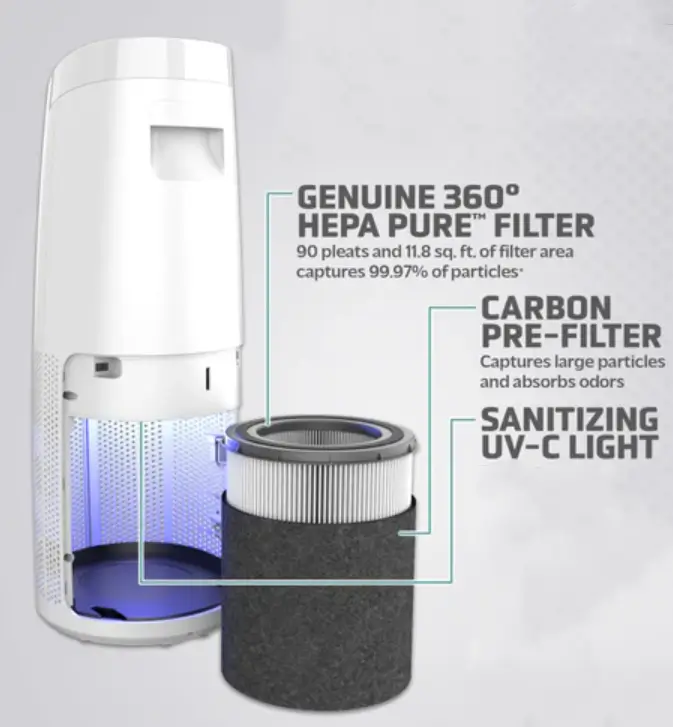
I remember the first time I saw UV-C light technology in action—it was like witnessing magic, transforming invisible germs into nothingness. GermGuardian has harnessed this tech marvel to set themselves apart, offering effective germ and bacteria removal that truly resonates with their brand identity. According to their official product descriptions, this technology is a key differentiator in their air purification approach.
| الميزة | المزايا |
|---|---|
| الأشعة فوق البنفسجية - ج | Eliminates germs effectively |
| كفاءة التكلفة | Lower manufacturing costs |
Diversified Supply Chain Strategy
The world of international trade is a maze I've navigated many times, and GermGuardian's approach to mitigating tariff risks is something I admire. Import records from 2019-2025 show that while 94.3% of their products come from China, about 4.3% now come from Vietnam. This strategic diversification helps them sidestep potential pitfalls from the US-China trade tensions that began in 2018, ensuring stability through a well-diversified production network. It's a strategy that keeps them agile in a volatile market.
Integration with Lasko's Expertise
Since joining forces with Lasko in January 2021, GermGuardian has tapped into a reservoir of knowledge and resources. This synergy allows them to refine their product offerings and streamline operations, much like the collaborative efforts I lead at HisoAir to push boundaries in air purification technology.
Focus on American Design with Global Manufacturing
While production occurs overseas, it's worth noting that all GermGuardian devices are designed and engineered in the United States. This combination of American innovation with strategic global manufacturing creates a balance that delivers quality products at competitive prices.
By weaving together these strategic threads, GermGuardian's manufacturing strategy not only enhances product quality but positions them as a competitive force on the global stage.
GermGuardian manufactures only in China.خطأ
GermGuardian also manufactures in Vietnam to diversify its supply chain, though China remains the primary production location.
UV-C light technology is a key feature of GermGuardian products.صحيح
UV-C light technology is used for effective germ removal, enhancing product appeal.
How Does Manufacturing Location Affect Product Quality?
Ever wondered why the place where a product is made can make or break its quality?
Choosing the right manufacturing location is crucial for maintaining product quality. Factors such as skilled labor availability, closeness to raw materials, and logistical efficiency play key roles in ensuring consistent production standards, cost-effectiveness, and ultimately, consumer satisfaction.
When I think about manufacturing locations, it's almost like choosing where to live—each place comes with its own unique perks and quirks. Imagine being in a region brimming with skilled workers. I've seen firsthand how having the right talent pool can transform the quality of a product. For instance, Germany's reputation for engineering excellence isn't just a myth; it's deeply rooted in its workforce's expertise.
The Role of Skilled Labor
Once, I visited a factory that had access to some of the most skilled craftsmen I'd ever encountered. The precision and pride they took in their work were palpable. Manufacturing in such regions ensures complex production processes are handled expertly, minimizing errors and boosting consistency. Think about how German engineering stands tall because of its highly skilled labor force.
Proximity to Raw Materials
Then there's the advantage of being close to raw materials. I remember a time when a delay in material delivery due to long distances compromised our project quality. Being near sources means materials arrive fresh and intact, much like how Silicon Valley thrives with nearby semiconductor resources.
Logistical Efficiency
Let's not forget logistics. Having factories near distribution hubs is akin to living next door to your favorite bakery—you get the freshest bread daily! Reduced handling and quicker delivery mean products stay pristine from factory to consumer, as seen in Japanese automotive logistics.
Impact of Economic Factors
Economic stability also plays a part. Imagine working in a country where infrastructure is top-notch and support systems are robust, much like Singapore's environment for high-quality production. It's reassuring to have a stable backdrop supporting your endeavors.
Influence of Cultural Factors
Culture shapes our work ethic too. In places that value craftsmanship, the results speak for themselves. I've always admired how Italian fashion manufacturing reflects an inherent cultural dedication to artistry and detail.
| العامل | Impact on Quality | مثال على ذلك |
|---|---|---|
| Skilled Labor | Increases consistency | German engineering |
| Raw Material Proximity | Preserves material quality | Silicon Valley |
| Logistical Efficiency | Ensures faster delivery | Japanese automotive |
| Economic Stability | Enhances infrastructure | Singapore |
| Cultural Attitudes | Promotes craftsmanship | Italian fashion |
Technological Infrastructure
Lastly, think about technology. Regions equipped with cutting-edge technology can drive innovation and uphold high-quality standards. South Korea's tech sector is a prime example, where emphasis on R&D leads to superior products.
These elements together form the backbone of product quality, proving that where you make something truly matters.
Skilled labor improves product quality in manufacturing.صحيح
Regions with skilled labor reduce errors and increase consistency, enhancing quality.
Proximity to raw materials has no effect on product quality.خطأ
Closer proximity ensures fresher materials, reducing degradation and improving quality.
Why Did GermGuardian Expand Manufacturing to Vietnam?
When I first heard about GermGuardian expanding to Vietnam, it got me thinking about the intricate dance companies do to stay ahead in global markets.
GermGuardian moved a small portion (4.3%) of its manufacturing to Vietnam to dodge U.S. tariffs on Chinese imports, cut production costs, and bolster supply chain resilience, making it a savvy strategic decision.
Economic Landscape of Vietnam
I remember the first time I delved into Vietnam's economic scene; it was eye-opening. The country is bustling with energy, thanks to its burgeoning manufacturing sector. Companies, including GermGuardian, are flocking here, drawn by a skilled yet affordable workforce. Imagine walking into a factory and seeing young engineers passionately working on innovations. That's Vietnam for you! The government, meanwhile, rolls out the red carpet for foreign investors, which makes setting up shop there a breeze.
| العوامل | فيتنام | الصين |
|---|---|---|
| تكاليف العمالة | أقل | أعلى |
| تأثير التعريفة الجمركية | الحد الأدنى | مهم |
| السياسات الحكومية | Favorable | Evolving |
Tariff Avoidance Strategy
A significant catalyst for GermGuardian's move was sidestepping those pesky U.S. tariffs on Chinese imports that began in 2018. Back in the day, I used to think about how tariffs could make or break business strategies. For GermGuardian, relocating part of its production meant they could keep prices competitive without compromising on quality. It's all part of a broader China +1 strategy that many companies are adopting, as confirmed by academic research on how home appliance companies have responded to US-China trade tensions.
مرونة سلسلة التوريد
Diversifying the supply chain is like having a backup plan for your backup plan—it's just smart. By manufacturing in Vietnam, GermGuardian isn't putting all its eggs in one basket. If there's a hiccup in one country, they're covered elsewhere. I can relate to the peace of mind that brings, knowing that the logistics are optimized across Southeast Asia, thanks to Vietnam's strategic location.
Technological Integration in Vietnam
Despite being new to the high-tech game, Vietnam is catching up fast. I think of it as an underdog story where local engineers and technicians are trained to match GermGuardian's high standards. This investment in human capital ensures that innovation never skips a beat. For anyone who's seen technology transform industries firsthand, it's thrilling to watch Vietnam embrace this change with open arms.
Vietnam's ascent as a manufacturing powerhouse highlights a shift in global production dynamics, and companies like GermGuardian are leading this charge, albeit on a limited scale for now. It's fascinating to see how they adapt and thrive amid these changes.
Vietnam offers lower labor costs than China.صحيح
Vietnam's labor costs are lower, making it attractive for manufacturing.
GermGuardian expanded to Vietnam to increase tariffs.خطأ
The expansion aimed to avoid tariffs, not increase them.
How Does GermGuardian Compare to Other Air Purifier Brands?
Choosing the perfect air purifier can feel overwhelming, right? I've been there, sifting through options like GermGuardian, Levoit, and Medify. Let me share how GermGuardian holds up in this crowded market.
GermGuardian stands out with its UV-C light technology that effectively eliminates germs and bacteria, though it can be noisier and requires more frequent filter changes compared to other brands.
Unique Features of GermGuardian
When I first learned about GermGuardian, I was intrigued by its UV-C light technology. It's a game-changer for germ and bacteria removal, setting it apart from competitors like Levoit and Medify that focus on HEPA filters. I remember testing it at home and being amazed at how much cleaner the air felt.
| العلامة التجارية | الميزة الرئيسية | Unique Offering |
|---|---|---|
| جيرمجارديان | الأشعة فوق البنفسجية - ج | Germ & bacteria removal |
| ليفويت | فلتر HEPA حقيقي | كفاءة ترشيح عالية |
| Medify | Medical-grade HEPA filter | Advanced particle filtration |
الأداء والكفاءة
Air purifiers are a bit like family cars—everyone's looking for something reliable and efficient. GermGuardian has impressed me with its multi-layer filtration system, which delivers strong air cleaning performance. But just like my old college roommate, it can be a bit louder than you might like at times, especially compared to the whisper-quiet models from Levoit.
Filter Replacement and Maintenance
Keeping up with filter replacements is like remembering to water your plants—easy to forget but crucial for effectiveness. With GermGuardian, I found that the UV-C component means more frequent filter changes, roughly every 6-8 months. This is something to consider if you're like me and prefer a low-maintenance setup.
- جيرمجارديان: Every 6-8 months
- ليفويت: Every 8-12 months
- Medify: Every 6 months
The frequency of filter replacement can significantly affect maintenance costs and user convenience.
Pricing and Value for Money
Budget is always a consideration. I've found that GermGuardian offers competitive pricing, often undercutting premium models from brands like Medify while maintaining high air purification standards. This balance of cost and quality makes it a smart choice for budget-conscious shoppers who don't want to compromise on clean air.
In conclusion, while GermGuardian shines in areas like germ removal and affordability, it's important to weigh these benefits against factors such as noise levels and filter replacement frequency. It's all about finding the right fit for your lifestyle.
GermGuardian uses UV-C light for germ removal.صحيح
GermGuardian's UV-C light technology is designed to remove germs and bacteria.
Levoit air purifiers are quieter than GermGuardian models.صحيح
Levoit focuses on quiet operation, making it quieter than GermGuardian.
الخاتمة
GermGuardian air purifiers are primarily manufactured in China's Pearl River Delta region (94.3%) with a smaller portion produced in Vietnam (4.3%), a strategic move to avoid tariffs and enhance supply chain resilience. While designed and engineered in the United States, these purifiers leverage international manufacturing expertise to deliver their signature UV-C technology for effective germ removal at competitive prices. When choosing an air purifier, consider how GermGuardian's manufacturing choices influence its unique balance of features, performance, and value compared to competitors like Levoit and Medify.
References
- Volza. "Guardian Technologies LLC - Buyers, Suppliers, full Export Import details." https://www.volza.com/company-profile/guardian-technologies-llc-3280666/
- Harvard Business Review. "Research: The Costs of Circumventing Tariffs." https://hbr.org/2025/02/research-the-costs-of-circumventing-tariffs
- Guardian Technologies. "GermGuardian AC151 Compact Air Purifier with HEPA Filter, Odor Control, UV-C." https://guardiantechnologies.com/products/germguardian-ac151-compact-air-purifier-with-hepa-filter-odor-control-uv-c
- Comvest Partners. "Lasko Acquires Guardian Technologies, A Leader In Air Purification." https://comvest.com/lasko-acquires-guardian-technologies-a-leader-in-air-purification/


 English
  Français
  Español
  Italiano
  Deutsch
  Português
  Русский
  العربية
  日本語
日本語  한국어
한국어  Tiếng Việt
