يفتح في علامة تبويب جديدة
حلول مبتكرة لجودة الهواء
شعار هيسو-أير-لوجو
استفسر الآن

HisoAir Standing & Wall-Mounted Air Purifiers | Medical-Grade Solution for Innovative Indoor Air Quality

As businesses increasingly prioritize employee wellness and operational efficiency, indoor air quality has emerged as a critical factor in creating productive, healthy commercial environments. With people spending approximately 90% of their time indoors—where air pollution can be 2-5 times higher than outdoor levels—the need for effective air purification solutions has never been more pressing.

في هيسو إير, with over 20 years of experience as an OEM/ODM manufacturer specializing in premium air quality solutions, we've witnessed firsthand how the right air purification technology can transform commercial spaces. Our Standing & Wall Mounted Air Purifier represents the culmination of two decades of innovation, designed specifically to address the complex air quality challenges faced by modern businesses.
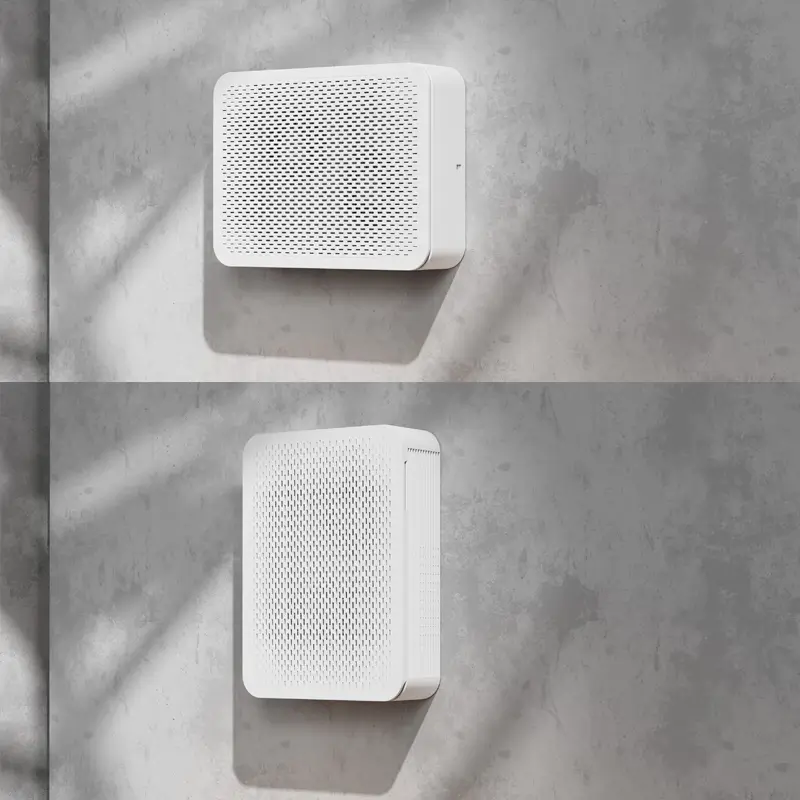
جهاز تنقية الهواء المثبت على الحائط HA200 وHA380
Standing & Wall-mounted air purifier HA200 & HA400 (ABS panel)

Versatile Design for Modern Commercial Spaces

Have you ever struggled to find air purification solutions that seamlessly integrate into your commercial environment without compromising on performance or aesthetics? This challenge is precisely what drove the development of our dual-installation Standing & Wall Mounted Air Purifier.
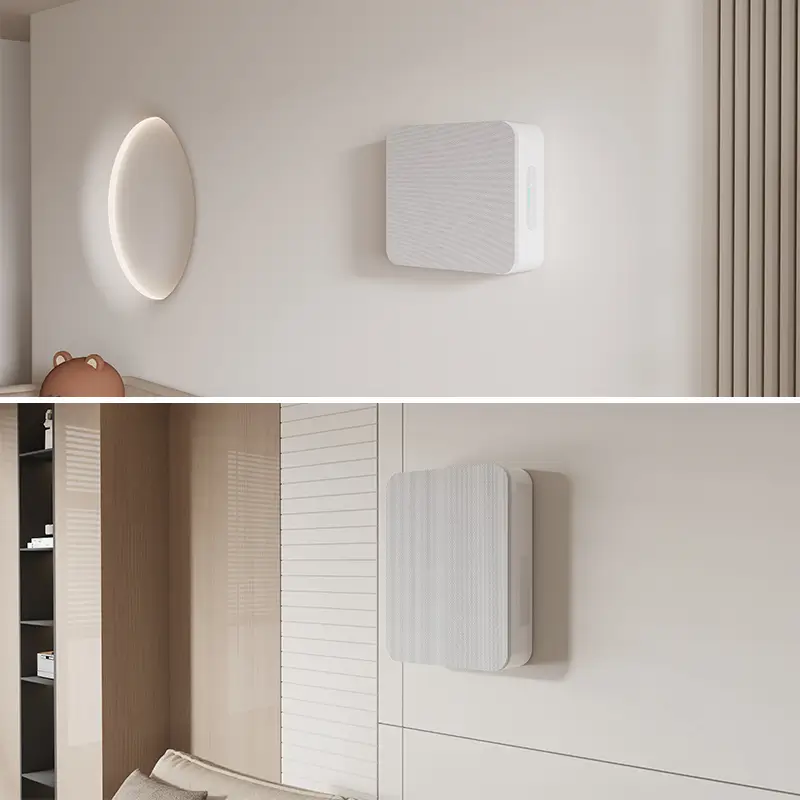
جهاز تنقية الهواء المثبت على الحائط HA200 وHA380
Standing & Wall-mounted air purifier HA180 & HA380 (Fabric panel)

The unit's versatile design allows for both horizontal and vertical wall mounting or traditional floor standing placement, providing unprecedented flexibility for diverse commercial settings. This adaptability makes it ideal for:

  • Corporate offices seeking to maximize usable floor space while maintaining optimal air quality
  • Healthcare facilities requiring powerful purification without intrusive equipment
  • Hospitality environments where aesthetic integration is as important as functionality
  • Educational institutions needing robust solutions that don't disrupt learning spaces

With a sleek, modern design that complements contemporary commercial interiors, our air purifier doesn't just clean air—it enhances your space. The unit's customizable exterior allows B2B clients to align the purifier with their brand aesthetics, creating a cohesive visual environment while delivering powerful air purification.

"The dual mounting capability has been a game-changer for our hotel chain," reports one of our hospitality clients. "We've been able to install these units in guest rooms without sacrificing valuable floor space, while still providing the air quality our guests increasingly demand."

ha200
Customizable appearance (HisoAir)

Medical-Grade Filtration Technology

In commercial environments where air quality directly impacts health, productivity, and customer experience, standard filtration is simply not enough. Our Standing & Wall Mounted Air Purifier incorporates medical-grade filtration technology that sets new standards for commercial air purification.

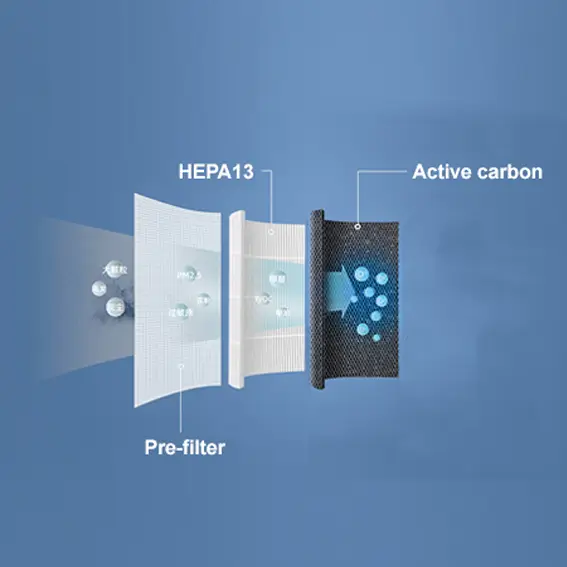
The multi-stage filtration system employs both electrostatic adsorption and physical interception principles to capture 99.97% of airborne particles down to 0.1 microns—significantly smaller than the 0.3-micron standard for HEPA filters. This enhanced capability means our purifiers effectively remove:

  • Airborne viruses and bacteria
  • Fine particulate matter (PM2.5 and PM10)
  • Allergens including pollen, dust mites, and pet dander
  • Volatile organic compounds (VOCs) from cleaning products and building materials
  • Smoke particles and odors

滤网

For projects that demand longer service intervals, we also offer an optional high-dust-holding filter cartridge. This upgrade extends filter life while maintaining peak performance, delivering tangible business benefits:

  • Reduced maintenance frequency and associated labor costs
  • Lower replacement filter expenses over the unit's lifetime
  • Consistent purification performance without degradation between filter changes
  • Decreased downtime for maintenance interventions

For facilities managers and operations directors, these advantages represent significant operational savings while ensuring consistently superior air quality for occupants.

Optional Sensor Technology for Intelligent Operation

The difference between basic air purifiers and truly intelligent air quality management lies in sensing capabilities. Our Standing & Wall Mounted Air Purifier can be equipped with an optional comprehensive suite of sensors that continuously monitor and respond to your environment:

ap ht m1549rs

Advanced PM2.5 Sensor (Standard)

The HA180 & HA380 / HA200 & HA400 are equipped with a high-precision PM2.5 sensor that continuously monitors indoor air quality. When set to Auto Mode, the purifier intelligently adjusts fan speed based on real-time PM2.5 levels—ensuring optimal performance.

ap ht m1549rs

Temperature & Humidity Sensors (Optional)

With high-precision monitoring from -40°C to +85°C and 0% to 100% RH, these sensors ensure your environment remains not just clean, but comfortable. The system works in harmony with existing HVAC systems to maintain ideal conditions.
السحب التلقائي

Noise Sensors (Optional)

Our proprietary Noise Sensor™ Technology continuously monitors ambient sound levels, automatically adjusting the unit so it operates in a whisper-quiet mode—ensuring air purification never disrupts a peaceful environment.

السحب التلقائي

Light Sensors (Optional)

The integrated Light Sensor™ Technology detects ambient lighting conditions and adjusts the unit's display brightness accordingly, preventing unnecessary light pollution in sensitive environments like hotels or healthcare facilities.

السحب التلقائي

Radar Sensors (Optional)

Our high-precision radar sensors detect occupancy patterns within spaces, allowing the purifier to optimize operation based on actual usage rather than arbitrary schedules. This intelligent capability delivers both enhanced performance and energy efficiency.

For business owners and facility managers, this optional sensor suite translates to:

  • Automated operation that requires minimal oversight
  • Optimized energy consumption through responsive purification
  • Detailed environmental data for compliance reporting
  • Enhanced occupant comfort through holistic environmental management

"The optional sensor technology has completely changed how we manage air quality across our office network," notes a corporate client. "We now have quantifiable data on air quality improvements, which has become part of our employee wellness program metrics."

Optional Smart Connectivity for Modern Businesses

In today's interconnected commercial environments, standalone solutions are no longer sufficient. Our Standing & Wall Mounted Air Purifier offers optional connectivity features designed specifically for business integration:

اتصال Wi-Fi (Optional)

Seamless remote control and real-time monitoring allow facility managers to adjust settings, monitor air quality, and receive alerts instantly via smartphone app or building management systems. This capability enables centralized management of air quality across multiple locations or floors.

matter

Matter Integration (Optional)

With universal smart home integration through the Matter standard, our purifiers effortlessly connect with Apple HomeKit, Google Home, Amazon Alexa, and other platforms. This interoperability ensures compatibility with existing building automation systems without requiring proprietary infrastructure.

thread

Thread Network Support (Optional)

Our purifiers can utilize ultra-reliable mesh network technology through Thread, ensuring uninterrupted performance with extended range and enhanced response time. This low-power, self-healing connectivity is ideal for large commercial spaces where network reliability is critical.

These optional connectivity features deliver substantial business value:

  • Centralized management of multiple units across different locations
  • Automated reporting for environmental compliance documentation
  • Predictive maintenance alerts to prevent unexpected downtime
  • Integration with existing building management systems for unified control

For IT and facilities teams, this means simplified management, reduced overhead, and seamless integration into smart building initiatives.

Optional Advanced Purification Technologies for Specialized Environments

Beyond advanced filtration, our Standing & Wall Mounted Air Purifier offers optional advanced purification technologies designed for environments with specialized requirements:
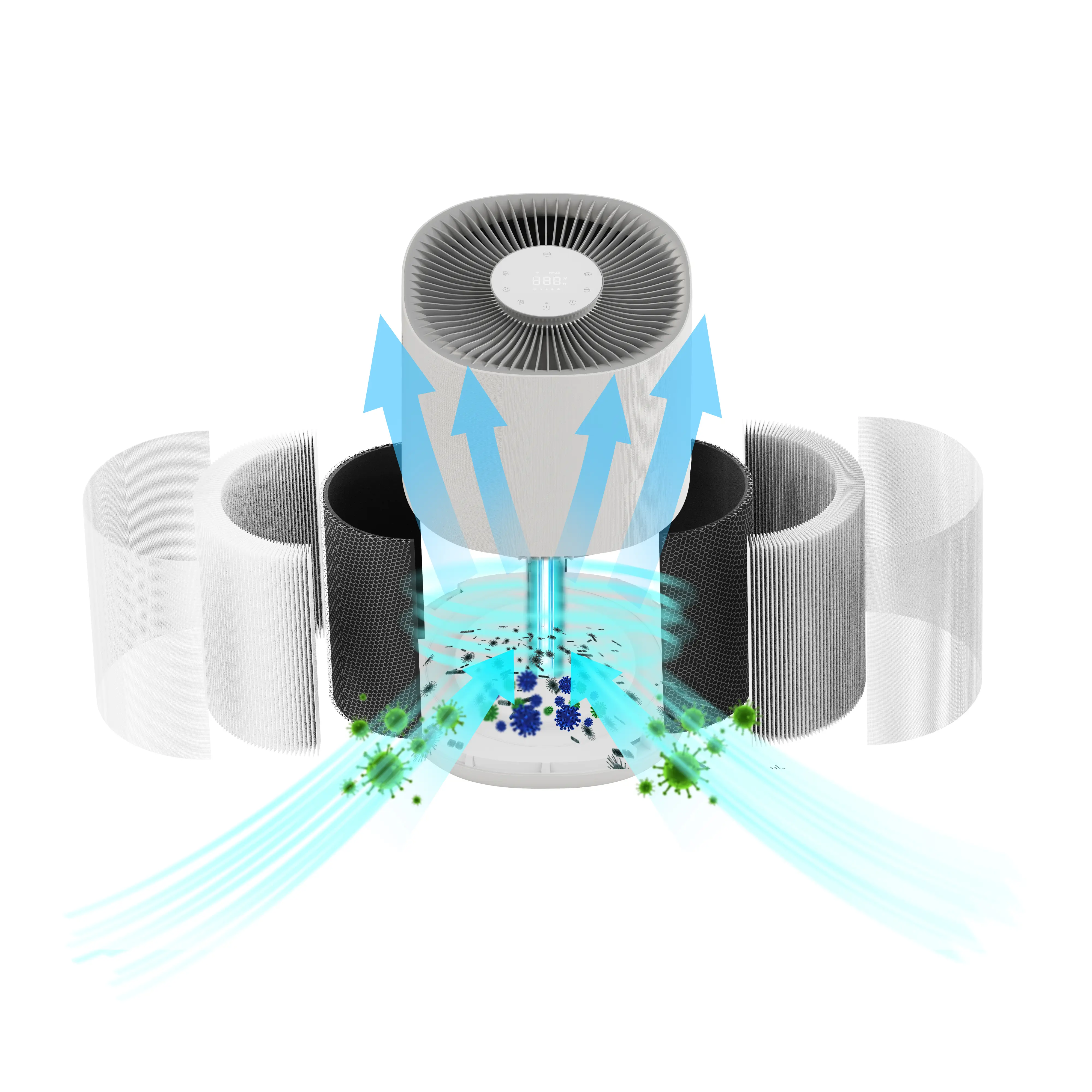
uv

UVC Photocatalytic Germicidal Technology (Optional)

This advanced system combines short-wave ultraviolet light (100-280 nm) with photocatalytic oxidation to destroy microbial DNA/RNA and break down cell membranes. The technology is particularly valuable in healthcare settings, food service environments, and other spaces where microbial control is critical.
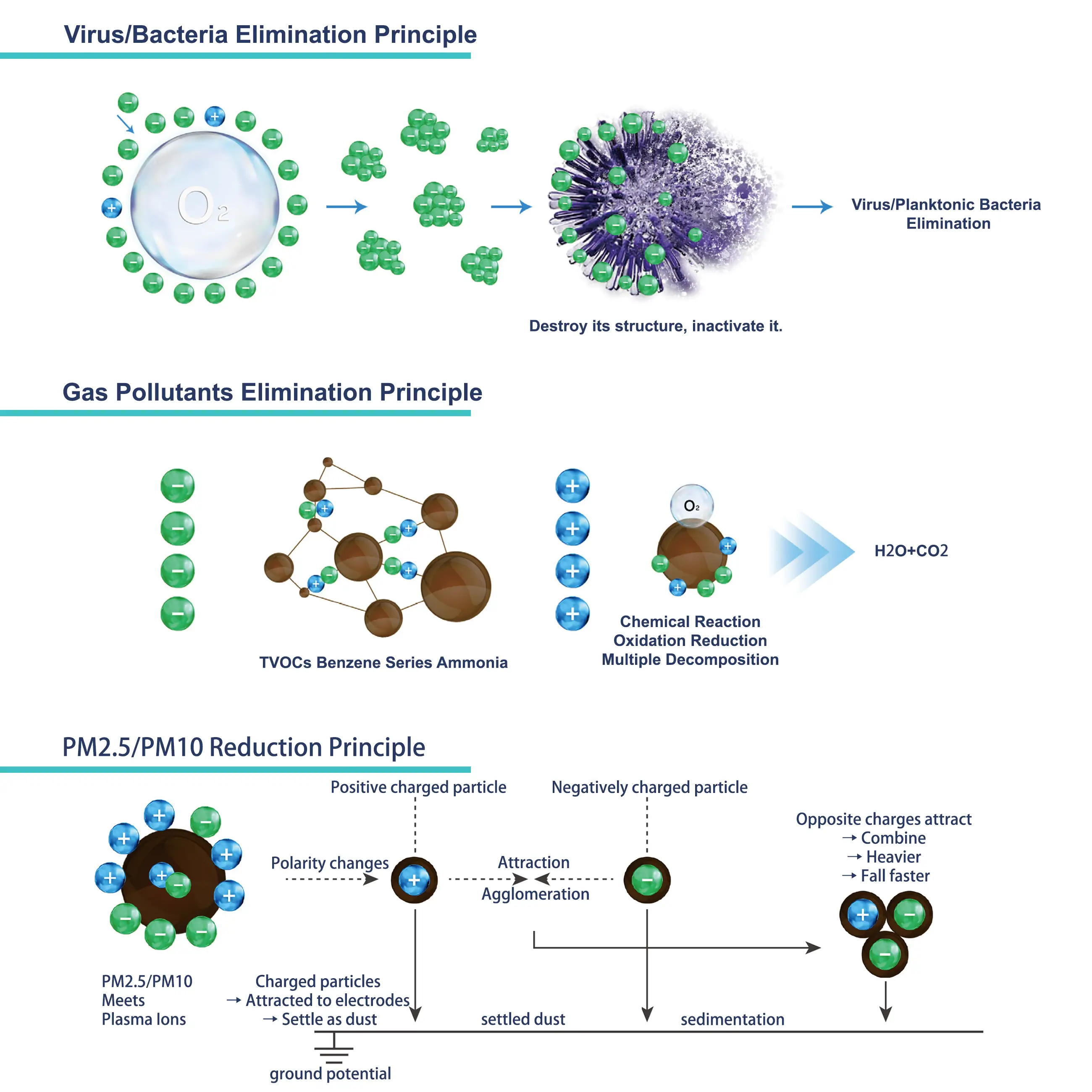
plasma ions

تقنية البلازما (Optional)

Our plasma system generates ion clusters through a high-voltage electric field, creating charged particles that actively target and neutralize viruses, bacteria, and pollutants. This technology excels at gas pollutant decomposition and particulate reduction, making it ideal for environments exposed to industrial emissions or high occupancy areas.

These optional technologies allow businesses to customize their air purification approach based on specific industry needs and environmental challenges, providing targeted solutions rather than one-size-fits-all approaches.
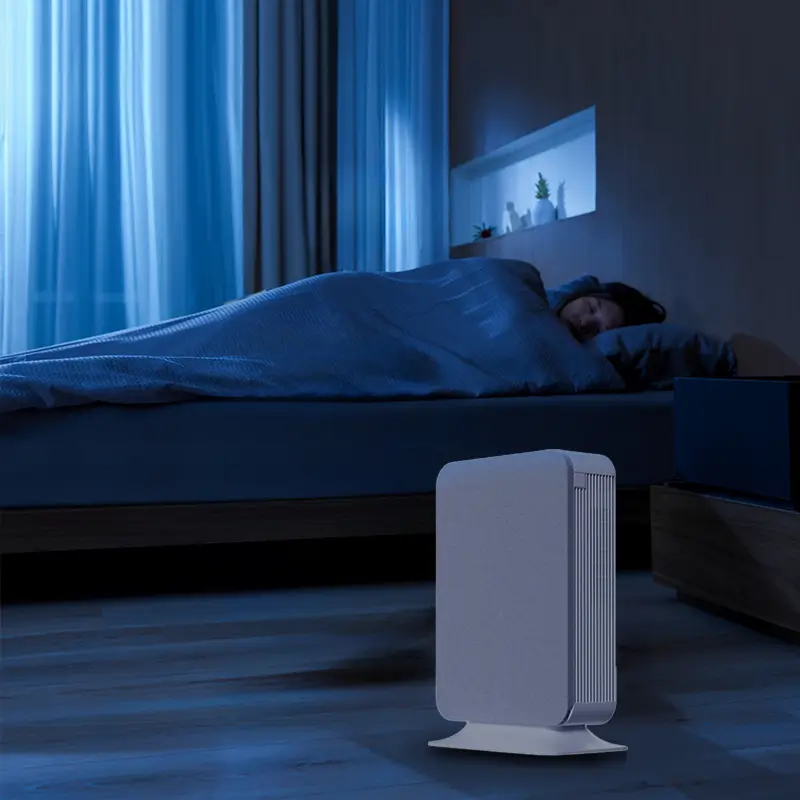
ha380卧室场景

Partner with a Global Leader in Air Quality Solutions

As businesses navigate increasingly complex air quality challenges, partnering with an experienced manufacturer makes all the difference. HisoAir brings over two decades of OEM/ODM expertise to every product, with manufacturing capabilities spanning China, Vietnam, and Thailand to ensure supply chain resilience and competitive pricing.

Our Standing & Wall Mounted Air Purifier represents not just a product, but a comprehensive approach to commercial air quality management—combining versatile design, medical-grade filtration, and a range of optional intelligent features in a solution designed specifically for business environments.

Whether you're a distributor looking to expand your product offerings, a facilities manager seeking to enhance workplace air quality, or a business owner investing in employee wellness, HisoAir's Standing & Wall Mounted Air Purifier delivers the performance, flexibility, and intelligence that modern commercial environments demand.

Contact our team today to discuss customized air quality solutions for your specific business needs, and discover why leading companies worldwide trust HisoAir to transform their indoor environments.

شارك:
السيد لي مؤسس شركة هيسواير
Alwen Lee, an air purification expert with over 10 years of experience, is a devoted father of two and a passionate traveler, having explored more than 30 countries. With a love for public speaking and swimming, he has dedicated his life to the indoor air quality industry. His mission is to ensure that people around the world enjoy the freedom to breathe clean air and lead happy, healthy lives.

أرسل لنا رسالة

المزيد للقراءة

Modern living room with a family enjoying a healthy indoor environment monitored by smart devices, natural lighting, and greenery.

After IFA 2026: The Healthy Home Is Moving Beyond Smart Devices

In our previous IFA 2026 column, Air Purification Is Becoming Part of the Healthy-Home Platform, we argued that the next generation of indoor-health products would ...
الأخبار
Modern living room and kitchen with smart home air quality devices including an air purifier, humidifier, and water filtration system, connected with visualized blue connectivity lines.

IFA 2026: Air Purification Is Becoming Part of the Healthy-Home Platform

Pre-IFA Industry Perspective | September 4, 2026 This article is based on official announcements and regulatory information available ahead of IFA 2026, which takes place ...
الأخبار
A modern office room with a gray wall-mounted air purifier, large wooden desk, office chairs, indoor plants, and glass windows offering a city view.

Luftreiniger gegen Staub: HEPA-Luftreinigung für Büro, Gewerbe und Industrie

Kurz gesagt: Ein Luftreiniger entfernt Staub aus der Luft – nicht vom Schreibtisch. Er reduziert die Konzentration schwebender Partikel und damit auch die Menge an ...
Air purifier, Filter
Comparison infographic showcasing the differences between carbon block filter and activated carbon fiber. Detailed diagrams illustrate the hierarchical porous structure of the carbon block with long diffusion paths and the open microporous structure of the activated carbon fiber with direct access for PFAS adsorption.

Carbon Block vs. Activated Carbon Fiber (ACF): Matching Media to Target Contaminants

Two carbon media. Same adsorption chemistry. Very different behaviour in a point-of-use cartridge. If you are specifying a water purifier platform for a PFAS-aware market, ...
الأخبار
NSF base listing and ANF private-label certification pathway for OEM water filters

What Is an NSF Master Listing? A Guide to Base Listings, ANF Certification and OEM Water Filters

For a brand preparing to launch an OEM water purifier, one of the most common supplier claims is: “We already have an NSF master listing, ...
News, Water Purifiers
Healthy-home brand team reviewing PFAS water filter certification, test data and product engineering

Entering the Water Category Is Easy. Building a Credible PFAS Claim Is Much Harder

For air purification, appliance and healthy-home brands, entering the water category can look surprisingly easy. A company can select an existing undersink system, customize its ...
الأخبار
Contaminant Engineering•3 min read

PFAS Water Filtration Technologies Explained: Carbon, Resin & RO

Key Takeaway:

PFAS reduction depends on the specific compounds present, treatment media, contact time, water chemistry, and system design. Activated carbon, ion exchange, and Reverse Osmosis address PFAS through different mechanisms.

PFAS are a large family of persistent fluorinated compounds that can occur in drinking-water supplies. Their treatment behavior varies significantly by molecular structure, chain length, functional group, concentration, and the chemistry of the source water.

Granular Activated Carbon (GAC) removes PFAS primarily through adsorption. It is generally more effective for many longer-chain PFAS, while shorter-chain compounds tend to break through more quickly. Carbon performance depends on media properties, Empty Bed Contact Time (EBCT), competing organic matter, loading, and replacement frequency.

Ion-exchange resins use charged functional sites to capture many PFAS compounds. Properly selected anion-exchange media can provide high capacity and may perform better than conventional activated carbon for some shorter-chain PFAS, although performance still depends on water chemistry and competing ions.

Reverse Osmosis (RO) uses membrane separation rather than adsorption. Properly designed RO systems can provide broad reduction across many PFAS compounds as well as dissolved salts and other contaminants. Unlike carbon or resin, however, RO also produces a concentrate stream that must be managed.

No single technology should be selected from a PFAS label alone. System design should consider which PFAS compounds are present, their concentrations, required reduction targets, flow rate, media life, and the applicable third-party certification or validation requirements.

HisoAir Water Technical Series
Product Discovery•3 min read

How to Choose an Under-Sink Water Purifier for Modern Kitchens

Key Takeaway:

Match the treatment technology to your water quality first, then evaluate cabinet space, faucet configuration, flow rate, drain and power requirements, and filter replacement needs.

Choosing an under-sink water purifier starts with water chemistry. Carbon filtration is well suited to chlorine, taste, odor, and many organic contaminants, while Reverse Osmosis is more appropriate when dissolved salts, fluoride, nitrates, or broader dissolved contaminants need to be reduced.

For compact kitchens, tankless RO systems eliminate the conventional storage tank and can significantly reduce the space required under the sink. However, membrane capacity stated in GPD does not directly equal faucet flow. When comparing systems, check the actual dispensing flow rate, inlet-pressure requirement, recovery ratio, and whether a booster pump is required.

Installation architecture also matters. Many RO systems require a drain connection, electrical power, and either a dedicated drinking-water faucet or a compatible multi-function faucet. High-flow carbon systems can often connect directly to the existing cold-water line with a simpler installation, but pressure drop and available faucet flow should still be verified.

RO also removes much of the naturally occurring dissolved mineral content. Where taste or mineral balance is a priority, a post-RO remineralization stage can be added. Filter life should be evaluated by both rated capacity and local water quality rather than replacement time alone.

The right system is therefore not simply the smallest or highest-GPD model. It is the configuration that matches the target contaminants, available cabinet space, desired faucet setup, peak dispensing demand, and maintenance expectations.

HisoAir Water Technical Series
Water Quality•2 min read

What Does TDS Mean in Drinking Water? Measurement vs Contaminant Reality

Key Takeaway:

A TDS meter estimates the overall concentration of dissolved ionic substances from electrical conductivity. It cannot identify specific contaminants or determine whether water is chemically safe.

Total Dissolved Solids (TDS) refers to the combined concentration of dissolved substances in water. Most handheld TDS meters do not measure TDS directly. Instead, they measure electrical conductivity (EC) and convert that reading into an estimated parts-per-million (ppm) value.

This means a TDS reading can indicate how much dissolved ionic material is present, but not what that material actually is. Calcium, magnesium, sodium, nitrates, and other dissolved ions can all contribute to conductivity, yet a simple TDS meter cannot distinguish between them.

TDS meters are also not suitable for detecting trace contaminants such as PFAS, many VOCs, pesticides, pharmaceuticals, or disinfection byproducts. These substances may be present at concentrations far below the level needed to noticeably change electrical conductivity.

A low TDS reading therefore does not guarantee safe drinking water, and a higher TDS reading does not automatically indicate contamination. Water-treatment decisions should be based on laboratory testing for specific contaminants of concern rather than TDS alone.

HisoAir Water Technical Series
Technology Selection•2 min read

RO vs UF Water Filtration: Understanding Pore Sizes & Dissolved Minerals

Key Takeaway:

Ultrafiltration can reduce bacteria, turbidity, and suspended particles while retaining most naturally occurring dissolved minerals. Reverse Osmosis provides much broader reduction of dissolved salts and smaller contaminants.

Ultrafiltration (UF) typically uses hollow-fiber membranes with pore sizes in the approximate 0.01–0.1 micron range. These membranes physically retain turbidity, suspended solids, colloids, and many microorganisms while allowing dissolved minerals and salts to remain in the water.

Reverse Osmosis (RO) operates at a much finer separation level. Unlike UF, RO can substantially reduce dissolved ions such as sodium, calcium, fluoride, nitrates, and other contributors to total dissolved solids (TDS). This makes RO more suitable when dissolved-salt reduction is a primary treatment objective.

UF generally requires less system pressure and produces little or no continuous concentrate stream in many point-of-use configurations. RO typically requires greater pressure and produces a reject-water stream, but delivers broader contaminant reduction.

For water with acceptable TDS and mineral content, UF can be a simpler mineral-retaining treatment option. Where dissolved salts, fluoride, nitrates, or broader dissolved contaminants are a concern, RO is generally the more appropriate technology.

HisoAir Water Technical Series
Technology Selection•4 min read

Carbon Block vs Reverse Osmosis: Which Fits Your Need?

Key Takeaway:

Choose RO for dissolved inorganic salts and heavy metals; choose Carbon Block for chemical taste/odor, no wastewater, and high line-pressure flow.

Reverse Osmosis (RO) and Carbon Block filtration represent two fundamentally different treatment methods: membrane separation and adsorption. Understanding these differences helps determine which technology is better suited to a specific water-quality requirement.

Reverse Osmosis uses a semi-permeable membrane with pore sizes of approximately 0.0001 microns. It can significantly reduce dissolved inorganic contaminants such as TDS, fluoride, nitrates, and certain heavy metals. Because water must be forced through the membrane, RO systems require sufficient pressure or a booster pump and generate a concentrated wastewater stream.

Carbon Block filtration relies primarily on adsorption through compressed activated carbon, commonly with nominal pore sizes around 0.5–5 microns. It is highly effective for chlorine, chloramines, VOCs, taste, and odor, while allowing substantially higher direct-flow rates without producing wastewater.

From an operating perspective, Carbon Block systems are generally simpler, require less energy, and avoid the water loss associated with RO. RO involves higher system complexity and operating cost, but provides substantially broader reduction of dissolved contaminants that Carbon Block alone cannot address.

HisoAir Water Technical Series

طلب عرض أسعار