

Designing a top-tier wellness product is difficult when there are so many water treatment options1. You might choose the wrong tech and hurt your brand's reputation. Let's fix that.
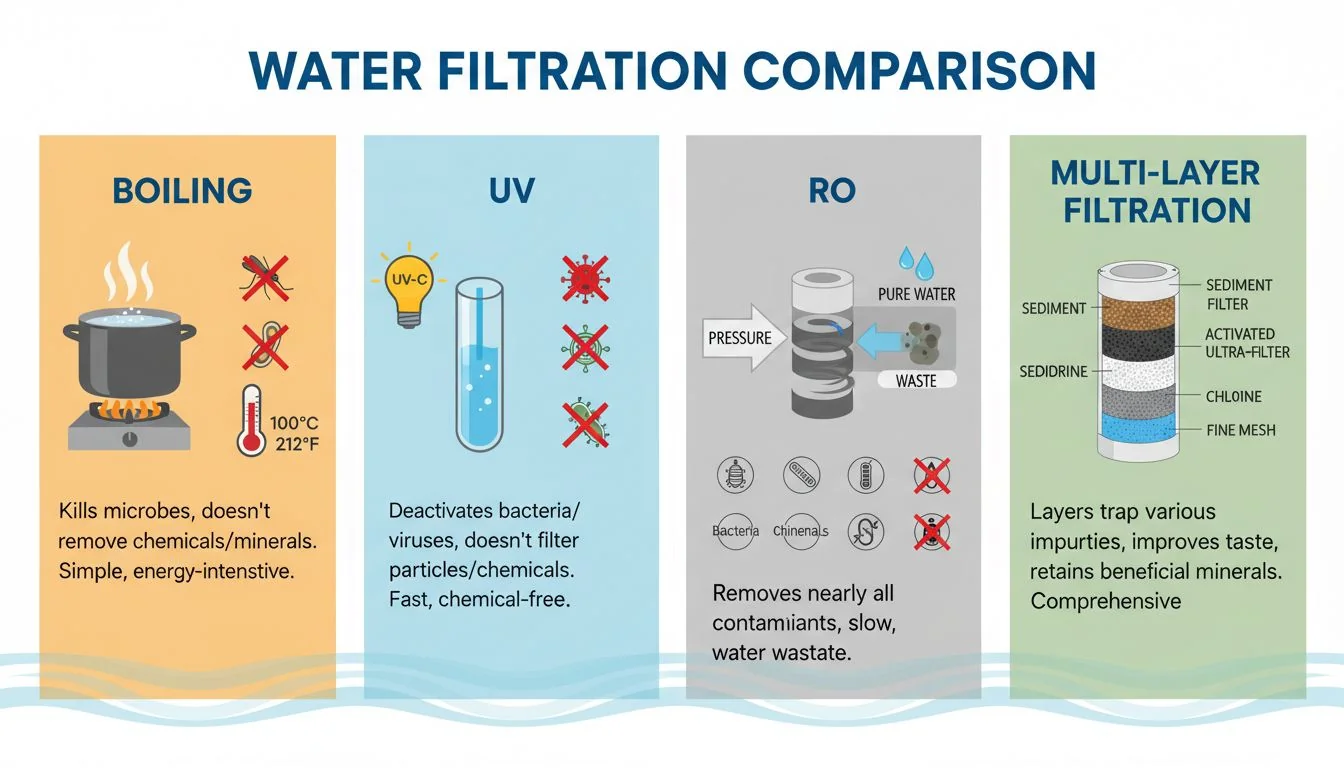
Boiling and UV are simple sterilizers that kill bacteria but leave chemicals behind. multi-layer filtration2 improves taste but misses heavy metals. Reverse Osmosis (RO) is the gold standard for removing toxins. However, for true wellness, you must pair RO with stainless steel storage to prevent plastic re-contamination.
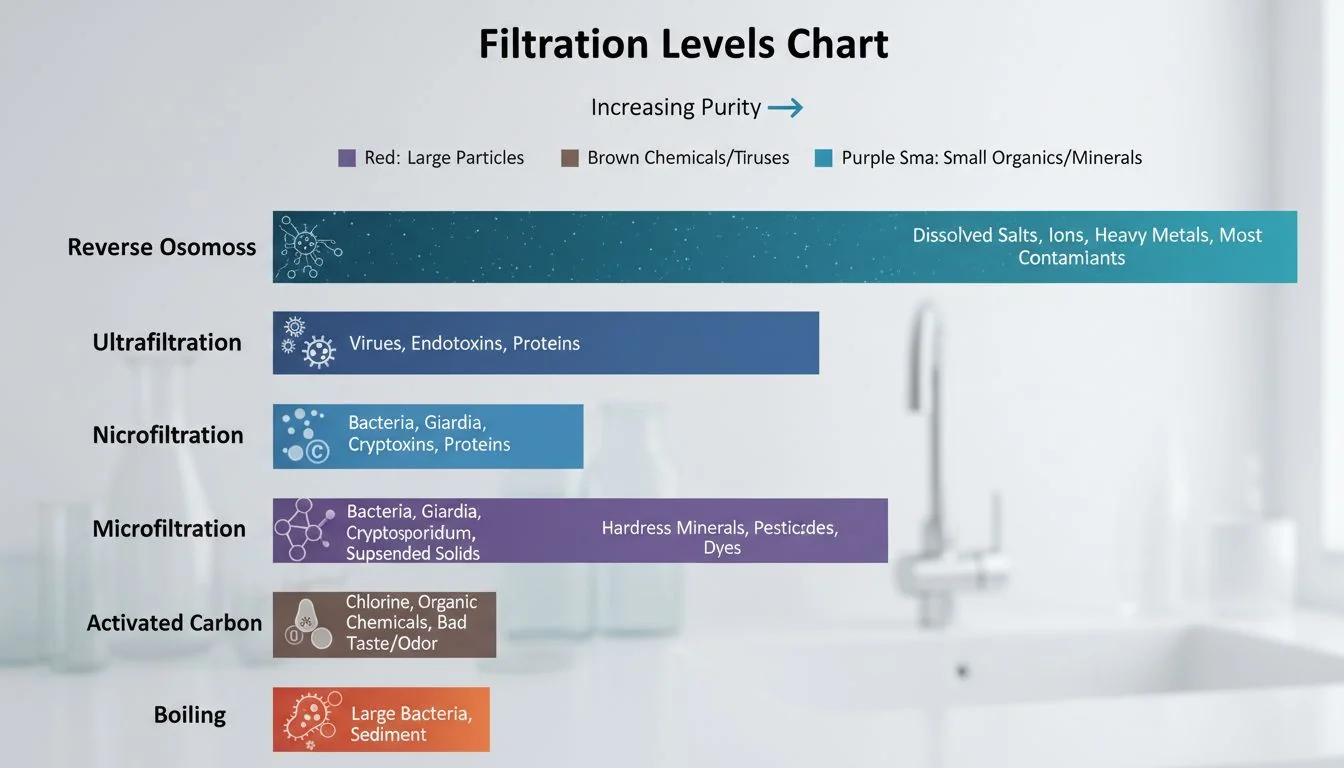
Many product designers confuse "killing bugs" with "removing toxins." This is a critical mistake. I want to walk you through the different levels of water purification3 so you can specify the right mold and materials for your next project.
Boiling water concentrates heavy metals and salts as water evaporates.صحيح
As water turns to steam, the volume decreases, but the solid contaminants like lead or salts remain, increasing their concentration in the remaining liquid.
UV light removes heavy metals and microplastics from water.خطأ
UV light is a sterilization method that disrupts the DNA of bacteria and viruses. It has no physical ability to remove solid particles, chemicals, or heavy metals.
Why Is There So Much Confusion Between Sterilization and Filtration?
I often see founders pitch "wellness" products that are just fancy kettles. They confuse safety with purity4. You need to know the difference to lead the market.
Sterilization, like boiling or UV, only kills biological threats like bacteria and viruses. Filtration, like RO or Carbon, physically removes contaminants. Modern consumers are less worried about cholera and more worried about microplastics5 and lead. Therefore, filtration is the higher-value feature for wellness brands.
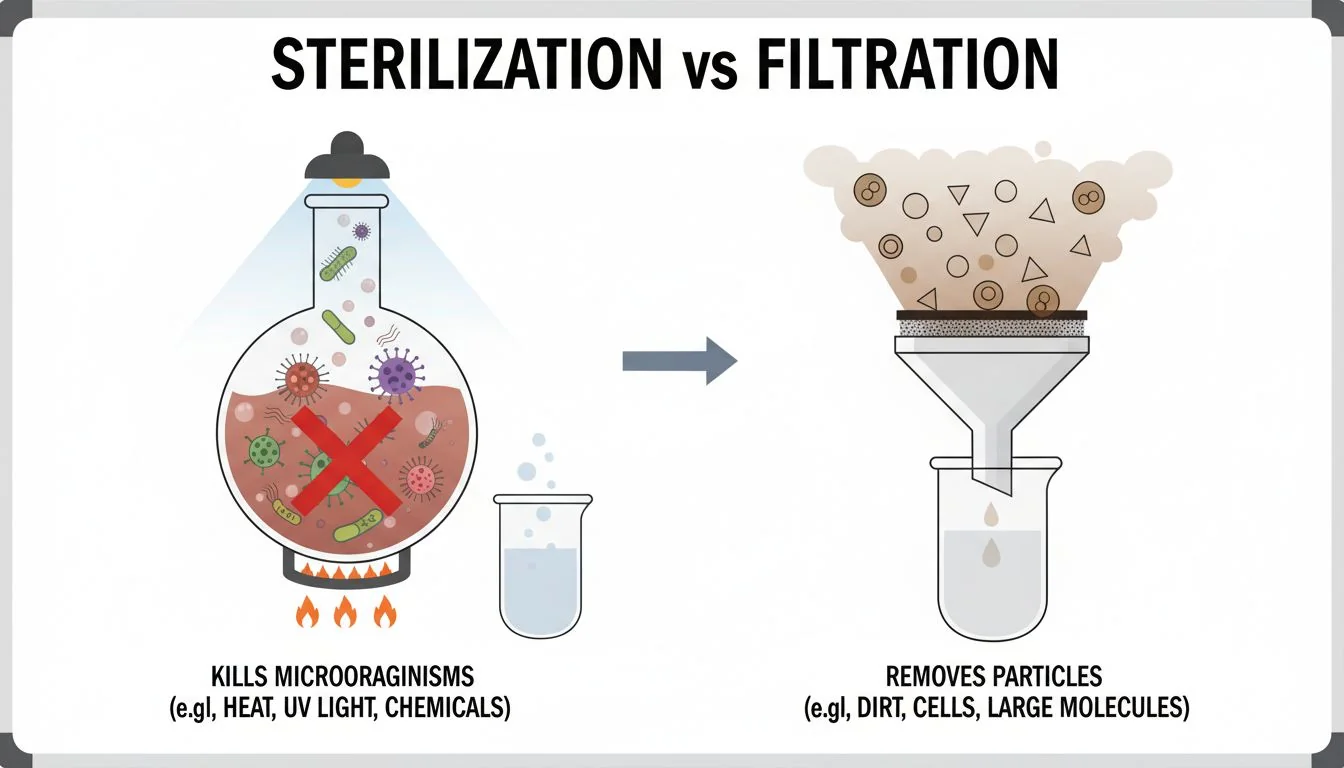
In my years in the mold industry, I have seen many specs for "purifiers" that are just heaters. We need to be precise with our terms. Sterilization is about killing living things. This was the main goal fifty years ago when sanitation was poor. Today, the problem is different. The modern consumer in Canada or the US is not afraid of bacteria in their tap water. They are afraid of industrial runoff.
They worry about "forever chemicals" (PFAS), lead from old pipes, and microplastics. A UV lamp cannot remove a piece of plastic. Boiling water cannot take out lead. If you design a product that only sterilizes, you are solving a problem your customer does not have. You are ignoring the problem they actually care about. To build a premium device, you must move from "killing bugs" to "removing toxins." This distinction changes everything about your internal component layout and your mold design.
Comparison of Consumer Concerns
| Concern | Technology Needed | Market Value |
|---|---|---|
| Bacteria/Viruses | UV / Boiling | Low (Basic Safety) |
| Chlorine/Taste | فلتر الكربون | Medium (Comfort) |
| Heavy Metals/PFAS | Reverse Osmosis | High (Wellness) |
Modern consumers prioritize chemical removal over bacteria killing in developed nations.صحيح
Market trends show a rising demand for RO systems specifically to address concerns about microplastics, PFOS, and lead, which are chemical/physical contaminants, not biological.
Carbon filters alone can remove all viruses from water.خطأ
Carbon filters are designed for chemical adsorption (like chlorine). They are too porous to physically trap tiny viruses.
Is Boiling Water Actually a Wellness Strategy?
You might think boiling is the oldest and best way to clean water. It is actually the worst option for a modern health product. Let's look at the science.
Boiling is a survival tactic, not a wellness strategy. While it kills bacteria, it causes water to evaporate. This evaporation concentrates the remaining heavy metals and salts. A "smart kettle" effectively makes the water more toxic regarding chemicals than it was before boiling.
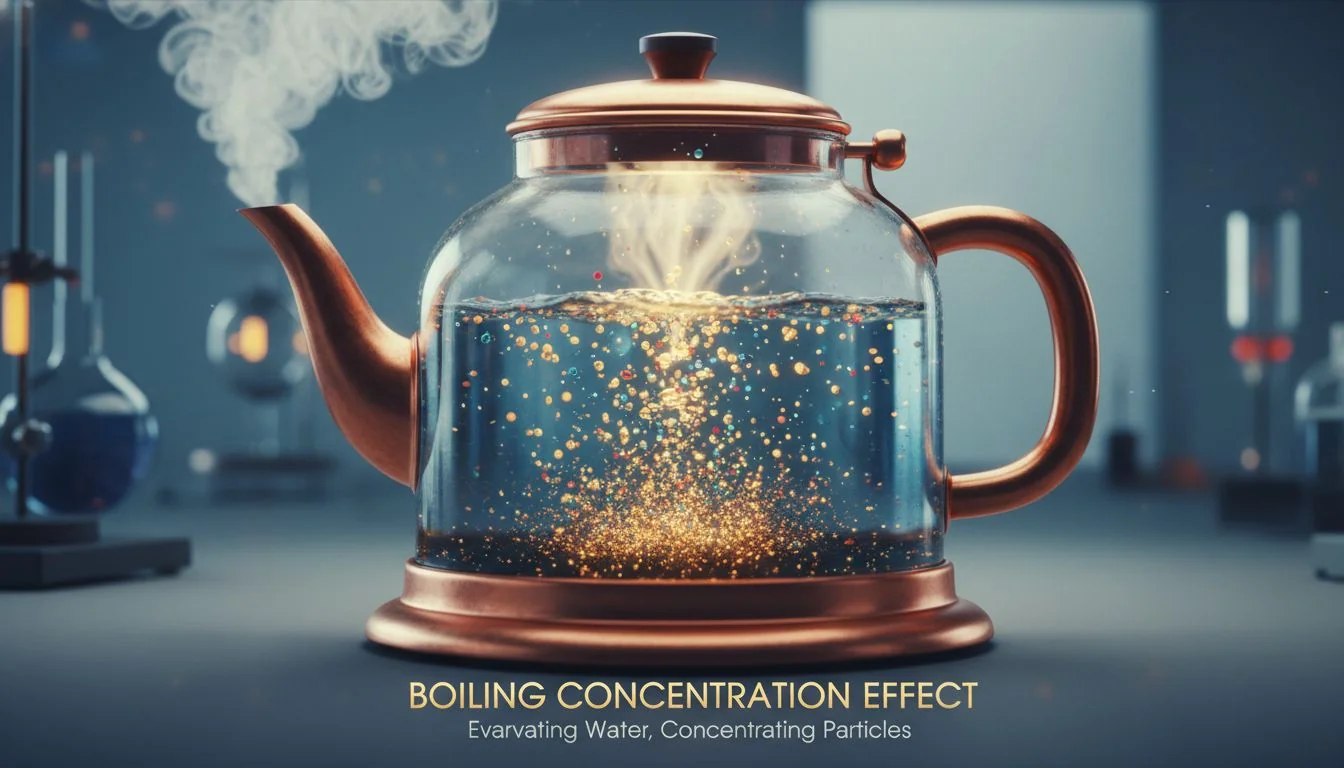
I remember my grandmother always boiling water. In her time, that was smart. It stopped her from getting sick. But for us as designers, we cannot rely on old habits. We must look at the physics. When you boil water, you create steam. That steam is pure H2O leaving the vessel. What stays behind? Everything else.
If your tap water has a small amount of lead or nitrates, boiling reduces the water volume but keeps the lead. The concentration of the poison actually goes up. This is why I tell my clients that boiling is obsolete for the "wellness" category. It is fine for making tea, but it is not purification. If you are designing a high-end water device, you cannot just use a heating element. You are selling a "concentration machine," not a purifier. This is a strong argument you can use against competitors who sell simple electric kettles as health devices.
The Boiling Paradox
- Heat Applied: Water reaches 100°C.
- Bacteria Die: Biological safety is achieved.
- Water Evaporates: Pure water leaves as gas.
- Toxins Remain: Metals and salts become more concentrated in the remaining liquid.
Boiling removes chlorine from water.صحيح
Chlorine is a volatile gas. Boiling water accelerates the off-gassing process, effectively removing chlorine and improving taste.
Boiling removes nitrates and lead.خطأ
Nitrates and lead are dissolved solids with high boiling points. They do not evaporate with the water and instead become more concentrated.
Where Does Multi-Layer Filtration Fit in the Market?
Multi-layer filters are the "middle ground." They are better than boiling but not quite perfect. They are great for taste but have limits.
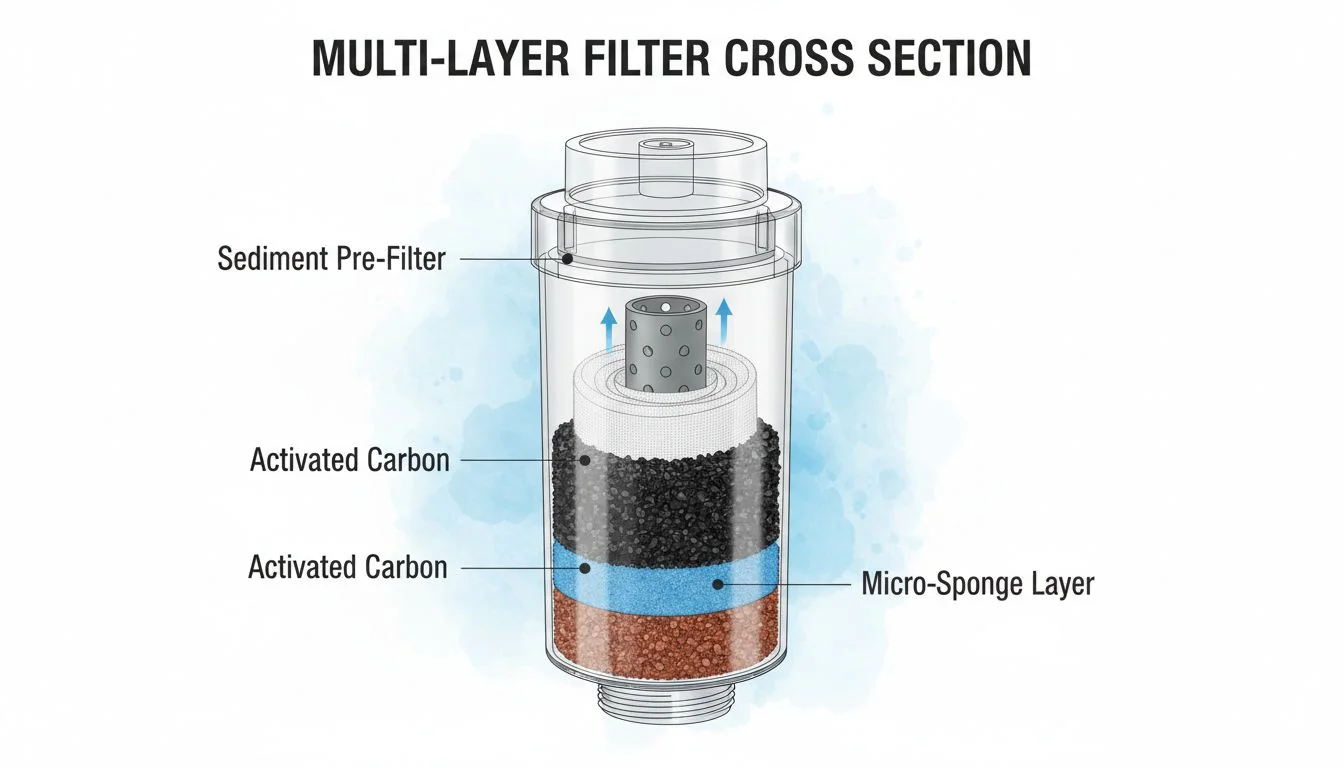
Multi-layer filtration, usually combining sediment and carbon, acts as a "Balancer." It removes chlorine, sediment, and bad odors while keeping minerals. It is excellent for improving taste, but it cannot filter out the smallest viruses or dissolved solids like arsenic.
Dive deeper Paragraph:
When we design housings for filter cartridges, we usually see a sequence. First, a PP cotton layer stops the big dirt. Then, activated carbon sucks up the chlorine. This is what I call the "Balancer" approach. It makes the water taste great. It keeps the calcium and magnesium that people like. For a mid-range product, this is a solid choice.
However, you need to be honest about the specs. The pore size of these filters is usually around 0.1 to 1 micron. That is small, but not small enough for everything. Heavy metals are dissolved on a molecular level. They pass right through a carbon block. If your target market has old plumbing with lead pipes, a multi-layer filter is not enough protection. As a designer, you must balance the cost of the filter housing against the performance claims. If you claim "total purity," this tech will fail you.
Filter Pore Size Comparison
| نوع المرشح | Pore Size (Micron) | What it Stops | What Passes Through |
|---|---|---|---|
| Sediment | 5.0 | Sand, Rust | Bacteria, Chemicals |
| Carbon Block | 1.0 | Chlorine, Odor | Viruses, Metals |
| Ultrafiltration | 0.01 | البكتيريا | Dissolved Salts |
Activated carbon filters improve the taste of water.صحيح
Carbon is highly effective at adsorbing organic compounds and chlorine, which are the primary causes of bad taste and odor in tap water.
Multi-layer filtration removes all beneficial minerals.خطأ
Most standard multi-layer filters (sediment + carbon) do not remove dissolved minerals like calcium and magnesium, leaving the water mineral-rich.
Why Is Reverse Osmosis Considered the Gold Standard?
If you want the highest level of purity, there is only one choice. Reverse Osmosis (RO) is the technology that defines the premium sector.
Reverse Osmosis (RO) uses a membrane with pores as small as 0.0001 microns. This is the "Gold Standard" because it removes 99% of contaminants, including heavy metals, viruses, and dissolved salts. It strips the water down to its purest form, removing the toxins other filters miss.
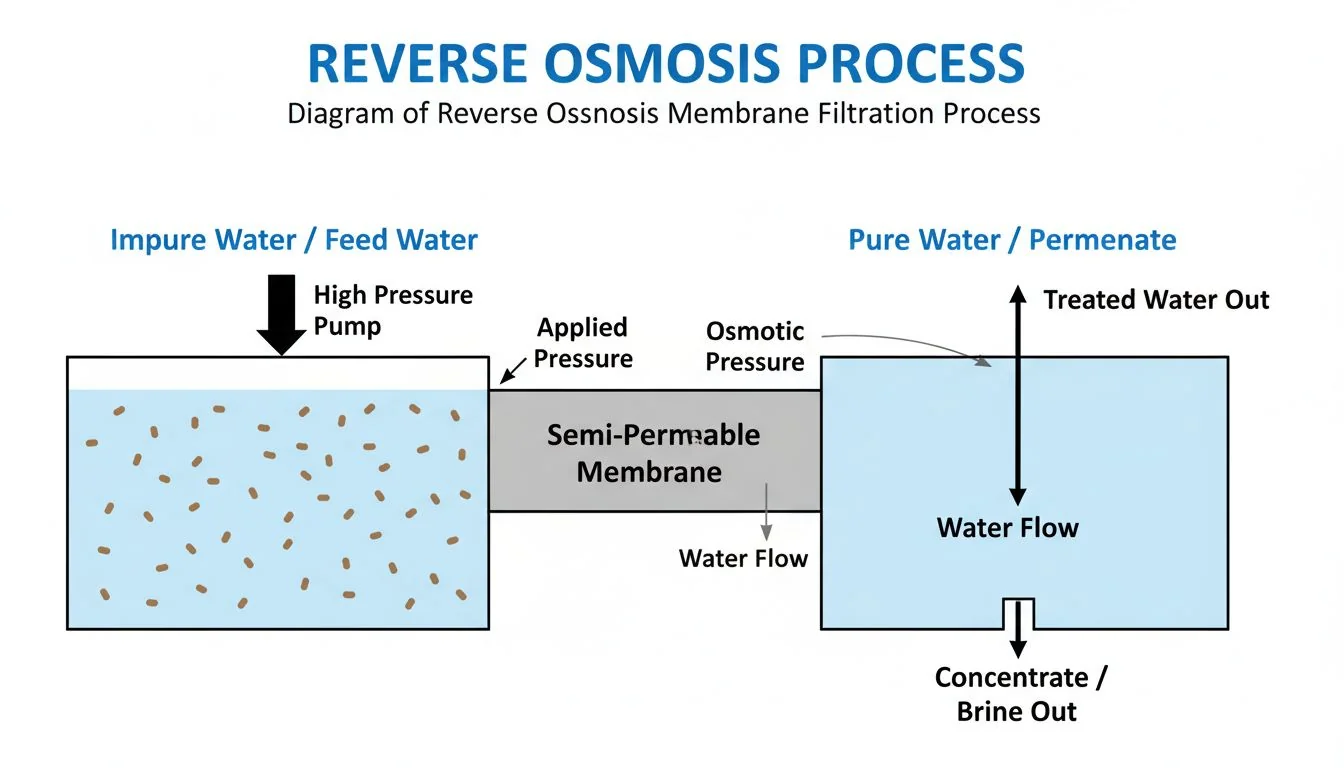
I have sourced many components for water systems, and the RO membrane is always the most critical. Think of it as a net that is so tight, only water molecules can squeeze through. The pressure forces the water against this membrane. The clean water goes through, and the dirty water is flushed away. This is the only residential technology that effectively removes fluoride, arsenic, and lead.
For a wellness brand, this is your strongest selling point. You are offering "blank slate" water. It is free from the industrial pollution I mentioned earlier. However, this technology impacts your mold design significantly. You need high-pressure pumps. You need a waste water line. You need a more complex internal structure than a simple gravity filter. But the result is a product that delivers on the promise of purity. If you want to dominate the high-end market, you must build your chassis around an RO system.
RO Removal Capabilities
- Microplastics: 100% Removed
- Viruses: >99.99% Removed
- Heavy Metals: >98% Removed
- Dissolved Solids: >95% Removed
Reverse Osmosis requires external pressure to work.صحيح
RO works by overcoming natural osmotic pressure. A pump is required to force water through the semi-permeable membrane.
RO membranes have a pore size of 0.1 microns.خطأ
RO membranes are much finer, typically around 0.0001 microns. 0.1 microns is the standard for Microfiltration or Ultrafiltration.
How Can Even the Best RO System Fail the Wellness Test?
Here is the secret that most brands miss. You can have the best filter, but if you store the water wrong, you ruin it.
This is the "Hidden Failure." RO water is slightly acidic and "hungry" for ions. If you store this pure water in a plastic tank, it will leach chemicals from the plastic faster than tap water would. This re-contamination renders the expensive filtration useless.
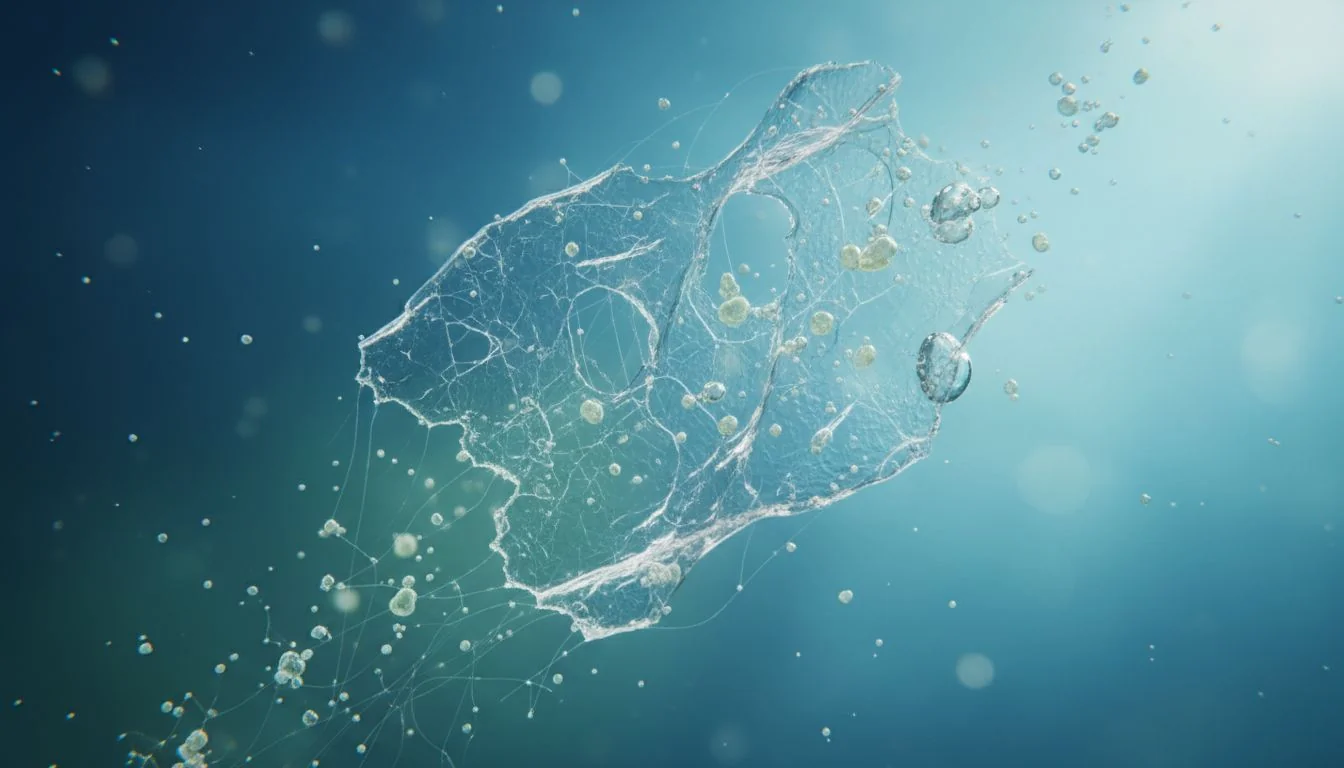
This is where my experience with materials becomes vital. I have seen great RO systems ruined by cheap plastic tanks. When you strip water of all its minerals via RO, it becomes hypotonic. It becomes aggressive. It wants to bond with something. If you put that "hungry" water into a standard Polypropylene (PP) or ABS tank, the water will attack the plastic walls.
Over time, the water pulls micro-particles and chemical stabilizers out of the plastic. You just spent energy filtering out microplastics, only to add them back in during storage! This is the "Re-Contamination Pivot." Most competitors stop talking after the filter stage. They ignore the storage stage. If you are a designer, you must realize that the storage tank is actually the final stage of filtration. If the tank is dirty, the water is dirty. This creates a massive opportunity for a better design solution.
The Cycle of Re-Contamination
- Purification: RO removes all impurities.
- Hungry State: Water is pure but unstable/acidic.
- Storage: Water sits in a plastic tank.
- Leaching: Water absorbs chemicals from the tank material.
- Result: The user drinks contaminated water.
Pure RO water is slightly acidic.صحيح
RO water absorbs carbon dioxide from the air, which forms mild carbonic acid, lowering the pH to around 5-6.
Plastic tanks are inert and never react with water.خطأ
Plastics can degrade over time, especially with aggressive (pure) water or heat, leaching additives like BPA or phthalates into the liquid.
What Is the Ultimate Wellness Device Configuration?
So, how do we solve the leaching problem? We combine the best tech with the best material. This is the future of wellness hardware.
snippet paragraph:
The ultimate wellness device integrates Reverse Osmosis technology with a Stainless Steel body. Stainless steel is inert and does not leach. By replacing the plastic tank with steel, you ensure the water stays as pure as it was when it left the membrane.

This is the conclusion I have reached after years in manufacturing. The perfect product uses RO to clean the water and Stainless Steel (specifically 304 or 316 food grade) to hold it. Steel does not react with "hungry" RO water. It prevents bacteria growth better than plastic. It is durable and premium.
The challenge for you, Jacky, is integration. Most factories only do plastic injection molding. They cannot handle steel deep drawing or welding. You need a partner who can integrate these two worlds. You need a "hybrid" approach. This is where a brand like Hisoair stands out as an integrator. They put the high-tech filtration into a high-quality steel body. As a designer, if you can advocate for a steel chassis or tank in your next design meeting, you are solving the biggest hidden flaw in the industry. You are creating a true wellness product, not just another plastic appliance.
The Winning Formula
- الترشيح: Reverse Osmosis (Removes the bad stuff)
- Storage: Stainless Steel (Keeps it pure)
- Result: Zero Re-contamination
Stainless steel is more resistant to bacterial biofilm than plastic.صحيح
Stainless steel has a non-porous surface that makes it much harder for bacteria to adhere and form biofilms compared to the microscopic texture of plastics.
Stainless steel tanks are cheaper to manufacture than plastic tanks.خطأ
Stainless steel requires more expensive raw materials and complex manufacturing processes (welding, polishing) compared to simple injection molding of plastic.
الخاتمة
To design a real wellness product, you must move beyond simple boiling or UV. You need Reverse Osmosis to remove toxins, and crucially, you need a Stainless Steel body to prevent re-contamination.
References
-
Get insights into the most effective water treatment technologies for creating high-quality wellness products. ↩
-
Learn about the effectiveness and limitations of multi-layer filtration systems for improving water quality. ↩
-
Understand the various techniques available for purifying water and their effectiveness. ↩
-
Delve into the criteria that determine water purity and the technologies that achieve it. ↩
-
Investigate the impact of microplastics on health and the importance of filtration systems that can remove them. ↩









 English
  Français
  Español
  Italiano
  Deutsch
  Português
  Русский
  العربية
  日本語
日本語  한국어
한국어  Tiếng Việt

