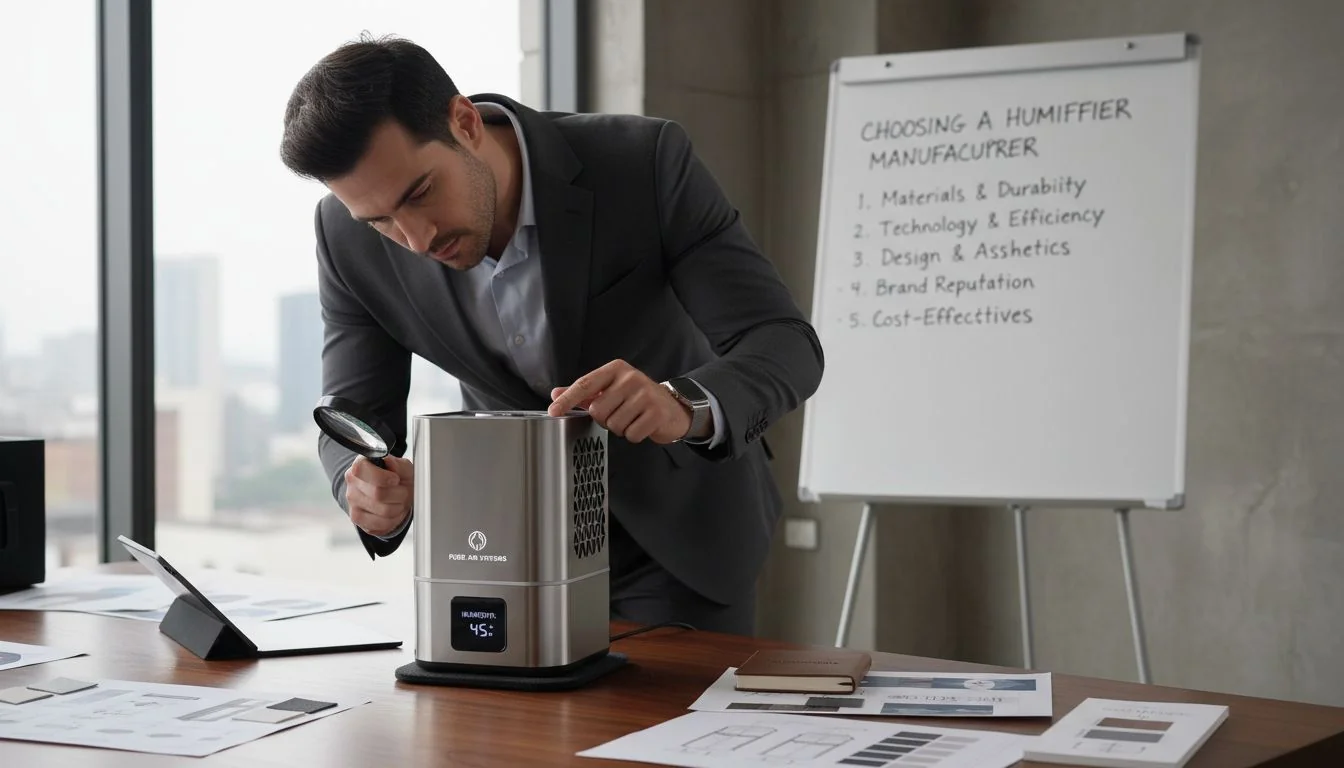
Your brand's success hinges on your product. Choosing the wrong manufacturer can lead to quality issues and failure. I'll give you the checklist to find a partner who ensures success.
To choose the right humidifier manufacturer, you must look beyond the unit price. Evaluate them with a checklist focused on three key areas: their ability to innovate with materials, their existing and verifiable US & EU compliance, and their willingness to act as a strategic partner1.
I've spent my career in the mold and manufacturing industry. I've seen countless brands make one critical mistake at the very beginning. They choose a factory, not a partner. This decision can make or break a business before the first product even ships. I've seen the painful results of a bad choice, from recalls to entire businesses folding.
That's why I created this guide. It's not just advice; it's the exact framework I use to vet manufacturing partners. This is the most important decision your brand will make. Let's make sure you get it right.
Over 80% of new consumer electronic products fail in the market.صحيح
Market studies and business analyses frequently cite high failure rates for new products, often attributed to poor product-market fit, quality issues, and supply chain problems, all of which are linked to manufacturing partner choice.
Choosing a manufacturer based on price alone guarantees higher profit margins.خطأ
While a lower unit cost can increase initial margins, it often leads to higher long-term costs from defects, returns, compliance failures, and brand damage, ultimately eroding profitability.
Are You Falling for the "Commodity Trap" by Choosing on Price Alone?
The lowest price on a quote sheet looks so tempting. It feels like a smart business move, a direct path to higher profits. But this is a dangerous illusion.
The "commodity trap2" is when a brand chooses a factory based only on the lowest price. This ignores critical factors like quality, reliability, and innovation. It's a race to the bottom that often leads to product failures, angry customers, and a damaged brand reputation.

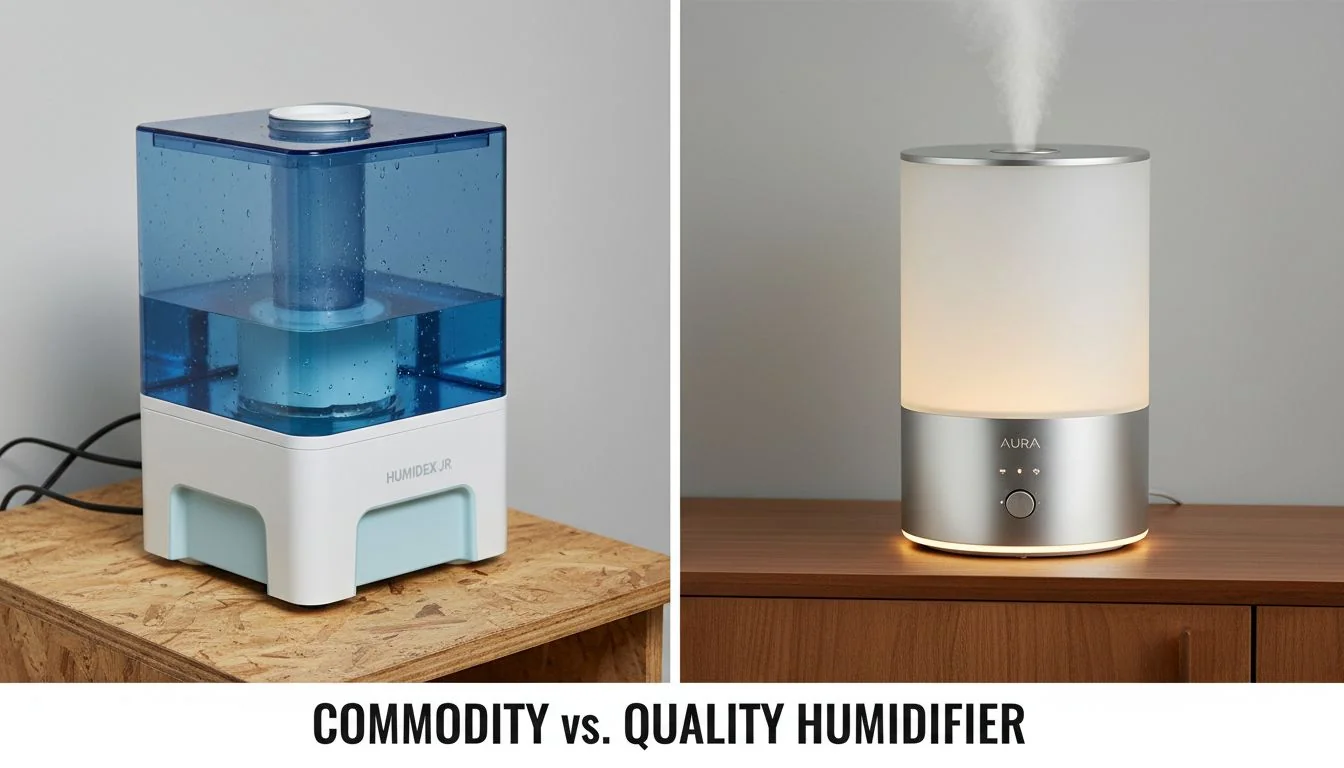
I've seen this happen firsthand. A client of mine was obsessed with saving fifty cents per unit on a new product. They chose a factory that gave them the rock-bottom price. The first shipment arrived, and the quality was terrible. The plastic felt cheap, the seams didn't line up, and a significant percentage didn't even work. They were stuck with a container of useless inventory. The fifty cents they "saved" per unit cost them their entire investment. This is the enemy: the "Commodity Factory." Their only weapon is a low price, and it's a weapon pointed directly at your brand's future. Smart brands know that the cheapest factory is almost always the most expensive choice in the long run.
The Mindset Difference
The core of the issue is the factory's mindset. Are they just trying to win your order, or are they trying to help you win the market?
| Commodity Supplier | Strategic Partner |
|---|---|
| Focuses on lowest unit cost | Focuses on total value and ROI |
| Transactional relationship | Collaborative relationship |
| Provides a basic, copied product | Helps you create a unique product3 |
| Disappears after shipment | Supports you post-launch |
The cheapest supplier always results in the lowest Total Cost of Ownership (TCO).خطأ
Total Cost of Ownership includes not just the purchase price but also costs related to quality control, defects, returns, shipping delays, and compliance, which are often higher with low-price suppliers.
Factories competing solely on price often cut corners on materials and quality control.صحيح
To achieve the lowest possible price, factories must reduce their costs. The easiest areas to cut are raw material quality, a less rigorous Quality Assurance (QA) process, and minimal investment in R&D.
Do They Offer Innovation or Just Commodities?
Your product is sitting on a digital shelf next to a dozen others that look almost identical. It's a generic plastic box. How will a customer choose yours?
When your product is generic, you are forced to compete on price. This erodes your margins and makes your brand forgettable. You need a "hero product" that stands out, and that begins with an innovative manufacturing partner4.
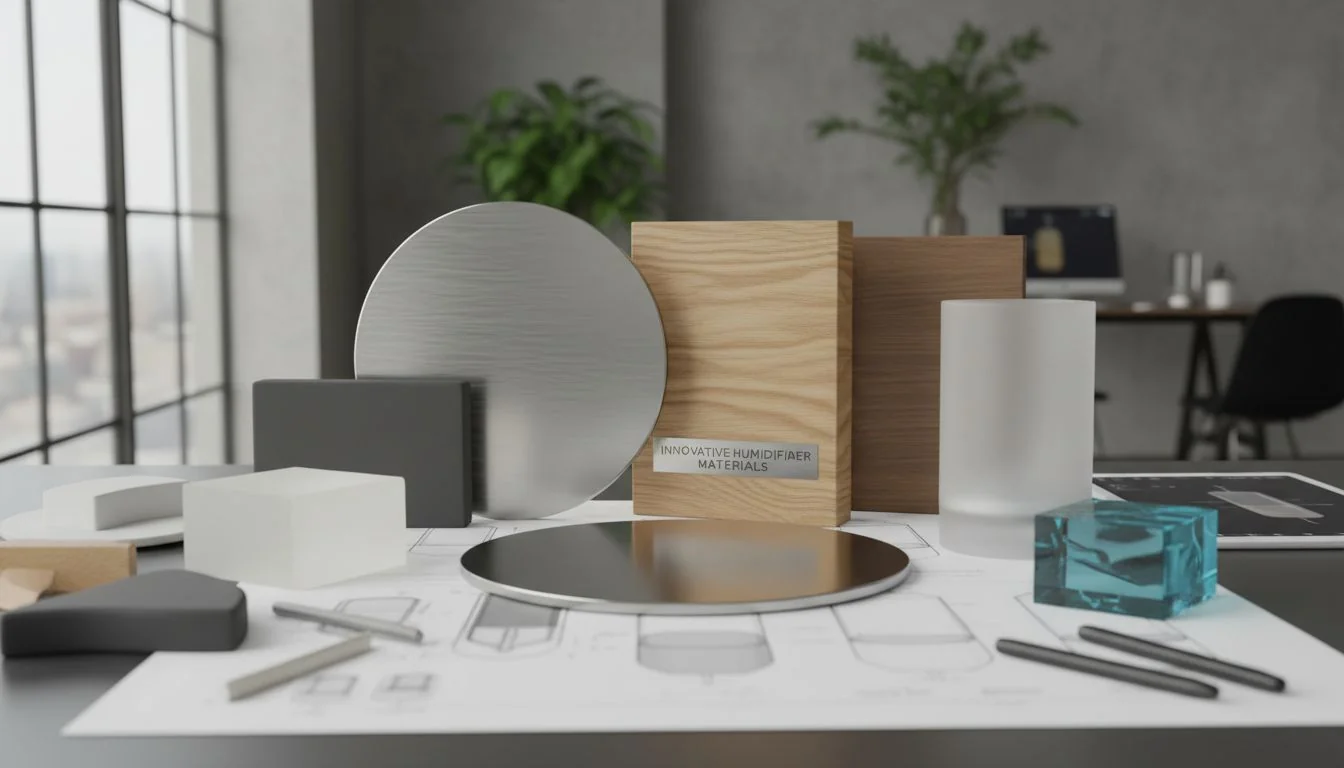
A truly innovative partner doesn't just ask, "What do you want to make?" They ask, "What problem are we solving for the customer?" They bring new ideas to the table. They talk about materials, technology, and user experience. A commodity factory will just show you a catalog of products they've already made for someone else. An innovative partner will help you design a product that no one has ever seen before. This is the first and most important item on your checklist.
Beyond Basic Plastics
Most low-cost humidifiers are made from the same cheap ABS or PP plastic. It's functional, but it's not special. It doesn't create a premium feel, and it can have long-term durability and hygiene issues.
The Power of Unique Materials
Ask a potential partner what they can offer beyond basic plastic. This is where you separate the innovators from the commodities. For example, using stainless steel for the water tank and core components is a game-changer.
| Standard ABS Plastic | Innovative Stainless Steel |
|---|---|
| Prone to scratches and staining | Durable and corrosion-resistant |
| Can harbor bacteria in micro-scratches | Hygienic and easy to clean |
| Feels lightweight and "cheap" | Has a premium, heavy feel |
| Standard, expected material | A unique, high-value selling point |
The checklist question is simple: "Show me your material library. What unique materials can you work with to make my product stand out?" If they can only talk about different grades of plastic, they are not an innovator.
All plastics used in humidifiers are the same.خطأ
Plastics vary widely in grade, durability, and safety. Medical-grade or BPA-free plastics are superior to standard, low-cost commodity plastics, and innovative materials like stainless steel offer even more benefits.
Using premium materials like stainless steel can increase a product's perceived value and justify a higher retail price.صحيح
Consumers associate materials like stainless steel with durability, hygiene, and quality, as seen in kitchen appliances. This perception allows brands to command a higher price point and achieve better margins.
Can They Prove Full US & EU Compliance?
You've found a factory and designed a product. You're excited. But a nagging fear keeps you up at night: what if it's not compliant with safety and environmental standards?
This isn't just a small worry. A compliance failure can be catastrophic. Your shipment could be seized by customs, forcing a total loss. Worse, a non-compliant product could cause harm, leading to recalls, lawsuits, and the end of your brand.
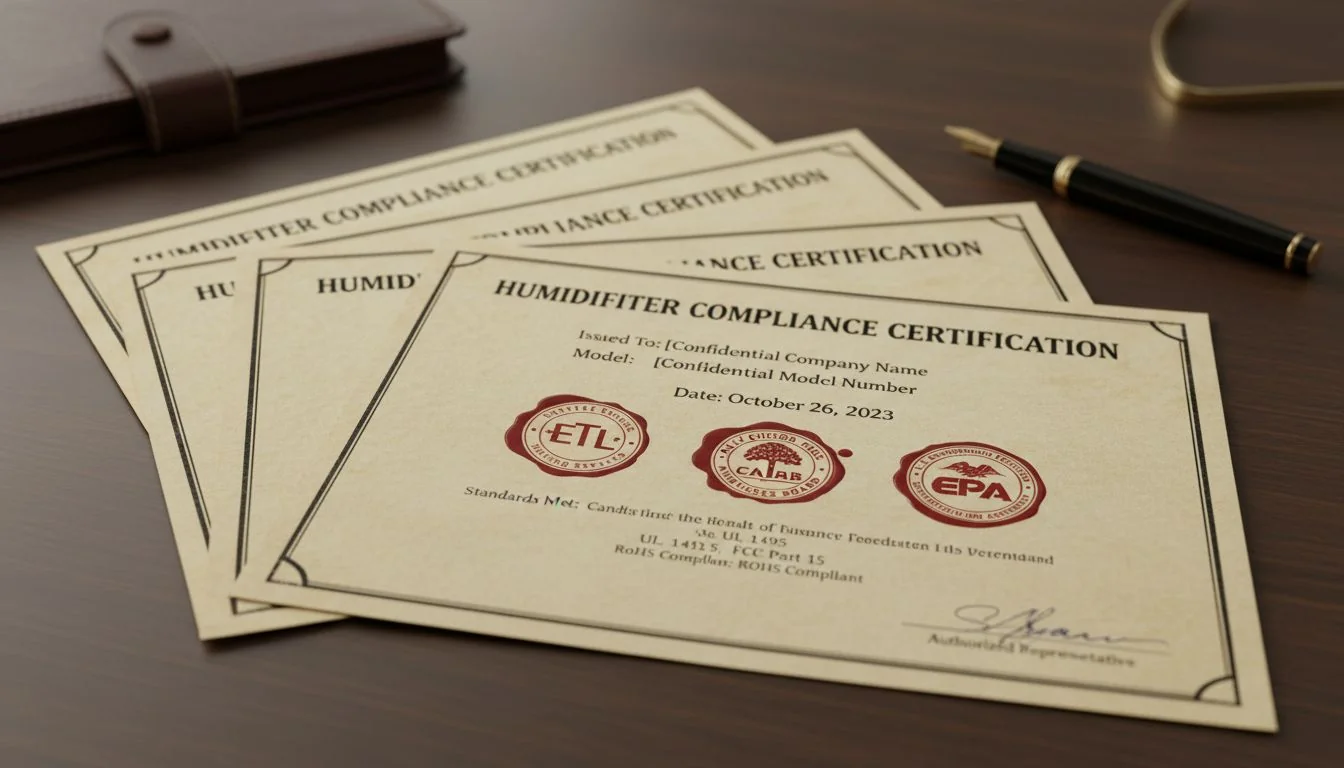
This is the most powerful filter you have. You can eliminate 90% of low-end, high-risk factories with one simple demand: show me your existing certifications. A professional, top-tier partner will have these ready to go because they have already invested in and proven their ability to serve major markets like the US and EU. They see compliance not as a hurdle, but as a basic requirement of doing business. If a factory hesitates or makes excuses, walk away.
The "We Can Get It Certified" Lie
Many factories will tell you, "Don't worry, we can get it certified for you." This is a massive red flag. This process is complex, expensive, and full of uncertainty. It means they haven't done it before. You will be paying for their learning curve, with no guarantee of success. It will add months to your timeline and thousands to your budget.
The "Ready-Certified" Standard
The gold standard is a factory that can immediately provide you with their valid certificates.
- ETL Listed Mark: Proves the product complies with North American electrical safety standards.
- CARB Certification: Required for selling in California, it ensures the product meets air quality standards.
- EPA Establishment Number: Necessary if you make any antimicrobial claims (e.g., "hygienic mist"), proving the factory is registered with the Environmental Protection Agency.
The checklist question is direct and non-negotiable: "Can you provide your current, valid ETL, CARB, and EPA certificates for my review today?" A "no" or "we'll get it" is an automatic disqualification.
Getting a product ETL certified is a quick and easy process.خطأ
ETL certification is a rigorous process that involves product testing, documentation review, and factory inspections. It can take several months and cost thousands of dollars, with no guarantee of passing on the first attempt.
A factory with existing ETL, CARB, and EPA registrations has demonstrated a high level of professionalism and investment in market access.صحيح
These certifications are expensive and time-consuming to obtain and maintain. A factory that holds them is signaling that they are a serious, long-term player committed to meeting the highest safety and environmental standards.
Are They a "Partner" or Just a "Supplier"?
Your supplier sends you an invoice and a tracking number. Then, silence. You're on your own to figure out packaging, marketing, and how to actually sell the product.
This is the lonely reality of working with a simple "supplier." They see you as a purchase order, not a partner. They don't care if you succeed or fail, as long as their invoice is paid. This is an inefficient and risky way to build a brand.
A true partner is invested in your growth. They understand that if you sell more, they will make more. Their success is tied to your success. They move beyond the transaction and become part of your team. They offer insights and support that a mere supplier wouldn't even think of. This is especially critical for modern Direct-to-Consumer (D2C) brands who need more than just a product in a box. They need a complete, market-ready solution.
The Transactional Supplier vs. The Strategic Partner
The difference in approach is night and day. A supplier's job ends when the product leaves their dock. A partner's job is to help you succeed in the market.
| Supplier Mindset (Transactional) | Partner Mindset (Strategic) |
|---|---|
| "Here is your product." | "Here's how we can help you sell it." |
| Provides basic brown box packaging. | Helps design retail-ready, D2C-friendly packaging. |
| Has no market insights5. | Shares data on trends and consumer preferences. |
| Offers no marketing support. | Provides high-quality photos, videos, and copy. |
A partner understands the D2C world. They know that your product's unboxing experience is part of the marketing. They know you need professional-grade photos and videos for your website and social media. They help you create these assets because it helps you sell.
The checklist question is: "How do you specifically support D2C brands6? Can you show me examples of packaging, photography, or other marketing assets you've helped create for other partners?" Their answer will tell you everything you need to know.
A manufacturer's responsibility ends once the product is shipped.خطأ
In a modern partnership model, especially for D2C brands, a manufacturer's value extends to post-production support, including providing marketing assets, insights on logistics, and feedback for future product iterations.
Manufacturers who understand D2C can help brands reduce their time-to-market and lower marketing costs.صحيح
By providing ready-made, high-quality marketing assets (photos, videos) and optimized packaging, these manufacturers save the brand the time and expense of creating these materials from scratch.
الخاتمة
Your goal is not to find a factory. Your goal is to create a "hero product" that builds your brand. Use this checklist to find a true partner who will help you win.
References
-
Understanding the role of a strategic partner can help you choose a manufacturer that supports your brand's growth. ↩
-
Discover how the commodity trap can impact your brand and why choosing based on price alone is risky. ↩
-
Find strategies for developing unique products that stand out and attract customers. ↩
-
Explore criteria for selecting a manufacturing partner that aligns with your brand's goals and values. ↩
-
Discover how manufacturers can offer valuable market insights that help brands succeed. ↩
-
Gain insights into the D2C model and how it affects your relationship with manufacturers. ↩










 English
  Français
  Español
  Italiano
  Deutsch
  Português
  Русский
  العربية
  日本語
日本語  한국어
한국어  Tiếng Việt