




يفتح في علامة تبويب جديدة
حلول مبتكرة لجودة الهواء
شعار هيسو-أير-لوجو
استفسر الآن

Is it Better to Manufacture in China or Vietnam in 2026?

Choosing a manufacturing partner1 is a huge decision. A wrong move can sink your business with delays and quality issues. Let's break down the real pros and cons.

The best choice depends on your product and strategy. China offers unmatched technology and scale, ideal for complex products. Vietnam provides lower labor costs and is a great option for diversifying your supply chain. For our water purifiers, we weigh China's tech against Vietnam's potential.
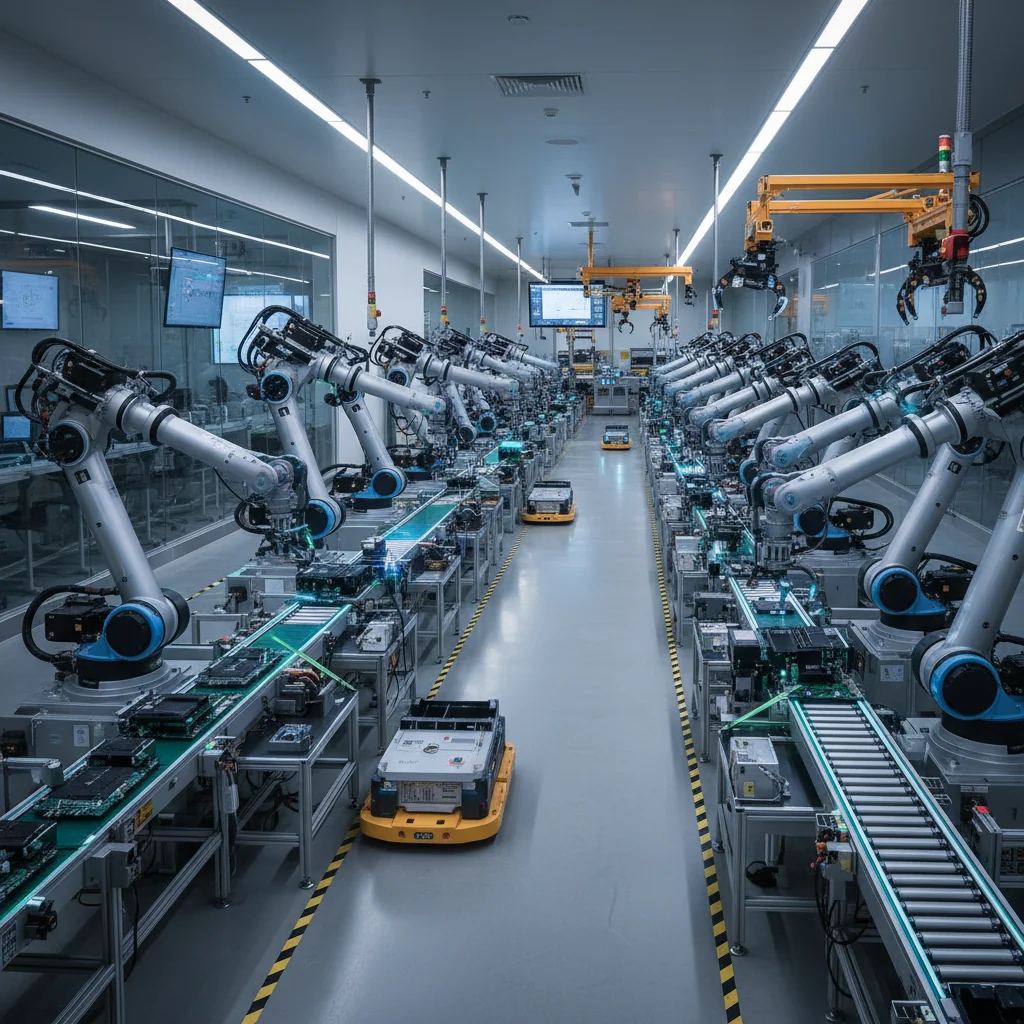
An image of a modern, automated factory floor with robotic arms.

As a brand owner, I get this question a lot. The world of manufacturing is changing fast. The simple answer from five years ago doesn't work anymore. We can't just look at the cost per unit. We have to think about technology, risk, and what our customers care about. I've spent countless hours researching this for my own business, HisoAir. It's a complex puzzle with huge stakes. So, let's walk through the key pieces together, so you can make the best decision for your brand in the coming year.

Vietnam's manufacturing labor costs are less than half of China's.صحيح

On average, China's hourly manufacturing wage is significantly higher than Vietnam's, making Vietnam attractive for labor-intensive production.

All manufacturing is leaving China for Vietnam.خطأ

While many companies are diversifying, China remains the world's largest manufacturer due to its advanced infrastructure, skilled labor, and massive domestic market. It's a diversification trend, not a total exodus.

Why is China Still the Manufacturing Giant?

Worried about rising costs in China? You see headlines about companies leaving. But the full story is more complex and might surprise you. Let's look at why it's still a top choice.

China remains a powerhouse because of its incredible infrastructure, skilled workforce, and massive investment in automation. For products needing precision and advanced tech, like our purifiers, it's often still the top choice, despite higher labor costs.
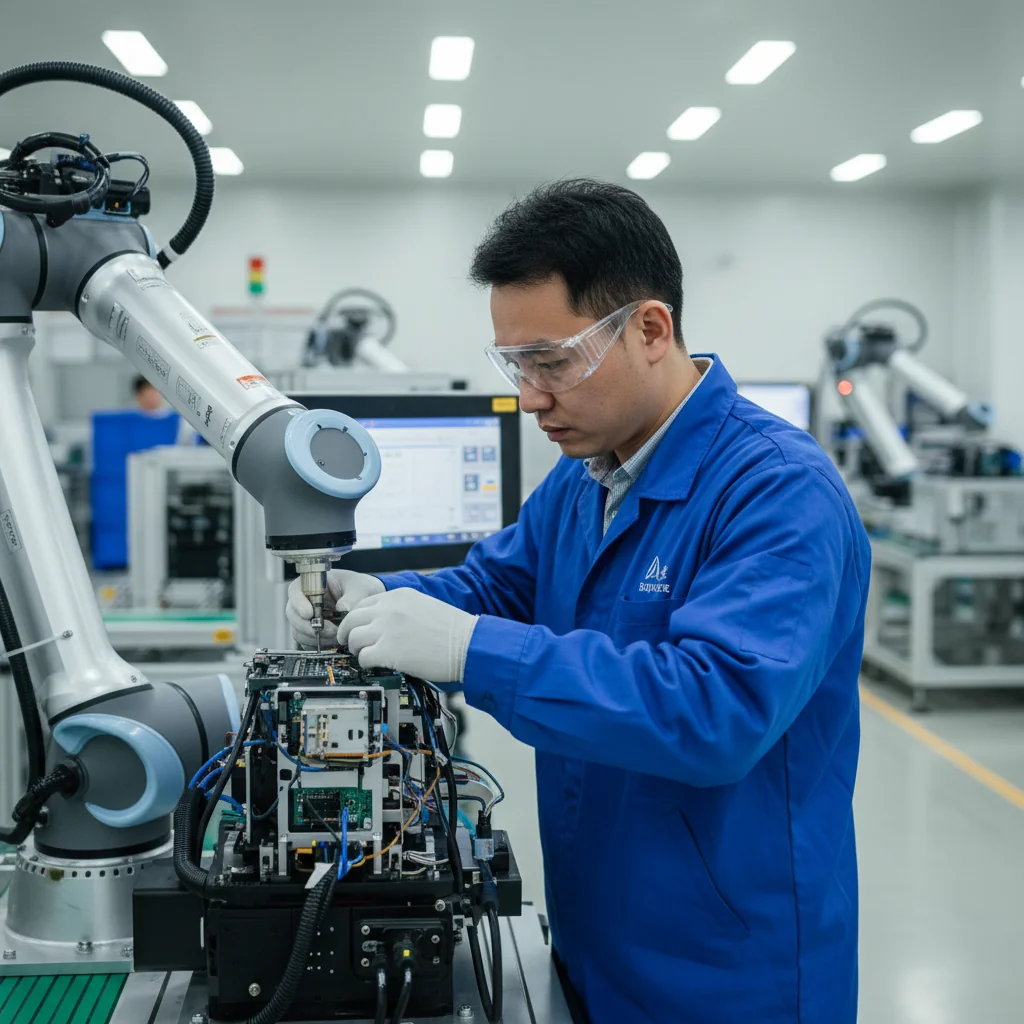
Close-up shot of an engineer working on a complex piece of machinery in a clean factory.

When I look at manufacturing for HisoAir, I see that China isn't just competing on cost anymore. It's competing on technology and skill. The country has poured billions into upgrading its factories.

The Power of Automation and Skill

China is leading the way in smart factories. They use robotics and AI to make production faster and more consistent. This helps offset their rising labor costs. For a product like a water purifier, where every component must be perfect, this level of automation is a huge advantage. It reduces human error and ensures high quality. On top of that, China has a massive pool of experienced engineers and technicians. If you need to develop a complex new product, the talent to help you do it is right there. This is a major reason why companies making electronics, machinery, and high-tech goods stay in China.

Unmatched Infrastructure

The logistics in China are simply on another level. The network of ports, like the massive Port of Shanghai, highways, and high-speed rail is incredibly efficient. This means you can get raw materials to the factory and finished goods to the port faster than almost anywhere else. While bottlenecks can happen, the system's overall capacity is enormous. This maturity means fewer surprises and more predictable shipping schedules, which is critical for keeping our D2C customers happy.

Is Vietnam the New 'Workshop of the World'?

Everyone is talking about the "China Plus One" strategy. Vietnam is the star of that conversation. But is the hype real for your brand, or are there hidden challenges?

Vietnam is a strong contender due to its lower labor costs, young workforce, and favorable trade agreements. It's an excellent option for simpler products or for brands looking to diversify their supply chain away from total reliance on China.
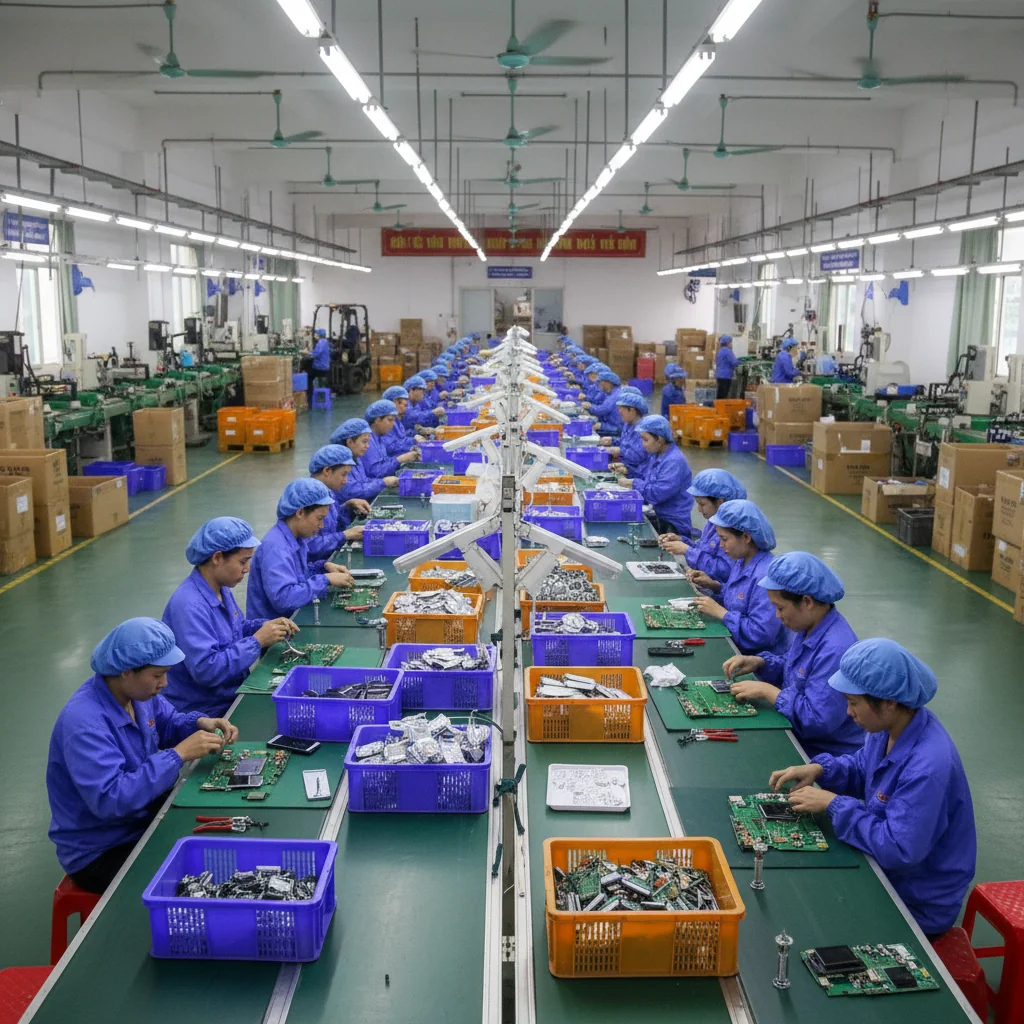
A bustling factory in Vietnam with many workers manually assembling products on a line.

The appeal of Vietnam is undeniable, and we've seriously considered it. The country has a young, eager workforce, and the government is actively attracting foreign investment. It feels like a land of opportunity.

The Labor Cost Advantage

The most obvious benefit is the cost of labor. It's significantly lower than in China. For products that require a lot of hands-on assembly, like apparel, footwear, or simpler electronics, this can lead to major savings. This is the primary driver for many companies making the move. Vietnam's workforce is also one of the youngest in Southeast Asia, which promises a long-term supply of labor. However, this reliance on manual work can sometimes mean less consistency compared to the highly automated factories in China.

Growing Pains: Infrastructure and Skills

Vietnam is racing to catch up, but it's not China. Its ports in Hai Phong and Ho Chi Minh City are expanding, but they don't have the capacity of Shanghai or Shenzhen yet. This can lead to congestion and delays. The talent pool is also different. While the workforce is large, there's a smaller supply of highly skilled engineers and technicians for really complex manufacturing. Training programs are improving, but for a brand that needs advanced R&D or intricate production processes, finding the right factory with the right skills can be a challenge. It's a trade-off between lower costs and a less mature ecosystem.

Vietnam has one of the fastest-growing economies in Southeast Asia.صحيح

Vietnam has consistently posted high GDP growth rates over the past decade, driven by exports and foreign direct investment in its manufacturing sector.

Vietnam's IP protection laws are more established than China's.خطأ

While improving, Vietnam's legal framework and enforcement for Intellectual Property (IP) are still considered less mature than China's, which has been strengthening its IP courts and laws in recent years.

What Key Factors Should Your D2C Brand Weigh for 2025?

It's not just about cost per unit. Hidden factors can make or break your profitability. Are you considering currency, IP protection, and how your customers see your brand?

You must look beyond the factory floor. Consider currency stability, intellectual property protection2, and how "Made In" affects your brand image. These factors directly impact your bottom line and brand risk, especially for innovative products like ours.
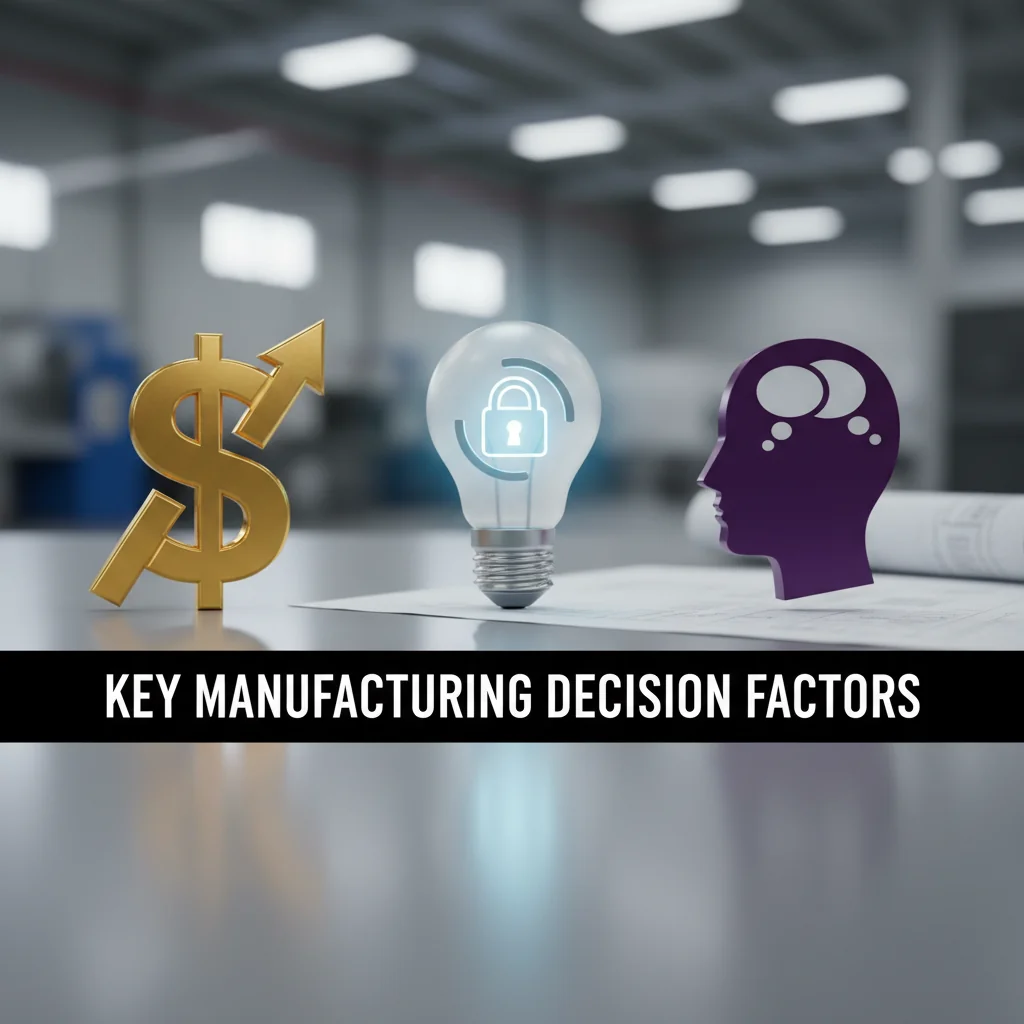
An image showing three icons: a currency symbol, a lightbulb with a lock (for IP), and a person thinking (for perception).

As a D2C brand, we are connected directly to our customers. This means every decision we make is under a microscope. I've learned that the "soft" factors are just as important as the hard costs. A currency swing can wipe out your profit margin. A copied design can destroy your competitive edge. And a negative brand perception can cost you customers. That's why we have to dig deeper.

Here is a simple breakdown of some of the most critical factors I consider for HisoAir.

العامل الصين فيتنام
IP Protection Improved enforcement, but risks remain for innovative products. More mature legal system. Still developing. Enforcement can be inconsistent, posing a higher risk for new designs.
Currency The Yuan (RMB) is relatively stable but influenced by major geopolitical trade policies. The Dong (VND) is weaker, which can benefit exporters, but it's more prone to fluctuation.
الاستدامة Facing huge pressure to go green. Compliance costs may rise, but "green" factories are emerging. Attracting green investment, but struggles with energy shortages and a heavy reliance on coal.
تصورات المستهلكين "Made in China" is known for scale and tech, but can carry negative political or quality baggage. "Made in Vietnam" often feels fresh and agile. It can appeal to consumers looking for alternatives.

A weaker local currency always makes exporting cheaper.خطأ

While a weaker currency makes your goods cheaper for foreign buyers, it also increases the cost of any raw materials or components you have to import, which can offset the benefit.

China has specialized IP courts to handle patent and trademark disputes.صحيح

China has established specialized intellectual property courts in major cities like Beijing, Shanghai, and Guangzhou to improve the handling and enforcement of IP cases.

Should You Choose One Country or Diversify Your Supply Chain?

Putting all your eggs in one basket is risky. We all learned that during the pandemic. So, what does a smart, resilient supply chain look like for 2025 and beyond?

A "China + 1" strategy, often with Vietnam as the "+1," is becoming the new standard for risk management. Some brands are even exploring a "China + Vietnam + Nearshoring" model to build ultimate resilience and speed.
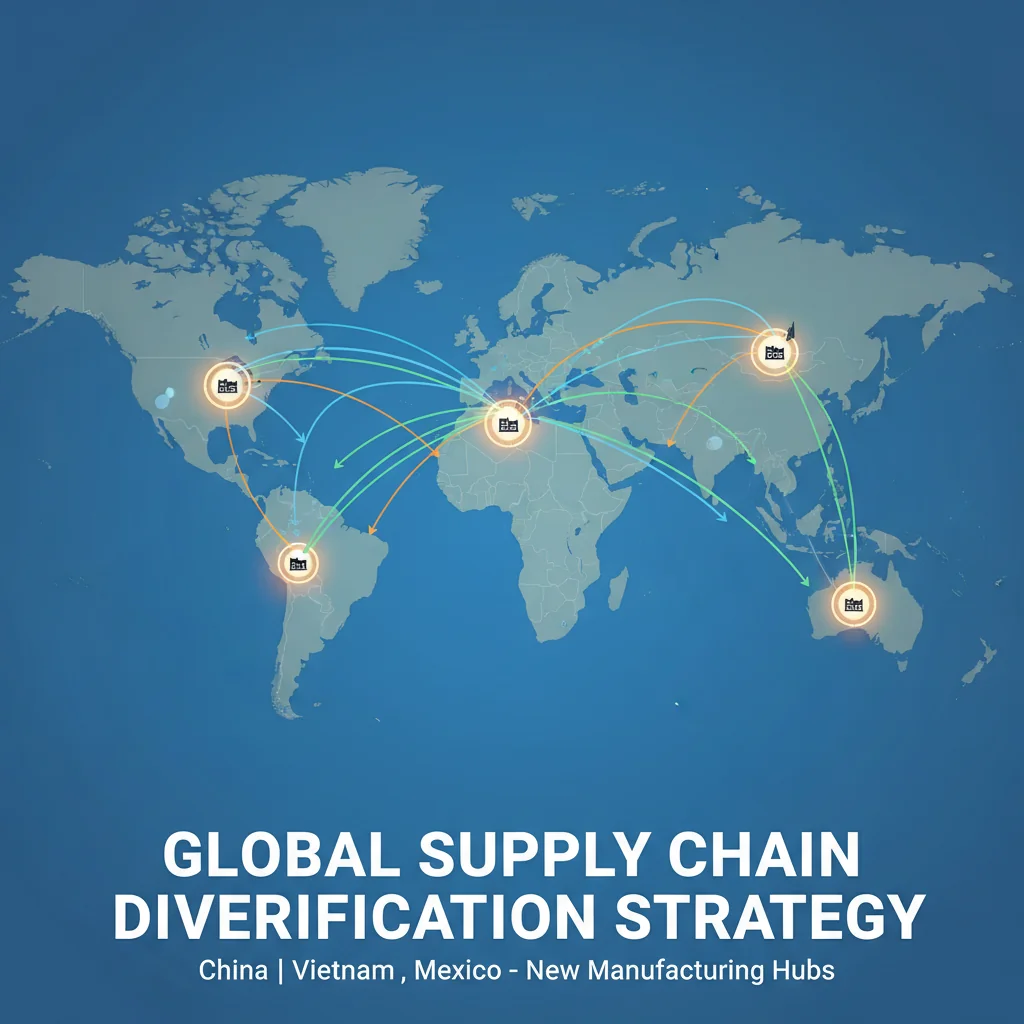
A world map with manufacturing hubs highlighted in China, Vietnam, and Mexico, with arrows showing diversified supply routes.

The biggest lesson of the last few years is that resilience is everything. A single point of failure can shut down your entire operation. That's why the conversation has shifted from "China أو Vietnam" to "China و Vietnam." This is the famous "China Plus One" strategy. The idea is to not be completely dependent on one country. You can keep your complex, high-tech production in China to leverage its strengths in automation and engineering. Then, you can move assembly or the production of simpler products to Vietnam to take advantage of lower labor costs.

This hybrid model gives you a backup plan. If one country faces lockdowns, port closures, or new tariffs, you can ramp up production in the other. It spreads your risk. But now, some brands are taking it a step further. They are looking at nearshoring as a third pillar. For a U.S. brand, that might mean adding a manufacturing partner in Mexico. For a European brand, it could be Eastern Europe. This doesn't just add resilience; it can dramatically cut down shipping times and costs for your home market. The ultimate strategy might be using Asia for scale and nearshoring for speed and flexibility.

Nearshoring to Mexico is always cheaper than manufacturing in Asia.خطأ

While shipping is faster and cheaper from Mexico to the U.S., Mexico's labor and operational costs can be higher than in some parts of Asia, making the total landed cost variable depending on the product.

Diversifying a supply chain can help a business mitigate risks from tariffs and trade disputes.صحيح

By not relying on a single country, companies can shift production to avoid the impact of tariffs or geopolitical tensions, making their supply chain more resilient.

الخاتمة

The China vs. Vietnam debate has no single answer. The best choice depends on your product's complexity, your risk tolerance, and your long-term brand strategy for 2025.



References


  1. Understanding the key factors in selecting a manufacturing partner can significantly impact your business success. ↩

  2. Exploring IP protection can help safeguard your innovations and competitive edge. ↩

شارك:
السيد لي مؤسس شركة هيسواير
Alwen Lee, an air purification expert with over 10 years of experience, is a devoted father of two and a passionate traveler, having explored more than 30 countries. With a love for public speaking and swimming, he has dedicated his life to the indoor air quality industry. His mission is to ensure that people around the world enjoy the freedom to breathe clean air and lead happy, healthy lives.

أرسل لنا رسالة

المزيد للقراءة

Modern living room with a family enjoying a healthy indoor environment monitored by smart devices, natural lighting, and greenery.

After IFA 2026: The Healthy Home Is Moving Beyond Smart Devices

In our previous IFA 2026 column, Air Purification Is Becoming Part of the Healthy-Home Platform, we argued that the next generation of indoor-health products would ...
الأخبار
Modern living room and kitchen with smart home air quality devices including an air purifier, humidifier, and water filtration system, connected with visualized blue connectivity lines.

IFA 2026: Air Purification Is Becoming Part of the Healthy-Home Platform

Pre-IFA Industry Perspective | September 4, 2026 This article is based on official announcements and regulatory information available ahead of IFA 2026, which takes place ...
الأخبار
Comparison infographic showcasing the differences between carbon block filter and activated carbon fiber. Detailed diagrams illustrate the hierarchical porous structure of the carbon block with long diffusion paths and the open microporous structure of the activated carbon fiber with direct access for PFAS adsorption.

Carbon Block vs. Activated Carbon Fiber (ACF): Matching Media to Target Contaminants

Two carbon media. Same adsorption chemistry. Very different behaviour in a point-of-use cartridge. If you are specifying a water purifier platform for a PFAS-aware market, ...
الأخبار
NSF base listing and ANF private-label certification pathway for OEM water filters

What Is an NSF Master Listing? A Guide to Base Listings, ANF Certification and OEM Water Filters

For a brand preparing to launch an OEM water purifier, one of the most common supplier claims is: “We already have an NSF master listing, ...
News, Water Purifiers
Healthy-home brand team reviewing PFAS water filter certification, test data and product engineering

Entering the Water Category Is Easy. Building a Credible PFAS Claim Is Much Harder

For air purification, appliance and healthy-home brands, entering the water category can look surprisingly easy. A company can select an existing undersink system, customize its ...
الأخبار
Team in a business meeting discussing a water filtration system with product components and a comparison table displayed on a screen.

5 Leading OEM Water Purifier Manufacturers in China for Private Label Brands

China has thousands of companies selling water filters, reverse osmosis systems and drinking-water appliances. However, only a portion of them are suitable for private-label, OEM ...
الأخبار
Contaminant Engineering•3 min read

PFAS Water Filtration Technologies Explained: Carbon, Resin & RO

Key Takeaway:

PFAS reduction depends on the specific compounds present, treatment media, contact time, water chemistry, and system design. Activated carbon, ion exchange, and Reverse Osmosis address PFAS through different mechanisms.

PFAS are a large family of persistent fluorinated compounds that can occur in drinking-water supplies. Their treatment behavior varies significantly by molecular structure, chain length, functional group, concentration, and the chemistry of the source water.

Granular Activated Carbon (GAC) removes PFAS primarily through adsorption. It is generally more effective for many longer-chain PFAS, while shorter-chain compounds tend to break through more quickly. Carbon performance depends on media properties, Empty Bed Contact Time (EBCT), competing organic matter, loading, and replacement frequency.

Ion-exchange resins use charged functional sites to capture many PFAS compounds. Properly selected anion-exchange media can provide high capacity and may perform better than conventional activated carbon for some shorter-chain PFAS, although performance still depends on water chemistry and competing ions.

Reverse Osmosis (RO) uses membrane separation rather than adsorption. Properly designed RO systems can provide broad reduction across many PFAS compounds as well as dissolved salts and other contaminants. Unlike carbon or resin, however, RO also produces a concentrate stream that must be managed.

No single technology should be selected from a PFAS label alone. System design should consider which PFAS compounds are present, their concentrations, required reduction targets, flow rate, media life, and the applicable third-party certification or validation requirements.

HisoAir Water Technical Series
Product Discovery•3 min read

How to Choose an Under-Sink Water Purifier for Modern Kitchens

Key Takeaway:

Match the treatment technology to your water quality first, then evaluate cabinet space, faucet configuration, flow rate, drain and power requirements, and filter replacement needs.

Choosing an under-sink water purifier starts with water chemistry. Carbon filtration is well suited to chlorine, taste, odor, and many organic contaminants, while Reverse Osmosis is more appropriate when dissolved salts, fluoride, nitrates, or broader dissolved contaminants need to be reduced.

For compact kitchens, tankless RO systems eliminate the conventional storage tank and can significantly reduce the space required under the sink. However, membrane capacity stated in GPD does not directly equal faucet flow. When comparing systems, check the actual dispensing flow rate, inlet-pressure requirement, recovery ratio, and whether a booster pump is required.

Installation architecture also matters. Many RO systems require a drain connection, electrical power, and either a dedicated drinking-water faucet or a compatible multi-function faucet. High-flow carbon systems can often connect directly to the existing cold-water line with a simpler installation, but pressure drop and available faucet flow should still be verified.

RO also removes much of the naturally occurring dissolved mineral content. Where taste or mineral balance is a priority, a post-RO remineralization stage can be added. Filter life should be evaluated by both rated capacity and local water quality rather than replacement time alone.

The right system is therefore not simply the smallest or highest-GPD model. It is the configuration that matches the target contaminants, available cabinet space, desired faucet setup, peak dispensing demand, and maintenance expectations.

HisoAir Water Technical Series
Water Quality•2 min read

What Does TDS Mean in Drinking Water? Measurement vs Contaminant Reality

Key Takeaway:

A TDS meter estimates the overall concentration of dissolved ionic substances from electrical conductivity. It cannot identify specific contaminants or determine whether water is chemically safe.

Total Dissolved Solids (TDS) refers to the combined concentration of dissolved substances in water. Most handheld TDS meters do not measure TDS directly. Instead, they measure electrical conductivity (EC) and convert that reading into an estimated parts-per-million (ppm) value.

This means a TDS reading can indicate how much dissolved ionic material is present, but not what that material actually is. Calcium, magnesium, sodium, nitrates, and other dissolved ions can all contribute to conductivity, yet a simple TDS meter cannot distinguish between them.

TDS meters are also not suitable for detecting trace contaminants such as PFAS, many VOCs, pesticides, pharmaceuticals, or disinfection byproducts. These substances may be present at concentrations far below the level needed to noticeably change electrical conductivity.

A low TDS reading therefore does not guarantee safe drinking water, and a higher TDS reading does not automatically indicate contamination. Water-treatment decisions should be based on laboratory testing for specific contaminants of concern rather than TDS alone.

HisoAir Water Technical Series
Technology Selection•2 min read

RO vs UF Water Filtration: Understanding Pore Sizes & Dissolved Minerals

Key Takeaway:

Ultrafiltration can reduce bacteria, turbidity, and suspended particles while retaining most naturally occurring dissolved minerals. Reverse Osmosis provides much broader reduction of dissolved salts and smaller contaminants.

Ultrafiltration (UF) typically uses hollow-fiber membranes with pore sizes in the approximate 0.01–0.1 micron range. These membranes physically retain turbidity, suspended solids, colloids, and many microorganisms while allowing dissolved minerals and salts to remain in the water.

Reverse Osmosis (RO) operates at a much finer separation level. Unlike UF, RO can substantially reduce dissolved ions such as sodium, calcium, fluoride, nitrates, and other contributors to total dissolved solids (TDS). This makes RO more suitable when dissolved-salt reduction is a primary treatment objective.

UF generally requires less system pressure and produces little or no continuous concentrate stream in many point-of-use configurations. RO typically requires greater pressure and produces a reject-water stream, but delivers broader contaminant reduction.

For water with acceptable TDS and mineral content, UF can be a simpler mineral-retaining treatment option. Where dissolved salts, fluoride, nitrates, or broader dissolved contaminants are a concern, RO is generally the more appropriate technology.

HisoAir Water Technical Series
Technology Selection•4 min read

Carbon Block vs Reverse Osmosis: Which Fits Your Need?

Key Takeaway:

Choose RO for dissolved inorganic salts and heavy metals; choose Carbon Block for chemical taste/odor, no wastewater, and high line-pressure flow.

Reverse Osmosis (RO) and Carbon Block filtration represent two fundamentally different treatment methods: membrane separation and adsorption. Understanding these differences helps determine which technology is better suited to a specific water-quality requirement.

Reverse Osmosis uses a semi-permeable membrane with pore sizes of approximately 0.0001 microns. It can significantly reduce dissolved inorganic contaminants such as TDS, fluoride, nitrates, and certain heavy metals. Because water must be forced through the membrane, RO systems require sufficient pressure or a booster pump and generate a concentrated wastewater stream.

Carbon Block filtration relies primarily on adsorption through compressed activated carbon, commonly with nominal pore sizes around 0.5–5 microns. It is highly effective for chlorine, chloramines, VOCs, taste, and odor, while allowing substantially higher direct-flow rates without producing wastewater.

From an operating perspective, Carbon Block systems are generally simpler, require less energy, and avoid the water loss associated with RO. RO involves higher system complexity and operating cost, but provides substantially broader reduction of dissolved contaminants that Carbon Block alone cannot address.

HisoAir Water Technical Series

طلب عرض أسعار














