
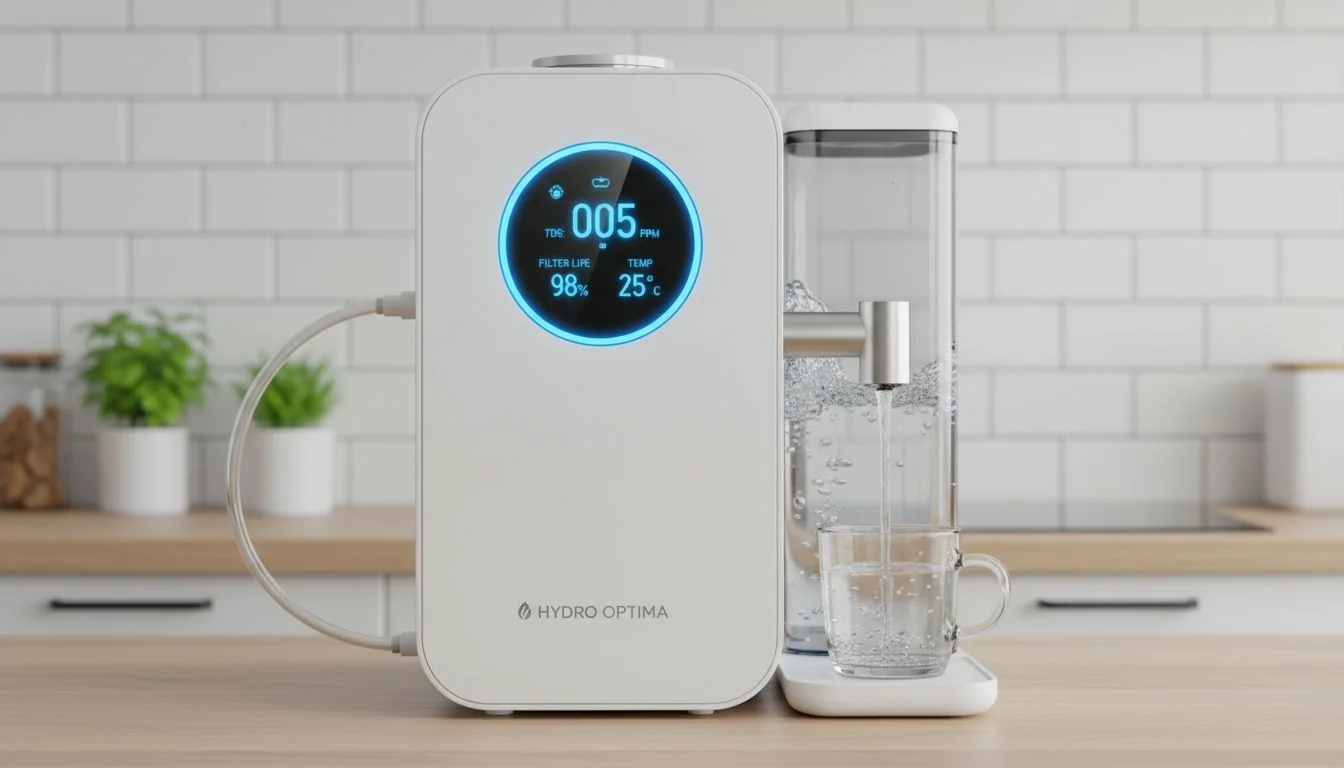
You design smart water purifiers, but basic TDS displays and simple apps feel outdated. This limits your market appeal. Let us explore how to build truly intelligent water systems.
To move beyond basic IoT, ODMs must upgrade from simple connectivity to true intelligence. This means using advanced multi-point sensors1, applying the Sense-Think-Act framework, integrating real AI for predictive maintenance, securing cloud data, and positioning the purifier as a node in a household wellness system.
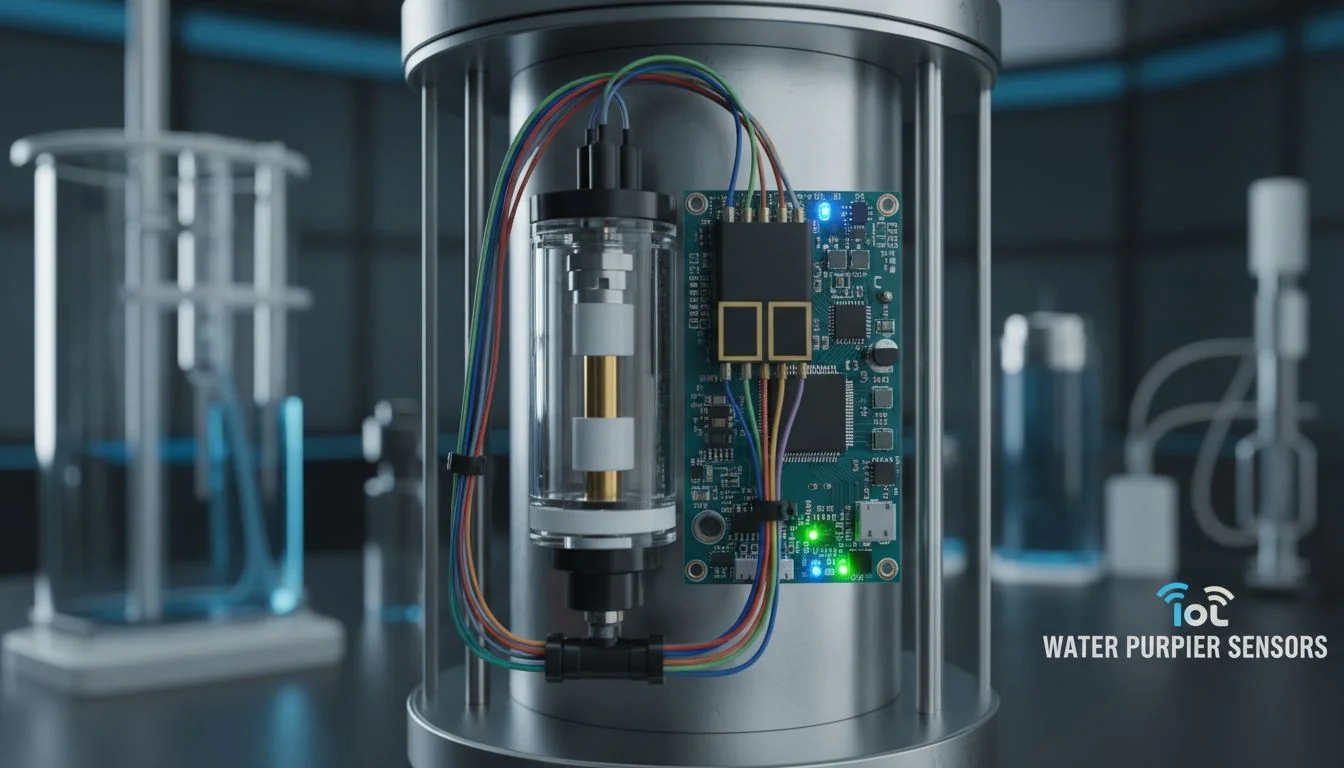
If you want to design products that dominate the market in 2026, you need to rethink your entire approach to water purification. Let me show you the exact hardware and software shifts that will separate the winners from the losers.
Basic TDS sensors can identify specific contaminants like lead or PFAS.خطأ
TDS only measures total dissolved solids in aggregate and cannot distinguish between specific chemicals or heavy metals.
Electrochemical sensor costs have dropped significantly in recent years.صحيح
The BOM cost for electrochemical sensors has decreased by over 40% in the last three years, making advanced sensing more viable.
Why Is Water Sensing Generations Behind Air Sensing?
Air purifiers track many variables, but water purifiers only track basic TDS. This data gap hurts your product value. Upgrading your sensor stack is a massive opportunity.
Water sensing lags because water chemistry is harder to measure than air. Sensors drift and need calibration. However, dropping sensor costs and new regulations make advanced sensing—like hardness and free chlorine detection—a highly profitable feature for new ODM designs.
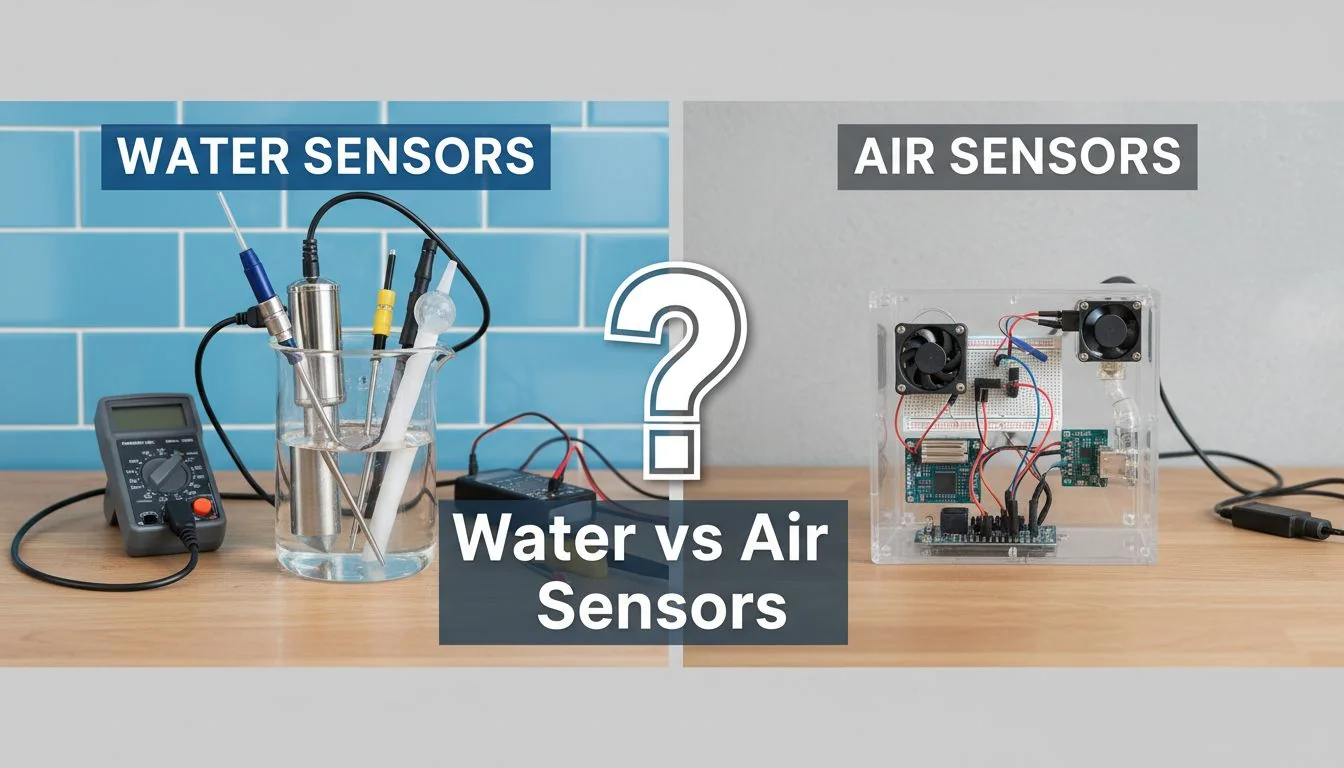
The Structural Gap in Consumer Water Sensing
When I visit mold factories and review new product designs, I always notice a huge gap between air and water devices. A standard $400 air purifier today measures PM2.5, VOCs, CO2, temperature, and humidity. It gives the user a complete picture.
In contrast, a $1,000 water purifier usually only has a basic TDS sensor, a flow meter, and a timer. This is a primitive toolkit. TDS only measures total dissolved solids. It cannot tell the difference between harmless calcium and dangerous lead.
Why does this gap exist? Water is simply harder to measure. Sensors in water get dirty, drift over time, and need constant calibration. But things are changing. New EPA rules and cheaper sensor costs mean you can now add real value to your designs.
| الميزة | Air Purifier Sensing | Water Purifier Sensing |
|---|---|---|
| Variables Tracked | 6 to 10 distinct metrics | 1 to 3 basic metrics |
| Contaminant Focus | Specific (PM2.5, VOCs, CO2) | Aggregate (Bulk TDS only) |
| Hardware Cost | Highly commoditized | Historically high, now dropping |
| Design Opportunity | Mature market, hard to stand out | Blue ocean for advanced sensors |
If you design a chassis that fits new electrochemical sensors2 for hardness or chlorine, you will create a category-defining product.
A standard water purifier today tracks 6 to 10 distinct environmental variables.خطأ
Most water purifiers only track basic TDS, flow, and filter time, whereas air purifiers track 6 to 10 variables.
Water sensors face challenges like biofouling and calibration drift.صحيح
Water chemistry is harsh on sensors, causing them to drift, get dirty, and require regular calibration.
Are Most "Smart" Water Purifiers Just Connected Instead of Intelligent?
Adding WiFi to a water purifier does not make it smart. Users ignore basic push notifications. You need a system that actually thinks and acts on its own.
Most smart purifiers are only connected. They send basic alerts and wait for human action. True intelligence requires the Sense-Think-Act framework3. The device must collect multi-point data, analyze historical patterns, and take autonomous actions like auto-flushing or locking the outlet during safety events.
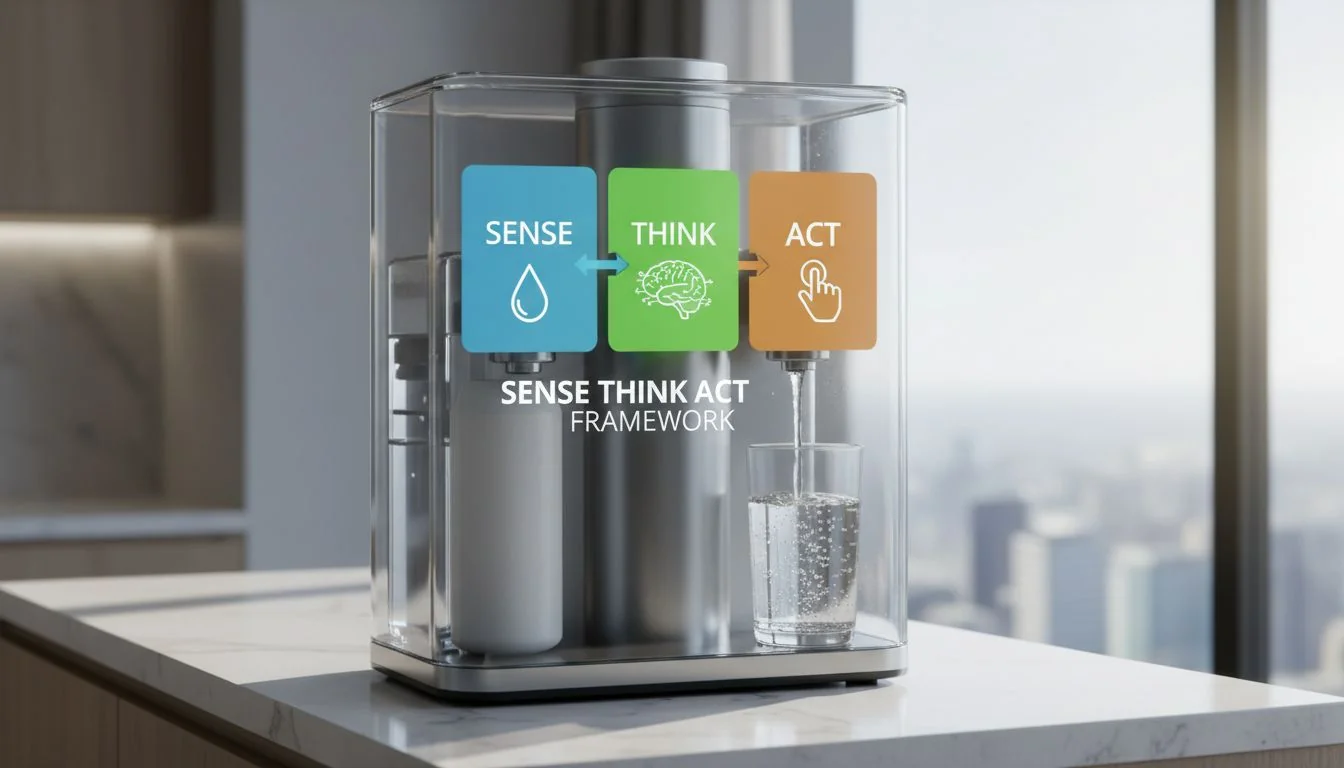
Applying the Sense-Think-Act Framework
I see many designers add a WiFi module to a water purifier and call it a day. This is a mistake. A phone app that shows a filter life percentage is connected, but it is not intelligent. To build a better product, we must borrow the Sense-Think-Act framework from robotics.
First, we have "Sense." Right now, devices only take a single-point TDS snapshot. We need multi-point sensing before and after the filter. We need time-series data, not just a quick check.
Second, we have "Think." Current devices use simple rules. If TDS is high, send an alert. Real intelligence uses edge machine learning. It compares current data to historical patterns and regional water profiles to find real anomalies.
Third, we have "Act." Today, devices do nothing on their own. They wait for the user. An intelligent device will auto-flush stagnant water. It will lock the dispenser if it detects a major contamination event.
| Framework Layer | Current "Connected" State | Future "Intelligent" State |
|---|---|---|
| Sense | Single-point TDS, filter clock | Multi-point, time-series data |
| Think | Simple threshold alerts | Edge ML, anomaly detection |
| Act | Waits for human decision | Auto-flush, safety outlet lock |
This requires a deep change in your product architecture, not just a quick software update.
Sending a push notification when a filter expires is an example of autonomous action.خطأ
A push notification simply alerts a human to take action; it is not an autonomous action by the device itself.
True intelligence in water purifiers requires edge machine learning or cloud reasoning.صحيح
To move beyond simple thresholds, devices must analyze historical patterns and regional data using ML or cloud reasoning.
What Is the Real AI Value in Water Purification Beyond Chatbots?
Many brands pitch AI chatbots for hydration tips. This is a gimmick that users ignore. You need AI features that actually justify the cost of your hardware.
The real value of AI lies in concrete applications. These include personalized filter life prediction, water quality anomaly detection, inferring contaminants from indirect signals, and الصيانة التنبؤية4 for the device itself. These features improve safety, reduce warranty costs, and build a strong hardware moat.
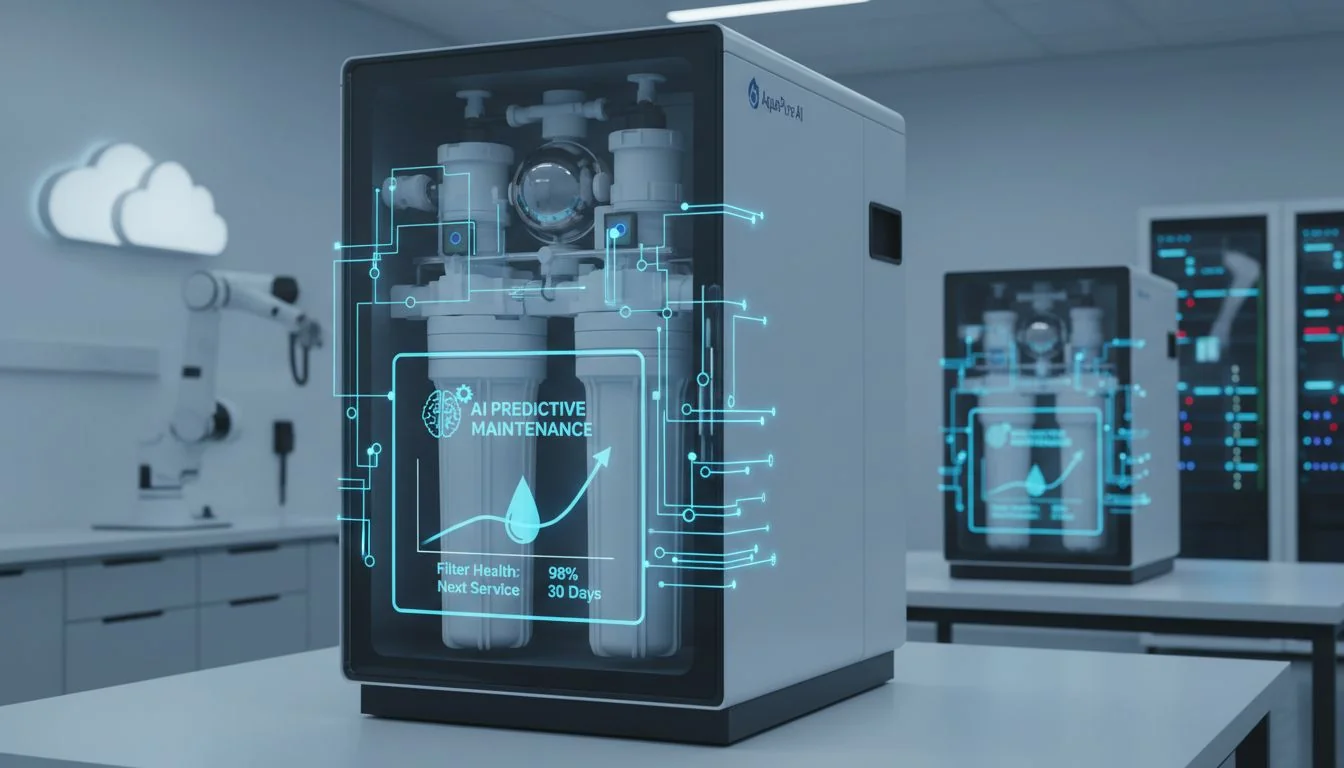
Concrete AI Applications for ODMs
When I talk to clients about AI, they often think of voice assistants or chatbots. In water purification, these are just gimmicks. The real AI value comes from features that pay back your sensor investment.
One great application is personalized filter life prediction. Instead of a generic six-month timer, the device uses actual water volume and contaminant levels to predict when the filter will fail. This saves the user money and builds trust.
Another application is predictive maintenance. By monitoring pump cycle counts and motor current, the device can predict a pump failure weeks in advance. You can ship a replacement part before the user even knows there is a problem. This directly lowers warranty costs and improves reviews.
We can also use AI to infer contaminants. By combining data from improved TDS, pH, and temperature sensors, machine learning models can guess the hardness and oxidation levels. You get more data without adding expensive specific sensors.
| AI Application | How It Works | Business Value |
|---|---|---|
| Filter Prediction | Uses actual volume and water data | Improves cost-per-gallon, builds trust |
| Anomaly Detection | Learns normal variance vs real spikes | Highest-trust safety feature |
| الصيانة التنبؤية | Monitors pump and motor health | Lowers warranty costs, stops RMAs |
Adding a small edge MCU and a few sensors costs around $40 to $80. This is a very high-ROI investment for any new mold design project.
AI chatbots offering hydration tips are the most valuable AI feature for water purifiers.خطأ
Chatbots are often gimmicks; real value comes from predictive maintenance, anomaly detection, and personalized filter tracking.
Machine learning can infer water hardness by combining data from basic sensors like TDS, pH, and temperature.صحيح
ML models can use indirect signals from multiple basic sensors to infer complex water properties without needing expensive specific sensors.
Why Are Data Privacy and Cloud Architecture the Silent Killers of Smart Water Projects?
You launch a great smart purifier, but a retailer audit flags your data privacy5. Your project dies instantly. Treating privacy as an afterthought is a massive risk.
Data privacy and cloud architecture6 must be planned from day one. North American laws like CCPA and FTC rules are strict. Routing US user data through foreign servers often fails retail audits. ODMs must use local cloud hosting, secure OTA updates, and build consent flows directly into the app.
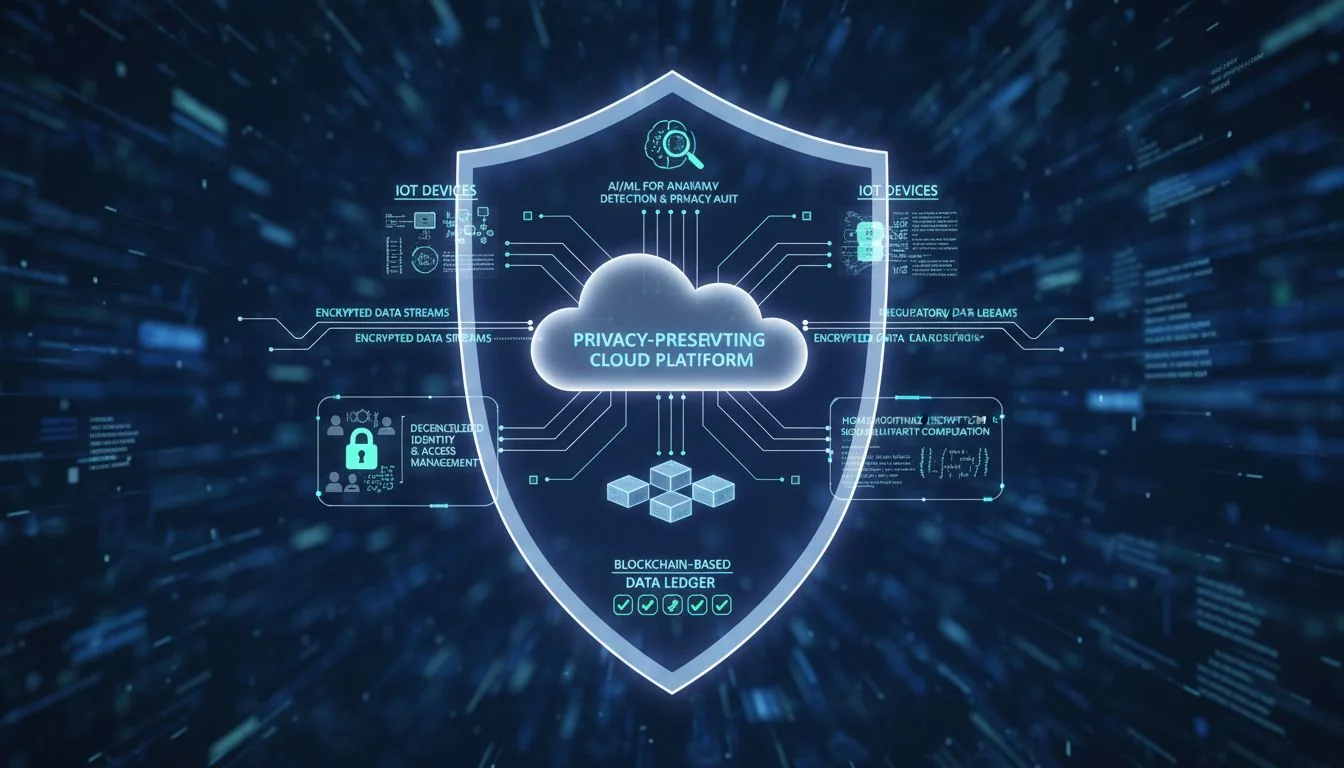
Architecting for Privacy and Security
In my trading business, I have seen many smart projects fail right after launch. The hardware was perfect, but the software was a liability. In North America, data privacy is not just a checklist. It is a core part of your product architecture.
Water consumption data is personal information under laws like the CCPA in California. You must handle it carefully. The biggest trap I see is cross-border data flow. Many ODMs still route US user data through Chinese cloud servers. This might be legal, but it will fail procurement audits at major retailers like Costco or Target. It is a huge brand risk.
You must make architectural decisions at the kickoff meeting. Default to US-hosted cloud servers like AWS or Azure. Build data export and deletion features into your companion app from the start. Do not skip basic IoT security hygiene. You need signed firmware and secure OTA updates.
| Architectural Decision | Common ODM Mistake | Required Best Practice |
|---|---|---|
| Cloud Residency | Foreign servers | Local US-hosted servers (AWS, Azure) |
| App Features | Bolted-on compliance | Built-in consent and data deletion |
| OTA Security | Unsigned firmware | Signed firmware, key rotation |
An ODM partner who treats privacy as a core feature will save you from launching a massive legal liability.
Routing US user data through foreign cloud servers is widely accepted by major North American retailers.خطأ
Major retailers often flag and reject products that route US data through foreign servers during procurement audits.
Water consumption data is considered personal information under the California CCPA.صحيح
Device usage logs and water consumption data are classified as personal information and are subject to privacy laws.
Is the Real Strategy Positioning Water as a Node in the Household Wellness OS?
Water purifiers operate in isolation. They do not talk to other smart home devices. This limits their value. You must integrate water into the broader household wellness system7.
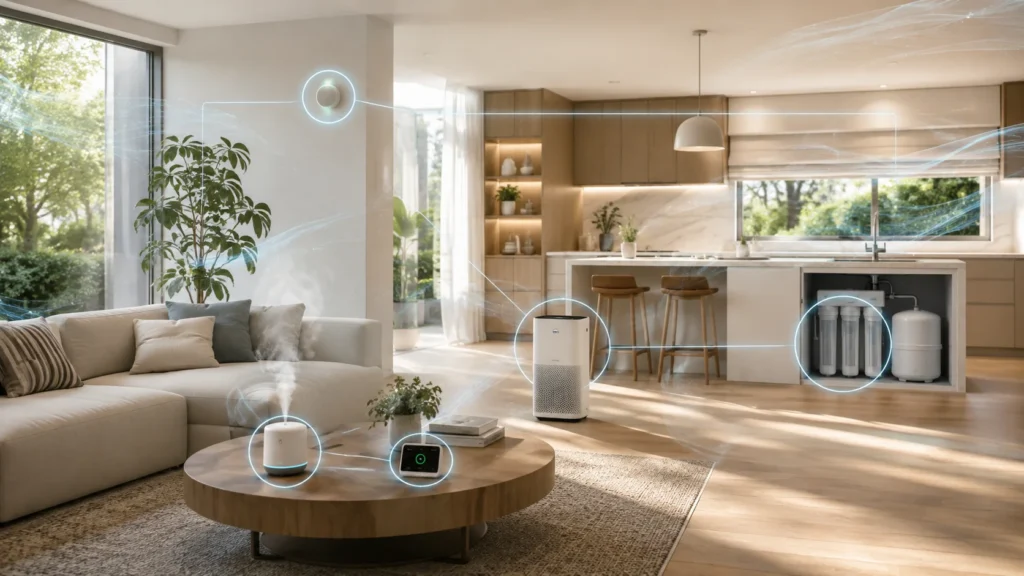
The future of water purification is becoming a node in the household wellness OS. A smart purifier should share hydration data with wearables, coordinate with smart faucets, and integrate with home automation. This requires open APIs, modular sensor designs8, and a deep commitment to data sharing from the start.
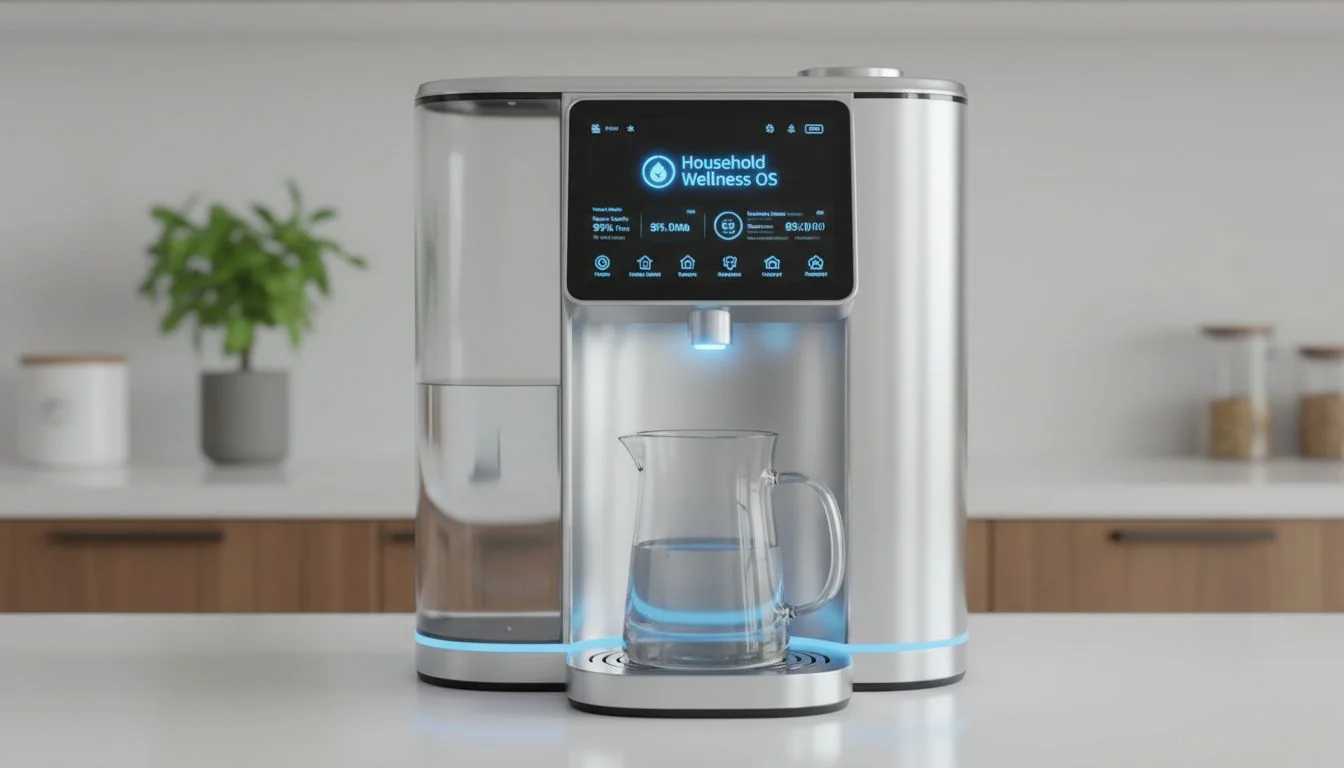
Designing for the Wellness Ecosystem
Look at the smart home market today. Air purifiers, smart lights, and wearables all talk to each other. They create a wellness layer for the user. But water is still a disconnected silo. A smart RO unit only reports data to its own isolated app. This is a missed opportunity.
The next generation of products will position water as a node in a household wellness OS. Imagine a water purifier that shares your daily hydration data with your fitness wearable. Imagine a system that coordinates with your fridge dispenser and whole-house softener to give you a complete view of your water chemistry.
To achieve this, you must design your molds and electronics differently. You cannot use walled-garden apps. You need open APIs and compatibility with Matter, HomeKit, or Google Home.
| Current Siloed Approach | Future Wellness OS Node |
|---|---|
| Isolated companion app | Open API and Matter compatibility |
| Fixed sensor hardware | Modular, upgradeable sensor chassis |
| Data used only for alerts | Data shared with wearables and health apps |
| Standalone operation | Coordinates with whole-house water systems |
You need a modular chassis design. This allows you to upgrade sensors in future generations without buying new molds. Brands that win the premium tier in the next few years will design their products as wellness nodes from day one.
Most smart water purifiers today easily share data with fitness wearables and smart home systems.خطأ
Currently, most water purifiers operate in isolated silos and only report data to their own proprietary apps.
Using open APIs and Matter compatibility helps integrate water purifiers into a broader smart home ecosystem.صحيح
Open standards like Matter and open APIs allow different smart devices to communicate and work together seamlessly.
الخاتمة
To dominate the smart water market, ODMs must move past basic connectivity. Embrace advanced sensors, real AI, strict data privacy, and integrate your designs into the household wellness ecosystem.
References
-
Explore how advanced multi-point sensors can enhance water purification systems and improve user experience. ↩
-
Investigate the role of electrochemical sensors in improving water quality monitoring and safety. ↩
-
Learn about the Sense-Think-Act framework and how it can transform water purifiers into intelligent devices. ↩
-
Discover the benefits of predictive maintenance in water purifiers and how it can reduce costs and improve reliability. ↩
-
Understand the significance of data privacy in smart water purifiers and how it affects user trust and compliance. ↩
-
Learn about the importance of cloud architecture in ensuring data security and functionality in smart water purifiers. ↩
-
Find out how integrating water purifiers into a household wellness system can enhance overall health and convenience. ↩
-
Discover how modular sensor designs can future-proof water purifiers and allow for easy upgrades. ↩


 English
  Français
  Español
  Italiano
  Deutsch
  Português
  Русский
  العربية
  日本語
日本語  한국어
한국어  Tiếng Việt

