
Curious about which humidifier technology best suits your commercial space? You're not alone. Understanding the fundamental differences between ultrasonic and evaporative humidifiers reveals much about their application, maintenance requirements, and overall value for your business.
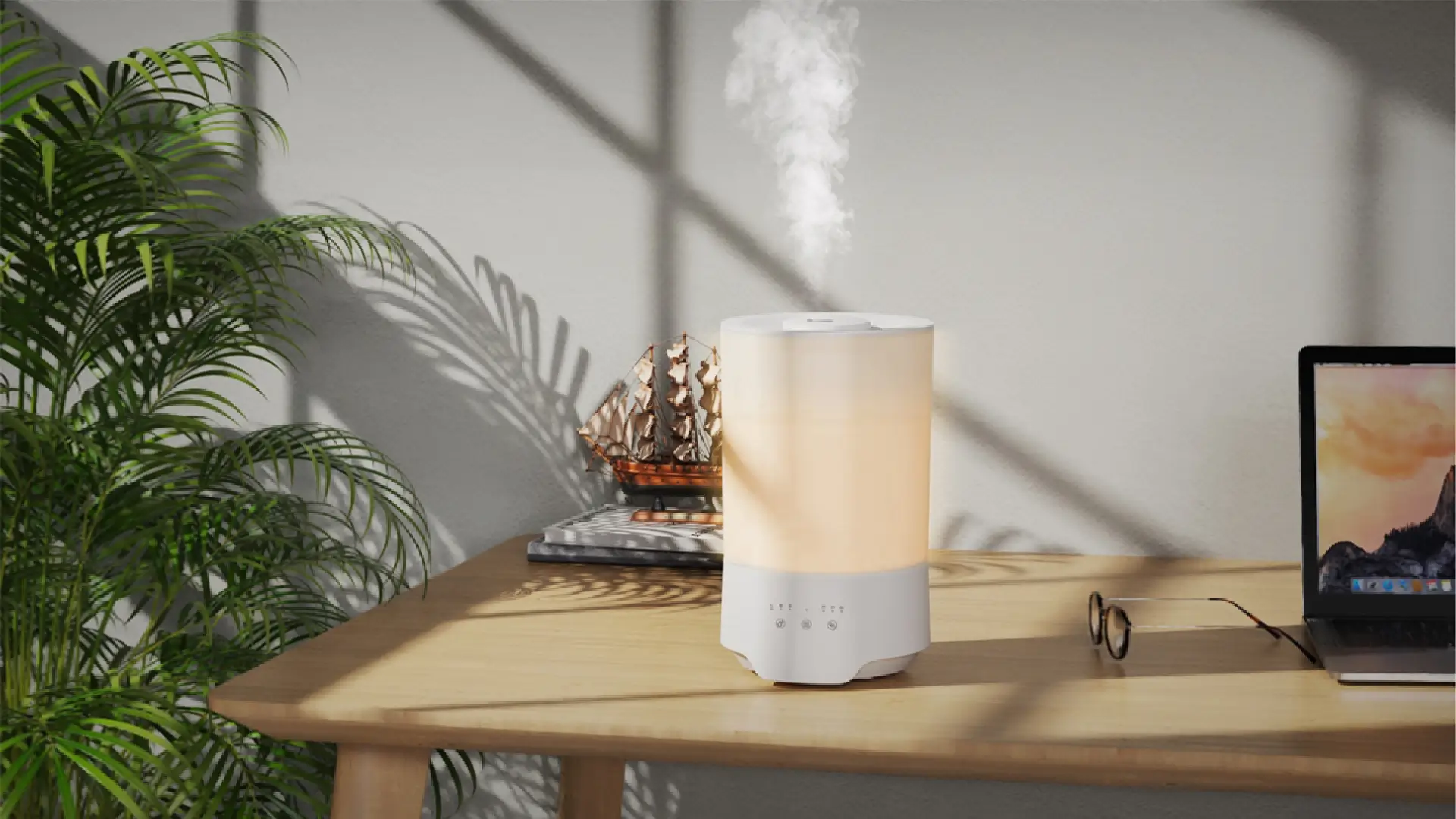
Ultrasonic humidifiers use high-frequency vibrations to create fine mist, ideal for precision environments requiring quiet operation, while evaporative humidifiers use natural evaporation with fans to distribute moisture, making them better suited for larger commercial spaces with fewer hygiene concerns.
When I first encountered the dilemma of choosing between ultrasonic and evaporative humidifiers for our clients' commercial spaces, I was struck by how significantly the choice impacts indoor air quality management. Learning about their operational differences became essential for providing tailored solutions. The story of these two technologies involves more than just how they generate humidity. We should explore how their distinct mechanisms influence maintenance requirements, health implications, and cost-effectiveness across different commercial applications. Many business owners now face this decision when upgrading their indoor air quality systems.
How Do Ultrasonic and Evaporative Humidifiers Actually Work?
I remember when I first needed to explain humidification technologies to a corporate client seeking solutions for their office complex. The fundamental differences in operation became the foundation for all subsequent recommendations.
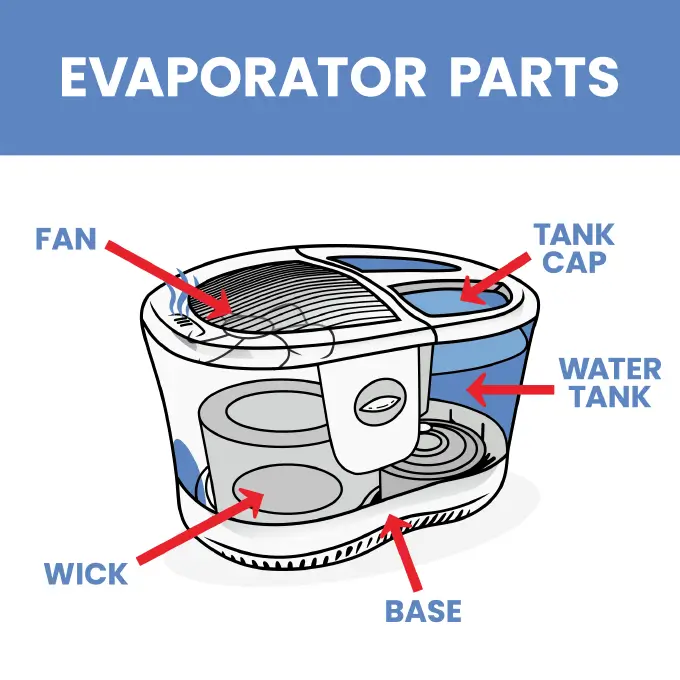
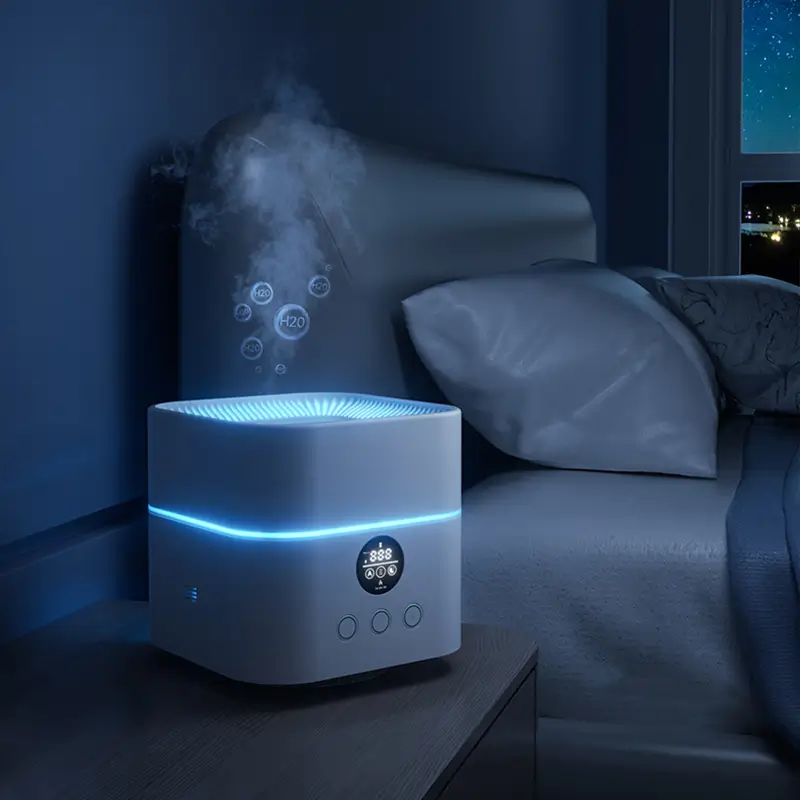
Ultrasonic humidifiers use ceramic plates vibrating at ultrasonic frequencies to create water droplets that form a fine mist. Evaporative humidifiers use a fan to blow air through a moistened wick filter, allowing natural evaporation to add humidity to the environment.
The Science Behind Ultrasonic Technology
It feels remarkable how something we can't hear can so effectively transform water into mist. Ultrasonic humidifiers employ ceramic plates or diaphragms that vibrate at an ultrasonic frequency—beyond human hearing range at approximately 1.7 million vibrations per second. This high-frequency vibration1 creates tiny water droplets that form a cool mist, which is then quietly propelled into the air. The process happens instantaneously, providing immediate visible humidity output.
Natural Evaporation Process
The evaporative approach mimics nature's own humidification method but accelerates it significantly. These systems draw dry air through a moistened wick filter using a fan. As air passes through the wet filter, water naturally evaporates and increases the air's moisture content. This self-regulating process2 becomes more efficient in drier conditions and naturally slows as humidity levels rise—a built-in mechanism that helps prevent over-humidification.
| الميزة | جهاز ترطيب الهواء بالموجات فوق الصوتية | جهاز الترطيب التبخيري |
|---|---|---|
| Operating Mechanism | Vibrating ceramic plates | Fan and wick filter system |
| Output Type | Visible fine mist | Invisible water vapor |
| استهلاك الطاقة | Lower (no heating element) | Moderate (fan operation) |
| مستوى الضوضاء | Very quiet | Moderate fan noise |
Technology Evolution
The technological journey of both systems fascinates me. Ultrasonic technology has evolved to incorporate antimicrobial materials and precise output control, while evaporative systems have developed advanced wick materials and energy-efficient fans. These innovations reflect manufacturers' responses to commercial clients' demands for more efficient, reliable humidification solutions.
Control Systems Integration
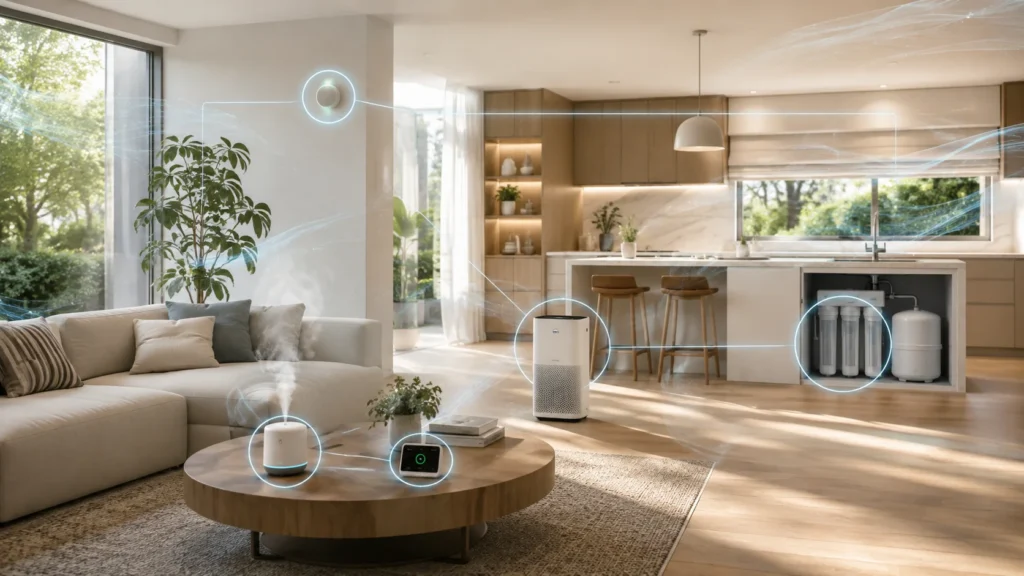
For commercial applications, the integration capabilities with building management systems represent a critical advancement. Modern ultrasonic and evaporative humidifiers can connect with HisoAir's IoT monitoring systems, allowing facility managers to maintain optimal humidity levels automatically. This connectivity transforms simple humidifiers into smart components of comprehensive indoor air quality management.
Understanding these operational differences provides the foundation for making informed decisions about which technology best suits specific commercial environments. The choice between ultrasonic and evaporative humidification ultimately depends on the unique requirements of your space and operational priorities.
Which Humidifier Type Best Suits Different Commercial Applications?
Do you ever wonder why certain businesses consistently choose one humidifier technology over another? The application context often determines which system will deliver optimal performance.
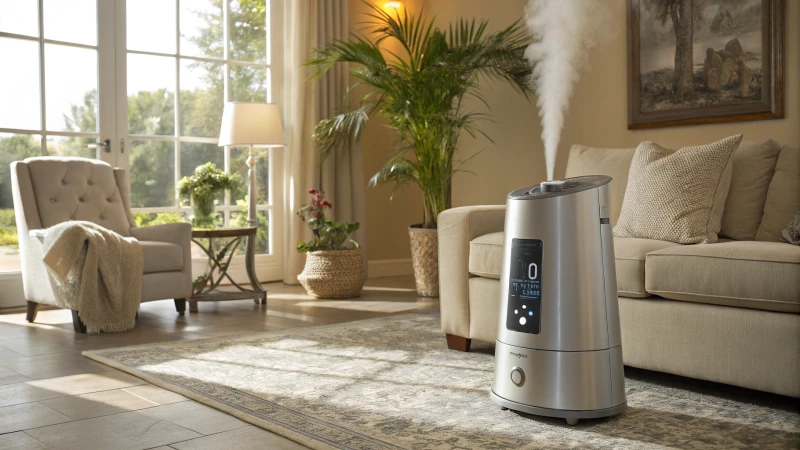
Ultrasonic humidifiers are best suited for precision environments requiring quiet operation like clinics, laboratories, and small offices, while evaporative humidifiers excel in larger commercial spaces such as retail stores, hotels, and open-plan offices where coverage area and hygiene are priorities.
Precision Environments and Specialized Applications
It feels like finding the perfect tool when matching ultrasonic humidifiers to precision-demanding environments. In medical facilities and laboratories, the precise humidity control3 offered by ultrasonic systems proves invaluable. Their ability to maintain exact moisture levels creates optimal conditions for sensitive equipment and procedures. The whisper-quiet operation makes them ideal for sound-sensitive environments like recording studios and high-end retail spaces where customer experience depends on peaceful ambiance.
Large-Scale Commercial Spaces
The robust performance of evaporative humidifiers in larger spaces reminds me of conversations with facility managers seeking solutions for expansive commercial areas. These systems excel in open office layouts and retail environments where consistent humidity across larger square footage becomes essential. Their natural filtration process makes them particularly valuable in hospitality settings where guest health and comfort remain paramount concerns.
| التطبيق | Recommended Type | Key Benefit |
|---|---|---|
| Medical Clinics | الموجات فوق الصوتية | Precise control, quiet operation |
| المختبرات | الموجات فوق الصوتية | Exact moisture levels, minimal disruption |
| Small Offices | الموجات فوق الصوتية | Quiet operation, compact size |
| Retail Stores | التبخير | Larger coverage, fewer hygiene concerns |
| Hotels | التبخير | Consistent humidity, lower maintenance |
| Open-Plan Offices | التبخير | Even distribution, natural filtration |
الاعتبارات الموسمية
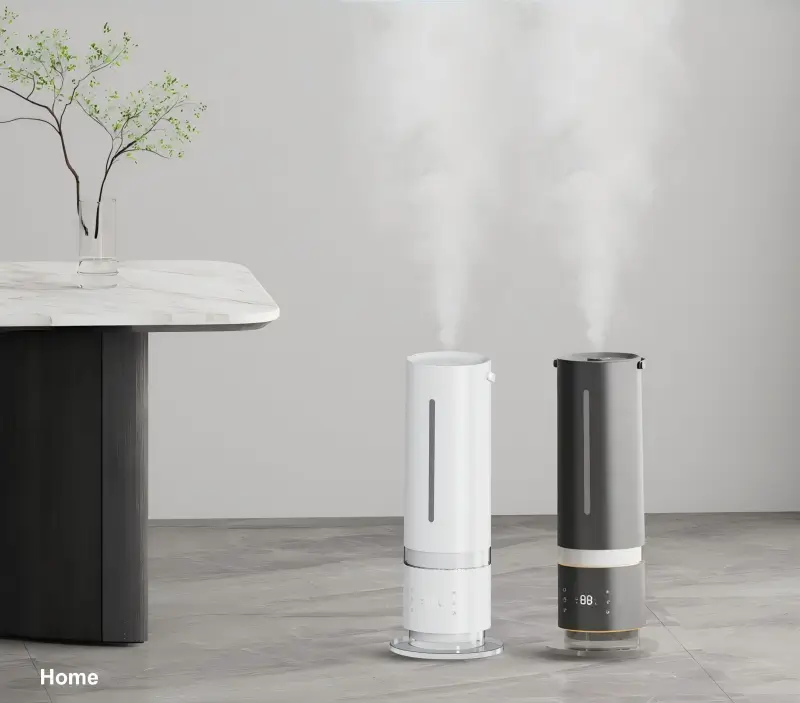
The seasonal adaptability of these systems fascinates me. During winter months when indoor heating creates extremely dry conditions, evaporative systems demonstrate remarkable efficiency in larger spaces. Their self-regulating nature prevents over-humidification even as they work harder to compensate for drier air. Conversely, ultrasonic units provide rapid response in smaller areas where immediate humidity adjustment becomes necessary.
Industry-Specific Requirements
Different industries present unique humidification challenges. In manufacturing facilities where static electricity poses risks to electronic components, ultrasonic systems offer targeted humidity control. Meanwhile, in commercial buildings with variable occupancy, evaporative humidifiers provide consistent background humidification that adjusts naturally to changing conditions.
Understanding your specific commercial application requirements forms the foundation for selecting the appropriate humidification technology. By matching the right system to your environment, you ensure optimal performance, efficiency, and return on investment for your business.
Why Does Maintenance Differ Between These Humidifier Technologies?
Have you considered how maintenance requirements might influence your long-term satisfaction with a humidification system? The contrast between ultrasonic and evaporative maintenance needs often surprises business owners.
Ultrasonic humidifiers require more frequent cleaning and distilled water to prevent mineral buildup and bacterial growth, while evaporative humidifiers naturally filter out minerals through their wick system and require simpler, less frequent maintenance despite periodic filter replacements.
The Mineral Buildup Challenge
I've witnessed the frustration of facility managers discovering white dust accumulation from ultrasonic humidifiers. This phenomenon occurs because ultrasonic technology atomizes everything in the water—including minerals. The resulting white dust deposits4 can settle on surfaces throughout commercial spaces, creating additional cleaning requirements. Using distilled or demineralized water prevents this issue but adds operational costs and logistical considerations for businesses.
Natural Filtration Advantages
The inherent filtration capability of evaporative systems continues to impress me in commercial applications. As water evaporates naturally through the wick filter, minerals remain behind rather than becoming airborne. This self-cleaning aspect significantly reduces maintenance concerns for busy commercial environments where consistent operation without interruption remains critical.
| Maintenance Aspect | جهاز ترطيب الهواء بالموجات فوق الصوتية | جهاز الترطيب التبخيري |
|---|---|---|
| Cleaning Frequency | Daily-Weekly | Weekly-Monthly |
| Water Requirements | Distilled/Demineralized | Standard tap water |
| استبدال المرشح | Not typically required | Every 1-3 months |
| Mineral Buildup | Common issue | Naturally prevented |
| Sanitization Needs | أعلى | أقل |
Post-Season Maintenance Considerations
The end-of-season maintenance burden represents a significant factor for seasonal businesses. Many consumers forget to properly clean and store humidifiers after dry seasons end, leading to bacterial buildup that can compromise health when units are reactivated. With increasing health awareness, more commercial clients now prioritize evaporative systems for their reduced hygiene concerns5 and lower long-term maintenance requirements.
Staff Time Allocation
For businesses managing multiple facilities, staff time allocation for maintenance becomes a crucial consideration. Ultrasonic units typically demand more frequent attention to prevent bacterial growth and mineral accumulation. Conversely, evaporative systems require less frequent intervention, allowing maintenance staff to focus on other priorities while still maintaining healthy indoor air quality.
Understanding these maintenance differences helps businesses make informed decisions that align with their operational capabilities and priorities. The right choice depends on balancing immediate performance needs against long-term maintenance commitments and resource allocation.
How Do These Humidifiers Impact Indoor Air Quality and Health?
Are you aware of how your choice of humidification technology might affect the health of everyone in your commercial space? The health implications extend far beyond simple moisture addition.
Ultrasonic humidifiers can potentially release minerals and bacteria into the air if not properly maintained and used with distilled water, while evaporative humidifiers naturally filter out contaminants and prevent over-humidification, making them generally healthier for commercial environments with multiple occupants.
The White Dust Phenomenon and Air Quality
The relationship between ultrasonic humidifiers and air quality concerns me whenever I consult with healthcare facilities. When ultrasonic units operate with standard tap water, they atomize minerals into the air as microscopic particles6 that can trigger air quality sensors and potentially aggravate respiratory conditions. This creates an ironic situation where an air purifier might detect poor air quality caused by the very humidifier intended to improve comfort.
Bacterial Control and Respiratory Health
My experience with commercial clients has consistently highlighted the importance of bacterial control in humidification systems. Standing water in any humidifier can become a breeding ground for microorganisms, but the different technologies address this risk differently. Evaporative systems benefit from their wick filters, which can incorporate antimicrobial treatments to reduce bacterial growth. This advantage becomes particularly valuable in إعدادات الرعاية الصحية where respiratory health remains paramount.
| Health Consideration | جهاز ترطيب الهواء بالموجات فوق الصوتية | جهاز الترطيب التبخيري |
|---|---|---|
| Mineral Dispersion | Can release minerals as white dust | Naturally filters out minerals |
| Bacterial Control | Requires frequent cleaning | Better natural resistance |
| Over-Humidification Risk | أعلى | Self-regulating |
| Respiratory Impact | Potential irritant if not maintained | Generally neutral or positive |
| Noise Stress | الحد الأدنى | Moderate fan noise |
Humidity Level Regulation
The self-regulating nature of evaporative humidifiers provides significant health benefits by preventing over-humidification. Excessive humidity can promote mold growth and dust mite proliferation—serious concerns for commercial environments. Evaporative technology naturally slows moisture output as ambient humidity rises, creating a built-in safety mechanism that protects indoor air quality without requiring sophisticated controls.
Noise Considerations and Wellbeing
While not directly related to respiratory health, noise levels impact overall wellbeing in commercial spaces. Ultrasonic humidifiers operate almost silently, contributing to quieter environments that support concentration and reduce stress. This benefit becomes particularly valuable in professional settings where noise distraction can affect productivity and employee satisfaction.
Understanding these health implications helps businesses prioritize the wellbeing of employees, customers, and other building occupants. The right humidification choice balances immediate comfort needs against long-term health considerations for everyone sharing the commercial space.
What Are the Cost Considerations for B2B Humidifier Selection?
Have you evaluated how your humidifier choice might impact your business's bottom line beyond the initial purchase? The total cost of ownership varies significantly between technologies.
Ultrasonic humidifiers typically have lower upfront costs but higher operational expenses due to distilled water requirements and more frequent maintenance, while evaporative humidifiers have higher initial investment but lower long-term costs through reduced maintenance needs and standard water usage.
Initial Investment Analysis
The price difference between these technologies often surprises business decision-makers. Ultrasonic humidifiers generally present a more attractive initial investment, making them appealing for businesses with limited capital expenditure budgets. This lower acquisition cost7 explains why ultrasonic units continue to dominate market share despite some operational disadvantages. The visible mist output also creates a perception of effectiveness that reinforces their popularity among cost-conscious purchasers.
Operational Cost Factors
My conversations with long-term commercial clients consistently highlight the importance of considering ongoing operational expenses. While evaporative humidifiers typically require filter replacements, these costs are often offset by their ability to use standard tap water. Ultrasonic units, conversely, perform optimally only with distilled or demineralized water—an ongoing expense that accumulates significantly in commercial settings with continuous operation.
| عامل التكلفة | جهاز ترطيب الهواء بالموجات فوق الصوتية | جهاز الترطيب التبخيري |
|---|---|---|
| Initial Purchase | أقل | أعلى |
| Water Requirements | Distilled (higher cost) | Standard tap water |
| استهلاك الطاقة | أقل | Moderate (fan operation) |
| Maintenance Supplies | Cleaning solutions | الفلاتر البديلة |
| Staff Time | More frequent attention | Less frequent maintenance |
| العمر الافتراضي | 2-3 years typical | 3-5 years typical |
Scale Considerations for B2B Applications
The cost equation shifts dramatically when scaling to larger commercial applications. For small, targeted areas like executive offices or meeting rooms, ultrasonic units may remain cost-effective despite higher operational costs. However, for large-scale implementations across entire facilities, the maintenance efficiency of evaporative systems often delivers superior long-term value for B2B applications.
Return on Investment Timeline
The ROI timeline differs significantly between these technologies. Ultrasonic humidifiers offer immediate cost advantages but typically higher five-year total ownership costs. Evaporative systems present a longer-term investment approach, with higher upfront costs balanced by lower operational expenses and typically longer service life. This distinction makes evaporative humidifiers particularly attractive for businesses with stable, long-term facility plans.
Understanding these cost dynamics helps businesses align humidification choices with their financial strategies and operational realities. The optimal selection balances immediate budget constraints against long-term operational efficiency and total cost of ownership.
الخاتمة
When selecting between ultrasonic and evaporative humidifiers for your commercial space, the decision extends far beyond simple moisture addition. Each technology offers distinct advantages that align with different business priorities and environments.
Ultrasonic humidifiers excel in precision, quiet environments requiring targeted humidification, while evaporative humidifiers prove superior for larger commercial spaces with emphasis on maintenance efficiency, health considerations, and long-term operational costs.
Making the Right Choice for Your Business
I've guided numerous businesses through this decision process, and the right choice invariably depends on specific priorities. For medical facilities, laboratories, and executive spaces where precise control and quiet operation matter most, ultrasonic technology often prevails despite higher maintenance requirements. For larger commercial environments, retail spaces, and facilities with limited maintenance resources, evaporative systems typically deliver superior overall value.
| Priority | Recommended Type | Key Consideration |
|---|---|---|
| Initial Budget | الموجات فوق الصوتية | Lower upfront investment |
| Maintenance Resources | التبخير | Reduced cleaning frequency |
| Space Size | Evaporative for large, Ultrasonic for small | Coverage efficiency |
| Noise Sensitivity | الموجات فوق الصوتية | Near-silent operation |
| المخاوف الصحية | التبخير | Natural mineral filtration |
| Long-term Costs | التبخير | Lower operational expenses |
Future Trends in Commercial Humidification
The humidification market continues evolving with hybrid systems8 that attempt to combine advantages from both technologies. These innovations reflect manufacturers' recognition that different commercial environments have unique requirements. As indoor air quality awareness grows, we anticipate continued advancement in both ultrasonic and evaporative technologies to address maintenance efficiency, health considerations, and energy consumption.
The HisoAir Approach
At HisoAir, we understand that optimal humidification solutions vary by application. Our approach focuses on matching the right technology to each client's specific needs rather than promoting a one-size-fits-all solution. By evaluating your space requirements, maintenance capabilities, and operational priorities, we can recommend the humidification system that will deliver the greatest long-term value9 for your business.
Understanding the fundamental differences between ultrasonic and evaporative humidifiers empowers business owners to make informed decisions that balance immediate performance needs against long-term operational considerations. The optimal choice creates healthier, more comfortable environments while aligning with your business's operational capabilities and financial strategy.
SEO Title and Meta Description
SEO Title: Ultrasonic vs. Evaporative Humidifiers: Which is Best for Your Commercial Space?
Meta Description: Discover the key differences between ultrasonic and evaporative humidifiers for B2B applications. Learn which technology offers better maintenance, health benefits, and cost-effectiveness for your specific commercial environment.
-
Learn about high-frequency vibration technology in ultrasonic humidifiers. These devices operate at frequencies above human hearing range (typically 1.7 million vibrations per second), creating microscopic water droplets without heat. This technology enables silent operation while efficiently converting water into fine mist for immediate humidity improvement. ↩
-
Discover how the self-regulating process in evaporative humidifiers works as a natural safeguard against over-humidification. As ambient humidity increases, the evaporation rate naturally slows, preventing excessive moisture that could lead to mold growth and other indoor air quality issues. ↩
-
Explore the importance of precise humidity control in specialized environments. Maintaining exact humidity levels is critical in medical facilities, laboratories, and manufacturing environments where even minor fluctuations can impact sensitive equipment, procedures, and materials. ↩
-
Understand the challenge of white dust deposits from ultrasonic humidifiers. When using tap water, minerals become aerosolized as microscopic particles that settle on surfaces throughout the space, potentially affecting air quality and creating additional cleaning requirements. ↩
-
Learn why hygiene concerns are driving commercial humidifier selection. With increasing awareness of indoor air quality's impact on health, businesses are prioritizing systems that minimize bacterial growth potential and reduce maintenance requirements to ensure consistently healthy environments. ↩
-
اكتشف كيف microscopic particles from ultrasonic humidifiers can impact indoor air quality. These sub-micron mineral particles can remain suspended in air for extended periods, potentially triggering air quality sensors and respiratory sensitivities in occupants. ↩
-
Understand how acquisition cost influences humidifier selection despite long-term operational considerations. Initial purchase price often drives decision-making, particularly for businesses with limited capital expenditure budgets, even when lifetime operational costs may ultimately be higher. ↩
-
Explore the emerging trend of hybrid humidification systems that combine technologies to maximize benefits while minimizing drawbacks. These innovative systems represent manufacturers' efforts to address diverse commercial needs through integrated solutions rather than single-technology approaches. ↩
-
Discover why long-term value should be the primary consideration when selecting commercial humidification systems. By evaluating total cost of ownership, maintenance requirements, and performance reliability over the entire product lifecycle, businesses can make more economically sound decisions that better serve their operational needs. ↩

 English
  Français
  Español
  Italiano
  Deutsch
  Português
  Русский
  العربية
  日本語
日本語  한국어
한국어  Tiếng Việt

