
You face strict new PFAS water rules1. You worry about high costs and complex maintenance. I will show you how to choose the right filtration system for your park.
You can treat PFAS at the community well or at each mobile home unit. Community wells require high upfront costs but centralize maintenance. Unit-level systems cost less initially but shift maintenance to individual homes. Your choice depends on your budget, site layout, and maintenance capacity2.
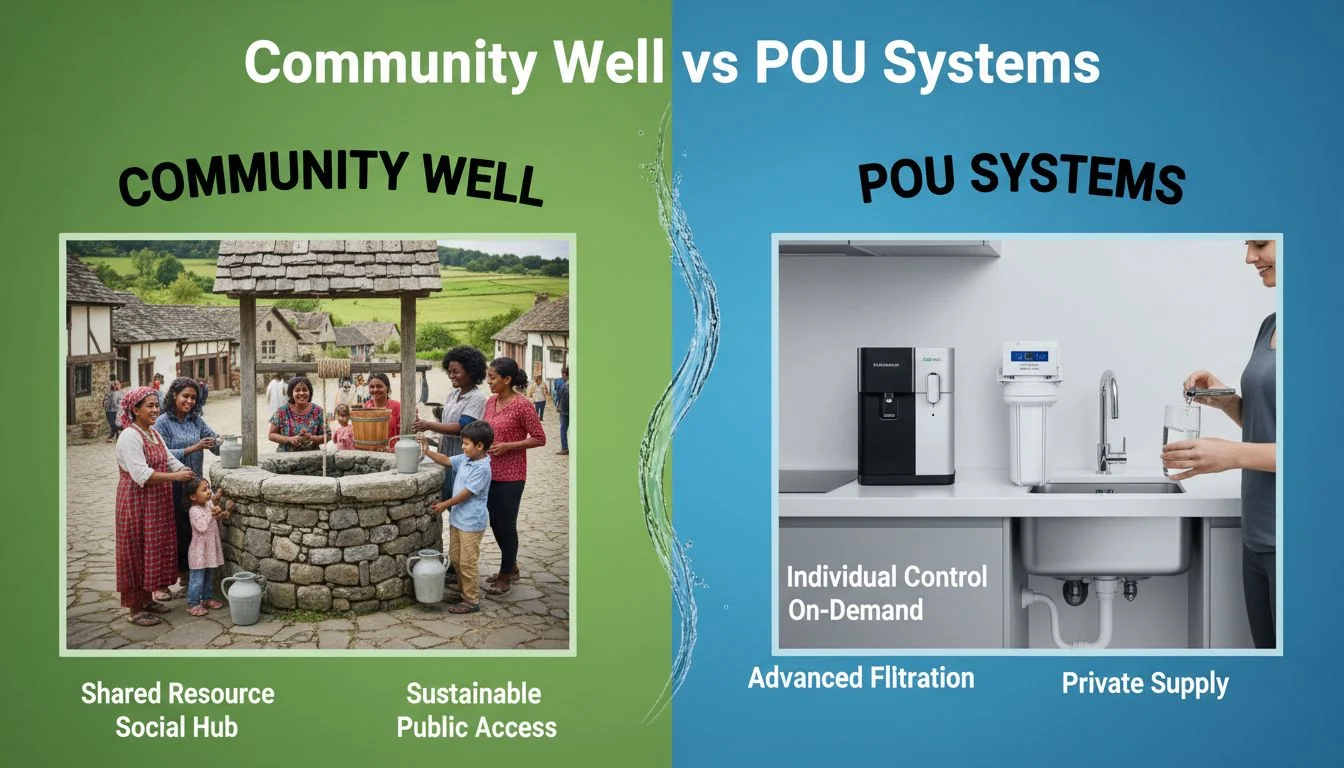
I remember designing a complex cooling system for a large mold project. I had to choose between one big central chiller and many small units. Water treatment for a mobile home park works the same way. You must look at the engineering facts to make the right choice.
PFAS is a water-quality parameter that requires specific filtration media like carbon or reverse osmosis.Wahr
PFAS compounds are chemical contaminants that can be removed using targeted filtration technologies.
Unit-level POU systems treat all the water used for lawn care and outdoor washing.Falsch
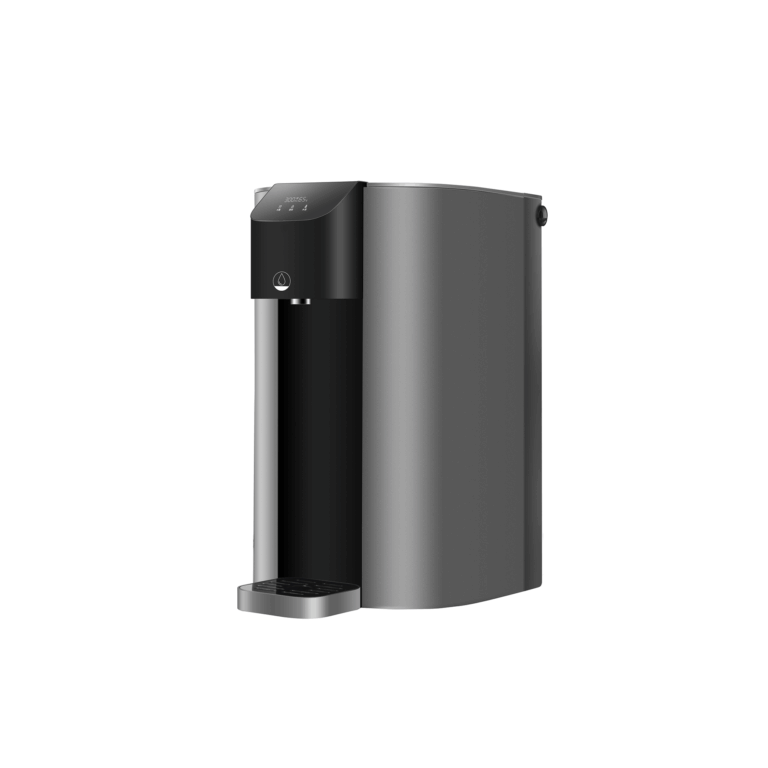
POU systems are installed at specific indoor taps, usually under the kitchen sink, and do not treat outdoor water.
What Are the Two Treatment Models for Mobile Home Parks?
You need a clear plan to handle PFAS. A wrong choice wastes money. I will explain the two main ways to filter this water.
The two models are community well treatment3 and unit-level Point-of-Use (POU) systems. Community well treatment filters all water at the main source. POU systems filter water at specific taps inside each mobile home. Both methods effectively reduce PFAS levels to meet water quality targets.
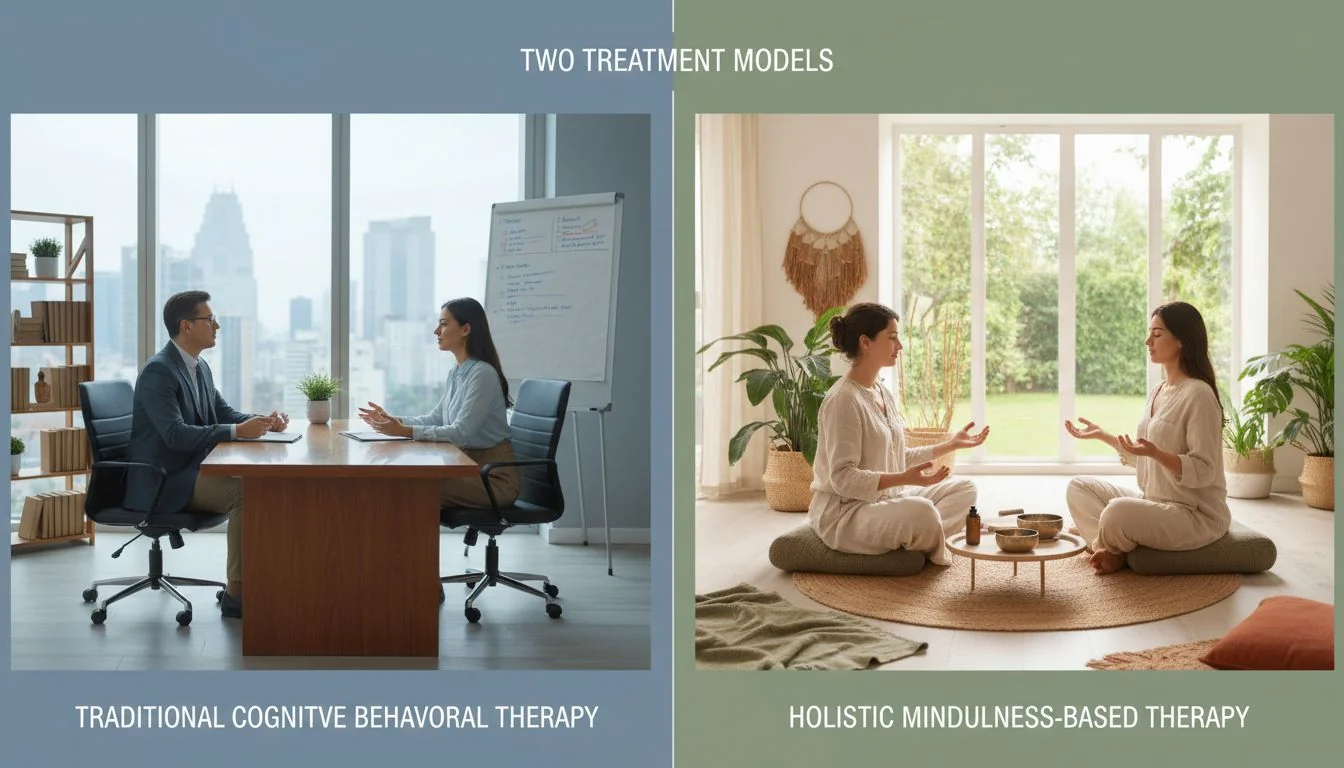
Understanding the Core Differences
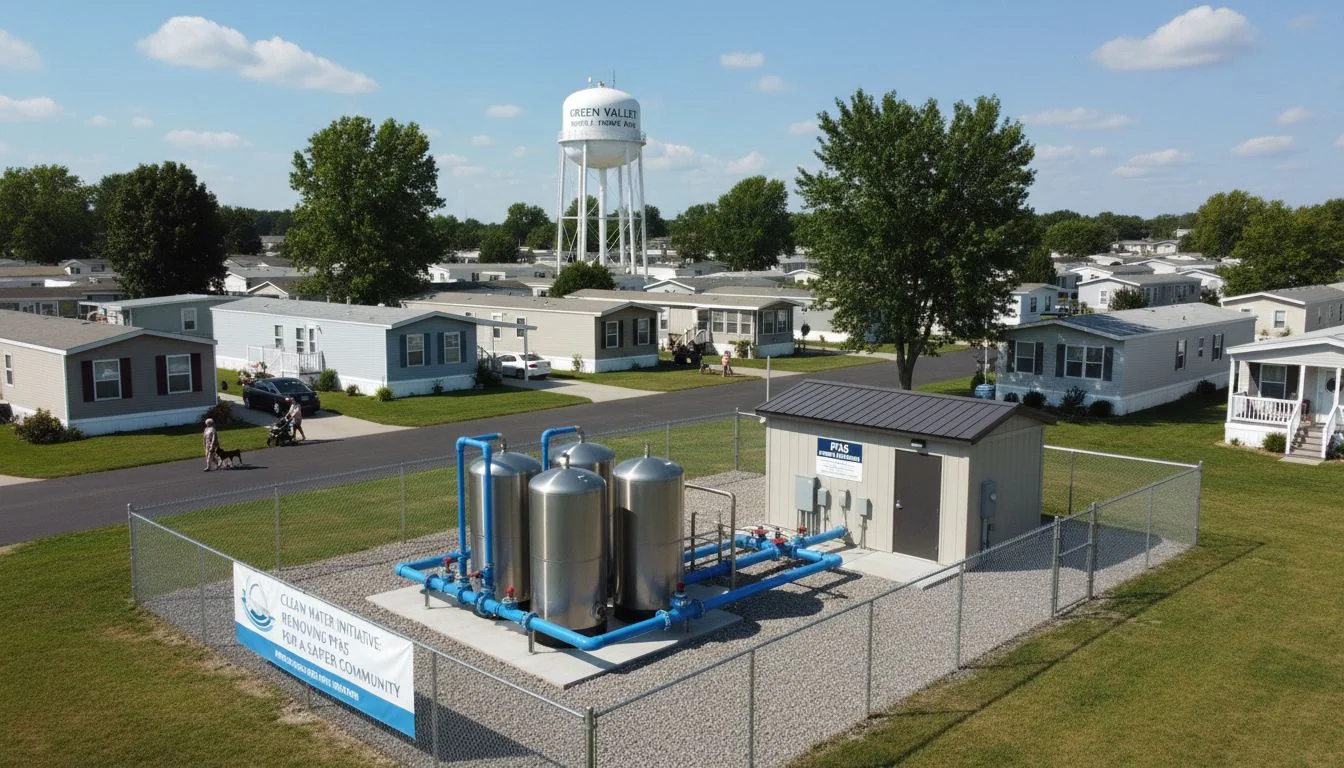
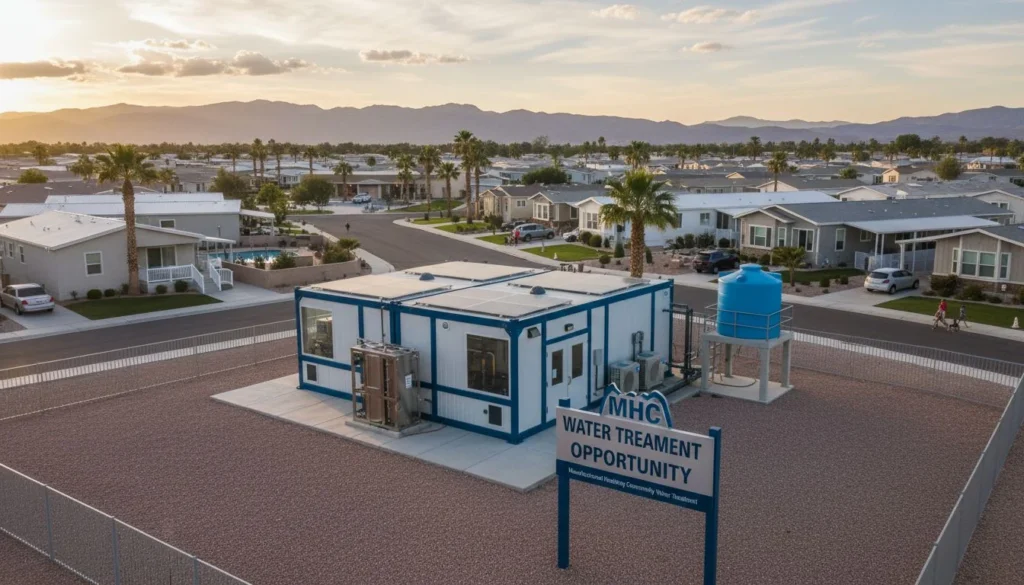
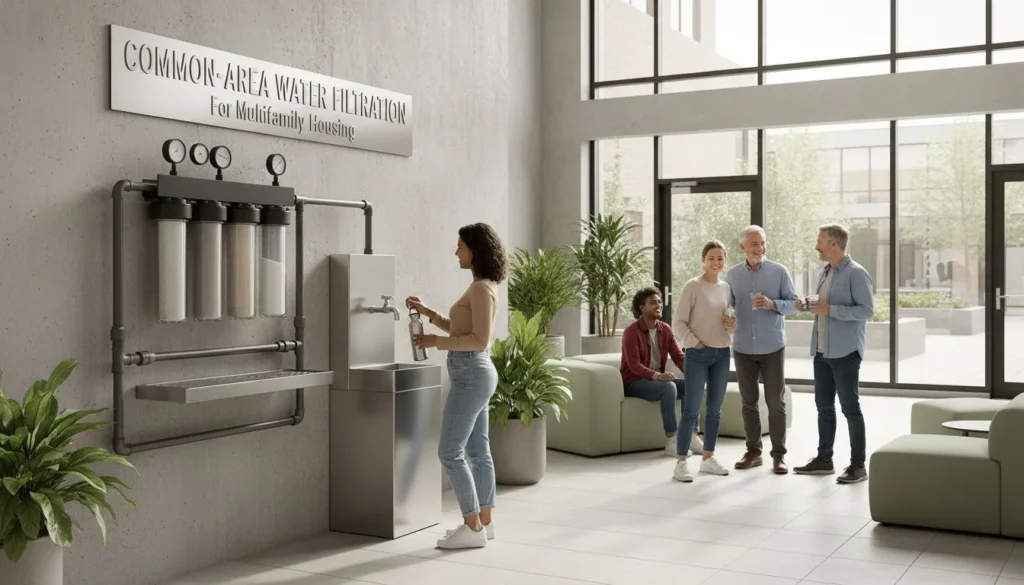
I always tell my engineering clients to define the system boundaries first. You must know where the treatment starts and stops. Community well treatment is a centralized model. You install large tanks and pumps at the main water source. This setup treats every drop of water in the park. unit-level POU systems4 are decentralized. You install small filters under the sinks in every single mobile home.
Coverage and Responsibility
The coverage changes your responsibility. If you use a central well system, you control everything. You do not need to bother the tenants. If you use POU systems, you must enter private homes to do the work. I made a table to show these differences clearly.
| Merkmal | Community Well Treatment | Unit-Level POU Systems |
|---|---|---|
| Standort | Main pump house | Under individual sinks |
| Water Treated | 100% of park water | Only drinking/cooking water |
| Access Needed | Only the pump house | Every mobile home unit |
| System Type | Centralized | Decentralized |
You must look at this table. You must think about your daily operations. You need to know if your team can handle entering homes every few months. This is a major operational difference. You cannot ignore the human element of maintenance.
Community well treatment filters water before it enters the distribution pipes.Wahr
Centralized systems treat the water at the source before it travels to individual homes.
POU systems require a large dedicated building to house the equipment.Falsch
POU systems are small and fit under standard kitchen sinks or on countertops.
How Does Community Well Treatment Handle Scope, Cost, and Operation?
Central systems look great on paper. But the high upfront costs can shock you. I will break down the real numbers and daily tasks for central wells.
Community well treatment requires a large initial capital expense for big tanks and media. But it offers lower operating expenses per gallon over time. One maintenance team handles everything at a single location. This gives you complete control over the water quality.
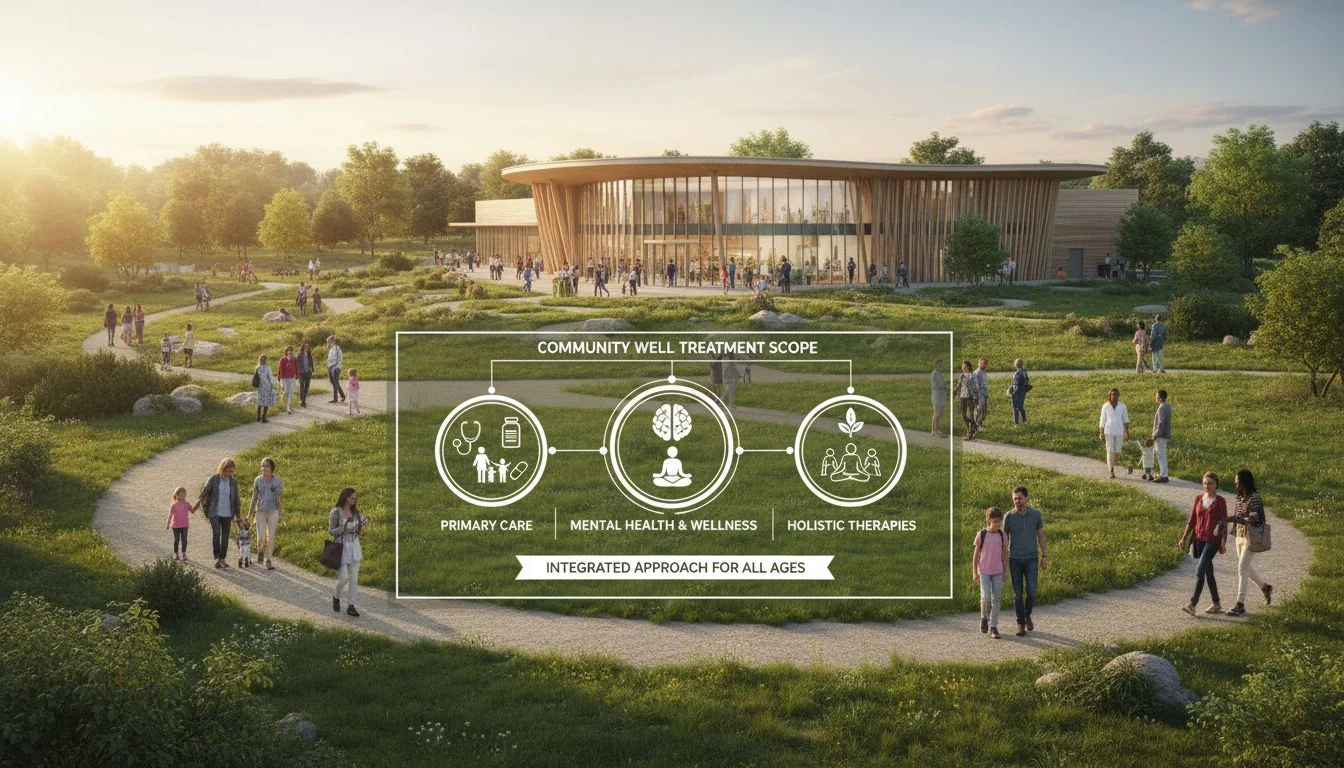
The Scope of Centralized Systems
I treat centralized water systems like large industrial machines. You need a dedicated space for the equipment. You must install large vessels. You fill these vessels with granular activated carbon or ion exchange resin. This setup treats all water. It treats water for drinking. It treats water for showering. It even treats water for flushing toilets.
Breaking Down the Costs
Die capital cost5 is very high. You must buy large equipment. You might need to build a new shed. You must upgrade the electrical panel. But the operating cost is easier to manage. You only change the media once a year. You might change it every two years.
Operational Reality
Your maintenance team only goes to one place. I prefer this kind of control.
| Cost Category | Beschreibung | Impact Level |
|---|---|---|
| Initial CAPEX | Tanks, media, plumbing, building | Hoch |
| Routine OPEX | Media replacement, testing | Mittel |
| Labor Burden | Single location maintenance | Niedrig |
You must test the water at the wellhead. You do not need to test water inside the homes. This makes your compliance testing much simpler. You save a lot of time on testing.
Community well systems require regular media replacement to maintain PFAS removal efficiency.Wahr
The filtration media becomes exhausted over time and must be swapped out to keep working.
Centralized treatment has a very low initial capital cost.Falsch
Centralized systems require large tanks, infrastructure upgrades, and bulk media, making the initial CAPEX high.
How Do Unit-Level POU Systems Manage Scope, Cost, and Operation?
Entering every home sounds like a nightmare. You worry about tenant schedules and missed filter changes. I will show you how POU systems actually work in practice.
Unit-level POU systems have a low initial capital cost. You only buy small filters for each kitchen. But the operating burden6 is high. You must schedule visits to every home to change filters. You also must track the maintenance schedule for every single unit.
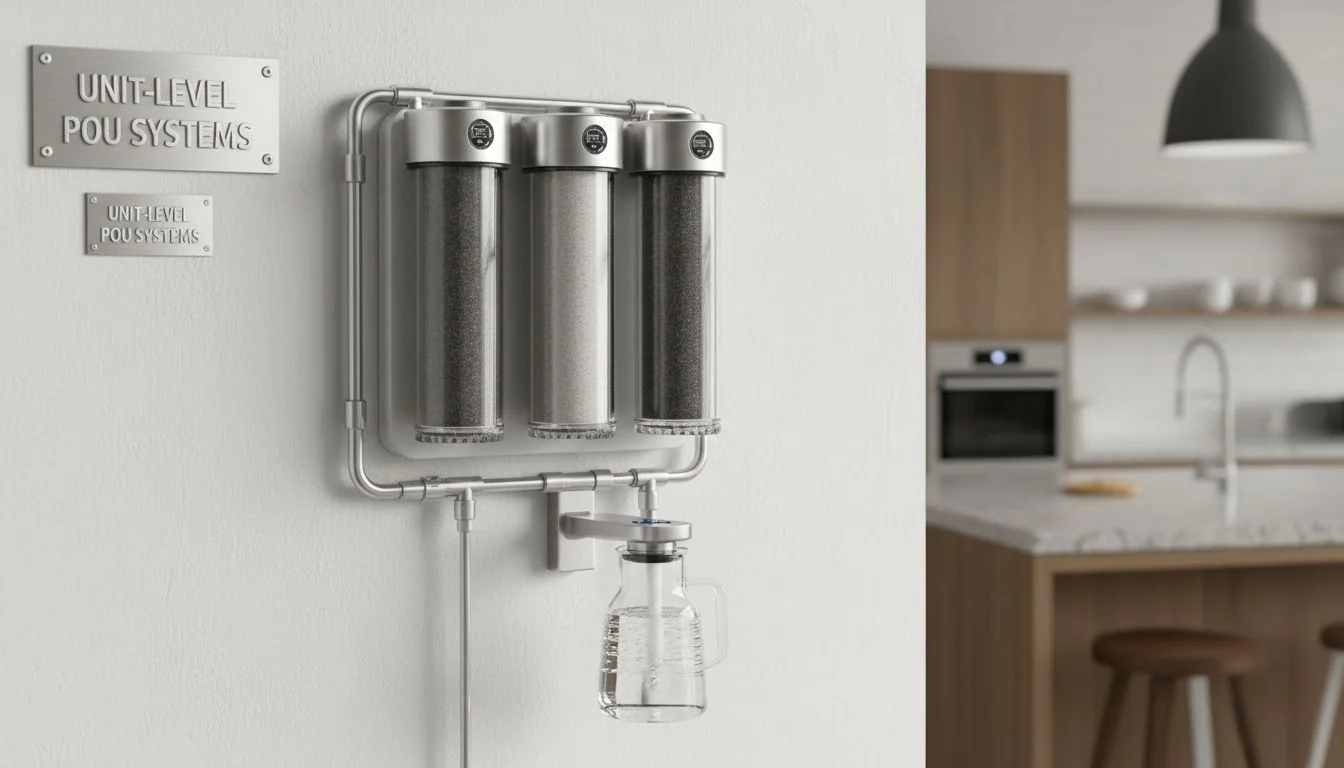
The Scope of Decentralized Systems
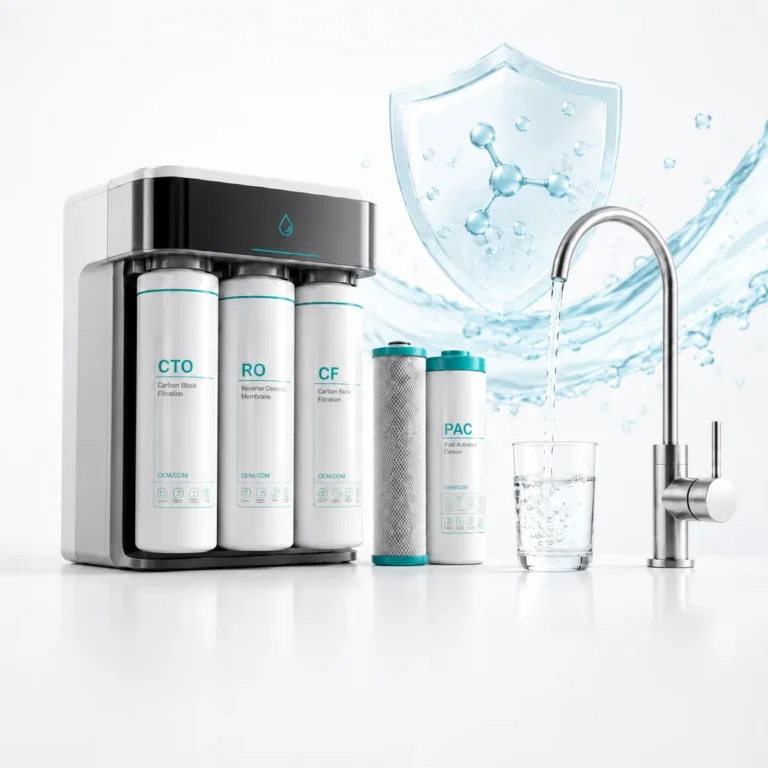
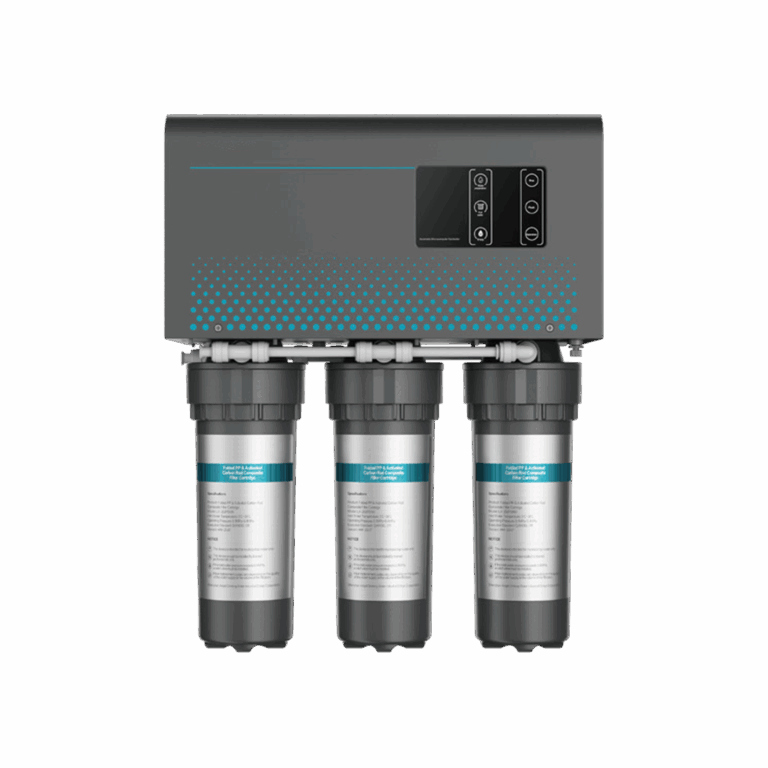
POU systems are like small independent tools. You install a reverse osmosis or carbon filter under the kitchen sink. This unit only treats the water used for drinking and cooking. It does not treat shower water. It does not treat toilet water. This targeted approach saves a lot of filtration capacity.
Cost Dynamics
The initial capital cost is very low. You buy the units in bulk. You pay a plumber to install them. But the operating cost grows quickly. You must buy many small replacement filters.
The Maintenance Challenge
I know from running my factory that tracking many small parts is hard. You must keep a strict schedule.
| Faktor | POU System Details | Management Difficulty |
|---|---|---|
| Initial CAPEX | Low cost per unit | Easy |
| Filter Changes | Every 6 to 12 months | Hard |
| Tenant Access | Required for every service | Very Hard |
You must coordinate with every tenant. If a tenant refuses entry, you have a compliance problem. You must document every filter change. You must prove the water quality meets the standard. This creates a massive paperwork burden for your management team. You must plan for this administrative work.
POU systems only treat water at the specific tap where they are installed.Wahr
Point-of-use means the filtration happens exactly where the water is dispensed, like a kitchen sink.
Tenants can easily bypass POU systems to save filter life.Falsch
POU systems are plumbed directly into the cold water line or a dedicated faucet, making them difficult to bypass for normal drinking use.
How Do You Compare Capital Cost, Operating Burden, and Control?
You feel stuck between two bad choices. You either spend all your cash now or commit to endless labor later. I will help you compare these factors directly.
Community wells demand high upfront cash but offer low labor burden and high control. POU systems save cash upfront but demand high labor and offer low control. You must weigh your available capital against your team's ability to manage ongoing maintenance tasks.
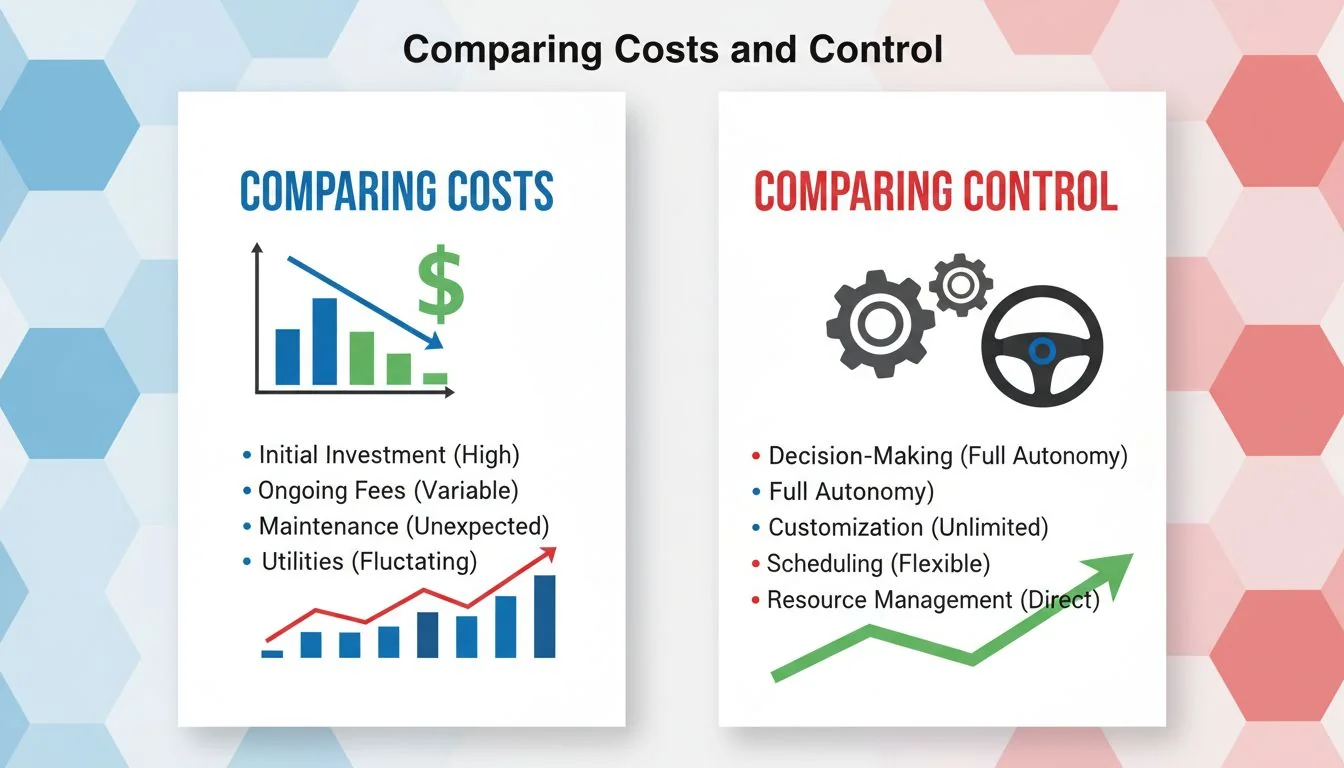
Analyzing the Financial Trade-offs
I always look at the total cost of ownership7. You cannot just look at the price tag today. A central well system is a heavy capital investment. You pay for large infrastructure upfront. A POU system is an operating expense model. You pay for labor and small parts forever.
Evaluating the Operating Burden
Labor is expensive. Labor is also hard to manage. A central system takes one day of work per year. A POU system in a large park takes many separate appointments.
Who Has the Control?
Control is the most important factor in engineering.
| Metric | Community Well | Unit-Level POU |
|---|---|---|
| Capital Cost (CAPEX) | Hoch | Niedrig |
| Operating Cost (OPEX) | Niedrig | Hoch |
| Labor Burden | Niedrig | Hoch |
| System Control | High (Centralized) | Low (Decentralized) |
With a central well, you lock the door. Nobody touches the equipment. With POU systems, tenants might break the filters. They might store chemicals under the sink. You lose control of the physical equipment. You must plan for damaged units. You must keep spare parts in your inventory. You must train your staff to handle angry tenants during maintenance visits. This is the real cost of decentralized control.
Total cost of ownership includes both the initial purchase price and all ongoing maintenance costs.Wahr
TCO is a financial estimate intended to help buyers and owners determine the direct and indirect costs of a product or system.
POU systems give the park operator complete physical control over the equipment at all times.Falsch
Because POU systems are inside private homes, operators cannot monitor or protect them 24/7.
What Factors Push the Decision One Way or the Other?
Every park is different. You might copy a competitor and fail completely. I will show you the specific site factors that dictate your final choice.
Your decision depends on park size, water usage, and site layout. Large parks with high water use benefit from central wells. Small parks with spread-out homes often favor POU systems. You also must consider your local regulations and your ability to secure financing.
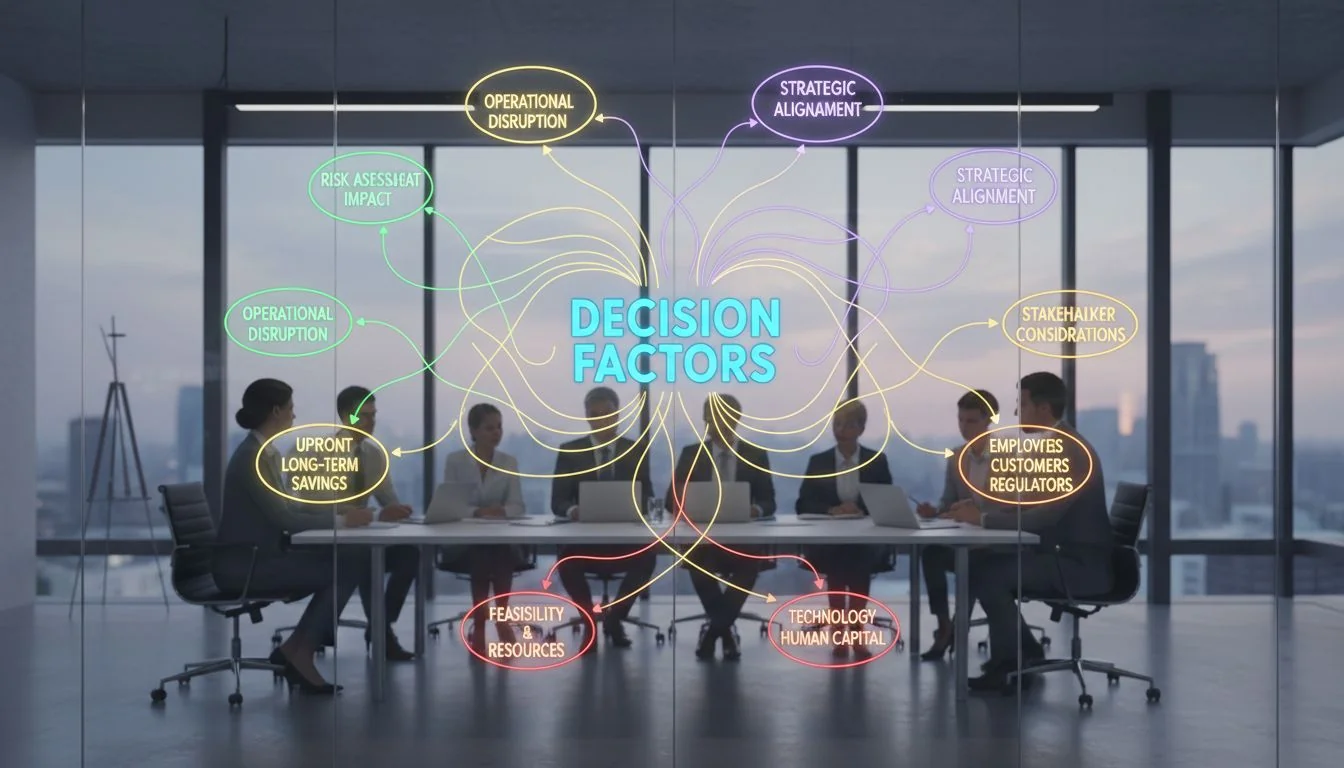
Park Size and Density
I use a simple rule for scale. A central well is highly efficient for a park with many homes. A central well is too expensive per home for a small park. POU makes sense for small numbers.
Water Usage Patterns
You must look at how much water goes down the drain. A central system wastes money if your park uses a lot of water for irrigation. You will filter water just to spray it on the grass.
Infrastructure Limits
Sometimes the site makes the choice for you.
| Site Factor | Favors Central Well | Favors POU System |
|---|---|---|
| Number of Homes | High (>50) | Low (<50) |
| Pump House Space | Available | Not Available |
| Outdoor Water Use | Niedrig | Hoch |
| Maintenance Staff | Small team | Large team |
You cannot use a central system if you do not have space to build a new pump house. You must use POU systems in that case. You must measure your physical space before you buy anything. You must also check your local regulations. Some local health departments do not allow POU systems for compliance. You must call your local regulator first. You do not want to buy a system and fail the inspection.
Filtering irrigation water for PFAS is necessary to meet drinking water standards.Falsch
Drinking water standards apply to water consumed by humans, not water used for lawns or agriculture.
The physical footprint of a centralized treatment system requires dedicated land or building space.Wahr
Large tanks, pipes, and monitoring equipment need a secure, climate-controlled environment.
How Do You Build a Decision Framework for Park Operators?
You have all the data now. But you still feel paralyzed by the choice. I will give you a simple step-by-step framework to make your final decision.
Start by assessing your available capital and physical space. Next, evaluate your maintenance team's capacity to handle tenant appointments. Finally, calculate the total cost of ownership for both options over a ten-year period. This framework removes emotion and relies purely on engineering facts.
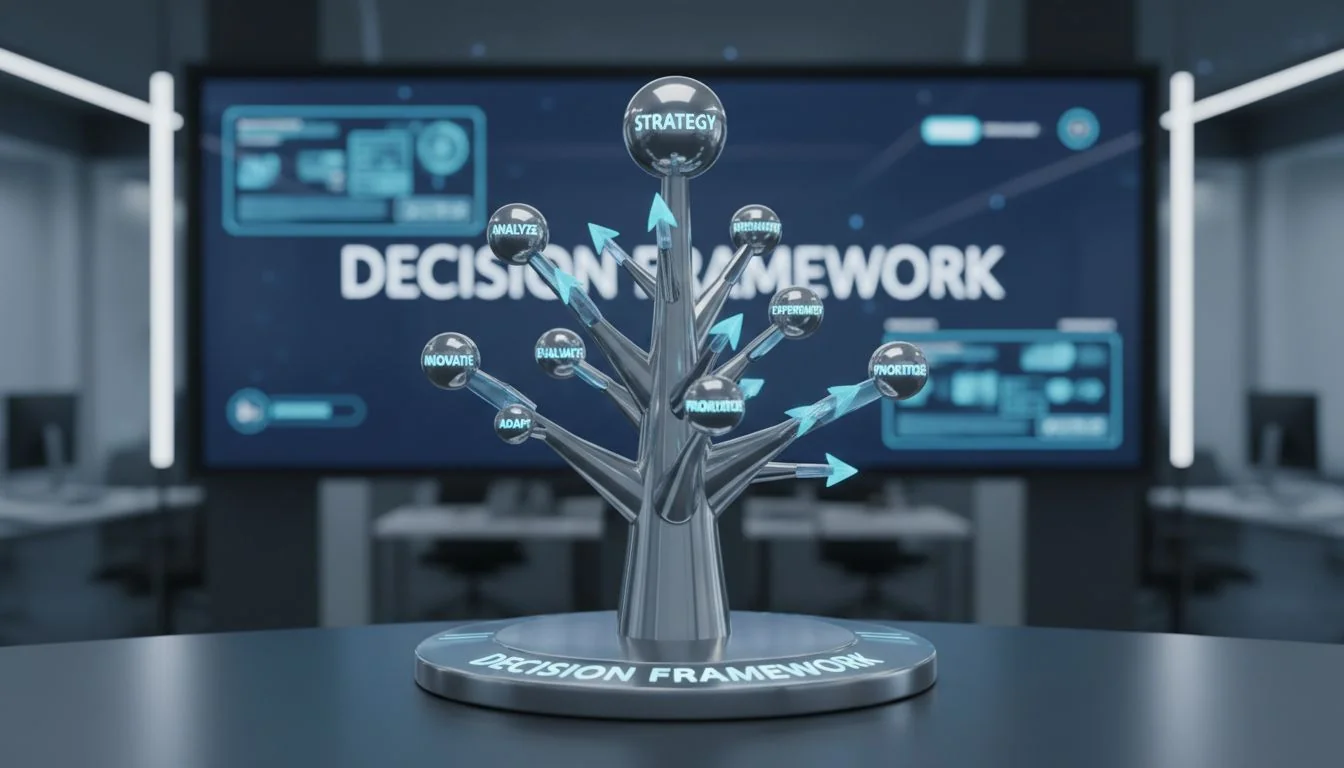
Step One: The Space and Cash Check
I always start with the hard limits. Do you have the money for a central system? Do you have the land for a pump house? You must choose POU systems if the answer is no to either question. You stop the analysis right there.
Step Two: The Labor Assessment
You move to step two if you have the cash and space. You must look at your staff. Can your team manage many appointments every six months? You must choose the central well if your team is small.
Step Three: The Ten-Year Math
You do the math if you can do both.
| Decision Step | Action Required | Outcome |
|---|---|---|
| 1. Hard Limits | Check cash and land | Eliminates impossible options |
| 2. Labor Check | Assess staff capacity | Determines operational fit |
| 3. TCO Math | Calculate 10-year costs | Finds the cheapest long-term path |
You must calculate the costs for ten years. You add the initial capital cost and ten years of operating costs. You compare the two final numbers. You pick the system with the lowest total cost. This is how you engineer a good business decision. You remove all emotion from the process. You rely purely on the numbers and your physical constraints.
A decision framework helps operators make objective choices based on data rather than guesses.Wahr
Structured frameworks force users to evaluate specific criteria like cost, space, and labor systematically.
Capital expenses (CAPEX) are the only costs that matter when choosing a water treatment system.Falsch
Operating expenses (OPEX) like media replacement and labor often exceed CAPEX over the life of the system.
Schlussfolgerung
You must choose between central control and unit-level flexibility. Please share your site layout, water source, number of homes, and target treatment claims so we can help you decide.
References
-
Understanding PFAS water rules is crucial for compliance and effective water treatment. ↩
-
Assessing maintenance capacity ensures that the chosen system can be effectively managed. ↩
-
Community well treatment centralizes maintenance and can be more cost-effective in the long run. ↩
-
Unit-level POU systems offer flexibility but require careful management and maintenance. ↩
-
Understanding capital costs helps in budgeting and financial planning for water treatment solutions. ↩
-
Evaluating the operating burden is essential for long-term maintenance and operational efficiency. ↩
-
Understanding total cost of ownership helps in making informed financial decisions. ↩

 English
  Français
  Español
  Italiano
  Deutsch
  Português
  Русский
  العربية
  日本語
日本語  한국어
한국어  Tiếng Việt

