
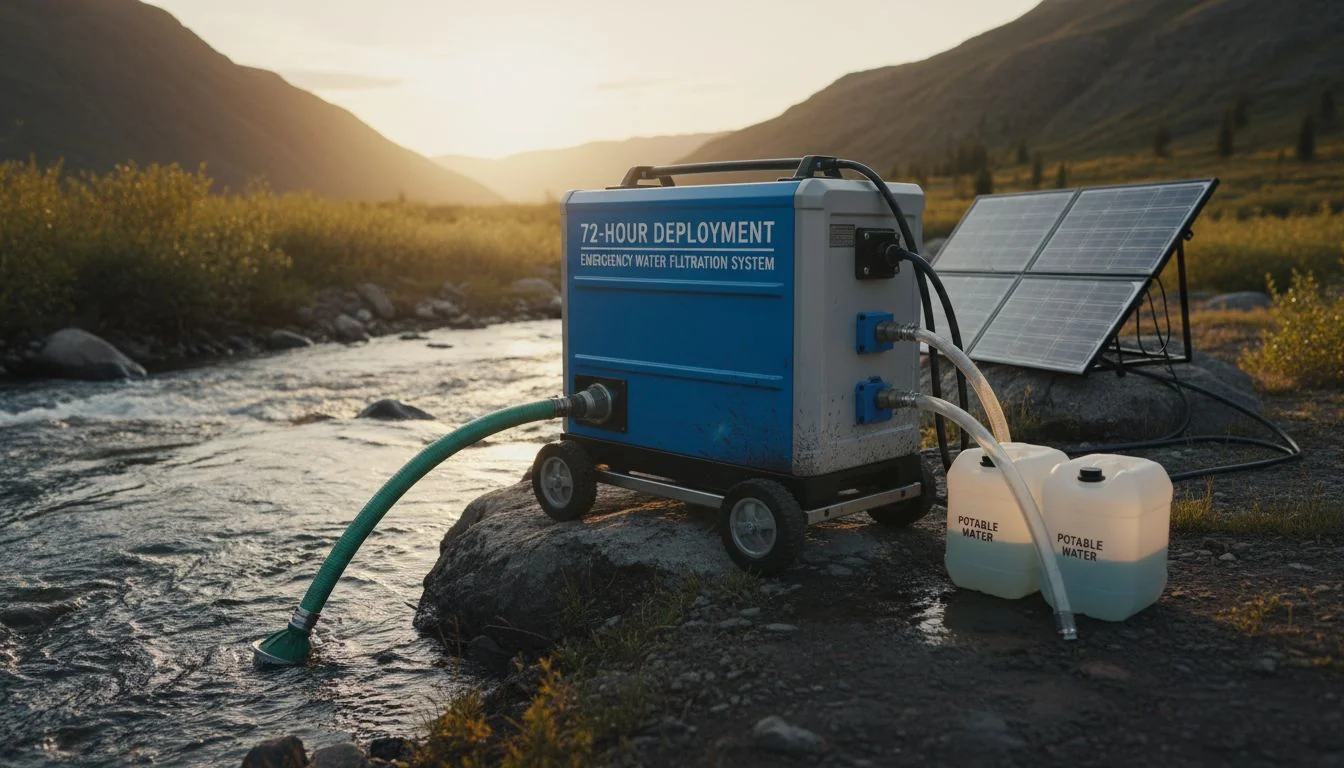
Disasters destroy clean water access fast. Waiting weeks for custom water systems costs lives. I will show you how we package rapid-response water filtration systems for 72-hour deployment.
A 72-hour deployment water filtration system is a pre-engineered, containerized unit designed for rapid emergency response. It includes standardized interfaces1, pre-packed kits, and clear manuals. This ensures the system goes from arrival to full commissioning and clean water production within exactly 72 hours.
You might think any water filter can work in an emergency. But your system will fail when people need it most if you do not plan the exact logistics, installation, and spare parts. Let us look at how real project execution makes this happen.
A 72-hour deployment means the system is built from scratch in three days.Falsch
It means the system goes from arrival on-site to full commissioning in 72 hours, using pre-engineered parts.
Standardized interfaces speed up the installation of emergency water systems.Wahr
Standard connections allow local workers to assemble the system quickly without specialized custom tools.
Why Does Deployment Speed Define Emergency Water Procurement?
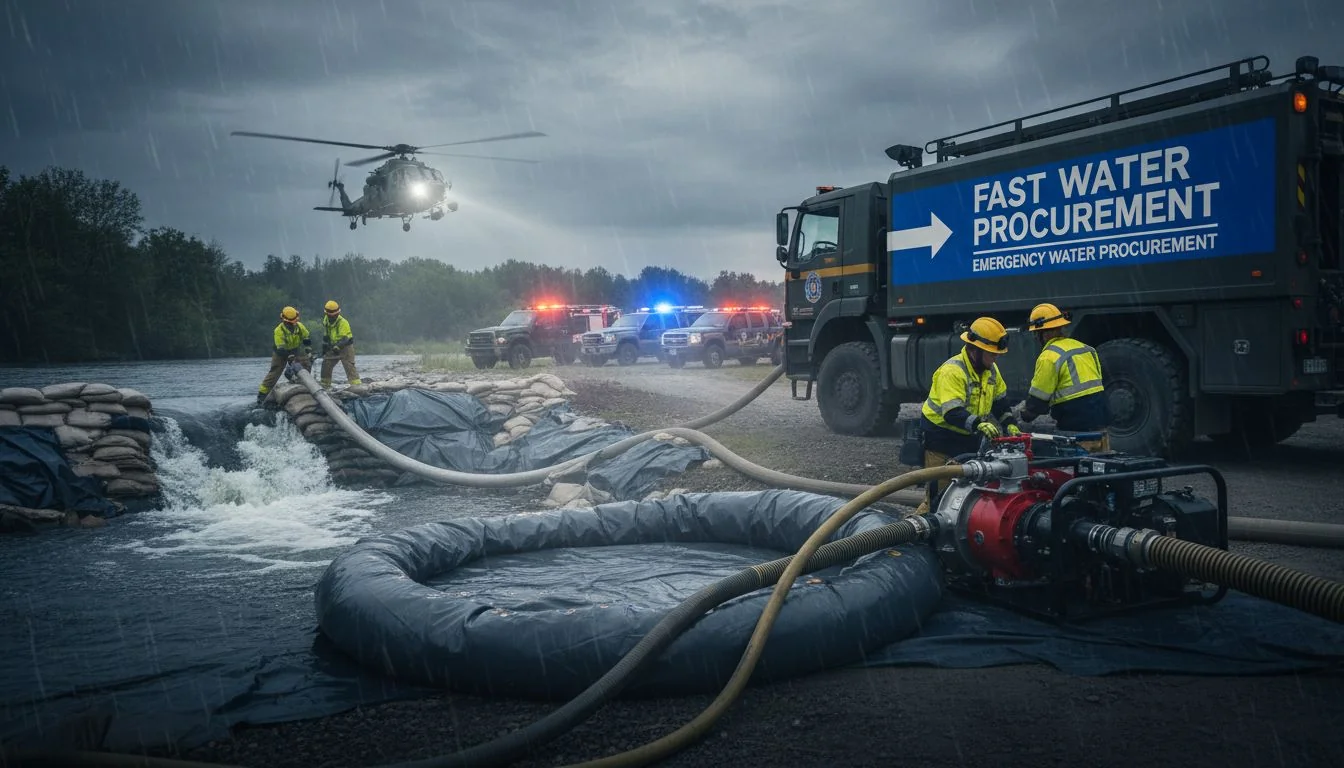
Slow procurement leaves disaster victims thirsty. Complex custom builds delay relief efforts. Fast deployment speed ensures emergency housing gets safe water exactly when the crisis hits.
Deployment speed defines emergency water procurement because survival depends on immediate access to clean water. Fast deployment relies on project execution capability2, not just filter performance. It requires pre-planned logistics, ready-to-install kits, and standardized parts to eliminate on-site guesswork.
The Reality of Project Execution
I learned a hard lesson when I started my CNC and mold trading company. A great design means nothing if you cannot deliver it on time. The same rule applies to emergency water systems. You cannot rely on exaggerated performance claims. You must focus on project execution capability. You do not have time to machine custom fittings in a disaster zone. You do not have time to wait for missing parts.
Defining the 72-Hour Timeline
We need to define exactly what "72 hours" means. It does not mean manufacturing the system in three days. The clock starts when the equipment arrives at the site. The system must reach a ready-to-install status, complete installation, and finish commissioning within 72 hours.
| Phase | Time Allocation | Schlüsselaktion |
|---|---|---|
| Arrival & Unloading | 12 Hours | Move containers to the flat site. |
| Assembly & Piping | 36 Hours | Connect standardized interfaces and modules. |
| Commissioning | 24 Hours | Test water pressure and filter quality. |
As a product designer, you know that tight project deadlines require smart planning. We design these systems so local workers can snap them together. We use molded plastic connectors and CNC-machined valves. These parts fit perfectly every time. This eliminates errors and guarantees the 72-hour goal.
Project execution capability is more important than exaggerated filter performance in emergencies.Wahr
A high-performance filter is useless if it cannot be delivered and installed quickly during a crisis.
The 72-hour timeline includes the manufacturing time of the water system.Falsch
The 72-hour timeline covers arrival, installation, and commissioning on-site, not the initial manufacturing.
What Does a “72-Hour Deployment” System Include?
Missing parts halt emergency installations. Searching for tools wastes precious time. A true 72-hour system includes every single component needed for immediate setup in one complete package.
A 72-hour deployment system includes pre-packed installation kits3, standardized piping interfaces, detailed visual manuals, and a comprehensive spare-parts plan. It provides everything required to take the system from a shipping container to a fully operational water filtration plant without needing outside supplies.

Pre-Packed Kits for Rapid Setup
I have seen how one missing screw can stop a whole assembly line in my years of manufacturing. Emergency water systems face the same risk. We use pre-packed kits to prevent this. We pack every bolt, filter membrane, and molded plastic fitting in order of use. We label everything clearly. This helps workers find what they need instantly.
Standardized Interfaces and Manuals
We also focus heavily on standardized interfaces. We use universal quick-connect fittings. You do not need special welding tools. You just push and lock the pipes together. We pair this with simple installation manuals. These manuals use pictures instead of long text. Anyone can understand them regardless of their language.
| Component Category | Included Items | Zweck |
|---|---|---|
| Core Filtration | RO membranes, UV lights | Remove bacteria and toxins. |
| Connection Kits | Standardized hoses, molded joints | Ensure fast, tool-free assembly. |
| Support Gear | Visual manuals, spare-parts kit | Guide workers and prevent downtime. |
We also include a spare-parts plan4. We pack extra O-rings and valves. The team can replace a part right away if something breaks during setup. This packaging strategy proves our ability to handle rapid-response projects.
Visual installation manuals help overcome language barriers in disaster zones.Wahr
Picture-based instructions allow local workers to assemble systems without needing to read a specific language.
Emergency water systems require complex welding on-site.Falsch
They use standardized interfaces and quick-connect fittings to avoid the need for specialized tools like welders.
How Do Pre-Engineered and Containerized Solutions Work?
Building water plants on-site takes months. Disasters do not give you months. Pre-engineered and containerized solutions solve this by putting a whole factory inside a standard shipping box.
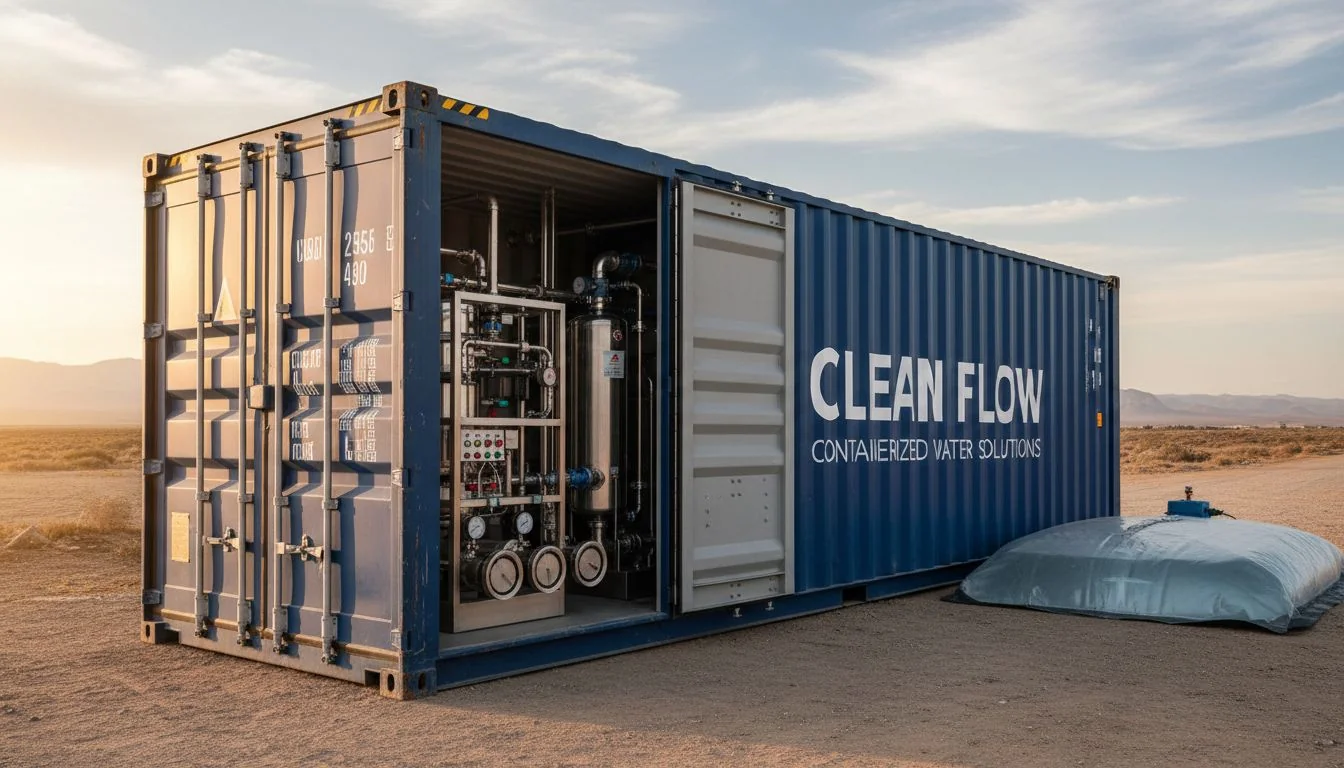
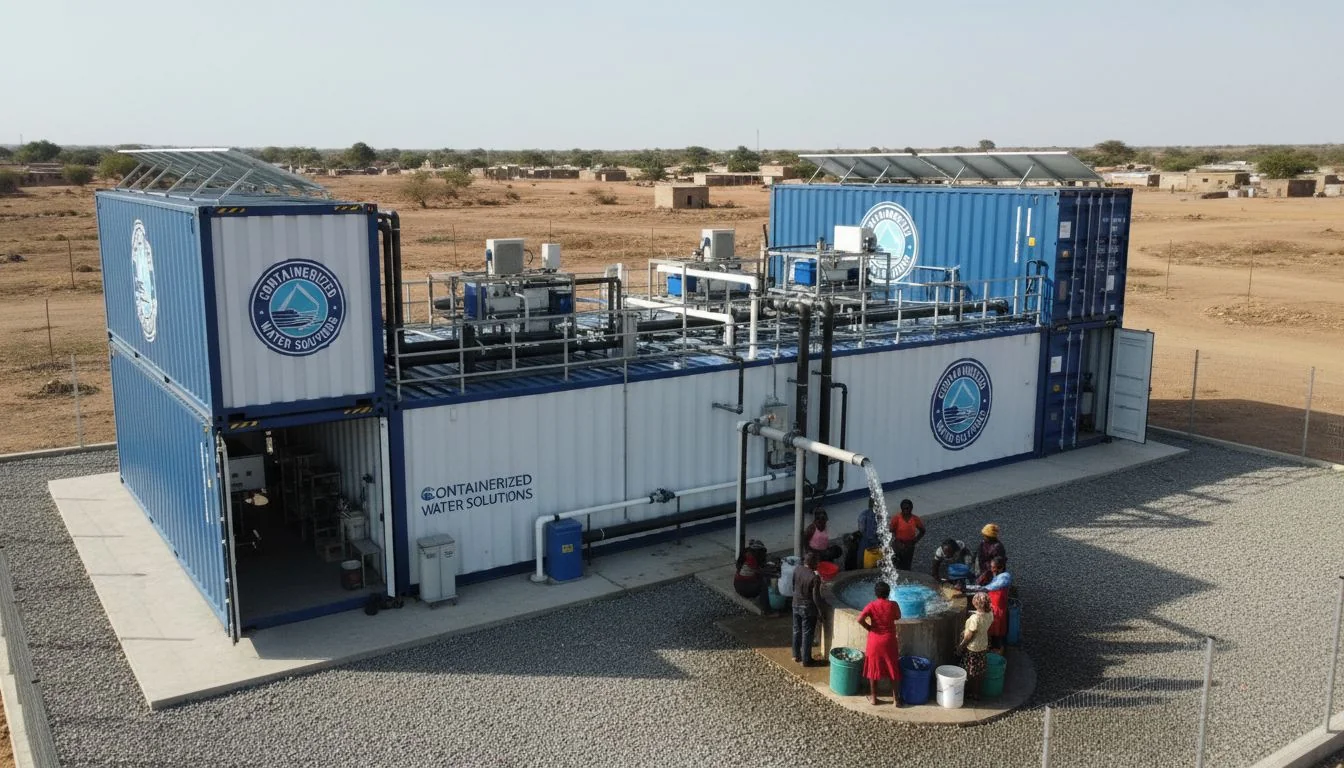
Pre-engineered and containerized solutions work by housing the entire water filtration system inside a standard shipping container. The internal layout is optimized for space and function. This design protects the equipment during transport and serves as the permanent secure housing once it arrives.
The Power of Containerization
I have to think about the final physical space the plastic part will occupy when I design a mold. We do the same thing with containerized water systems. We use standard 20-foot or 40-foot shipping containers. We bolt the pumps, filters, and electrical panels to the walls and floor before shipping. The container acts as both the shipping box and the final building.
Pre-Engineered for Reliability
Pre-engineered means we solve all the design problems in the factory. We calculate the pipe routing, the water flow, and the power needs ahead of time. We test the whole system before it leaves our facility.
| Merkmal | Factory Action | On-Site Benefit |
|---|---|---|
| Internal Piping | Pre-cut and pressure tested | No leaks during initial startup. |
| Electrical Wiring | Pre-wired to a central panel | Just plug into a generator. |
| Structural Layout | Bolted to container frame | Survives rough transport roads. |
This approach is perfect for rapid-response projects. The workers just open the doors when the container drops on the ground. They connect the raw water inlet and the clean water outlet. The system is ready to run. It is a pure plug-and-play solution.
Containerized systems use the shipping container as the permanent housing for the equipment.Wahr
The container protects the equipment during shipping and acts as a secure building on-site.
Pre-engineered systems are designed and tested after they arrive at the disaster site.Falsch
Pre-engineered systems are fully designed, built, and tested in the factory before shipping.
What Are the Transport, Setup, and Commissioning Logistics?
Bad logistics ruin good engineering. A stuck truck means no water. Planning the exact transport, setup, and commissioning logistics ensures the system actually reaches the people who need it.
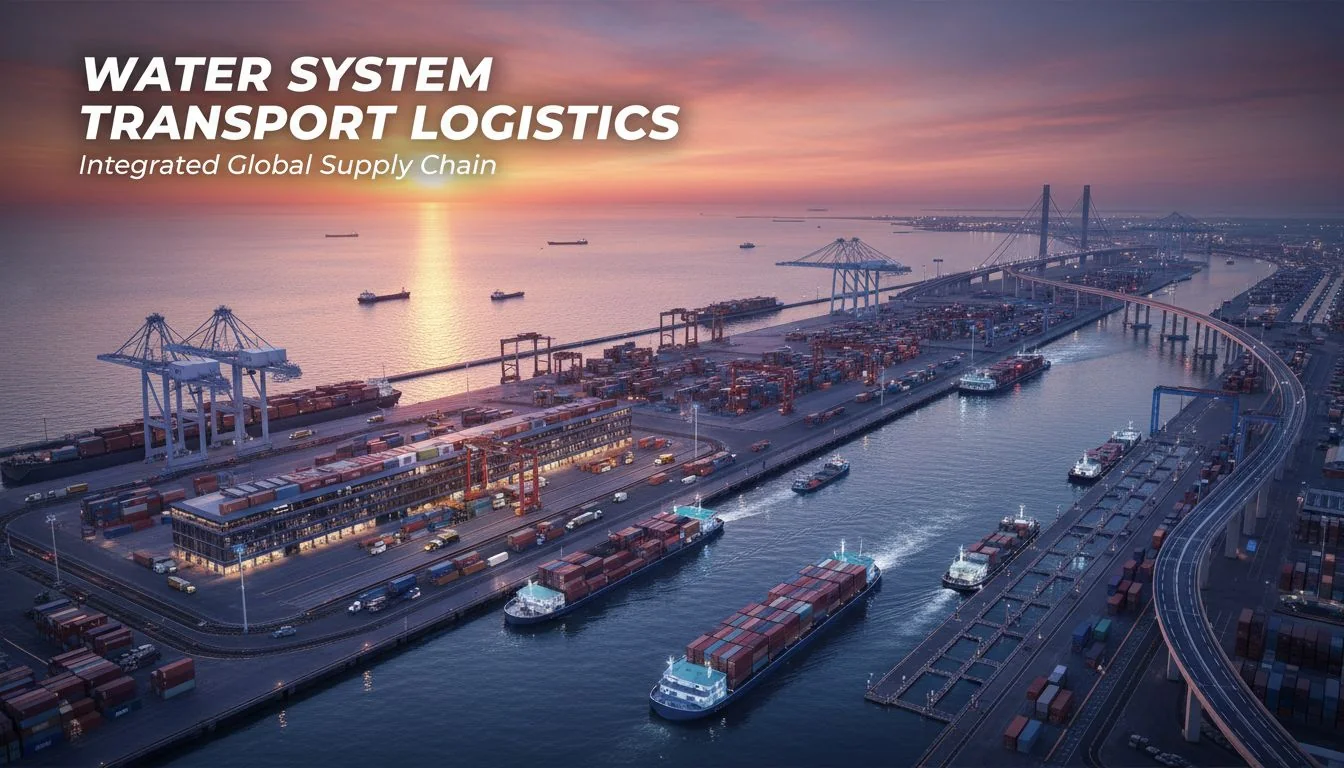
transport logistics5 involve moving standard containers via trucks or ships. Setup requires a flat surface and connecting the pre-packed kits. Commissioning involves flushing the filters, testing water quality, and checking system pressure. Clear logistics ensure the system hits the 72-hour operational target without delays.
Managing Transport to the Site
Moving heavy equipment into a disaster zone is hard. Roads might be broken. We use standard shipping containers. Therefore, any normal flatbed truck or cargo ship can move our systems. We do not need special oversized transport permits. This keeps the shipping fast and simple.
Setup and Commissioning Steps
The 72-hour clock starts once the truck arrives. The setup logistics are very strict. First, a crane or forklift places the container on a flat piece of ground. Next, workers use the standardized interfaces to connect the water source.
| Logistics Stage | Required Equipment | Key Objective |
|---|---|---|
| Transport | Flatbed truck, standard crane | Deliver container safely to the site. |
| Setup | Basic hand tools, pre-packed kits | Connect external hoses and power. |
| Commissioning | Water testing kits, pressure gauges | Verify safe drinking water output. |
Commissioning is the final step. We must prove the water is safe. Workers flush the system to clean the new filters. They check the pressure gauges. They use simple test kits to check the water quality. This on-site commissioning goes very fast because we pre-test everything in the factory.
Standard shipping containers require special oversized transport permits.Falsch
Standard containers fit on normal trucks and ships, avoiding the need for special permits.
Commissioning includes flushing the filters and testing the final water quality.Wahr
These steps ensure the system operates safely and produces clean drinking water before public use.
How Do You Operate and Service Systems in the Field?
Complex machines break down easily. Untrained users struggle to fix them. Operating and servicing systems in the field must be simple. Otherwise, the emergency housing will lose water again.
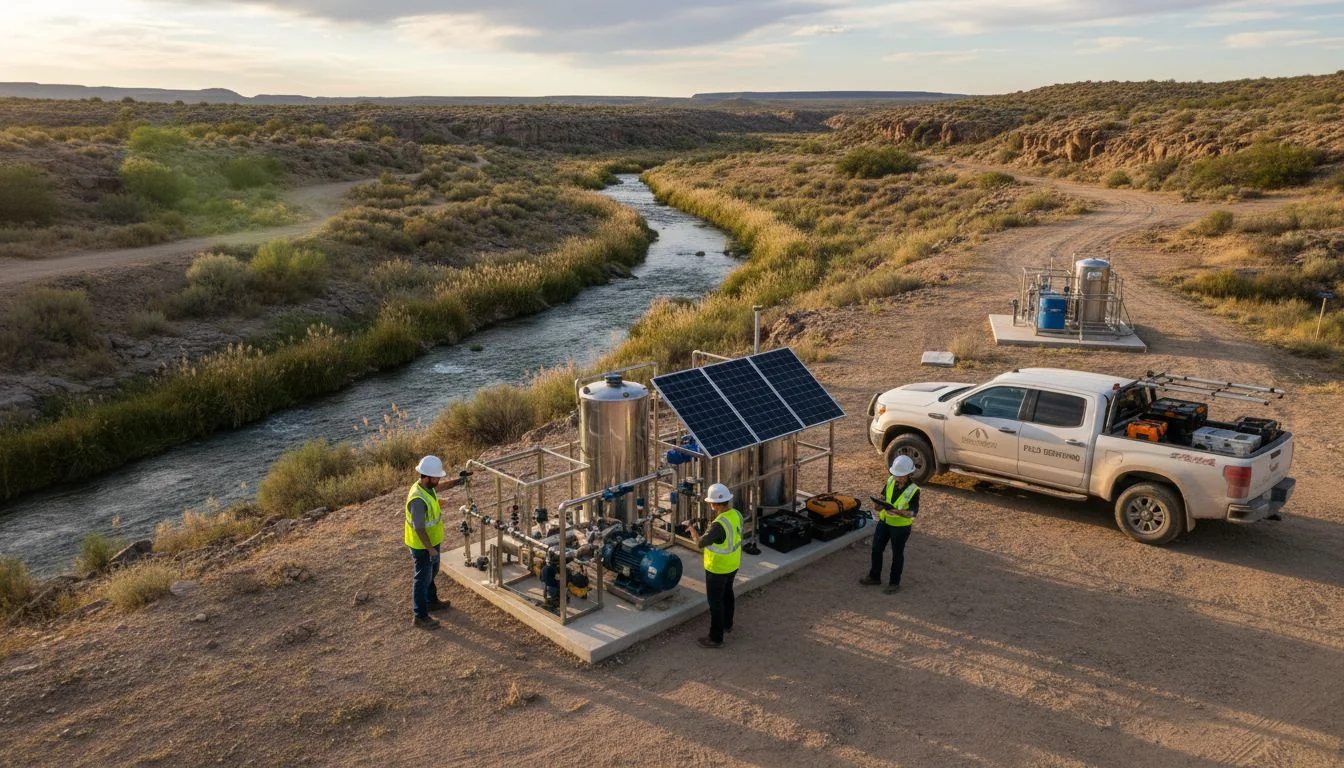
Operating field systems requires simple push-button controls and automated cleaning cycles6. Servicing relies on the pre-planned spare-parts kits and standardized components. We design these systems so local operators can perform daily maintenance and replace filters easily without needing an advanced engineering degree.
Simplified Daily Operation
I always tell my clients that good design makes the user's life easy. You know that complex interfaces cause user errors as a product designer. We apply this rule to our water systems. The control panels have simple green and red buttons. We use automated backwash cycles. The machine cleans its own filters automatically. The local operator just needs to watch the indicator lights.
Field Servicing and Spare Parts
Parts will wear out eventually. Filters get dirty. O-rings break. This is why our spare-parts planning is so important. We design the system using modular parts7.
| Maintenance Task | Frequenz | Required Action |
|---|---|---|
| Daily Check | Every 24 hours | Check pressure gauges and indicator lights. |
| Filter Cleaning | Weekly | Run automated backwash cycle. |
| Part Replacement | As needed | Swap modular filters using quick-connects. |
The operator does not need to take a pump apart if it fails. They just unbolt the broken module and snap in a new one from the spare-parts kit. We use standard molded plastic fittings. You can replace these fittings in minutes. This keeps the system running long after the initial 72-hour deployment.
Modular parts make field servicing faster and easier for local operators.Wahr
Operators can swap out whole modules quickly instead of trying to repair complex internal parts.
Emergency water systems require an advanced engineer to operate them daily.Falsch
They are designed with simple controls and automated cycles so local users can operate them easily.
Why Does Procuring and Pre-Positioning Ahead of Need Matter?
Waiting for a disaster to strike is too late. Supply chains freeze during emergencies. Procuring and pre-positioning systems ahead of need guarantees you have water ready when chaos hits.
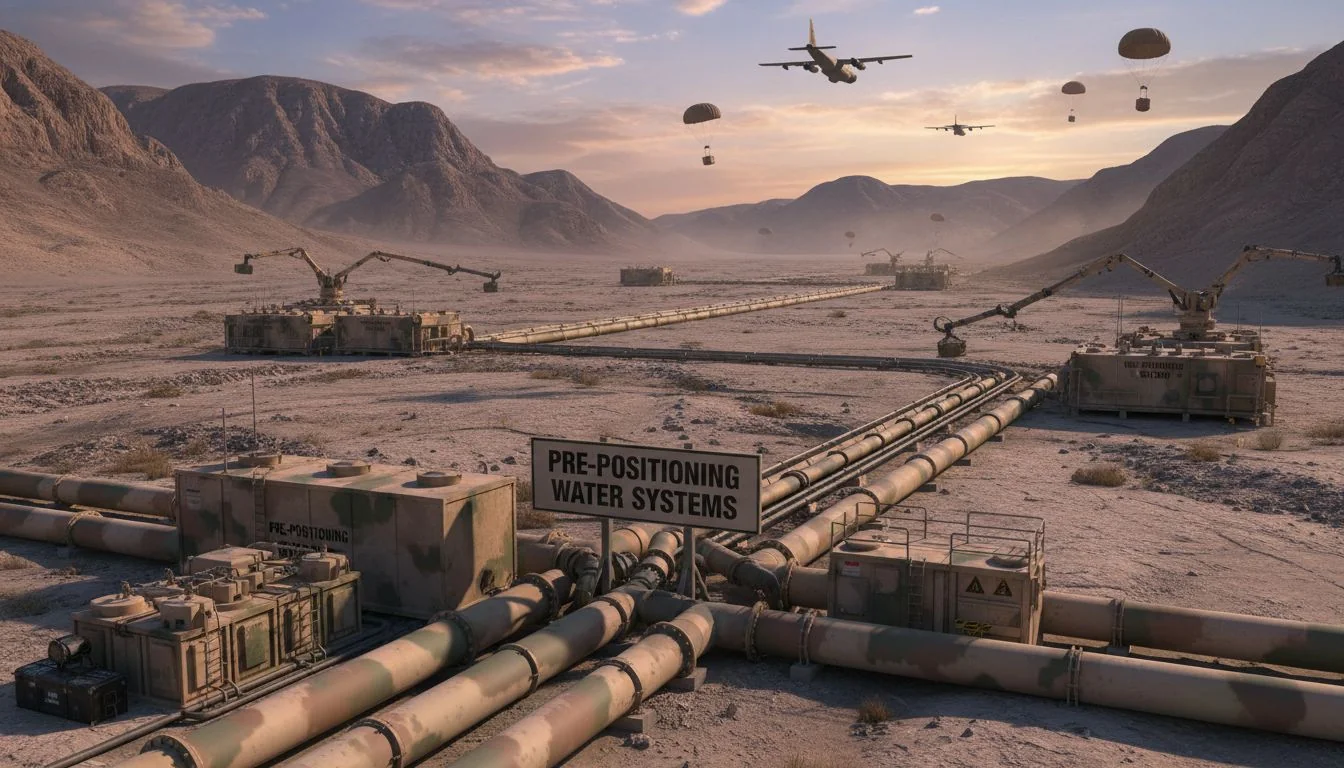
Procuring and pre-positioning ahead of need means buying and storing containerized water systems in strategic locations before a disaster occurs. This eliminates manufacturing and long-distance shipping delays. It ensures the equipment is ready for immediate 72-hour deployment to emergency housing areas the moment a crisis begins.
The Danger of Reactive Procurement
You will pay more and wait longer if you order a mold at the last minute in the manufacturing world. Emergency management is the same. Governments will fail if they wait until a hurricane hits to order water systems. Factories need time to build the units. Shipping companies need time to move them. You cannot compress a one-month build time into 72 hours.
Strategic Pre-Positioning
The only way to achieve a true 72-hour deployment is through pre-positioning. Organizations must procure these systems now. They must store them in regional warehouses near high-risk areas.
| Action Step | Timing | Nutzen Sie |
|---|---|---|
| Procurement | Months before disaster | Secures equipment at normal market prices. |
| Storage | Ongoing | Keeps systems safe and ready for use. |
| Deployment | Immediately after disaster | Guarantees arrival and setup within 72 hours. |
You cut out the longest part of the supply chain by storing pre-packed kits and containerized units locally. You just put the container on a truck when the emergency starts. This shows true project execution capability. It proves we can package water systems for real rapid-response success.
Pre-positioning eliminates the manufacturing delay during an active disaster.Wahr
Buying and storing systems early means they are already built and ready to deploy instantly.
You can easily manufacture a custom water filtration system within 72 hours.Falsch
Manufacturing takes weeks or months; the 72-hour window only applies to deploying pre-built systems.
Schlussfolgerung
A 72-hour deployment water system relies on smart packaging, standardized interfaces, and pre-positioning. Strong project execution ensures emergency housing gets safe drinking water exactly when they need it most.
References
-
Standardized interfaces simplify assembly, allowing local workers to quickly set up systems without specialized tools. ↩
-
Exploring project execution capability reveals how effective planning and logistics can enhance disaster response efforts. ↩
-
Pre-packed kits streamline setup, ensuring rapid deployment and minimizing delays in providing clean water. ↩
-
A spare-parts plan minimizes downtime during setup, ensuring that systems remain operational in critical situations. ↩
-
Effective transport logistics ensure timely delivery of water systems to disaster zones, crucial for saving lives. ↩
-
Automated cleaning cycles simplify maintenance, allowing local operators to focus on monitoring rather than complex repairs. ↩
-
Modular parts allow for quick replacements, ensuring that systems can be maintained easily and efficiently in the field. ↩



 English
  Français
  Español
  Italiano
  Deutsch
  Português
  Русский
  العربية
  日本語
日本語  한국어
한국어  Tiếng Việt

