
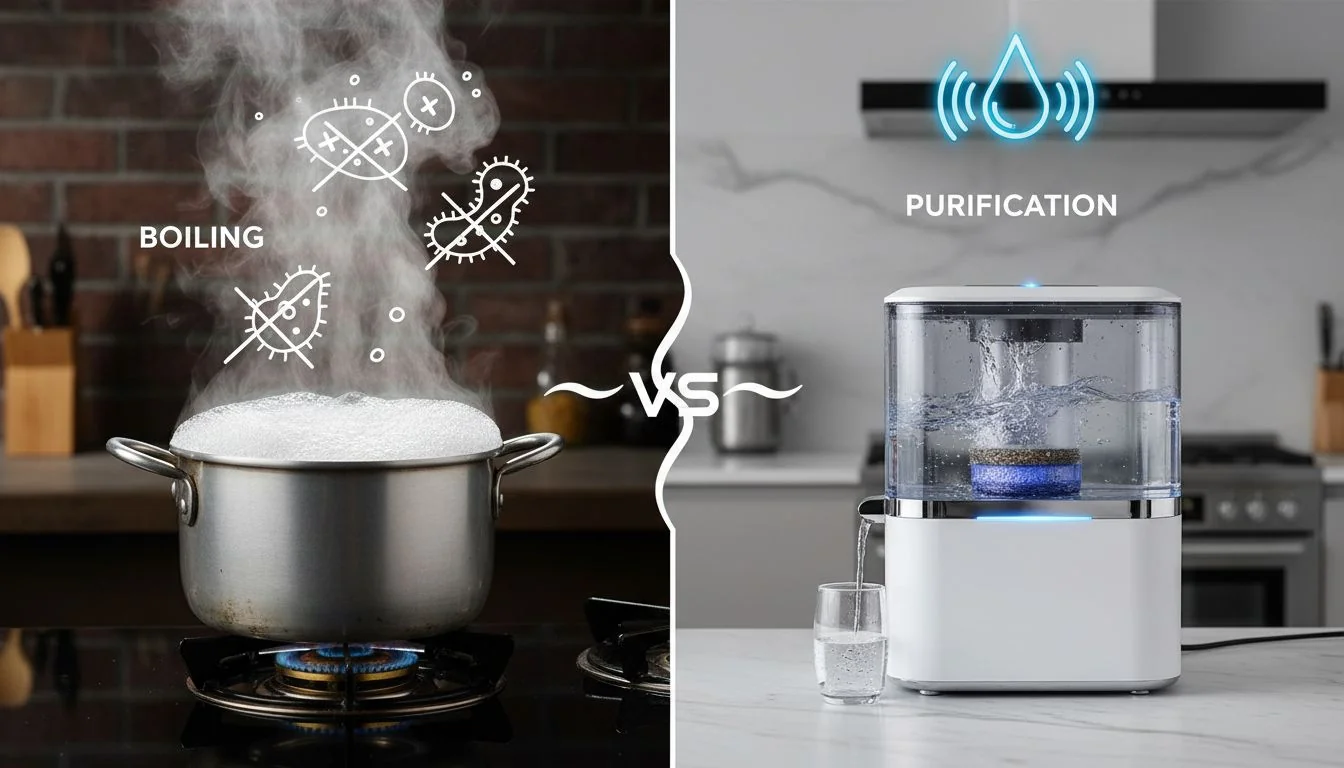
You might think a bubbling pot on the stove is the ultimate safety standard for your drinking water. But relying solely on heat is a survival tactic, not a daily wellness strategy.
Boiling water is highly effective at thermal inactivation1, which kills living organisms like bacteria, viruses, and protozoa by damaging their structural proteins. However, boiling does not remove physical contaminants like heavy metals, chemicals, or microplastics; it only creates sterile water, not necessarily pure water.
Many people confuse "sterile" with "pure," but as someone deeply involved in manufacturing and engineering, I know these are very different standards. Let's look at the engineering reality behind the bubbles.
Boiling water removes all harmful contaminants.Falsch
Boiling only kills biological pathogens; it leaves behind heavy metals, chemicals, and sediment.
Thermal inactivation works by denaturing proteins in bacteria.Wahr
High temperatures break down the structural integrity of pathogens, rendering them harmless.
Introduction: Is This The World's Oldest Water Hack?
We have boiled water for thousands of years to stay safe from disease. But does an ancient survival skill belong in a modern, high-tech kitchen?
Boiling is a "Survival Skill" perfect for camping trips or emergency boil-water advisories when infrastructure fails. However, for daily life, it falls short compared to filtration because it addresses only biological threats while ignoring chemical ones.
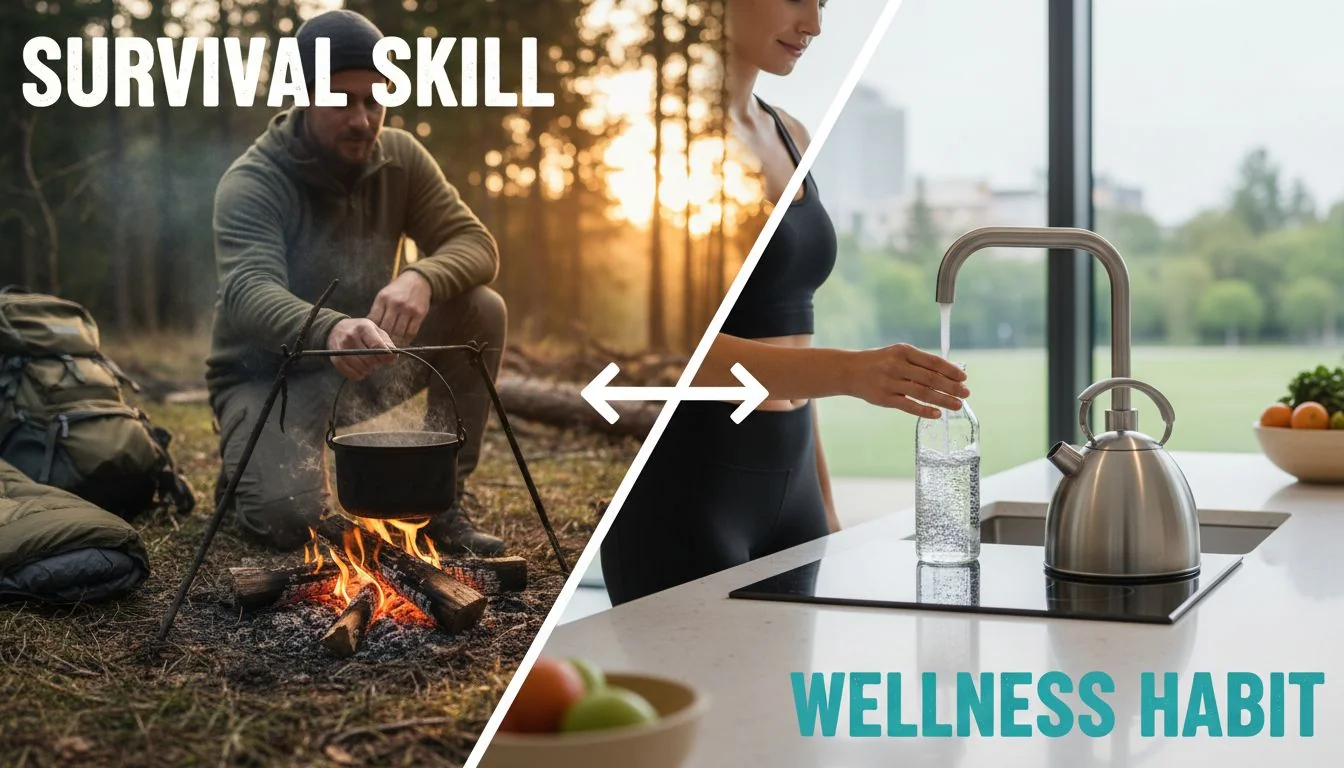
The Difference Between Survival and Wellness
When I look at the history of product design, I see tools that solve specific problems. Boiling is a tool for survival. If you are in the woods or the city pipes burst, you boil. It is a crude, effective way to stop immediate sickness from living bugs. But in our modern lives, we face different threats. We are not just dodging cholera anymore. We are worried about long-term exposure to industrial runoff and old piping materials.
I often tell my clients in the mold industry that you must design for the correct environment. A pot on a stove is designed for emergency sterilization. It is not designed for "Wellness." Wellness is a habit. It is about what you put into your body every single day for thirty years. Filtration, specifically Reverse Osmosis (RO), is the technology designed for wellness. It handles the complex chemical landscape of modern tap water. Relying on a kettle for your daily water is like using a survival knife to chop vegetables in a chef's kitchen. It works, but it is the wrong tool for the job. We need to upgrade our mindset from simply surviving to actually thriving.
Boiling is recommended for emergency situations.Wahr
CDC and health organizations recommend boiling during water main breaks or natural disasters.
Boiling water improves the taste by removing chlorine.Falsch
While some chlorine evaporates, boiling can concentrate other tastes and does not effectively remove all taste-altering chemicals.
The Science: How Does Heat Kill Pathogens?
We know that hot water kills germs, but what is actually happening at the microscopic level?
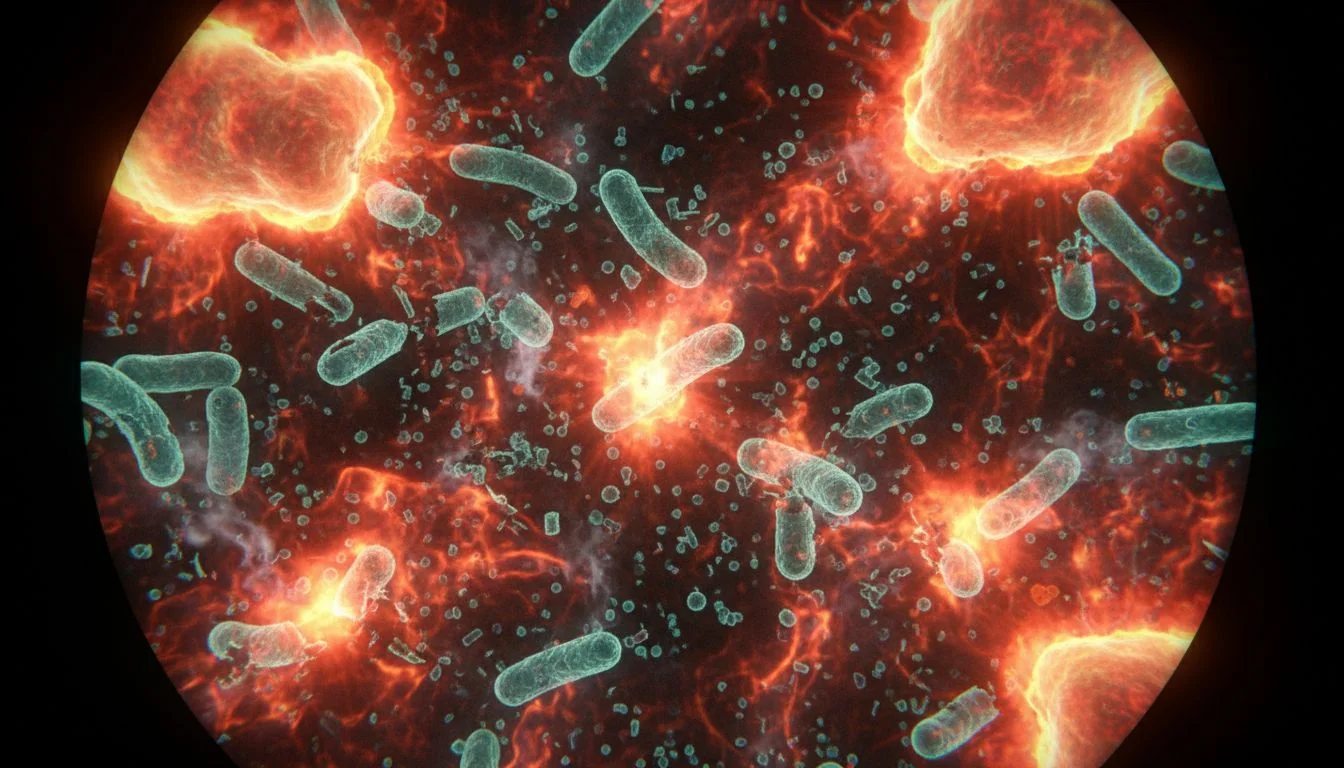
Heat kills pathogens through a process called thermal inactivation, which permanently alters the cell structure. The high temperature denatures the proteins and enzymes essential for the virus or bacteria to survive and reproduce.
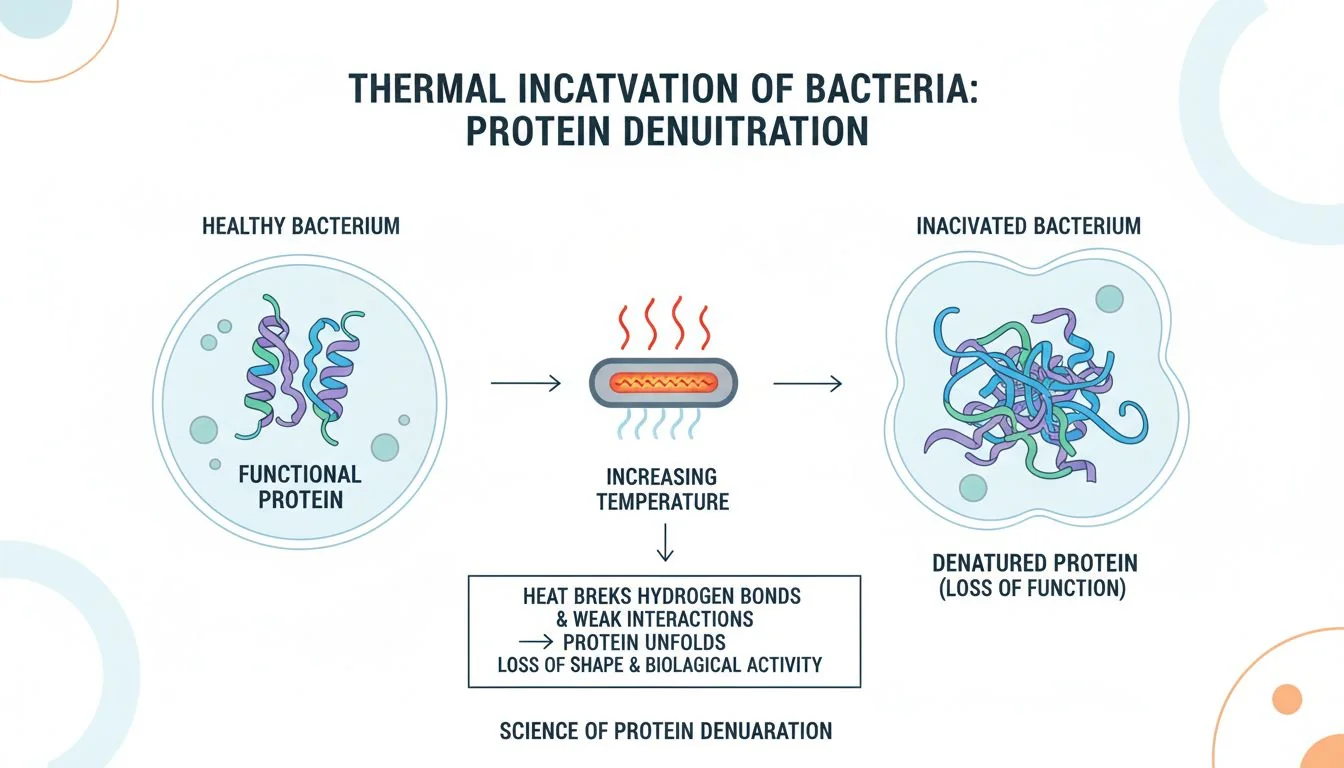
Understanding Thermal Inactivation
As an engineer, I love looking at the mechanics of how things break. Pathogens are essentially biological machines. They have outer shells and internal engines made of proteins. When you apply heat, you are adding massive amounts of kinetic energy to these molecules.
Think of a raw egg. The white is clear and liquid. When you boil it, it turns white and solid. This is denaturation. The heat causes the protein chains to unravel and tangle up. Once that happens, you cannot turn the cooked egg back into a raw egg. The change is permanent.
The same thing happens to bacteria like E. coli or viruses like Hepatitis A. When you bring water to a rolling boil (100°C or 212°F), the heat energy attacks the structural integrity of the organism. Their cell walls rupture. Their DNA or RNA becomes damaged. They stop functioning. They are technically still in the water, but they are dead. They cannot infect you or replicate inside your body. This is why boiling is so trusted. It physically destroys the machinery of life. However, this "kill mechanism" only works on things that are alive. It does absolutely nothing to things that were never alive to begin with.
Water must be boiled for 10 minutes to kill bacteria.Falsch
Most pathogens are killed instantly at boiling temperatures; 1 minute of rolling boil is the standard recommendation.
Heat destroys the DNA of viruses.Wahr
High temperatures disrupt the genetic material, preventing the virus from replicating.
The "Boiling Gap": What Can Heat Not Remove?
If the bacteria are dead, is the water actually clean?
No, because heat cannot remove dissolved solids, heavy metals2, or stable chemicals. This is the "Boiling Gap," where water is biologically sterile but chemically contaminated.
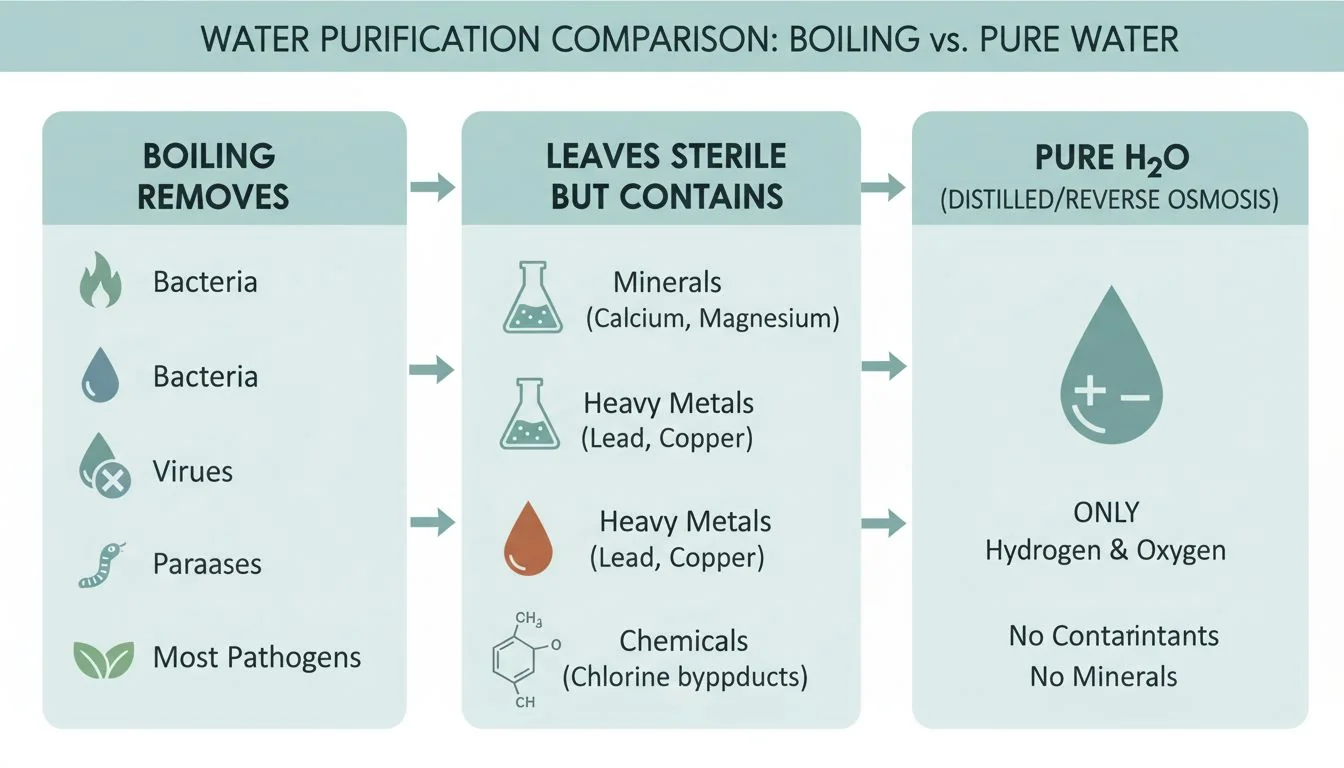
Sterile vs. Pure: The Critical Distinction
In the manufacturing world, we are precise with our language. "Sterile" and "Pure" are not synonyms. I see this confusion all the time in consumer products.
Sterile means there are no living microorganisms. If you boil water, you get sterile water. It will not give you a stomach bug.
Reines means the substance is free from foreign matter. This includes dirt, rust, lead, arsenic, nitrates, and PFAS (forever chemicals).
Here is the problem: Heat has no effect on a lead particle. If there is lead in your water from old city pipes, boiling the water just makes hot lead water. The same goes for nitrates from fertilizer runoff or microplastics. These are physical and chemical contaminants3. They do not have proteins to denature. They survive the boiling process completely intact.
This is where the design of the appliance matters. A kettle is a thermal device. It heats. A Reverse Osmosis system is a filtration device4. It separates. To get water that is both sterile und pure, you cannot just rely on thermal energy. You need a physical barrier that blocks these non-living contaminants. If you only boil, you are doing half the job. You are fixing the biological problem but ignoring the chemical one.
Boiling removes lead from water.Falsch
Lead is a dissolved metal and is not affected by boiling temperatures.
RO systems remove both bacteria and chemicals.Wahr
Reverse Osmosis uses a semi-permeable membrane to remove pathogens and dissolved solids.
The "Concentration Trap": When Does Boiling Backfire?
Could boiling your water actually make it more dangerous than it was before?
Yes, through a phenomenon called the "Concentration Effect5." As water evaporates into steam, the remaining volume of water holds a higher concentration of heavy metals and chemicals.
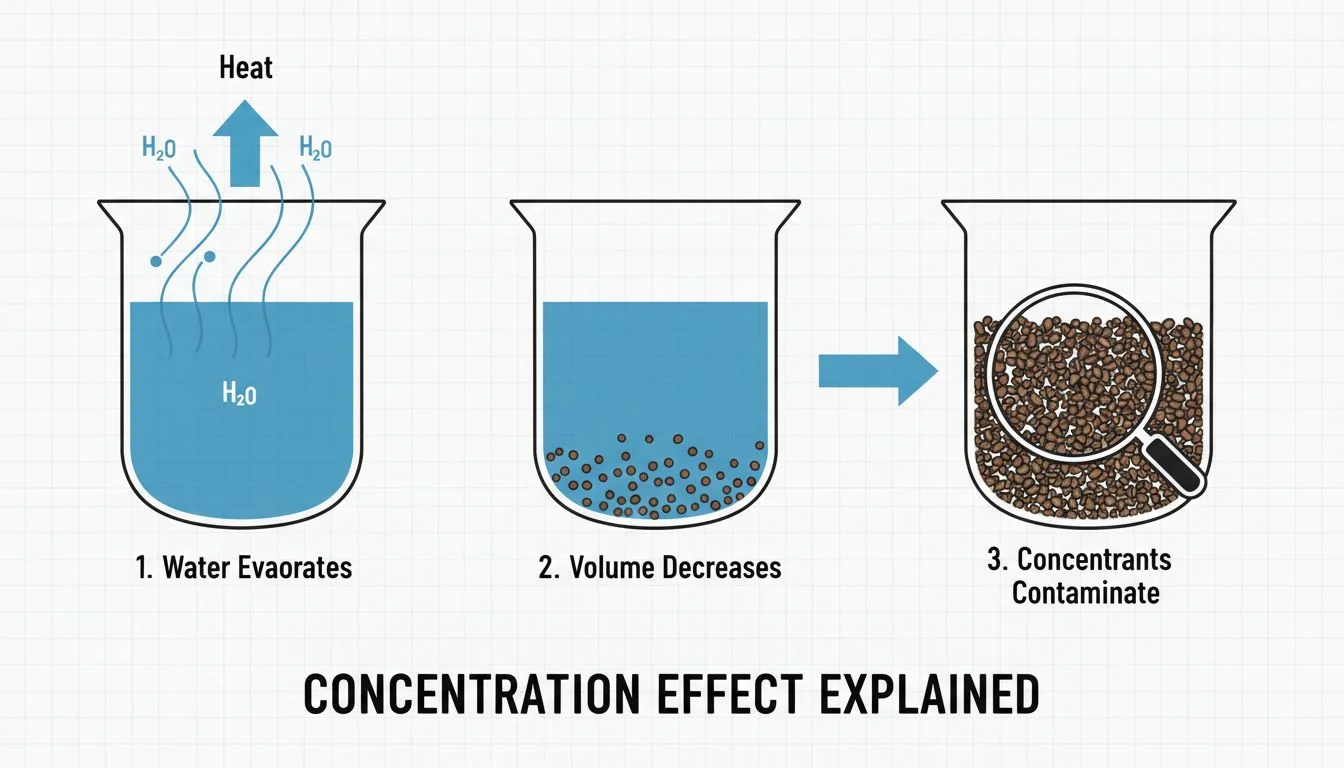
The Physics of Evaporation and Concentration
This is the part that usually shocks people. It is the "Aha!" moment that changes how they view their kitchen kettle. Let's look at the physics.
When you boil water, you are turning liquid H2O into gas (steam). That steam leaves the pot. But the contaminants—the lead, the mercury, the nitrates—do not turn into gas. They have much higher boiling points. So, they stay in the pot.
Imagine you have a pot of soup. If you leave it on the stove for an hour, the water boils away, and the soup gets very salty. You did not add more salt; you just removed the water. The ratio of salt to water increased.
The same thing happens with tap water. If you start with one liter of water containing a small amount of lead, and you boil it down to half a liter, you still have the same amount of lead, but now it is in half the water. You have effectively doubled the concentration of lead in your drink.
For a designer like Jacky, this is a critical failure in the "process design" of boiling. You are trying to clean the material, but you are inadvertently concentrating the impurities. This is why boiling is dangerous if you suspect chemical contamination. You are making the poison stronger.
Boiling water reduces the volume of water but keeps solids.Wahr
Pure water evaporates as steam, leaving dissolved solids behind in a smaller volume of liquid.
The concentration effect is negligible for short boils.Falsch
Even short boils result in evaporation, and for highly toxic substances like lead, any increase in concentration is undesirable.
The Modern Solution: Why "Purify First, Boil Second"?
How do we get the convenience of hot water without the risks of concentration?
The solution is "Purify First, Boil Second." By using Reverse Osmosis to remove contaminants before heating, you ensure the water is both chemically pure and thermally hot.
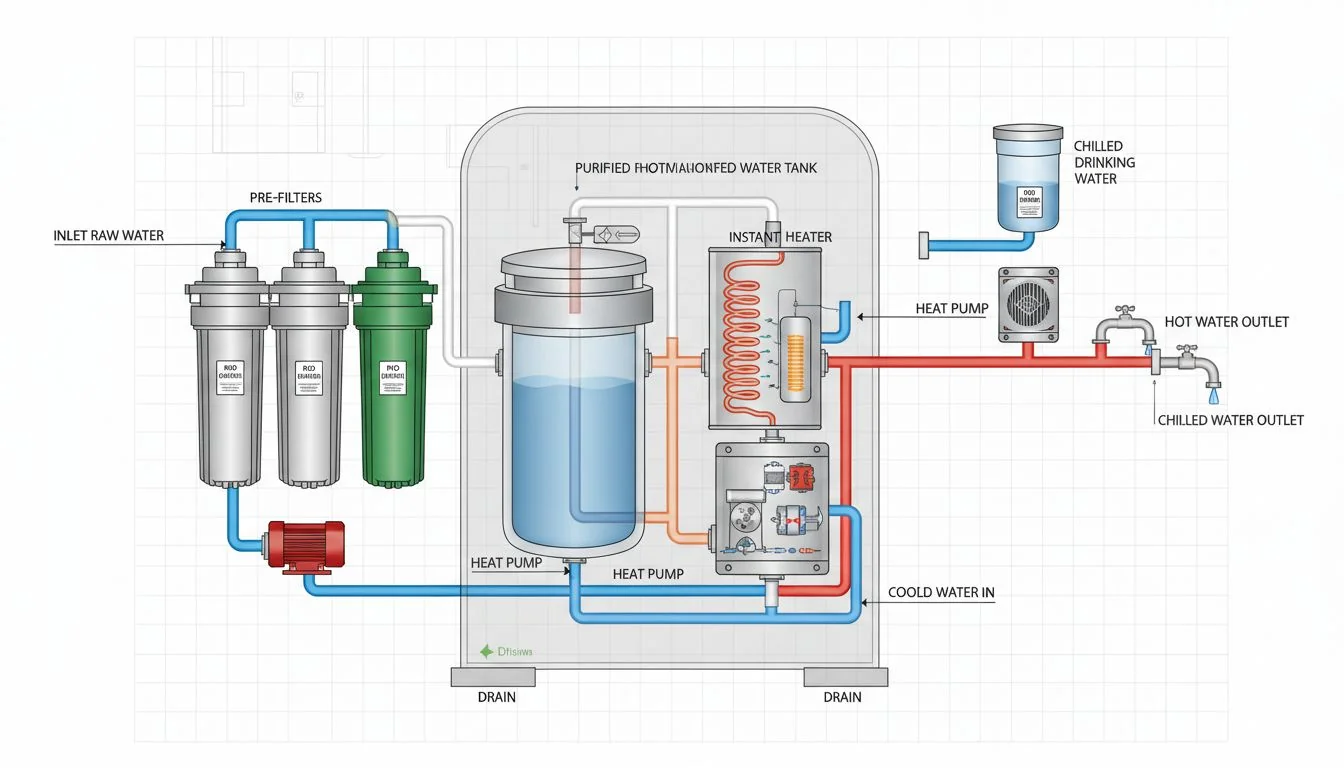
Engineering Integrated Hydro-Thermal Systems
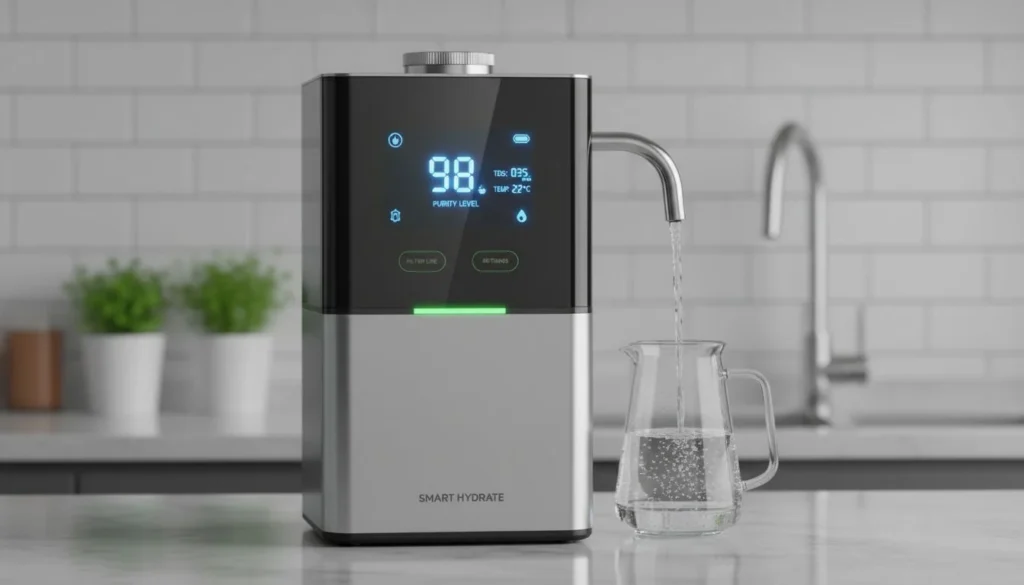
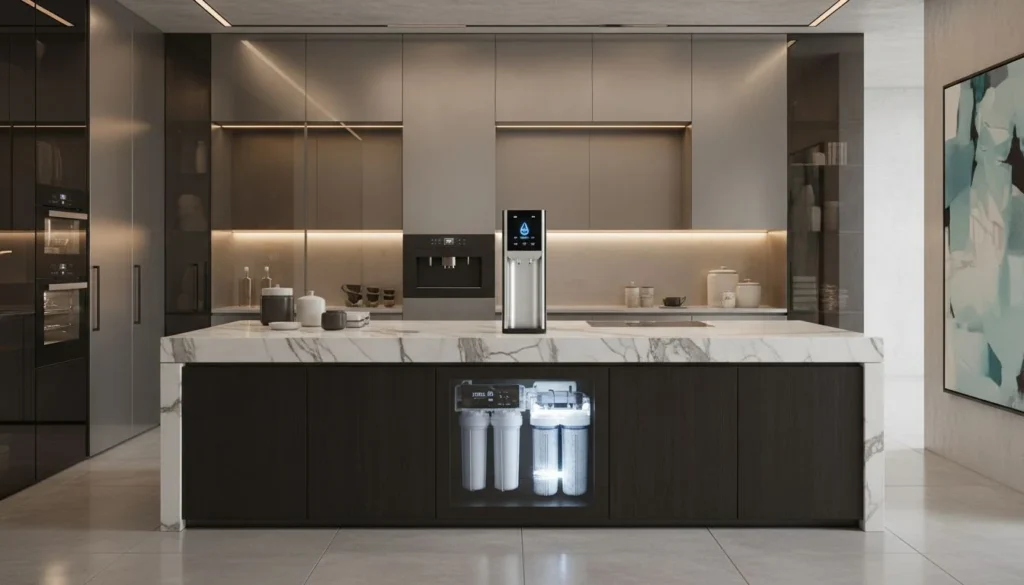
The future of kitchen water isn't a plastic jug filter or a standalone kettle. It is the "Instant Hot" RO system. This is a massive lifestyle upgrade that replaces the electric kettle entirely.
From a design perspective, this is a challenge. We call it an "Integrated Hydro-Thermal System." You are combining high-pressure filtration (RO) with rapid thermal exchange (heating).
Here is how it works:
- Purification: The water passes through the RO membrane first. This strips out the lead, chemicals, and dissolved solids. The water is now "Pure."
- Heating: Diese pure water6 is then instantly heated.
Because the water was purified before it was heated, there are no contaminants to concentrate. You eliminate the "Concentration Trap."
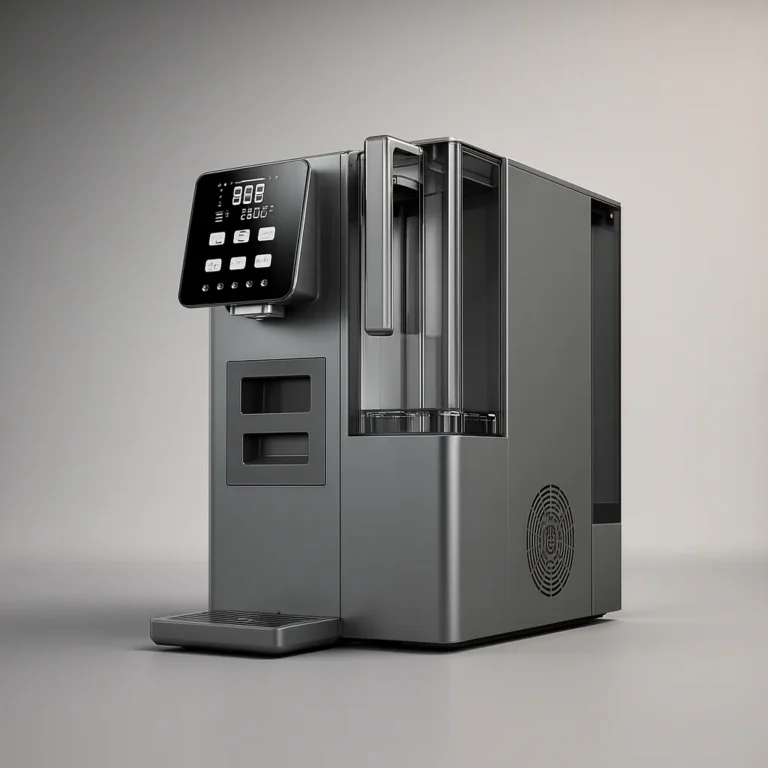
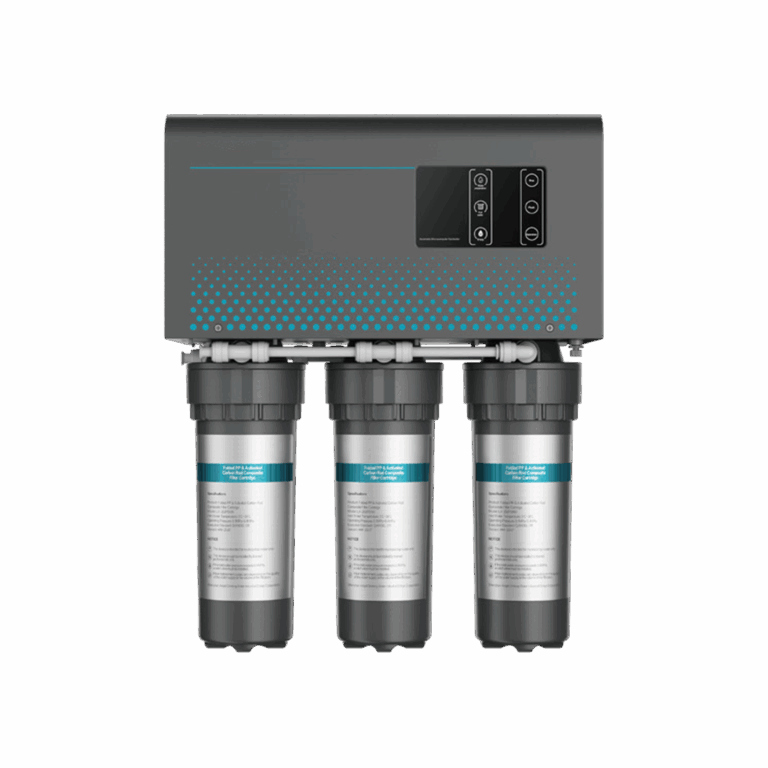
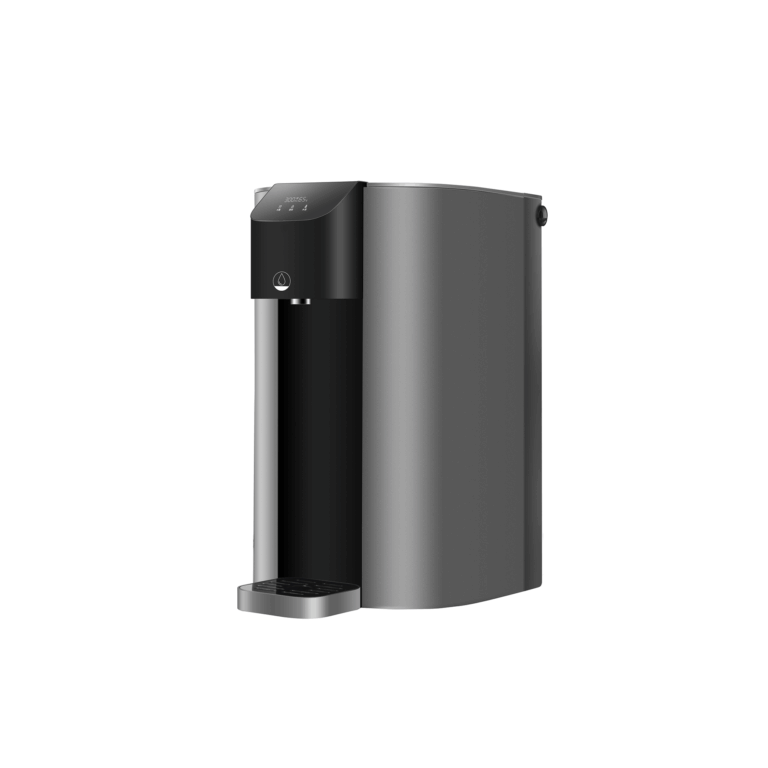
This also frees up counter space. You don't need a kettle cluttering your workspace. You get boiling-hot water instantly for tea, coffee, or cooking, and it is cleaner than anything a kettle could produce. Brands like Hisoair are leading this because they act as "Thermal Engineers," not just filter makers. They understand that you need to control both the purity and the temperature of the fluid. It is a complex appliance, but for the user, it is simple: safer water, faster.
Instant hot systems use more energy than kettles.Falsch
Instant systems only heat the water you use, whereas kettles often boil more water than necessary, wasting energy.
RO membranes can filter out viruses.Wahr
RO pores are small enough (0.0001 microns) to block viruses and bacteria physically.
Schlussfolgerung
Boiling is a backup plan, not a daily solution. It sterilizes bugs but concentrates toxins. To truly detoxify your life, you need to filter first, then heat. Upgrade to purification.
References
-
Understanding thermal inactivation is crucial for grasping how heat affects pathogens and the limitations of boiling. ↩
-
Exploring heavy metals in water helps to understand the risks associated with relying solely on boiling. ↩
-
Identifying chemical contaminants helps in understanding the limitations of boiling water for purification. ↩
-
Understanding filtration devices is essential for recognizing their role in water purification compared to boiling. ↩
-
The concentration effect highlights the risks of boiling contaminated water, making it essential to understand. ↩
-
Understanding the difference between pure and sterile water is vital for safe drinking water practices. ↩

 Deutsch
  English
  Français
  Español
  Italiano
  Português
  Русский
  العربية
  日本語
日本語  한국어
한국어  Tiếng Việt

