
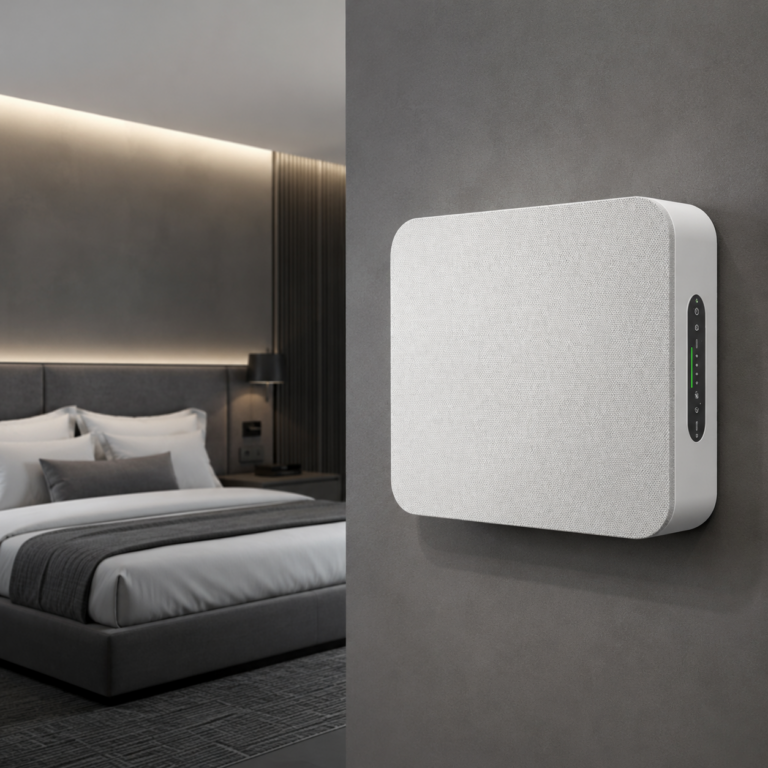
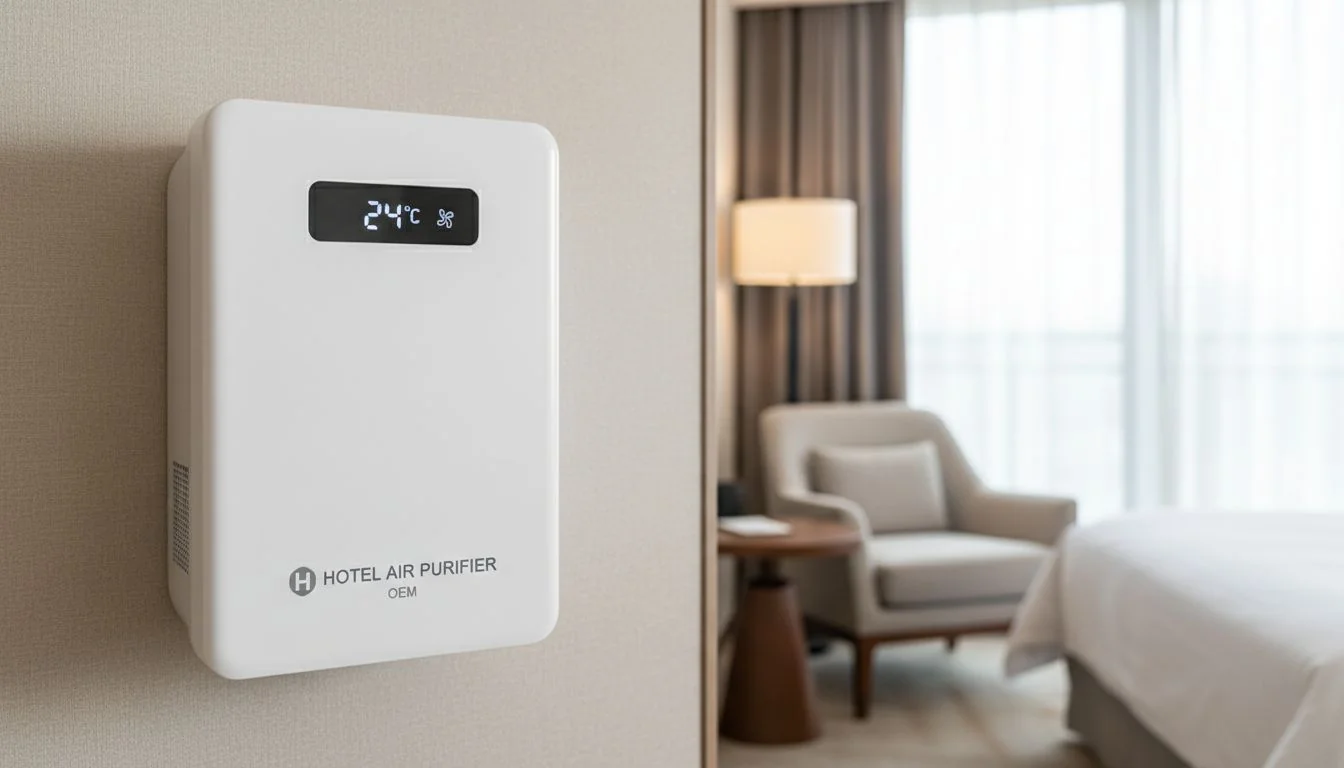
Sourcing hotel air purifiers is risky. Pick the wrong OEM, and you face failed certifications and angry guests. Here is how to evaluate suppliers correctly.
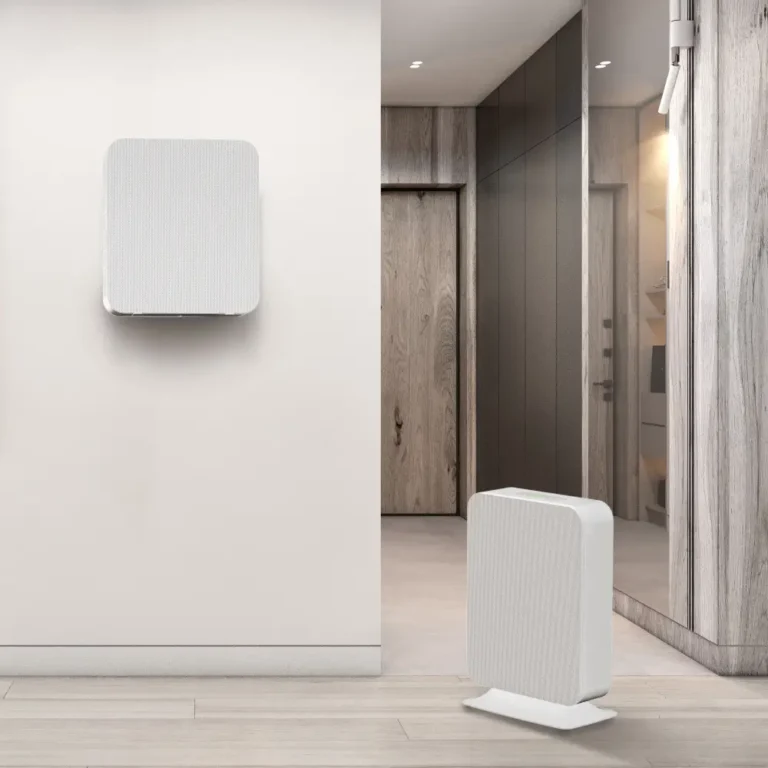
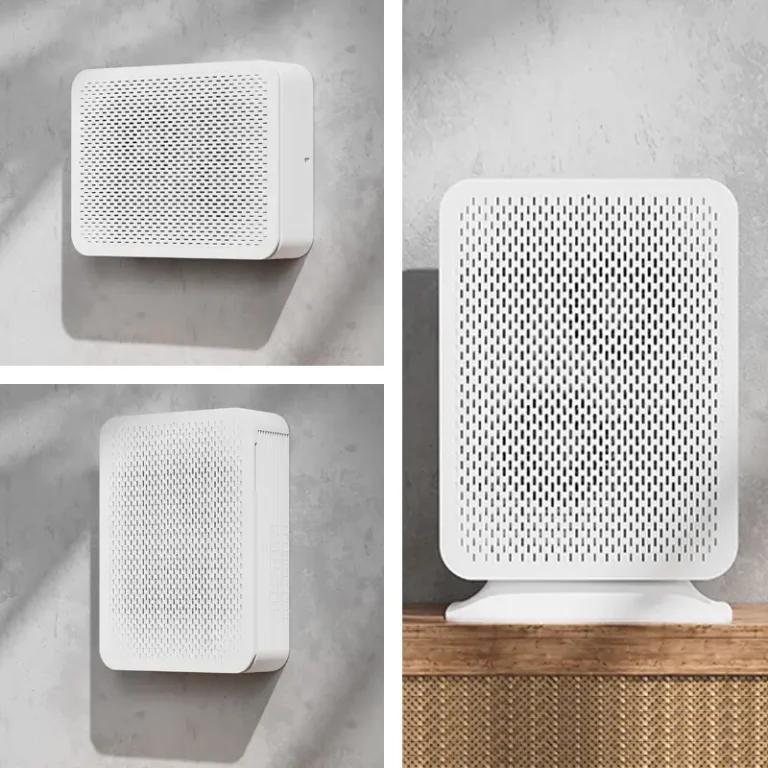
To evaluate OEM wall-mounted air purifiers1 for hotels, buyers must look beyond basic specs. You need to assess certification mapping for your target market, long-term serviceability, and true customization depth. Performance is just the baseline; operational fitness determines your success.
Let us dive into the exact steps I use to vet suppliers. If you skip these details, your project will likely stall before mass production even begins.
CADR is the only metric that matters when choosing an air purifier for a hotel room.Falsch
While CADR is important, noise levels and serviceability are equally critical for hospitality environments.
Wall-mounted air purifiers save floor space, making them ideal for small hotel rooms.Wahr
Mounting the unit on the wall keeps it out of the way of guests and cleaning staff, optimizing room space.
OEM vs ODM: How Do You Choose the Right Engagement Model?
You need a product fast, but building from scratch takes time. Choosing the wrong model wastes months of tooling. Pick the right path to save money.
Choose OEM if you have a custom design and want full control over the molds and specs. Choose ODM if you want to rebrand an existing, proven product to save on tooling costs and speed up your time to market.
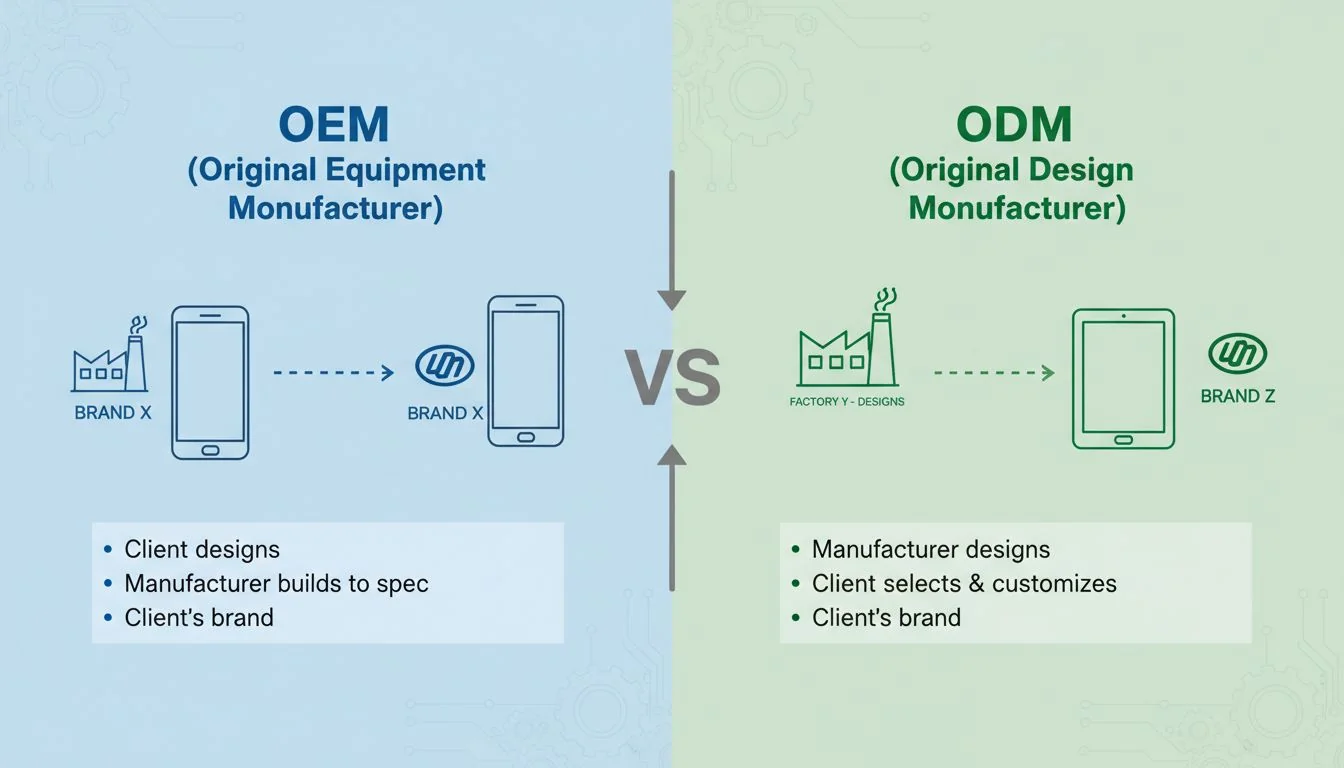
As a mold designer, you know that tooling is the biggest hurdle in any new project. When I started my trading company, I saw clients bleed cash because they chose an OEM model when an ODM model would have worked perfectly fine. Let us break this down.
The Tooling Impact
In an OEM model, you own the mold. You control the draft angles, the wall thickness, and the shrinkage rates. But you pay for the steel and the CNC machining time. This takes months. In an ODM model, the factory owns the mold. You just change the color or add your logo. This is much faster.
Making the Choice
If your hotel client needs a unique front panel to match their specific room decor, you must go OEM. If they just need a standard box that works well, ODM is safer and cheaper. You must weigh the cost of custom molds against the need for a unique brand identity.
| Modell | Tooling Cost | Time to Market | Design Control |
|---|---|---|---|
| OEM | Hoch | Slow (3-6 months) | Vollständig |
| ODM | Niedrig | Fast (1-2 months) | Begrenzt |
ODM models require you to pay for the full cost of the plastic injection molds.Falsch
In an ODM model, the factory already owns the molds, so you do not pay full tooling costs.
OEM models give you complete control over the product design and internal components.Wahr
Because you own the design and the molds in an OEM model, you dictate all specifications.
Core Performance Metrics: What Should You Evaluate Beyond CADR?
Hoch CADR2 numbers look great on paper. But loud fans will keep hotel guests awake, leading to bad reviews. You must balance airflow with noise.
Evaluate CADR, noise levels, and filtration efficiency together. For hotels, a high CADR is useless if the unit is too loud for sleeping. Look for units that deliver at least 150 CADR at noise levels below 30 decibels on the lowest setting.
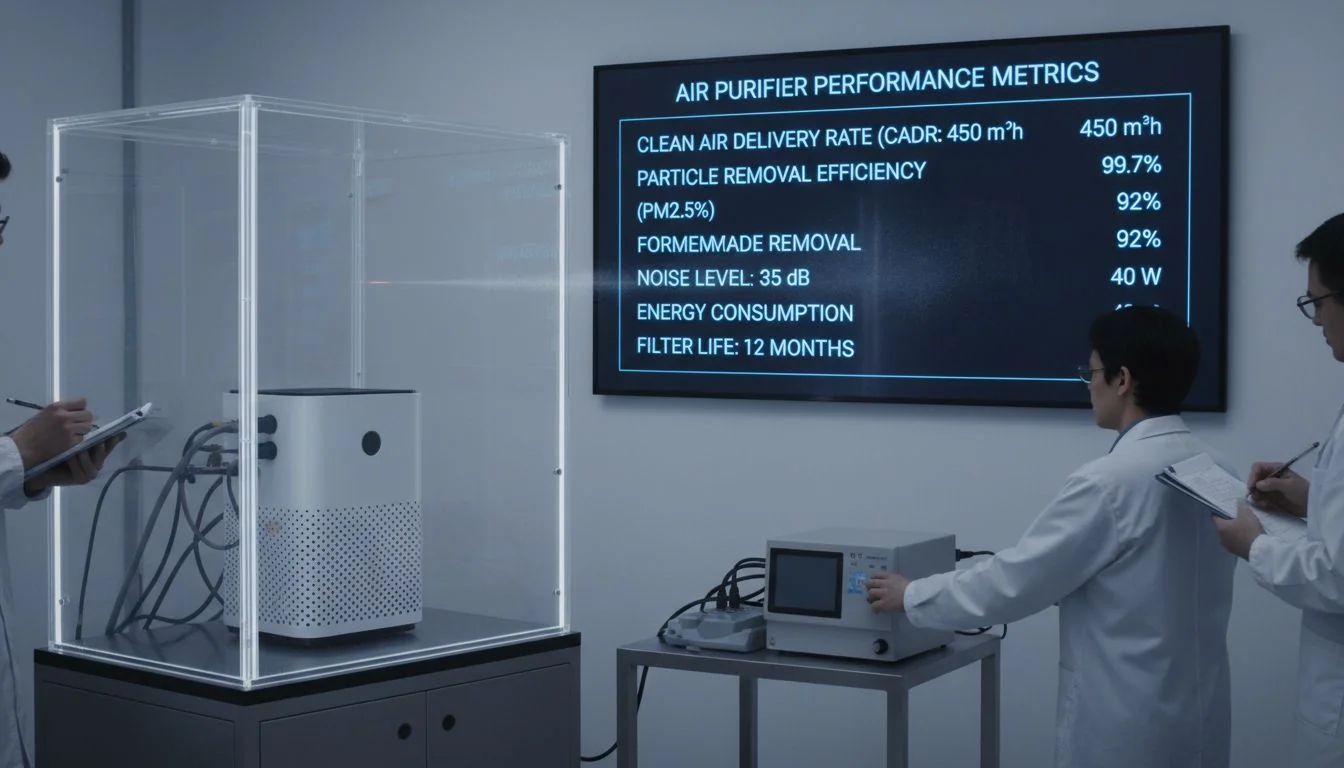
Buyers tend to judge an OEM air purifier on one headline number: CADR (Clean Air Delivery Rate). But a hospitality unit lives or dies on the things that do not fit on a spec sheet. Performance is table stakes. Every serious supplier clears it.
The Noise Problem
Hotel rooms are small and quiet. If the fan motor vibrates against the plastic housing, the guest will unplug the unit. As designers, we must look at how the motor mounts inside the plastic shell. Are there rubber dampeners? Is the plastic thick enough to stop resonance? If the wall thickness is too thin, the whole unit will hum.
Real-World Testing
Do not just read the spec sheet. Test the unit in a real room. Listen to the motor at low speeds. Check if the air outlet creates a whistling sound. The internal air duct design must be smooth to reduce air friction.
| Metric | Target for Hotels | Design Impact |
|---|---|---|
| CADR | 150+ m³/h | Determines motor size and fan blade design |
| Noise (Low) | < 30 dB | Requires thick plastic walls and motor dampeners |
| Strom | < 50W | Impacts internal heat generation and venting |
A higher CADR always means a better air purifier for a hotel room.Falsch
A very high CADR often results in high noise levels, which is unacceptable in a sleeping environment.
Motor vibration can cause the plastic housing of an air purifier to generate unwanted noise.Wahr
Without proper dampening and thick enough plastic walls, motor vibrations transfer to the casing and create noise.
Filtration Configuration: Which Filters Do Hotels Actually Need?
Bad smells ruin hotel stays. Basic filters only catch dust, leaving smoke and odors behind. You need the right filter stack to keep rooms fresh.
A hotel air purifier needs a pre-filter for large dust, a True HEPA filter for allergens, and a heavy activated carbon layer for odors. Add-ons like UV-C or ionizers can help, but the core physical filters do the heavy lifting.
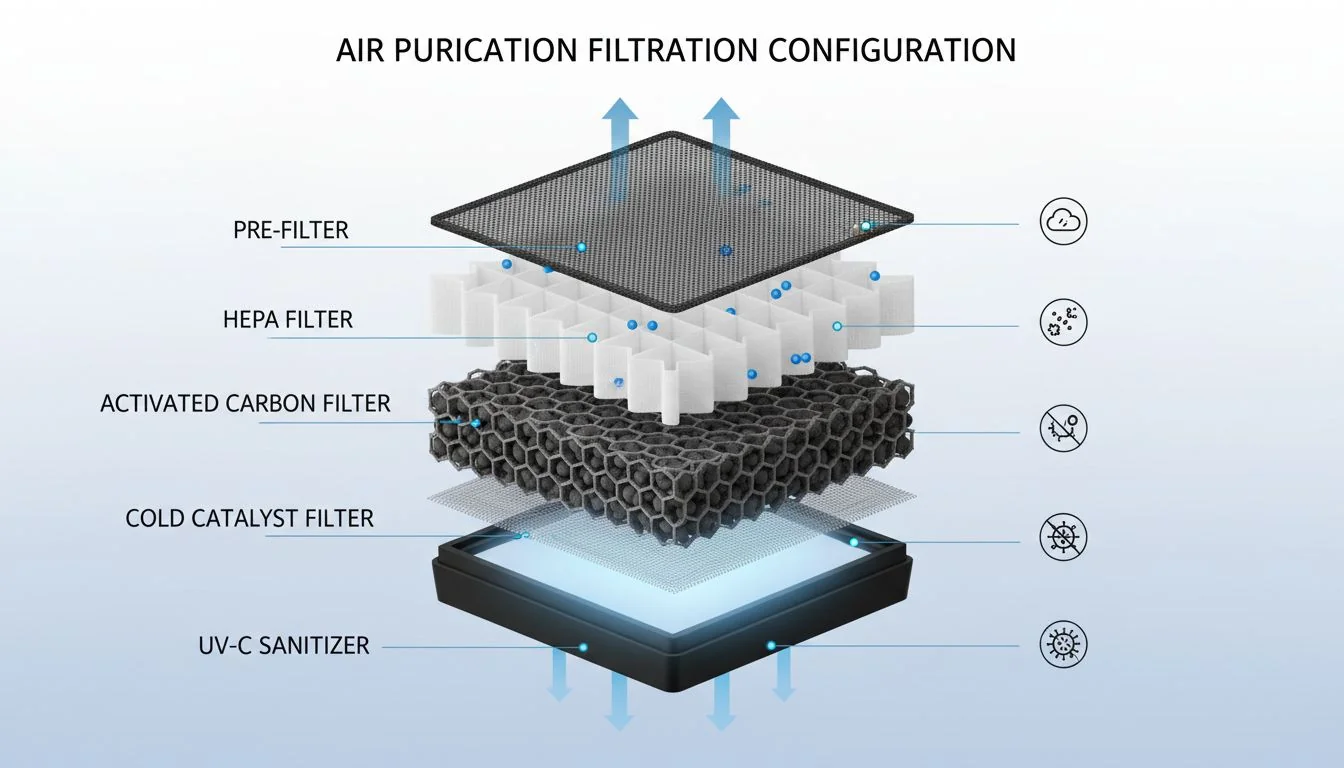
Filtration is where many factories cut corners. They use thin carbon pads instead of real carbon pellets. But for hotels, you must think about how serviceable the unit stays at scale.
The Serviceability Factor
In a hotel with 300 rooms, maintenance staff must change filters fast. How does the front panel open? Are the plastic clips durable, or will they snap after five uses? I always check the mold design of the filter door. If the snap fits are too stiff or made from brittle plastic, the staff will break them. You need a design that allows a filter change in under 60 seconds.
Filter-Typen
You must specify the exact grade of HEPA and the weight of the carbon. Hotels deal with smoke, food smells, and damp odors. A heavy pellet carbon filter is mandatory. Do not accept cheap sponge filters sprayed with carbon dust.
| Filter Layer | Hauptfunktion | Häufigkeit der Ersetzung |
|---|---|---|
| Washable Pre-filter | Catches hair and large dust | Every 1 month (Wash) |
| True HEPA (H13) | Captures 99.97% of fine particles | Every 6-12 months |
| Pellet Carbon | Absorbs smoke and strong odors | Every 6-12 months |
Activated carbon pads are just as effective as carbon pellets for removing strong hotel odors.Falsch
Carbon pellets have a much higher surface area and mass, making them far more effective at absorbing heavy odors than thin pads.
The design of the plastic clips on the filter door affects how fast maintenance staff can service the unit.Wahr
Poorly designed clips make the door hard to open, slowing down filter changes and increasing the risk of breakage.
Certification Packages: How Do You Map Specs to Target Markets?
Customs will seize your products if they lack the right papers. Getting certifications later is costly and slow. You must verify compliance before you buy.
You must ensure the OEM has the exact certifications for your destination market. For the US, you need UL or ETL for safety, FCC for electronics, and CARB if the unit produces ozone. Do not accept generic CE marks for US imports.
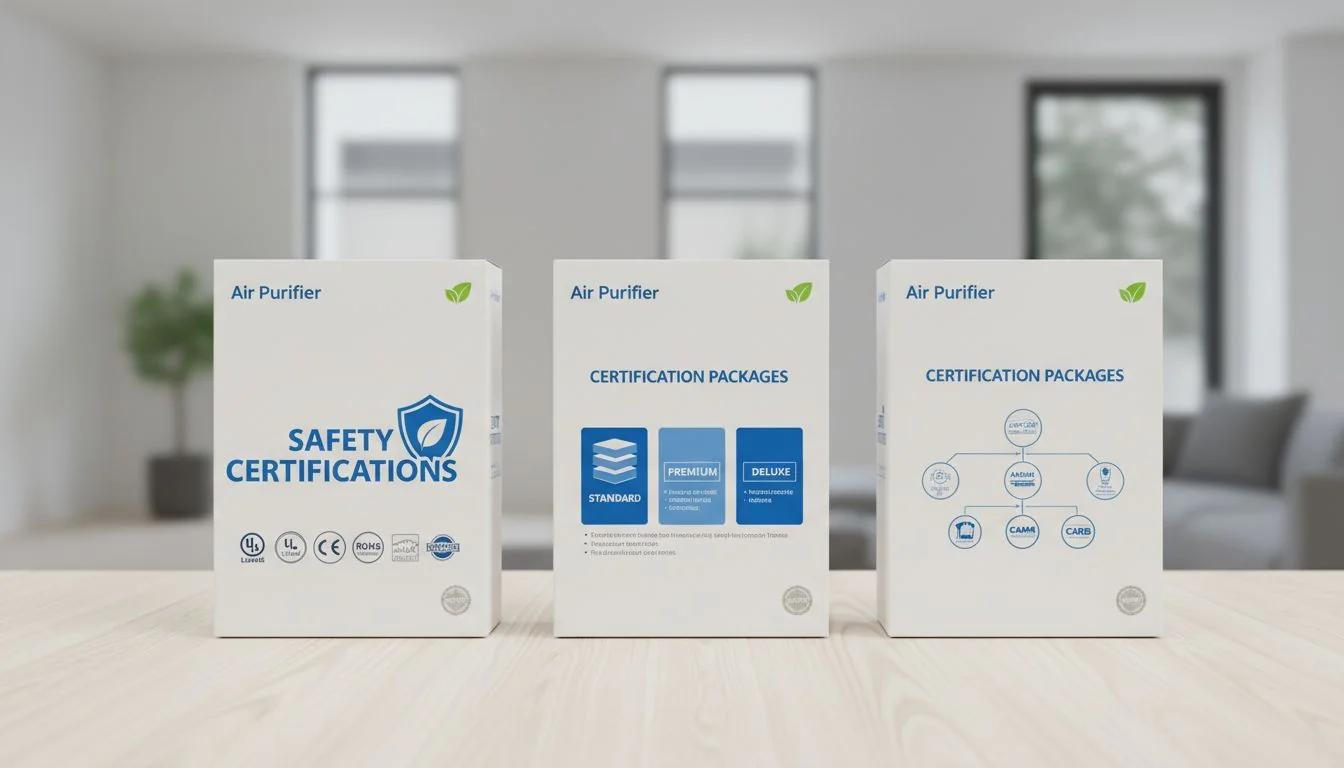
This is a trap many buyers fall into. They see a CE mark and think they are safe. But how cleanly does the certification package map to the destination market? This is a critical question.
The Cost of Compliance
If the factory does not have UL certification, you will have to pay for it. This means sending samples to a lab and waiting months. Furthermore, the materials must match the standard. If the plastic housing does not use flame-retardant resin, like ABS V0, it will fail the UL fire test. As a designer, you must specify the right resin grade from day one to avoid mold modifications later.
Market Requirements
Different countries have strict rules. California requires CARB certification to prove the unit does not emit dangerous levels of ozone. If your OEM uses an ionizer, they must pass this test. Always ask for the actual test reports, not just a badge on a website.
| Zielmarkt | Required Certifications | Key Focus Area |
|---|---|---|
| USA | UL/ETL, FCC, CARB | Electrical safety, ozone limits |
| Europe | CE, RoHS, REACH | General safety, chemical limits |
| Kanada | CSA, ICES | Electrical safety, interference |
A CE certification is legally sufficient to sell electronic air purifiers in the United States.Falsch
The US requires specific certifications like FCC for electronics and often UL/ETL for safety, not CE.
Using non-flame-retardant plastic for the housing will cause the product to fail UL safety testing.Wahr
UL standards require specific flame-retardant material grades, like ABS V0, to prevent fire hazards.
Customization Scope: Does It Go Deeper Than Printing a Logo?
Slapping a logo on a generic box looks cheap. Hotels want products that match their brand. You need deep customization to stand out.
True customization involves changing the CMF (Color, Material, Finish), redesigning the front panel, and modifying the control interface. A good OEM partner will let you adjust the plastic injection molds to create a unique look without building a whole new machine.
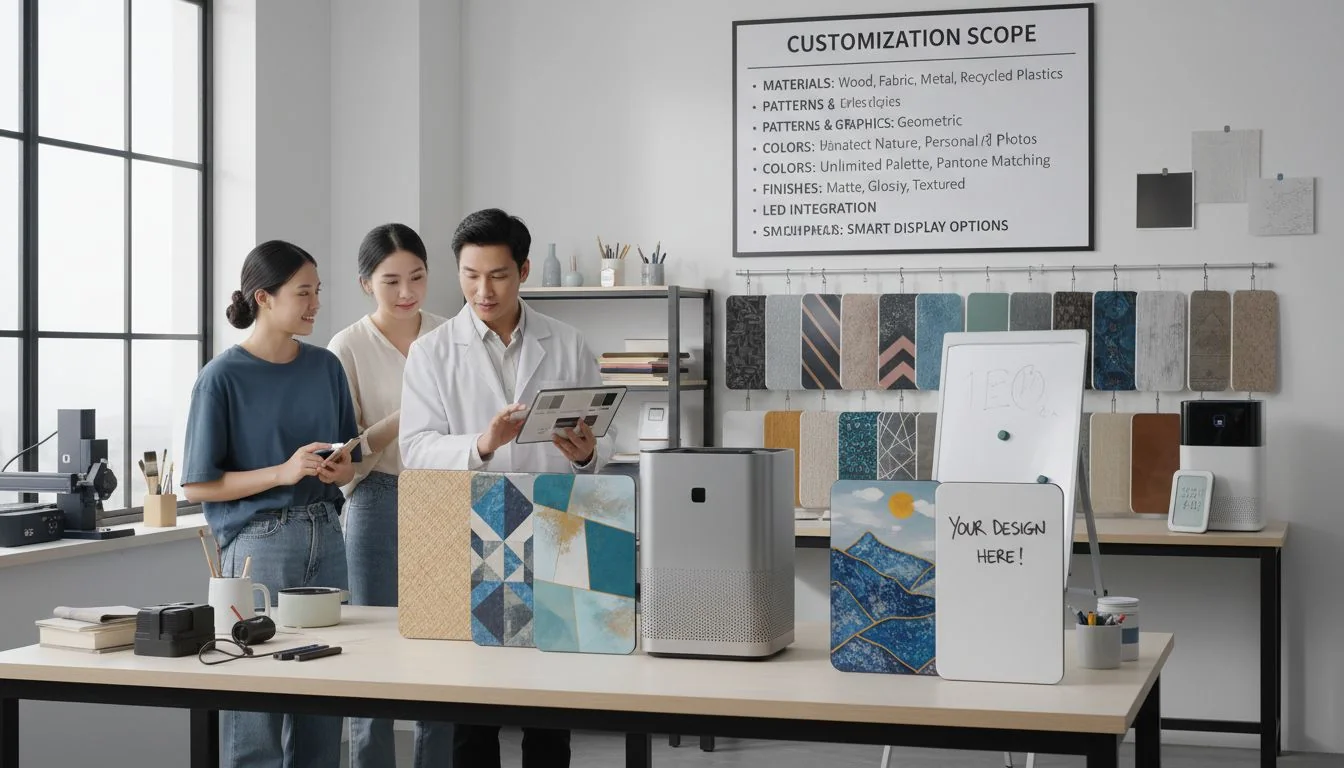
Whether "customization" goes any deeper than printing a logo is the real test of an OEM. Anyone can silk-screen a brand name. But hotels often want the unit to blend into the wall or match the furniture.
Modifying the Front Panel
You do not need to redesign the whole unit to get a custom look. You can just make a new mold for the front panel. This saves money but gives the product a totally new face. I have helped clients do this many times. We keep the internal chassis, the motor, and the fan, and we just change the front cover.
CMF Choices
Hotels often want matte finishes or wood-grain textures. You must check if the factory can handle complex mold texturing. If you want a matte finish, the mold cavity needs a specific sandblasting texture. If the factory does not understand mold shrinkage differences between glossy and matte plastics, the parts will warp.
| Anpassungsgrad | Tooling Required | Cost Impact |
|---|---|---|
| Logo & Color | Keine | Very Low |
| New Front Panel | 1-2 Molds | Mittel |
| Full Custom Design | Complete Mold Set | Hoch |
You must build entirely new molds for every part of the air purifier to change its outward appearance.Falsch
You can often achieve a new look by only redesigning and tooling the front panel, saving significant costs.
Applying a matte texture to a plastic mold can affect how the plastic shrinks and warps during injection.Wahr
Different surface finishes alter the cooling and release dynamics in the mold, which can impact part warpage.
Quality Control: How Do You Verify Testing and Documentation?
Defective units will destroy your reputation. Trusting the factory blindly leads to high return rates. You must demand strict quality control processes3.
Verify quality control by asking for their standard operating procedures, incoming material inspection reports, and final testing data. A reliable OEM will document every step, from checking the plastic resin quality to testing the final assembled unit for noise and airflow.
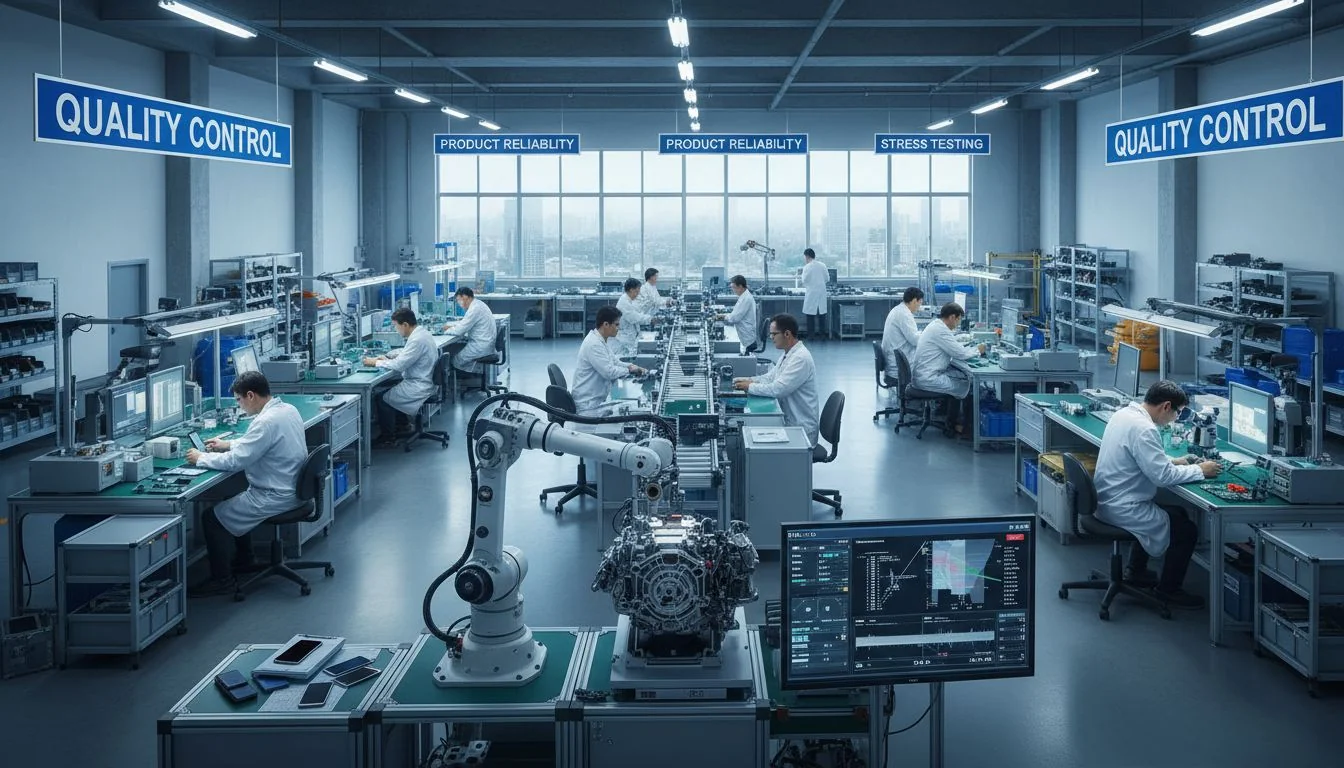
What separates a good OEM partner is fitness for operation, and that is the part most evaluation checklists skip. You must look at how they build the product on the line.
Inspecting the Plastic Parts
As someone who knows molds, I always look at the plastic parts first. Are there sink marks? Is there flash on the edges? These defects tell me if the factory maintains their molds properly. If they ignore mold maintenance, they will likely ignore internal wiring standards too. Poorly injected parts also lead to gaps in the housing, which lets dirty air bypass the filter.
The Testing Line
The factory must test every single unit before packing. They should have a quiet room at the end of the assembly line to test noise levels. They must also test the power draw and the control board. Ask for a video of their testing line. If they only do batch testing, walk away.
| QC Stage | What to Check | Why It Matters |
|---|---|---|
| Incoming Material | Resin grade, filter weight | Ensures base components meet specs |
| Spritzgießen | Flash, sink marks, warpage | Ensures tight assembly and good looks |
| Final Assembly | Noise, power, airflow | Guarantees the unit works as promised |
Flash on the edges of plastic parts is a sign that the injection mold is well-maintained.Falsch
Flash indicates that the mold halves are not sealing properly, which is a sign of wear or poor maintenance.
Gaps in the plastic housing can reduce the overall filtration efficiency of the air purifier.Wahr
Gaps allow unfiltered air to bypass the internal filters, reducing the actual clean air delivery rate.
Pricing and Tooling: How Do You Manage MOQs and Samples?
High MOQs tie up your cash. Expensive tooling ruins your budget. You must negotiate terms that protect your cash flow while testing the market.
Manage costs by negotiating a lower minimum order quantity4 for the first trial run. Pay for tooling in stages, tied to sample approval. Always demand a fully functional golden sample before you approve mass production or pay the final tooling balance.
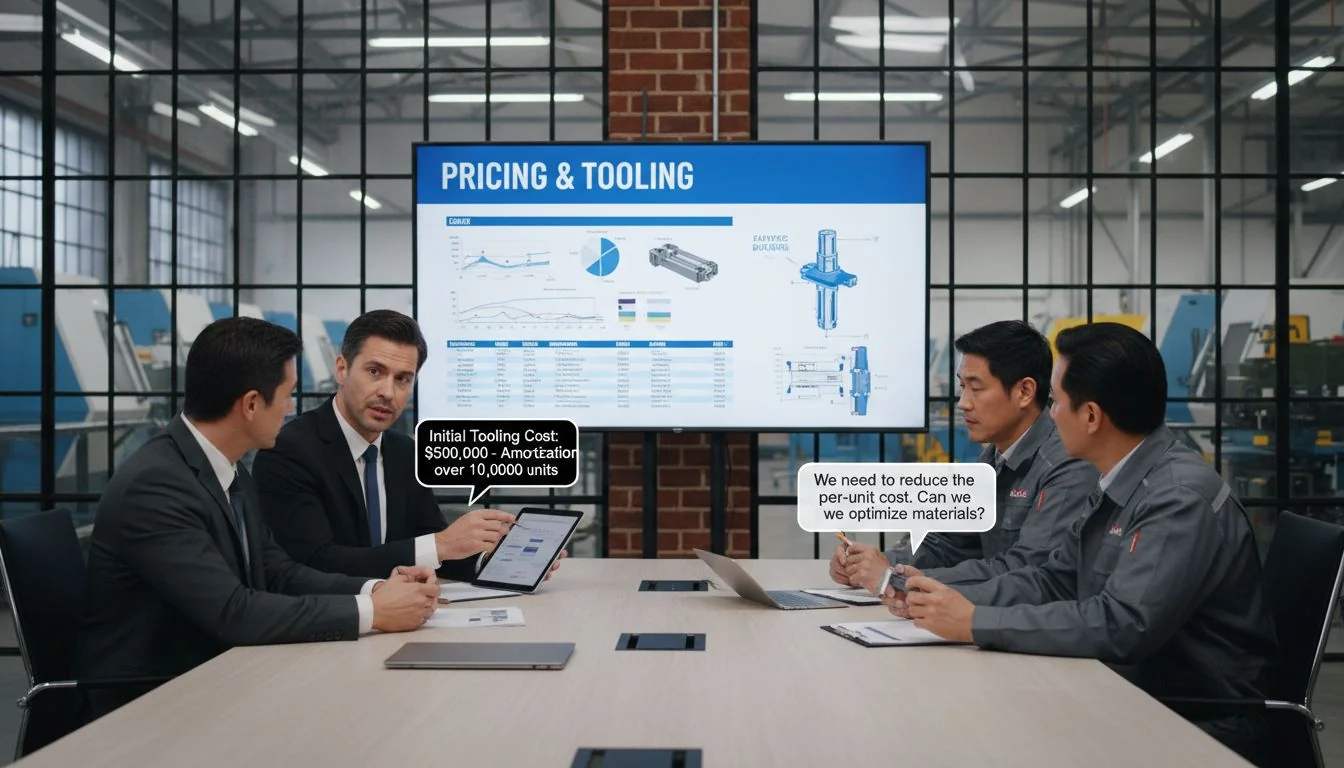
Let us talk about money. Tooling costs can be huge, and managing that risk is a big part of your job as a designer and buyer.
Tooling Payment Terms
Never pay 100% for a mold upfront. I always advise my clients to pay 50% to start, 30% after the first sample (T1), and 20% after final approval. This keeps the factory motivated to fix any mold shrinkage issues or fitment problems quickly. If you pay it all at once, you lose your leverage.
The Golden Sample
The golden sample is your contract. It proves the factory can meet your specs. Check the plastic assembly carefully. Do the parts fit tightly? Is the color exactly right? Does the wall mount bracket hold the weight securely? Once you sign off on this sample, the factory will use it as the standard for mass production. Do not rush this step.
| Cost Category | Negotiation Strategy | Risikostufe |
|---|---|---|
| Werkzeugbau | Pay in 50/30/20 stages | Hoch |
| Unit Price | Tie to raw material costs | Mittel |
| MOQ | Ask for a small pilot run first | Niedrig |
Paying 100% of the tooling cost upfront is the best way to speed up the manufacturing process.Falsch
Paying upfront removes the factory's financial incentive to quickly fix mold defects during the sampling phase.
The golden sample serves as the physical standard for all mass production units.Wahr
Factories use the approved golden sample as the benchmark to check quality during mass production.
Long-Term Partnership: How Do You Build a Reliable OEM Relationship?
Switching factories is a nightmare. Poor communication causes endless delays. You need a partner who will grow with you, not just take your orders.
Build a long-term partnership by choosing an OEM with strong engineering support5, transparent communication, and a willingness to solve problems together. A good partner will proactively suggest design improvements to lower your manufacturing costs and improve product reliability over time.

From the OEM side, the honest evaluation is much wider than performance. You are not just buying a machine; you are hiring an engineering team.
Engineering Support
A great factory does not just follow your CAD files blindly. If you design a part with uneven wall thickness, a good partner will warn you about potential sink marks before they cut the steel. They will help you optimize the design for manufacturing (DFM). This saves you from expensive mold modifications later.
Growing Together
When your hotel clients ask for new features next year, like smart room integration, your OEM must be ready to adapt. This is why I value engineering capability over cheap prices. A cheap factory will just say yes to everything and fail. A good partner will tell you what is possible, what is risky, and how to achieve your goals safely.
| Factory Type | Behavior | Long-Term Value |
|---|---|---|
| Order Taker | Follows CAD blindly, ignores flaws | Niedrig |
| True Partner | Suggests DFM improvements, warns of risks | Hoch |
A good OEM partner will manufacture your CAD design exactly as submitted without asking questions.Falsch
A reliable partner will review your CAD for manufacturing flaws and suggest improvements before cutting steel.
Optimizing a design for manufacturing (DFM) can prevent expensive mold modifications later.Wahr
DFM identifies issues like uneven wall thickness early, preventing defects that would require costly mold rework.
Schlussfolgerung
Evaluating an OEM air purifier requires looking past basic specs. Focus on mold quality, certification mapping6, and true customization to ensure your hotel units succeed in the real world.
References
-
Explore the advantages of using OEM wall-mounted air purifiers to enhance hotel guest experiences. ↩
-
Understanding CADR helps in selecting the right air purifier for optimal guest comfort. ↩
-
Learn about quality control processes that ensure reliable and efficient air purifiers for hotels. ↩
-
Negotiating MOQs can significantly impact your budget and cash flow when sourcing air purifiers. ↩
-
Discover how engineering support can enhance product quality and manufacturing efficiency. ↩
-
Understanding certification mapping is crucial for compliance and safety in hotel air purifiers. ↩



 English
  Français
  Español
  Italiano
  Deutsch
  Português
  Русский
  العربية
  日本語
日本語  한국어
한국어  Tiếng Việt

