Öffnet in einem neuen Tab
Innovative Lösungen für die Luftqualität

Where Are Anjou Diffusers Manufactured?

Related Products

At first glance, the Anjou brand seems to embody the quintessential modern wellness company. Its marketing speaks of being "Inspired by Nature" and "perfected by science," offering a portfolio of essential oils, bath bombs, and its flagship aromatherapy diffusers designed for a clean, healthy, and beautiful lifestyle. Press releases and product manuals consistently identify Anjou as a company based in Fremont, California, reinforcing a narrative of American design and quality control. For the average consumer, the story is simple and appealing: a nature-focused brand born out of the California wellness movement.

But for leaders in the D2C and B2B space, the most interesting stories are rarely that simple. When we ask the question, "Where are Anjou diffusers really manufactured?" we uncover more than just a location. We uncover a masterclass in modern global commerce, a textbook case study on how to strategically decouple a brand's public identity from its manufacturing origins to achieve global scale.

The short answer is that Anjou diffusers are manufactured in China. But the long answer reveals a sophisticated, multi-layered corporate structure that offers invaluable lessons for any business operating in the global marketplace today.

Crafting the California Dream: The Power of a Public Persona

Anjou’s success in Western markets is built on a meticulously constructed American identity. This isn't just a casual claim; it's a strategic foundation supported by a consistent corporate and logistical footprint.
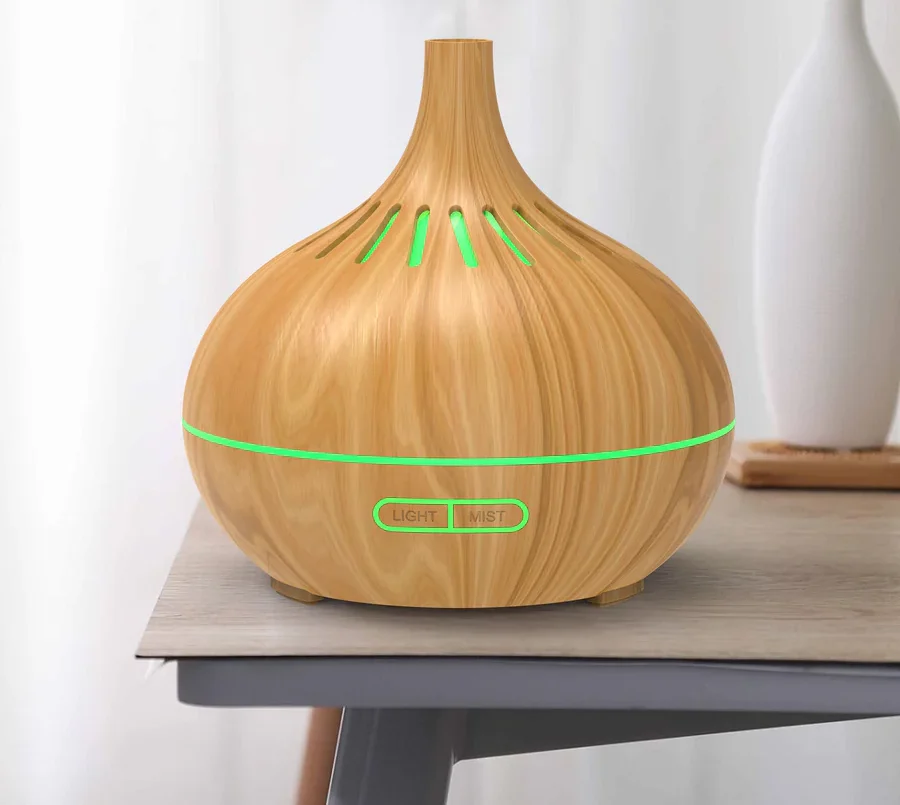
anjou diffusers 5

The Philosophy: The brand's motto, "Be pure, be healthy, and be beautiful with Anjou," perfectly targets the wellness-conscious consumer. The emphasis on clean, cruelty-free, and eco-friendly products resonates deeply with its target demographic.

The California Connection: Anjou has consistently used California addresses in its official communications, from Fremont to Cupertino to Fullerton. This creates a tangible link to a state synonymous with innovation, health, and natural lifestyles. The legal entity behind the brand in the U.S. is Sunvalleytek International, Inc., a registered California corporation, lending official weight to the "Made in the USA" perception.

The Distribution Gambit: Herein lies a particularly brilliant piece of D2C strategy. Anjou’s website states that U.S. orders are "processed by Amazon, and shipped directly from Amazon distribution center in California". This statement is factually correct, but it also masterfully conflates the final point of distribution with the point of origin. For the consumer, the product’s last journey starts in California, effectively obscuring the thousands of miles it traveled before that. It’s a subtle but powerful way to reinforce the brand’s American identity without making a false manufacturing claim.

Pulling Back the Curtain: A Global Corporate Structure

The California-based Sunvalleytek International, Inc. is just the tip of the iceberg. Digging into corporate and legal records reveals that it is the final link in a long chain of ownership that stretches across the Pacific to Shenzhen, China.

anjou diffusers 4

The direct parent of Sunvalleytek is the Sunvalley Group (formally Shenzhen Sunvalley Innovation Technology Co., Ltd.), a major consumer electronics conglomerate founded in 2007 and headquartered in Shenzhen. This is the true operational hub where product strategy and development decisions are made.

Sunvalley Group operates a portfolio of distinct consumer brands, each targeting a specific niche on platforms like Amazon:

  • Anjou: Wellness and personal care products
  • RAVPower: Power banks and charging accessories
  • TaoTronics: Headphones and audio equipment
  • HooToo: USB hubs and electronic accessories
  • Sable: Bedding and home comfort items
  • VAVA: Dash cams and audio devices

This multi-brand, or "phantom brand," strategy is a key lesson for D2C businesses. It allows the parent company to dominate multiple product categories and mitigate risk. If one brand faces a public relations crisis or, as was the case in 2021, gets delisted from Amazon for allegedly incentivizing reviews, the other brands in the portfolio can remain insulated from the fallout.

The Ultimate Owner: From Wellness Products to Industrial Hardware

The ownership chain doesn’t even stop with Sunvalley Group. U.S. court filings reveal that Sunvalley is a wholly-owned subsidiary of an even larger entity: Guangdong SACA Precision Manufacturing Co., Ltd.

This is where the story takes a fascinating turn. Guangdong SACA is not a consumer electronics company. It is a publicly-traded industrial giant based in Foshan, China, that specializes in manufacturing precision hardware. Its core products are hinges, drawer slides, and other metal components for furniture, appliances, and industrial equipment.

The acquisition of Sunvalley Group represents a strategic diversification for SACA. It was a calculated move by a traditional B2B industrial manufacturer to enter the high-growth, high-margin global D2C market. This structure allows the conglomerate to leverage its immense manufacturing expertise and supply chain efficiencies to power a portfolio of consumer-facing brands. The Anjou diffuser, therefore, is not the product of a small California startup; it is a strategic asset in the global portfolio of a major Chinese industrial company.
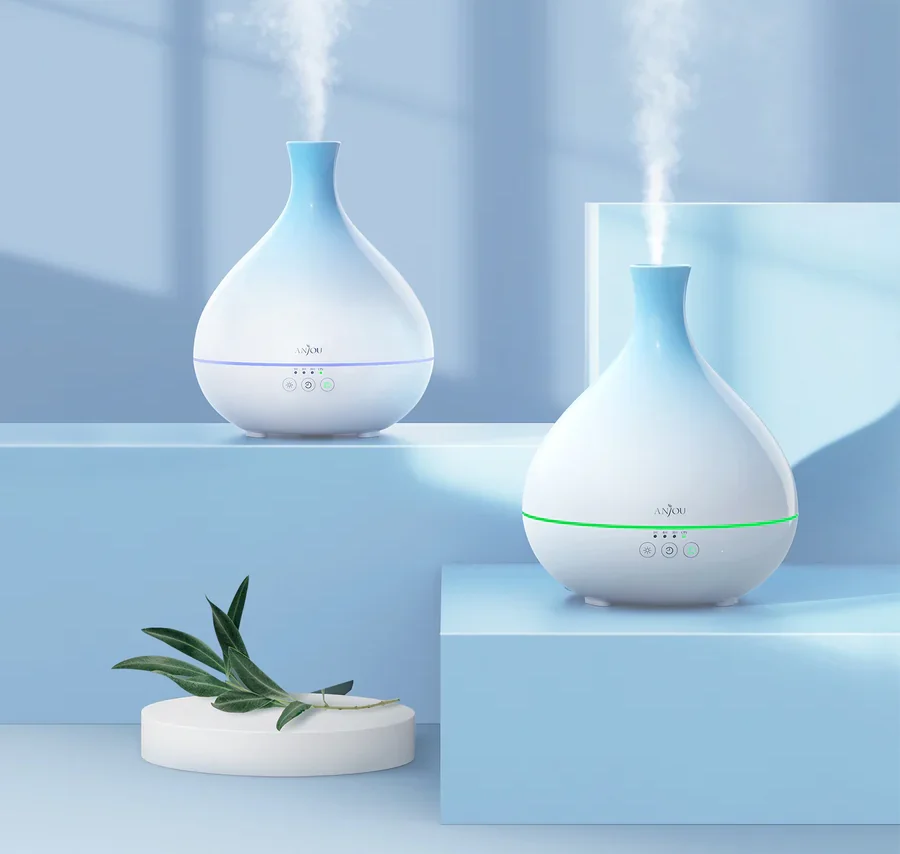
anjou diffusers 2

Corporate Ownership Hierarchy of the Anjou Brand

  • Marke

    • Anjou – Consumer-facing wellness brand, marketed globally
  • US Subsidiary

    • Sunvalleytek International, Inc. – US Sales, Marketing, Distribution – California, USA
  • Intermediary

    • Shenzhen Sunvalley (Sunvalley Group) – D2C Brand Portfolio Management – Shenzhen, China
  • Ultimate Parent

    • Guangdong SACA Precision Mfg. Co. – Corporate Governance, Manufacturing – Foshan, China

On the Factory Floor: Pinpointing the Manufacturer

While SACA provides the financial oversight and Sunvalley manages the brands, who physically makes the products? To sell electronics in the United States, companies must file for certification with government agencies like the Federal Communications Commission (FCC) and the Food and Drug Administration (FDA). These public records provide the final piece of the puzzle.

An FCC filing for a product from TaoTronics, Anjou’s sister brand, lists the manufacturer as "Shenzhen NearbyExpress Technology Development Co., Ltd." More directly, FDA filings for Anjou-branded products, such as a "Spot Remover Pen" and a "Wireless Body Composition Smart Scale," also name "SHENZEN NEARBYEXPRESS TECHNOLOGY DEVELOPMENT COMPANY LTD" as the company behind the devices.

This evidence strongly indicates that Shenzhen NearbyExpress is the primary manufacturing partner responsible for producing the electronics across Sunvalley's brand portfolio. This entity not only handles the physical assembly but also navigates the complex regulatory landscape required to legally import and sell these goods in the U.S. market.

anjou diffusers

The D2C Playbook: Key Takeaways from the Anjou Model

The Anjou brand structure is a textbook example of a modern, efficient global business model. The operational roles are clearly divided between two countries to maximize their respective strengths.

The Role of the U.S. Entity is Market-Facing:

  • Marketing & Sales: Building the brand narrative and managing e-commerce channels like Amazon
  • Logistics: Handling importation and last-mile distribution
  • Legal & Customer Support: Providing a domestic corporate presence and a point of contact for U.S. consumers

The Role of the Chinese Entities is Foundational:

  • Governance & Finance (SACA): High-level corporate oversight and capital investment
  • Strategy & R\&D (Sunvalley): Parent-level brand management and product development
  • Manufacturing & Compliance (NearbyExpress): Physical production and navigating U.S. import regulations

This model allows the conglomerate to leverage China's cost-effective and highly developed manufacturing ecosystem while using a minimal-footprint U.S. entity to build a localized brand identity that appeals directly to high-value Western consumers.

anjou diffusers 3

Conclusion: The Illusion is the Masterstroke

So, where are Anjou diffusers made? They are made in Shenzhen, China, by a manufacturing partner serving a portfolio of D2C brands, which are owned by a consumer electronics group, which in turn is an asset of a publicly-traded industrial hardware giant.

The story of Anjou is a powerful lesson for every D2C and B2B leader. It demonstrates that in today's global economy, brand identity is a strategic construct that can be intentionally and effectively decoupled from manufacturing origin. The journey of a product from a factory floor in Shenzhen to a living room in Ohio is masked by a sophisticated architecture of international law, digital marketing, and global logistics. The "nature-inspired" wellness brand from California is, in reality, a triumph of global industrial strategy. And understanding that distinction is key to understanding the future of direct-to-consumer commerce.

Teilen:
hisoair-gründer herr lee
Alwen Lee, an air purification expert with over 10 years of experience, is a devoted father of two and a passionate traveler, having explored more than 30 countries. With a love for public speaking and swimming, he has dedicated his life to the indoor air quality industry. His mission is to ensure that people around the world enjoy the freedom to breathe clean air and lead happy, healthy lives.

Senden Sie uns eine Nachricht

Mehr zum Lesen

levoit diffusers

Where Are Levoit Diffusers Manufactured?

Levoit has emerged as a prominent brand, widely recognized for its commitment to enhancing home environments. From its leading-edge air purifiers to its popular humidifiers ...
Diffuser
saje diffusers 5

Where Are Saje Diffusers Manufactured?

For any D2C or B2B brand leader, Saje Natural Wellness is a case study in masterful brand building. Since its inception in 1992, the Vancouver-based ...
Diffuser
asakuki diffusers 3

Where Are ASAKUKI Diffusers Manufactured?

For any direct-to-consumer (D2C) brand navigating the complexities of the global marketplace, the story of ASAKUKI is a masterclass in strategy. On the surface, it’s ...
Diffuser
innogear diffusers 7

Where Are InnoGear Diffusers Manufactured?

If you’ve browsed for home wellness products on Amazon or Walmart, you’ve almost certainly encountered the InnoGear brand. Known for its affordable, reliable, and feature-rich ...
Diffuser
urpower diffusers 5

Where Are URPOWER Diffusers Manufactured?

If you’ve browsed for home wellness products on Amazon or Walmart in the last few years, you’ve almost certainly encountered the URPOWER brand. Their essential ...
Diffuser
vitruvi diffusers 6

Where Are Vitruvi Diffusers Manufactured?

In the world of direct-to-consumer (D2C) wellness, few brands have captured the intersection of design, quality, and clean living as effectively as Vitruvi. Their iconic ...
Diffuser
Contaminant Engineering•3 min read

PFAS Water Filtration Technologies Explained: Carbon, Resin & RO

Key Takeaway:

PFAS reduction depends on the specific compounds present, treatment media, contact time, water chemistry, and system design. Activated carbon, ion exchange, and Reverse Osmosis address PFAS through different mechanisms.

PFAS are a large family of persistent fluorinated compounds that can occur in drinking-water supplies. Their treatment behavior varies significantly by molecular structure, chain length, functional group, concentration, and the chemistry of the source water.

Granular Activated Carbon (GAC) removes PFAS primarily through adsorption. It is generally more effective for many longer-chain PFAS, while shorter-chain compounds tend to break through more quickly. Carbon performance depends on media properties, Empty Bed Contact Time (EBCT), competing organic matter, loading, and replacement frequency.

Ion-exchange resins use charged functional sites to capture many PFAS compounds. Properly selected anion-exchange media can provide high capacity and may perform better than conventional activated carbon for some shorter-chain PFAS, although performance still depends on water chemistry and competing ions.

Reverse Osmosis (RO) uses membrane separation rather than adsorption. Properly designed RO systems can provide broad reduction across many PFAS compounds as well as dissolved salts and other contaminants. Unlike carbon or resin, however, RO also produces a concentrate stream that must be managed.

No single technology should be selected from a PFAS label alone. System design should consider which PFAS compounds are present, their concentrations, required reduction targets, flow rate, media life, and the applicable third-party certification or validation requirements.

HisoAir Water Technical Series
Product Discovery•3 min read

How to Choose an Under-Sink Water Purifier for Modern Kitchens

Key Takeaway:

Match the treatment technology to your water quality first, then evaluate cabinet space, faucet configuration, flow rate, drain and power requirements, and filter replacement needs.

Choosing an under-sink water purifier starts with water chemistry. Carbon filtration is well suited to chlorine, taste, odor, and many organic contaminants, while Reverse Osmosis is more appropriate when dissolved salts, fluoride, nitrates, or broader dissolved contaminants need to be reduced.

For compact kitchens, tankless RO systems eliminate the conventional storage tank and can significantly reduce the space required under the sink. However, membrane capacity stated in GPD does not directly equal faucet flow. When comparing systems, check the actual dispensing flow rate, inlet-pressure requirement, recovery ratio, and whether a booster pump is required.

Installation architecture also matters. Many RO systems require a drain connection, electrical power, and either a dedicated drinking-water faucet or a compatible multi-function faucet. High-flow carbon systems can often connect directly to the existing cold-water line with a simpler installation, but pressure drop and available faucet flow should still be verified.

RO also removes much of the naturally occurring dissolved mineral content. Where taste or mineral balance is a priority, a post-RO remineralization stage can be added. Filter life should be evaluated by both rated capacity and local water quality rather than replacement time alone.

The right system is therefore not simply the smallest or highest-GPD model. It is the configuration that matches the target contaminants, available cabinet space, desired faucet setup, peak dispensing demand, and maintenance expectations.

HisoAir Water Technical Series
Water Quality•2 min read

What Does TDS Mean in Drinking Water? Measurement vs Contaminant Reality

Key Takeaway:

A TDS meter estimates the overall concentration of dissolved ionic substances from electrical conductivity. It cannot identify specific contaminants or determine whether water is chemically safe.

Total Dissolved Solids (TDS) refers to the combined concentration of dissolved substances in water. Most handheld TDS meters do not measure TDS directly. Instead, they measure electrical conductivity (EC) and convert that reading into an estimated parts-per-million (ppm) value.

This means a TDS reading can indicate how much dissolved ionic material is present, but not what that material actually is. Calcium, magnesium, sodium, nitrates, and other dissolved ions can all contribute to conductivity, yet a simple TDS meter cannot distinguish between them.

TDS meters are also not suitable for detecting trace contaminants such as PFAS, many VOCs, pesticides, pharmaceuticals, or disinfection byproducts. These substances may be present at concentrations far below the level needed to noticeably change electrical conductivity.

A low TDS reading therefore does not guarantee safe drinking water, and a higher TDS reading does not automatically indicate contamination. Water-treatment decisions should be based on laboratory testing for specific contaminants of concern rather than TDS alone.

HisoAir Water Technical Series
Technology Selection•2 min read

RO vs UF Water Filtration: Understanding Pore Sizes & Dissolved Minerals

Key Takeaway:

Ultrafiltration can reduce bacteria, turbidity, and suspended particles while retaining most naturally occurring dissolved minerals. Reverse Osmosis provides much broader reduction of dissolved salts and smaller contaminants.

Ultrafiltration (UF) typically uses hollow-fiber membranes with pore sizes in the approximate 0.01–0.1 micron range. These membranes physically retain turbidity, suspended solids, colloids, and many microorganisms while allowing dissolved minerals and salts to remain in the water.

Reverse Osmosis (RO) operates at a much finer separation level. Unlike UF, RO can substantially reduce dissolved ions such as sodium, calcium, fluoride, nitrates, and other contributors to total dissolved solids (TDS). This makes RO more suitable when dissolved-salt reduction is a primary treatment objective.

UF generally requires less system pressure and produces little or no continuous concentrate stream in many point-of-use configurations. RO typically requires greater pressure and produces a reject-water stream, but delivers broader contaminant reduction.

For water with acceptable TDS and mineral content, UF can be a simpler mineral-retaining treatment option. Where dissolved salts, fluoride, nitrates, or broader dissolved contaminants are a concern, RO is generally the more appropriate technology.

HisoAir Water Technical Series
Technology Selection•4 min read

Carbon Block vs Reverse Osmosis: Which Fits Your Need?

Key Takeaway:

Choose RO for dissolved inorganic salts and heavy metals; choose Carbon Block for chemical taste/odor, no wastewater, and high line-pressure flow.

Reverse Osmosis (RO) and Carbon Block filtration represent two fundamentally different treatment methods: membrane separation and adsorption. Understanding these differences helps determine which technology is better suited to a specific water-quality requirement.

Reverse Osmosis uses a semi-permeable membrane with pore sizes of approximately 0.0001 microns. It can significantly reduce dissolved inorganic contaminants such as TDS, fluoride, nitrates, and certain heavy metals. Because water must be forced through the membrane, RO systems require sufficient pressure or a booster pump and generate a concentrated wastewater stream.

Carbon Block filtration relies primarily on adsorption through compressed activated carbon, commonly with nominal pore sizes around 0.5–5 microns. It is highly effective for chlorine, chloramines, VOCs, taste, and odor, while allowing substantially higher direct-flow rates without producing wastewater.

From an operating perspective, Carbon Block systems are generally simpler, require less energy, and avoid the water loss associated with RO. RO involves higher system complexity and operating cost, but provides substantially broader reduction of dissolved contaminants that Carbon Block alone cannot address.

HisoAir Water Technical Series

EIN ANGEBOT ANFORDERN