
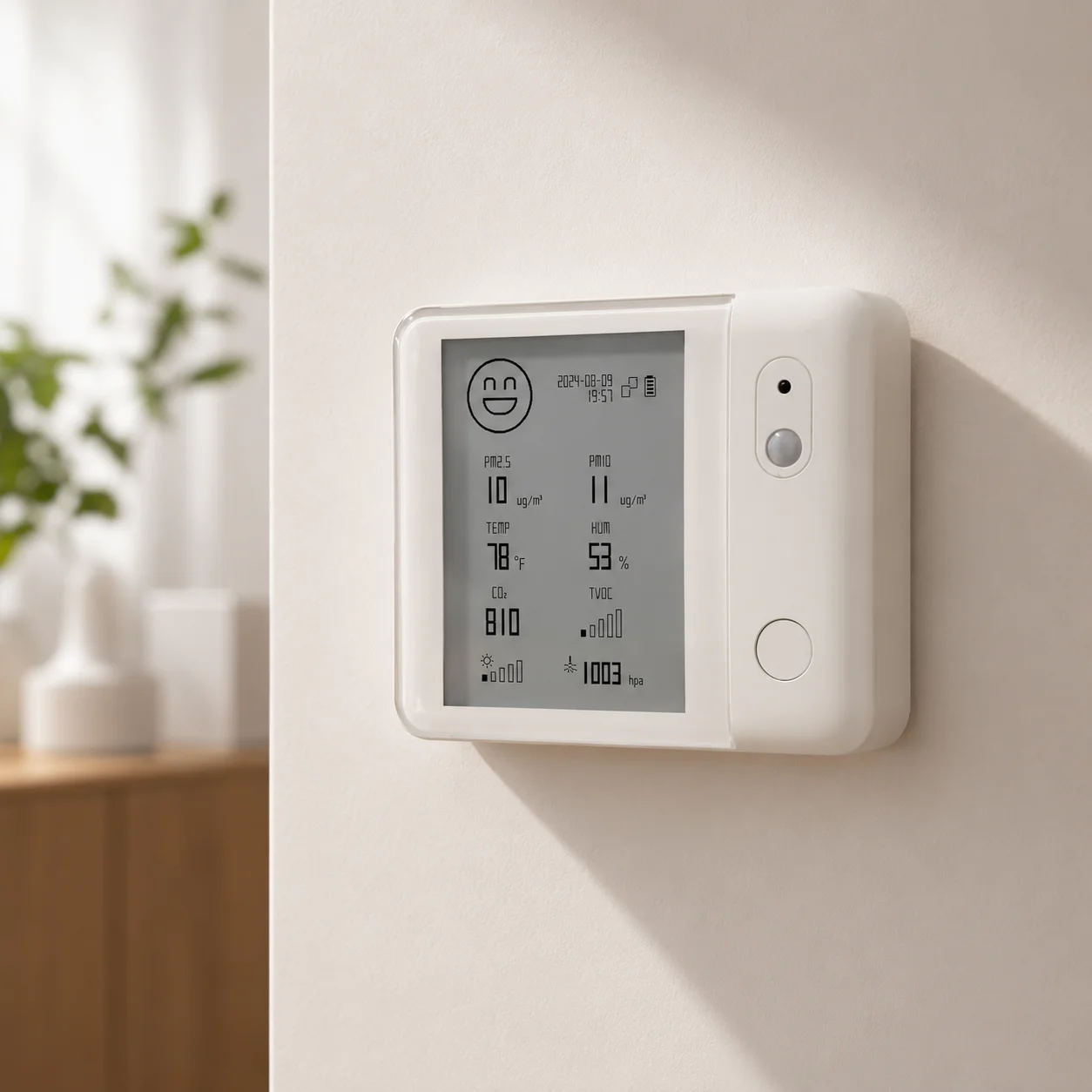
wildfire smoke1 ruins indoor air. You struggle to design products that actually fix this problem. I will show you how to build systems that truly protect homes.
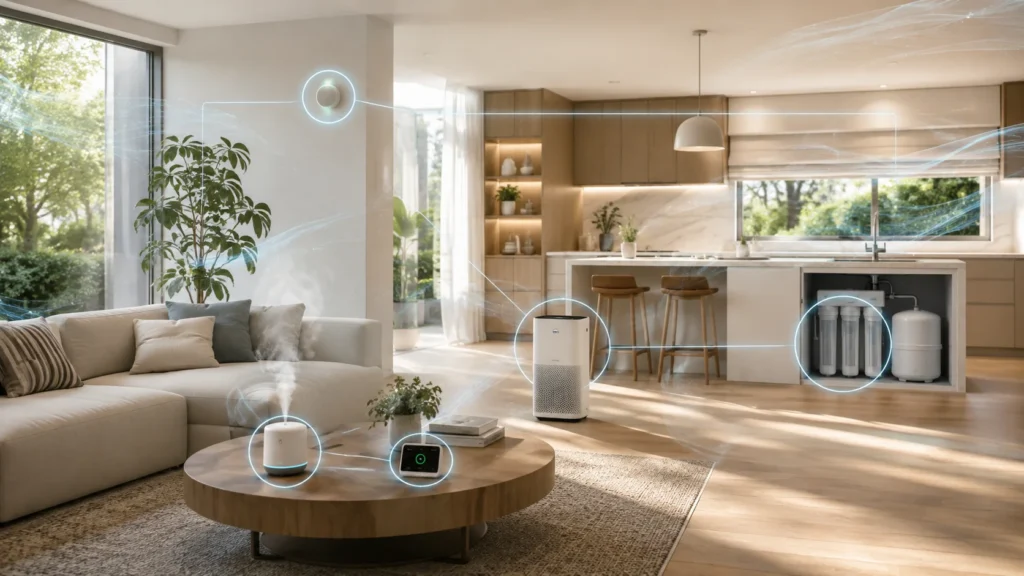
Wellness brands must move beyond standalone purifiers. A wildfire-ready home needs a connected system. This system must detect outdoor smoke, monitor indoor air, and automatically control distributed wall-mounted purifiers. This approach turns basic air quality into true home resilience infrastructure2.
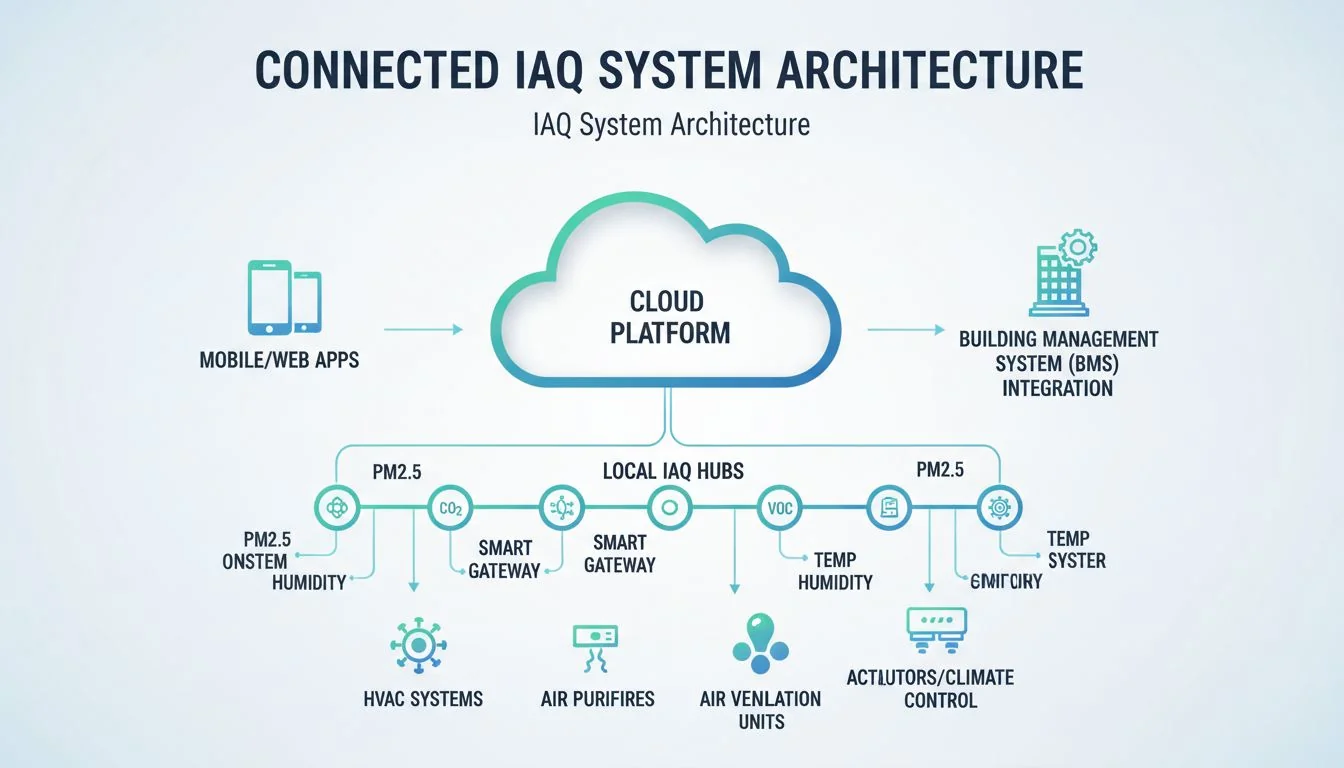
I remember my early days in the mold factory. We just made simple plastic boxes for fans. Today, the products we design must do much more. If you want to master molding right for modern wellness brands, you must understand the whole system. Let us look at how these new systems work.
Wildfire smoke only affects outdoor environments.Falso
Wildfire smoke easily penetrates buildings and becomes a major indoor air quality issue.
A connected IAQ system uses multiple sensors to control air purifiers.Verdadero
Connected systems use environmental data to automatically trigger distributed purifiers.
Is Wildfire Smoke Turning Indoor Air Quality from a Comfort Feature into Home Resilience Infrastructure?
Smoke enters buildings fast. Facility teams panic because they cannot clear the air. We must design products that handle this heavy operational load.
Wildfire smoke is no longer just an outdoor problem. It is a major indoor air quality and operational challenge. Building owners need systems that ensure operational continuity. Air quality is now a critical infrastructure requirement for commercial buildings and homes.

The Shift to Infrastructure Design
I started my trading company many years ago. Clients only wanted cheap molds for basic air filters back then. Now, clients like you design for resilience. We must think about how our plastic components fit into a larger building operations issue. Wildfire smoke forces us to change our design mindset. We are not just making a consumer gadget anymore. We are building commercial-grade infrastructure.
You must consider how the plastic housing handles constant use during a fire season. The materials must withstand higher temperatures. They must survive constant vibration from heavy-duty fans. Let us break down the difference between comfort devices and resilience infrastructure.
| Característica | Comfort Air Purifier | Resilience Infrastructure |
|---|---|---|
| Primary Goal | Remove daily dust and odors | Protect against heavy wildfire smoke |
| Usage Pattern | Occasional or low speed | Continuous high speed during events |
| Component Wear | Low stress on plastic parts | High stress and vibration on mounts |
| System Type | Standalone unit | Integrated building system |
We must account for thicker walls and stronger ribs in our CAD models. This prevents the housing from warping. The system will run at full capacity for weeks. Your mold design must support this heavy use.
Building owners treat wildfire smoke as a minor comfort issue.Falso
Building owners now view it as a major operational continuity challenge.
Resilience infrastructure requires stronger product designs than basic comfort devices.Verdadero
These systems run continuously under high stress during smoke events, requiring robust components.
Why Is One Smart Air Purifier Not Enough to Create a Wildfire-Ready Home?
One purifier cannot clean a whole house. Users get frustrated when smoke still smells in the bedroom. We need to design scalable solutions.
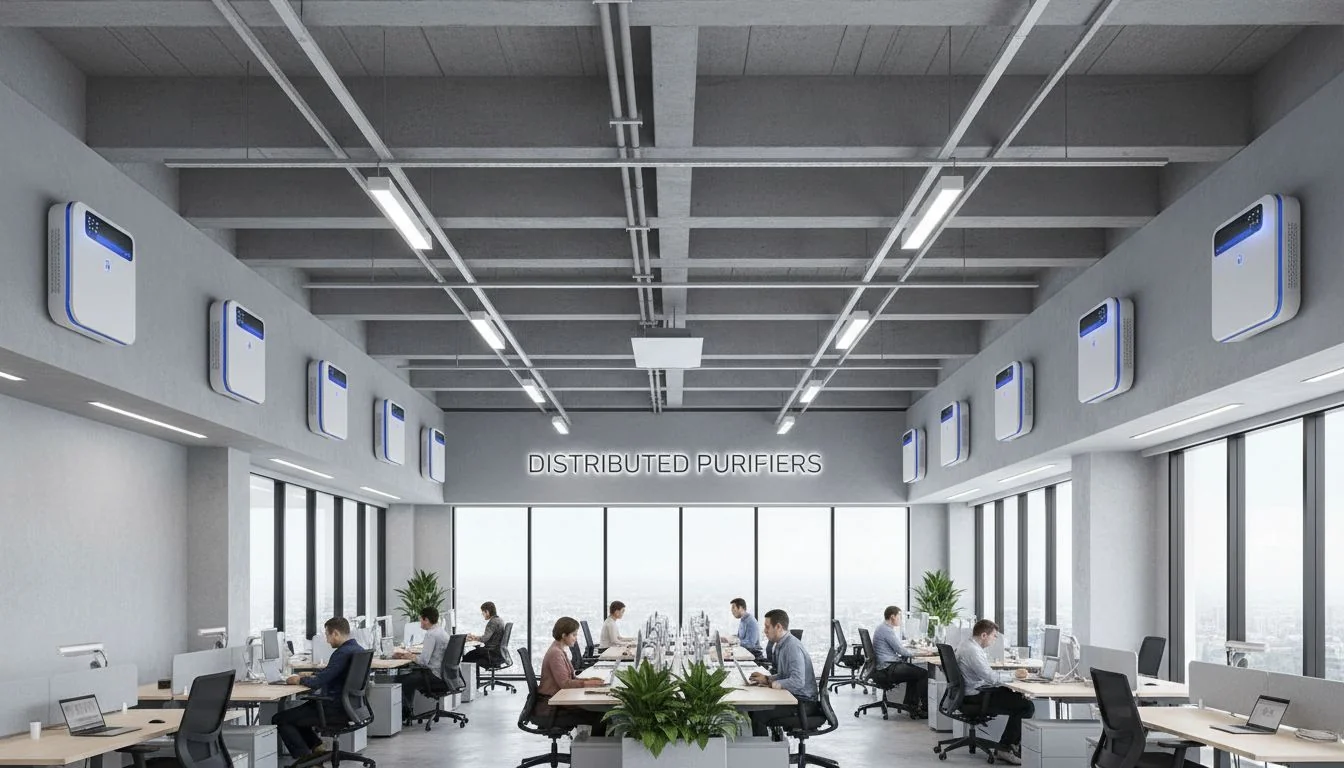
A single smart air purifier lacks the capacity to handle heavy wildfire smoke across multiple rooms. Manual response does not scale well. An AI-ready IAQ system is the future. This system connects multiple distributed units to respond consistently and automatically throughout the entire building.
Designing for Distributed Systems
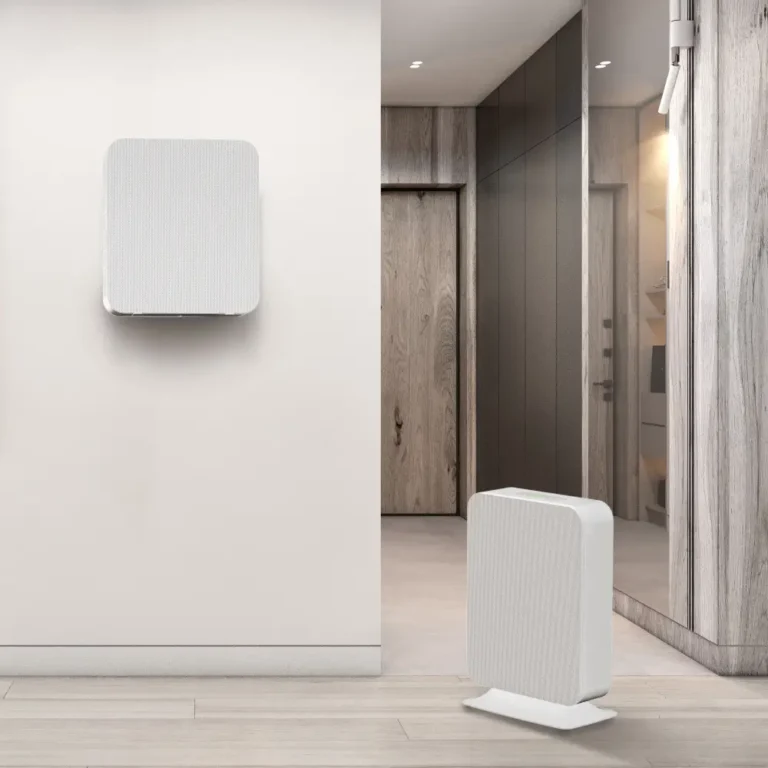
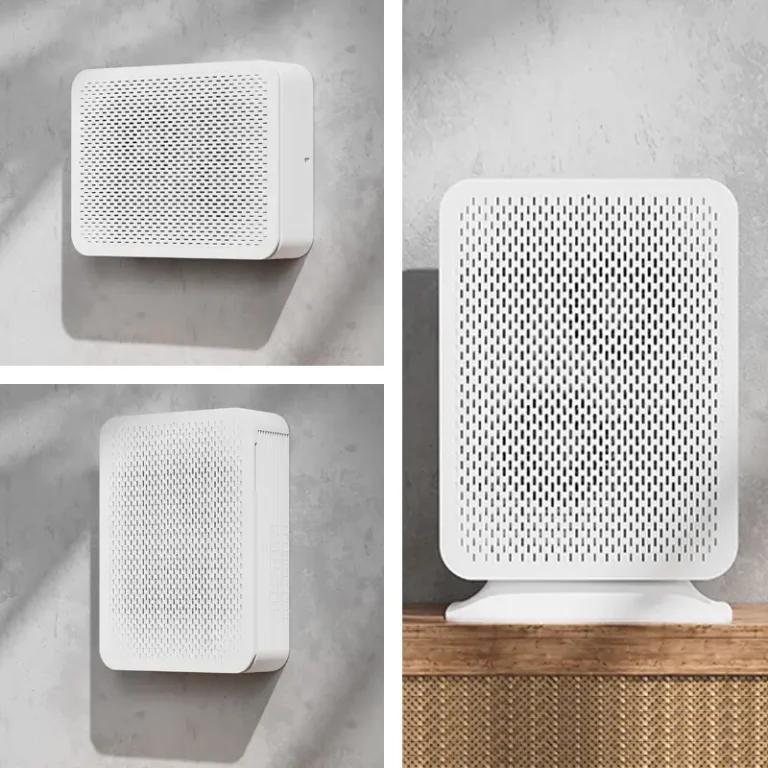
I often see designers make the mistake of focusing on one giant machine. I did this too in my early factory days. But one machine cannot push clean air through closed doors. We must design smaller units. We must design distributed units. This means we need to design molds for wall-mounted purifiers.
Wall-mounted units bring new challenges for you and me. We must calculate mold shrinkage perfectly for the mounting brackets. The unit will rattle on the wall if the bracket shrinks too much. We also need to design easy-access filter doors. Users will change filters often during fire season.
| Elemento de diseño | Standalone Floor Unit | Distributed Wall Unit |
|---|---|---|
| Talla | Large and bulky | Compact and slim |
| Mounting | Rests on floor | Requires precise wall brackets |
| Mold Complexity | Large single cavities | Multiple smaller, precise cavities |
| Airflow Path | Bottom to top | Front to top or side |
You must optimize these designs for large-scale production. A building might need fifty wall units instead of one floor unit. Your CAD work must ensure these parts pop out of the mold quickly. They must pop out flawlessly.
One large air purifier can easily clean multiple closed rooms.Falso
Airflow is blocked by walls and doors, requiring distributed units for full coverage.
Wall-mounted units require precise mold shrinkage calculations for mounting brackets.Verdadero
Inaccurate shrinkage leads to loose brackets and rattling units.
Must a Wildfire-Ready Home Understand Both Outdoor Smoke and Indoor Exposure?
Indoor sensors only tell half the story. You cannot stop smoke if you do not see it coming. We must integrate dual monitoring.
Yes, a wildfire-ready home must monitor both environments. It needs to track outdoor smoke levels to anticipate threats. It also needs to measure indoor exposure to verify safety. This dual approach allows the system to define a strict wildfire response protocol: Prepare, Detect, Respond, and Verify.
The Prepare-Detect-Respond-Verify Protocol
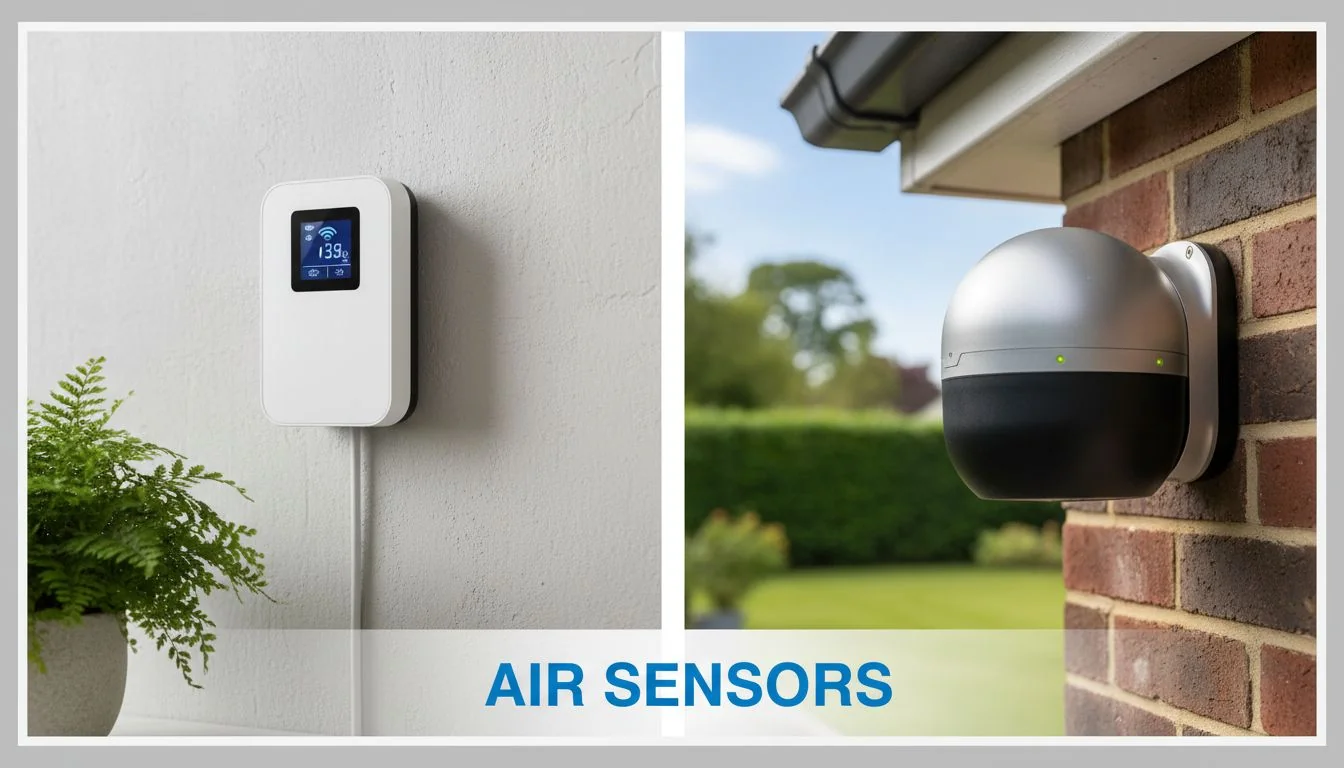
We must think about where these sensors live. We design the plastic housings for them. Outdoor sensors face rain and UV light. Indoor sensors face dust and human interaction. I learned the hard way about material selection. You will cause the outdoor units to crack if you use the same plastic for both.
The system uses a specific protocol. We must design the hardware to support this protocol.
| Protocol Step | System Action | Hardware Design Need |
|---|---|---|
| Prepare | Monitor outdoor air data | Weather-resistant outdoor sensor housings |
| Detect | Identify smoke entering the building | Highly sensitive indoor sensor enclosures |
| Respond | Turn on wall-mounted purifiers | Fast-acting motorized vents and fans |
| Verify | Confirm indoor air is clean | Clear LED indicator displays on units |
You must select the right materials. Use UV-resistant plastics for the outdoor parts. Ensure the indoor sensor enclosures have proper airflow vents. The whole protocol fails if your mold design blocks the air to the sensor. The system cannot verify the air if the sensor cannot breathe.
Indoor and outdoor sensors can always use the exact same plastic materials.Falso
Outdoor sensors require UV and weather-resistant materials to prevent cracking.
The Verify step confirms that the indoor air is actually clean.Verdadero
The system uses indoor sensors to measure air quality after the purifiers run.
From Monitoring to Automated Action: How Should a Home Enter Wildfire Protection Mode?
Manual controls fail during emergencies. Users forget to turn on purifiers. We must build systems that take action without human help.
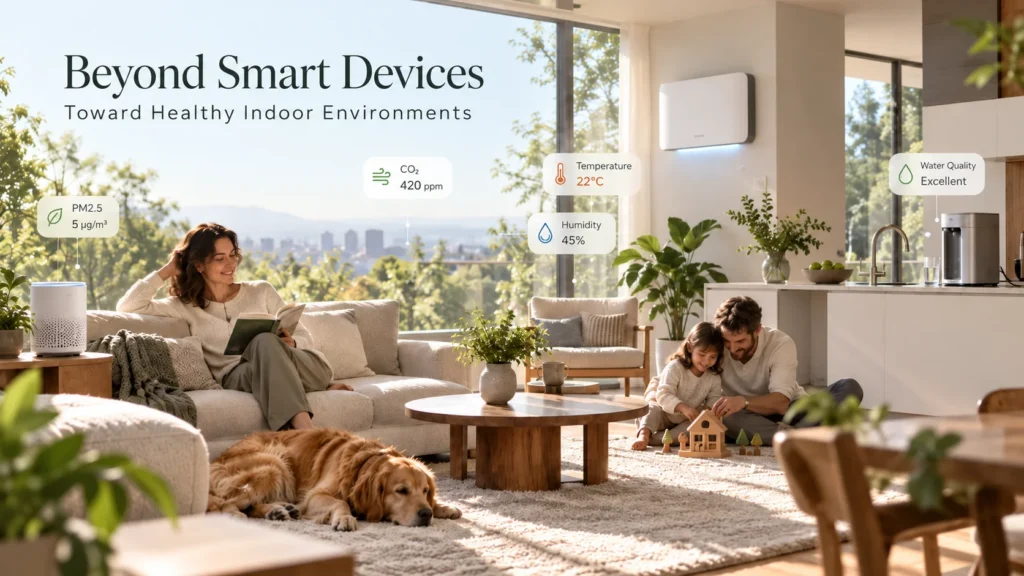
A home enters protection mode through a Sense-Think-Act architecture. It uses a centralized environmental intelligence layer. Sense+ provides visibility and coordination. It detects the smoke, processes the data, and automatically triggers the distributed wall-mounted purifiers3. This manages all devices as one unified system.

The Sense-Think-Act Architecture
This architecture changes how we approach product design. We are no longer designing isolated parts. We are designing a network. The "Sense" part requires small sensor boxes. The "Think" part requires a central control hub. The "Act" part requires the wall-mounted purifiers.
I helped a client transition to this model last year. We had to redesign all their molds. We needed to ensure the different devices looked like a single family of products.
| Architecture Phase | Tipo de dispositivo | Mold Design Focus |
|---|---|---|
| Sense | Air Quality Monitors | Small footprint, precise vent holes |
| Think | Central Hub / Gateway | Clean aesthetics, good heat dissipation |
| Act | Wall-Mounted Purifiers | Structural strength, acoustic dampening |
You must ensure aesthetic consistency across all these parts. The surface finish on the sensor must match the surface finish on the purifier. The system will look cheap if you use different draft angles or textures. The Sense-Think-Act system must look and feel like premium home infrastructure.
The Sense-Think-Act architecture relies on users manually turning on devices.Falso
The architecture is designed to automatically trigger actions based on sensor data.
Aesthetic consistency is important when designing multiple devices for one system.Verdadero
Matching surface finishes and textures ensures the devices look like a unified premium system.
Does Real Wildfire Performance Depend on CADR, Capacity, Noise and Filter Intelligence—not HEPA Alone?
HEPA filters are not magic. A bad fan makes a good filter useless. We must design enclosures that maximize overall performance.
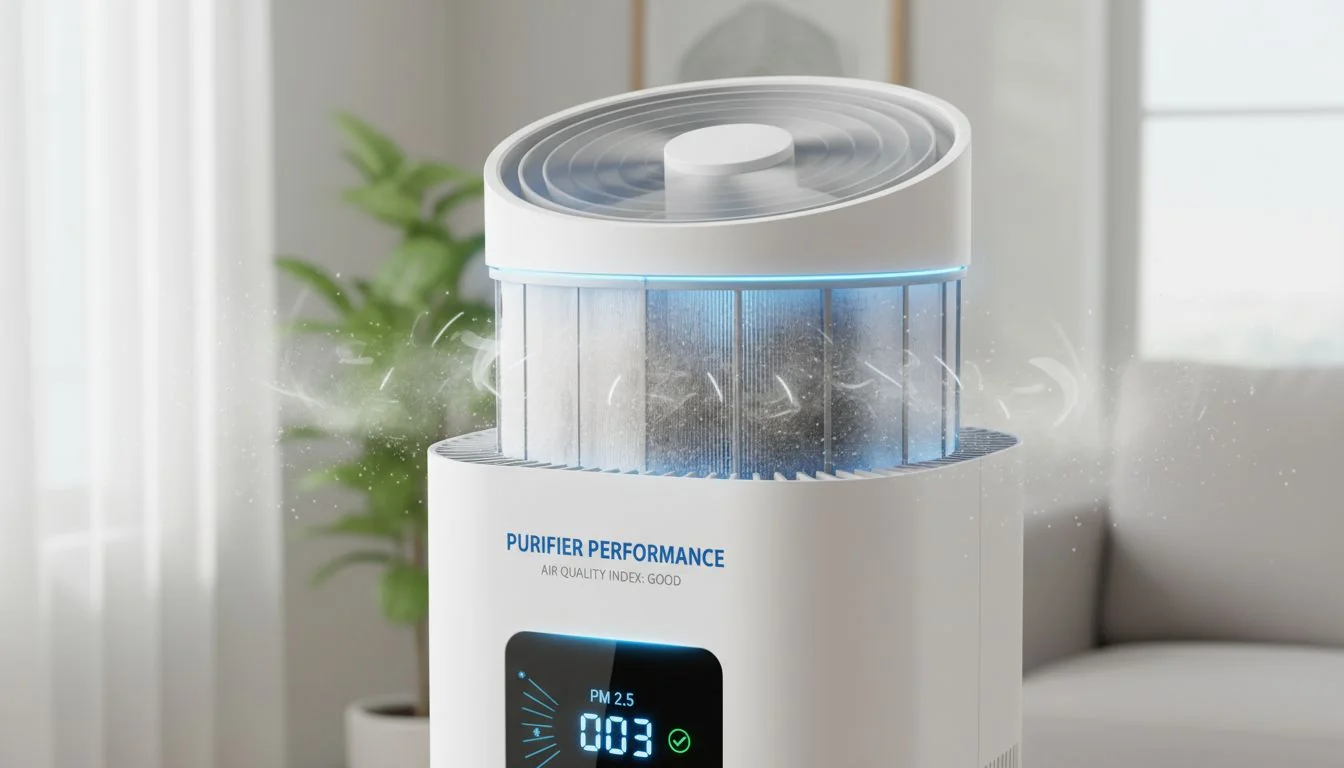
HEPA alone cannot stop wildfire smoke. Real performance depends on high Clean Air Delivery Rate (CADR), large filter capacity, low noise levels, and filter intelligence4. The system must move a lot of air quietly. It must also know exactly when the filter needs replacing.
Optimizing Enclosures for Performance
Many designers think the filter does all the work. I know you understand that the mechanical design is just as important. The CADR drops if we design a poor airflow channel. The noise increases if we design a flimsy housing.
We must use our CAD tools to optimize the internal geometry. We need smooth curves to guide the air. We need thick ribs to stop vibrations.
| Performance Factor | Design Requirement | Manufacturing Challenge |
|---|---|---|
| CADR alta | Large, smooth air channels | Complex core pulls in the mold |
| Filter Capacity | Deep filter cavities | Managing shrinkage on large flat walls |
| Bajo nivel de ruido | Rigid mounting points, tight seams | High precision CNC machining for molds |
| Filter Intelligence | RFID or sensor mounts near filter | Designing tiny, precise snap-fits |
The filter door must seal perfectly when you design it. The HEPA rating means nothing if smoke bypasses the filter through a gap in the plastic. Master molding right means ensuring every seam is tight. This is how we guarantee real wildfire performance.
A HEPA filter guarantees clean air even if the plastic housing has air leaks.Falso
Air leaks allow smoke to bypass the filter, ruining the system's performance.
Smooth internal air channels help maintain a high Clean Air Delivery Rate (CADR).Verdadero
Smooth channels reduce air resistance, allowing the fan to move more air efficiently.
Can Wellness Brands Move from Selling Devices to Providing an Ongoing Home Resilience Service?
Selling one box is a dead end. Customers forget about you after the purchase. We must help brands build ongoing relationships.
Wellness brands can shift to a service model. HisoAir is developing a connected IAQ architecture that combines multi-parameter sensing, intelligent control, and distributed wall-mounted purification. This platform helps brands and building solution providers move beyond standalone devices. They can now offer a scalable, ongoing home resilience service.

Manufacturing for Service Platforms
This shift to a service model changes our manufacturing timelines. Brands will need a steady supply of replacement parts. They will need new sensor modules. They will need upgraded wall units. I built my CNC trading company by supporting clients through these long-term projects.
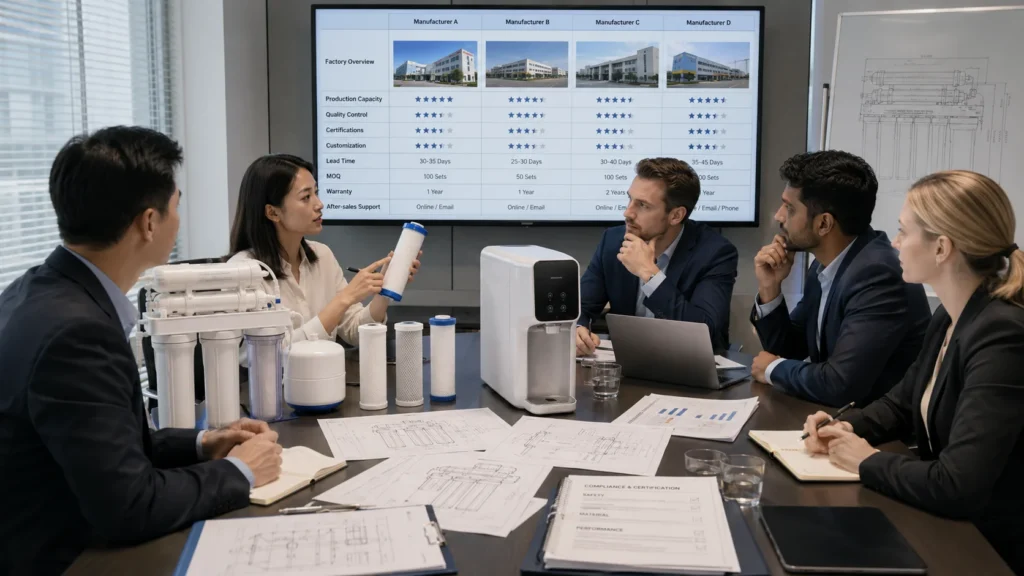
You need a reliable manufacturing partner if you are developing a wildfire-ready IAQ solution for schools, offices, or multifamily housing. You must design molds that can run for years without degrading.
| Business Model | Productos | Mold Lifespan Requirement |
|---|---|---|
| Selling Devices | One-time hardware sale | Short to medium term |
| Resilience Service | Hardware + Data + Subscriptions | Long term, high volume |
| System Upgrades | Replacing whole units | Modular designs, interchangeable parts |
We must design modular components. We should only need to change a small part of the mold if HisoAir updates their sensor technology. We should not change the whole thing. Talk with HisoAir about connected sensors and system integration. Talk to your manufacturing team about building molds that support this scalable Sense-Think-Act system.
A service model requires brands to only sell a product once and never interact with the customer again.Falso
A service model relies on ongoing relationships, data monitoring, and continuous support.
Modular product designs make it easier to upgrade specific components like sensors.Verdadero
Modular designs allow you to replace small parts without redesigning the entire product.
Conclusión
Wildfire smoke demands better indoor air quality systems. We can build true home resilience infrastructure together by understanding connected architectures and mastering mold design for distributed units.
References
-
Understanding the impact of wildfire smoke on indoor air quality is crucial for developing effective solutions. ↩
-
Learning about resilience infrastructure can help in designing buildings that withstand environmental challenges. ↩
-
Discovering the advantages of distributed systems can enhance air purification strategies in homes. ↩
-
Understanding filter intelligence can lead to more effective air purification solutions. ↩


 English
  Français
  Español
  Italiano
  Deutsch
  Português
  Русский
  العربية
  日本語
日本語  한국어
한국어  Tiếng Việt

