Se abre en una pestaña nueva
Soluciones innovadoras para la calidad del aire

Top 5 Humidifier Manufacturers in Australia

Is the air in your home feeling a little dry? You’re not alone. The constant hum of air conditioners in the summer and heaters in the winter can strip the moisture from our indoor environments, leading to dry skin, irritated sinuses, and restless nights. A quality humidifier is the perfect solution, restoring balance to your home's atmosphere for better health and comfort.

But with so many options on the market, choosing the right one can be overwhelming. To help you decide, we’ve compiled a list of the top 5 humidifier manufacturers making waves in Australia, each with a unique approach to improving your indoor air quality.

Why Does Indoor Air Feel So Dry?

Indoor air often feels dry because of the way heating and cooling systems work. In the summer, air conditioners cool the air but also strip out much of its natural moisture. In the winter, heaters warm the air but don’t add any humidity back, causing the relative humidity to drop even further. Seasonal weather patterns also play a role — colder outdoor air holds less moisture, which means when it enters your home and gets heated, it becomes even drier.

The result is an environment where the air pulls moisture from everything it touches — your skin, your nasal passages, even wooden furniture and flooring — leaving both you and your home feeling dehydrated.
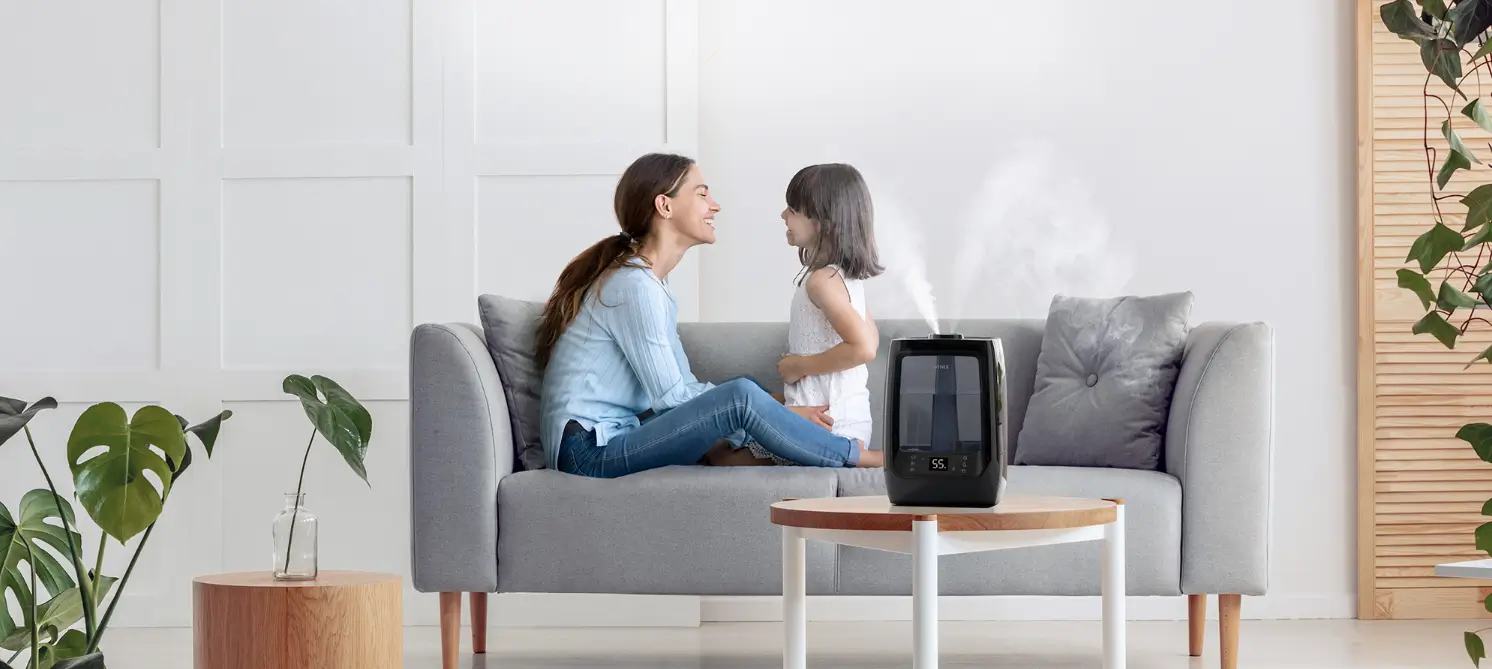
winxi humidifier

Health and Comfort Benefits of Using a Humidifier

A humidifier restores balance by reintroducing the right amount of moisture into the air. This creates a healthier and more comfortable living environment with several key benefits:

  • Better skin and hair health: Helps prevent dryness, irritation, and flaking.
  • Easier breathing: Keeps nasal passages and airways moist, reducing congestion and sinus discomfort.
  • Improved sleep quality: Balanced humidity can ease snoring and nighttime coughing.
  • Protection for your home: Maintains proper moisture levels to help prevent cracks in wooden furniture, floors, and even musical instruments.
  • Enhanced overall comfort: Air feels fresher, warmer, and less irritating to the throat and eyes.

By maintaining the ideal indoor humidity (typically between 40–60%), a humidifier can make your home feel more inviting year-round.

Top 5 Humidifier Brands in Australia

Breville: The Smart Home Favourite

A beloved Australian brand, Breville has built a reputation for integrating smart technology into everyday appliances. Their humidifiers are no exception, designed for the tech-savvy consumer who values convenience and automation.

  • Key Technology: Breville’s humidifiers often feature the SensAir System™, which automatically monitors the room's temperature and adjusts humidity levels for optimal comfort. Many models also connect to the Breville Home Connect™ app and are compatible with voice assistants like Amazon Alexa and Google Home, allowing you to control your environment from anywhere.
  • Best For: Those who want to integrate their humidifier into a smart home ecosystem and enjoy "set and forget" functionality.
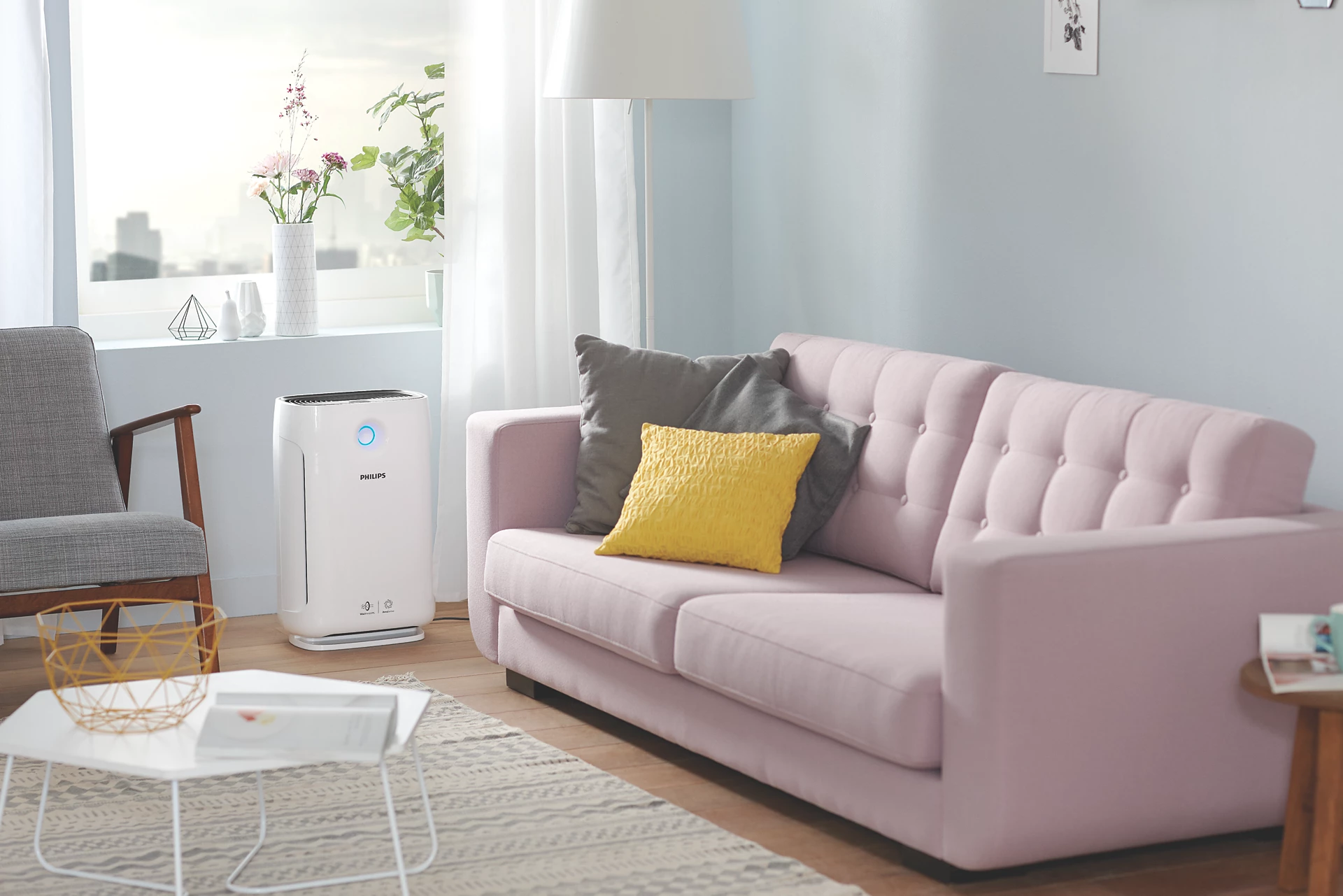
philips humidifier 3

Philips: The Health and Hygiene Champion

Philips has positioned itself as a global leader in health technology, and this focus is evident in their air care products. Their strategy is built on providing a hygienically superior humidification experience, making them a top choice for health-conscious families.

  • Key Technology: The cornerstone of the Philips range is the proprietary NanoCloud technology. This evaporative method is proven to release 99% less bacteria into the air compared to standard ultrasonic models. It also prevents the "white dust" mineral residue that can settle on furniture, a common issue with other humidifiers.
  • Best For: Families, allergy sufferers, and anyone who prioritizes a clean, hygienic, and low-mess humidification process.

HisoAir: The Air Quality Solutions Expert

With over two decades of experience developing and manufacturing high-end air treatment solutions for top global brands, HisoAir brings a wealth of technical expertise to the Australian market. Their focus is on delivering tailored, high-performance products that solve key consumer pain points.

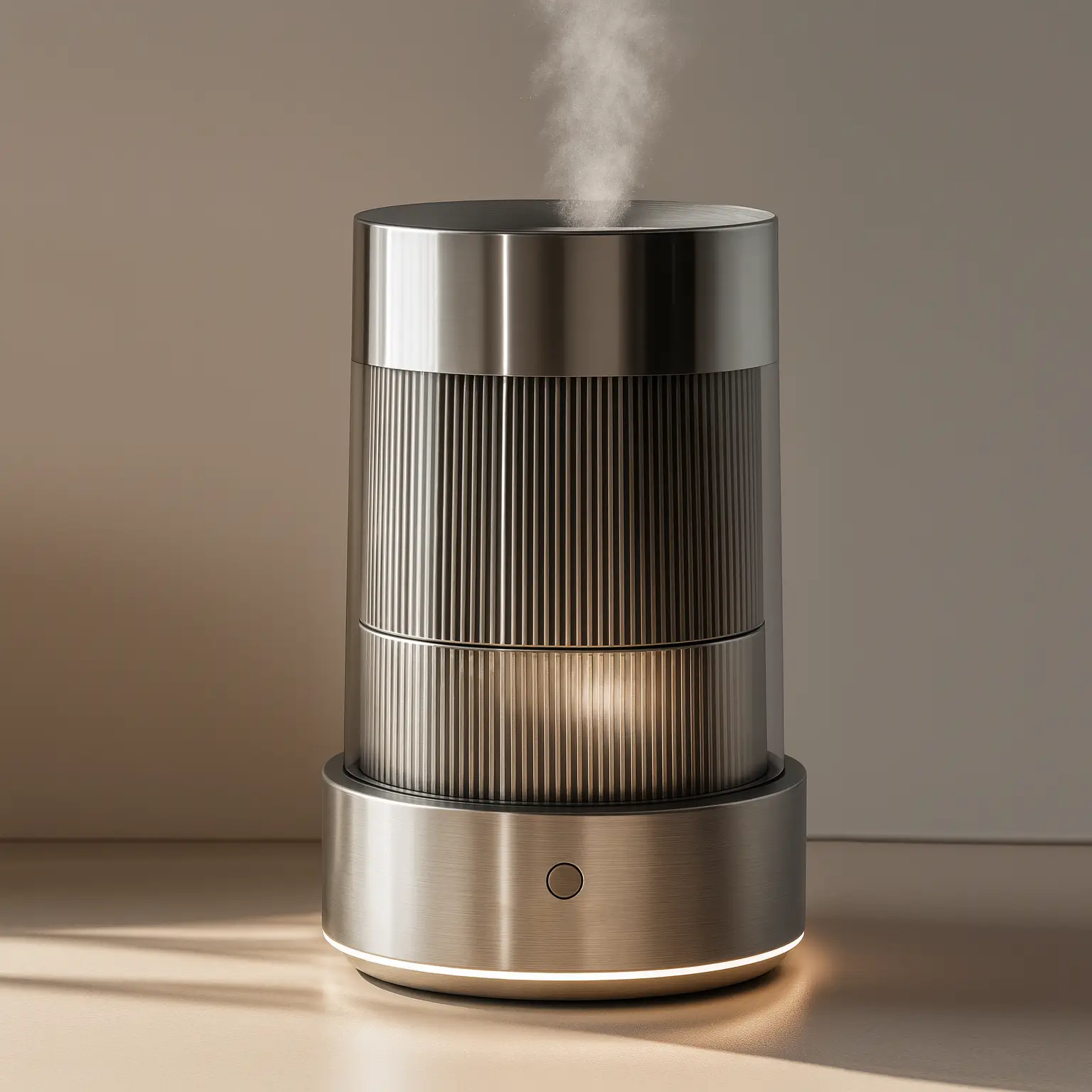
  • Key Technology: HisoAir stands out with its commitment to innovation. Their unique Tecnología Decibel Cancellation™ ensures powerful performance with whisper-quiet operation, making their units ideal for bedrooms and noise-sensitive environments. They also prioritize hygiene with advanced features like stainless-steel modular tanks and UV-C disinfection. For the modern home, their products are often Matter-ready and feature smart IoT integration for seamless app control.
  • Best For: Discerning users who demand superior performance, advanced hygienic features, and ultra-quiet operation.
stainless humidifier 14

Crane: The Nursery and Family Specialist

Crane has masterfully captured the family market by creating humidifiers that are not only effective but also functional and stylish additions to a child's room. Their entire philosophy is centered around creating safe, design-led products for families and nurseries.

  • Key Technology: Crane exclusively uses ultrasonic cool mist technology, which is widely recommended as a safer alternative to warm mist vaporizers for homes with children. Their innovation lies in multi-functionality; many models combine a humidifier with a sound machine, a multi-color night light, and an aroma tray, creating an all-in-one nursery wellness device. Their playful "Adorables" range, shaped like animals, is a consistent hit with parents and kids alike.
  • Best For: New parents and families looking for a child-safe, quiet, and multi-functional humidifier that complements a nursery's decor.

Dyson: The Premium All-in-One System

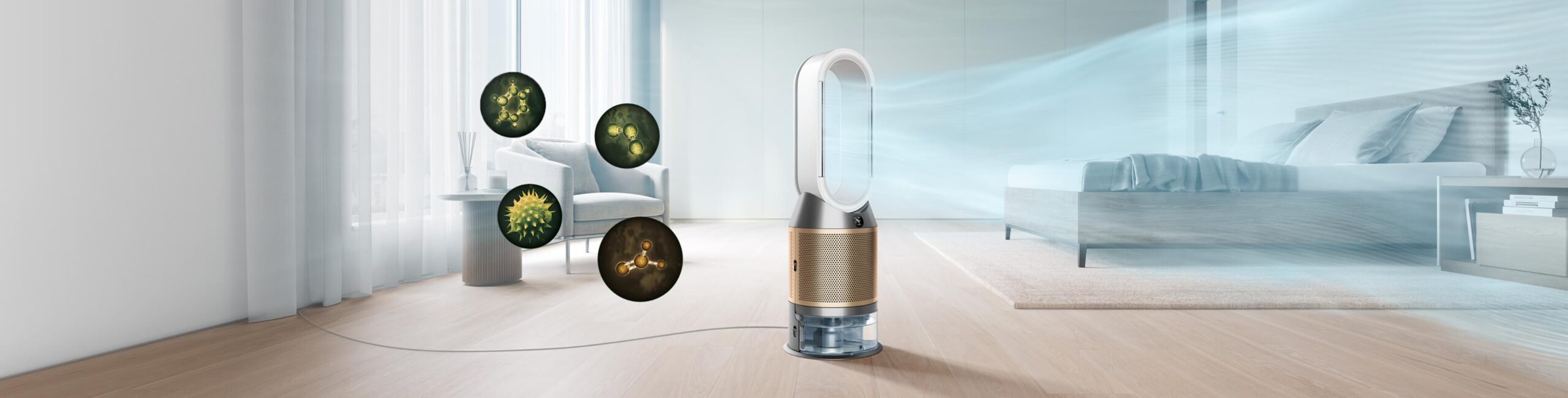
Dyson operates in a class of its own, targeting the premium end of the market. The company doesn’t sell standalone humidifiers; instead, it integrates hygienic humidification into its high-performance, multi-functional air treatment systems that also purify and provide fan-based cooling or heating.

  • Key Technology: Dyson’s approach is "purification first." Their units feature fully sealed HEPA H13 filtration systems to capture 99.95% of ultrafine particles. For humidification, their Ultraviolet Cleanse tecnología exposes every drop of water to a UV-C light, which kills 99.9% of bacteria before it’s released into the room. The signature bladeless Air Multiplier™ technology then projects the treated air evenly throughout the space.
  • Best For: Affluent consumers who want a single, high-end device that provides a comprehensive, year-round solution for air purification, humidification, and climate control.
dyson air purifier humidifier header ph04 us

Humidifier Brand Comparison at a Glance

With so many humidifier options on the market, it helps to see the differences side by side. Here’s a quick overview of the five leading brands in Australia:

Marca Key Technology Best For Price Tier
Breville SensAir System™, smart app integration Smart home users who want automated, “set and forget” comfort Mid–High
Philips NanoCloud evaporative tech Families and allergy sufferers prioritizing hygiene Medio
HisoAir Decibel Cancellation™, UV-C, IoT ready Discerning users seeking quiet, hygienic, high-performance solutions Mid–High
Crane Ultrasonic cool mist + multi-function Parents and nurseries needing safe, kid-friendly designs Low–Mid
Dyson UV-C Cleanse + HEPA H13 purification Premium buyers wanting all-in-one air treatment systems Premium

How to Choose the Right Humidifier for Your Needs

The best humidifier for you depends on your lifestyle, health priorities, and budget. Here are a few quick pointers:

  • For Smart Homes: Go with Breville if you want app control, voice assistant integration, and automated humidity management.
  • For Health-Conscious Families: Philips is ideal thanks to its hygienic NanoCloud system that prevents bacteria and white dust.
  • For Performance and Quiet Operation: HisoAir offers advanced hygiene features and near-silent running, great for bedrooms or workspaces.
  • For Parents with Young Children: Crane provides safe, cool-mist models that double as night-lights and sound machines.
  • For Premium All-in-One Solutions: Dyson is the choice if you want air purification, cooling/heating, and humidification in one sleek unit.

By narrowing down your needs — whether that’s smart connectivity, hygiene, silence, child safety, or multifunctionality you can quickly find the humidifier that delivers the right balance of comfort and value.

Here’s a polished Conclusión section you can use to wrap up the blog and include a natural call-to-action:

crane lifestyle drop clear white ee humidifier

Conclusión

Dry indoor air can take a toll on both your health and your home, but the right humidifier can make all the difference. From Breville’s smart home integration to Philips’ hygienic NanoCloud, HisoAir’s ultra-quiet performance, Crane’s family-friendly designs, and Dyson’s premium all-in-one systems, there’s a solution for every household and budget.

When choosing, consider your top priorities — whether that’s clean air, noise levels, child safety, or advanced smart features — and match them with the brand that best aligns with your lifestyle.

No matter which option you select, investing in a quality humidifier means investing in year-round comfort, healthier air, and a more inviting home environment.

Comparte:
fundador de hisoair, sr. lee
Alwen Lee, an air purification expert with over 10 years of experience, is a devoted father of two and a passionate traveler, having explored more than 30 countries. With a love for public speaking and swimming, he has dedicated his life to the indoor air quality industry. His mission is to ensure that people around the world enjoy the freedom to breathe clean air and lead happy, healthy lives.

Envíenos un mensaje

Más que leer

Comparison between PFAS-ready and PFAS-certified water filters, showing internal filter components and certification steps.

PFAS-Ready vs. PFAS-Certified Water Filters: Engineering Differences for OEM Brands

For an appliance, wellness or healthy-home brand preparing to launch a water purifier, the phrase “PFAS-ready” can sound reassuring. The proposed system may use activated ...
Water Purifiers
NSF base listing and ANF private-label certification pathway for OEM water filters

What Is an NSF Master Listing? A Guide to Base Listings, ANF Certification and OEM Water Filters

For a brand preparing to launch an OEM water purifier, one of the most common supplier claims is: “We already have an NSF master listing, ...
News, Water Purifiers
Two professionals discussing a supplier evaluation checklist at a table with water purifier parts, documents, and technical drawings in a factory setting.

Water Purifier Manufacturer in China: 12 Questions B2B Buyers Should Ask

Finding a water purifier manufacturer in China is easy. Finding a factory that can support your target contaminants, certification pathway, product positioning and long-term replacement-filter ...
News, Water Purifiers
Featured image for Why Stainless Steel Water Purifiers Are Becoming the Premium Choice for Wellness Brands

Why Stainless Steel Water Purifiers Are Becoming the Premium Choice for Wellness Brands

Choose stainless steel purifiers for purity, aesthetics, and sustainability. Elevate your wellness brand with premium quality today!
News, Water Purifiers
Featured image for What Biohacking & Longevity Consumers Want in a Water Purification System

What Biohacking & Longevity Consumers Want in a Water Purification System

Discover pure, re-mineralized water systems. No plastics, complete RO, perfect for biohacking longevity. Upgrade your hydration now!
News, Water Purifiers
Featured image for How Premium Water Appliances Improve Sleep, Skin, and Daily Energy

How Premium Water Appliances Improve Sleep, Skin, and Daily Energy

Unlock better sleep, radiant skin, and energy with mineral-rich water. Discover the power of premium appliances for your ultimate wellness boost.
News, Water Purifiers
Contaminant Engineering•3 min read

PFAS Water Filtration Technologies Explained: Carbon, Resin & RO

Key Takeaway:

PFAS reduction depends on the specific compounds present, treatment media, contact time, water chemistry, and system design. Activated carbon, ion exchange, and Reverse Osmosis address PFAS through different mechanisms.

PFAS are a large family of persistent fluorinated compounds that can occur in drinking-water supplies. Their treatment behavior varies significantly by molecular structure, chain length, functional group, concentration, and the chemistry of the source water.

Granular Activated Carbon (GAC) removes PFAS primarily through adsorption. It is generally more effective for many longer-chain PFAS, while shorter-chain compounds tend to break through more quickly. Carbon performance depends on media properties, Empty Bed Contact Time (EBCT), competing organic matter, loading, and replacement frequency.

Ion-exchange resins use charged functional sites to capture many PFAS compounds. Properly selected anion-exchange media can provide high capacity and may perform better than conventional activated carbon for some shorter-chain PFAS, although performance still depends on water chemistry and competing ions.

Reverse Osmosis (RO) uses membrane separation rather than adsorption. Properly designed RO systems can provide broad reduction across many PFAS compounds as well as dissolved salts and other contaminants. Unlike carbon or resin, however, RO also produces a concentrate stream that must be managed.

No single technology should be selected from a PFAS label alone. System design should consider which PFAS compounds are present, their concentrations, required reduction targets, flow rate, media life, and the applicable third-party certification or validation requirements.

HisoAir Water Technical Series
Product Discovery•3 min read

How to Choose an Under-Sink Water Purifier for Modern Kitchens

Key Takeaway:

Match the treatment technology to your water quality first, then evaluate cabinet space, faucet configuration, flow rate, drain and power requirements, and filter replacement needs.

Choosing an under-sink water purifier starts with water chemistry. Carbon filtration is well suited to chlorine, taste, odor, and many organic contaminants, while Reverse Osmosis is more appropriate when dissolved salts, fluoride, nitrates, or broader dissolved contaminants need to be reduced.

For compact kitchens, tankless RO systems eliminate the conventional storage tank and can significantly reduce the space required under the sink. However, membrane capacity stated in GPD does not directly equal faucet flow. When comparing systems, check the actual dispensing flow rate, inlet-pressure requirement, recovery ratio, and whether a booster pump is required.

Installation architecture also matters. Many RO systems require a drain connection, electrical power, and either a dedicated drinking-water faucet or a compatible multi-function faucet. High-flow carbon systems can often connect directly to the existing cold-water line with a simpler installation, but pressure drop and available faucet flow should still be verified.

RO also removes much of the naturally occurring dissolved mineral content. Where taste or mineral balance is a priority, a post-RO remineralization stage can be added. Filter life should be evaluated by both rated capacity and local water quality rather than replacement time alone.

The right system is therefore not simply the smallest or highest-GPD model. It is the configuration that matches the target contaminants, available cabinet space, desired faucet setup, peak dispensing demand, and maintenance expectations.

HisoAir Water Technical Series
Water Quality•2 min read

What Does TDS Mean in Drinking Water? Measurement vs Contaminant Reality

Key Takeaway:

A TDS meter estimates the overall concentration of dissolved ionic substances from electrical conductivity. It cannot identify specific contaminants or determine whether water is chemically safe.

Total Dissolved Solids (TDS) refers to the combined concentration of dissolved substances in water. Most handheld TDS meters do not measure TDS directly. Instead, they measure electrical conductivity (EC) and convert that reading into an estimated parts-per-million (ppm) value.

This means a TDS reading can indicate how much dissolved ionic material is present, but not what that material actually is. Calcium, magnesium, sodium, nitrates, and other dissolved ions can all contribute to conductivity, yet a simple TDS meter cannot distinguish between them.

TDS meters are also not suitable for detecting trace contaminants such as PFAS, many VOCs, pesticides, pharmaceuticals, or disinfection byproducts. These substances may be present at concentrations far below the level needed to noticeably change electrical conductivity.

A low TDS reading therefore does not guarantee safe drinking water, and a higher TDS reading does not automatically indicate contamination. Water-treatment decisions should be based on laboratory testing for specific contaminants of concern rather than TDS alone.

HisoAir Water Technical Series
Technology Selection•2 min read

RO vs UF Water Filtration: Understanding Pore Sizes & Dissolved Minerals

Key Takeaway:

Ultrafiltration can reduce bacteria, turbidity, and suspended particles while retaining most naturally occurring dissolved minerals. Reverse Osmosis provides much broader reduction of dissolved salts and smaller contaminants.

Ultrafiltration (UF) typically uses hollow-fiber membranes with pore sizes in the approximate 0.01–0.1 micron range. These membranes physically retain turbidity, suspended solids, colloids, and many microorganisms while allowing dissolved minerals and salts to remain in the water.

Reverse Osmosis (RO) operates at a much finer separation level. Unlike UF, RO can substantially reduce dissolved ions such as sodium, calcium, fluoride, nitrates, and other contributors to total dissolved solids (TDS). This makes RO more suitable when dissolved-salt reduction is a primary treatment objective.

UF generally requires less system pressure and produces little or no continuous concentrate stream in many point-of-use configurations. RO typically requires greater pressure and produces a reject-water stream, but delivers broader contaminant reduction.

For water with acceptable TDS and mineral content, UF can be a simpler mineral-retaining treatment option. Where dissolved salts, fluoride, nitrates, or broader dissolved contaminants are a concern, RO is generally the more appropriate technology.

HisoAir Water Technical Series
Technology Selection•4 min read

Carbon Block vs Reverse Osmosis: Which Fits Your Need?

Key Takeaway:

Choose RO for dissolved inorganic salts and heavy metals; choose Carbon Block for chemical taste/odor, no wastewater, and high line-pressure flow.

Reverse Osmosis (RO) and Carbon Block filtration represent two fundamentally different treatment methods: membrane separation and adsorption. Understanding these differences helps determine which technology is better suited to a specific water-quality requirement.

Reverse Osmosis uses a semi-permeable membrane with pore sizes of approximately 0.0001 microns. It can significantly reduce dissolved inorganic contaminants such as TDS, fluoride, nitrates, and certain heavy metals. Because water must be forced through the membrane, RO systems require sufficient pressure or a booster pump and generate a concentrated wastewater stream.

Carbon Block filtration relies primarily on adsorption through compressed activated carbon, commonly with nominal pore sizes around 0.5–5 microns. It is highly effective for chlorine, chloramines, VOCs, taste, and odor, while allowing substantially higher direct-flow rates without producing wastewater.

From an operating perspective, Carbon Block systems are generally simpler, require less energy, and avoid the water loss associated with RO. RO involves higher system complexity and operating cost, but provides substantially broader reduction of dissolved contaminants that Carbon Block alone cannot address.

HisoAir Water Technical Series

SOLICITAR PRESUPUESTO