Se abre en una pestaña nueva
Soluciones innovadoras para la calidad del aire

Data-Driven Air Purifiers: Using Air Quality Insights to Innovate

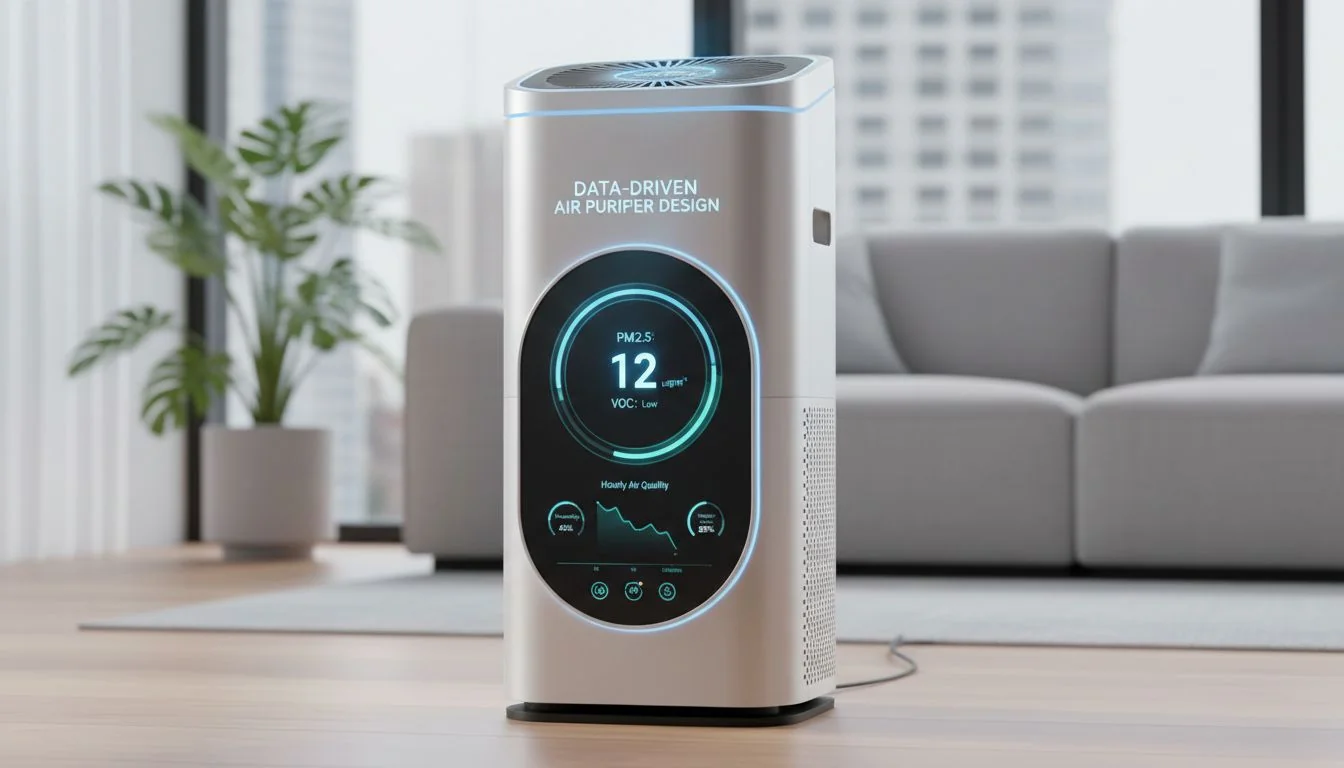
modern air purifier with digital display showing air quality data

You design a beautiful plastic shell for an air purifier, but the user hides it in a corner. They turn it on once and forget it exists. This is a failure of engagement, not just aesthetics.

Data-driven air purifiers1 use sensors and connectivity to transform a simple fan into an intelligent health monitor. By visualizing invisible threats and tracking performance history, these devices shift from passive hardware to active retention engines that keep users engaged and safe.
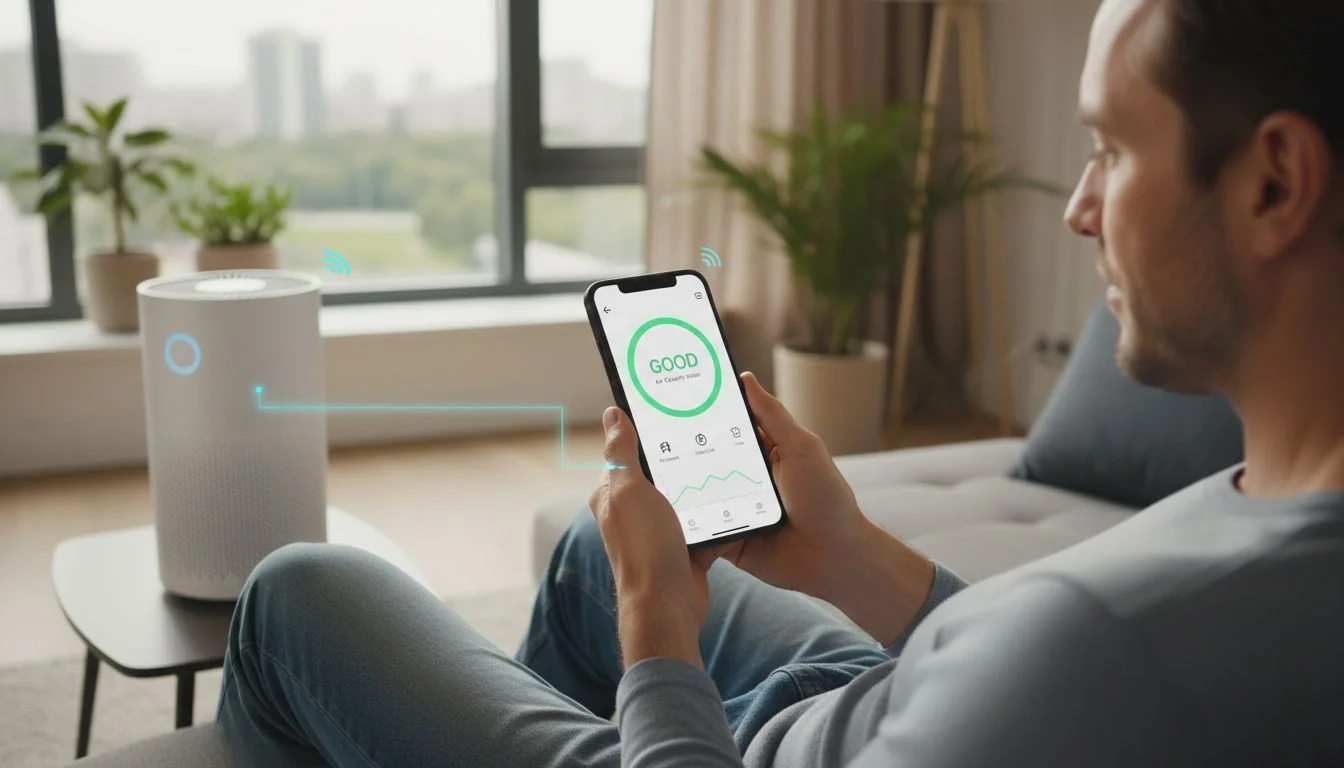
user looking at smartphone app connected to air purifier

We need to stop thinking about plastic parts and start thinking about the information those parts deliver. Let me explain how we change the mold.

The global smart air purifier market is expected to grow significantly due to rising pollution awareness.Verdadero

Market research indicates a strong compound annual growth rate for connected air treatment devices.

Users prefer devices without screens to save energy.Falso

Data shows users prefer visual feedback to confirm the device is actually working.

Why Must We Shift From Moving Air to Managing Data?

Hardware is a one-time sale that eventually becomes a commodity. If you only sell the plastic box and the motor, your relationship with the customer ends the moment they leave the store.

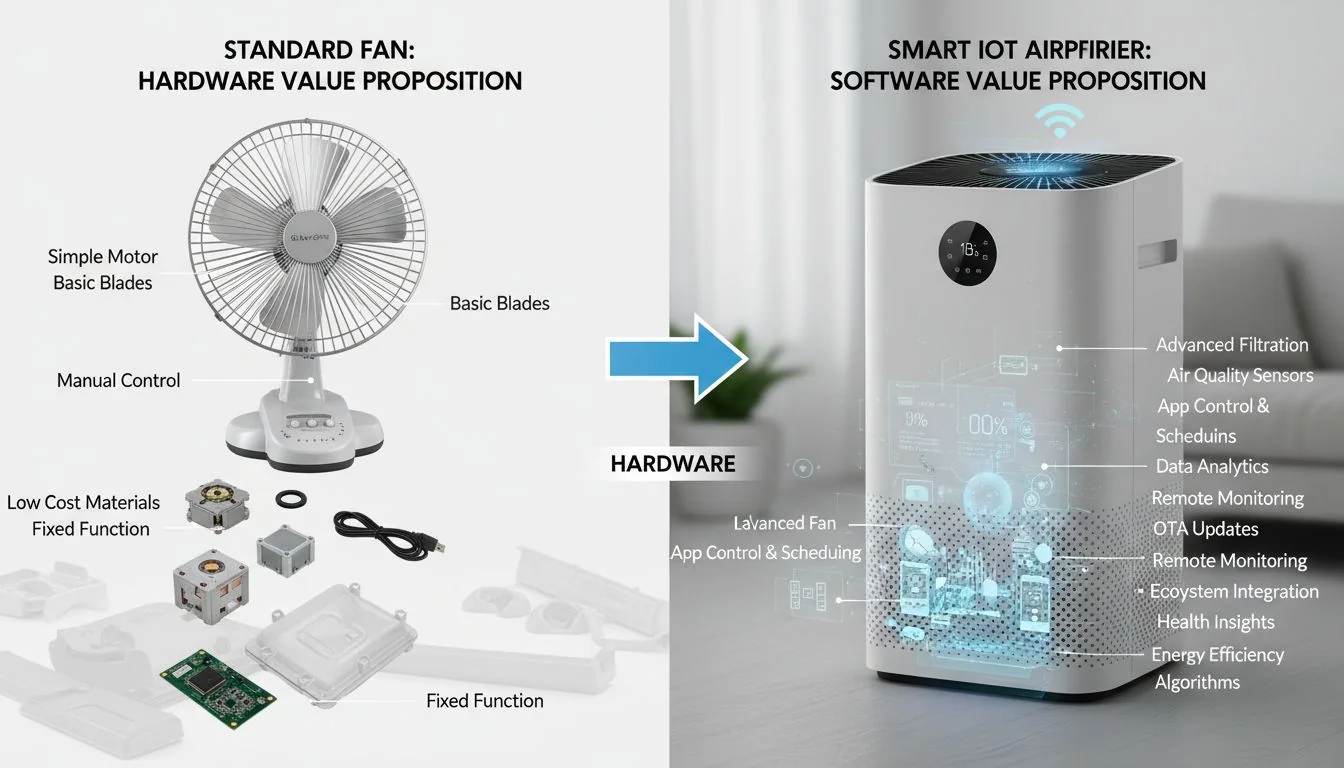
The shift to managing data turns a low-margin appliance into a high-engagement platform. By integrating IoT sensors2, we create a "Retention Engine" that keeps the brand relevant in the user's daily life.
comparison of standard fan vs smart iot air purifier

I have seen many mold clients struggle because they only focus on the physical product. They perfect the injection molding, but they ignore the software. In the world of modern appliances, data is the real product. Hardware is just the delivery mechanism. When we design for Hisoair, we position the IoT platform as the core value.

Think about it this way. A user buys a purifier once every five years. But they check their phone fifty times a day. If your device connects to an app that shows an "Air Quality History3" graph, the user is engaging with your brand every single day. They are not just buying a fan; they are buying peace of mind.

This changes how we design the physical unit. We need to make space for high-quality sensors. We need to ensure the Wi-Fi module has a clear signal path through the plastic housing. We are not just moving air anymore; we are capturing and visualizing data.

Característica Old Approach (Moving Air) New Approach (Managing Data)
Función principal Filter dust Monitor and improve health
User Interaction On/Off Switch Daily App Check-ins
Value Source Hardware margins Long-term retention
Design Focus Airflow dynamics Sensor integration & UI

App engagement rates correlate directly with brand loyalty.Verdadero

Frequent digital interaction keeps the brand top-of-mind for future purchases.

Hardware sales alone provide sufficient long-term revenue.Falso

Without recurring revenue or engagement, hardware businesses face stiff price competition.

How Does Visual Data Build Trust With Users?

The biggest problem with clean air is that you cannot see it. Users often wonder if the machine is actually doing anything, which leads to them turning it off.

Visual data4 bridges this gap by making the invisible visible, acting as a "truth teller" in the room. When users see the numbers change, they trust the device.
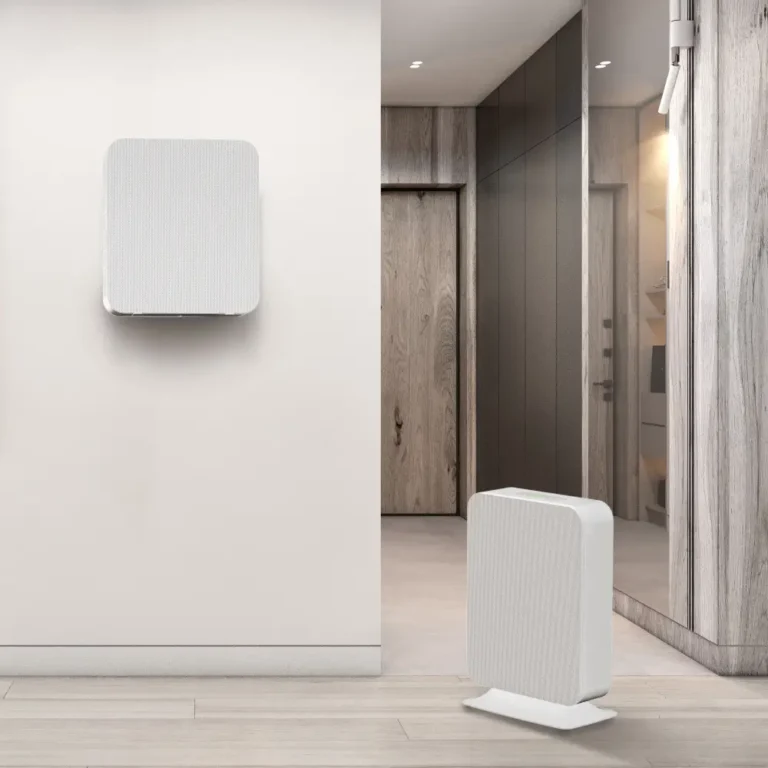
wall mounted air purifier with eye level screen

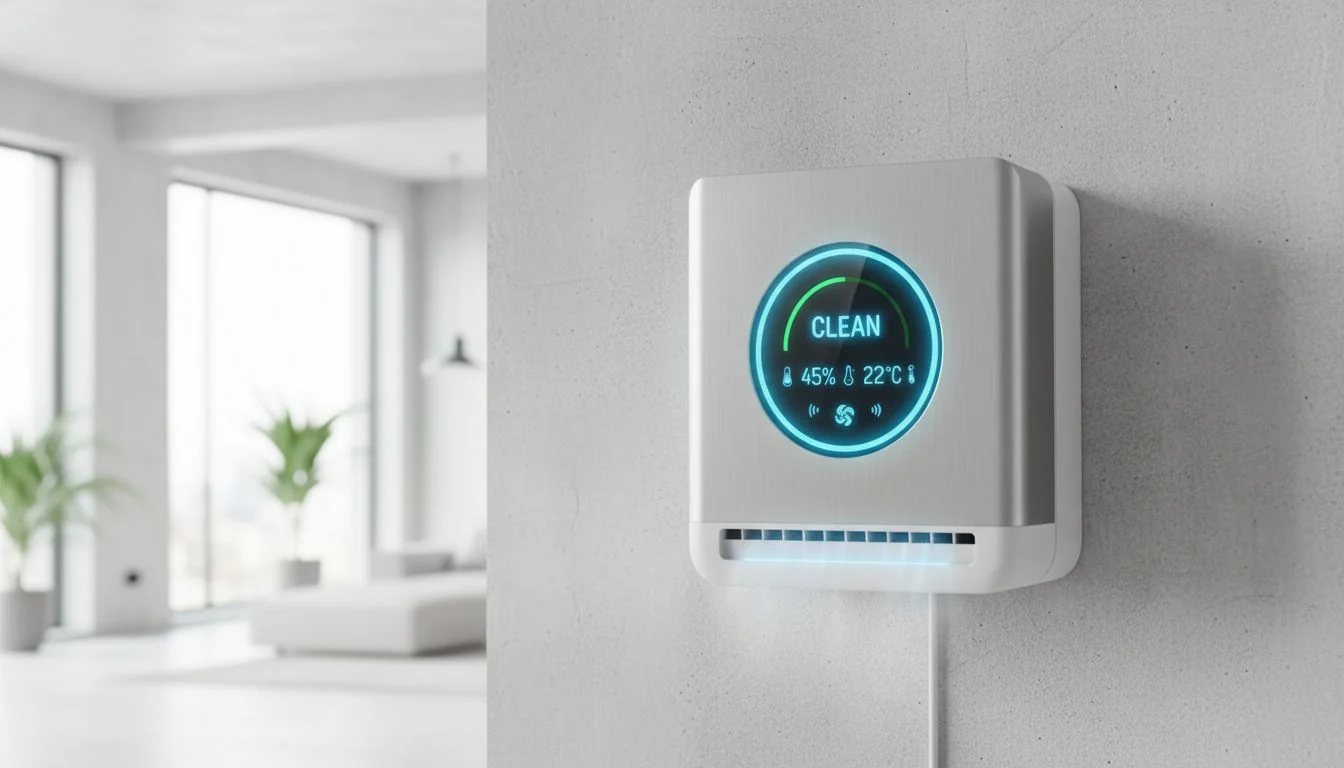
This brings me to a specific design argument I call the "Eye-Level" argument. Most air purifiers are floor units. They sit near the ground. If there is a screen, you have to bend down to see it. This is bad ergonomics and bad data presentation. Data is useless if it is physically hard to access.

We should look at wall-mounted units differently. Think about a thermostat or a wall clock. They are placed at eye level for a reason. They are the central information hubs of a room. By designing the purifier to mount on the wall with a clear, forward-facing display, we elevate its status. It becomes the authority on the room's health.

From a mold design perspective, this presents challenges. We need to manage the weight distribution so it hangs safely. We need to route power cables cleanly. But the payoff is huge. When the screen is at eye level, the user sees the air quality reading every time they walk by. It constantly reinforces the value of the product. It proves that the air was dirty, and now it is clean. That visual confirmation builds massive trust.

Wall-mounted displays increase the frequency of user checks.Verdadero

Placing data in the natural line of sight encourages passive monitoring.

Floor units provide better visibility for data displays.Falso

Floor units require intentional physical effort to read, reducing engagement.

Can Gamification Drive Higher Usage and Sales?

People love to track their progress. We see this with fitness trackers where users are obsessed with "closing their rings." We can apply this same psychology to air purification.

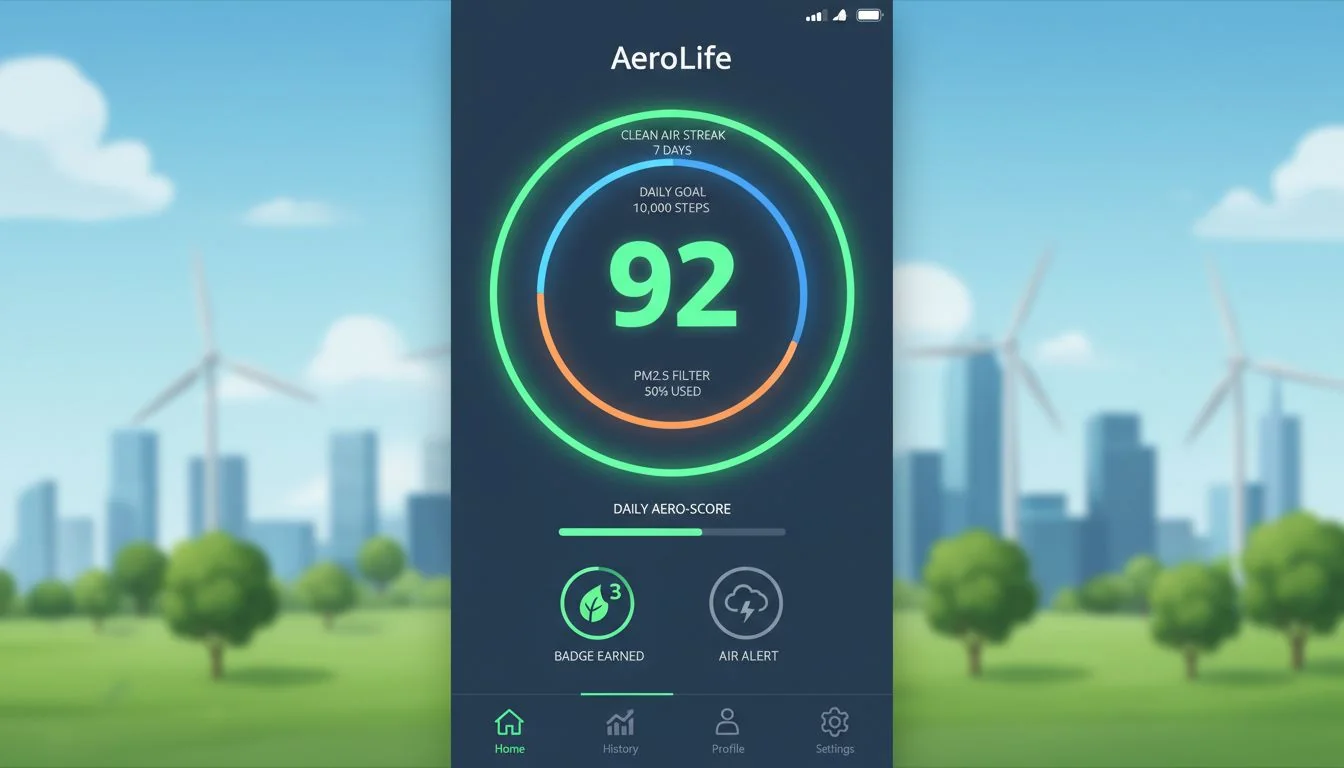
Gamification5 features, like a "Daily Clean Air Score," encourage users to keep the device running longer to achieve a perfect rating.
app interface showing daily clean air score and rings

This is where design meets psychology. If we simply give a raw number, like "PM2.5 is 15," it might not mean much to the average user. But if we give them a green ring that closes when the air is clean for 24 hours, they will strive to keep that ring closed.

I call this the "Gamification of Air." We can pitch features like a "Toxins Removed Tracker." It shows the user exactly how much pollution the machine has captured this week. This makes the user feel accomplished. It validates their purchase.

But here is the business secret: this also drives sales. To get a high score, the user must keep the machine running. They cannot turn it off. When the machine runs more, the filters load up with dust faster. This means they need to buy replacement filters sooner.

As designers, we need to think about the UI on the physical device too. Maybe we add a simple LED ring on the plastic housing that mimics the app. It gives instant gratification. It turns a boring appliance into an interactive game where the prize is better health.

Gamification Element Beneficio para el usuario Business Benefit
Daily Score Motivation to keep air clean Increased device runtime
Toxin Tracker Visual proof of value Justifies filter cost
Streaks Habit formation Higher retention

Gamification strategies increase user engagement with non-game apps.Verdadero

Applying game mechanics to utility apps significantly boosts daily active usage.

Running the device longer extends filter life.Falso

Increased runtime accumulates particulate matter faster, requiring more frequent changes.

Why Is Data the Ultimate Compliance Tool for B2B?

For commercial clients like schools and offices, air quality is not just about comfort; it is about liability. They need proof that they are providing a safe environment.

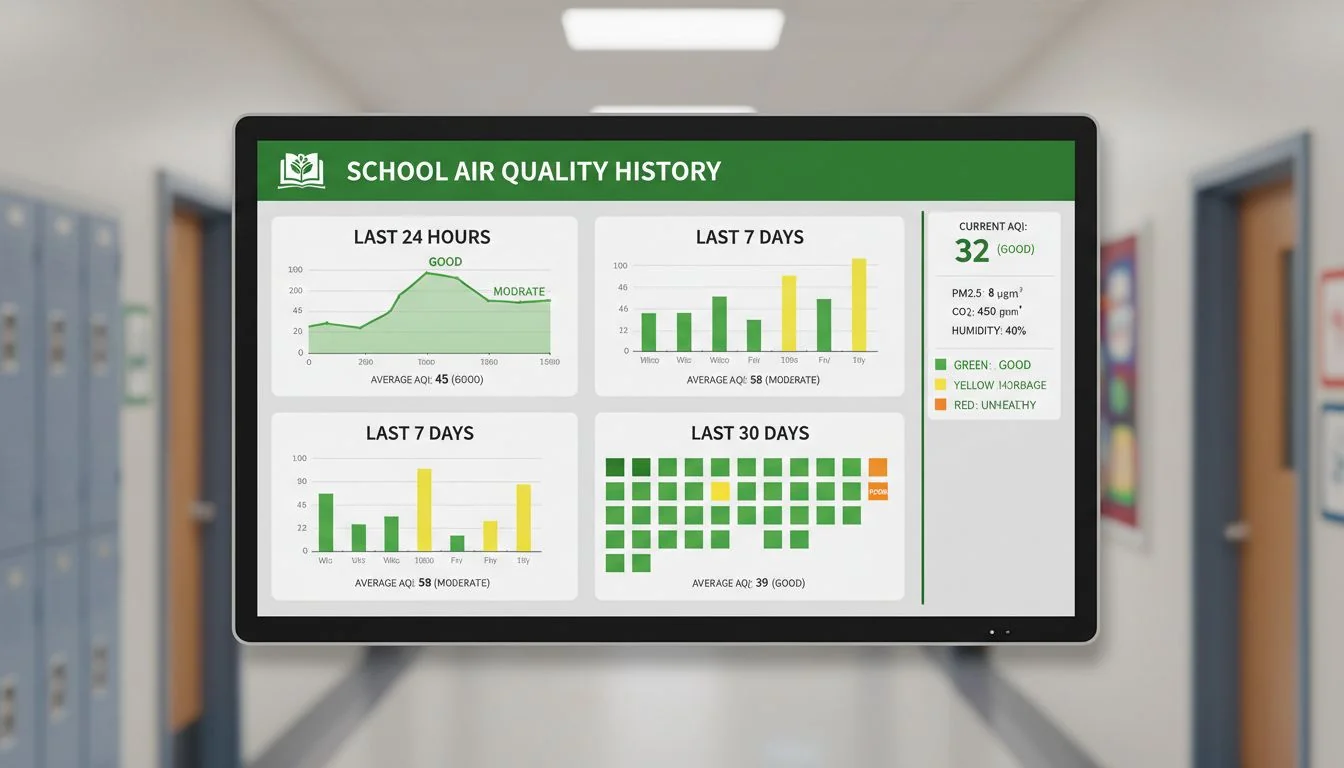
Data serves as a "Digital Paper Trail6." It provides historical records that protect organizations from complaints and lawsuits regarding air safety.
dashboard showing air quality history for a school

I have worked with many clients targeting the B2B sector. The needs here are different from the home user. If a parent complains to a school principal that the classroom air is making their child sick, the school needs an immediate answer. They cannot just say, "We have a purifier." They need proof.

This is where Hisoair’s commercial dashboard becomes a goldmine. It is a feature you can charge a premium for. The system records minute-by-minute air quality data. The facility manager can print out a report proving that on Tuesday at 10:00 AM, the air quality was excellent.

This is "Compliance as a Service7." For the designer, this means the device must be robust. It cannot lose connection. We might need to design the mold to house stronger antennas or even cellular modules so the device does not rely on the school's patchy Wi-Fi. The physical design must scream "reliability." It should look like a piece of infrastructure, not a toy. The data protects the client, so the device must protect the data.

Digital records of air quality can mitigate liability risks.Verdadero

Historical data serves as objective evidence of compliance with safety standards.

Commercial clients prioritize aesthetics over data logging.Falso

Commercial buyers prioritize function, reliability, and reporting capabilities over looks.

Is Data Your Strongest Competitive Moat?

Anyone can reverse-engineer a fan and a filter. It is easy to copy hardware. It is much harder to copy a user's personal data history and a sophisticated software ecosystem.

Positioning yourself as a "Software Partner" creates a barrier to entry. It locks customers into your ecosystem because leaving means losing their data.
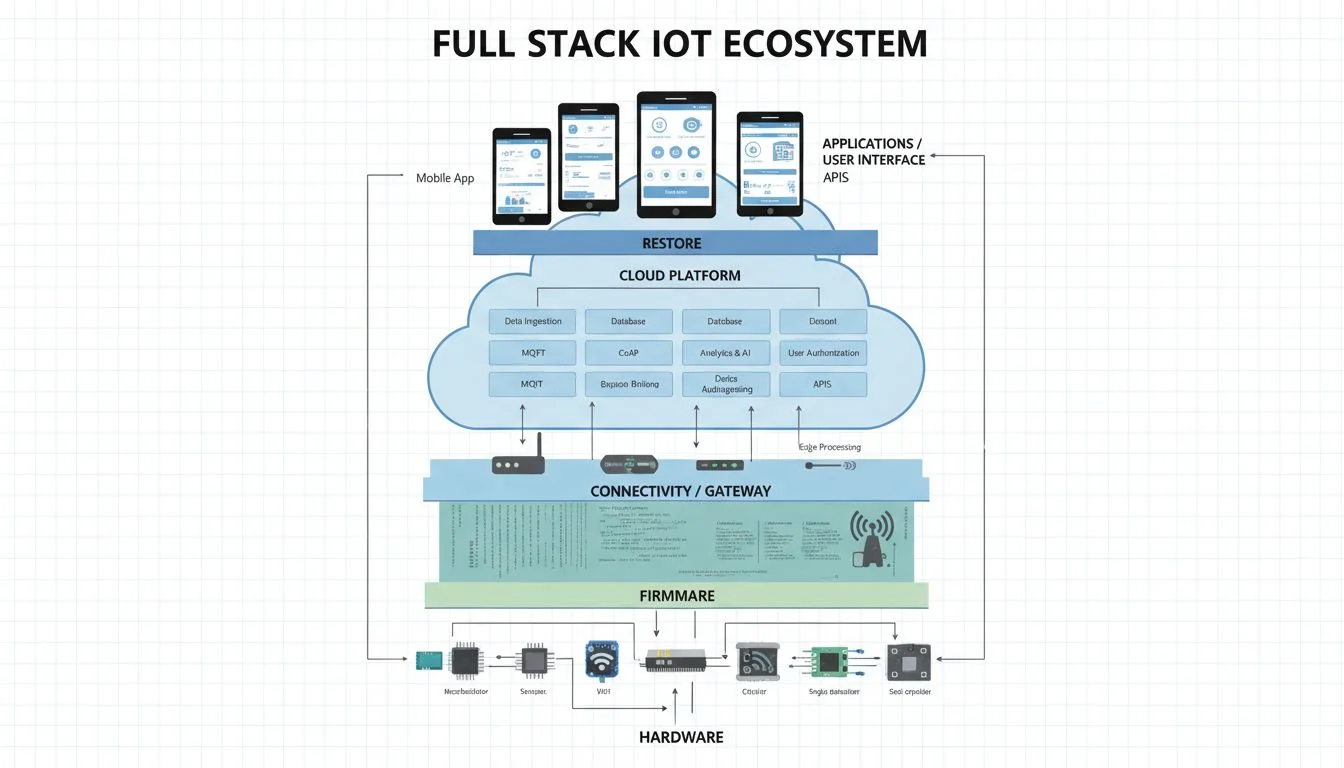
diagram of full stack hardware firmware cloud ecosystem

Many traditional brands fear IoT. They know how to bend metal and mold plastic, but they do not have software engineers. They are afraid of the complexity. This is where we, or a brand like Hisoair, can step in as the "Full-Stack Partner."

We handle the hardware, the firmware, and the cloud. We tell the client: "You don't just get a machine; you get the whole brain." When a competitor tries to copy the product, they can only copy the shell. They cannot copy the months of air quality history the user has stored in the app. They cannot copy the predictive algorithms we have built.

For a designer like Jacky, this means your role is expanding. You are not just designing a standalone object. You are designing a physical terminal for a cloud network. The "stickiness" of the product comes from the software, but the software needs the hardware to exist. By integrating these two perfectly, we build a moat that cheap copycats cannot cross.

Software ecosystems create higher switching costs for users.Verdadero

Users are less likely to switch brands if they lose their historical data and familiar interface.

Hardware patents are the only way to protect a product.Falso

Software integration and data moats offer stronger protection than hardware patents alone.

Conclusión

Data transforms the air purifier from a simple appliance into an essential service. By visualizing the invisible, gamifying usage, and providing compliance protection, we create value that goes far beyond the plastic shell.


References


  1. Explore how data-driven air purifiers enhance user engagement and health monitoring. ↩

  2. Learn about the role of IoT sensors in transforming air purifiers into smart devices. ↩

  3. Understand the significance of tracking air quality history for user engagement. ↩

  4. Understand the importance of visual data in ensuring user trust and satisfaction. ↩

  5. Find out how gamification techniques can motivate users to engage more with their devices. ↩

  6. Learn how digital records can serve as proof of compliance and safety. ↩

  7. Explore how data compliance can protect businesses and enhance air quality assurance. ↩

Comparte:
fundador de hisoair, sr. lee
Alwen Lee, an air purification expert with over 10 years of experience, is a devoted father of two and a passionate traveler, having explored more than 30 countries. With a love for public speaking and swimming, he has dedicated his life to the indoor air quality industry. His mission is to ensure that people around the world enjoy the freedom to breathe clean air and lead happy, healthy lives.

Envíenos un mensaje

Más que leer

Modern living room with a family enjoying a healthy indoor environment monitored by smart devices, natural lighting, and greenery.

After IFA 2026: The Healthy Home Is Moving Beyond Smart Devices

In our previous IFA 2026 column, Air Purification Is Becoming Part of the Healthy-Home Platform, we argued that the next generation of indoor-health products would ...
Noticias
Modern living room and kitchen with smart home air quality devices including an air purifier, humidifier, and water filtration system, connected with visualized blue connectivity lines.

IFA 2026: Air Purification Is Becoming Part of the Healthy-Home Platform

Pre-IFA Industry Perspective | September 4, 2026 This article is based on official announcements and regulatory information available ahead of IFA 2026, which takes place ...
Noticias
Comparison infographic showcasing the differences between carbon block filter and activated carbon fiber. Detailed diagrams illustrate the hierarchical porous structure of the carbon block with long diffusion paths and the open microporous structure of the activated carbon fiber with direct access for PFAS adsorption.

Carbon Block vs. Activated Carbon Fiber (ACF): Matching Media to Target Contaminants

Two carbon media. Same adsorption chemistry. Very different behaviour in a point-of-use cartridge. If you are specifying a water purifier platform for a PFAS-aware market, ...
Noticias
NSF base listing and ANF private-label certification pathway for OEM water filters

What Is an NSF Master Listing? A Guide to Base Listings, ANF Certification and OEM Water Filters

For a brand preparing to launch an OEM water purifier, one of the most common supplier claims is: “We already have an NSF master listing, ...
News, Water Purifiers
Healthy-home brand team reviewing PFAS water filter certification, test data and product engineering

Entering the Water Category Is Easy. Building a Credible PFAS Claim Is Much Harder

For air purification, appliance and healthy-home brands, entering the water category can look surprisingly easy. A company can select an existing undersink system, customize its ...
Noticias
Team in a business meeting discussing a water filtration system with product components and a comparison table displayed on a screen.

5 Leading OEM Water Purifier Manufacturers in China for Private Label Brands

China has thousands of companies selling water filters, reverse osmosis systems and drinking-water appliances. However, only a portion of them are suitable for private-label, OEM ...
Noticias
Contaminant Engineering•3 min read

PFAS Water Filtration Technologies Explained: Carbon, Resin & RO

Key Takeaway:

PFAS reduction depends on the specific compounds present, treatment media, contact time, water chemistry, and system design. Activated carbon, ion exchange, and Reverse Osmosis address PFAS through different mechanisms.

PFAS are a large family of persistent fluorinated compounds that can occur in drinking-water supplies. Their treatment behavior varies significantly by molecular structure, chain length, functional group, concentration, and the chemistry of the source water.

Granular Activated Carbon (GAC) removes PFAS primarily through adsorption. It is generally more effective for many longer-chain PFAS, while shorter-chain compounds tend to break through more quickly. Carbon performance depends on media properties, Empty Bed Contact Time (EBCT), competing organic matter, loading, and replacement frequency.

Ion-exchange resins use charged functional sites to capture many PFAS compounds. Properly selected anion-exchange media can provide high capacity and may perform better than conventional activated carbon for some shorter-chain PFAS, although performance still depends on water chemistry and competing ions.

Reverse Osmosis (RO) uses membrane separation rather than adsorption. Properly designed RO systems can provide broad reduction across many PFAS compounds as well as dissolved salts and other contaminants. Unlike carbon or resin, however, RO also produces a concentrate stream that must be managed.

No single technology should be selected from a PFAS label alone. System design should consider which PFAS compounds are present, their concentrations, required reduction targets, flow rate, media life, and the applicable third-party certification or validation requirements.

HisoAir Water Technical Series
Product Discovery•3 min read

How to Choose an Under-Sink Water Purifier for Modern Kitchens

Key Takeaway:

Match the treatment technology to your water quality first, then evaluate cabinet space, faucet configuration, flow rate, drain and power requirements, and filter replacement needs.

Choosing an under-sink water purifier starts with water chemistry. Carbon filtration is well suited to chlorine, taste, odor, and many organic contaminants, while Reverse Osmosis is more appropriate when dissolved salts, fluoride, nitrates, or broader dissolved contaminants need to be reduced.

For compact kitchens, tankless RO systems eliminate the conventional storage tank and can significantly reduce the space required under the sink. However, membrane capacity stated in GPD does not directly equal faucet flow. When comparing systems, check the actual dispensing flow rate, inlet-pressure requirement, recovery ratio, and whether a booster pump is required.

Installation architecture also matters. Many RO systems require a drain connection, electrical power, and either a dedicated drinking-water faucet or a compatible multi-function faucet. High-flow carbon systems can often connect directly to the existing cold-water line with a simpler installation, but pressure drop and available faucet flow should still be verified.

RO also removes much of the naturally occurring dissolved mineral content. Where taste or mineral balance is a priority, a post-RO remineralization stage can be added. Filter life should be evaluated by both rated capacity and local water quality rather than replacement time alone.

The right system is therefore not simply the smallest or highest-GPD model. It is the configuration that matches the target contaminants, available cabinet space, desired faucet setup, peak dispensing demand, and maintenance expectations.

HisoAir Water Technical Series
Water Quality•2 min read

What Does TDS Mean in Drinking Water? Measurement vs Contaminant Reality

Key Takeaway:

A TDS meter estimates the overall concentration of dissolved ionic substances from electrical conductivity. It cannot identify specific contaminants or determine whether water is chemically safe.

Total Dissolved Solids (TDS) refers to the combined concentration of dissolved substances in water. Most handheld TDS meters do not measure TDS directly. Instead, they measure electrical conductivity (EC) and convert that reading into an estimated parts-per-million (ppm) value.

This means a TDS reading can indicate how much dissolved ionic material is present, but not what that material actually is. Calcium, magnesium, sodium, nitrates, and other dissolved ions can all contribute to conductivity, yet a simple TDS meter cannot distinguish between them.

TDS meters are also not suitable for detecting trace contaminants such as PFAS, many VOCs, pesticides, pharmaceuticals, or disinfection byproducts. These substances may be present at concentrations far below the level needed to noticeably change electrical conductivity.

A low TDS reading therefore does not guarantee safe drinking water, and a higher TDS reading does not automatically indicate contamination. Water-treatment decisions should be based on laboratory testing for specific contaminants of concern rather than TDS alone.

HisoAir Water Technical Series
Technology Selection•2 min read

RO vs UF Water Filtration: Understanding Pore Sizes & Dissolved Minerals

Key Takeaway:

Ultrafiltration can reduce bacteria, turbidity, and suspended particles while retaining most naturally occurring dissolved minerals. Reverse Osmosis provides much broader reduction of dissolved salts and smaller contaminants.

Ultrafiltration (UF) typically uses hollow-fiber membranes with pore sizes in the approximate 0.01–0.1 micron range. These membranes physically retain turbidity, suspended solids, colloids, and many microorganisms while allowing dissolved minerals and salts to remain in the water.

Reverse Osmosis (RO) operates at a much finer separation level. Unlike UF, RO can substantially reduce dissolved ions such as sodium, calcium, fluoride, nitrates, and other contributors to total dissolved solids (TDS). This makes RO more suitable when dissolved-salt reduction is a primary treatment objective.

UF generally requires less system pressure and produces little or no continuous concentrate stream in many point-of-use configurations. RO typically requires greater pressure and produces a reject-water stream, but delivers broader contaminant reduction.

For water with acceptable TDS and mineral content, UF can be a simpler mineral-retaining treatment option. Where dissolved salts, fluoride, nitrates, or broader dissolved contaminants are a concern, RO is generally the more appropriate technology.

HisoAir Water Technical Series
Technology Selection•4 min read

Carbon Block vs Reverse Osmosis: Which Fits Your Need?

Key Takeaway:

Choose RO for dissolved inorganic salts and heavy metals; choose Carbon Block for chemical taste/odor, no wastewater, and high line-pressure flow.

Reverse Osmosis (RO) and Carbon Block filtration represent two fundamentally different treatment methods: membrane separation and adsorption. Understanding these differences helps determine which technology is better suited to a specific water-quality requirement.

Reverse Osmosis uses a semi-permeable membrane with pore sizes of approximately 0.0001 microns. It can significantly reduce dissolved inorganic contaminants such as TDS, fluoride, nitrates, and certain heavy metals. Because water must be forced through the membrane, RO systems require sufficient pressure or a booster pump and generate a concentrated wastewater stream.

Carbon Block filtration relies primarily on adsorption through compressed activated carbon, commonly with nominal pore sizes around 0.5–5 microns. It is highly effective for chlorine, chloramines, VOCs, taste, and odor, while allowing substantially higher direct-flow rates without producing wastewater.

From an operating perspective, Carbon Block systems are generally simpler, require less energy, and avoid the water loss associated with RO. RO involves higher system complexity and operating cost, but provides substantially broader reduction of dissolved contaminants that Carbon Block alone cannot address.

HisoAir Water Technical Series

SOLICITAR PRESUPUESTO