

Se abre en una pestaña nueva
Soluciones innovadoras para la calidad del aire

The Essential Guide to US Air Purifier Manufacturers: A 2026 Market Perspective

In an era where calidad del aire is a growing global concern, the demand for effective air purification solutions has never been more critical. With millions worldwide suffering from the adverse effects of contaminación atmosférica, purificadores de aire have transitioned from luxury items to essential household and commercial appliances. These devices play a vital role in removing contaminants, allergens, and pollutants, thereby safeguarding public health and improving overall well-being. This comprehensive guide delves into the leading fabricantes de purificadores de aire in the United States, offering insights into their contributions to a cleaner, healthier environment.

The Thriving US Air Purifier Market: Trends and Growth

En US air purifier market is experiencing robust growth, driven by increasing awareness of indoor air quality, rising prevalence of respiratory conditions, and technological advancements. According to recent market analyses, the U.S. air purifier market size was estimated at approximately $4.5 billion USD in 2024 and is projected to expand significantly. Experts forecast a Compound Annual Growth Rate (CAGR) of around 7.2% from 2025 to 2030, with the market expected to reach an estimated $6.8 billion USD by 20301. This upward trajectory underscores the sustained demand and the critical role these manufacturers play in addressing public health needs.

Factors contributing to this growth include:

  • Increased Health Awareness: A heightened understanding of the link between air quality and health, particularly post-pandemic, has spurred consumer interest.
  • Rising Pollution Levels: Both outdoor and indoor pollution, stemming from industrial emissions, wildfires, and household chemicals, necessitate effective filtration.
  • Allergy and Asthma Prevalence: A growing number of individuals suffering from allergies and asthma seek purificadores de aire to alleviate symptoms.
  • Technological Innovations: Advancements in filtration technologies, smart features, and energy efficiency are making purificadores de aire more appealing and accessible.
ha 1341 6

This dynamic market landscape presents significant opportunities for both established players and emerging innovators. Understanding the key manufacturers and their offerings is crucial for consumers, businesses, and distributors alike.

Leading Air Purifier Manufacturers in the USA

The following companies represent some of the most influential and innovative fabricantes de purificadores de aire in the United States. Their commitment to research, development, and quality has positioned them as leaders in the industry.

1. Honeywell International Inc.

Logotipo de Honeywell - Líder en soluciones de filtración y purificación del aire

Honeywell International Inc., a global conglomerate with a legacy spanning over a century since its inception in 1906, is a prominent name across various industries, including aerospace, software, healthcare, and home products. Their extensive experience and commitment to innovation are reflected in their impressive portfolio of over 35,000 patented designs.

In the realm of purificación del aire, Honeywell is renowned for integrating advanced Filtros HEPA into many of its products. HEPA (aire particulado de alta eficiencia) filters are a cornerstone of modern purificación del aire, capable of capturing 99.97% of airborne particles 0.3 microns in size, including dust, pollen, mold spores, and pet dander2. Honeywell's widespread distribution, including a robust e-commerce platform, makes their productos de purificación del aire readily accessible to a broad consumer base.

Key Offerings: Honeywell's product range extends beyond purificadores de aire to include fans, heaters, filters, and humidifiers, offering comprehensive indoor air quality solutions.

2. Austin Air Systems

Established over three decades ago, Austin Air Systems has demonstrated remarkable growth, evolving from a modest operation to a manufacturer with a substantial 480,000 square-foot production facility. Based in Buffalo, NY, Austin Air Systems is not only a significant player in the US market but also a well-recognized exporter to over a hundred countries, including Canada, China, Korea, Malaysia, and Israel.

Austin Air Systems prides itself on its robust air purification technology, which boasts a particle removal rate of 99.97%. This efficacy has been independently verified by reputable institutions such as Battelle Laboratories and tested by Johns Hopkins University, underscoring the reliability and performance of their purificadores de aire in critical environments.

Key Offerings: Their primary focus is on purificadores de aire y air filters, emphasizing durable construction and long-lasting filtration systems designed for comprehensive air cleaning.

3. Oransi LLC

Logotipo de Oransi LLC

Founded in 2009, Oransi LLC has quickly established itself as a reputable fabricante de purificadores de aire known for its energy-efficient products. As an Energy Star partner, Oransi is committed to producing appliances that not only effectively purify air but also minimize energy consumption, aligning with growing consumer demand for sustainable solutions3. While Oransi develops its proprietary HEPA technology in the USA, it sources product components from Germany and China, leveraging global expertise to deliver high-quality products.

One of Oransi's distinctive initiatives is its AirLift program, a testament to their corporate social responsibility. This program is dedicated to assisting individuals with asthma and similar respiratory ailments by facilitating access to clean air, healthcare, and educational resources, highlighting their commitment beyond commercial interests.

Key Offerings: Oransi specializes in purificadores de aire y filtros de repuesto, focusing on advanced filtration and user-friendly designs.

4. Silicon Valley Air Expert Inc. (Airdog)

airdog logo

Silicon Valley Air Expert Inc., widely recognized by its brand Airdog, is a California-based manufacturer that has made significant strides in air purification technology. With a vast production facility exceeding 100,000 square meters, Airdog is a testament to large-scale manufacturing capabilities. The company holds numerous globally recognized certifications, including CE, ROHS, TUV, ISO 9001:2015, and ISO 14001:2015, affirming their adherence to international quality and environmental management standards4. Airdog has also secured over a hundred patents for its innovative tecnologías de purificación del aire, particularly its TPA® (Two-Pole Active) filtration technology, which offers a washable and reusable filter alternative to traditional HEPA filters5.

Key Offerings: Más allá de purificadores de aire, Airdog's product line includes fans, air coolers, humidifiers, dehumidifiers, and electric heaters, providing a diverse range of home comfort solutions.

5. Molekule

Logotipo de Molekule

Molekule stands out in the air purifier market for its pioneering PECO (Photo Electrochemical Oxidation) technology. Unlike traditional Filtros HEPA that capture pollutants, PECO technology is designed to destroy them at a molecular level, including viruses, bacteria, mold, allergens, and volatile organic compounds (VOCs)6. This innovative approach has positioned Molekule as a leader in advanced purificación del aire, particularly for those seeking to eliminate a broader spectrum of airborne contaminants.

Molekule's commitment to scientific validation and cutting-edge technology has earned them recognition and a dedicated customer base. Their products are often characterized by sleek design and smart features, appealing to a modern consumer seeking both efficacy and aesthetics.

Key Offerings: Molekule primarily focuses on a range of purificadores de aire utilizing their proprietary PECO technology, offering solutions for various room sizes and needs.

6. HisoAir

hisoair logo hd

As a dedicated provider of innovative air quality solutions, HisoAir is committed to delivering advanced productos de purificación del aire that meet the evolving needs of global markets, including the United States. With a focus on cutting-edge technology and user-centric design, HisoAir aims to enhance indoor environments by effectively removing airborne contaminants and promoting healthier living spaces. Our comprehensive range of purificadores de aire is designed to address various air quality challenges, from common allergens and dust to more complex pollutants, ensuring a cleaner and safer atmosphere for homes and businesses alike. We invite you to explore our solutions and discover how HisoAir can contribute to your well-being. For inquiries regarding our products and distribution in the US market, please visit our official website HisoAir.com7.

Key Offerings: HisoAir offers a diverse portfolio of purificadores de aire and related air quality solutions, engineered for optimal performance and reliability.

Conclusion: Choosing the Right Air Purifier for a Healthier Future

En US air purifier market is a dynamic and essential sector, continually evolving to meet the demands for cleaner indoor air. The manufacturers highlighted in this guide—Honeywell International Inc., Austin Air Systems, Oransi LLC, Silicon Valley Air Expert Inc. (Airdog), Molekuley HisoAir—represent the forefront of innovation and quality in this industry. Each company brings unique strengths, from long-standing expertise and diverse product portfolios to specialized filtration technologies and strong commitments to energy efficiency and social responsibility.

When selecting an purificador de aire, it is crucial to consider factors such as the size of the space, specific air quality concerns (e.g., allergies, pet dander, VOCs), filtration technology, energy efficiency, and maintenance requirements. By understanding the offerings of these leading manufacturers and the broader market trends, consumers and businesses can make informed decisions to invest in air purification solutions that contribute to a healthier and more comfortable living and working environment.

Notas a pie de página


  1. Learn more about the projected growth of the US air purifier market: U.S. Air Purifier Market Size & Share | Industry Report, 2030 ↩

  2. Understand how HEPA filters work: How HEPA Filters Work - EPA ↩

  3. Explore Energy Star certified products: ENERGY STAR Certified Air Purifiers ↩

  4. Learn about ISO 9001 and ISO 14001 certifications: ISO 9001 - Quality management y ISO 14001 - Environmental management ↩

  5. Discover Airdog's TPA technology: Airdog TPA Technology ↩

  6. Understand Molekule's PECO technology: How PECO Technology Works - Molekule ↩

  7. Visit HisoAir's official website for more information: HisoAir.com ↩

Comparte:
fundador de hisoair, sr. lee
Alwen Lee, an air purification expert with over 10 years of experience, is a devoted father of two and a passionate traveler, having explored more than 30 countries. With a love for public speaking and swimming, he has dedicated his life to the indoor air quality industry. His mission is to ensure that people around the world enjoy the freedom to breathe clean air and lead happy, healthy lives.

Envíenos un mensaje

Más que leer

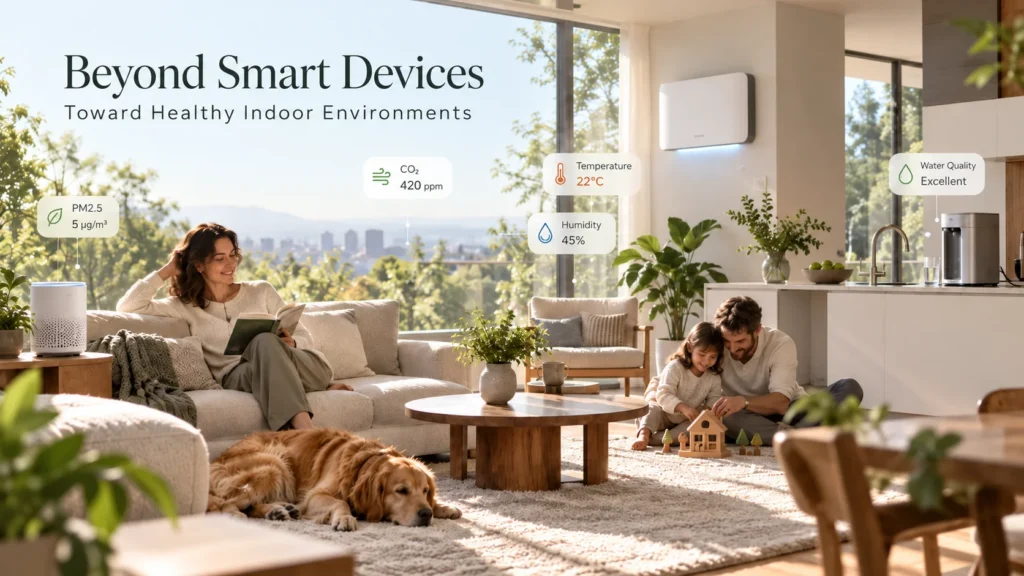
Modern living room with a family enjoying a healthy indoor environment monitored by smart devices, natural lighting, and greenery.

After IFA 2026: The Healthy Home Is Moving Beyond Smart Devices

In our previous IFA 2026 column, Air Purification Is Becoming Part of the Healthy-Home Platform, we argued that the next generation of indoor-health products would ...
Noticias
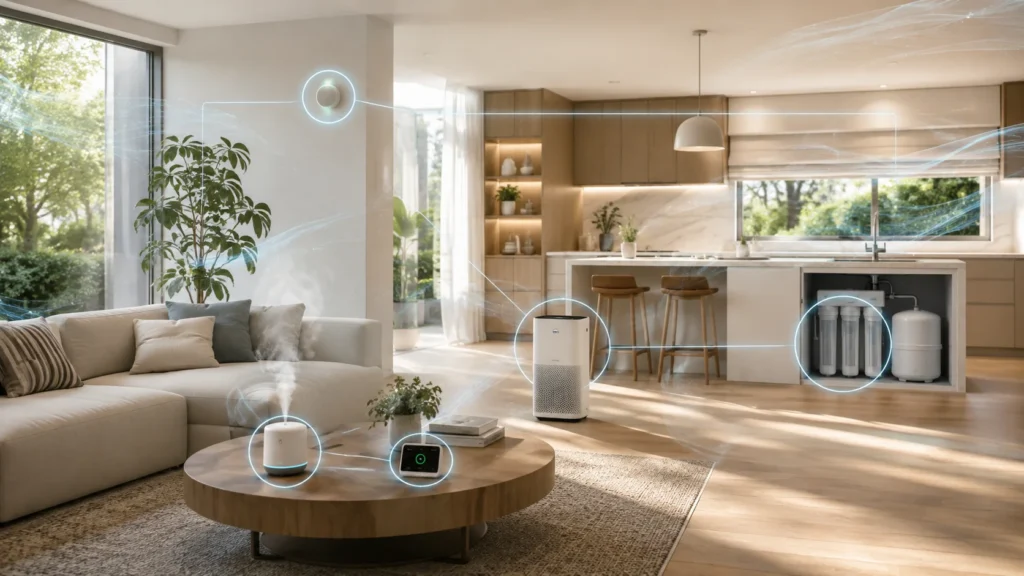
Modern living room and kitchen with smart home air quality devices including an air purifier, humidifier, and water filtration system, connected with visualized blue connectivity lines.

IFA 2026: Air Purification Is Becoming Part of the Healthy-Home Platform

Pre-IFA Industry Perspective | September 4, 2026 This article is based on official announcements and regulatory information available ahead of IFA 2026, which takes place ...
Noticias
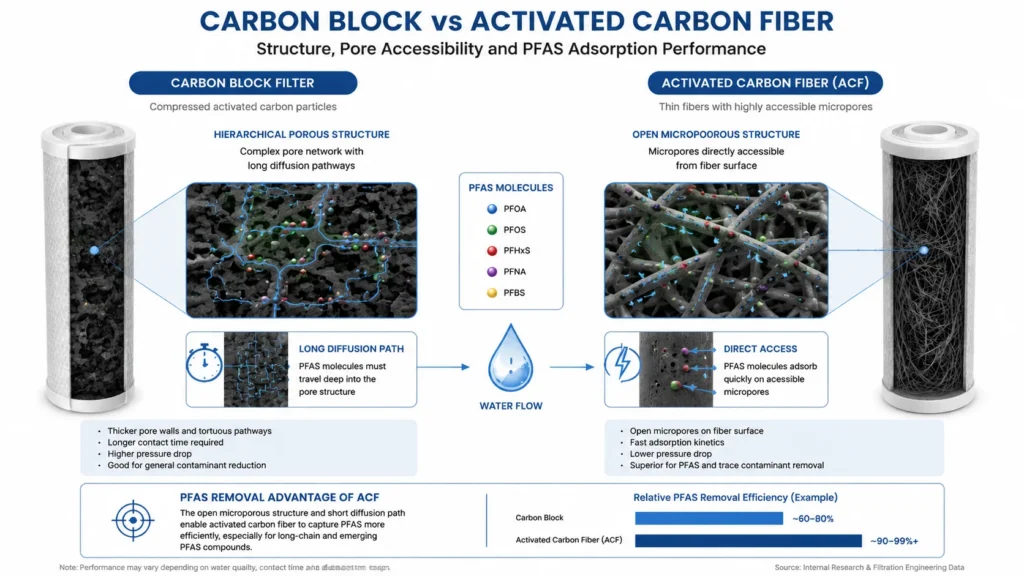
Comparison infographic showcasing the differences between carbon block filter and activated carbon fiber. Detailed diagrams illustrate the hierarchical porous structure of the carbon block with long diffusion paths and the open microporous structure of the activated carbon fiber with direct access for PFAS adsorption.

Carbon Block vs. Activated Carbon Fiber (ACF): Matching Media to Target Contaminants

Two carbon media. Same adsorption chemistry. Very different behaviour in a point-of-use cartridge. If you are specifying a water purifier platform for a PFAS-aware market, ...
Noticias
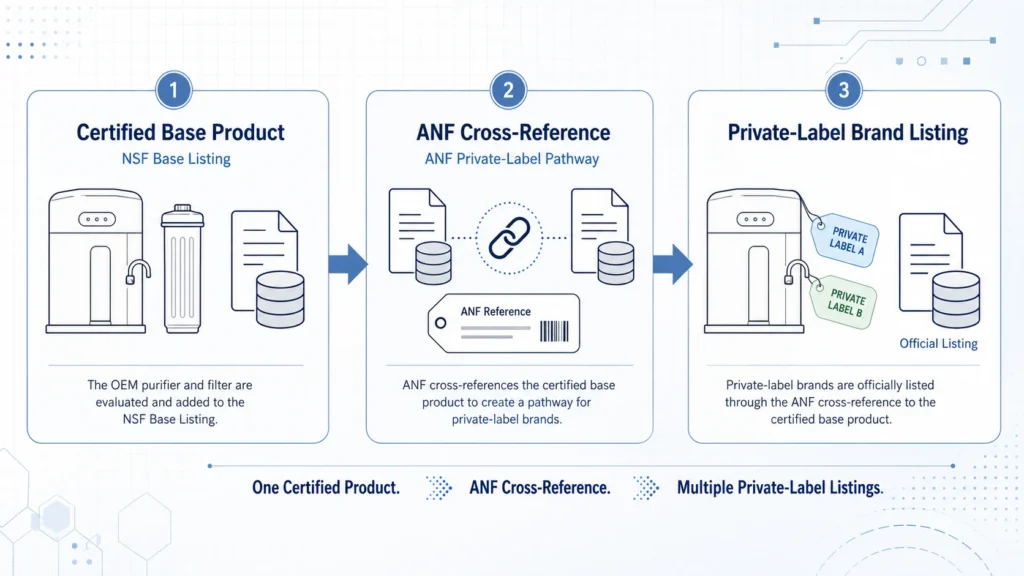
NSF base listing and ANF private-label certification pathway for OEM water filters

What Is an NSF Master Listing? A Guide to Base Listings, ANF Certification and OEM Water Filters

For a brand preparing to launch an OEM water purifier, one of the most common supplier claims is: “We already have an NSF master listing, ...
News, Water Purifiers
Healthy-home brand team reviewing PFAS water filter certification, test data and product engineering

Entering the Water Category Is Easy. Building a Credible PFAS Claim Is Much Harder

For air purification, appliance and healthy-home brands, entering the water category can look surprisingly easy. A company can select an existing undersink system, customize its ...
Noticias
Team in a business meeting discussing a water filtration system with product components and a comparison table displayed on a screen.

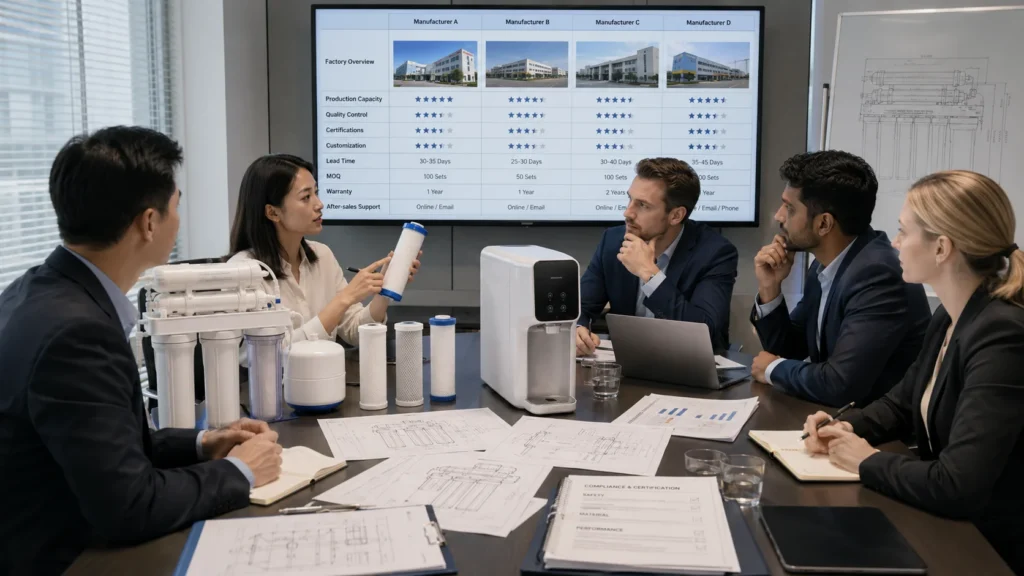
5 Leading OEM Water Purifier Manufacturers in China for Private Label Brands

China has thousands of companies selling water filters, reverse osmosis systems and drinking-water appliances. However, only a portion of them are suitable for private-label, OEM ...
Noticias
Contaminant Engineering•3 min read

PFAS Water Filtration Technologies Explained: Carbon, Resin & RO

Key Takeaway:

PFAS reduction depends on the specific compounds present, treatment media, contact time, water chemistry, and system design. Activated carbon, ion exchange, and Reverse Osmosis address PFAS through different mechanisms.

PFAS are a large family of persistent fluorinated compounds that can occur in drinking-water supplies. Their treatment behavior varies significantly by molecular structure, chain length, functional group, concentration, and the chemistry of the source water.

Granular Activated Carbon (GAC) removes PFAS primarily through adsorption. It is generally more effective for many longer-chain PFAS, while shorter-chain compounds tend to break through more quickly. Carbon performance depends on media properties, Empty Bed Contact Time (EBCT), competing organic matter, loading, and replacement frequency.

Ion-exchange resins use charged functional sites to capture many PFAS compounds. Properly selected anion-exchange media can provide high capacity and may perform better than conventional activated carbon for some shorter-chain PFAS, although performance still depends on water chemistry and competing ions.

Reverse Osmosis (RO) uses membrane separation rather than adsorption. Properly designed RO systems can provide broad reduction across many PFAS compounds as well as dissolved salts and other contaminants. Unlike carbon or resin, however, RO also produces a concentrate stream that must be managed.

No single technology should be selected from a PFAS label alone. System design should consider which PFAS compounds are present, their concentrations, required reduction targets, flow rate, media life, and the applicable third-party certification or validation requirements.

HisoAir Water Technical Series
Product Discovery•3 min read

How to Choose an Under-Sink Water Purifier for Modern Kitchens

Key Takeaway:

Match the treatment technology to your water quality first, then evaluate cabinet space, faucet configuration, flow rate, drain and power requirements, and filter replacement needs.

Choosing an under-sink water purifier starts with water chemistry. Carbon filtration is well suited to chlorine, taste, odor, and many organic contaminants, while Reverse Osmosis is more appropriate when dissolved salts, fluoride, nitrates, or broader dissolved contaminants need to be reduced.

For compact kitchens, tankless RO systems eliminate the conventional storage tank and can significantly reduce the space required under the sink. However, membrane capacity stated in GPD does not directly equal faucet flow. When comparing systems, check the actual dispensing flow rate, inlet-pressure requirement, recovery ratio, and whether a booster pump is required.

Installation architecture also matters. Many RO systems require a drain connection, electrical power, and either a dedicated drinking-water faucet or a compatible multi-function faucet. High-flow carbon systems can often connect directly to the existing cold-water line with a simpler installation, but pressure drop and available faucet flow should still be verified.

RO also removes much of the naturally occurring dissolved mineral content. Where taste or mineral balance is a priority, a post-RO remineralization stage can be added. Filter life should be evaluated by both rated capacity and local water quality rather than replacement time alone.

The right system is therefore not simply the smallest or highest-GPD model. It is the configuration that matches the target contaminants, available cabinet space, desired faucet setup, peak dispensing demand, and maintenance expectations.

HisoAir Water Technical Series
Water Quality•2 min read

What Does TDS Mean in Drinking Water? Measurement vs Contaminant Reality

Key Takeaway:

A TDS meter estimates the overall concentration of dissolved ionic substances from electrical conductivity. It cannot identify specific contaminants or determine whether water is chemically safe.

Total Dissolved Solids (TDS) refers to the combined concentration of dissolved substances in water. Most handheld TDS meters do not measure TDS directly. Instead, they measure electrical conductivity (EC) and convert that reading into an estimated parts-per-million (ppm) value.

This means a TDS reading can indicate how much dissolved ionic material is present, but not what that material actually is. Calcium, magnesium, sodium, nitrates, and other dissolved ions can all contribute to conductivity, yet a simple TDS meter cannot distinguish between them.

TDS meters are also not suitable for detecting trace contaminants such as PFAS, many VOCs, pesticides, pharmaceuticals, or disinfection byproducts. These substances may be present at concentrations far below the level needed to noticeably change electrical conductivity.

A low TDS reading therefore does not guarantee safe drinking water, and a higher TDS reading does not automatically indicate contamination. Water-treatment decisions should be based on laboratory testing for specific contaminants of concern rather than TDS alone.

HisoAir Water Technical Series
Technology Selection•2 min read

RO vs UF Water Filtration: Understanding Pore Sizes & Dissolved Minerals

Key Takeaway:

Ultrafiltration can reduce bacteria, turbidity, and suspended particles while retaining most naturally occurring dissolved minerals. Reverse Osmosis provides much broader reduction of dissolved salts and smaller contaminants.

Ultrafiltration (UF) typically uses hollow-fiber membranes with pore sizes in the approximate 0.01–0.1 micron range. These membranes physically retain turbidity, suspended solids, colloids, and many microorganisms while allowing dissolved minerals and salts to remain in the water.

Reverse Osmosis (RO) operates at a much finer separation level. Unlike UF, RO can substantially reduce dissolved ions such as sodium, calcium, fluoride, nitrates, and other contributors to total dissolved solids (TDS). This makes RO more suitable when dissolved-salt reduction is a primary treatment objective.

UF generally requires less system pressure and produces little or no continuous concentrate stream in many point-of-use configurations. RO typically requires greater pressure and produces a reject-water stream, but delivers broader contaminant reduction.

For water with acceptable TDS and mineral content, UF can be a simpler mineral-retaining treatment option. Where dissolved salts, fluoride, nitrates, or broader dissolved contaminants are a concern, RO is generally the more appropriate technology.

HisoAir Water Technical Series
Technology Selection•4 min read

Carbon Block vs Reverse Osmosis: Which Fits Your Need?

Key Takeaway:

Choose RO for dissolved inorganic salts and heavy metals; choose Carbon Block for chemical taste/odor, no wastewater, and high line-pressure flow.

Reverse Osmosis (RO) and Carbon Block filtration represent two fundamentally different treatment methods: membrane separation and adsorption. Understanding these differences helps determine which technology is better suited to a specific water-quality requirement.

Reverse Osmosis uses a semi-permeable membrane with pore sizes of approximately 0.0001 microns. It can significantly reduce dissolved inorganic contaminants such as TDS, fluoride, nitrates, and certain heavy metals. Because water must be forced through the membrane, RO systems require sufficient pressure or a booster pump and generate a concentrated wastewater stream.

Carbon Block filtration relies primarily on adsorption through compressed activated carbon, commonly with nominal pore sizes around 0.5–5 microns. It is highly effective for chlorine, chloramines, VOCs, taste, and odor, while allowing substantially higher direct-flow rates without producing wastewater.

From an operating perspective, Carbon Block systems are generally simpler, require less energy, and avoid the water loss associated with RO. RO involves higher system complexity and operating cost, but provides substantially broader reduction of dissolved contaminants that Carbon Block alone cannot address.

HisoAir Water Technical Series

SOLICITAR PRESUPUESTO