
As someone deeply immersed in the indoor air quality (IAQ) industry, I've observed countless brands rise and evolve, each with its unique story of production, market strategy, and product philosophy. Today, I want to shed light on a prominent name in the commercial air purification sector: Fellowes. Specifically, we'll delve into a question many have pondered: Where are Fellowes wall-mounted air purifiers manufactured? And more importantly, what does this mean for their market position, pricing, and overall value proposition, especially when compared to dedicated OEM/ODM manufacturers like HisoAir?
Understanding the manufacturing origins of any product offers crucial insights into its cost structure, quality control, and strategic market placement. For a brand like Fellowes, known for its extensive range of office supplies, their foray into air purification, particularly wall-mounted units, presents an interesting case study. Let's embark on this journey to uncover the facts and provide a comprehensive analysis.
The Manufacturing Hub: Fellowes Wall-Mounted Air Purifiers and Their Origins
When we talk about the manufacturing of Fellowes wall-mounted air purifiers, the primary location that comes to mind is Suzhou City, Jiangsu Province, China. This region is not just a manufacturing base for their air purifiers but also serves as a significant production facility for a wide array of Fellowes office supplies. This centralized production strategy allows Fellowes to leverage existing infrastructure and supply chains, which can lead to cost efficiencies in manufacturing. The presence of a robust manufacturing ecosystem in China, particularly in areas like Suzhou, provides access to skilled labor, established supply networks, and competitive production costs.
Fellowes, as a global brand, maintains a strong presence with dedicated teams in both the US and China, alongside a comprehensive global distribution network. This dual-continent operational structure is typical for many international companies seeking to optimize both production and market reach. However, the manufacturing origin in China, while offering cost advantages, raises questions about the final retail price point for a premium commercial brand like Fellowes. I've observed that despite the relatively lower manufacturing costs in China, Fellowes wall-mounted air purifiers are retailed at a significantly high price. This pricing strategy, in my opinion, may not always be reasonable or beneficial for the end customers, especially considering the production economics.
This phenomenon is not unique to Fellowes. Many brands that manufacture in regions with lower production costs often position their products at a premium in target markets, capitalizing on brand perception and distribution channels. However, for the discerning commercial buyer, understanding the true cost-to-value proposition becomes critical. The high retail price point, when juxtaposed with the manufacturing location, suggests a substantial margin, which might be justifiable through brand equity, R&D, and extensive distribution, but it's a factor that potential customers should consider when evaluating their investment in air purification solutions.

Fellowes in the Commercial Air Purification Landscape: A Leading Brand
Fellowes has firmly established itself as a leading brand in the commercial air purifier sector, particularly within the office environment. Their strong market presence is a testament to their long-standing reputation in office solutions and their ability to adapt to evolving workplace needs. The demand for robust air purification systems surged dramatically during the COVID-19 pandemic, as businesses sought to create safer indoor environments for their employees and customers. Fellowes, with its existing commercial network and brand recognition, was well-positioned to meet this unprecedented demand. I witnessed firsthand how many businesses, especially in the office sector, invested heavily in air purification solutions during this period, and Fellowes was a significant beneficiary of this trend.
Beyond the pandemic, the increasing frequency and intensity of natural disasters, such as the wildfire seasons in California, have further underscored the critical need for effective indoor air quality management. During these events, outdoor air quality can plummet to hazardous levels, making indoor air purification an absolute necessity. Fellowes wall-mounted air purifiers have been widely adopted in affected regions, providing a crucial line of defense against airborne pollutants and particulate matter. This demonstrates their responsiveness to market needs and their ability to deliver solutions in times of crisis.
However, while Fellowes excels in market penetration and brand recognition, especially in the commercial space, a deeper look into their product performance reveals an interesting dynamic. My insights suggest that despite their strong market position, Fellowes did not OEM (Original Equipment Manufacturer) or ODM (Original Design Manufacturer) from professional air purifier manufacturers. This is a critical point, as it implies that their product development might not be as specialized or optimized for air purification as companies solely focused on this technology. For instance, HisoAir, with its 20 years of experience as an OEM/ODM air purifier manufacturer, brings a level of specialized expertise and performance optimization that might be lacking in a more diversified company like Fellowes.
This distinction is vital for commercial clients who prioritize performance and efficiency. While Fellowes offers a convenient, integrated solution for office environments, the core air purification technology might not be at the cutting edge compared to specialists. This is not to say their products are ineffective, but rather that there might be a trade-off between broad market appeal and specialized performance. For businesses seeking the absolute best in air purification efficacy, exploring options from dedicated air purifier manufacturers becomes a prudent step.
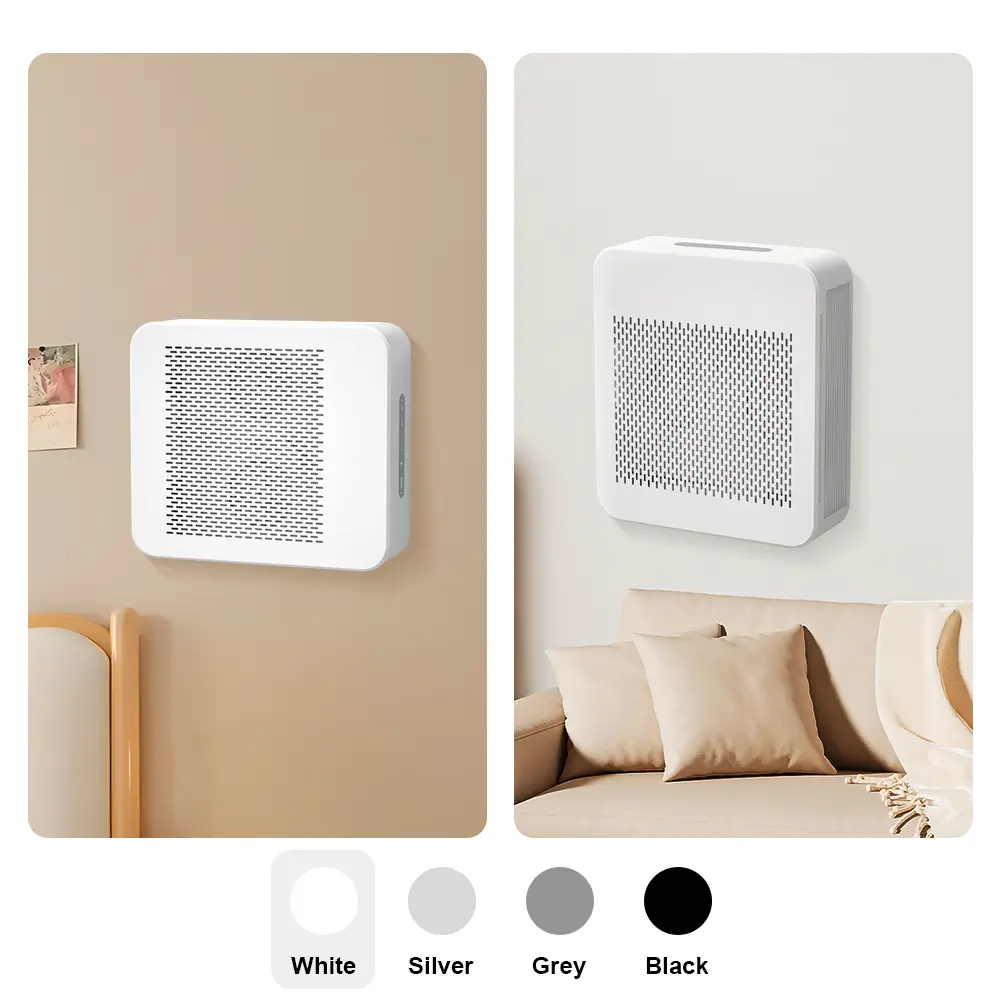
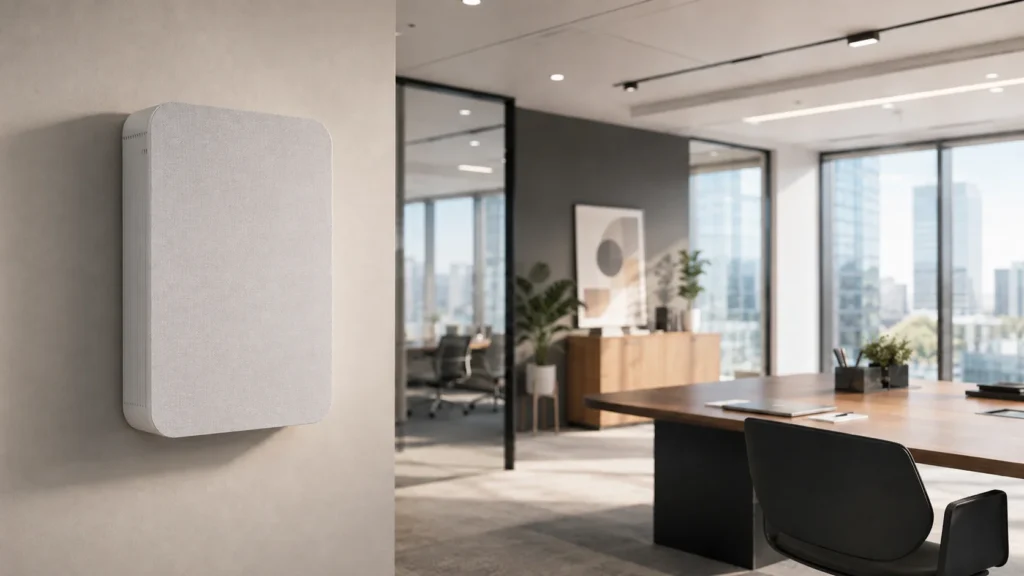
(HisoAir Wall-Mounted Air Purifier with Customer-Customizable Panels/UI Panels)
Feature Set of Fellowes Wall-Mounted Air Purifiers: Innovation Meets Integration
One of the notable aspects of Fellowes wall-mounted air purifiers is their integration of advanced features designed to cater specifically to commercial environments. These devices are not merely air purifiers; they are networked solutions equipped with a suite of sensors that provide valuable data points for commercial customers. I've observed that these units often include VOC (Volatile Organic Compounds) sensors, CO2 (Carbon Dioxide) sensors, occupancy sensors, and pressure sensors. This comprehensive sensor array allows businesses to monitor indoor air quality in real-time, understand occupancy patterns, and potentially optimize ventilation systems based on actual data. This level of data integration is a significant advantage for facility managers and businesses looking to create smarter, healthier, and more energy-efficient spaces.
The ability to network these devices means that a central system can monitor and control multiple units across a large commercial building, providing a holistic view of indoor air quality. This centralized management is crucial for large offices, schools, hospitals, and other commercial establishments where maintaining consistent air quality across various zones is paramount. The data collected from these sensors can be used for various purposes, including compliance reporting, energy management, and even demonstrating a commitment to employee well-being. For instance, real-time CO2 levels can indicate the need for increased ventilation, while occupancy data can help in optimizing HVAC schedules.
However, despite these impressive features and smart integrations, a critical insight I've gathered is that the overall product performance of Fellowes wall-mounted air purifiers may not be as robust as one might expect from a premium commercial brand. This, as I mentioned earlier, stems from the fact that Fellowes did not OEM or ODM from professional air purifier manufacturers. The core competency of Fellowes lies in office solutions, and while they have successfully integrated air purification into their product line, the deep-seated expertise in air purification technology, filtration efficiency, and airflow dynamics might be less pronounced compared to companies whose sole focus is air purification. For example, HisoAir, with its two decades of experience in OEM/ODM air purifier manufacturing, possesses a specialized knowledge base and manufacturing prowess that directly translates into superior product performance.
This difference in core competency can manifest in various aspects, such as CADR (Clean Air Delivery Rate) values, filtration efficiency for ultra-fine particles, noise levels, and overall longevity under continuous commercial use. While Fellowes provides a convenient and feature-rich solution, businesses with stringent air quality requirements or those seeking the highest levels of purification performance might find themselves needing to look beyond general office supply brands to specialized air purification manufacturers.

Fellowes vs. HisoAir: A Comparative Analysis of Wall-Mounted Air Purifiers
When we place Fellowes wall-mounted air purifiers side-by-side with those from HisoAir, a company with 20 years of dedicated OEM/ODM experience in air purification, distinct differences emerge, primarily in their target markets, performance capabilities, and cost structures. This comparison is crucial for businesses and individuals looking to make informed decisions about their air purification investments.
Target Market and Pricing Strategy:
Fellowes wall-mounted air purifiers are predominantly designed for commercial spaces. Their features, such as networked devices and multiple sensors, are tailored for the complexities of office environments, educational institutions, and other large commercial settings. This commercial focus is also reflected in their retail pricing, which, as I've noted, is significantly high. The premium pricing strategy aligns with their brand positioning as a provider of commercial solutions, where factors like brand reputation, integrated features, and established distribution channels often command higher prices. Consequently, Fellowes wall-mounted air purifiers are generally not a viable option for the residential market due to their cost and commercial-centric design.
In stark contrast, HisoAir wall-mounted air purifiers, while capable of serving commercial needs, are also highly suitable for the residential market, particularly for spaces like bedrooms and living rooms. This broader applicability is a direct result of HisoAir's focus on delivering high performance at a lower cost. As a specialized OEM/ODM manufacturer, HisoAir benefits from economies of scale and a deep understanding of air purification technology, allowing them to produce highly efficient units more affordably. This makes HisoAir a compelling choice for residential consumers who prioritize effective air purification without the prohibitive price tag associated with commercial-grade units.
Performance and Specialization:
The performance disparity between Fellowes and HisoAir units largely stems from their core business models. Fellowes, as a diversified office solutions provider, integrates air purification into its broader product portfolio. While their units offer smart features, their core air purification performance may not be optimized to the same extent as a company solely dedicated to air purification. My observation is that Fellowes did not OEM or ODM from professional air purifier manufacturers, which can lead to a gap in specialized performance.
Conversely, HisoAir's 20 years of experience as an OEM/ODM air purifier manufacturer means their entire focus is on perfecting air purification technology. This specialization translates into products with higher performance in terms of CADR, filtration efficiency, and overall air cleaning capabilities. They are experts in designing and manufacturing air purifiers, ensuring that their units deliver superior results for removing pollutants, allergens, and other airborne contaminants. This deep expertise allows HisoAir to offer solutions that are not only more effective but also more cost-efficient, making them a strong contender for both commercial and residential applications where performance is a key consideration.
Table: Comparative Overview - Fellowes vs. HisoAir Wall-Mounted Air Purifiers
| Feature/Aspect | Fellowes Wall-Mounted Air Purifier | HisoAir Wall-Mounted Air Purifier |
|---|---|---|
| Primary Manufacturing Location | Suzhou, China | China, Vietnam, Thailand, Malaysia |
| Mercado destinatario | Primarily Commercial (Offices, etc.) | Commercial & Residential (Bedrooms, Living Rooms) |
| Retail Price | Super High Price | Lower Cost |
| OEM/ODM Strategy | Did not OEM/ODM from professional air purifier manufacturers | 20+ years OEM/ODM air purifier manufacturer |
| Product Performance | Good features (sensors, networking), but core performance not optimized | Higher performance (CADR, filtration efficiency) |
| Características principales | Networked devices, VOC, CO2, Occupancy, Pressure sensors | High performance, lower cost, suitable for residential use |
| Suitability for Residential Use | Not possible due to high cost and commercial design | Highly suitable for residential bedrooms and living rooms |
This table clearly illustrates the divergent paths these two brands have taken. While Fellowes leverages its brand and distribution in the commercial sector with feature-rich, albeit expensive, products, HisoAir focuses on delivering high-performance, cost-effective air purification solutions through specialized manufacturing expertise. For consumers and businesses, the choice ultimately depends on their specific needs, budget, and priority for specialized air purification performance versus integrated commercial features.
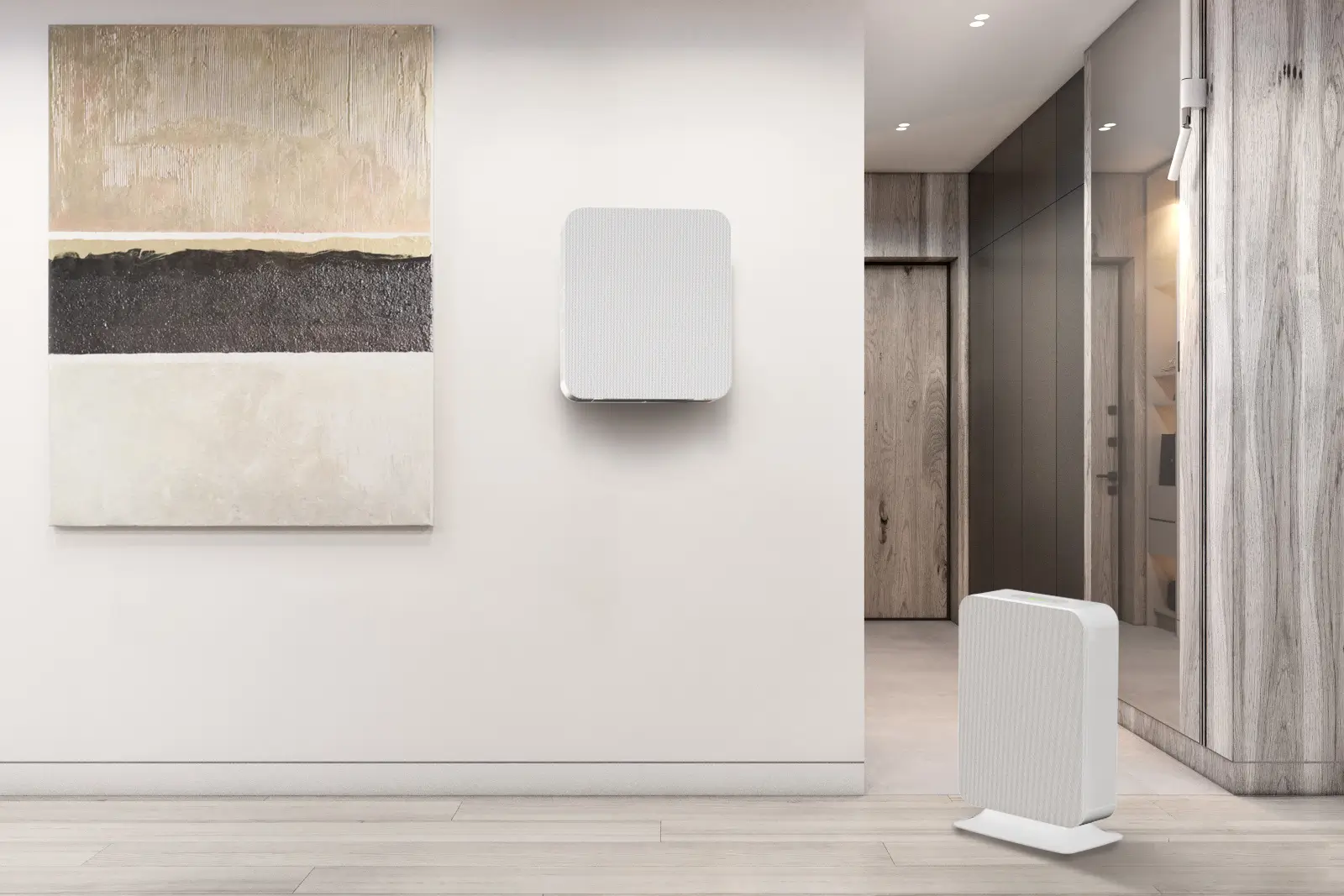
(HisoAir Wall-Mounted Air Purifier with Customer-Customizable Panels/UI Panels)
Conclusion: Making an Informed Choice in Air Purification
In conclusion, knowing where Fellowes wall-mounted air purifiers are made and their market position helps potential buyers. Despite being made in Suzhou, China, for cost efficiency, their commercial units are still pricey. Fellowes has a strong presence in commercial, especially office settings, using brand recognition and distribution channels. Their units offer advanced networked sensors for VOC, CO₂, occupancy, and pressure, appealing to commercial clients.
But as an IAQ expert, I must note that Fellowes' performance may not match specialized air purifier manufacturers. This is due to their business model without OEM/ODM partnerships focused solely on air purification. Brands like HisoAir, with 20 years of dedicated OEM/ODM experience, provide a better alternative. HisoAir offers higher - performance, lower - cost units suitable for both commercial and residential use.
The choice between Fellowes and a specialized manufacturer like HisoAir depends on your needs. If you're a commercial entity seeking an integrated office solution with smart features and are willing to pay extra for brand convenience, Fellowes is an option. But if you prioritize air purification performance and value for money across commercial and residential spaces, exploring brands like HisoAir would be more beneficial. Making an informed decision requires looking beyond brand names to consider manufacturing origins, product performance, and overall value.


 English
  Français
  Español
  Italiano
  Deutsch
  Português
  Русский
  العربية
  日本語
日本語  한국어
한국어  Tiếng Việt

