

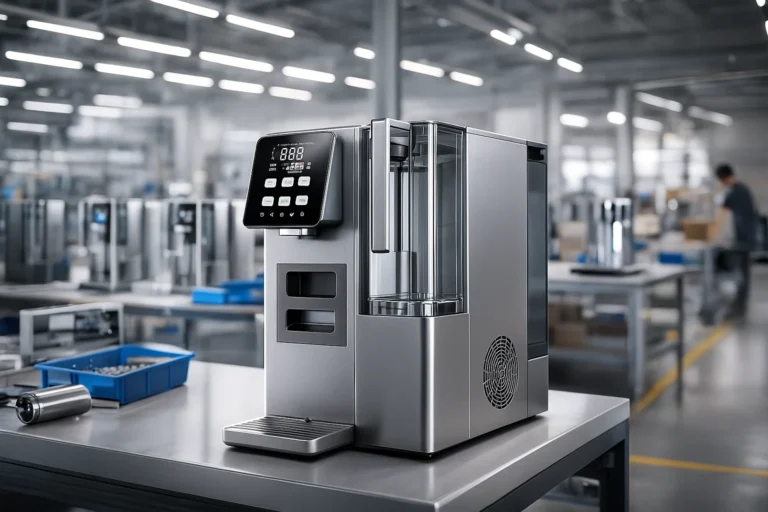
You design sleek water purifiers, but clients often view them as basic appliances. This limits your pricing power. There is a better way to design for high-value wellness markets.
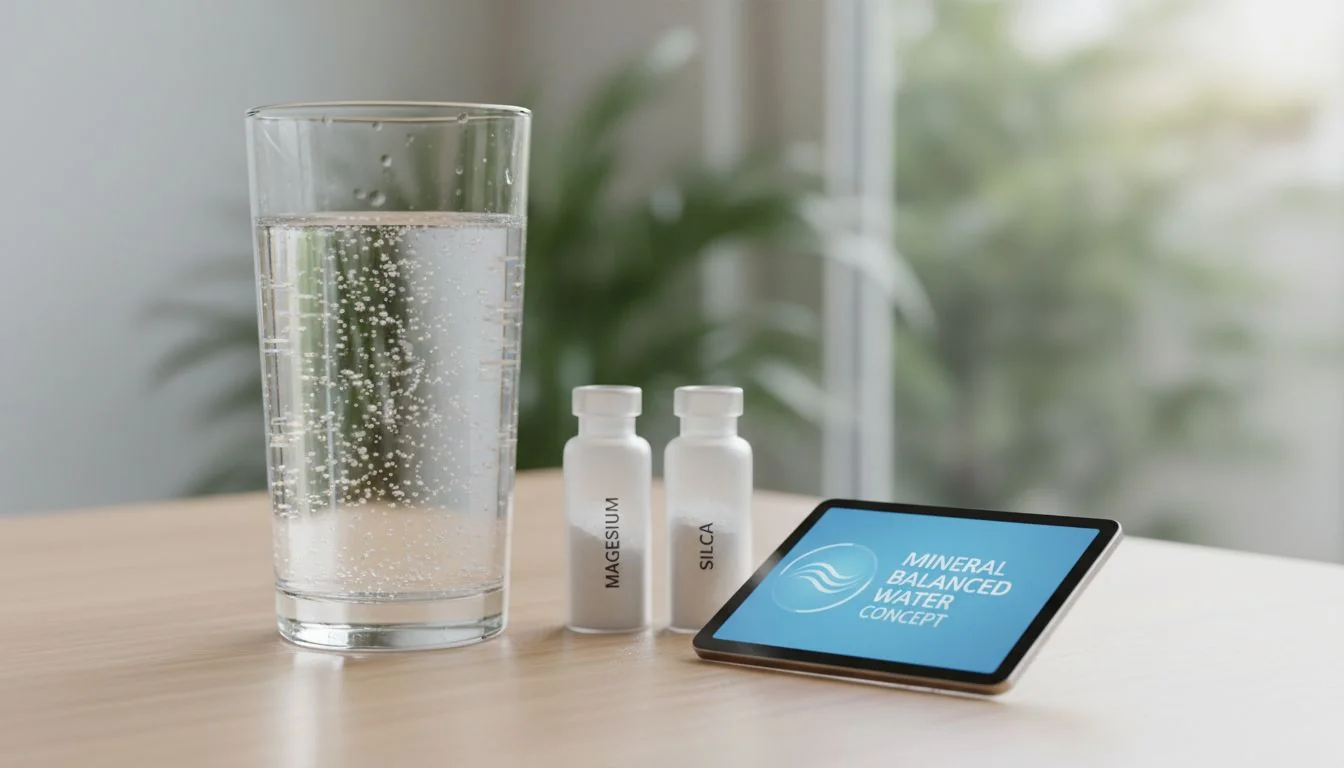
Mineral-balanced water systems1 transform standard Reverse Osmosis (RO) units into wellness devices by reintroducing essential minerals like magnesium and silica. This process corrects pH levels and improves absorption, allowing designers to market products as "skin hydration systems" rather than simple filters, significantly increasing market value.
Most designers stop at the plastic shell. Let me show you why the chemistry inside matters more.
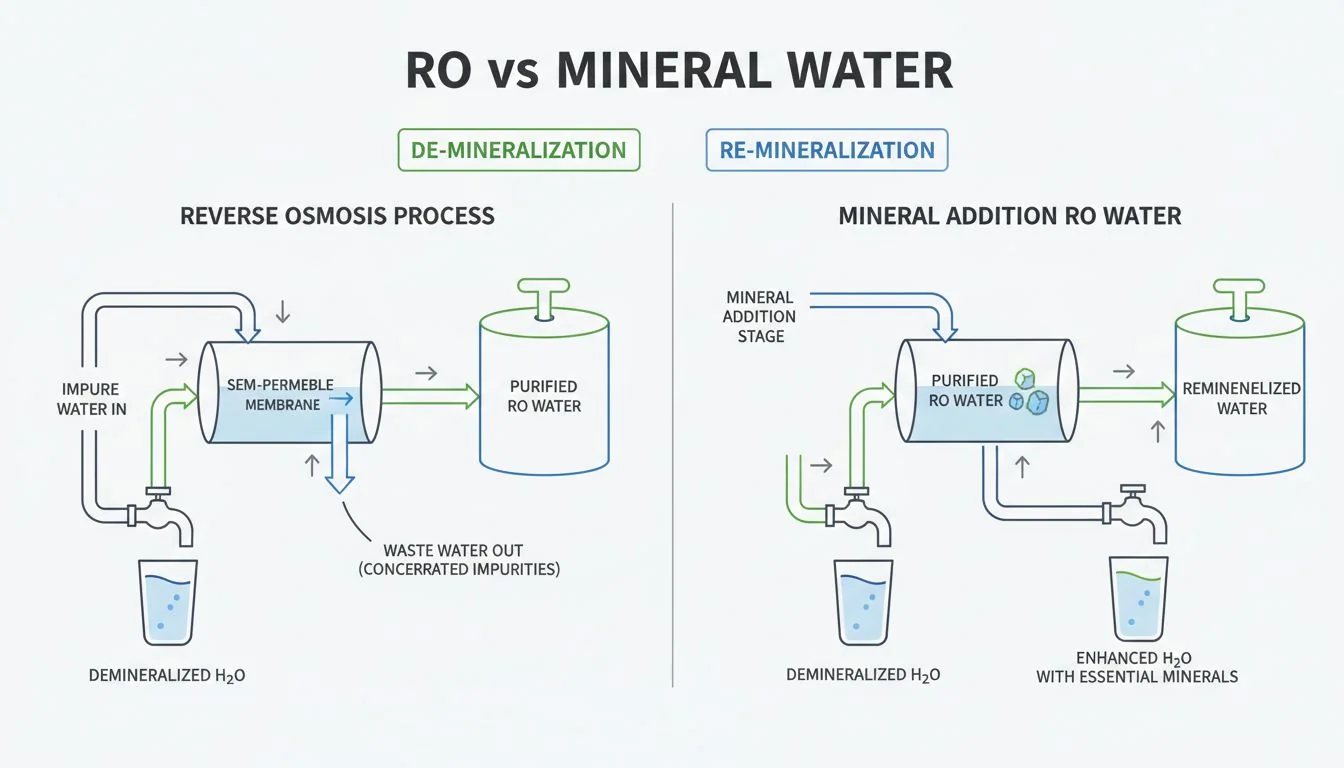
Reverse Osmosis removes up to 99% of contaminants, but also removes 99% of healthy minerals.Vero
RO membranes are extremely effective at filtration, but they cannot distinguish between harmful toxins and beneficial minerals like calcium and magnesium.
Pure water is always the healthiest option for the human body.Falso
Water that is completely demineralized can be acidic and may leach minerals from the body over time; balanced mineral water is often preferred for health.
Clean water is now a standard expectation, not a luxury. To stand out, you need more than just safety. Premium brands demand functional water that actively contributes to health.
"Pure" water lacks character and specific health benefits. Premium brands now demand functional water that actively contributes to health, moving beyond safety to wellness. This shift allows manufacturers to target the booming beauty and supplement market.
In my years in the mold industry, I have seen many companies fail because they compete on the wrong things. They fight over price. They try to make the cheapest plastic box. This is a trap.
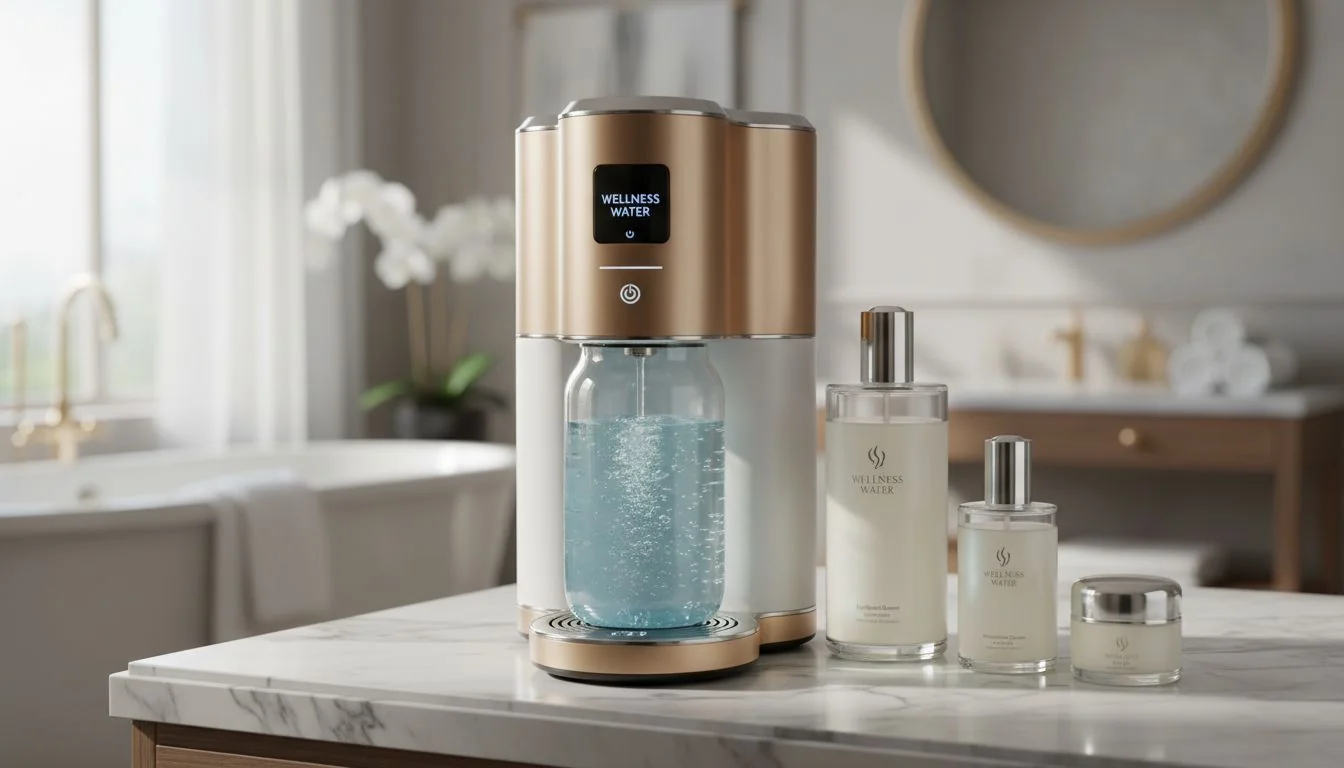
We need to pivot from designing an "Appliance" to designing a "Beauty Device." This is a massive value unlock for you and your clients. Think about it. A standard RO filter sells for $200. It is a utility item. It sits under the sink. But a "Skin Hydration System"? That sells for $500 or more.
When you frame the product around mineral benefits, you change the category. You are no longer competing with hardware stores. You are competing with beauty counters. Your B2B clients can sell this device alongside serums and supplements. As a designer, you must understand this. The mold you design is not just holding a filter. It is holding a wellness solution. This mindset shifts how you approach the internal structure and the flow of the water.
Consumers are willing to pay 2-3x more for products labeled as beauty devices compared to home appliances.Vero
Market data suggests that wellness and beauty positioning commands significantly higher margins than standard home utility positioning.
Water purity is the only factor that determines the quality of a water purifier.Falso
While purity is essential, the mineral content, pH balance, and taste profile (the 'recipe') are increasingly important for premium market positioning.
What Is the "Dead Water" Dilemma Created by Standard RO Filtration?
RO filtration works too well. It strips everything out, leaving the water empty. This creates a product that is scientifically safe but biologically incomplete.
"Dead Water2" refers to RO water that is so pure it lacks minerals and becomes acidic. It seeks to bond with minerals, potentially leaching them from the body or pipes, making it less ideal for long-term consumption.

I like to use the term "Dead Water" or "Hungry Water." It sounds scary, but it is scientifically grounded. It is also an emotionally powerful term to use in marketing.
Standard Reverse Osmosis (RO) removes everything. It takes out the bad stuff like lead and bacteria. But it also takes out the good stuff like calcium and magnesium. The result is water with a low pH. It is acidic.
In the industry, we know that this water is "hungry." It wants to bond with something. If you put it in metal pipes, it eats the metal. If you drink it, some studies suggest it might pull minerals from your body.
This is a design flaw in standard systems. If you only design for filtration rating (0.0001 microns), you are selling an incomplete product. You are selling Dead Water. Your competitors are likely doing this. You can beat them by solving this problem. You must design a stage in your system that brings the water back to life. This makes your product safer and more valuable.
RO water typically has a neutral pH of 7.0.Falso
RO water is often slightly acidic, with a pH between 5.0 and 6.0, because it absorbs carbon dioxide from the air which turns into carbonic acid.
Remineralization filters can raise the pH of RO water back to alkaline levels.Vero
By passing acidic RO water over calcium and magnesium media, the water absorbs minerals and the pH is neutralized or made alkaline.
How Does Mineral Water Create a "Beauty from Within" Connection?
Creams and lotions are expensive, but they only treat the surface. Water works from the inside. Combining these concepts creates a powerful sales argument.
Water rich in silica and magnesium supports collagen production and skin hydration better than plain water. This allows hardware brands to compete in the beauty sector by offering a "supplement dispenser" in the home.

Let's talk about the "Supplement" argument. Wellness consumers spend billions on pills. They buy Magnesium for sleep. They buy Zinc for immunity. They buy Silica for hair and nails.
You need to remind your clients of a simple fact. Absorption from water is often higher than from pills. The body takes in liquid minerals very easily.
When you design a mold for a water system, you are building the most efficient "supplement dispenser" in the house.
Key Minerals for Beauty Design
| Mineral | Benefici | Target Audience |
|---|---|---|
| Silica | Collagen production, skin elasticity | Beauty & Anti-Aging Brands |
| Magnesium | Muscle recovery, sleep aid, hydration | Fitness & Wellness Brands |
| Calcium | Bone health, pH balance | General Health & Family |
By focusing on these minerals, you give your client a story. They are not selling a plastic box. They are selling "Beauty from Within3." This is how you win the high-budget contracts. You are helping them tap into the skincare market, which is much bigger than the appliance market.
The body absorbs minerals from water as effectively, or sometimes better, than from food or pills.Vero
Minerals in water are in ionic form, which allows them to be easily absorbed by the gastrointestinal tract.
Silica has no impact on skin health.Falso
Silica is essential for collagen formation and helps improve skin elasticity and hydration.
Why Is Balancing pH Essential for Modern Diets?
Our modern diet is full of acidic processed foods. We need balance to stay healthy. Your water design can provide that daily correction.
Alkaline water4 neutralizes the acidity found in processed foods and stress. Designing filters that stabilize pH creates a daily health tool for users, positioning the device as a bio-engineering marvel.
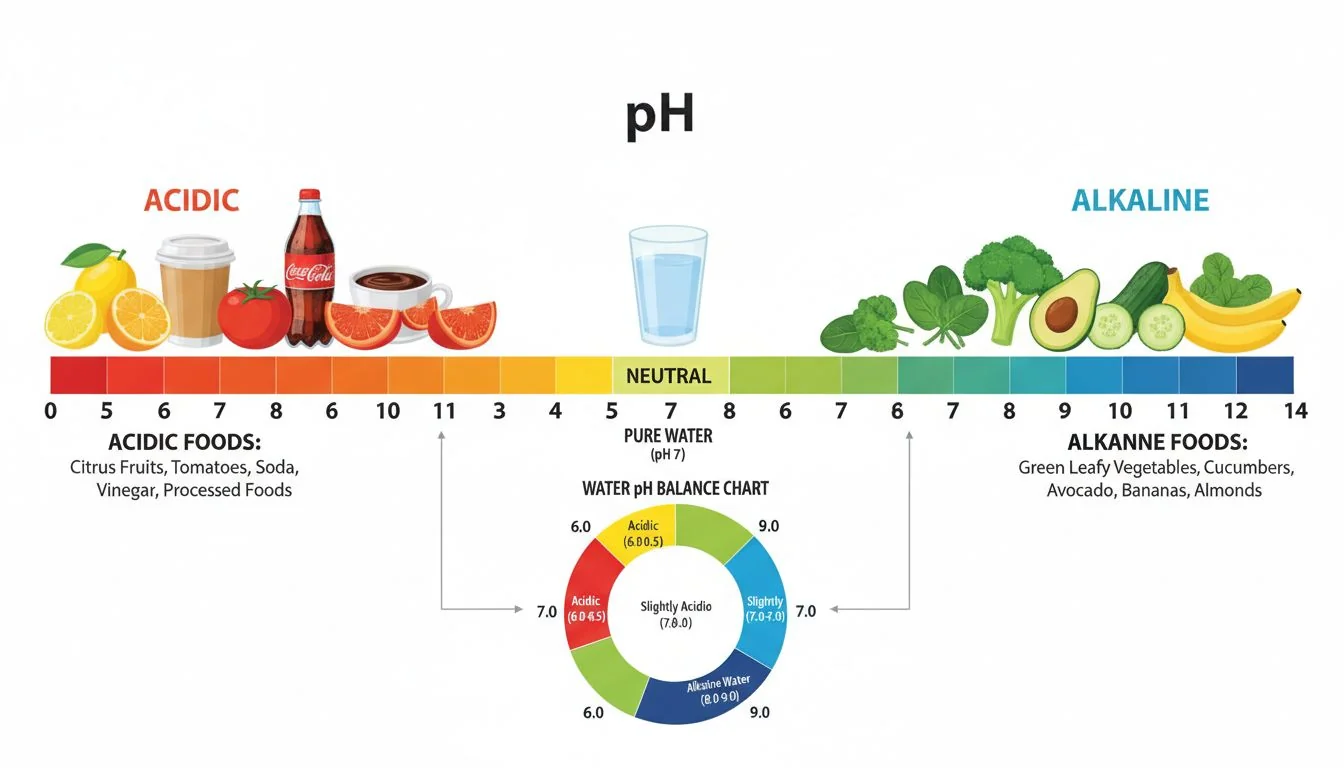
This is where you position yourself as a "Bio-Engineer." You are not just a plastic molder. You are discussing pH stability.
Most people eat too much sugar and processed food. This makes their body acidic. They feel tired. They get sick easily. They are looking for a solution.
If you design a system that produces alkaline water, you are solving this problem. But it is not easy. You cannot just dump minerals in. You need a stable release.
If the water flows too fast, it does not pick up minerals. If it sits too long, it gets too strong. As a designer, you have to calculate the flow rate. You have to design the internal channels of the cartridge.
This attracts the most sophisticated founders. They want to talk about bio-ceramics. They want to talk about bioavailability. When you speak this language, you show that you are an expert. You are helping them engineer a health product, not just a kitchen gadget.
The human body maintains a strictly neutral pH of 7.0 in the blood.Falso
Human blood is slightly alkaline, maintained tightly between 7.35 and 7.45.
Drinking alkaline water can help buffer stomach acidity.Vero
Alkaline water has a higher pH and acid-buffering capacity, which can help neutralize excess acid in the digestive system.
How Can We Engineer "Nature in a Box" Using the Hisoair Mineralization Stage?
Replicating nature is difficult because nature is complex. We need a consistent method. The Hisoair stage offers a controlled way to achieve this.
The Hisoair stage uses specific bio-ceramics to mimic natural spring filtration. It controls the release of minerals to ensure a consistent "recipe" rather than a random rating, allowing for customized water profiles.
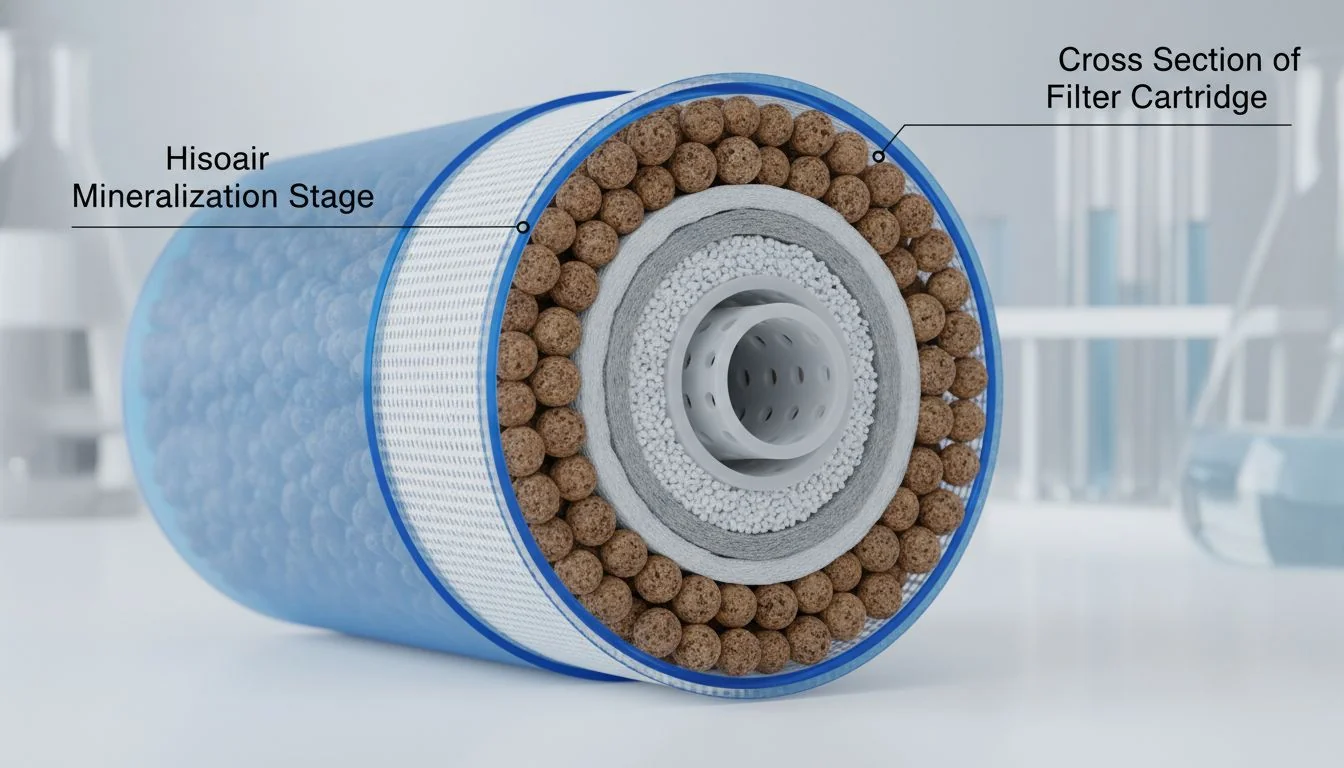
In the factory, we often talk about "Filtration Rating." We brag about 0.0001 microns. But I believe we should compete on "Water Recipe."
You are the "Water Chef." You can tailor the mineral profile. This is what the Hisoair Mineralization Stage5 does. It is not a simple filter. It is a complex system of bio-ceramics.
Imagine you are designing for a sports recovery brand. You would use a "Magnesium-Rich" recipe. You would adjust the Hisoair stage to release more magnesium.
Now imagine you are designing for a luxury beauty brand. You would use a "Silica-Rich" recipe.
This is engineering "Nature in a Box." Nature takes rain and filters it through rocks over many years. We have to do that in seconds. The Hisoair technology allows us to do this. It gives us control. It turns a commodity product into a bespoke solution. This is the highest level of mold and product design. You are not just shaping plastic; you are shaping the water itself.
All mineral filters release minerals at the same speed.Falso
The release rate depends on the type of ceramic media, water temperature, and flow rate. Advanced stages like Hisoair are engineered for consistent release.
Customizing the mineral profile allows brands to target specific niche markets.Vero
By adjusting the 'recipe' of the water, brands can market specifically to athletes (recovery), beauty enthusiasts (skin), or families (health).
How Do You Move Your Brand from "Safe Water" to "Wellness Water"?
Don't get stuck in the price war of basic safety. Elevate the product to a lifestyle choice. This is how you build a lasting brand.
By focusing on the Mineral profile6, you shift the conversation from filtration specs to health benefits. This justifies higher price points and attracts sophisticated buyers who view the device as an investment in their longevity.

We have covered a lot of ground. We talked about the problem with "Dead Water." We talked about the "Beauty from Within" opportunity.
Now, you have a choice. You can keep designing standard RO boxes. You can fight with other factories over pennies. Or, you can move your brand.
Move from "Safe Water" to "Wellness water7."
When you present your next design to a client, do not just show them the CAD drawing. Show them the mineral profile. Tell them about the pH balance. Explain how this device will help their customers sleep better or have better skin.
Use the Hisoair concept as your tool. Show them that you are a "Bio-Engineer."
This is how you master molding right. It is not just about the steel and the plastic. It is about the value you create for the end user. When you do this, you are no longer a vendor. You are a partner. And partners get paid much better than vendors.
Wellness water products often have higher customer retention rates than standard filters.Vero
Customers who perceive a tangible health or beauty benefit are more likely to maintain the system and purchase replacement cartridges regularly.
Marketing 'safe water' is still the most effective strategy in 2024.Falso
In developed markets, safety is assumed. Wellness, longevity, and beauty are the new drivers for high-end consumer purchasing decisions.
Conclusione
Stop selling empty water. By engineering mineral-balanced "recipes" and positioning your device as a wellness tool, you unlock higher margins and deliver real health value to the user.
References
-
Discover how mineral-balanced water systems enhance health and wellness, transforming standard water into a valuable resource. ↩
-
Understand the concept of 'Dead Water' and its potential health impacts, highlighting the importance of mineral content. ↩
-
Learn how hydration and minerals contribute to beauty from within, creating a compelling narrative for wellness brands. ↩
-
Find out how alkaline water can neutralize acidity and support overall health, making it a desirable choice. ↩
-
Discover how the Hisoair stage mimics natural filtration, providing customized mineral profiles for enhanced health benefits. ↩
-
Explore the significance of mineral profiles in water and how they can enhance health and wellness. ↩
-
Discover the concept of wellness water and its benefits, positioning it as a premium choice for health-conscious consumers. ↩









 English
  Français
  Español
  Italiano
  Deutsch
  Português
  Русский
  العربية
  日本語
日本語  한국어
한국어  Tiếng Việt

