
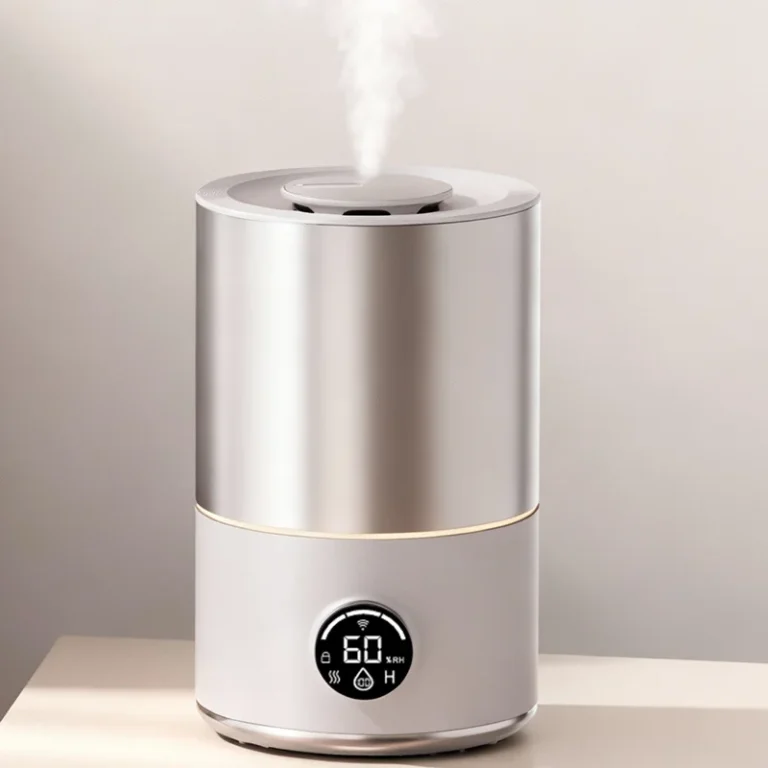

Launching a new humidifier? A cheap supplier seems great, but hidden issues can destroy your brand, budget, and reputation before you even start.
The biggest risks are choosing a supplier based on price alone, ignoring hygiene, falling for fake certifications, miscalculating total costs, and misunderstanding what ISO 9001 actually means. Avoiding these requires shifting your focus from unit price to total business risk and supplier transparency1.

I've been in the manufacturing game for a long time. I've seen brilliant product designers like you create amazing concepts, only to see them fail because of a poor supplier choice. It's a painful lesson, and one I want to help you avoid. In my trading company, I've helped clients navigate these waters, and the difference between success and failure often comes down to the first decision: the supplier.
Let's break down the four most common traps I see brands fall into. This will help you protect your investment and build a successful product line.
Over 60% of new product launches fail due to supply chain issues, including poor supplier quality.Falso
While supply chain issues are a major factor in product failure, the 60% figure is not a verified statistic. The actual percentage varies widely by industry and market conditions, but the principle remains true: a bad supplier is a significant risk.
Products that fail to meet import regulations, like FCC or EPA standards, can be seized and destroyed by customs at the importer's expense.Vero
U.S. Customs and Border Protection (CBP) has the authority to detain, seize, and even destroy merchandise that violates regulations set by partner government agencies. The importer is liable for all associated costs.
Are You Prioritizing Price Over Product Hygiene?
That low-cost plastic humidifier looks tempting. But what happens when customers complain about mold and bad smells? Your brand's reputation is on the line.
Prioritizing price often means getting a standard, cheap plastic unit that is a breeding ground for mold and bacteria. The solution is to partner with a supplier who innovates for hygiene, using materials like stainless steel that are easier to clean and inhibit microbial growth.

The "Commodity Trap" Explained
When you source a humidifier, you're not just buying a plastic box that makes mist. You're selling a health and wellness product. The biggest trap I see is treating it like a simple commodity, where the lowest price wins. Cheap suppliers use standard ABS or PP plastics for water tanks. These materials are porous on a microscopic level and have complex shapes that are impossible to clean thoroughly. After a few weeks of use, mold and bacteria start to grow, creating a foul odor and releasing spores into the air. Your customers will notice. The negative reviews will pour in, returns will skyrocket, and your brand will be associated with "dirty" or "unhealthy" products.
Shifting to a Hygiene-First Mindset
A smart supplier understands this risk. They don't just follow your design; they innovate to solve the core problem. This is where material choice becomes your biggest ally. A supplier focused on quality might propose using medical-grade stainless steel for the water tank. It's non-porous, easy to sterilize, and immediately signals a premium, hygienic product to the customer.
| Caratteristica | Standard Plastic Tank | Stainless Steel Tank |
|---|---|---|
| Hygiene | Porous, hard to clean, prone to mold | Non-porous, easy to clean, inhibits growth |
| Durata | Can crack, discolor over time | Highly durable, resistant to corrosion |
| Customer Perception | Standard, cheap | Premium, safe, hygienic |
| Brand Risk | High (bad reviews, returns) | Low (positive reviews, brand trust) |
All plastic humidifiers will eventually grow mold, regardless of cleaning.Falso
While plastics can be more susceptible to microbial growth than non-porous materials, regular and thorough cleaning according to the manufacturer's instructions can prevent mold growth in most cases. However, design and material quality play a huge role in how easy and effective that cleaning is.
Stainless steel is inherently antimicrobial.Falso
Standard stainless steel is not inherently antimicrobial. However, its non-porous surface makes it much easier to clean and disinfect than plastic, which significantly reduces the risk of microbial colonization. Some specialized stainless steels do have antimicrobial properties.
Is Your Supplier Truly US/EU Market-Ready?
Your supplier says, "No problem, we can get certified." But when your shipment is held at customs, it's too late. Your launch is dead in the water.
Many factories claim they are "ready" for Western markets but lack crucial, mandatory certifications like ETL, CARB, or EPA. To be truly ready, a supplier must have these certifications in hand before production, proving their products meet safety, emissions, and regulatory standards.

The Danger of the "Certification Lie"
This is one of the most expensive mistakes you can make. A factory might tell you they are "experienced with the US market" and that getting certifications is just a formality. This is a huge red flag. Certifications are not just paperwork; they are proof that the product has been tested by an accredited third-party lab and meets specific legal standards. I once advised a client who was about to place a huge order. The supplier swore they were compliant. I pushed my client to ask for the actual certificate numbers. The factory went silent. We dodged a bullet that would have cost my client hundreds of thousands of dollars when the goods were inevitably stopped at the border.
What to Look For: The "Big Three" for Humidifiers
For a humidifier sold in the US, you need to verify several key certifications. Don't just take the supplier's word for it. Ask for the certificate and look it up in the public database.
| Certificazione | What It Covers | Why It Matters |
|---|---|---|
| ETL Listed Mark | Product Safety (Electrical) | Proves the product won't cause fires or electrical shocks. It's a legal requirement for many retailers. |
| CARB compliance2 | Air Quality (Ozone Emissions) | Some humidifiers can produce ozone. CARB certification is mandatory in California and a standard for clean air. |
| EPA Establishment | Pesticidal Device Claims | If you claim your humidifier "kills germs" or is "antibacterial," the factory must be registered with the EPA. |
A supplier who says "we can get it" is telling you that you will be paying for the entire, lengthy testing process, and if it fails, it's your problem. A true partner has these certifications ready to go.
CARB certification is only required for products sold in California.Falso
While the California Air Resources Board (CARB) sets the standards, many other states have adopted California's stricter regulations. Furthermore, national retailers often require CARB compliance for all products they carry, regardless of the state, to simplify their logistics.
An ETL Listed Mark is equivalent to a UL Listed Mark.Vero
Both ETL and UL are Nationally Recognized Testing Laboratories (NRTLs) recognized by OSHA. They test products to the same standards (e.g., UL standards). For market access in the US, they are functionally equivalent.
Do You Really Know Your Total Landed Cost?
You got a fantastic FOB price and celebrated. But then came the shipping fees, import duties, and quality control3 costs. Suddenly, your profit margin is gone.
The FOB (Free On Board) price is just the factory's price to get the goods to the port. It ignores shipping, insurance, customs, duties, and potential rework costs. To avoid this illusion, you must calculate your total landed cost4 with a transparent partner.

The FOB Price Illusion
In my early days as a trader, I learned this lesson the hard way. I focused only on getting the lowest FOB price from factories. But a low FOB price often hides other problems. The factory might use flimsy packaging, leading to 10% of my products arriving damaged. Or their quality control is so bad that I have to hire a third-party inspection team for every shipment, adding thousands to my cost. The "cheap" supplier ends up being the most expensive one. Your job as a product designer or manager is to protect your company's profit margin. You can't do that if you only look at one number on a price sheet.
Calculating Your True Cost
A trustworthy partner is transparent. They don't just give you an FOB price; they help you understand the full picture. They have experience shipping to your country and can provide realistic estimates for freight and duties. They have robust internal quality control, which reduces your need for expensive third-party inspections and lowers your defect rate.
| Componente di costo | "Cheap" Supplier (Low FOB) | "Partner" Supplier (Higher FOB) |
|---|---|---|
| FOB Unit Price | $10 | $12 |
| Freight & Insurance | $2.50 (Poor packaging) | $2.00 (Optimized packaging) |
| Duties & Tariffs | $1.50 | $1.50 |
| QC & Rework | $1.00 (High defect rate) | $0.20 (Low defect rate) |
| Total Landed Cost | $15.00 | $15.70 |
In this example, the "cheap" supplier is almost the same price in the end, but with much higher risk and more headaches. A slightly higher FOB price from a better supplier often leads to a lower, more predictable Total Landed Cost.
FOB is the most common incoterm for sourcing from China.Vero
Free On Board (FOB) is a widely used incoterm where the seller is responsible for the goods until they are loaded onto the vessel at the designated port. It is popular because it provides a clear handoff point for responsibility and cost.
You can estimate import duties for any product using its HS code on the official government tariff database.Vero
The Harmonized System (HS) code is an international standard for classifying traded products. You can use this code to look up the specific tariff and duty rates for your product on your country's customs or international trade commission website.
Does an ISO 9001 Certificate Guarantee a Good Product?
The factory proudly shows you their ISO 90015 certificate. You feel safe, but this doesn't mean the product itself is high-quality or even compliant.
No. ISO 9001 is a quality management system certification. It means the factory has documented processes. It says nothing about the quality, safety, or compliance of the actual product you are buying. You must look for specific prodotto certifications instead.

The ISO 9001 Mirage
This is a very common point of confusion. As a designer, you're trained to look for signs of quality, and a big ISO 9001 banner on a factory website seems like a great sign. But here's the reality: ISO 9001 certifies the processo, not the prodotto. A factory can have a perfectly documented process for making a terrible, non-compliant, low-quality humidifier. The certificate just means they follow their own bad process consistently. I have visited many ISO 9001-certified factories where the final product was unacceptable. The certificate on the wall was a mirage, giving a false sense of security.
Focusing on What Matters: Product vs. Process
Don't be distracted by process certifications. Your focus must be on the product itself. Does the product have the specific certifications required for your market (like ETL, CE, CARB)? Has the product passed specific performance and reliability tests? A good supplier will lead with their product's strengths and certifications, not their factory's administrative awards.
| Certification Type | What It Certifies | Esempio | What It Tells You |
|---|---|---|---|
| Process Certification | The factory's management system | ISO 9001 | The factory has documented procedures. (Doesn't guarantee a good product). |
| Product Certification | The specific product itself | ETL, CE, CARB | The product has been tested and meets specific safety, health, or performance standards. |
Always ask for product-level proof. That is the only way to truly know if you are getting a safe, compliant, and high-quality item.
ISO 9001 certification is required to export products from China.Falso
ISO 9001 is a voluntary standard. While many factories pursue it to demonstrate a commitment to quality management and improve marketability, it is not a legal requirement for exporting goods from China or any other country.
A product with a CE mark can be legally sold anywhere in the United States.Falso
The CE mark indicates conformity with health, safety, and environmental protection standards for products sold within the European Economic Area (EEA). It is not recognized in the United States, which has its own conformity systems, such as marks from NRTLs (e.g., UL, ETL).
Conclusion: How to Find a "Safe" Partner (Your 3-Point Checklist)
Choosing the right supplier isn't about finding the lowest price. It's about managing risk. Use this checklist to find a true partner who protects your brand and budget.
- Prioritize Product, Not Just Process: Ask for product-specific certifications (ETL, CARB) and material innovations (stainless steel), not just factory-level ones (ISO 9001).
- Demand Transparency on Cost: Move beyond the FOB price. Ask for help estimating your Total Landed Cost. A good partner will be transparent and assist you.
- Verify, Don't Trust: Always ask for copies of current certificates and look them up. A safe partner has proof ready and is proud to show it.
References
-
Understanding supplier transparency can help you choose partners who prioritize quality and compliance. ↩
-
Knowing CARB compliance helps ensure your products meet air quality standards, especially in California. ↩
-
Implementing best practices in quality control can significantly reduce defects and improve product reliability. ↩
-
Calculating total landed cost is crucial for accurate budgeting and avoiding unexpected expenses. ↩
-
Learn why ISO 9001 certification doesn't guarantee product quality and what to look for instead. ↩






 English
 Français
 Español
 Italiano
 Deutsch
 Português
 Русский
 العربية
 日本語
 한국어
 Tiếng Việt


