Si apre in una nuova scheda

From Medical Doctor to Entrepreneur:
Austin Perlmutter’s Journey with HisoAir

How a brain health expert transformed an evidence-based idea into a production-ready air purifier with 800 m³/h CADR, certification planning (CE/ETL/FCC), and a refined user experience — powered by HisoAir’s OEM/ODM capabilities.
800 m³/h
Target CADR achieved
Bassa rumorosità
Optimized airflow & layout
End‑to‑End
Concept → Production support
CE · ETL · FCC
Certification planned in design
ha b800 version2 5
sgs
doe scaled
energy star
aham

Company & Product Overview

Company: Lichen Air

Product Category: Wellness Products

Product: Purificatore d'aria

Involvement: Product Design, Structural Engineering, Function Design Pack, Prototyping & Sampling, Initial Purchase Order Production, Certification & Compliance Support, Product Inspection & Quality Control

Background: Dr. Austin Perlmutter is an internal medicine physician, author, and internationally recognized brain health expert. With years of experience researching and teaching about mental wellness, he’s become a trusted voice on the connection between lifestyle and cognitive function. His work has reached millions globally through books, podcasts, and media. Yet his mission is also deeply personal—after witnessing the impact of Alzheimer’s disease on both of his grandparents and struggling with his own mental health challenges, Austin became committed to helping others take control of their brain health from home.

Purificatore d'aria ad alte prestazioni
HA-B800
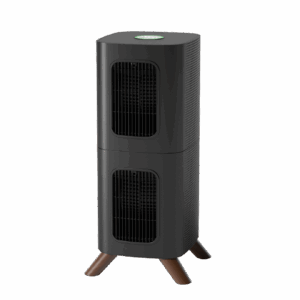
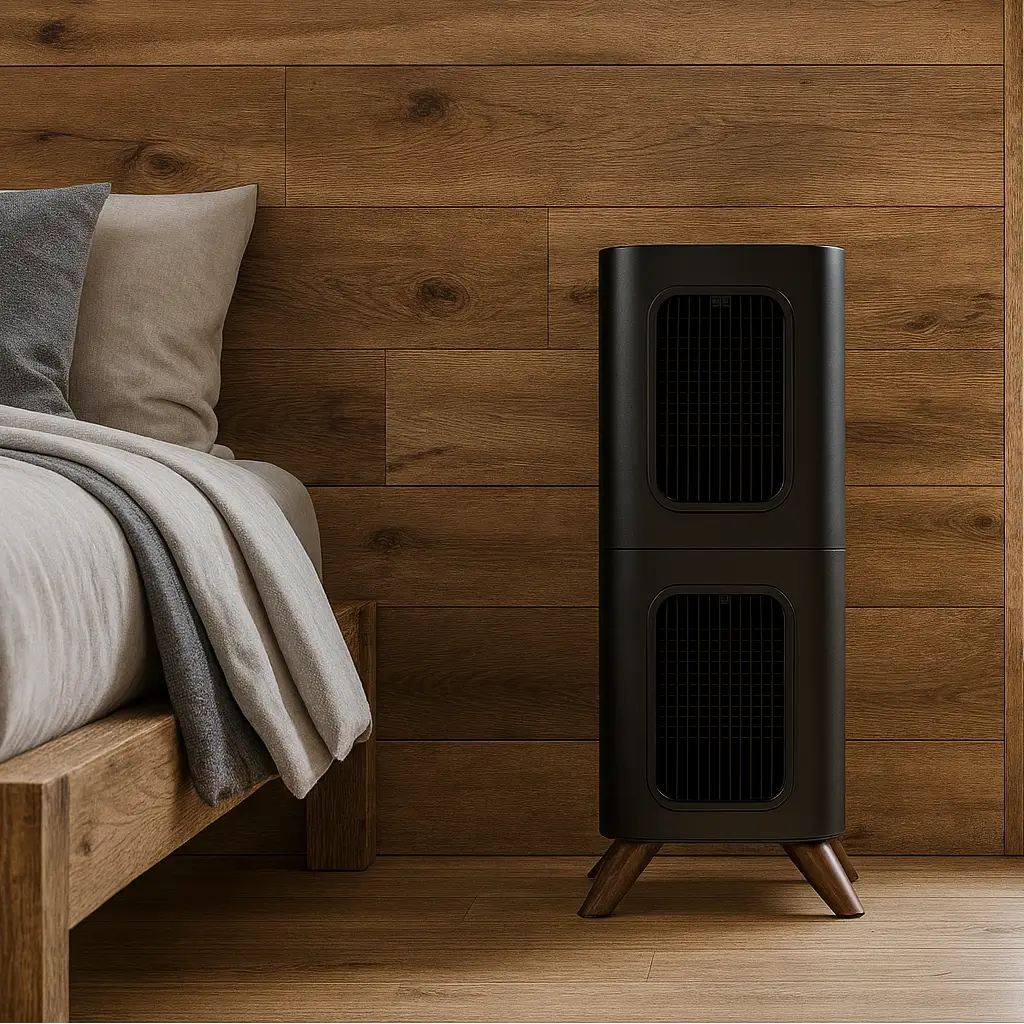
lichen air ha b800

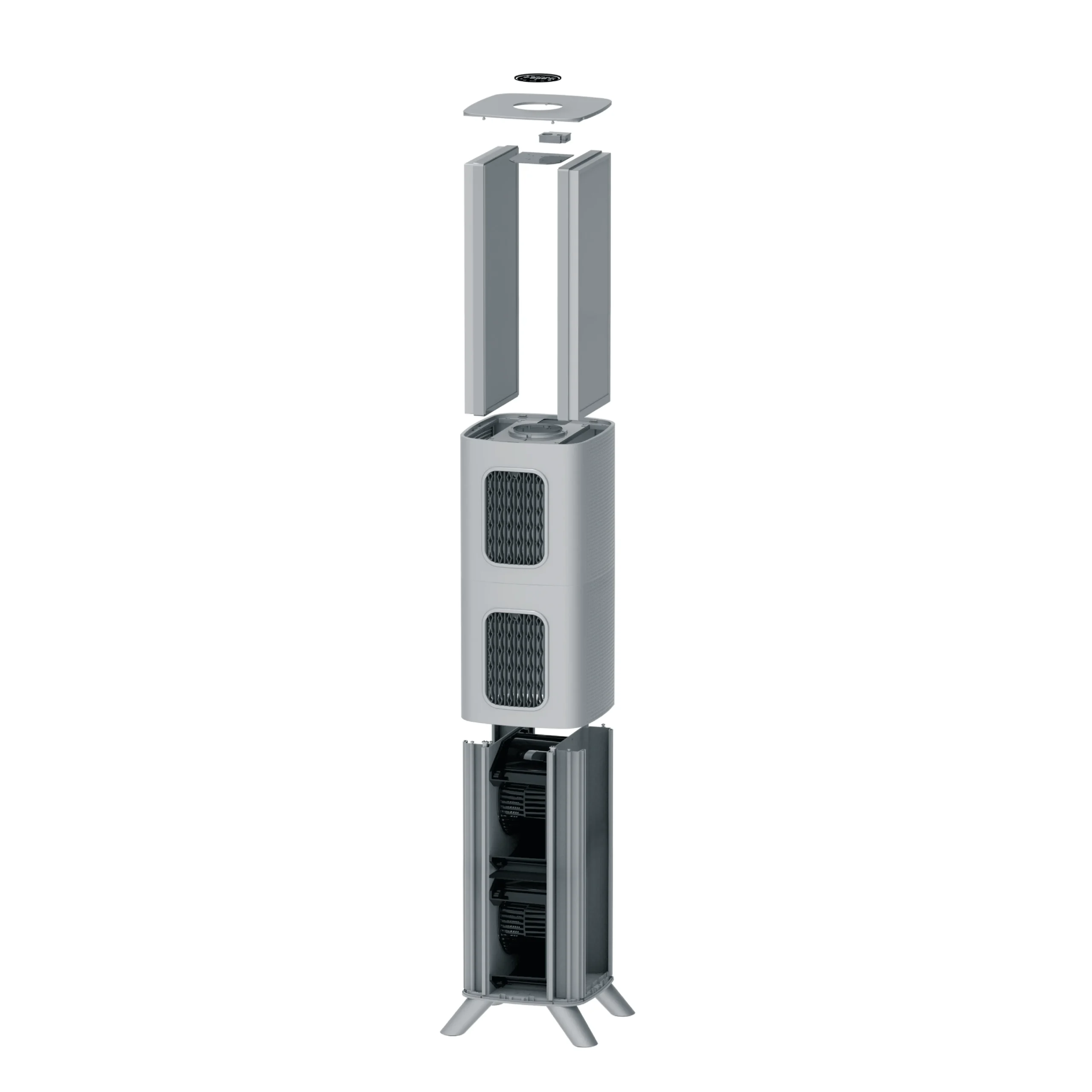
  • CADR: 800 m³/h (large-room coverage)
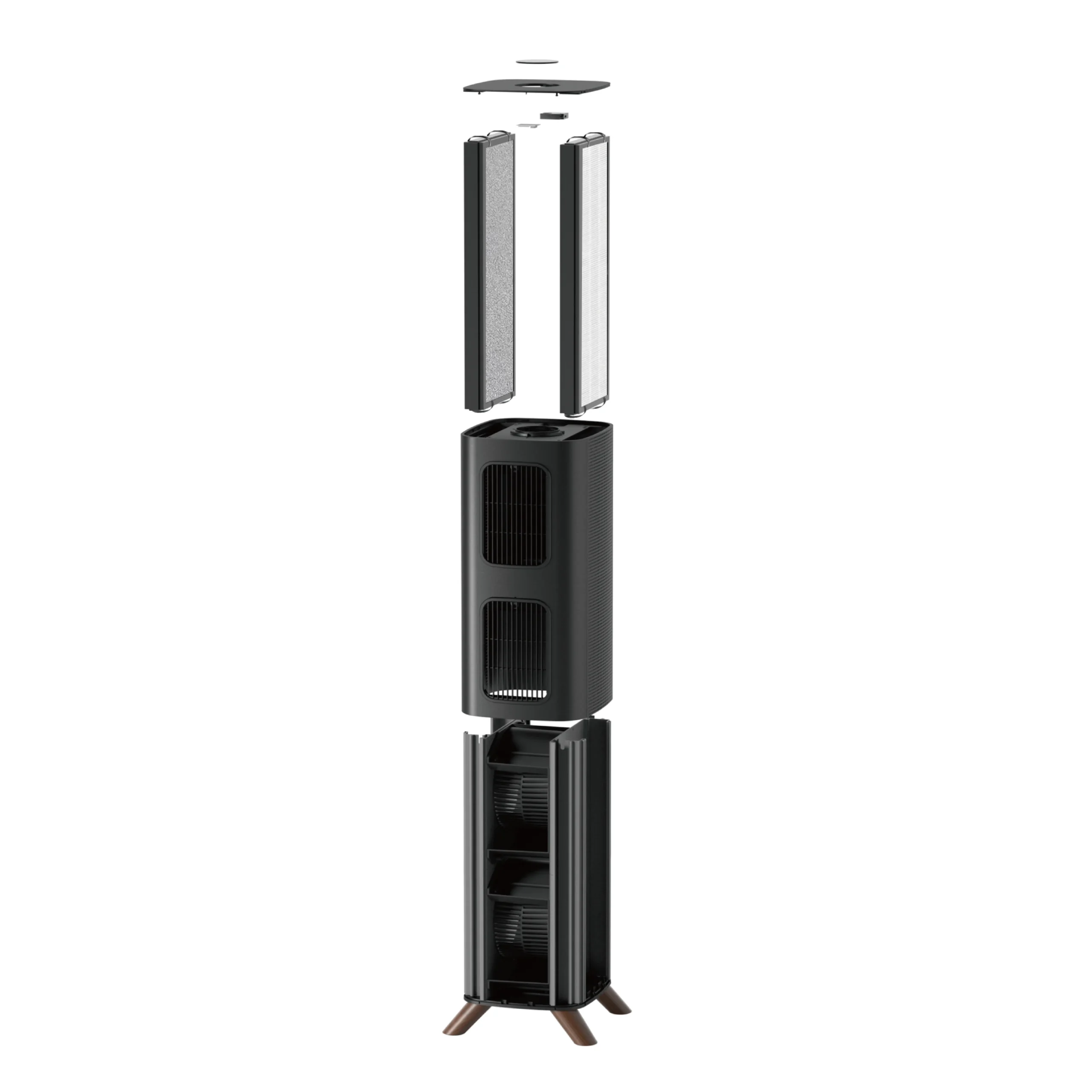
  • Filtration: H14 HEPA (99.995% efficiency) + Corrugated Carbon
  • Noise Level: <56 dB (quiet operation)
  • Application: Homes, offices, hotels, clinics, commercial spaces
  • Compliance: CE / ETL / FCC ready

The Idea

As he dove deeper into strategies for supporting brain function, Austin discovered a major but often overlooked factor: indoor air quality. Scientific research was clear—airborne pollutants could negatively impact mood, focus, and cognitive longevity. However, most air purifiers on the market lacked real evidence and in some cases made air quality worse. Disappointed by the gap between marketing and science, Austin was driven to create something better.

Inspired by his medical background, commitment to evidence-based wellness, and love for the healing nature of the Pacific Northwest, he envisioned a new kind of wellness brand—one rooted in science, designed for real impact. That vision became Lichen Air, a company devoted to improving brain health through cleaner, smarter indoor air. Partnering with HisoAir gave him the tools and technical support to bring this idea to life.

brain air pollution

The Challenge

Though highly accomplished in the fields of medicine and wellness, Dr. Austin Perlmutter was stepping into unfamiliar territory when he set out to create his own air purifier. While he had previously served as Senior Director of Science & Clinical Innovation at Big Bold Health—a company focused on nutritional supplements—developing a hardware product like an air purifier was an entirely new challenge.

He was navigating a steep learning curve: from understanding HEPA filtration and CADR ratings to grasping global safety certifications, component specifications, and manufacturing logistics. As a first-time entrepreneur in this product category, Austin had the passion and scientific credibility—but lacked the technical and operational experience required to bring a medical-grade wellness product to market.

When he partnered with HisoAir, he was still in the early stages of exploring what made a purifier effective, safe, and truly differentiated. Our role was not just to manufacture a product—but to educate, support, and help him translate his vision into a high-performance, validated device he could proudly stand behind.

New-to-hardware hurdles

HEPA & CADR basics
Filtering performance fundamentals
Global compliance
CE / ETL / FCC considerations
Components & layouts
Fans, motors, airflow paths
Manufacturing logistics
Tooling, MOQs, QC/QA

The HisoAir Solution — Discover, Define, Deliver

At HisoAir, we guided Dr. Perlmutter through a structured journey that transformed his vision into a certified, premium air purifier tailored for health- and brain-wellness-conscious customers.

Scoprire 

From Vision to Opportunity

Dr. Perlmutter knew why — improving wellness through cleaner air — but not how. We helped to: 

  • Turn his medical insights into clear product requirements. 
  • Identify the needs of brain-wellness customers (safety, performance, premium design). 
  • Benchmark competitors to uncover true differentiation. 

👉 Outcome: A clear strategy aligned with medical credibility and consumer expectations.

Define

From Idea to Premium Design

With the vision mapped, we advanced design and engineering to: 

  • Create a premium design language that conveys trust and wellness.
  • Integrate advanced filtration (HEPA, carbon, airflow) to meet standards. 
  • Plan certifications (CE, FCC, ETL) early to reduce launch risks. 
  • Prototype to validate usability, aesthetics, and performance. 

👉 Outcome: A refined concept balancing medical-grade performance with consumer-grade elegance.

Deliver

From Prototype to Market Launch

Finally, we prepared production and launch readiness by: 

  • Scaling manufacturing while keeping premium quality.
  • Designing packaging and interface that reinforce trust.
  • Managing logistics and compliance for US/EU entry.
  • Delivering a product that is certified and loyalty-ready. 

👉 Outcome: The HA-B800 — a globally certified purifier for health- and brain-wellness markets.

Before & After — Product Evolution

From Concept to Market-Ready: Product Transformation
Working side by side with our client, we transformed the initial prototype into a refined, production-ready device. Every detail was optimized to deliver higher performance, improved usability, and a stronger market presence.
ha b800 original design 3
ha b800 (1)

Standard grille layout

H13 + Activated Carbon filter

Generic branding

Basic UI

Standard plastic feet

Simple brown box packaging

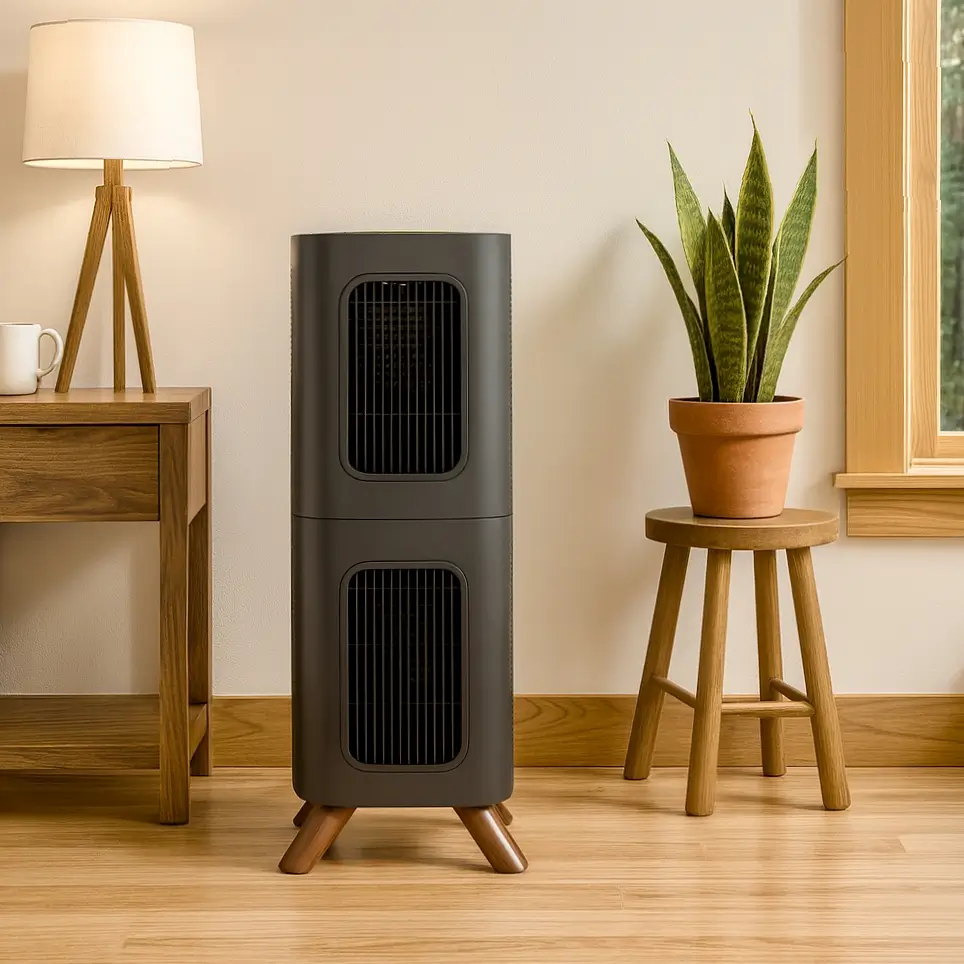
Redesigned grille for optimized airflow

H14 + Corrugated Carbon Filter

Custom logo design

Refined UI for enhanced user experience

Wood-textured feet design

Premium packaging design

Validated Results & Market Launch

With HisoAir’s full-stack support in design, engineering, and manufacturing, the client progressed from a rough concept to a refined, production-ready product. Despite multiple challenges—including strict cost targets, high performance requirements, and complex material choices—HisoAir delivered a solution that maintained its standout specs (including an 800 CADR), passed key performance evaluations, and has now been successfully launched.

This collaboration highlighted HisoAir’s strengths not just as a supplier, but as a strategic product development partner.

  • ✔ Concept → Production-ready
  • ✔ Target CADR met at 800 m³/h
  • ✔ Low noise, long filter life
  • ✔ Full certification coverage, including CE, ETL, FCC, UL, CA Prop 65, ENERGY STAR, and AHAM DOE
  • ✔ Successfully passed performance, safety, and packaging tests (ISTA-6, FedEx-A)
  • ✔ Ready for large-scale production and global launch
ha b800 version2 7

Beyond Product Design — Full-Service Support

At HisoAir, our role extends far beyond product engineering and manufacturing. We act as a full-service partner, managing every stage of the journey to ensure our clients succeed in global markets — from certifications and project timelines to logistics and marketing.
  • Certification Support: Comprehensive coverage of CE, ETL, FCC, UL, CA Prop 65, ENERGY STAR, and AHAM DOE, with full testing and compliance management.
  • AHAM Membership Registration: Helping clients gain industry recognition and credibility.
  • Performance Testing: CADR, noise, filter life, reliability, and packaging validation (ISTA-6, FedEx-A, etc.).
  • Project Timeline Management: Clear Gantt charts, milestone planning, and weekly progress updates to keep every stakeholder aligned.
  • Logistics & Cost Estimation: Container loading calculations, pallet optimization, and shipping cost analysis for efficient global delivery.
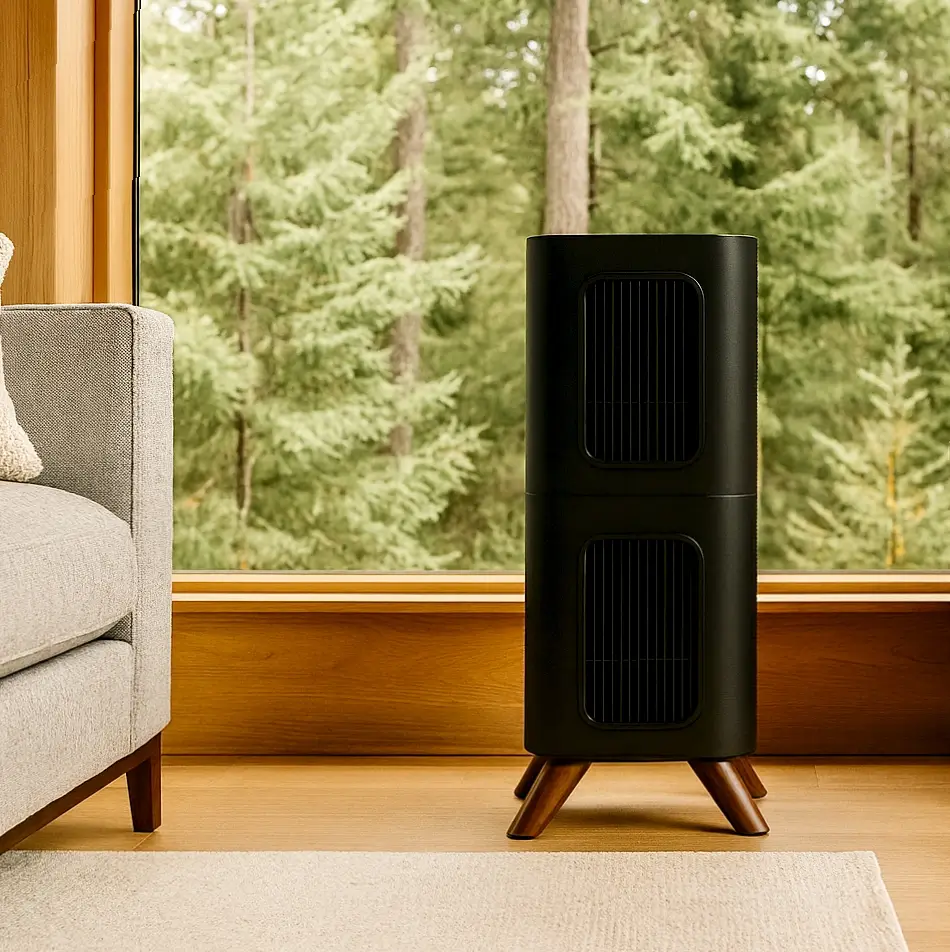
  • Marketing Assets: Professional product visuals and web-ready graphics to support brand promotion.
ha b800 version2 6

Conclusione

Austin Perlmutter’s journey exemplifies how HisoAir empowers entrepreneurs, regardless of their background, to bring their ideas to life. With the right team and resources, anyone can take the leap from concept to commercialization.

Have an idea? Let’s build it together.

Talk to our OEM/ODM specialists about performance goals, budget, and timelines.
Contatto
Contaminant Engineering•3 min read

PFAS Water Filtration Technologies Explained: Carbon, Resin & RO

Key Takeaway:

PFAS reduction depends on the specific compounds present, treatment media, contact time, water chemistry, and system design. Activated carbon, ion exchange, and Reverse Osmosis address PFAS through different mechanisms.

PFAS are a large family of persistent fluorinated compounds that can occur in drinking-water supplies. Their treatment behavior varies significantly by molecular structure, chain length, functional group, concentration, and the chemistry of the source water.

Granular Activated Carbon (GAC) removes PFAS primarily through adsorption. It is generally more effective for many longer-chain PFAS, while shorter-chain compounds tend to break through more quickly. Carbon performance depends on media properties, Empty Bed Contact Time (EBCT), competing organic matter, loading, and replacement frequency.

Ion-exchange resins use charged functional sites to capture many PFAS compounds. Properly selected anion-exchange media can provide high capacity and may perform better than conventional activated carbon for some shorter-chain PFAS, although performance still depends on water chemistry and competing ions.

Reverse Osmosis (RO) uses membrane separation rather than adsorption. Properly designed RO systems can provide broad reduction across many PFAS compounds as well as dissolved salts and other contaminants. Unlike carbon or resin, however, RO also produces a concentrate stream that must be managed.

No single technology should be selected from a PFAS label alone. System design should consider which PFAS compounds are present, their concentrations, required reduction targets, flow rate, media life, and the applicable third-party certification or validation requirements.

HisoAir Water Technical Series
Product Discovery•3 min read

How to Choose an Under-Sink Water Purifier for Modern Kitchens

Key Takeaway:

Match the treatment technology to your water quality first, then evaluate cabinet space, faucet configuration, flow rate, drain and power requirements, and filter replacement needs.

Choosing an under-sink water purifier starts with water chemistry. Carbon filtration is well suited to chlorine, taste, odor, and many organic contaminants, while Reverse Osmosis is more appropriate when dissolved salts, fluoride, nitrates, or broader dissolved contaminants need to be reduced.

For compact kitchens, tankless RO systems eliminate the conventional storage tank and can significantly reduce the space required under the sink. However, membrane capacity stated in GPD does not directly equal faucet flow. When comparing systems, check the actual dispensing flow rate, inlet-pressure requirement, recovery ratio, and whether a booster pump is required.

Installation architecture also matters. Many RO systems require a drain connection, electrical power, and either a dedicated drinking-water faucet or a compatible multi-function faucet. High-flow carbon systems can often connect directly to the existing cold-water line with a simpler installation, but pressure drop and available faucet flow should still be verified.

RO also removes much of the naturally occurring dissolved mineral content. Where taste or mineral balance is a priority, a post-RO remineralization stage can be added. Filter life should be evaluated by both rated capacity and local water quality rather than replacement time alone.

The right system is therefore not simply the smallest or highest-GPD model. It is the configuration that matches the target contaminants, available cabinet space, desired faucet setup, peak dispensing demand, and maintenance expectations.

HisoAir Water Technical Series
Water Quality•2 min read

What Does TDS Mean in Drinking Water? Measurement vs Contaminant Reality

Key Takeaway:

A TDS meter estimates the overall concentration of dissolved ionic substances from electrical conductivity. It cannot identify specific contaminants or determine whether water is chemically safe.

Total Dissolved Solids (TDS) refers to the combined concentration of dissolved substances in water. Most handheld TDS meters do not measure TDS directly. Instead, they measure electrical conductivity (EC) and convert that reading into an estimated parts-per-million (ppm) value.

This means a TDS reading can indicate how much dissolved ionic material is present, but not what that material actually is. Calcium, magnesium, sodium, nitrates, and other dissolved ions can all contribute to conductivity, yet a simple TDS meter cannot distinguish between them.

TDS meters are also not suitable for detecting trace contaminants such as PFAS, many VOCs, pesticides, pharmaceuticals, or disinfection byproducts. These substances may be present at concentrations far below the level needed to noticeably change electrical conductivity.

A low TDS reading therefore does not guarantee safe drinking water, and a higher TDS reading does not automatically indicate contamination. Water-treatment decisions should be based on laboratory testing for specific contaminants of concern rather than TDS alone.

HisoAir Water Technical Series
Technology Selection•2 min read

RO vs UF Water Filtration: Understanding Pore Sizes & Dissolved Minerals

Key Takeaway:

Ultrafiltration can reduce bacteria, turbidity, and suspended particles while retaining most naturally occurring dissolved minerals. Reverse Osmosis provides much broader reduction of dissolved salts and smaller contaminants.

Ultrafiltration (UF) typically uses hollow-fiber membranes with pore sizes in the approximate 0.01–0.1 micron range. These membranes physically retain turbidity, suspended solids, colloids, and many microorganisms while allowing dissolved minerals and salts to remain in the water.

Reverse Osmosis (RO) operates at a much finer separation level. Unlike UF, RO can substantially reduce dissolved ions such as sodium, calcium, fluoride, nitrates, and other contributors to total dissolved solids (TDS). This makes RO more suitable when dissolved-salt reduction is a primary treatment objective.

UF generally requires less system pressure and produces little or no continuous concentrate stream in many point-of-use configurations. RO typically requires greater pressure and produces a reject-water stream, but delivers broader contaminant reduction.

For water with acceptable TDS and mineral content, UF can be a simpler mineral-retaining treatment option. Where dissolved salts, fluoride, nitrates, or broader dissolved contaminants are a concern, RO is generally the more appropriate technology.

HisoAir Water Technical Series
Technology Selection•4 min read

Carbon Block vs Reverse Osmosis: Which Fits Your Need?

Key Takeaway:

Choose RO for dissolved inorganic salts and heavy metals; choose Carbon Block for chemical taste/odor, no wastewater, and high line-pressure flow.

Reverse Osmosis (RO) and Carbon Block filtration represent two fundamentally different treatment methods: membrane separation and adsorption. Understanding these differences helps determine which technology is better suited to a specific water-quality requirement.

Reverse Osmosis uses a semi-permeable membrane with pore sizes of approximately 0.0001 microns. It can significantly reduce dissolved inorganic contaminants such as TDS, fluoride, nitrates, and certain heavy metals. Because water must be forced through the membrane, RO systems require sufficient pressure or a booster pump and generate a concentrated wastewater stream.

Carbon Block filtration relies primarily on adsorption through compressed activated carbon, commonly with nominal pore sizes around 0.5–5 microns. It is highly effective for chlorine, chloramines, VOCs, taste, and odor, while allowing substantially higher direct-flow rates without producing wastewater.

From an operating perspective, Carbon Block systems are generally simpler, require less energy, and avoid the water loss associated with RO. RO involves higher system complexity and operating cost, but provides substantially broader reduction of dissolved contaminants that Carbon Block alone cannot address.

HisoAir Water Technical Series