

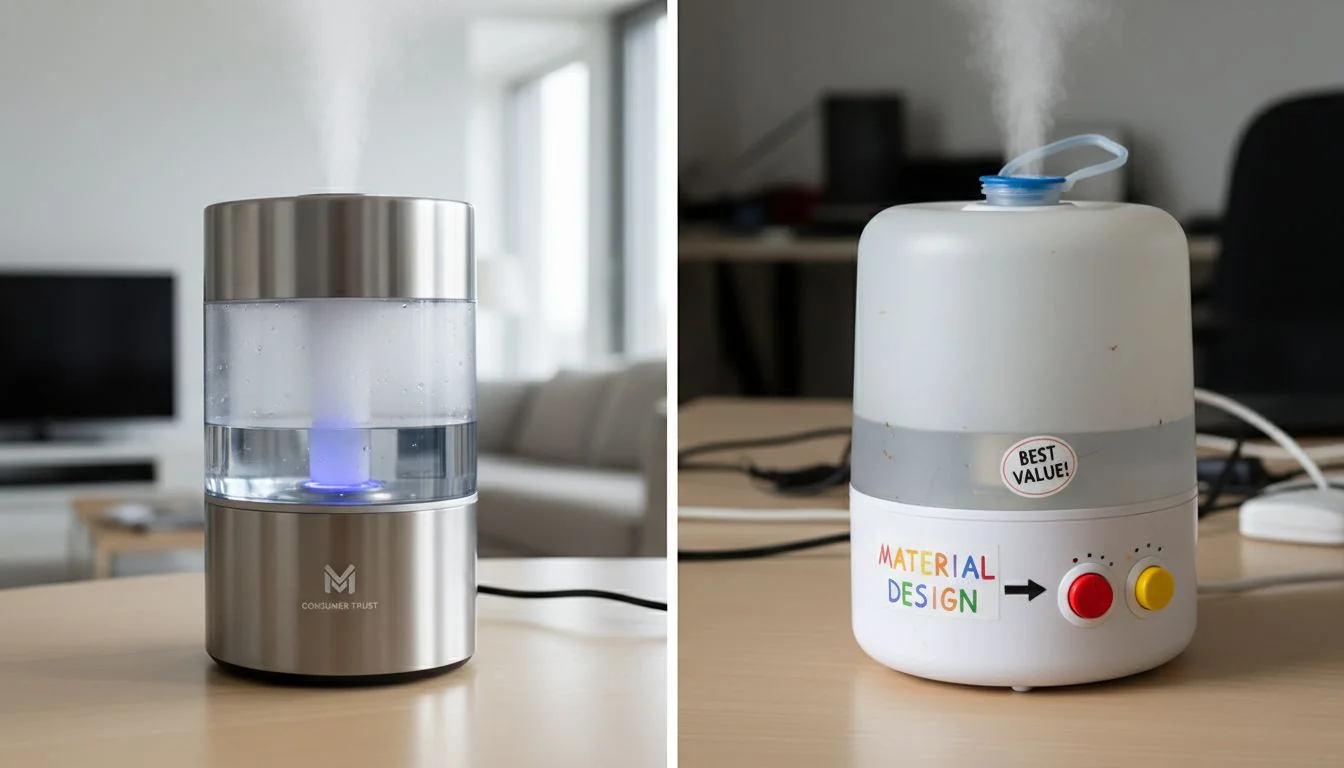
Your wellness brand promises purity, but your plastic device feels cheap and unclean. The right Material choice1 is the simple, powerful solution that can build unbreakable trust with your customers.
Material choice directly impacts a product's perceived quality and hygiene. Using premium materials like Stainless steel2, instead of plastic, signals durability and cleanliness, which builds strong consumer trust in wellness products.

Throughout my career, from the factory floor to running my own company, I've seen how a product's physical form can make or break a brand. A great idea is not enough if the final product doesn't feel right in the customer's hands. I once worked with a client who had a brilliant concept for an organic air purifier. The branding was perfect, all about nature and purity. But the prototype was a standard white plastic box. In user testing, people just didn't believe the "pure air" story. The material was telling a different, cheaper story than the brand. This disconnect is a powerful force that can sink even the best products, and it's something every designer needs to understand. This is the core problem we're going to explore.
Stainless steel is naturally antibacterial.Falso
While stainless steel is non-porous and easy to clean, making it resistant to bacterial growth, it does not have inherent antibacterial properties that actively kill bacteria on contact like some copper alloys do.
The global market for reusable water bottles, dominated by stainless steel models, was valued at over USD 8.6 billion in 2021.Vero
This market size demonstrates massive consumer adoption and trust in stainless steel for products related to personal hydration and hygiene.
What is "Material Dissonance" and How Does It Betray Your Brand?
You've spent a fortune on branding a pure, premium wellness product. But customers complain it feels cheap and hard to clean. You must fix the disconnect between your promise and your product.
"Material Dissonance3" is the negative feeling customers get when a brand promises purity and quality, but the product is made of cheap-feeling plastic. This mismatch erodes trust and undermines your brand's value, betraying the very promise you worked so hard to build.
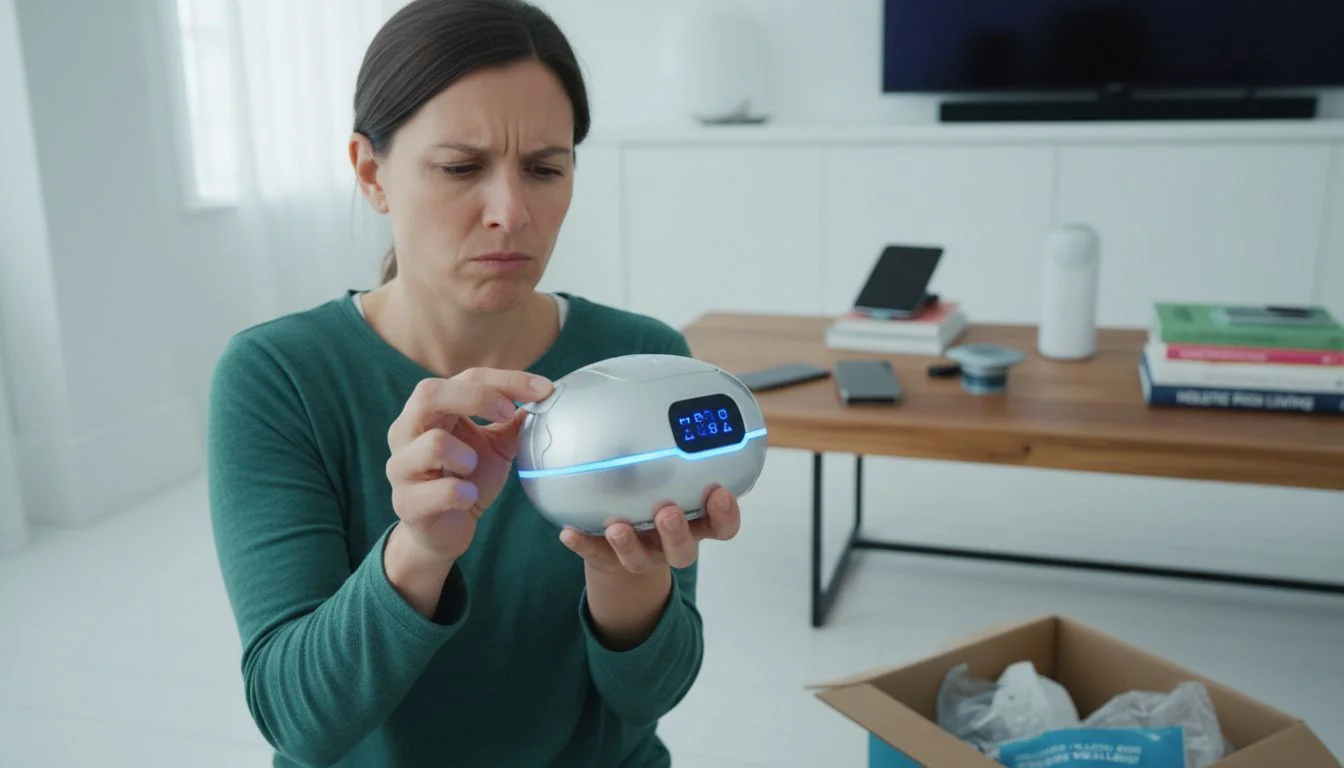
I coined the term "Material Dissonance" to describe this specific kind of brand betrayal. As a designer like you, Jacky, you know the technical specs of materials. But we also have to think about the story they tell. When a customer unboxes a device that promises to improve their health—like a humidifier—their senses are on high alert. They touch the surface, feel its weight, and look inside. If your brand story is about "clean air" and "pure moisture," but the product is a lightweight, glossy plastic box, you create a conflict in their mind. Their gut feeling tells them something is off. This is Material Dissonance in action. It's the anxiety a customer feels when your "pure" promise is delivered in a "cheap" plastic body.
The Promise vs. The Product
The core of the issue is a simple conflict. Your marketing team spends millions crafting a narrative of health, cleanliness, and premium quality. Your design, however, might be telling a story of cost-cutting and disposability.
| Brand promise4 | Material Reality (Plastic) | Resulting Dissonance |
|---|---|---|
| Purity & Health | Porous, can harbor mold | "Is this actually making me sick?" |
| Premium & Durable | Lightweight, scratches easily | "This feels cheap, not premium." |
| Easy to Clean | Stains, complex shapes | "I can never get it truly clean." |
The Customer's Gut Feeling
This isn't a logical calculation for the customer. It's an immediate, emotional reaction. They don't need a spec sheet to feel that the product doesn't live up to the promise. This feeling of being let down is what leads to poor reviews, high return rates, and a damaged brand reputation.
All plastics used in consumer goods are prone to staining and discoloration over time.Falso
While many common plastics like ABS and Polypropylene can stain or yellow with UV exposure and use, advanced polymers and specific additives can significantly improve resistance to staining and degradation.
Consumer trust is a leading factor in purchasing decisions, with 81% of consumers saying they need to be able to trust the brand to do what is right.Vero
This data from the Edelman Trust Barometer highlights the critical importance of brand trust, which can be undermined by Material Dissonance.
Why Does Plastic Fail the "Wellness" Test?
Plastic is cheap and easy to mold, making it a go-to material. But in wellness devices, it creates "Hygiene anxiety5" about hidden mold and germs. You need to recognize plastic's psychological baggage.
Plastic often fails the wellness test because it is porous, scratches easily, and can harbor bacteria and mold in those imperfections. This creates "hygiene anxiety" for consumers, making them doubt the cleanliness and safety of the device they are using to improve their health.
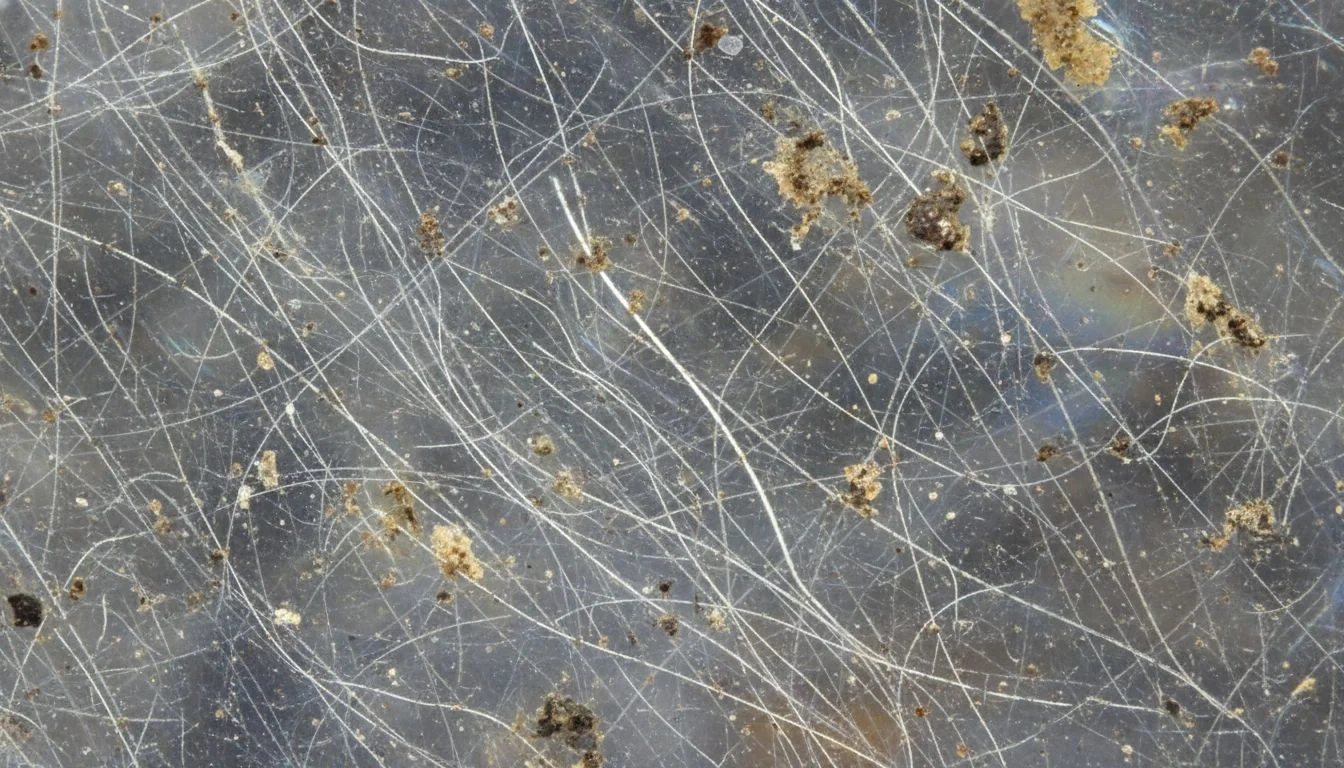
I've spent my life working with molds, and I have a deep respect for what plastic can do. For many products, it's the perfect choice. But for the wellness category, it has a fundamental psychological problem. Think about a humidifier tank. The user knows it's a dark, wet environment—the perfect breeding ground for mold and bacteria. When that tank is made of plastic, especially translucent or opaque plastic, a dozen questions pop into their head. Did I clean it right? Is there mold growing in that corner I can't reach? Are those scratches holding onto germs? This is what I call "hygiene anxiety." It's a constant, low-level stress that the product designed for their well-being might actually be harming them.
The Problem of "Hygiene Anxiety"
This anxiety is rooted in the physical properties of plastic. As a designer, you know that even smooth-looking plastic has microscopic pores.
- Micro-Scratches: Everyday cleaning with brushes creates tiny scratches that become hiding places for biofilm and bacteria.
- Discoloration: Over time, plastics can yellow or stain, which users perceive as a sign of uncleanliness, even if it's just material degradation.
- Inability to Sterilize: Most consumer-grade plastics can't be boiled or steam-sterilized without warping or degrading, leaving the user to wonder if it's ever truly sanitized.
This creates a constant cycle of doubt for the user, directly opposing the feeling of confidence a wellness product should inspire.
Boiling water can effectively sterilize all types of plastic.Falso
Many common plastics, such as PET and PVC, have low melting points and will warp or leach chemicals when exposed to boiling water. Only specific types, like polypropylene (PP), can withstand such temperatures.
Studies have shown that bacteria can form biofilms on plastic surfaces within 24 hours, which are difficult to remove with standard cleaning.Vero
This scientific reality is the basis for consumer 'hygiene anxiety,' as they intuitively understand that plastic surfaces in wet environments are difficult to keep truly clean.
How Can Stainless Steel Act as a "Trust" Signal?
You need to restore trust after creating "Material Dissonance." A simple design change is not enough. You must use a material that inherently signals quality, cleanliness, and Durata6 from the start.
Stainless steel acts as a powerful trust signal. Its non-porous, durable, and easily sterilized nature provides "Hygienic confidence7." Consumers instinctively associate it with medical-grade cleanliness and premium quality, perfectly aligning the product with a high-end wellness promise.
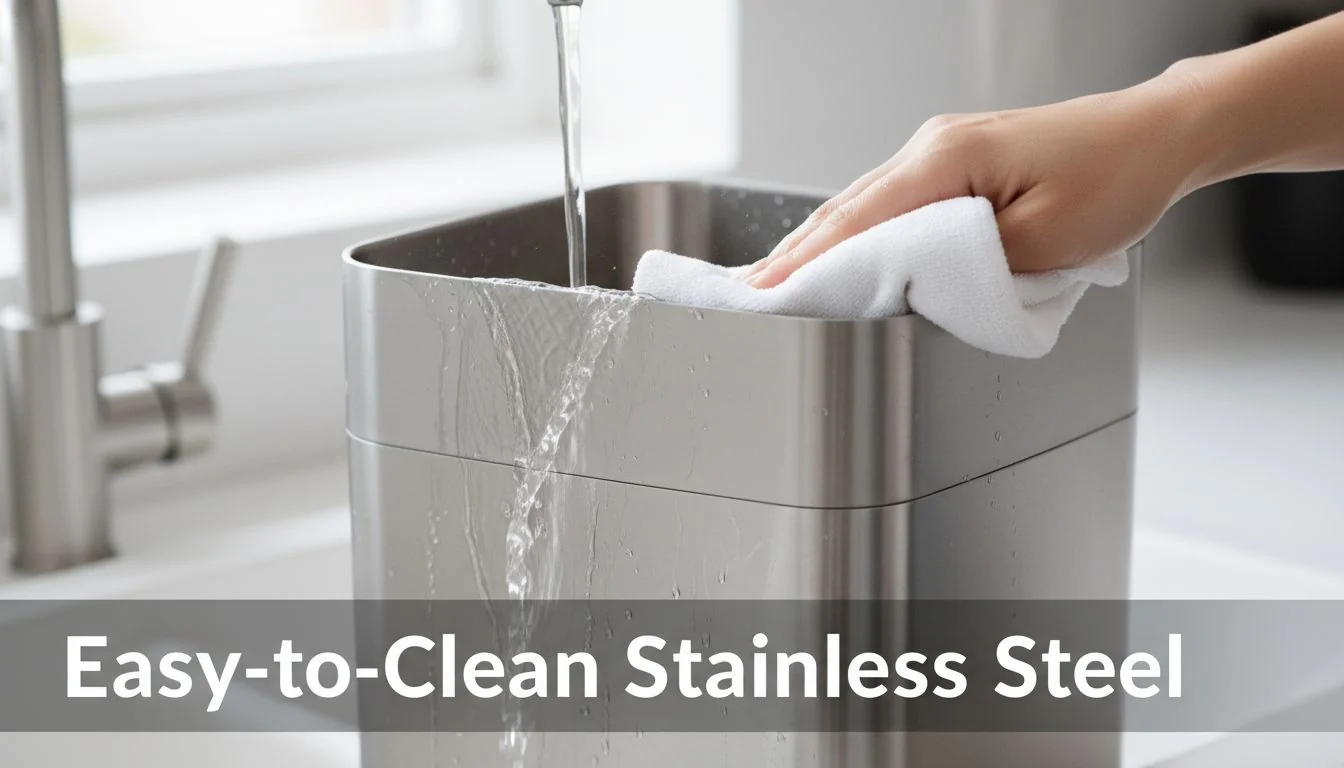
The solution to "Material Dissonance" is what I call "Material Alignment." It's about choosing a material that reinforces your brand promise at every touchpoint. For wellness, stainless steel is the undisputed champion. When a customer sees and touches a stainless steel component, especially one that holds water, their "hygiene anxiety" disappears. It's replaced by "hygienic confidence." They know it's clean because they can see it. They know it's durable because they can feel its weight and strength. They know it can be truly sanitized. This isn't something you have to teach them; it's an association built over a lifetime of seeing steel used in kitchens, hospitals, and premium products.
Achieving "Hygienic Confidence"
This confidence comes from the tangible properties of steel.
- Non-Porous Surface: Unlike plastic, stainless steel has no pores for bacteria to hide in.
- Durata: It resists scratches, won't stain, and doesn't degrade over time.
- Sterilizable: It can be easily cleaned and even sterilized with hot water without any damage.
The Engineering Challenge (and Solution)
For years, designers like you, Jacky, knew steel was better, but the manufacturing was a huge barrier. Stamping and welding complex shapes for something like a humidifier was expensive and difficult to scale. This is where the industry has changed. I've seen partners like Hisoair invest heavily in R&D to solve these exact problems. They've mastered the techniques to mold stainless steel into the complex forms needed for consumer electronics, making it a viable and powerful option. They aren't just a factory; they are enablers of trust.
All stainless steel is magnetic.Falso
It depends on the type. Austenitic stainless steels, like the common 304 and 316 grades used in consumer products, are non-magnetic. Ferritic and martensitic stainless steels are magnetic.
304-grade stainless steel is composed of iron, chromium (at least 18%), and nickel (at least 8%).Vero
This specific composition is what gives 304 stainless steel its excellent corrosion resistance and durability, making it a standard for food-grade and medical applications.
How Can You Use the "Yeti & HydroFlask Effect" for Your Device?
You need to convince consumers your product is premium and trustworthy. But marketing claims alone are not enough. You can leverage a pre-existing consumer belief in the superiority of a specific material.
The "Yeti & HydroFlask Effect" is the built-in Consumer trust8 in stainless steel for hygiene and durability. By using steel in your wellness device, you borrow this trust, instantly elevating your product's perceived value without needing an extensive marketing campaign to prove it.
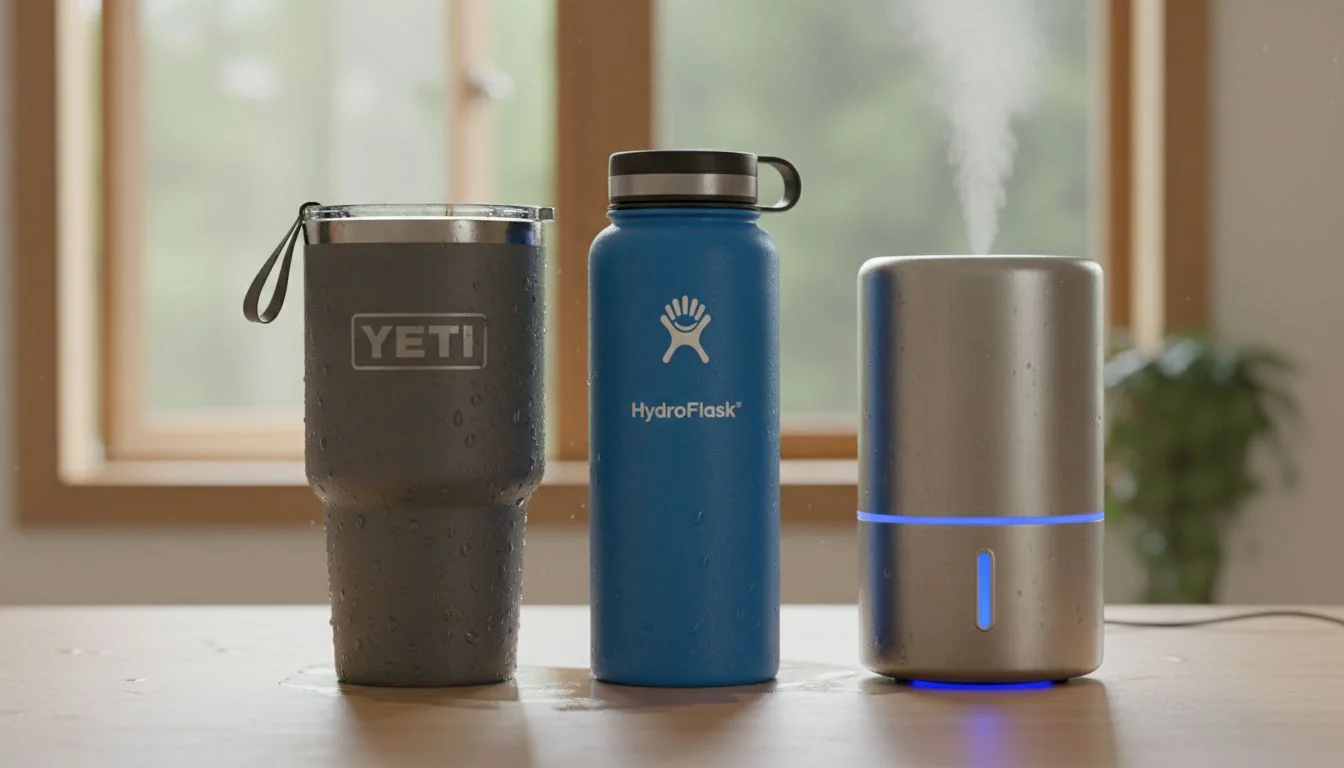
The most powerful tool you have as a designer isn't something you create; it's something that already exists in the consumer's mind. Think about it. Brands like Yeti and HydroFlask built multi-billion dollar empires not by inventing a new technology, but by applying a trusted material—stainless steel—to a category dominated by plastic. They didn't have to run ads explaining why steel was better for a water bottle. Consumers already knew. They knew it wouldn't hold onto old coffee smells, it was durable, and it felt clean. This is the "Yeti & HydroFlask Effect9." You are weaponizing a proven, pre-existing consumer belief.
Borrowing Billions in Brand Trust
Your D2C brand doesn't have the marketing budget of a giant corporation. So, you need to be smarter. By choosing stainless steel, you are borrowing the trust and perceived value that other brands have spent billions to build.
| Percezione del consumatore | Plastic Product | Stainless Steel Product |
|---|---|---|
| Initial Feeling | Skepticism, "Is it clean?" | Confidence, "This is quality." |
| Long-Term View | Disposable, will need replacing | A long-term investment |
| Price Expectation | Basso | High / Premium |
Applying the Effect to Wellness Devices
Now, apply this directly to your work, Jacky. The biggest fear for a humidifier user is moldy water creating unhealthy mist. Imagine their relief when they see the water tank is made of the same trusted stainless steel as their favorite water bottle. The trust is instant. The value is immediately understood. You don't have to sell them on the concept of "hygienic confidence"; the material does it for you. You have the chance to be the designer who brings this proven, powerful trend to a new category. The market is already educated and waiting for it.
Yeti and HydroFlask were the first companies to make insulated drinkware.Falso
Insulated vacuum flasks have existed since the late 19th century with the brand Thermos. Yeti and HydroFlask's success came from modern branding, design, and applying the concept to a wider range of products with a focus on durability and lifestyle.
The use of stainless steel in a product can justify a higher retail price point in the consumer's mind.Vero
Consumers widely perceive stainless steel as a premium, durable, and hygienic material, and are often willing to pay more for products that feature it, as demonstrated by the success of brands like Yeti.
Conclusione
Your material choice is not just a feature on a spec sheet. It is the physical foundation of your brand's promise and the very core of building lasting consumer trust.
References
-
Understanding material choice can help brands enhance consumer trust and product perception. ↩
-
Discover why stainless steel is associated with quality and hygiene in wellness products. ↩
-
Exploring Material Dissonance reveals how mismatched materials can erode consumer trust. ↩
-
Aligning brand promise with product reality is crucial for maintaining consumer trust. ↩
-
Learning about hygiene anxiety can help brands address consumer concerns effectively. ↩
-
Exploring durability can help brands create products that resonate with quality-conscious consumers. ↩
-
Instilling hygienic confidence is essential for wellness brands to succeed in the market. ↩
-
Understanding consumer trust can guide brands in building stronger relationships with customers. ↩
-
Understanding this effect can help brands leverage existing consumer trust in materials. ↩










 English
  Français
  Español
  Italiano
  Deutsch
  Português
  Русский
  العربية
  日本語
日本語  한국어
한국어  Tiếng Việt

