Si apre in una nuova scheda
Soluzioni innovative per la qualità dell'aria

The ROI of Premium Air Purifiers for Businesses

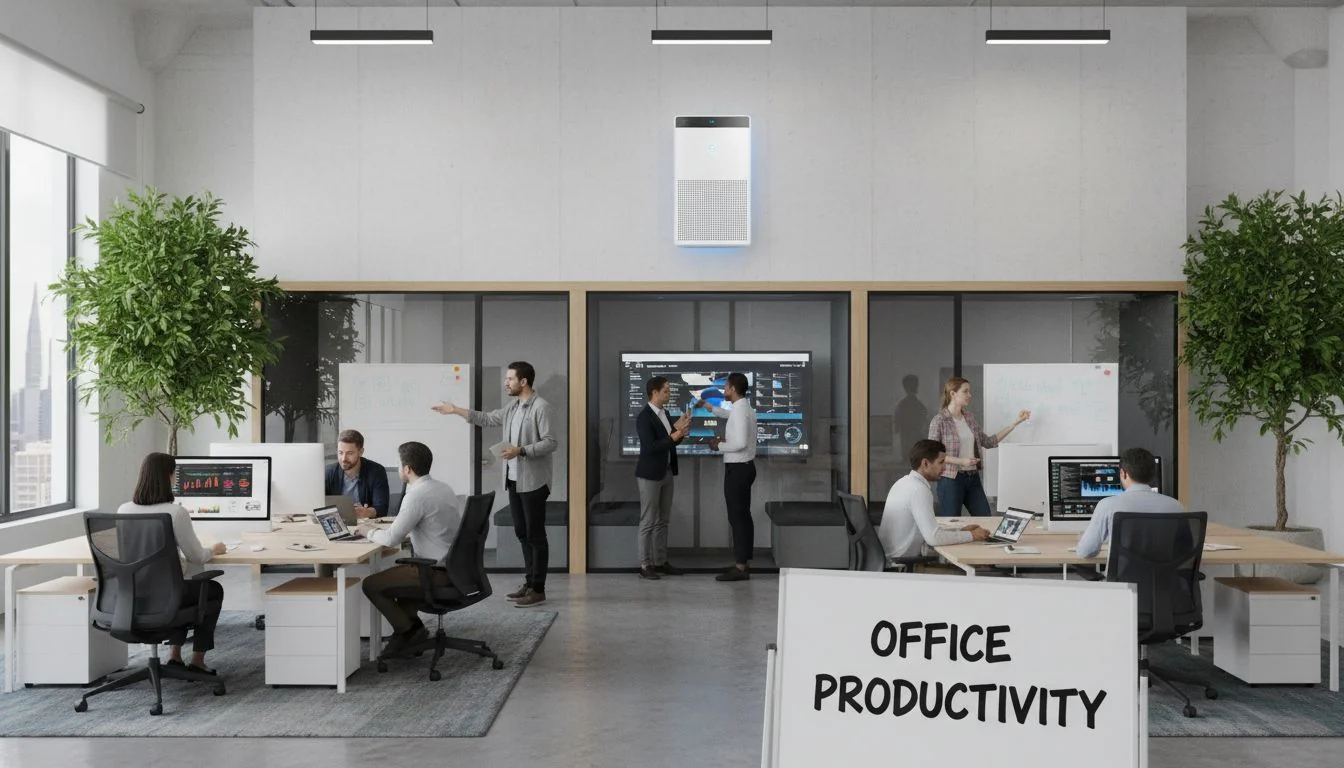
modern office with wall mounted air purifier and productive team

Stale office air isn't just uncomfortable; it drains your team's energy and hurts your bottom line. You need a solution that turns air quality into a competitive advantage.

Premium air purifiers deliver ROI by improving cognitive performance, reducing sick leave, and optimizing floor space. High-quality units like Hisoair offer the lowest Total Cost of Ownership1 (TCO) through energy efficiency and durability, transforming air filtration from a maintenance cost into a productivity asset.
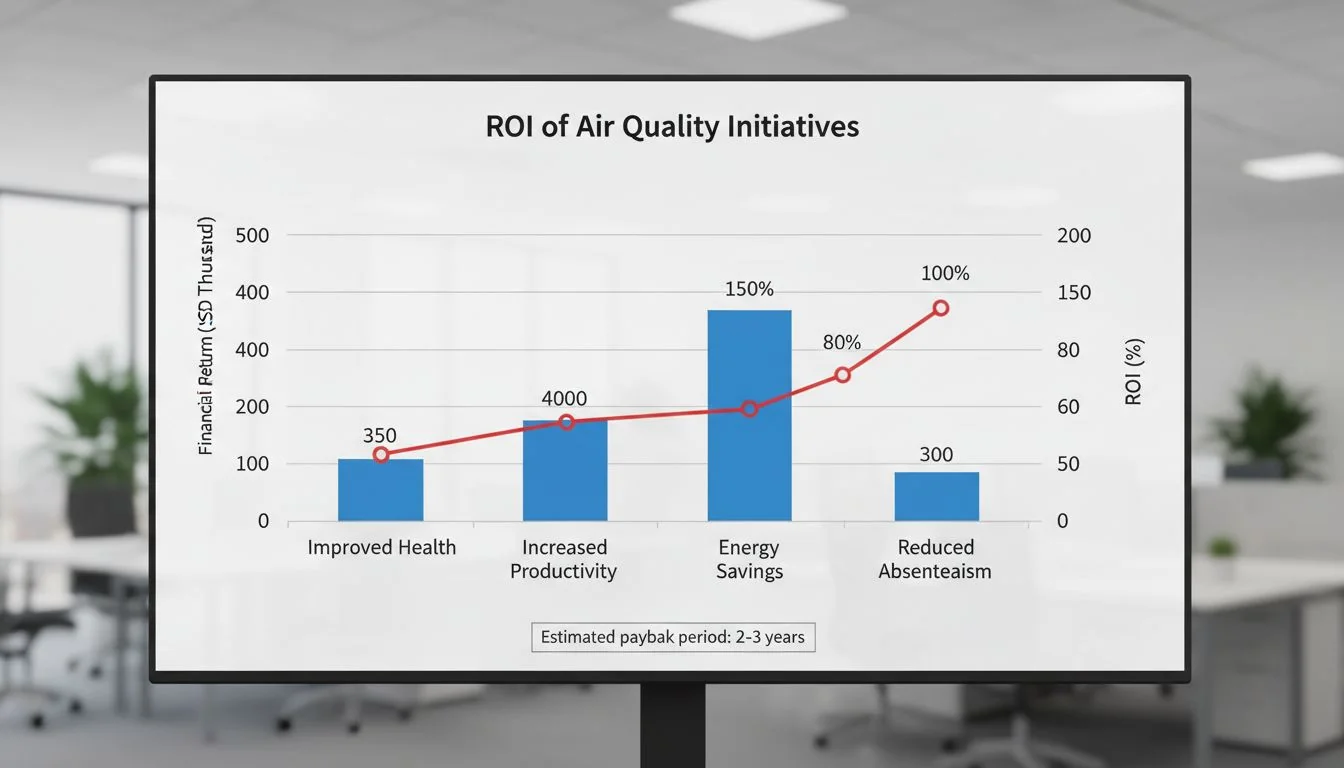
chart showing roi of air quality

Many business owners see air purifiers as just another appliance to buy. They look at the price tag and hesitate. But I have learned that in manufacturing and design, efficiency is everything. Let me show you the math behind why clean air2 is an investment, not an expense.

Poor air quality is a primary cause of reduced cognitive function in offices.Vero

Studies show high CO2 and particulate matter significantly lower decision-making abilities.

Air purifiers are strictly a health expense with no financial return.Falso

Air purifiers provide financial ROI through energy savings, space optimization, and productivity gains.

Why Should You Shift Air Quality from a Cost Center to a Profit Driver?

Most managers treat air filters like toilet paper—a necessary expense to minimize. This mindset ignores the massive potential for operational improvement hiding in plain sight.

Viewing air quality as a profit driver changes how you budget. Instead of seeking the cheapest hardware, you invest in "Facility Optimization3." Clean air increases uptime and yield by keeping the human machinery—your employees—running at peak efficiency.
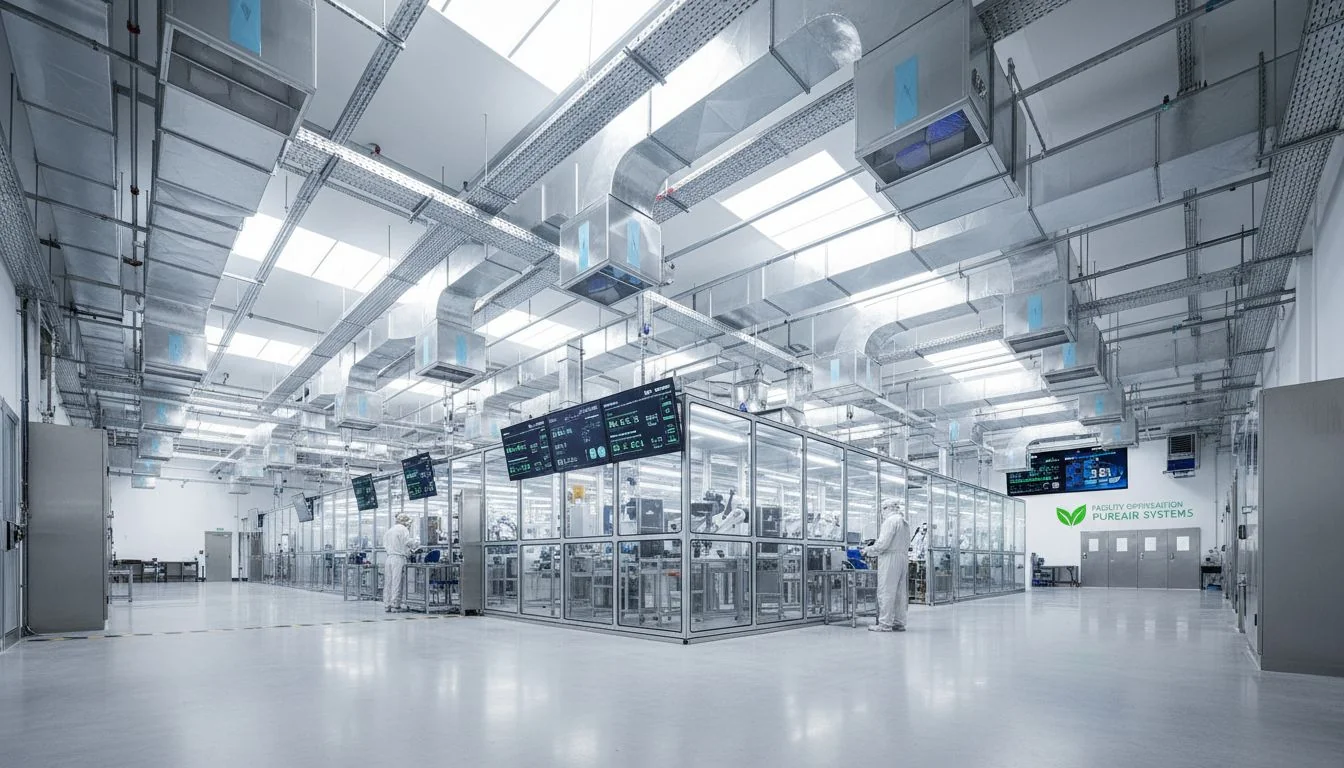
factory floor with clean air systems

In the mold industry, we know that precision matters. If a CNC machine is slightly off, the whole batch is ruined. Your workforce is the same. I used to think air conditioning was enough. But standard HVAC doesn't remove fine particles that slow us down. We need to stop thinking about "dust" and start thinking about "yield." When I ran my factory, I realized that the environment dictates the output. If the air is heavy, the work is slow.

You are not selling hardware; you are selling "Facility Optimization." Your language should be about "efficiency," "uptime," and "yield," not just "dust." When I talk to fellow business owners, I tell them to look at their facility as a whole system. If your designers are breathing dirty air, their output drops. It is the same as running a machine with a clogged filter. By installing premium purification, you are upgrading your facility's operating system.

Old Mindset New Mindset
Air is a utility cost. Air is a performance tool.
Buy the cheapest unit. Buy for lowest TCO.
Focus on comfort. Focus on productivity yield.

Facility optimization only applies to machinery.Falso

Facility optimization includes environmental factors like air quality that affect human performance.

Clean air contributes to higher operational yield.Vero

Better environments lead to fewer errors and higher work output.

Can Better Air Quality Really Double Your Team's Cognitive Performance?

Brain fog kills creativity and leads to expensive design errors. You might blame fatigue, but the real culprit is often the invisible CO2 and particulate matter in the room.

The Harvard "COGfx" study proves that improved indoor air quality can double cognitive function scores. By removing pollutants, premium purifiers act as performance enhancers, allowing designers and engineers to solve complex problems faster and with fewer mistakes.

engineers collaborating in clean environment

In B2B sales and engineering, authority is key. We don't guess; we look at data. The Harvard T.H. Chan School of Public Health conducted the famous "COGfx" Study. The results were shocking. They found that people working in green, well-ventilated environments had cognitive scores 101% higher than those in standard offices. That is double the brainpower. For a guy like Jacky designing complex molds, that focus is critical.

This turns your product from a "health gadget" into a "Performance Enhancer." When I am designing a mold, I need total focus. A small mistake in the shrinkage calculation can cost thousands of dollars later. If the air is clean, my brain works better. It is that simple. We need to treat air purifiers like we treat high-speed computers. They are tools that help us do our jobs better.

Key Cognitive Gains from Clean Air:

  • Crisis Response: Ability to handle emergencies improves.
  • Strategy: Better long-term planning capabilities.
  • Information Usage: Faster processing of new data.

The Harvard COGfx study showed a 101% increase in cognitive scores with better air.Vero

The study confirmed doubling of cognitive performance in green building environments.

Air quality has no impact on strategic thinking.Falso

Strategic thinking scores are significantly higher in environments with lower VOCs and CO2.

How Does Clean Air Reduce Absenteeism and Boost Retention?

Losing key staff to sick days or competitors disrupts production schedules. A simple ping-pong table won't fix this, but a visible commitment to health might be the answer.

High-tech, wall-mounted purifiers signal to employees that you invest in their well-being. This reduces sick leave4 by filtering pathogens and serves as a powerful retention tool, often providing more value to staff than superficial office perks.
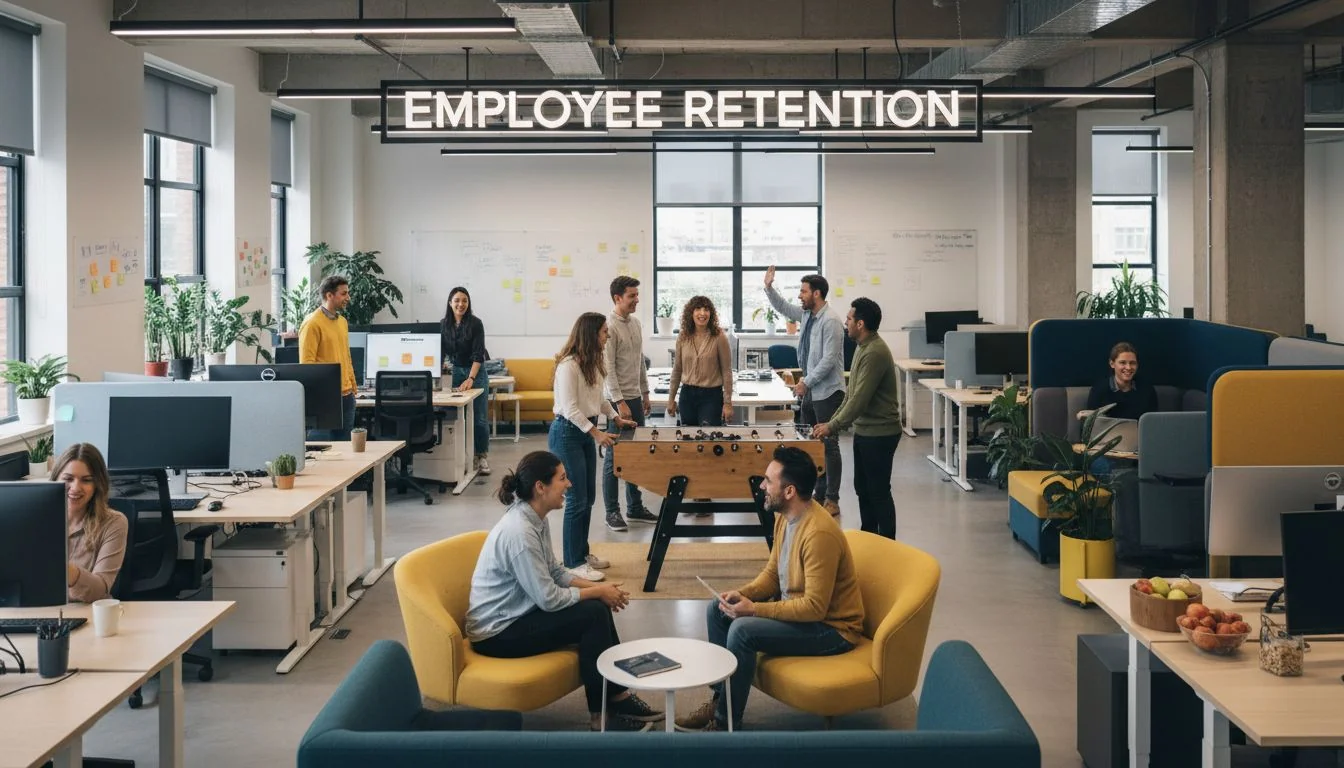
happy employees in modern office

In the war for talent, "Wellness" is a major perk. When I hire engineers, they look at the workspace. A visible, high-tech Wall-Mounted Purifier signals to employees: "We invest in your health." It is a retention tool that is cheaper than a ping-pong table but much more valuable. Employees want to feel safe. If they see a Hisoair unit humming quietly on the wall, they know I care about them.

Also, consider the "health dividend5." Reducing absenteeism saves money. If a senior designer is out for a week with the flu, projects stall. Deadlines are missed. Clients get angry. By filtering out viruses and bacteria, we keep the team healthy. It is an insurance policy for your production schedule.

The Retention Value Proposition:

  1. Visual Safety: The unit is visible proof of care.
  2. Reduced Sickness: Fewer days off means less stress on the team.
  3. Modern Feel: High-tech equipment attracts high-tech talent.

Visible health investments improve employee retention.Vero

Employees are more likely to stay with companies that demonstrate care for their physical well-being.

Ping-pong tables are more effective than health perks.Falso

Health and safety benefits rank higher than recreational perks for long-term satisfaction.

Are Floor Units Stealing Valuable Office Space from Your Business?

Floor space in commercial buildings is incredibly expensive. Cluttering your walkways with bulky appliances is a waste of money that most business owners fail to calculate.

wall-mounted purifiers6 utilize vertical space, effectively operating "rent-free." In contrast, a floor unit occupying two square feet in a prime office can cost hundreds of dollars annually in implied rent, making wall units the financially superior choice.
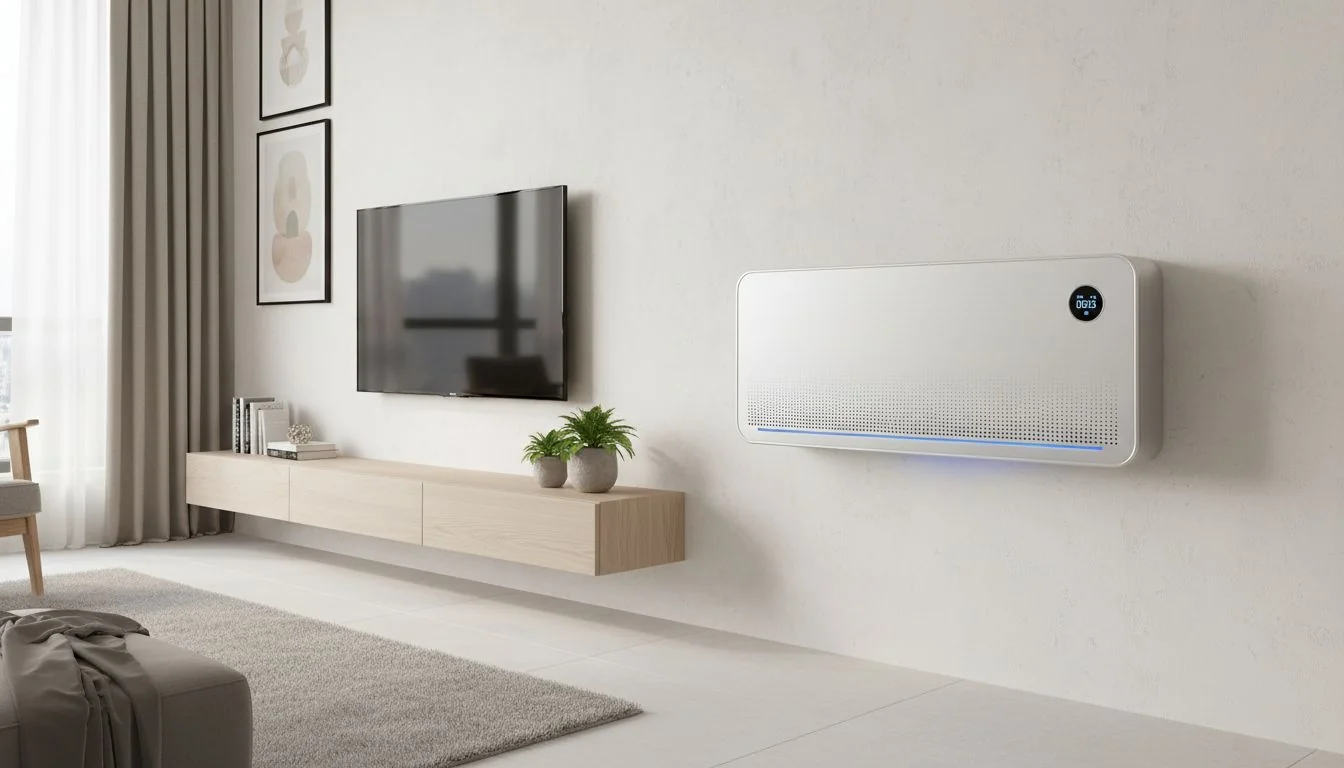
wall mounted air purifier saving space

I've mentioned this before, but for B2B, it's critical. Let's do the Real Estate Math. If a law firm or design studio pays $100 per square foot for rent, space is money. A standard floor unit takes up about 2 square feet. That means that unit "rents" $200 of space a year. Over five years, that is $1,000 just to have it sit on the floor.

A wall unit is "rent-free." This is a purely financial argument for your form factor. In my trading company, we had limited space. Every square foot had to generate revenue. I couldn't afford to have bulky machines blocking the path. Hisoair’s wall-mounted advantage solves this. It keeps the floor clear for people and products. It is a smart design choice that respects the cost of real estate.

Unit Type Footprint Annual "Rent" Cost ($100/sq ft)
Floor Unit 2 sq ft $200
Wall Unit 0 sq ft $0

Wall-mounted units save money on implied rent costs.Vero

By not occupying floor space, they do not consume billable square footage.

Floor units are more space-efficient than wall units.Falso

Floor units occupy walkable area, whereas wall units use unused vertical space.

Why Is Total Cost of Ownership More Important Than the Sticker Price?

Buying the cheapest air purifier often leads to higher costs later. Smart buyers look beyond the initial price tag to see the true financial picture over five years.

Hisoair units offer the lowest Total Cost of Ownership (TCO) thanks to long-life brushless motors and washable pre-filters. While a cheap unit breaks or consumes excess energy, a premium unit wins on the 5-year spreadsheet through durability and efficiency.

calculator and money saving concept

"TCO" (Total Cost of Ownership) is King. Business buyers are smart. They know a cheap $50 unit that breaks in 6 months is expensive. You have to replace it, and that takes time and money. I pitch Hisoair's units as having the "Lowest TCO." We use long-life brushless motors. They don't wear out like the cheap ones. We use washable pre-filters so you buy fewer replacements.

You win on the 5-year spreadsheet, not the day-1 price. Also, consider energy. Our units have energy-sipping AI modes. They only run hard when the air is dirty. This saves on the electric bill. When I calculate the cost for my clients, I show them the long game. A cheap unit costs more in energy and filters in just two years than a premium unit costs upfront.

The TCO Advantage:

  • Motor Life: Brushless motors last years longer.
  • Consumables: Washable filters reduce recurring costs.
  • Energy: AI modes prevent energy waste.

Cheap air purifiers usually have a lower TCO.Falso

Frequent replacements and high energy use make cheap units more expensive over time.

Brushless motors extend the lifespan of the unit.Vero

Brushless technology reduces friction and wear, significantly increasing operational life.

Conclusione

Treat air purifiers as assets, not appliances. By improving cognition, saving space, and lowering TCO, Hisoair units optimize your facility and drive real profit.


References


  1. Understanding TCO helps businesses make informed decisions about air purifiers, ensuring long-term savings. ↩

  2. Clean air is crucial for maintaining high productivity levels and reducing errors in the workplace. ↩

  3. Facility Optimization emphasizes the importance of air quality in enhancing operational efficiency and employee performance. ↩

  4. Reducing sick leave through improved air quality can enhance overall employee well-being and productivity. ↩

  5. Understanding the health dividend can help businesses recognize the financial benefits of investing in air quality. ↩

  6. Wall-mounted purifiers save valuable floor space and can be more cost-effective in the long run. ↩

Condividi:
il fondatore di hisoair, il signor lee
Alwen Lee, an air purification expert with over 10 years of experience, is a devoted father of two and a passionate traveler, having explored more than 30 countries. With a love for public speaking and swimming, he has dedicated his life to the indoor air quality industry. His mission is to ensure that people around the world enjoy the freedom to breathe clean air and lead happy, healthy lives.

Inviaci un messaggio

Altro da leggere

Modern living room with a family enjoying a healthy indoor environment monitored by smart devices, natural lighting, and greenery.

After IFA 2026: The Healthy Home Is Moving Beyond Smart Devices

In our previous IFA 2026 column, Air Purification Is Becoming Part of the Healthy-Home Platform, we argued that the next generation of indoor-health products would ...
Notizie
Modern living room and kitchen with smart home air quality devices including an air purifier, humidifier, and water filtration system, connected with visualized blue connectivity lines.

IFA 2026: Air Purification Is Becoming Part of the Healthy-Home Platform

Pre-IFA Industry Perspective | September 4, 2026 This article is based on official announcements and regulatory information available ahead of IFA 2026, which takes place ...
Notizie
Comparison infographic showcasing the differences between carbon block filter and activated carbon fiber. Detailed diagrams illustrate the hierarchical porous structure of the carbon block with long diffusion paths and the open microporous structure of the activated carbon fiber with direct access for PFAS adsorption.

Carbon Block vs. Activated Carbon Fiber (ACF): Matching Media to Target Contaminants

Two carbon media. Same adsorption chemistry. Very different behaviour in a point-of-use cartridge. If you are specifying a water purifier platform for a PFAS-aware market, ...
Notizie
NSF base listing and ANF private-label certification pathway for OEM water filters

What Is an NSF Master Listing? A Guide to Base Listings, ANF Certification and OEM Water Filters

For a brand preparing to launch an OEM water purifier, one of the most common supplier claims is: “We already have an NSF master listing, ...
News, Water Purifiers
Healthy-home brand team reviewing PFAS water filter certification, test data and product engineering

Entering the Water Category Is Easy. Building a Credible PFAS Claim Is Much Harder

For air purification, appliance and healthy-home brands, entering the water category can look surprisingly easy. A company can select an existing undersink system, customize its ...
Notizie
Team in a business meeting discussing a water filtration system with product components and a comparison table displayed on a screen.

5 Leading OEM Water Purifier Manufacturers in China for Private Label Brands

China has thousands of companies selling water filters, reverse osmosis systems and drinking-water appliances. However, only a portion of them are suitable for private-label, OEM ...
Notizie
Contaminant Engineering•3 min read

PFAS Water Filtration Technologies Explained: Carbon, Resin & RO

Key Takeaway:

PFAS reduction depends on the specific compounds present, treatment media, contact time, water chemistry, and system design. Activated carbon, ion exchange, and Reverse Osmosis address PFAS through different mechanisms.

PFAS are a large family of persistent fluorinated compounds that can occur in drinking-water supplies. Their treatment behavior varies significantly by molecular structure, chain length, functional group, concentration, and the chemistry of the source water.

Granular Activated Carbon (GAC) removes PFAS primarily through adsorption. It is generally more effective for many longer-chain PFAS, while shorter-chain compounds tend to break through more quickly. Carbon performance depends on media properties, Empty Bed Contact Time (EBCT), competing organic matter, loading, and replacement frequency.

Ion-exchange resins use charged functional sites to capture many PFAS compounds. Properly selected anion-exchange media can provide high capacity and may perform better than conventional activated carbon for some shorter-chain PFAS, although performance still depends on water chemistry and competing ions.

Reverse Osmosis (RO) uses membrane separation rather than adsorption. Properly designed RO systems can provide broad reduction across many PFAS compounds as well as dissolved salts and other contaminants. Unlike carbon or resin, however, RO also produces a concentrate stream that must be managed.

No single technology should be selected from a PFAS label alone. System design should consider which PFAS compounds are present, their concentrations, required reduction targets, flow rate, media life, and the applicable third-party certification or validation requirements.

HisoAir Water Technical Series
Product Discovery•3 min read

How to Choose an Under-Sink Water Purifier for Modern Kitchens

Key Takeaway:

Match the treatment technology to your water quality first, then evaluate cabinet space, faucet configuration, flow rate, drain and power requirements, and filter replacement needs.

Choosing an under-sink water purifier starts with water chemistry. Carbon filtration is well suited to chlorine, taste, odor, and many organic contaminants, while Reverse Osmosis is more appropriate when dissolved salts, fluoride, nitrates, or broader dissolved contaminants need to be reduced.

For compact kitchens, tankless RO systems eliminate the conventional storage tank and can significantly reduce the space required under the sink. However, membrane capacity stated in GPD does not directly equal faucet flow. When comparing systems, check the actual dispensing flow rate, inlet-pressure requirement, recovery ratio, and whether a booster pump is required.

Installation architecture also matters. Many RO systems require a drain connection, electrical power, and either a dedicated drinking-water faucet or a compatible multi-function faucet. High-flow carbon systems can often connect directly to the existing cold-water line with a simpler installation, but pressure drop and available faucet flow should still be verified.

RO also removes much of the naturally occurring dissolved mineral content. Where taste or mineral balance is a priority, a post-RO remineralization stage can be added. Filter life should be evaluated by both rated capacity and local water quality rather than replacement time alone.

The right system is therefore not simply the smallest or highest-GPD model. It is the configuration that matches the target contaminants, available cabinet space, desired faucet setup, peak dispensing demand, and maintenance expectations.

HisoAir Water Technical Series
Water Quality•2 min read

What Does TDS Mean in Drinking Water? Measurement vs Contaminant Reality

Key Takeaway:

A TDS meter estimates the overall concentration of dissolved ionic substances from electrical conductivity. It cannot identify specific contaminants or determine whether water is chemically safe.

Total Dissolved Solids (TDS) refers to the combined concentration of dissolved substances in water. Most handheld TDS meters do not measure TDS directly. Instead, they measure electrical conductivity (EC) and convert that reading into an estimated parts-per-million (ppm) value.

This means a TDS reading can indicate how much dissolved ionic material is present, but not what that material actually is. Calcium, magnesium, sodium, nitrates, and other dissolved ions can all contribute to conductivity, yet a simple TDS meter cannot distinguish between them.

TDS meters are also not suitable for detecting trace contaminants such as PFAS, many VOCs, pesticides, pharmaceuticals, or disinfection byproducts. These substances may be present at concentrations far below the level needed to noticeably change electrical conductivity.

A low TDS reading therefore does not guarantee safe drinking water, and a higher TDS reading does not automatically indicate contamination. Water-treatment decisions should be based on laboratory testing for specific contaminants of concern rather than TDS alone.

HisoAir Water Technical Series
Technology Selection•2 min read

RO vs UF Water Filtration: Understanding Pore Sizes & Dissolved Minerals

Key Takeaway:

Ultrafiltration can reduce bacteria, turbidity, and suspended particles while retaining most naturally occurring dissolved minerals. Reverse Osmosis provides much broader reduction of dissolved salts and smaller contaminants.

Ultrafiltration (UF) typically uses hollow-fiber membranes with pore sizes in the approximate 0.01–0.1 micron range. These membranes physically retain turbidity, suspended solids, colloids, and many microorganisms while allowing dissolved minerals and salts to remain in the water.

Reverse Osmosis (RO) operates at a much finer separation level. Unlike UF, RO can substantially reduce dissolved ions such as sodium, calcium, fluoride, nitrates, and other contributors to total dissolved solids (TDS). This makes RO more suitable when dissolved-salt reduction is a primary treatment objective.

UF generally requires less system pressure and produces little or no continuous concentrate stream in many point-of-use configurations. RO typically requires greater pressure and produces a reject-water stream, but delivers broader contaminant reduction.

For water with acceptable TDS and mineral content, UF can be a simpler mineral-retaining treatment option. Where dissolved salts, fluoride, nitrates, or broader dissolved contaminants are a concern, RO is generally the more appropriate technology.

HisoAir Water Technical Series
Technology Selection•4 min read

Carbon Block vs Reverse Osmosis: Which Fits Your Need?

Key Takeaway:

Choose RO for dissolved inorganic salts and heavy metals; choose Carbon Block for chemical taste/odor, no wastewater, and high line-pressure flow.

Reverse Osmosis (RO) and Carbon Block filtration represent two fundamentally different treatment methods: membrane separation and adsorption. Understanding these differences helps determine which technology is better suited to a specific water-quality requirement.

Reverse Osmosis uses a semi-permeable membrane with pore sizes of approximately 0.0001 microns. It can significantly reduce dissolved inorganic contaminants such as TDS, fluoride, nitrates, and certain heavy metals. Because water must be forced through the membrane, RO systems require sufficient pressure or a booster pump and generate a concentrated wastewater stream.

Carbon Block filtration relies primarily on adsorption through compressed activated carbon, commonly with nominal pore sizes around 0.5–5 microns. It is highly effective for chlorine, chloramines, VOCs, taste, and odor, while allowing substantially higher direct-flow rates without producing wastewater.

From an operating perspective, Carbon Block systems are generally simpler, require less energy, and avoid the water loss associated with RO. RO involves higher system complexity and operating cost, but provides substantially broader reduction of dissolved contaminants that Carbon Block alone cannot address.

HisoAir Water Technical Series

RICHIEDI UN PREVENTIVO