
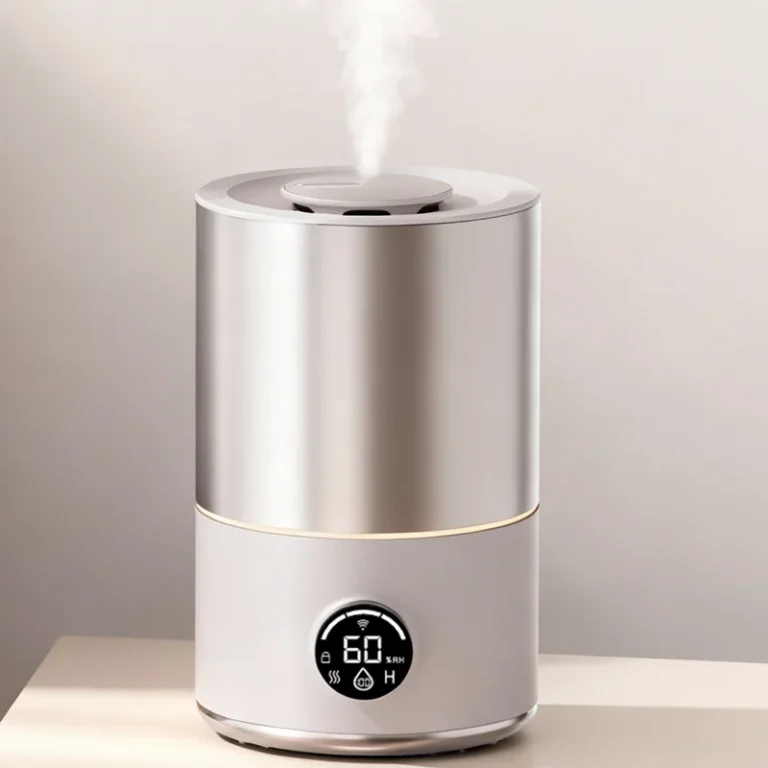
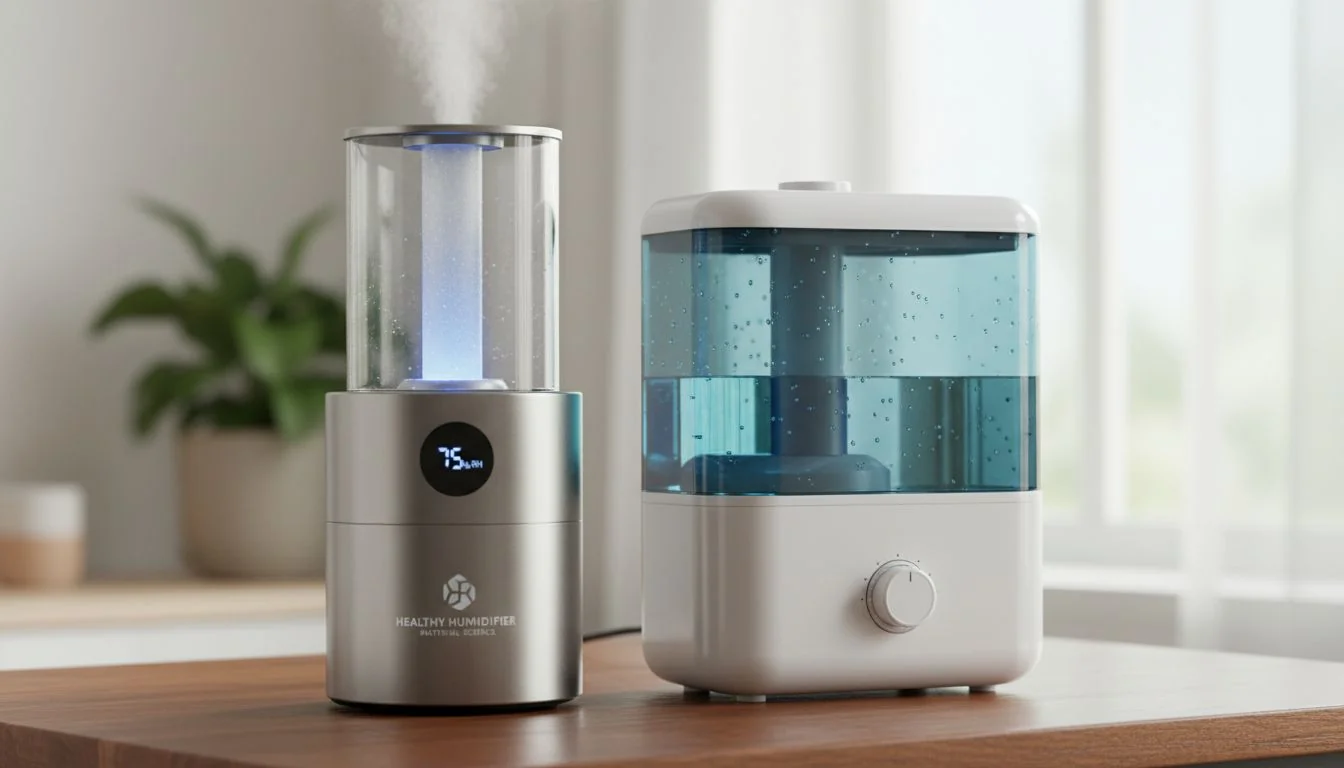
Your brand sells wellness, but your humidifier might be spreading germs. This hidden flaw can damage your reputation. The key is understanding the science that separates a standard humidifier from a truly healthy one.
A "healthy humidifier" is not about mist volume; it's defined by its hygienic design1. This means using non-porous, sterilizable materials like stainless steel that actively prevent the growth of biofilm, ensuring the mist is clean and safe to breathe.
As someone who has spent a lifetime in manufacturing, I've learned that the materials you choose define the quality and safety of the final product. It's a lesson that applies to everything from industrial molds to the wellness devices in our homes. Many brands focus on features they can list on a box, but the real story of a product's health and safety is written in its material science. Let's dive into the science that D2C brands need to understand to build a humidifier that is genuinely healthy. This is the knowledge that separates a market leader from just another product on the shelf.
High humidity levels in a home can reduce the survival of airborne flu viruses.Vero
Studies have shown that at humidity levels above 40%, the ability of aerosolized influenza virus to cause infection drops significantly.
All humidifiers are effective at preventing the spread of airborne bacteria.Falso
If a humidifier's water tank is contaminated with bacteria, the device can aerosolize these pathogens and spread them into the air, potentially increasing health risks.
1. Introduction: "Humidity" vs. "Healthy Humidity"?
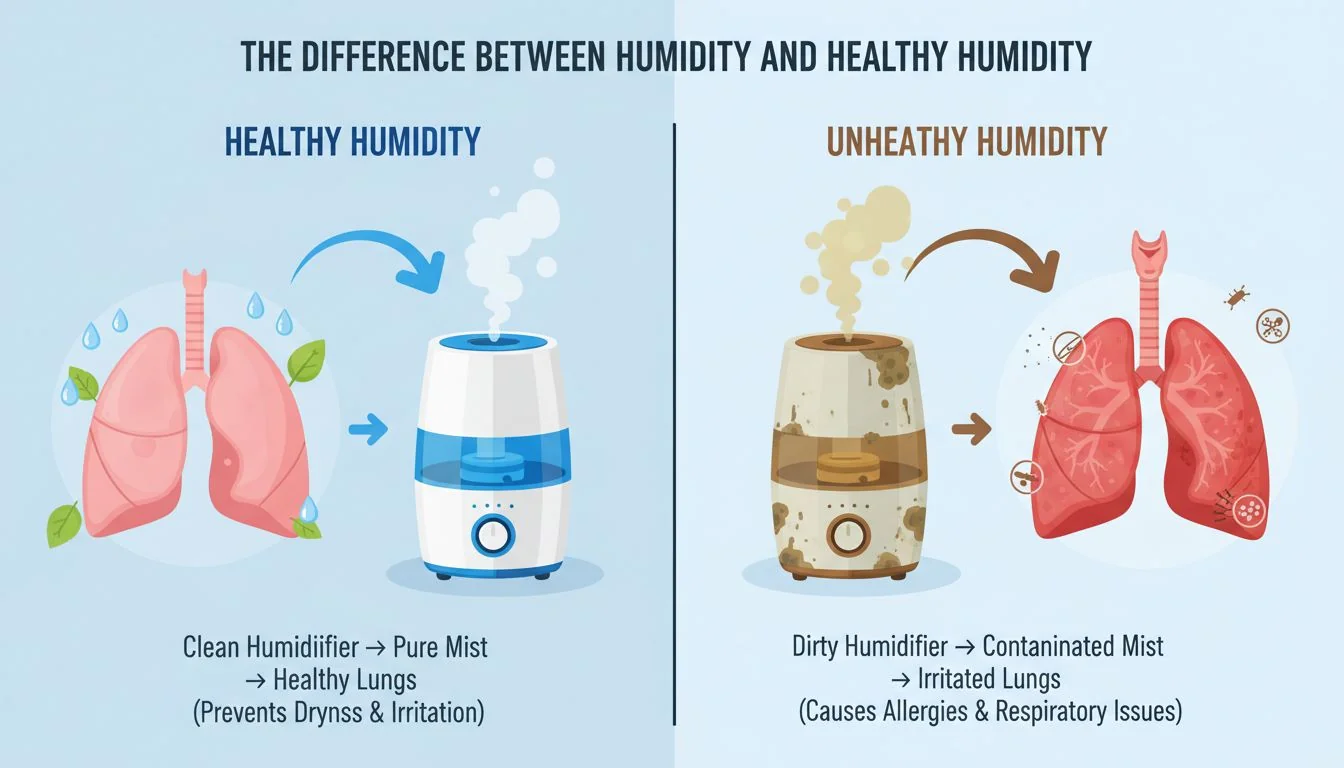
You believe adding moisture to the air is always beneficial. But what if your device is dispersing contaminated water? This turns a wellness product into a health hazard for your customers.
"Healthy humidity" is not just water vapor; it's pure, uncontaminated moisture. This is only possible when the humidifier itself is designed to be inherently hygienic, preventing the growth and aerosolization of microbes from the water tank.
Dive deeper Paragraph:
For years, the industry has sold us on the idea of "humidity." We measure it in percentages and aim for a target number, thinking that's the end of the story. But that's a dangerously incomplete picture. I remember consulting for a startup that had a beautiful humidifier design. They were proud of its high mist output. But they used standard, cheap plastic for the tank. Within a few months, customer reviews started mentioning musty smells and even respiratory irritation. They focused on the quantity of "humidity," not the quality. This is the critical distinction. "Healthy humidity" is about the purity of the mist. It's a qualitative measure, not just a quantitative one. As a designer like Jacky knows, specifications are everything. We need to add a new spec to our design brief: microbial count in the aerosolized mist.
| Caratteristica | Standard "Humidity" | "Healthy Humidity" |
|---|---|---|
| Primary Focus | Mist Output (mL/hr) | Purity of Mist |
| Key Metric | Relative Humidity (%) | Microbial Count (CFU/m³) |
| Design Goal | Evaporazione | Hygiene & Sterilization |
| User Outcome | Relief from Dryness | Safe, Clean Air & Wellness |
The term 'healthy humidity' is a regulated, scientific standard.Falso
While the concept is based on scientific principles of hygiene, 'healthy humidity' is a marketing and educational term used to differentiate clean mist from potentially contaminated mist. It is not a formal standard regulated by a government body.
Maintaining indoor humidity between 40-60% is associated with better health outcomes.Vero
This range is widely recommended by organizations like the EPA as it can limit the survival of viruses, reduce allergens like dust mites, and soothe dry airways, without promoting mold growth.
2. The "Unhealthy" Science: Why Do Most Humidifiers Fail (The Biofilm Problem)?
Your plastic humidifier looks clean on the surface, but a hidden danger is growing inside. It's a slimy, microbial colony. This "biofilm" constantly releases bacteria into the mist your customers breathe.
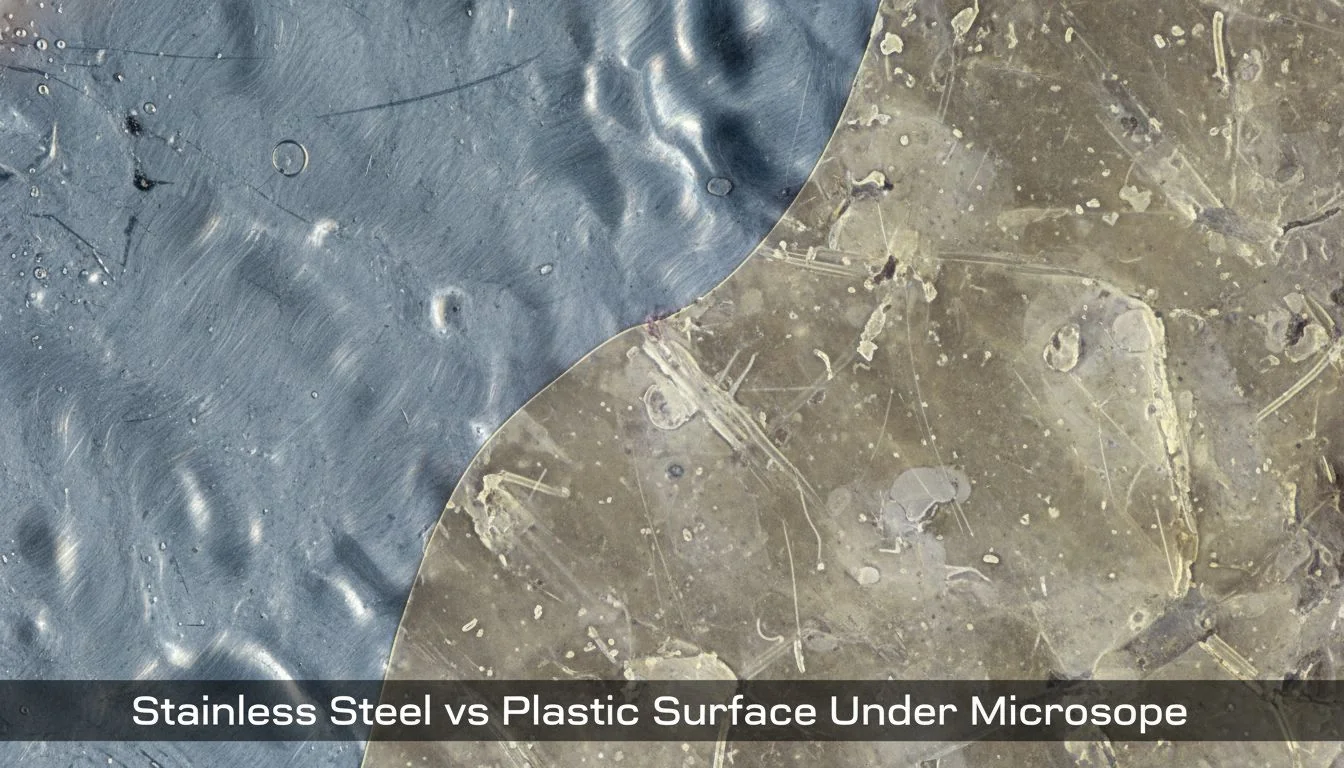
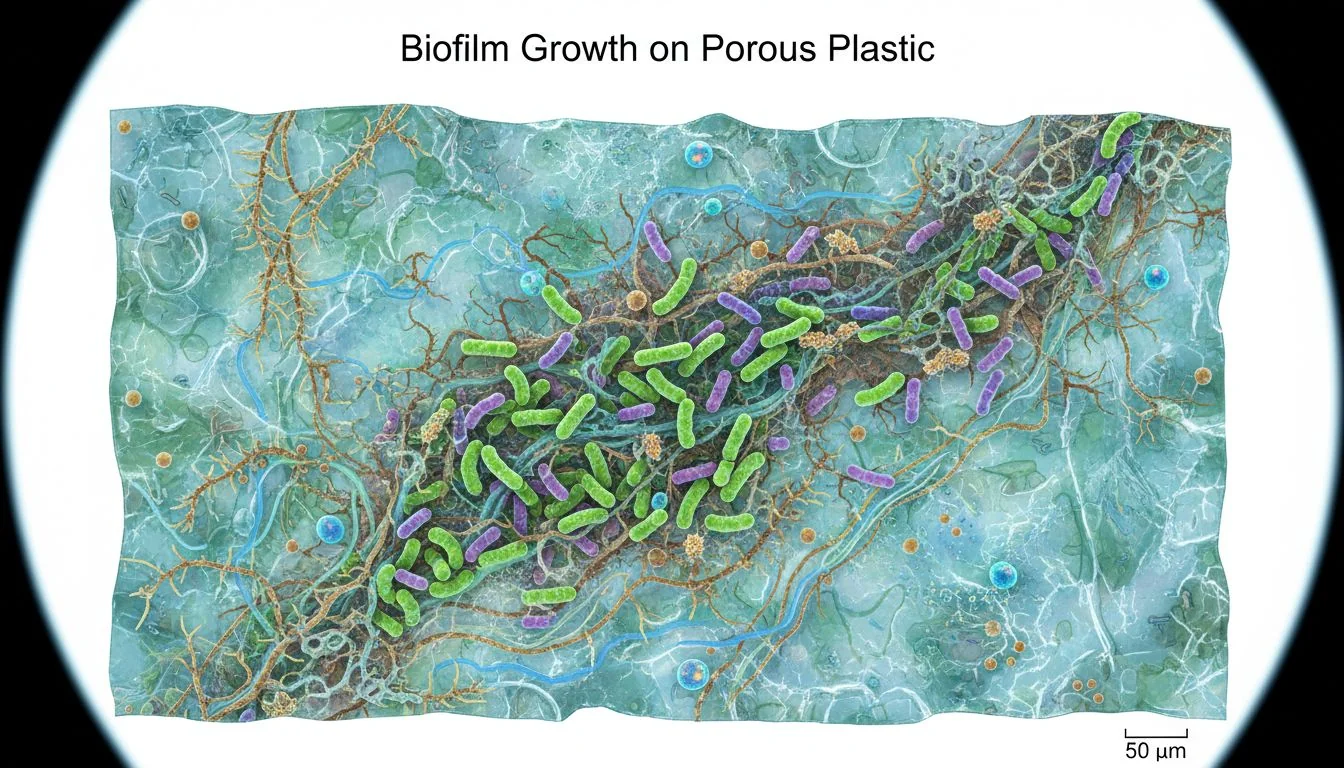
Most humidifiers fail because they are made from porous plastics. These materials quickly develop micro-scratches that become perfect breeding grounds for a resilient, slimy layer of bacteria and fungi called biofilm, which is nearly impossible to fully remove.
Dive deeper Paragraph:
In my world of mold making, we are obsessed with the surface finish of steel. The smallest imperfection can ruin a part. The same principle applies here, but with health consequences. The enemy in every humidifier is "biofilm." Think of it as a protected, organized city for germs. It’s not just loose bacteria floating in water; it's a structured community that secretes a slimy, glue-like substance. This slime allows it to stick firmly onto surfaces. Plastic, even when it looks smooth, is a porous material. Under a microscope, it's full of tiny valleys. Worse, every time you wipe or scrub it, you create new "micro-scratches." For biofilm, these scratches are perfect, sheltered real estate to build their city. You can't effectively clean it because you can't reach into these microscopic crevices. As a designer, Jacky, you understand that material choice dictates function. Using a porous plastic for a water-holding, health-related device is a fundamental design flaw. It’s like building a foundation out of sand.
Biofilm is easily removed from plastic surfaces with regular soap and water.Falso
Biofilm creates a protective matrix that is highly resistant to cleaning. While scrubbing may remove the top layer, it often leaves microbes behind in surface pores and scratches, allowing the biofilm to regrow quickly.
Biofilm can contain multiple species of bacteria and fungi living together.Vero
Biofilms are complex communities, not single-organism colonies. They can consist of various bacteria, fungi, algae, and protozoa, which work together and are more resistant to antimicrobial agents than free-floating organisms.
3. The "Healthy" Science: What is the Power of Hygienic Materials?
You're stuck designing products that are hard to clean and prone to contamination. This compromises your product's core promise of wellness. There has to be a better way to design for health.
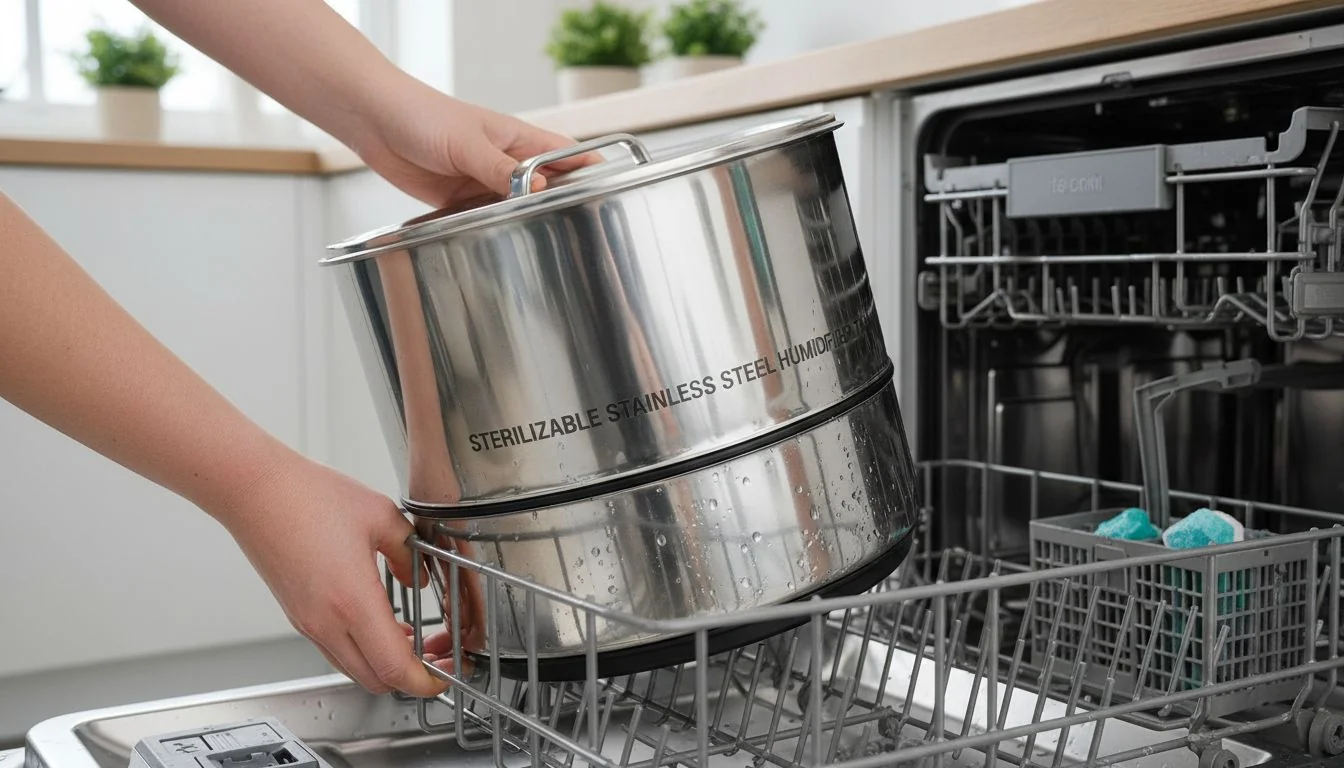
The solution is in material science. By choosing inherently hygienic materials, you make cleanliness and safety effortless. The power of materials like medical-grade stainless steel2 is their non-porous nature, which resists biofilm and makes true sterilization possible.
Dive deeper Paragraph:
This is where we shift from being a simple assembler to a true R&D-led brand. The entire strategy is to redefine "healthy" as "hygienic material." For too long, brands have used the weak term "easy to clean." This is subjective. My definition of easy might be very different from yours. The new standard must be "sterilizable." This is a scientific, provable standard. Sterilization means achieving a near-total elimination of microbes, something you can't do by just wiping plastic. This is where stainless steel shines. Its surface is non-porous. It resists the micro-scratches that harbor biofilm. Most importantly, it can withstand high temperatures. You can put it in a dishwasher on a sanitize cycle or even boil it in water. This is how you achieve true, scientific cleanliness. Plastic will warp, degrade, or leach chemicals under that kind of heat. In my factory, we use steel for molds because it's durable and precise. For a health product, you use steel because it's hygienic and safe.
| Property | Standard Plastic (ABS/PP) | Medical-Grade Stainless Steel |
|---|---|---|
| Surface Porosity | Porous, scratches easily | Non-porous, highly resistant |
| Biofilm Adhesion | Alto | Extremely Low |
| Cleaning Standard | "Easy to Clean" (Subjective) | "Sterilizable" (Scientific) |
| Heat Resistance | Low (Can warp/degrade) | High (Dishwasher/Boiling Safe) |
Stainless steel is naturally antimicrobial and kills all bacteria on contact.Falso
While some metals like copper have antimicrobial properties, stainless steel is valued for being non-porous and easy to sterilize. It doesn't actively kill microbes, but it prevents them from hiding and makes them easy to remove.
Boiling water (100°C / 212°F) for several minutes is an effective method of sterilization for heat-resistant materials.Vero
This process, known as moist heat sterilization, effectively kills most bacteria, viruses, and fungi. It is a common and accessible method for sterilizing items like stainless steel components.
4. Beyond Materials: What's on the "Total Health" Checklist?
A great material is a huge step, but is it enough? Overlooking electrical or chemical safety can still lead to product recalls, damaging your brand's credibility and bottom line.
A "Total Health" checklist, proven by third-party certifications3, ensures your product is safe from every angle. These certifications are not just paperwork; they are the scientific, third-party proof that your product is holistically safe for consumers.

Dive deeper Paragraph:
When I was starting my trading company, I learned that paperwork is proof. For D2C brands, certifications are your scientific proof. They build massive trust. Let's stop seeing them as a cost and start seeing them as a core feature.
- ETL (Electrical Testing Laboratories): This mark proves your product is electrically safe. I've seen products fail this test for simple wiring flaws that could cause fires. Passing ETL means your product is professionally engineered. It shows you are an R&D expert, not just a factory sourcing agent.
- CARB (California Air Resources Board): This is critical for air-related products. It certifies that the plastics and materials in your device do not off-gas harmful composti organici volatili4 (VOCs). It proves your product isn't polluting the air while it's trying to humidify it.
- EPA (Environmental Protection Agency): If your product makes any antimicrobial claims or uses certain technologies, it likely needs to be registered with the EPA. This shows you are compliant with federal regulations on health devices.
For a designer like Jacky, incorporating these requirements from the start is essential. For a brand, these logos tell your customer, "We didn't just test this ourselves. We had independent scientists verify that our product is safe."
CARB certification only applies to products sold in California.Falso
While CARB is a California standard, it is one of the strictest in the world. Many manufacturers certify their products to CARB standards for sale across North America as a mark of high quality and chemical safety.
The ETL Listed Mark is legally equivalent to the UL Listed Mark.Vero
Both ETL and UL are Nationally Recognized Testing Laboratories (NRTLs) recognized by OSHA. They test products to the same safety standards, and both marks indicate a product's compliance with North American safety standards.
5. What Does This Science Mean for D2C Wellness Brands?
As a D2C brand, you're fighting to stand out in a crowded market. Competing on minor features or price is a race to the bottom, and your brand message gets lost.
Embrace the science of "hygienic design" to build a powerful, defensible brand story. This allows you to educate customers, justify a premium product, and build a brand that people truly trust.

Dive deeper Paragraph:
This entire scientific framework is your marketing strategy. It's how you win. For years, I've helped clients grow their businesses by finding a unique angle. This is it.
First, you shift the narrative. Stop marketing "5L tank" and start educating about "the biofilm problem5." Create content that explains why plastic is unhygienic. When you teach your customer something valuable, you become the expert. You become the trusted source.
Second, you justify a premium price. A humidifier made with stainless steel and backed by ETL and CARB certifications costs more to produce. The science is how you explain why it's worth every penny. Customers will pay more for a product they believe is genuinely safer and healthier for their family.
Finally, you build a competitive moat. Any factory can copy a plastic shape. It is much, much harder to replicate a product built on a foundation of material science, rigorous testing, and third-party certification. This is your defensible advantage. Jacky, when you present a design based on this science, you are showing your company how to lead the market with a product that is better in a way that truly matters.
Educating consumers on technical topics like 'biofilm' is too complex and will not work for marketing.Falso
Modern consumers, especially in the wellness space, are savvy and appreciate transparency. Brands like Dyson have successfully educated consumers on complex topics (e.g., cyclonic separation) to build authority and justify premium pricing.
Focusing on health and safety can alienate customers who are only looking for a low-cost option.Vero
A brand positioned around premium, science-backed safety will not appeal to every segment of the market. However, it will strongly attract a valuable segment willing to pay more for quality, trust, and peace of mind.
Conclusione
A truly healthy humidifier is not an accident. It is hygienic by design, built from superior materials and proven by science to deliver clean, safe moisture to your home.
References
-
Understanding hygienic design is crucial for creating safe and effective humidifiers that promote health. ↩
-
Discover the benefits of using medical-grade stainless steel for hygienic and safe humidifier designs. ↩
-
Understanding third-party certifications helps ensure product safety and builds consumer trust. ↩
-
Learn about VOCs and their impact on indoor air quality, especially in humidifying devices. ↩
-
Exploring the biofilm problem reveals why some humidifiers can be harmful, impacting health and safety. ↩


 English
  Français
  Español
  Italiano
  Deutsch
  Português
  Русский
  العربية
  日本語
日本語  한국어
한국어  Tiếng Việt

