Abre num novo separador
Soluções inovadoras para a qualidade do ar

Clean Air as a Selling Point: Innovative IAQ Solutions in Real Estate

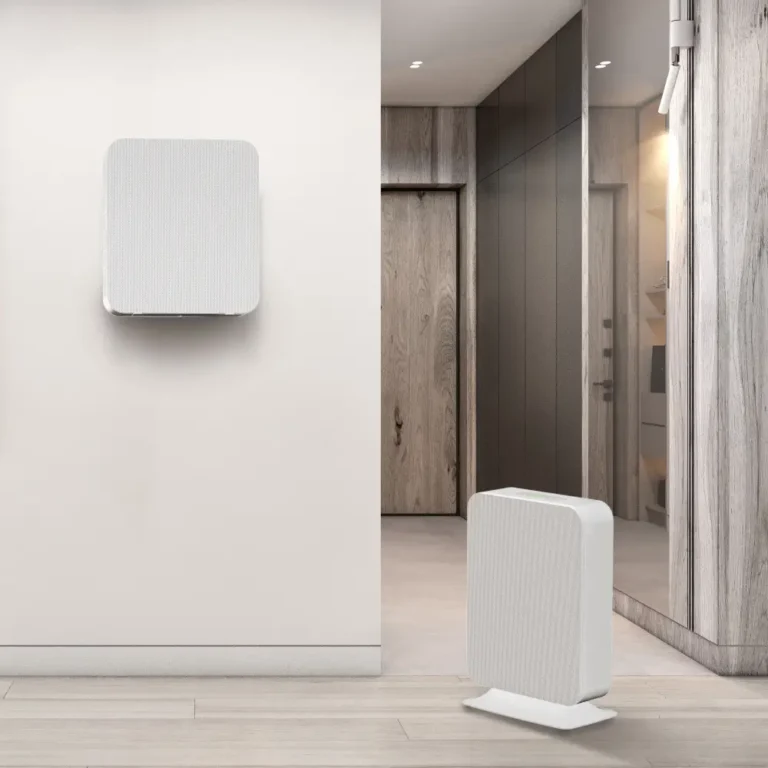
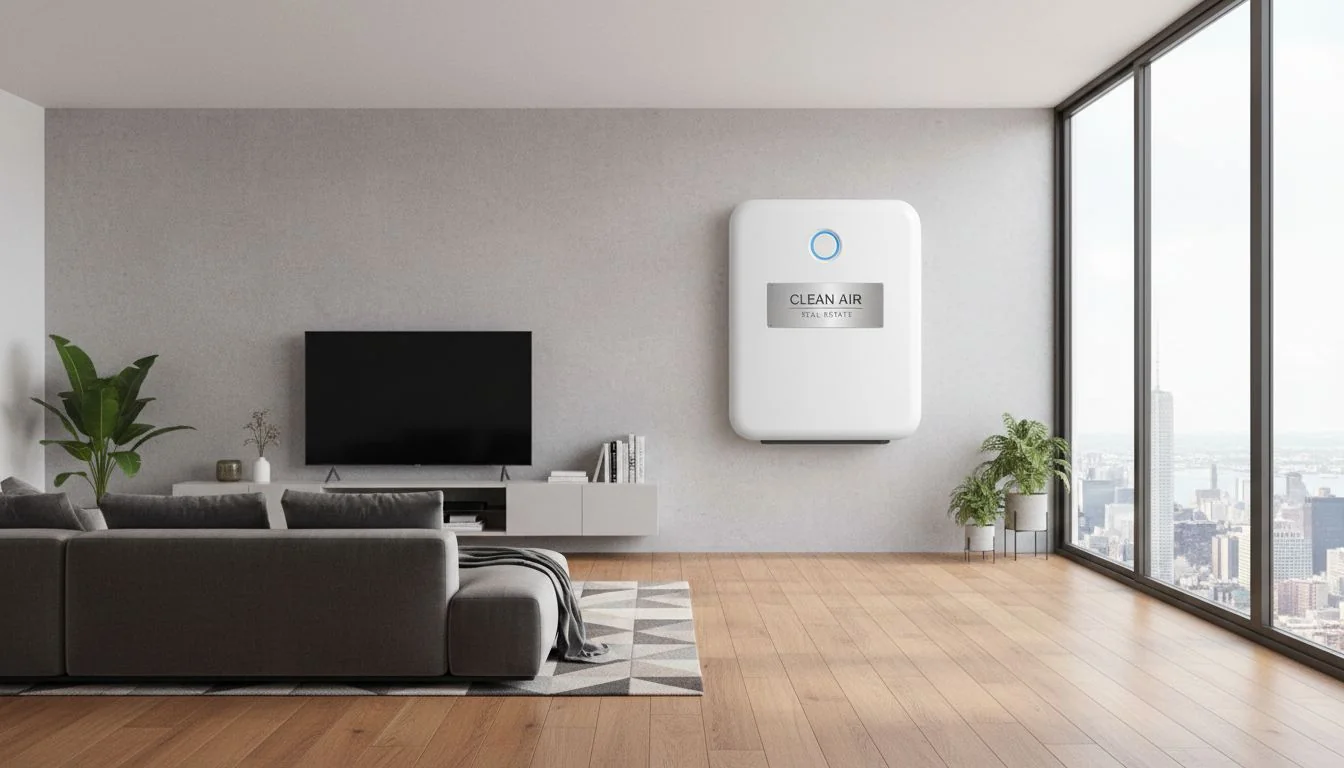
Modern apartment interior with visible wall-mounted air purifier

Developers are fighting a fierce war for tenants today. Standard amenities like gyms and pools are no longer enough to win leases. You need a new, tangible edge to stand out in a crowded market.

Clean air is the new luxury amenity that drives real estate value. By integrating visible, wall-mounted air purification systems, developers can boost property appeal, achieve WELL Certification1, and offer a tangible health benefit that central HVAC systems cannot match. This strategy turns invisible infrastructure into a marketable asset.
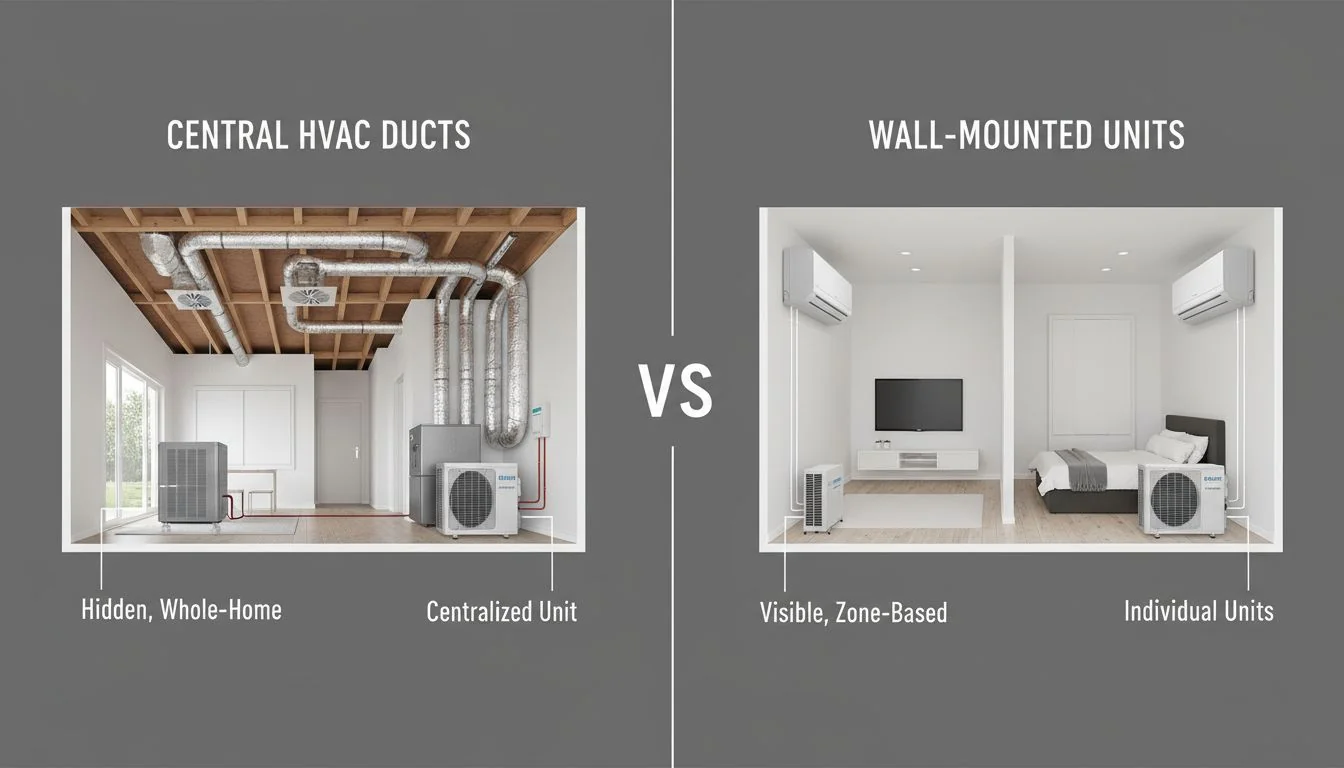
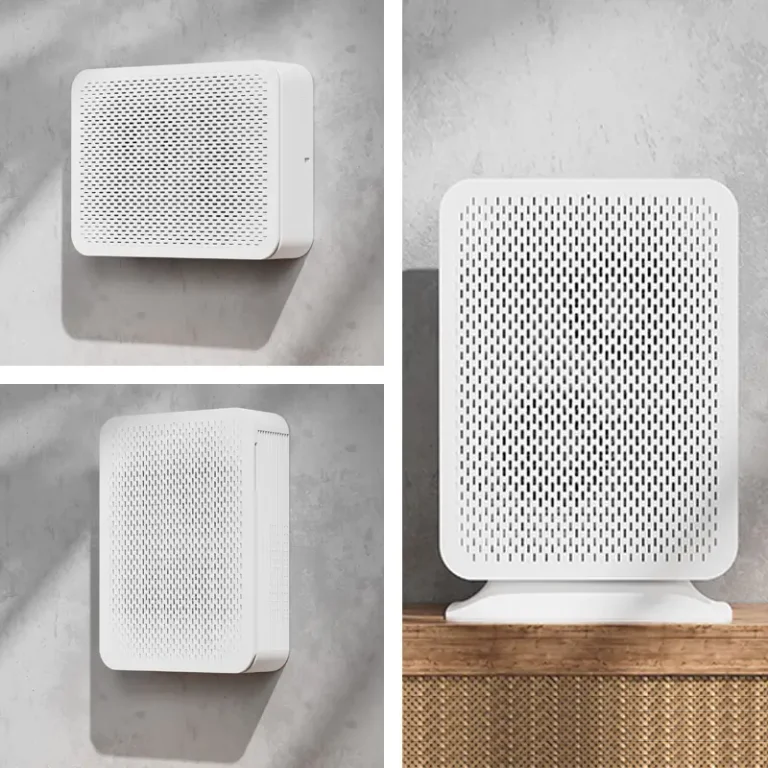
Comparison of central HVAC ducts versus wall-mounted units

Many developers ignore this shift. They stick to old methods and hidden systems. But the market is changing fast, and health is the priority. Let me explain why you should care about this change.

Indoor air quality is a top priority for modern tenants.Verdadeiro

Post-pandemic surveys indicate that healthy building features, specifically air quality, rank higher than traditional amenities like gyms.

Central HVAC systems are sufficient for removing all indoor pollutants.Falso

Standard HVAC filters often miss fine particulate matter and pathogens, and the ductwork itself can harbor mold and dust if not maintained perfectly.

Why Are Traditional HVAC Filters No Longer Enough?

We often trust our building's central system too much. We think a big machine on the roof solves everything. But tenants are starting to ask harder questions about the air they breathe.

Central HVAC systems are designed for temperature control, not purification. They are often invisible to the tenant, meaning your heavy investment in upgraded filters goes unnoticed, while wall-mounted units provide visible reassurance and superior localized air cleaning.
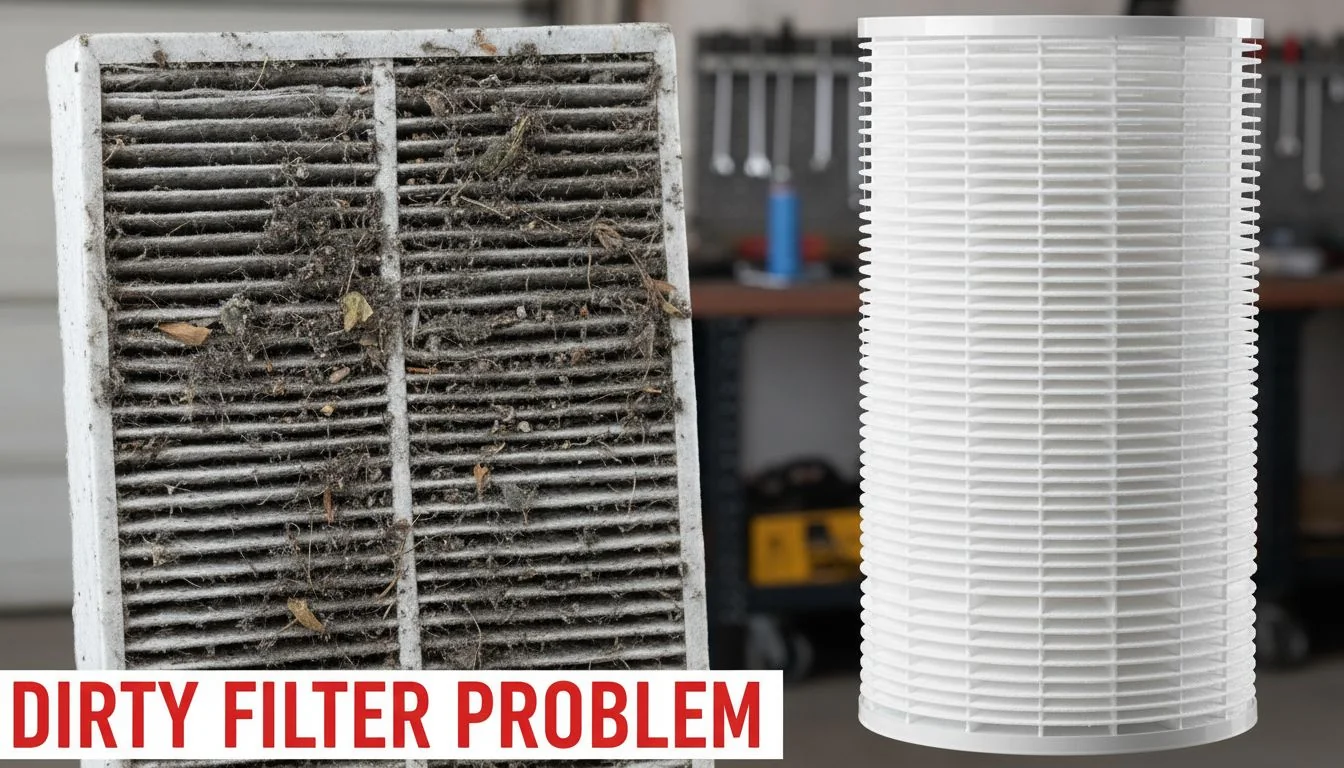
Close up of dirty HVAC filter vs clean air purifier

I have seen many developers spend millions upgrading their central HVAC systems. They install high-grade MERV filters and UV lights inside the ducts. Technically, this is good. But from a marketing perspective, it has a major flaw. It is invisible.

When a potential tenant walks into a unit, they cannot see the UV light in the ductwork. They cannot see the filter on the roof. If you spend $1 million on these upgrades, the tenant does not "feel" the value immediately. This is the "Visible vs. Invisible" argument.

Furthermore, central systems have physical limitations. They rely on moving air through long, often dirty ducts. This can actually spread dust and mold spores between units if the building is older. A central system is reactive. It waits for the air to come to it.

In contrast, a localized solution is active. It cleans the air right where the people are. For a leasing team, this is a "Marketing Asset." They can point to the sleek unit on the wall and say, "This machine protects your health." That is a powerful sales pitch that a hidden HVAC system can never make.

Caraterística Central HVAC Upgrade Wall-Mounted Purifier
Visibility Invisible (Hidden in ducts) Highly Visible (On the wall)
Tenant Perception "Standard Building Feature" "Premium Health Amenity"
Instalação Complex, requires shutdown Simple, scalable
Cross-Contamination Risk of spreading between units Zero risk (Unit specific)

Tenants are willing to pay more for visible health features.Verdadeiro

Studies in real estate economics show that visible wellness certifications and amenities correlate with higher rental premiums.

Upgrading central HVAC is the most cost-effective way to improve air quality.Falso

Retrofitting central systems in older buildings is often cost-prohibitive compared to installing decentralized, wall-mounted units.

How Do Wall-Mounted Purifiers Function as Active Infrastructure?

New buildings are easy to design, but they are not the bulk of the market. The real money and the real challenge lie in fixing older buildings. This is where traditional solutions fail.

Wall-mounted purifiers serve as the ideal retrofit solution for older properties. They bypass the need for expensive ductwork renovation, allowing developers to upgrade a building's health standards instantly without major construction or tenant displacement.

Old brick building exterior vs modern interior retrofit

I look at the real estate market like I look at mold manufacturing. You have to design for the constraints you have. In real estate, the biggest constraint is the "Retrofit" market.

There are thousands of older hotels and apartment complexes with terrible ventilation. They have low ceilings and no space for new ducts. To bring these buildings up to modern health standards using central HVAC is a nightmare. You would have to tear down walls and evict tenants. It costs too much.

This is where we pivot to B2B developers. We stop thinking about selling one air purifier to a homeowner. We start selling "Scalability." A developer needs to buy 500 units for a complex. They need "Ease of Installation."

Hisoair’s wall-mounted units fit this perfectly. They act as "Active Infrastructure." You do not need to rip out the old ducts. You simply mount the unit. Instantly, that 1980s apartment has 2024 air quality standards.

This is the only solution that bridges the gap without construction. It allows a developer to take a C-class building and market it as an A-class "Health-First" property. You are not just selling an appliance; you are selling a renovation shortcut.

Key Benefits for Retrofitting:

  • No Demolition: Keep the walls intact.
  • Speed: Install hundreds of units in a few days.
  • Cost: A fraction of the price of re-ducting a building.

Retrofitting old buildings is a larger market than new construction.Verdadeiro

The majority of the building stock that will exist in 2050 has already been built, making retrofitting the primary avenue for energy and health upgrades.

Wall-mounted units require complex wiring.Falso

Most modern wall-mounted purifiers are plug-and-play or require very simple electrical connections, minimizing installation labor.

Can Smart Integration Simplify Property Management?

Installing the hardware is only step one. Managing 500 devices can be a headache if you do not have the right system. Property managers need control, not more chores.

Smart building integration2 allows property managers to control air quality centrally. By offering "Air-as-a-Service," developers can monitor performance and schedule filter changes remotely, reducing maintenance labor and ensuring consistent performance.
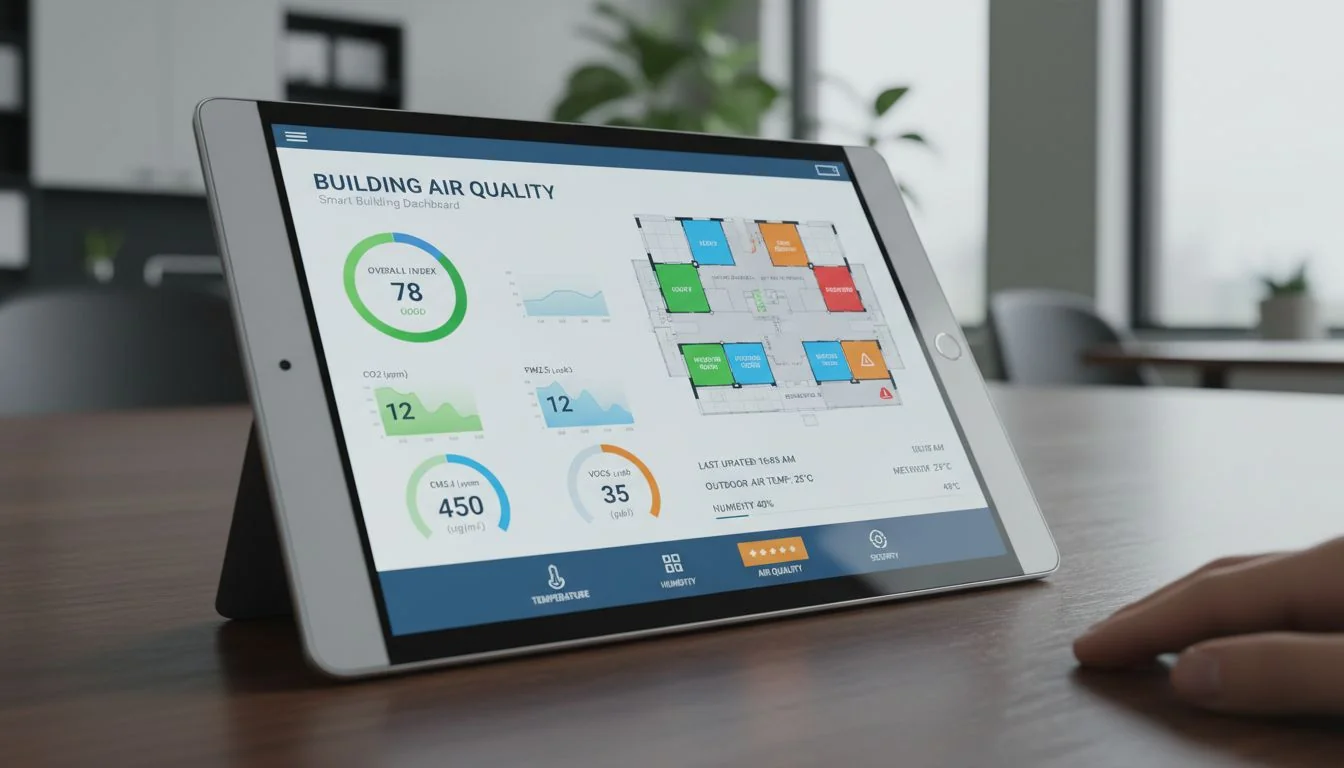
Tablet screen showing dashboard of building air quality

When you sell to a developer, you are really selling to the Property Manager. These people are busy. They do not want to walk into 500 different rooms to check if a red light is blinking on a filter.

This is why we position Hisoair as an "Infrastructure Partner," not just a seller. We offer "Air-as-a-Service3." This capability changes the game.

Imagine a dashboard in the leasing office. The manager can see the air quality in every single room. They know exactly when a filter needs changing. They can automate the ordering of bulk filter replacements.

This appeals to the B2B mindset. It lowers operational costs. It reduces the labor hours needed for maintenance.

Also, it gives the manager control over energy usage. They can turn down units in empty rooms and turn them up before a new tenant arrives. This is "Smart Building" integration. It turns a standalone product into a connected ecosystem.

For a developer, this is peace of mind. They know the asset is being taken care of. They know the "clean air" promise they made to tenants is actually being kept.

Remote monitoring increases maintenance efficiency.Verdadeiro

Predictive maintenance based on real-time data reduces unnecessary site visits and ensures filters are only changed when needed.

Property managers prefer manual checks for appliances.Falso

Automation and centralized dashboards are highly preferred to reduce the labor burden on maintenance staff.

What Is the ROI of Clean Air for Developers?

We have talked about health and technology. But developers ultimately care about the bottom line. Does clean air actually make money?

O ROI of clean air4 comes from higher rents and lower tenant turnover. By using products like Hisoair to earn "WELL Certification," developers can justify premium pricing and attract high-value tenants who prioritize wellness.
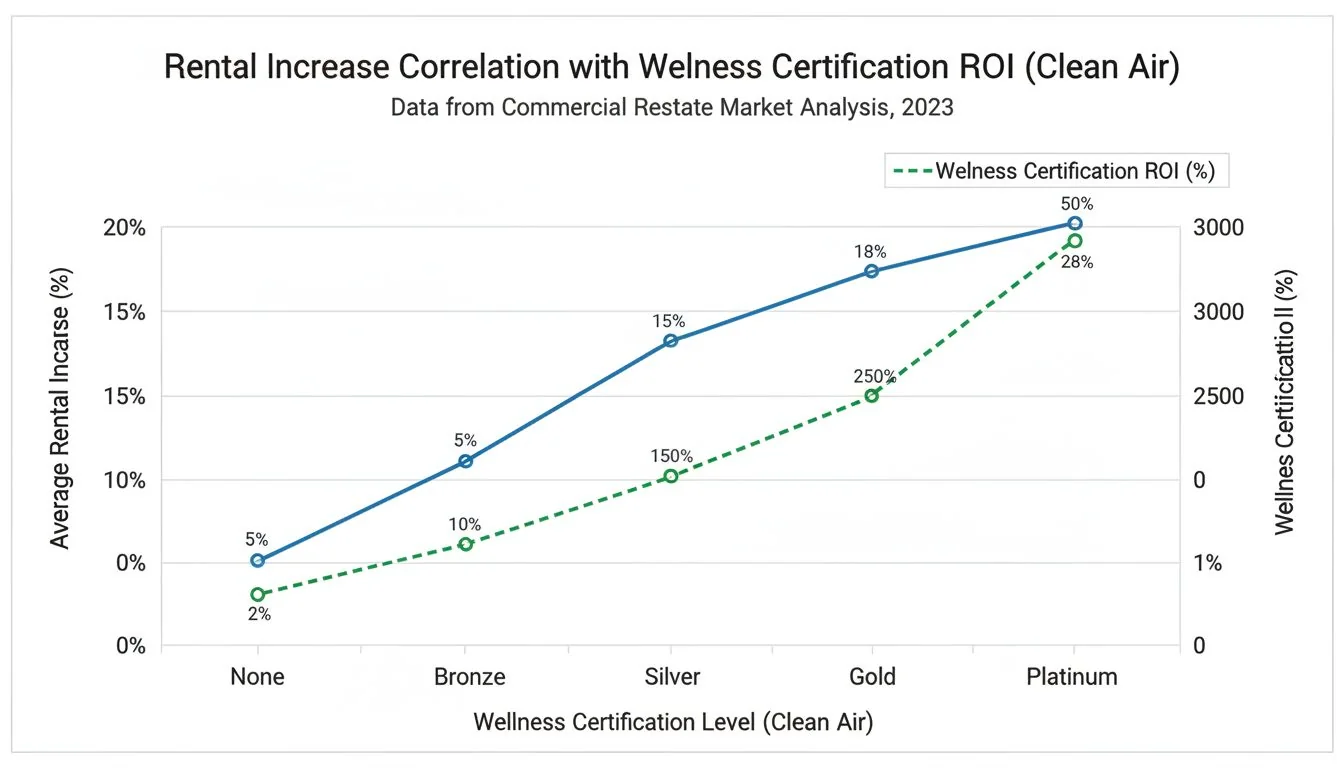
Graph showing rental increase correlation with wellness certification

The "WELL Certification" is the Golden Ticket in modern real estate. It is the global standard for healthy buildings. Developers want this plaque on their wall because it allows them to charge more.

Hisoair’s wall-mounted units are the easiest way to earn "Air Concept" points toward this certification. It is a strategic compliance tool.

Instead of doing a massive construction project to meet the standard, the developer installs these units. They get the points. They get the certification.

This leads to higher rents. Tenants pay a premium for "WELL Certified" spaces. It also lowers churn. When a tenant feels that the building management cares about their health, they stay longer.

Lower churn means less money lost on empty units and marketing. So, the cost of the units is paid back quickly. It is an investment, not an expense.

The Financial Breakdown:

  1. Premium Rents: Certified healthy buildings command 10-20% higher rates.
  2. Retention: Happy, healthy tenants renew their leases.
  3. Differentiation: You win the war against the building next door that smells like dust.

WELL Certification increases asset value.Verdadeiro

Buildings with wellness certifications have been shown to have higher occupancy rates and sale prices compared to non-certified peers.

Tenants do not care about building certifications.Falso

Corporate and residential tenants are increasingly demanding proof of healthy environments, making certifications a key decision factor.

Conclusão

Clean air is no longer just a nice-to-have; it is a financial asset. By using visible, scalable wall-mounted purifiers, developers can retrofit old buildings, gain WELL Certification, and increase rents. It is the smartest way to future-proof your property.


References


  1. Understanding WELL Certification can help developers enhance property value and attract health-conscious tenants. ↩

  2. Exploring smart integration can reveal how it simplifies maintenance and improves tenant experiences. ↩

  3. Learning about Air-as-a-Service can help property managers streamline operations and enhance air quality management. ↩

  4. Understanding the financial benefits of clean air can justify investments in air quality improvements. ↩

Partilhar:
o fundador da hisoair, sr. lee
Alwen Lee, an air purification expert with over 10 years of experience, is a devoted father of two and a passionate traveler, having explored more than 30 countries. With a love for public speaking and swimming, he has dedicated his life to the indoor air quality industry. His mission is to ensure that people around the world enjoy the freedom to breathe clean air and lead happy, healthy lives.

Envie-nos uma mensagem

Mais para ler

Modern living room with a family enjoying a healthy indoor environment monitored by smart devices, natural lighting, and greenery.

After IFA 2026: The Healthy Home Is Moving Beyond Smart Devices

In our previous IFA 2026 column, Air Purification Is Becoming Part of the Healthy-Home Platform, we argued that the next generation of indoor-health products would ...
Notícias
Modern living room and kitchen with smart home air quality devices including an air purifier, humidifier, and water filtration system, connected with visualized blue connectivity lines.

IFA 2026: Air Purification Is Becoming Part of the Healthy-Home Platform

Pre-IFA Industry Perspective | September 4, 2026 This article is based on official announcements and regulatory information available ahead of IFA 2026, which takes place ...
Notícias
Comparison infographic showcasing the differences between carbon block filter and activated carbon fiber. Detailed diagrams illustrate the hierarchical porous structure of the carbon block with long diffusion paths and the open microporous structure of the activated carbon fiber with direct access for PFAS adsorption.

Carbon Block vs. Activated Carbon Fiber (ACF): Matching Media to Target Contaminants

Two carbon media. Same adsorption chemistry. Very different behaviour in a point-of-use cartridge. If you are specifying a water purifier platform for a PFAS-aware market, ...
Notícias
NSF base listing and ANF private-label certification pathway for OEM water filters

What Is an NSF Master Listing? A Guide to Base Listings, ANF Certification and OEM Water Filters

For a brand preparing to launch an OEM water purifier, one of the most common supplier claims is: “We already have an NSF master listing, ...
News, Water Purifiers
Healthy-home brand team reviewing PFAS water filter certification, test data and product engineering

Entering the Water Category Is Easy. Building a Credible PFAS Claim Is Much Harder

For air purification, appliance and healthy-home brands, entering the water category can look surprisingly easy. A company can select an existing undersink system, customize its ...
Notícias
Team in a business meeting discussing a water filtration system with product components and a comparison table displayed on a screen.

5 Leading OEM Water Purifier Manufacturers in China for Private Label Brands

China has thousands of companies selling water filters, reverse osmosis systems and drinking-water appliances. However, only a portion of them are suitable for private-label, OEM ...
Notícias
Contaminant Engineering•3 min read

PFAS Water Filtration Technologies Explained: Carbon, Resin & RO

Key Takeaway:

PFAS reduction depends on the specific compounds present, treatment media, contact time, water chemistry, and system design. Activated carbon, ion exchange, and Reverse Osmosis address PFAS through different mechanisms.

PFAS are a large family of persistent fluorinated compounds that can occur in drinking-water supplies. Their treatment behavior varies significantly by molecular structure, chain length, functional group, concentration, and the chemistry of the source water.

Granular Activated Carbon (GAC) removes PFAS primarily through adsorption. It is generally more effective for many longer-chain PFAS, while shorter-chain compounds tend to break through more quickly. Carbon performance depends on media properties, Empty Bed Contact Time (EBCT), competing organic matter, loading, and replacement frequency.

Ion-exchange resins use charged functional sites to capture many PFAS compounds. Properly selected anion-exchange media can provide high capacity and may perform better than conventional activated carbon for some shorter-chain PFAS, although performance still depends on water chemistry and competing ions.

Reverse Osmosis (RO) uses membrane separation rather than adsorption. Properly designed RO systems can provide broad reduction across many PFAS compounds as well as dissolved salts and other contaminants. Unlike carbon or resin, however, RO also produces a concentrate stream that must be managed.

No single technology should be selected from a PFAS label alone. System design should consider which PFAS compounds are present, their concentrations, required reduction targets, flow rate, media life, and the applicable third-party certification or validation requirements.

HisoAir Water Technical Series
Product Discovery•3 min read

How to Choose an Under-Sink Water Purifier for Modern Kitchens

Key Takeaway:

Match the treatment technology to your water quality first, then evaluate cabinet space, faucet configuration, flow rate, drain and power requirements, and filter replacement needs.

Choosing an under-sink water purifier starts with water chemistry. Carbon filtration is well suited to chlorine, taste, odor, and many organic contaminants, while Reverse Osmosis is more appropriate when dissolved salts, fluoride, nitrates, or broader dissolved contaminants need to be reduced.

For compact kitchens, tankless RO systems eliminate the conventional storage tank and can significantly reduce the space required under the sink. However, membrane capacity stated in GPD does not directly equal faucet flow. When comparing systems, check the actual dispensing flow rate, inlet-pressure requirement, recovery ratio, and whether a booster pump is required.

Installation architecture also matters. Many RO systems require a drain connection, electrical power, and either a dedicated drinking-water faucet or a compatible multi-function faucet. High-flow carbon systems can often connect directly to the existing cold-water line with a simpler installation, but pressure drop and available faucet flow should still be verified.

RO also removes much of the naturally occurring dissolved mineral content. Where taste or mineral balance is a priority, a post-RO remineralization stage can be added. Filter life should be evaluated by both rated capacity and local water quality rather than replacement time alone.

The right system is therefore not simply the smallest or highest-GPD model. It is the configuration that matches the target contaminants, available cabinet space, desired faucet setup, peak dispensing demand, and maintenance expectations.

HisoAir Water Technical Series
Water Quality•2 min read

What Does TDS Mean in Drinking Water? Measurement vs Contaminant Reality

Key Takeaway:

A TDS meter estimates the overall concentration of dissolved ionic substances from electrical conductivity. It cannot identify specific contaminants or determine whether water is chemically safe.

Total Dissolved Solids (TDS) refers to the combined concentration of dissolved substances in water. Most handheld TDS meters do not measure TDS directly. Instead, they measure electrical conductivity (EC) and convert that reading into an estimated parts-per-million (ppm) value.

This means a TDS reading can indicate how much dissolved ionic material is present, but not what that material actually is. Calcium, magnesium, sodium, nitrates, and other dissolved ions can all contribute to conductivity, yet a simple TDS meter cannot distinguish between them.

TDS meters are also not suitable for detecting trace contaminants such as PFAS, many VOCs, pesticides, pharmaceuticals, or disinfection byproducts. These substances may be present at concentrations far below the level needed to noticeably change electrical conductivity.

A low TDS reading therefore does not guarantee safe drinking water, and a higher TDS reading does not automatically indicate contamination. Water-treatment decisions should be based on laboratory testing for specific contaminants of concern rather than TDS alone.

HisoAir Water Technical Series
Technology Selection•2 min read

RO vs UF Water Filtration: Understanding Pore Sizes & Dissolved Minerals

Key Takeaway:

Ultrafiltration can reduce bacteria, turbidity, and suspended particles while retaining most naturally occurring dissolved minerals. Reverse Osmosis provides much broader reduction of dissolved salts and smaller contaminants.

Ultrafiltration (UF) typically uses hollow-fiber membranes with pore sizes in the approximate 0.01–0.1 micron range. These membranes physically retain turbidity, suspended solids, colloids, and many microorganisms while allowing dissolved minerals and salts to remain in the water.

Reverse Osmosis (RO) operates at a much finer separation level. Unlike UF, RO can substantially reduce dissolved ions such as sodium, calcium, fluoride, nitrates, and other contributors to total dissolved solids (TDS). This makes RO more suitable when dissolved-salt reduction is a primary treatment objective.

UF generally requires less system pressure and produces little or no continuous concentrate stream in many point-of-use configurations. RO typically requires greater pressure and produces a reject-water stream, but delivers broader contaminant reduction.

For water with acceptable TDS and mineral content, UF can be a simpler mineral-retaining treatment option. Where dissolved salts, fluoride, nitrates, or broader dissolved contaminants are a concern, RO is generally the more appropriate technology.

HisoAir Water Technical Series
Technology Selection•4 min read

Carbon Block vs Reverse Osmosis: Which Fits Your Need?

Key Takeaway:

Choose RO for dissolved inorganic salts and heavy metals; choose Carbon Block for chemical taste/odor, no wastewater, and high line-pressure flow.

Reverse Osmosis (RO) and Carbon Block filtration represent two fundamentally different treatment methods: membrane separation and adsorption. Understanding these differences helps determine which technology is better suited to a specific water-quality requirement.

Reverse Osmosis uses a semi-permeable membrane with pore sizes of approximately 0.0001 microns. It can significantly reduce dissolved inorganic contaminants such as TDS, fluoride, nitrates, and certain heavy metals. Because water must be forced through the membrane, RO systems require sufficient pressure or a booster pump and generate a concentrated wastewater stream.

Carbon Block filtration relies primarily on adsorption through compressed activated carbon, commonly with nominal pore sizes around 0.5–5 microns. It is highly effective for chlorine, chloramines, VOCs, taste, and odor, while allowing substantially higher direct-flow rates without producing wastewater.

From an operating perspective, Carbon Block systems are generally simpler, require less energy, and avoid the water loss associated with RO. RO involves higher system complexity and operating cost, but provides substantially broader reduction of dissolved contaminants that Carbon Block alone cannot address.

HisoAir Water Technical Series

SOLICITAR UM ORÇAMENTO